Downloaded 284 times
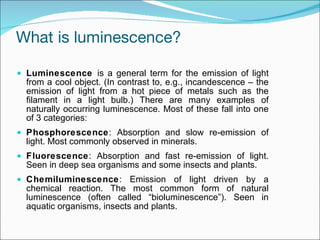
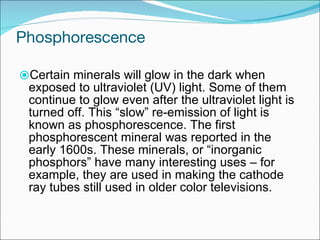

Luminescence is the emission of light from a cool object, in contrast to incandescence which is the emission of light from a hot object. There are three main types of luminescence: phosphorescence involves the absorption and slow re-emission of light, fluorescence involves fast absorption and re-emission of light, and chemiluminescence is the emission of light driven by a chemical reaction. Phosphorescent minerals will glow after exposure to UV light. Fluorescence is seen in scorpion exoskeletons and deep sea organisms. Chemiluminescence, the most common form in living organisms, is used by fireflies, deep sea fish, and microorganisms.


![Nanotechnology,ppt by dr.imran aziz [compatibility mode]](https://cdn.slidesharecdn.com/ss_thumbnails/nanotechnologypptbydr-imranazizcompatibilitymode-110507150029-phpapp02-thumbnail.jpg?width=640&height=640&fit=bounds)


