Electromagnetic
   Radiation
Science Standard

S8P5:

Students will explore the
wave nature of sound and
electromagnetic radiation.
Essential Question


What are some everyday
uses of electromagnetic
radiation (or waves)?
Waves… a review
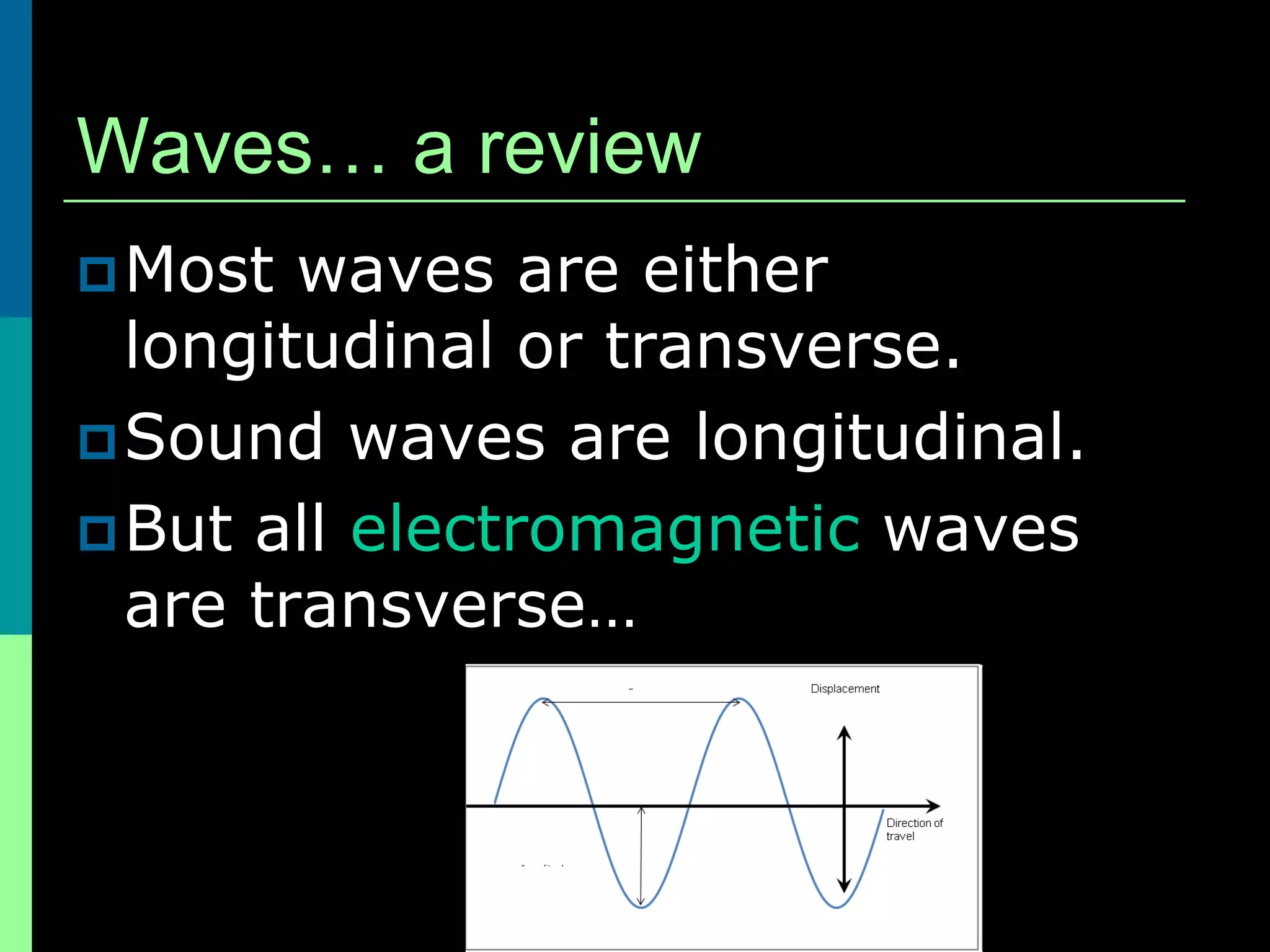
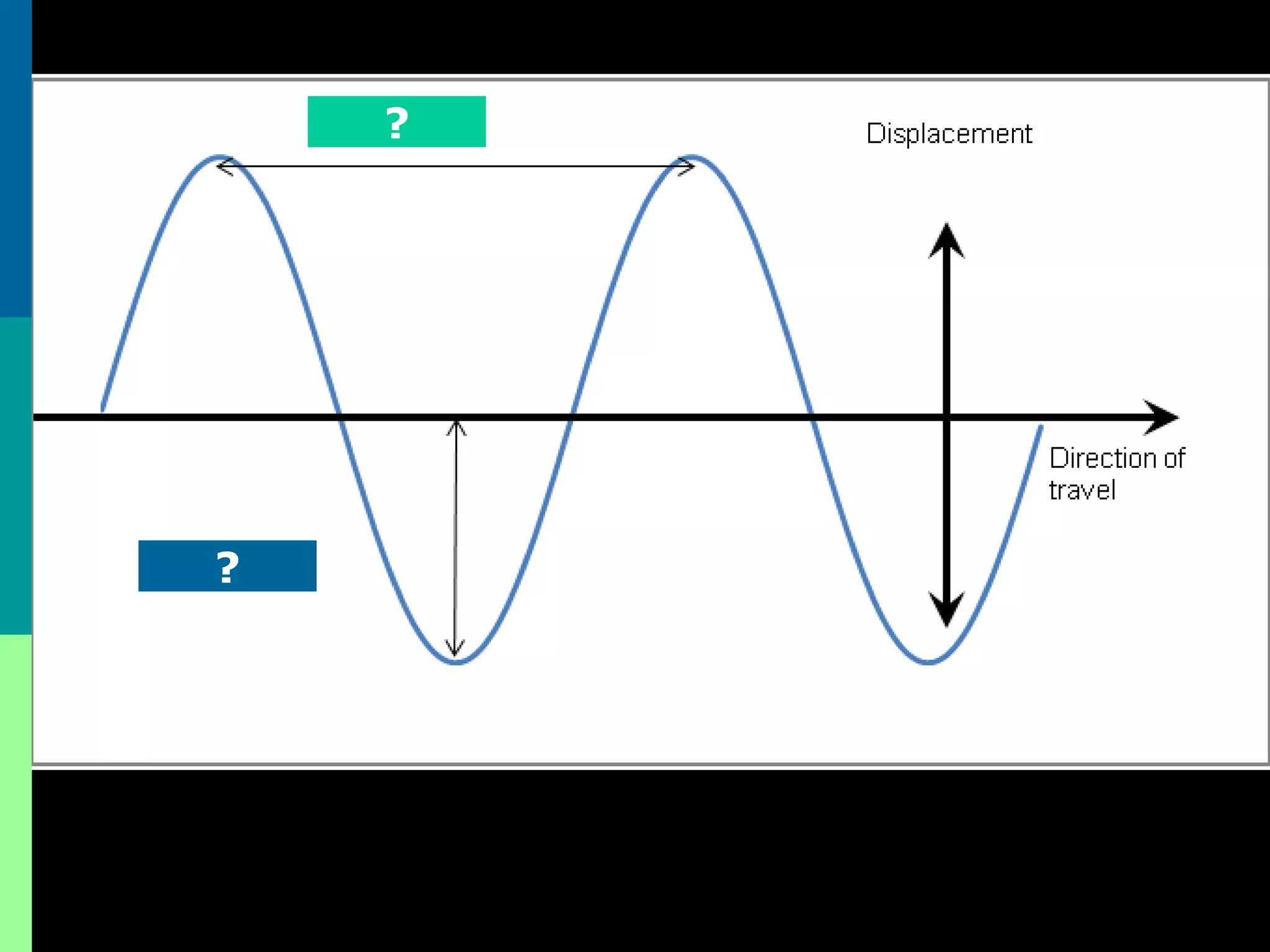
 Most  waves are either
  longitudinal or transverse.
 Sound waves are longitudinal.
 But all electromagnetic waves
  are transverse…
?


?
Electromagnetic waves
 Produced  by the movement of
 electrically charged particles

 Cantravel in a “vacuum”
(they do NOT need a
  medium)
Electromagnetic waves
 Travelat the speed of light
  (300,000,000 m/s in a vacuum )
* Travels slower when passing through a medium


 Also known as EM waves
because they are
surrounded by:
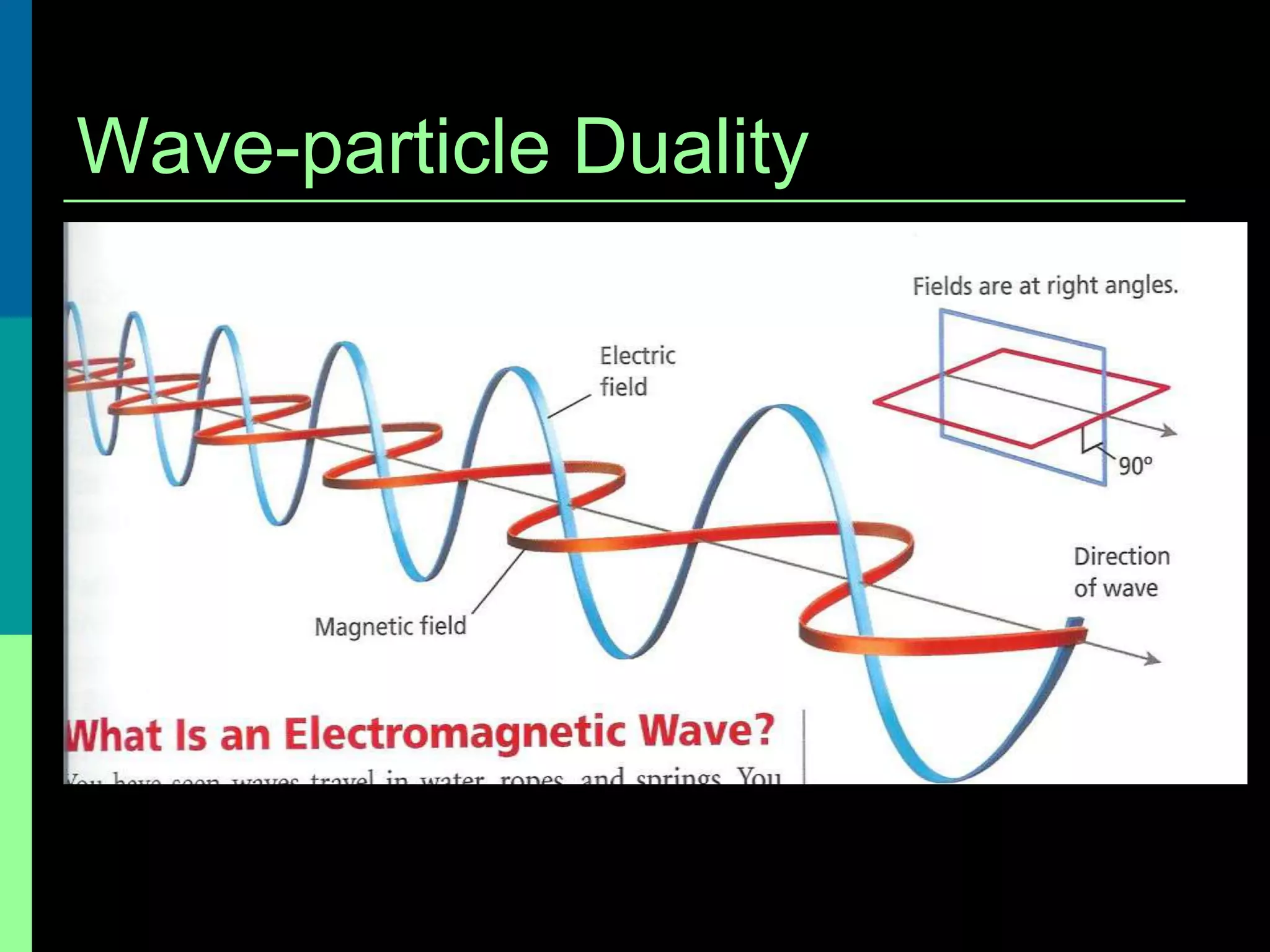
    i.Electric fields
    ii.Magnetic fields
Wave-particle Duality
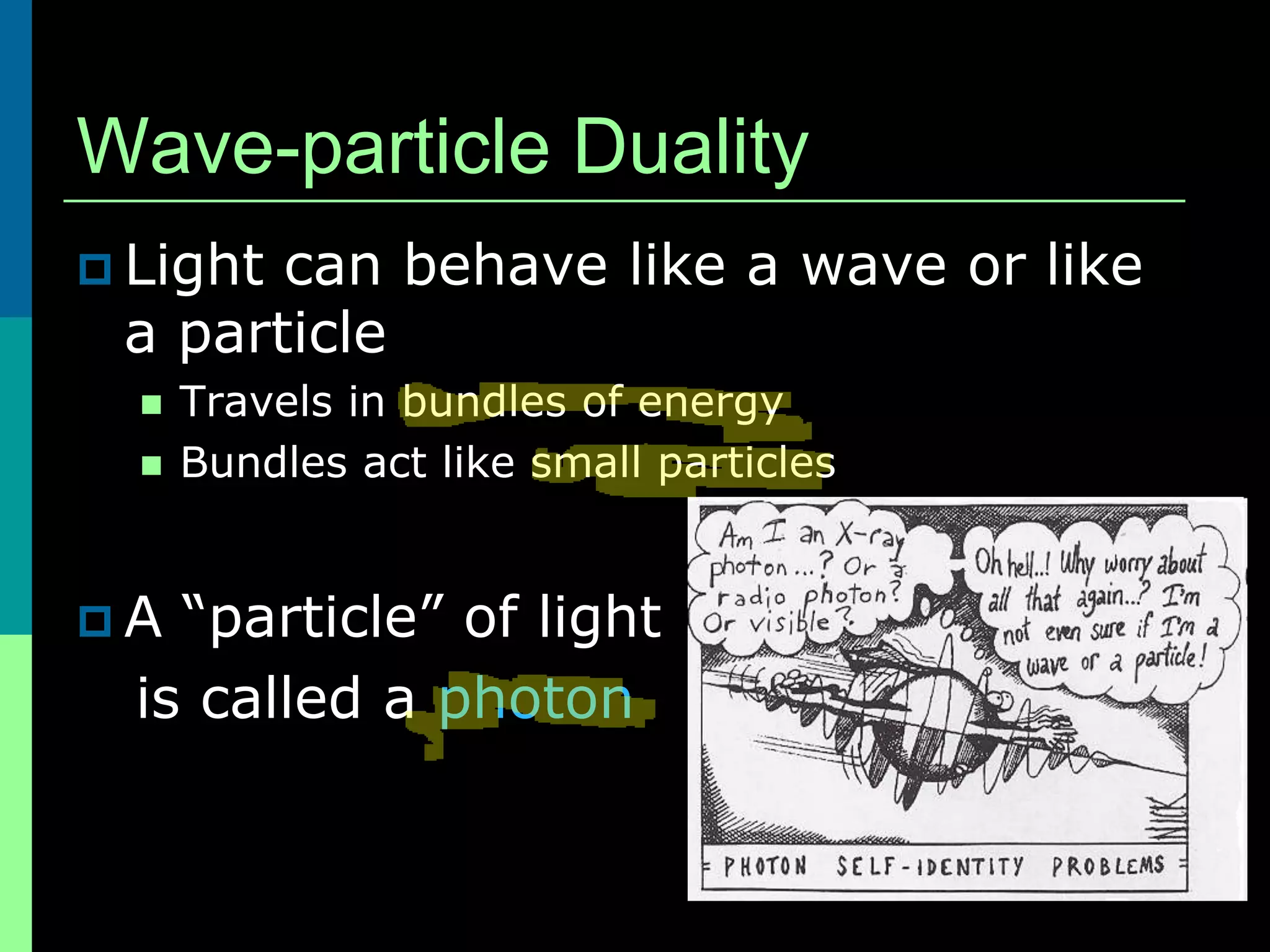
 Lightcan behave like a wave or like
 a particle
     Travels in bundles of energy
     Bundles act like small particles


A  “particle” of light
  is called a photon
Wave-particle Duality

 Allelectromagnetic waves travel at
  the same speed

 Frequency   and wavelength are
  used to classify the waves in the
  electromagnetic spectrum
Wave-particle Duality
Electromagnetic
           Spectrum

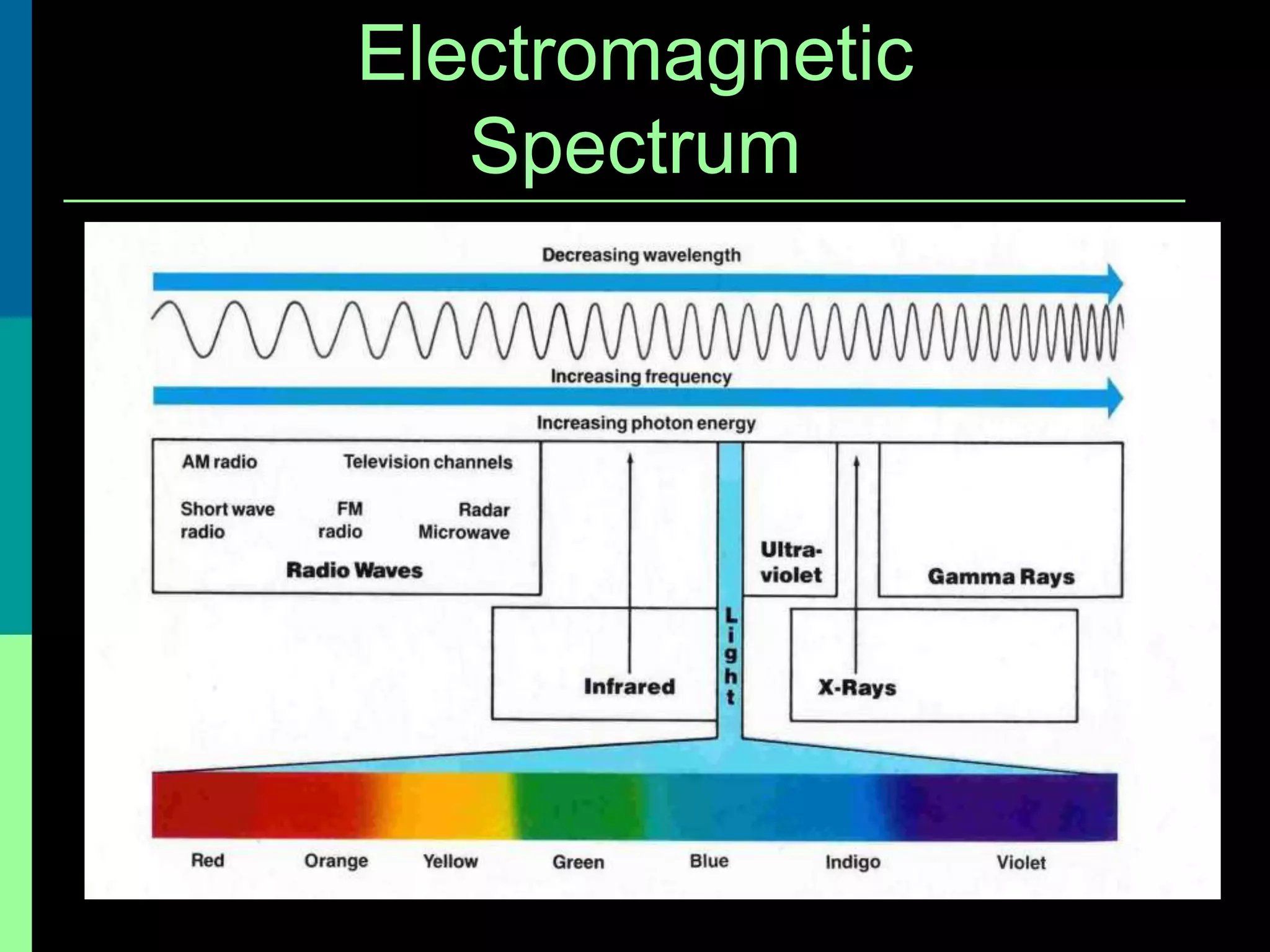
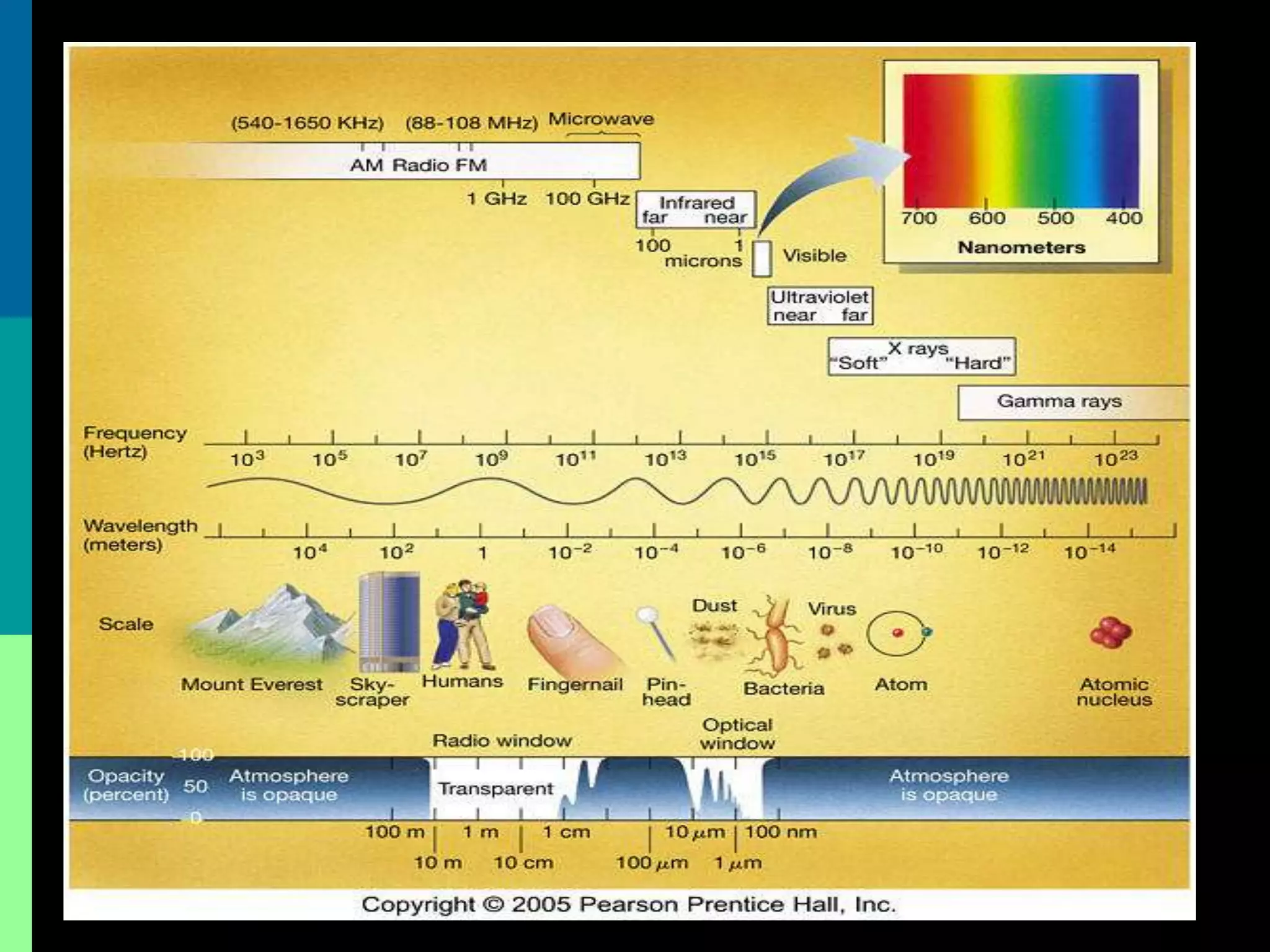
 The electromagnetic spectrum is
 the complete range of
 electromagnetic waves placed in
 order of increasing frequency.
Electromagnetic
   Spectrum
Electromagnetic
          Spectrum

 Asthe frequency increases:
   a.Wavelength decreases
   b.Photon penetrating energy
     increases
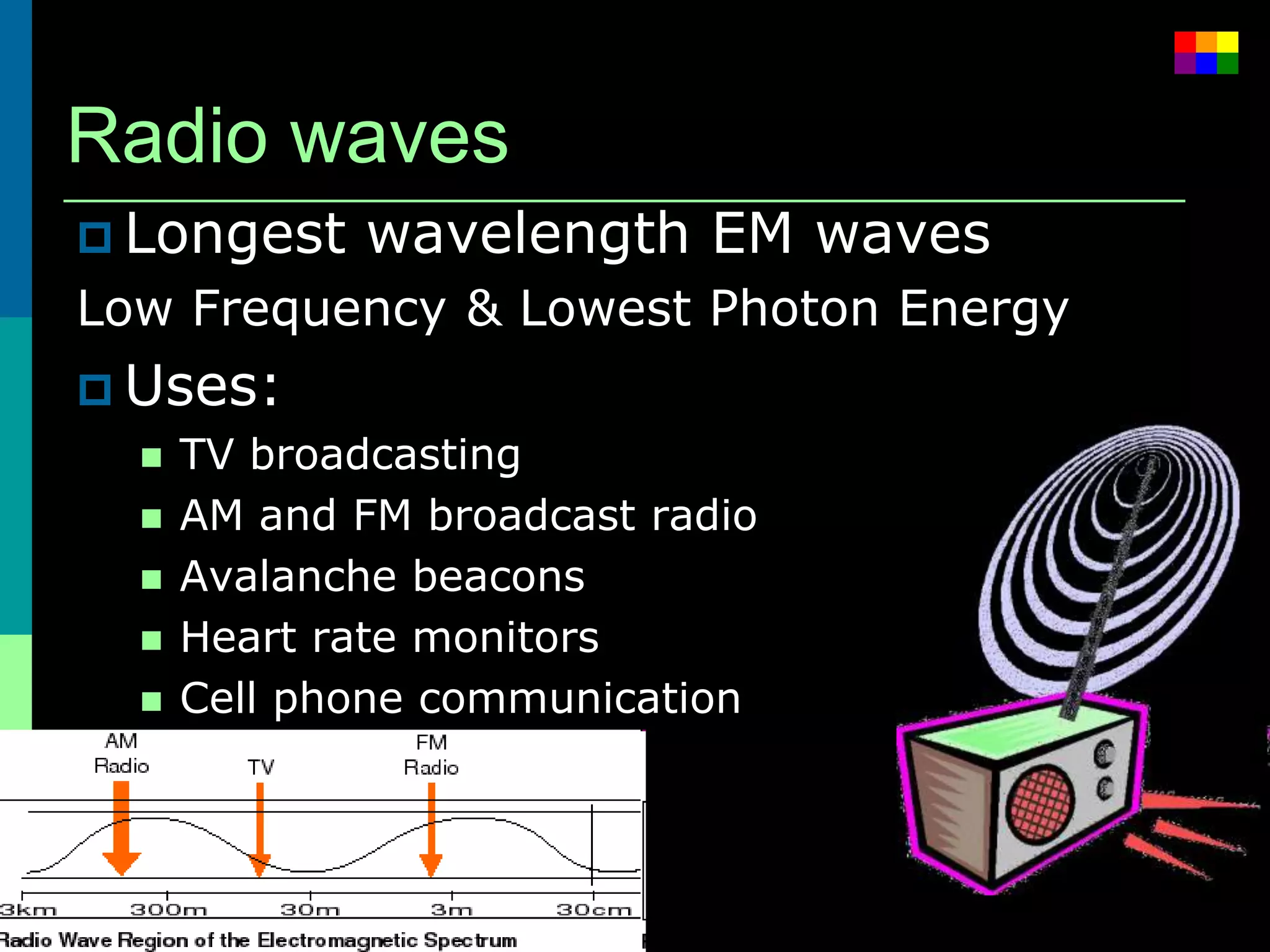
Radio waves
 Longest     wavelength EM waves
Low Frequency & Lowest Photon Energy
 Uses:
     TV broadcasting
     AM and FM broadcast radio
     Avalanche beacons
     Heart rate monitors
     Cell phone communication
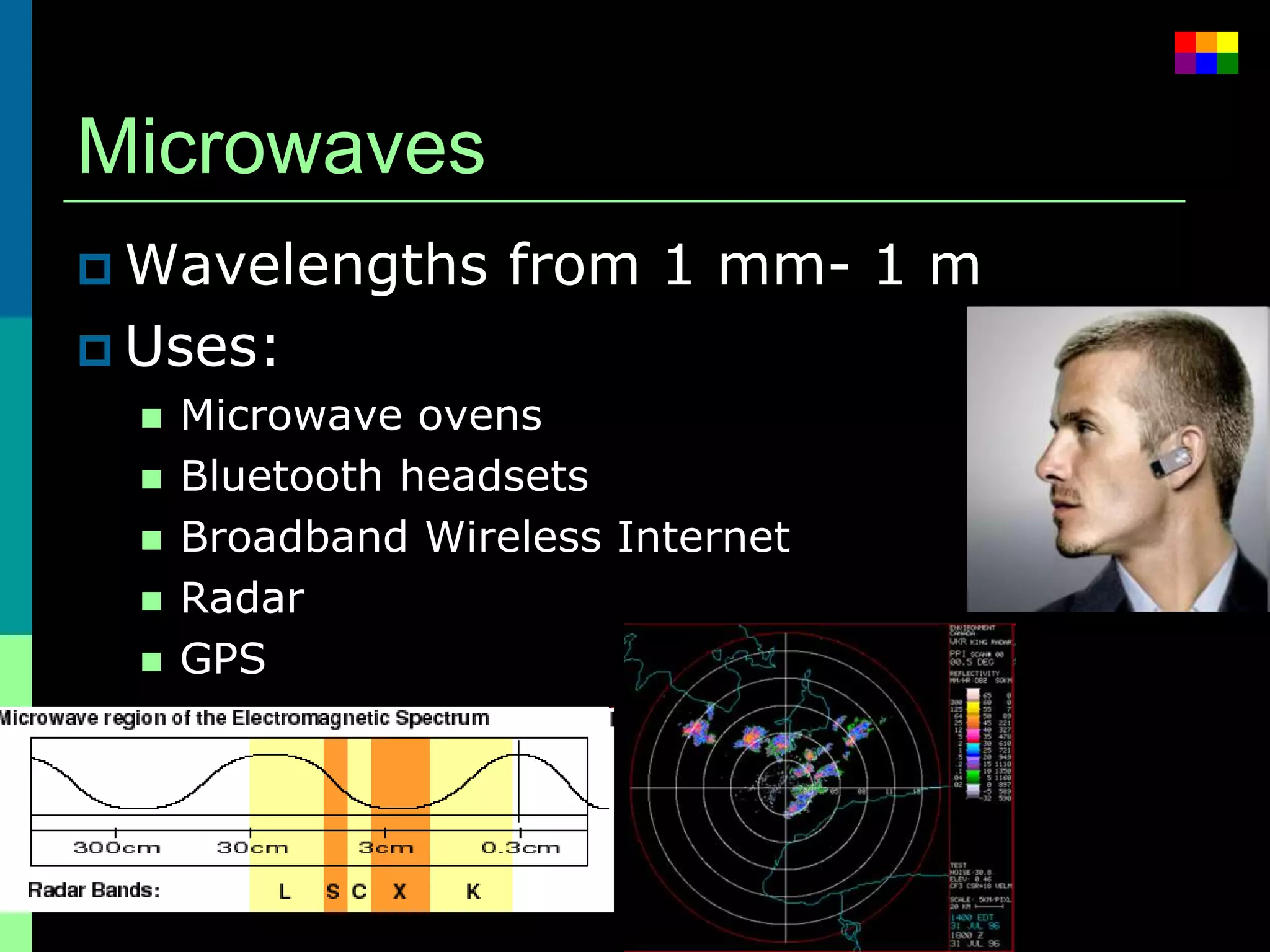
Microwaves
 Wavelengths       from 1 mm- 1 m
 Uses:
     Microwave ovens
     Bluetooth headsets
     Broadband Wireless Internet
     Radar
     GPS
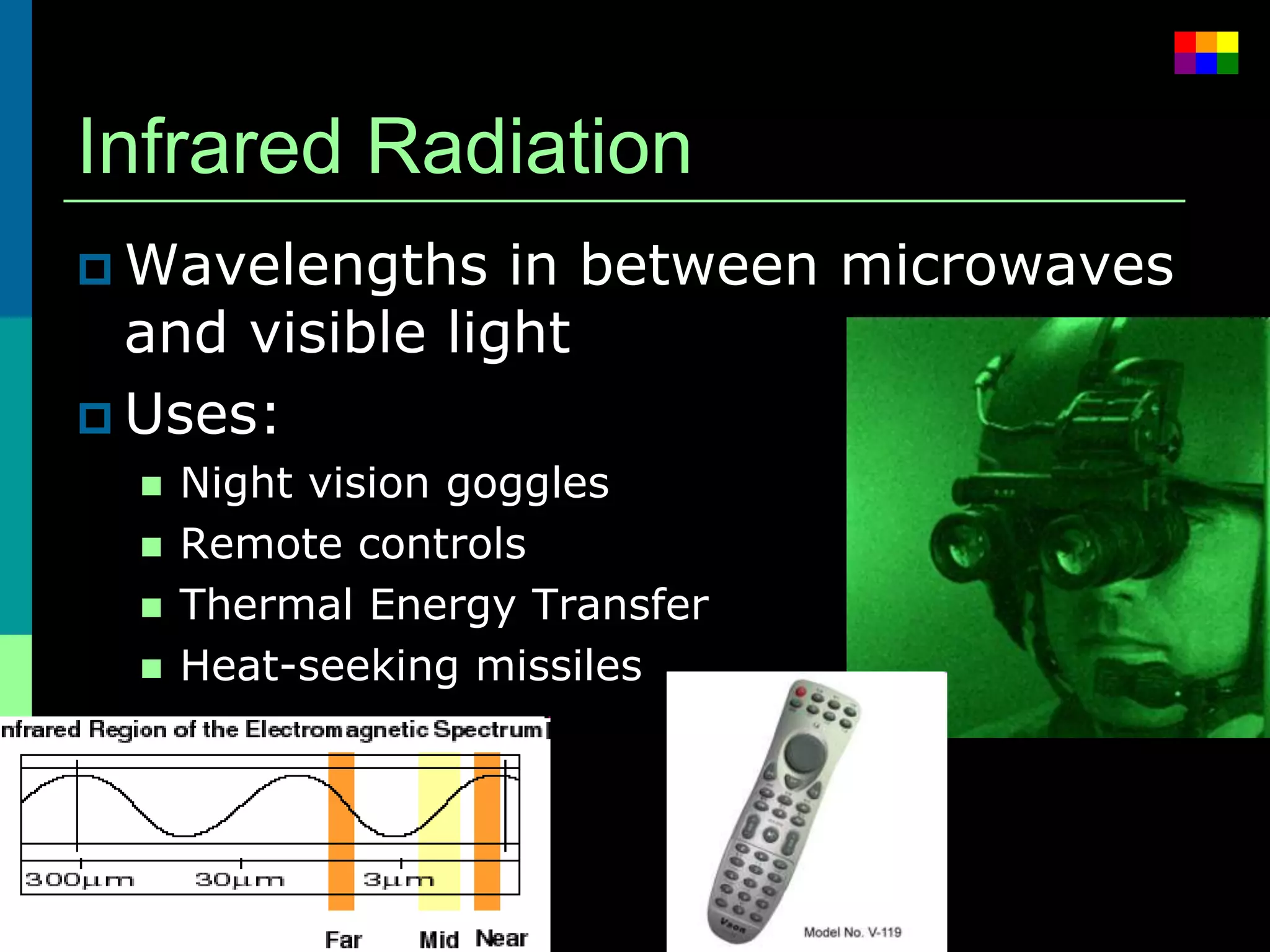
Infrared Radiation
 Wavelengths    in between microwaves
  and visible light
 Uses:
     Night vision goggles
     Remote controls
     Thermal Energy Transfer
     Heat-seeking missiles
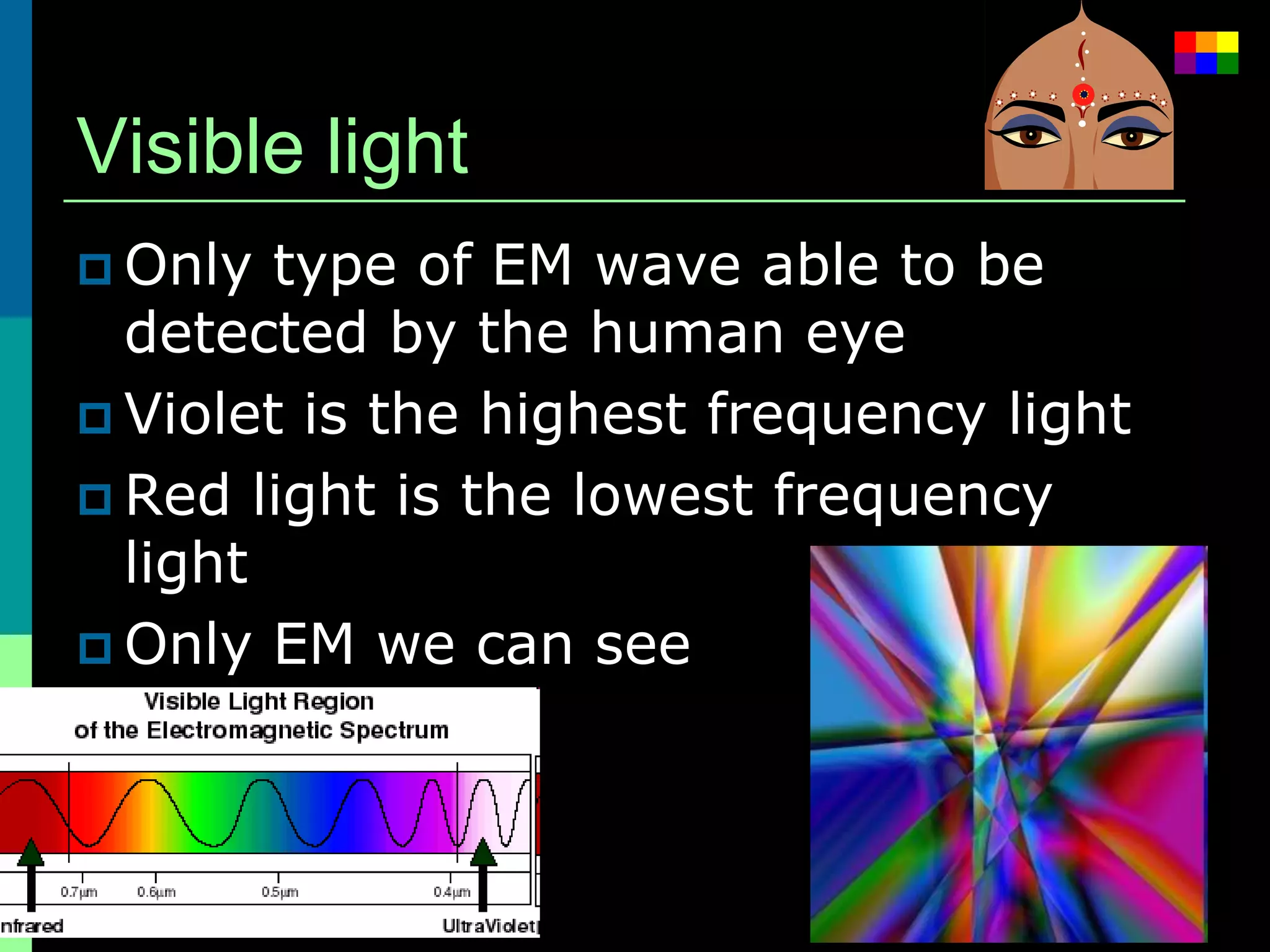
Visible light
 Only  type of EM wave able to be
  detected by the human eye
 Violet is the highest frequency light
 Red light is the lowest frequency
  light
 Only EM we can see
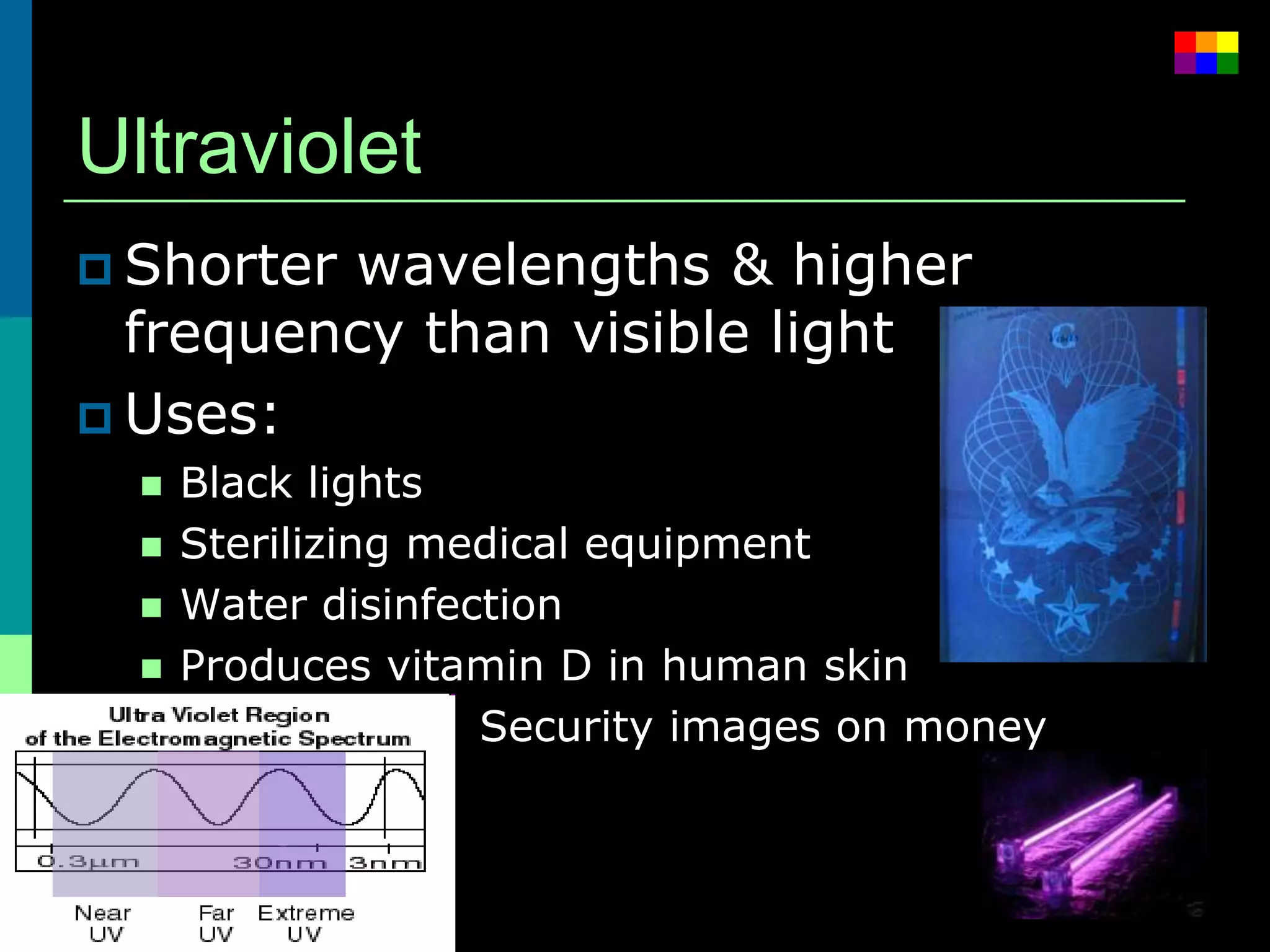
Ultraviolet
 Shorterwavelengths & higher
  frequency than visible light
 Uses:
     Black lights
     Sterilizing medical equipment
     Water disinfection
     Produces vitamin D in human skin
                   Security images on money
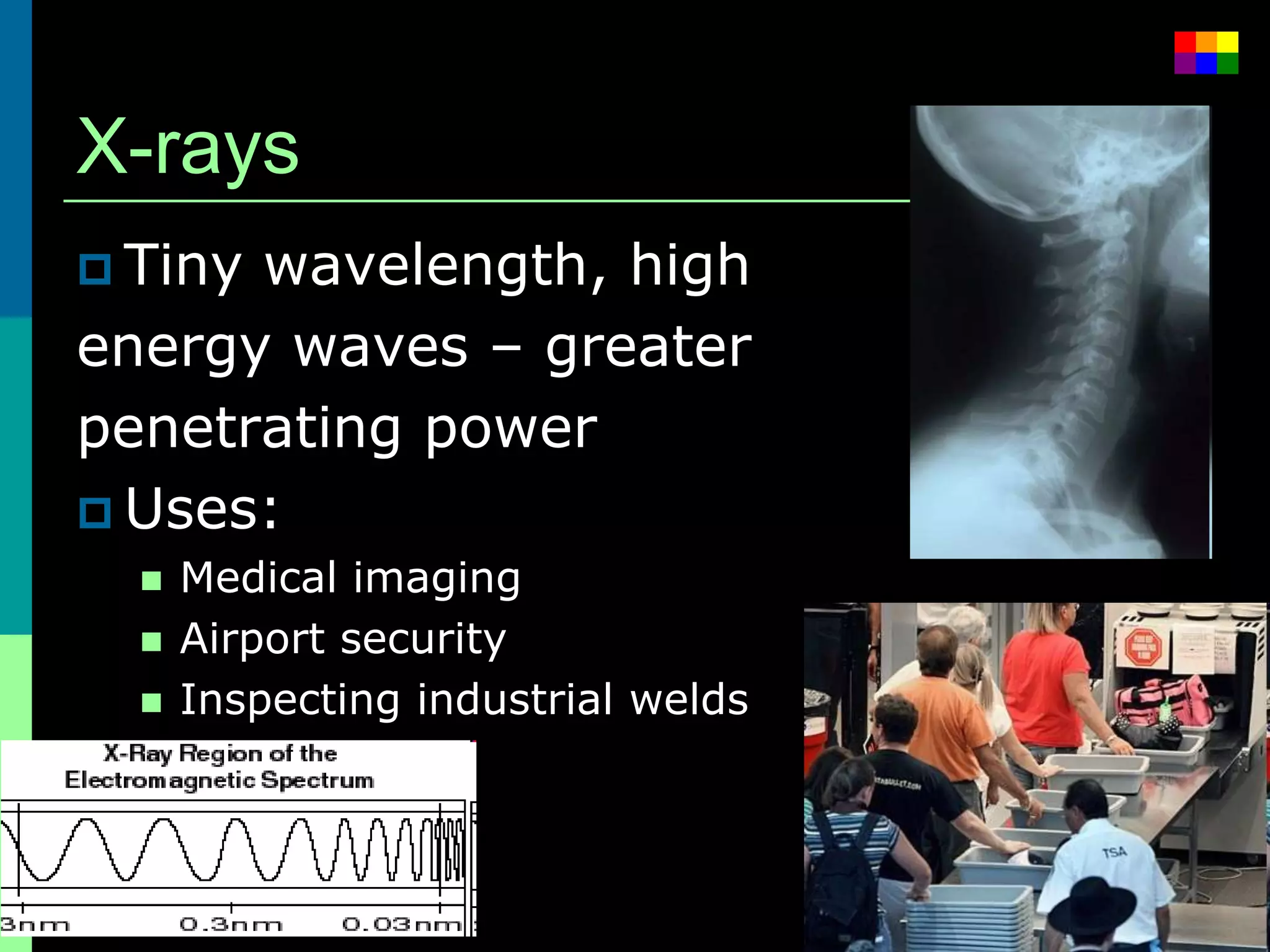
X-rays
 Tinywavelength, high
energy waves – greater
penetrating power
 Uses:
     Medical imaging
     Airport security
     Inspecting industrial welds
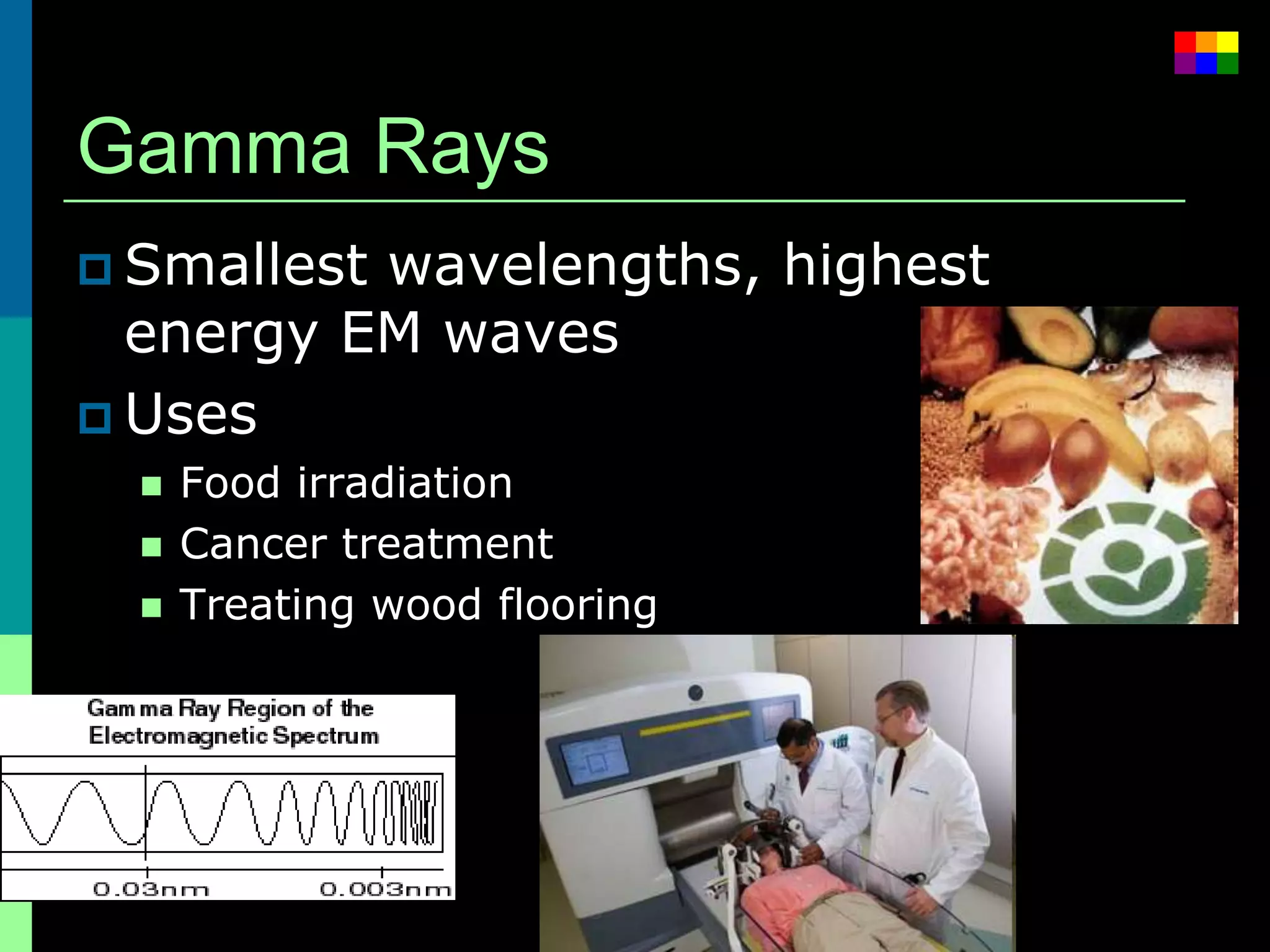
Gamma Rays
 Smallestwavelengths, highest
  energy EM waves
 Uses
     Food irradiation
     Cancer treatment
     Treating wood flooring
Light and Color


Type of matter in an object
determines the amount of
light it absorbs and reflects.
Can it Reflect Light?
What types of objects or materials can reflect light? Put an
X next to the things you think can reflect light.
Explain your thinking. Describe the “rule” or the reasoning
you used to decide if something can reflect light.

    ___   water                  ___   red apple
    ___   gray rock              ___   rough cardboard
    ___   leaf                   ___   the Moon
    ___   mirror                 ___   rusty nail
    ___   glass                  ___   clouds
    ___   sand                   ___   soil
    ___   potato skin            ___   milk
    ___   wax paper              ___   bedsheet
    ___   tomato soup            ___   brand new penny
    ___   crumpled paper         ___   wood
    ___   shiny metal            ___   old tarnished penny
    ___   dull metal             ___   smooth sheet of
                                         aluminum foil
Light and Color
1.Opaque materials – absorbs or reflects
all light, you can not see through them

2.Transparent materials – allow light to
pass through, you can see through them

3.Translucent materials – allow some of
the light to pass through; you can not
clearly see objects through them
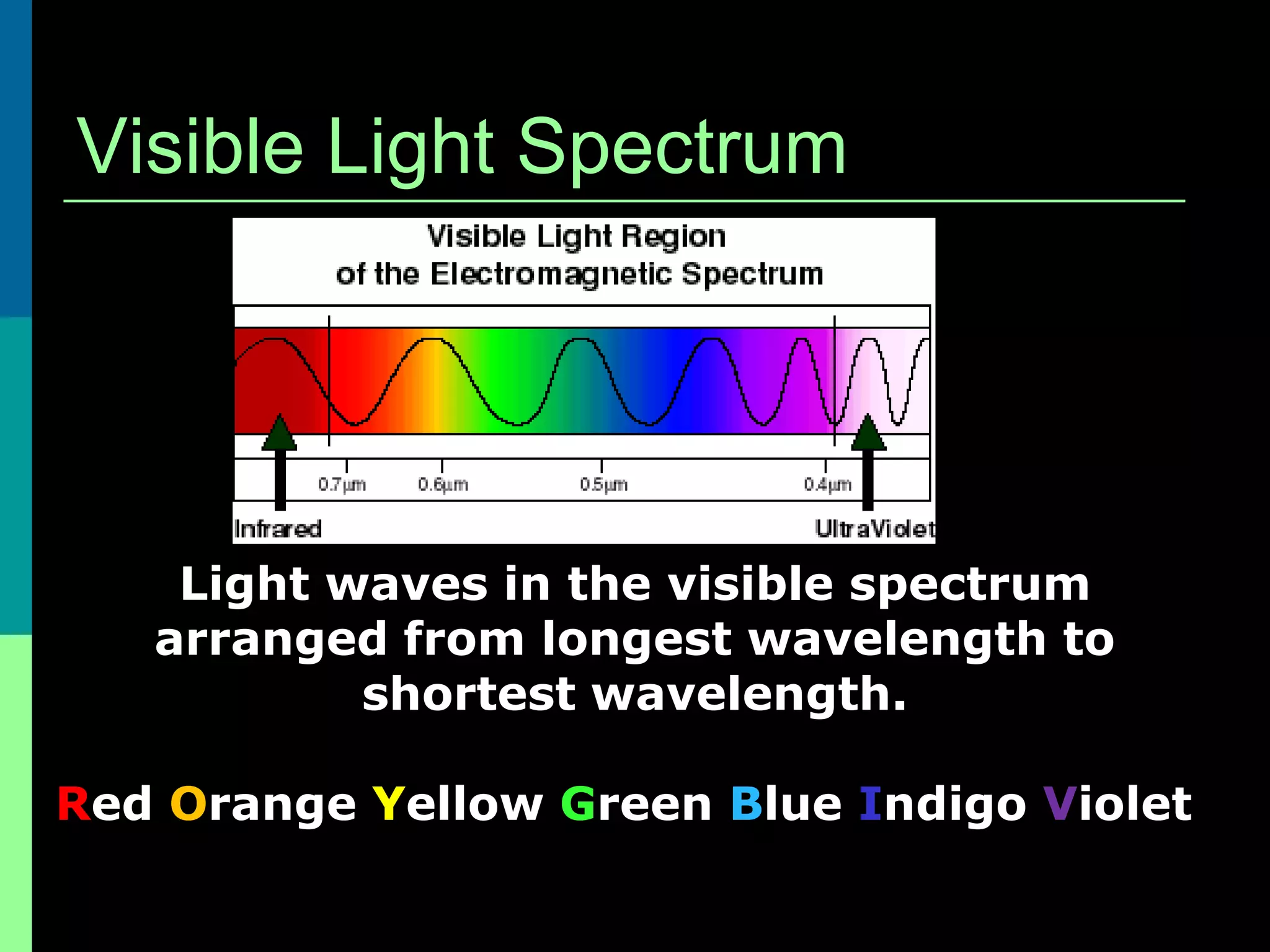
Visible Light Spectrum


    Light waves in the visible spectrum
   arranged from longest wavelength to
           shortest wavelength.

Red Orange Yellow Green Blue Indigo Violet
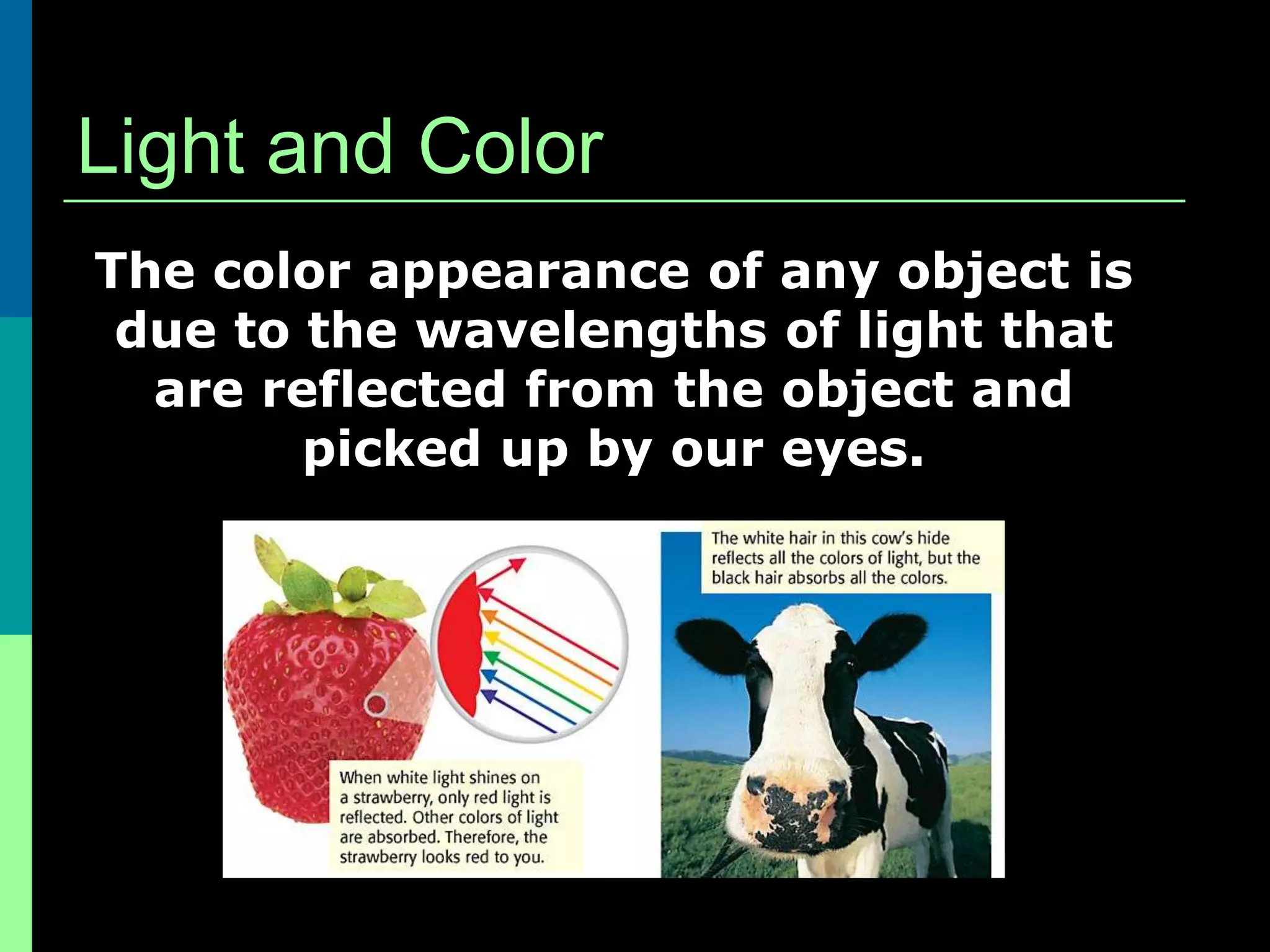
Light and Color
The color appearance of any object is
 due to the wavelengths of light that
  are reflected from the object and
        picked up by our eyes.
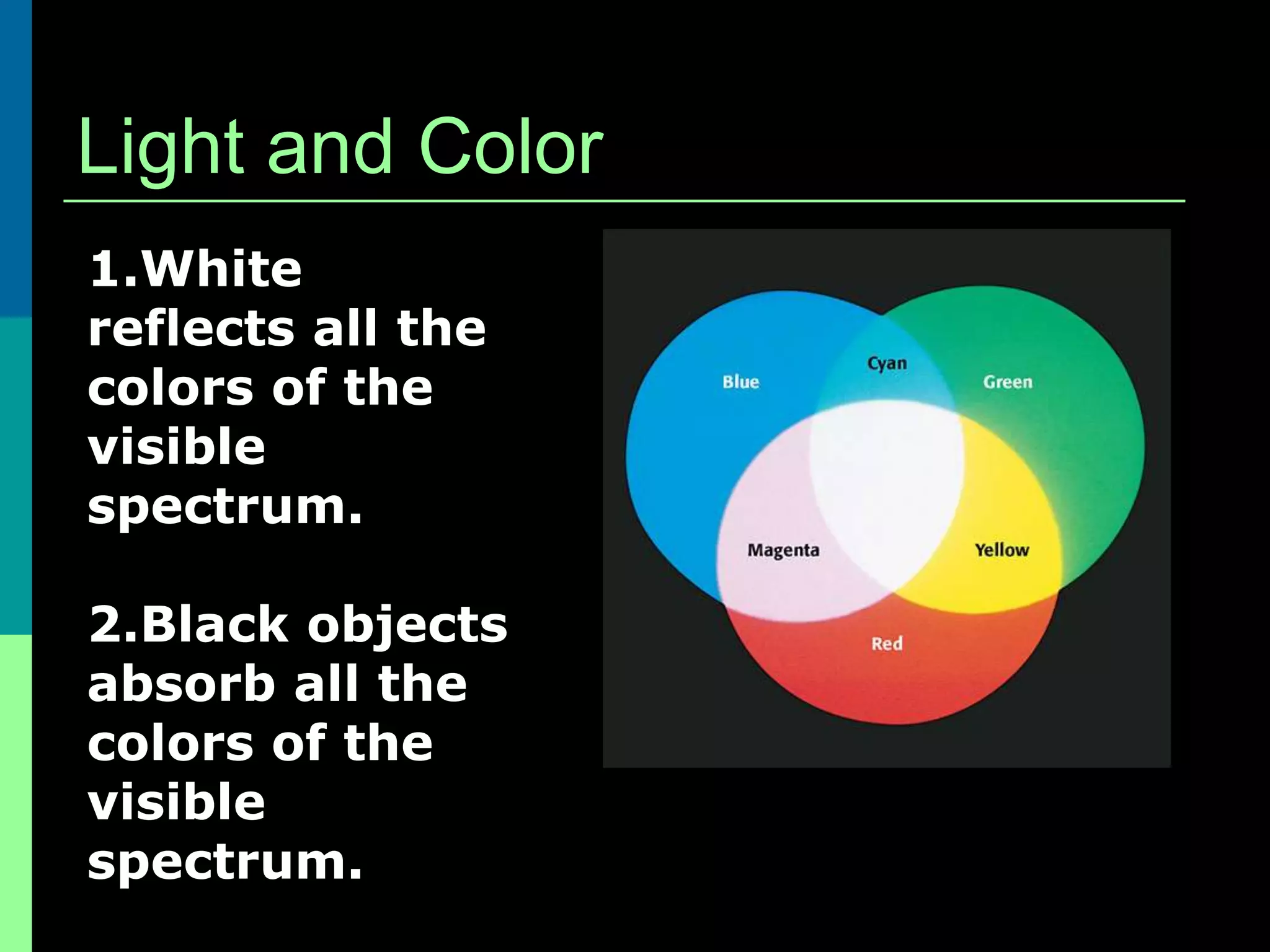
Light and Color
1.White
reflects all the
colors of the
visible
spectrum.

2.Black objects
absorb all the
colors of the
visible
spectrum.
Lenses Bend Light
 Lensesare used in
 microscopes, telescopes, binoculars,
 cameras, magnifying glasses, and
 eyeglasses.
The Refraction of Light
 When  light travels from some
 transparent substances through others
 –like air into water or glass into air, the
 light bends.

   Convex Lenses
   Concave Lenses
   Prisms
Convex Lenses
A  magnifying glass is an example of
  a convex lens.
 A convex lens is thicker in the middle
  of the lens than it is at the ends.
 A convex lens bends the light and
  makes the object look larger or
  magnify it.
Concave Lenses
A  concave lens is thinner in the
  middle than at the ends.
 Concave lenses cause the light to
  spread out after light passes
  through them.
 Concave lenses are used in glasses
  for people who are short-sighted
  or cannot clearly see things far
  away.
Prisms
A  prism bends the light in such a
  way that it separates it into different
  parts.
 Normal white light contains all the
  colors of the rainbow.
 Prisms can separate the different
  colors because each color bends
  differently when it passes through a
  prism.

Electromagnetic spectrum #1

  • 1.
  • 2.
    Science Standard S8P5: Students willexplore the wave nature of sound and electromagnetic radiation.
  • 3.
    Essential Question What aresome everyday uses of electromagnetic radiation (or waves)?
  • 4.
    Waves… a review Most waves are either longitudinal or transverse.  Sound waves are longitudinal.  But all electromagnetic waves are transverse…
  • 5.
  • 6.
    Electromagnetic waves  Produced by the movement of electrically charged particles  Cantravel in a “vacuum” (they do NOT need a medium)
  • 7.
    Electromagnetic waves  Travelatthe speed of light (300,000,000 m/s in a vacuum ) * Travels slower when passing through a medium  Also known as EM waves because they are surrounded by: i.Electric fields ii.Magnetic fields
  • 8.
    Wave-particle Duality  Lightcanbehave like a wave or like a particle  Travels in bundles of energy  Bundles act like small particles A “particle” of light is called a photon
  • 9.
    Wave-particle Duality  Allelectromagneticwaves travel at the same speed  Frequency and wavelength are used to classify the waves in the electromagnetic spectrum
  • 10.
  • 11.
    Electromagnetic Spectrum  The electromagnetic spectrum is the complete range of electromagnetic waves placed in order of increasing frequency.
  • 12.
  • 14.
    Electromagnetic Spectrum  Asthe frequency increases: a.Wavelength decreases b.Photon penetrating energy increases
  • 15.
    Radio waves  Longest wavelength EM waves Low Frequency & Lowest Photon Energy  Uses:  TV broadcasting  AM and FM broadcast radio  Avalanche beacons  Heart rate monitors  Cell phone communication
  • 16.
    Microwaves  Wavelengths from 1 mm- 1 m  Uses:  Microwave ovens  Bluetooth headsets  Broadband Wireless Internet  Radar  GPS
  • 17.
    Infrared Radiation  Wavelengths in between microwaves and visible light  Uses:  Night vision goggles  Remote controls  Thermal Energy Transfer  Heat-seeking missiles
  • 18.
    Visible light  Only type of EM wave able to be detected by the human eye  Violet is the highest frequency light  Red light is the lowest frequency light  Only EM we can see
  • 19.
    Ultraviolet  Shorterwavelengths &higher frequency than visible light  Uses:  Black lights  Sterilizing medical equipment  Water disinfection  Produces vitamin D in human skin  Security images on money
  • 20.
    X-rays  Tinywavelength, high energywaves – greater penetrating power  Uses:  Medical imaging  Airport security  Inspecting industrial welds
  • 21.
    Gamma Rays  Smallestwavelengths,highest energy EM waves  Uses  Food irradiation  Cancer treatment  Treating wood flooring
  • 22.
    Light and Color Typeof matter in an object determines the amount of light it absorbs and reflects.
  • 23.
    Can it ReflectLight? What types of objects or materials can reflect light? Put an X next to the things you think can reflect light. Explain your thinking. Describe the “rule” or the reasoning you used to decide if something can reflect light.  ___ water  ___ red apple  ___ gray rock  ___ rough cardboard  ___ leaf  ___ the Moon  ___ mirror  ___ rusty nail  ___ glass  ___ clouds  ___ sand  ___ soil  ___ potato skin  ___ milk  ___ wax paper  ___ bedsheet  ___ tomato soup  ___ brand new penny  ___ crumpled paper  ___ wood  ___ shiny metal  ___ old tarnished penny  ___ dull metal  ___ smooth sheet of aluminum foil
  • 24.
    Light and Color 1.Opaquematerials – absorbs or reflects all light, you can not see through them 2.Transparent materials – allow light to pass through, you can see through them 3.Translucent materials – allow some of the light to pass through; you can not clearly see objects through them
  • 25.
    Visible Light Spectrum Light waves in the visible spectrum arranged from longest wavelength to shortest wavelength. Red Orange Yellow Green Blue Indigo Violet
  • 26.
    Light and Color Thecolor appearance of any object is due to the wavelengths of light that are reflected from the object and picked up by our eyes.
  • 27.
    Light and Color 1.White reflectsall the colors of the visible spectrum. 2.Black objects absorb all the colors of the visible spectrum.
  • 28.
    Lenses Bend Light Lensesare used in microscopes, telescopes, binoculars, cameras, magnifying glasses, and eyeglasses.
  • 29.
    The Refraction ofLight  When light travels from some transparent substances through others –like air into water or glass into air, the light bends.  Convex Lenses  Concave Lenses  Prisms
  • 30.
    Convex Lenses A magnifying glass is an example of a convex lens.  A convex lens is thicker in the middle of the lens than it is at the ends.  A convex lens bends the light and makes the object look larger or magnify it.
  • 31.
    Concave Lenses A concave lens is thinner in the middle than at the ends.  Concave lenses cause the light to spread out after light passes through them.  Concave lenses are used in glasses for people who are short-sighted or cannot clearly see things far away.
  • 32.
    Prisms A prismbends the light in such a way that it separates it into different parts.  Normal white light contains all the colors of the rainbow.  Prisms can separate the different colors because each color bends differently when it passes through a prism.