1
ELECTRIC DRIVE
Dr. A. Ravi
Professor/EEE
FRANCIS XAVIER ENGINEERING COLLEGE
TIRUNELVELI INDIA
2
Electric Drive
The system which is used for controlling the
motion of an electrical machine, such type of
system is called an electrical drive.
3
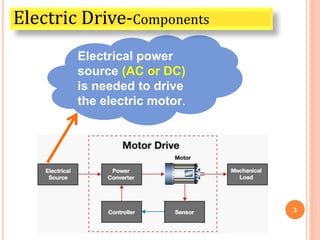
Electrical power
source (AC or DC)
is needed to drive
the electric motor.
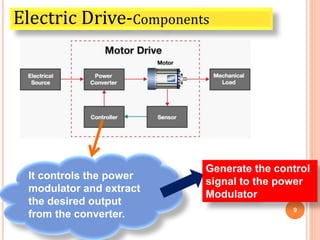
Electric Drive-Components
4
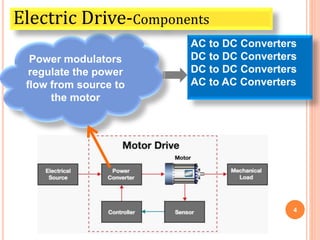
Power modulators
regulate the power
flow from source to
the motor
AC to DC Converters
DC to DC Converters
DC to DC Converters
AC to AC Converters
Electric Drive-Components
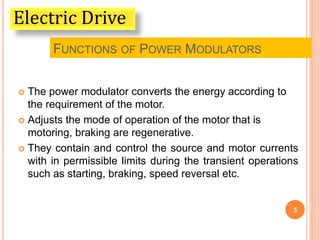
FUNCTIONS OF POWER MODULATORS
 The power modulator converts the energy according to
the requirement of the motor.
 Adjusts the mode of operation of the motor that is
motoring, braking are regenerative.
 They contain and control the source and motor currents
with in permissible limits during the transient operations
such as starting, braking, speed reversal etc.
5
Electric Drive
6
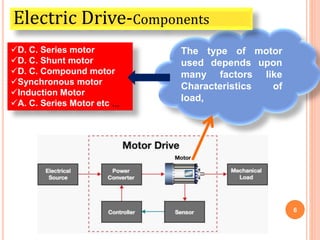
The type of motor
used depends upon
many factors like
Characteristics of
load,
Electric Drive-Components
D. C. Series motor
D. C. Shunt motor
D. C. Compound motor
Synchronous motor
Induction Motor
A. C. Series Motor etc .,,
7
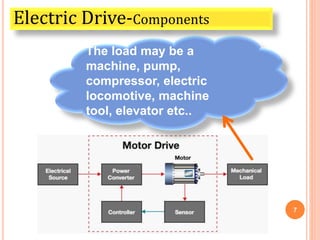
The load may be a
machine, pump,
compressor, electric
locomotive, machine
tool, elevator etc..
Electric Drive-Components
8
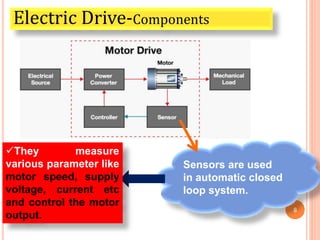
Sensors are used
in automatic closed
loop system.
Electric Drive-Components
They measure
various parameter like
motor speed, supply
voltage, current etc
and control the motor
output.
9
It controls the power
modulator and extract
the desired output
from the converter.
Electric Drive-Components
Generate the control
signal to the power
Modulator
 The electric drive has very large range of torque,
speed and power.
 Their working is independent of the environmental
condition.
 The electric drives are free from pollution.
 The electric drives operate on all the quadrants of
speed torque plane.
 The drive can easily be started and it does not
require any refuelling.
 The efficiency of the drives is high because fewer
losses occur on it. 10
Advantages of Electric Drives
 The application of the drive is limited because it
cannot use in a place where the power supply is
not available.
 It can cause noise pollution.
 The initial cost of the system is high.
 It has a poor dynamic response.
 The output power obtained from the drive is low.
 During the breakdown of conductors or short
circuit, the system may get damaged due to which
several problems occur.
11
Disadvantages of Electric Drives
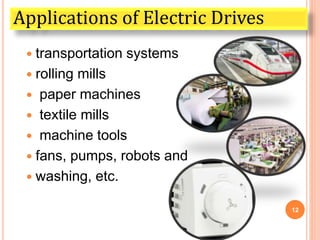
 transportation systems
 rolling mills
 paper machines
 textile mills
 machine tools
 fans, pumps, robots and
 washing, etc.
12
Applications of Electric Drives
13

Electric drives

  • 1.
    1 ELECTRIC DRIVE Dr. A.Ravi Professor/EEE FRANCIS XAVIER ENGINEERING COLLEGE TIRUNELVELI INDIA
  • 2.
    2 Electric Drive The systemwhich is used for controlling the motion of an electrical machine, such type of system is called an electrical drive.
  • 3.
    3 Electrical power source (ACor DC) is needed to drive the electric motor. Electric Drive-Components
  • 4.
    4 Power modulators regulate thepower flow from source to the motor AC to DC Converters DC to DC Converters DC to DC Converters AC to AC Converters Electric Drive-Components
  • 5.
    FUNCTIONS OF POWERMODULATORS  The power modulator converts the energy according to the requirement of the motor.  Adjusts the mode of operation of the motor that is motoring, braking are regenerative.  They contain and control the source and motor currents with in permissible limits during the transient operations such as starting, braking, speed reversal etc. 5 Electric Drive
  • 6.
    6 The type ofmotor used depends upon many factors like Characteristics of load, Electric Drive-Components D. C. Series motor D. C. Shunt motor D. C. Compound motor Synchronous motor Induction Motor A. C. Series Motor etc .,,
  • 7.
    7 The load maybe a machine, pump, compressor, electric locomotive, machine tool, elevator etc.. Electric Drive-Components
  • 8.
    8 Sensors are used inautomatic closed loop system. Electric Drive-Components They measure various parameter like motor speed, supply voltage, current etc and control the motor output.
  • 9.
    9 It controls thepower modulator and extract the desired output from the converter. Electric Drive-Components Generate the control signal to the power Modulator
  • 10.
     The electricdrive has very large range of torque, speed and power.  Their working is independent of the environmental condition.  The electric drives are free from pollution.  The electric drives operate on all the quadrants of speed torque plane.  The drive can easily be started and it does not require any refuelling.  The efficiency of the drives is high because fewer losses occur on it. 10 Advantages of Electric Drives
  • 11.
     The applicationof the drive is limited because it cannot use in a place where the power supply is not available.  It can cause noise pollution.  The initial cost of the system is high.  It has a poor dynamic response.  The output power obtained from the drive is low.  During the breakdown of conductors or short circuit, the system may get damaged due to which several problems occur. 11 Disadvantages of Electric Drives
  • 12.
     transportation systems rolling mills  paper machines  textile mills  machine tools  fans, pumps, robots and  washing, etc. 12 Applications of Electric Drives
  • 13.