Electrical drive
Rameshwar Dudhe
2016618
What is drive
 System employed for motion controlled are
called drive.
 So we say when a systems employed for
motion controlled then such system are called
drives.
 And what that drives system employees an
electrical motors for creating some motion
electrically is known as electrical drive.
 An electrical drive can be defined as an
electromechanical energy tp impact motion to
different machines and mechanisms for various kinds
of process control.
 Generally a drive system is basically has a
mechanical load a transmission sysytem and prime
mover may be I.C engine,stteam engine.
Advantages
 Flexiable control characterstics.
 Startinof g and breaking is easy and simple.
 Provide a wide range of torques over a wide
range of speed (both ac and dc motor)
 Availabilty of wide range of electrical power
 Works to almost may any type of enviromental
conditions.
 No exhaust gases emitted.
 Can be started and acceleration at very short
time
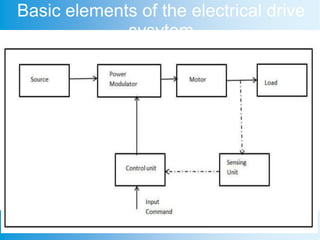
Basic elements of the electrical drive
sysytem
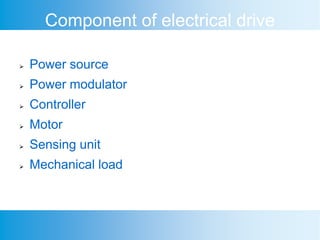
Component of electrical drive
 Power source
 Power modulator
 Controller
 Motor
 Sensing unit
 Mechanical load
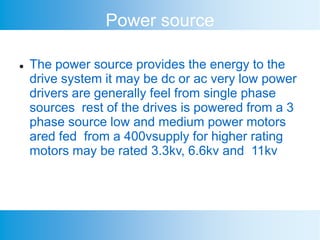
Power source
 The power source provides the energy to the
drive system it may be dc or ac very low power
drivers are generally feel from single phase
sources rest of the drives is powered from a 3
phase source low and medium power motors
ared fed from a 400vsupply for higher rating
motors may be rated 3.3kv, 6.6kv and 11kv
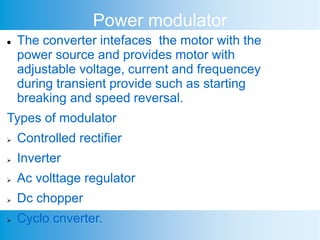
Power modulator
 The converter intefaces the motor with the
power source and provides motor with
adjustable voltage, current and frequencey
during transient provide such as starting
breaking and speed reversal.
Types of modulator
 Controlled rectifier
 Inverter
 Ac volttage regulator
 Dc chopper
 Cyclo cnverter.
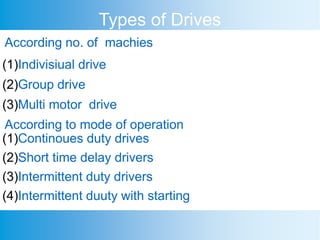
Types of Drives
(1)Indivisiual drive
(2)Group drive
(3)Multi motor drive
According no. of machies
According to mode of operation
(1)Continoues duty drives
(2)Short time delay drivers
(3)Intermittent duty drivers
(4)Intermittent duuty with starting
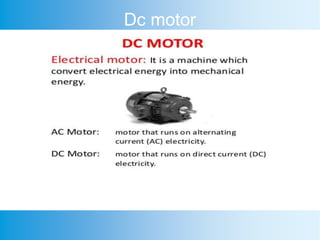
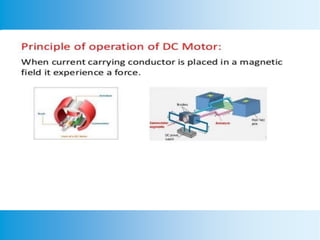
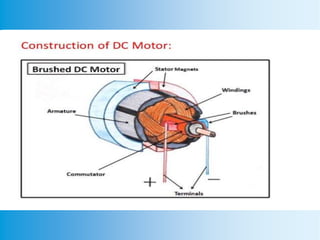
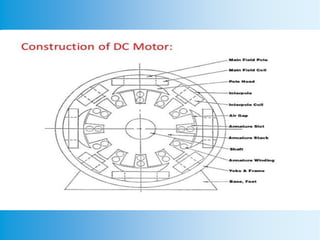
Dc motor
electrical drive
electrical drive
electrical drive
electrical drive
electrical drive
electrical drive

electrical drive

  • 1.
  • 2.
    What is drive System employed for motion controlled are called drive.  So we say when a systems employed for motion controlled then such system are called drives.  And what that drives system employees an electrical motors for creating some motion electrically is known as electrical drive.
  • 3.
     An electricaldrive can be defined as an electromechanical energy tp impact motion to different machines and mechanisms for various kinds of process control.  Generally a drive system is basically has a mechanical load a transmission sysytem and prime mover may be I.C engine,stteam engine.
  • 4.
    Advantages  Flexiable controlcharacterstics.  Startinof g and breaking is easy and simple.  Provide a wide range of torques over a wide range of speed (both ac and dc motor)  Availabilty of wide range of electrical power  Works to almost may any type of enviromental conditions.  No exhaust gases emitted.  Can be started and acceleration at very short time
  • 5.
    Basic elements ofthe electrical drive sysytem
  • 6.
    Component of electricaldrive  Power source  Power modulator  Controller  Motor  Sensing unit  Mechanical load
  • 7.
    Power source  Thepower source provides the energy to the drive system it may be dc or ac very low power drivers are generally feel from single phase sources rest of the drives is powered from a 3 phase source low and medium power motors ared fed from a 400vsupply for higher rating motors may be rated 3.3kv, 6.6kv and 11kv
  • 8.
    Power modulator  Theconverter intefaces the motor with the power source and provides motor with adjustable voltage, current and frequencey during transient provide such as starting breaking and speed reversal. Types of modulator  Controlled rectifier  Inverter  Ac volttage regulator  Dc chopper  Cyclo cnverter.
  • 9.
    Types of Drives (1)Indivisiualdrive (2)Group drive (3)Multi motor drive According no. of machies According to mode of operation (1)Continoues duty drives (2)Short time delay drivers (3)Intermittent duty drivers (4)Intermittent duuty with starting
  • 10.