A
Presentation
on

“Parallel Operation Of Alternators And
Load Sharing”

Presented By
Vikas Jangir
Electrical Engineering
Contents










Introduction
Why this system is required
Parallel operation of alternators
Parallel alternator arrangement
Process
Conditions
Applications
Advantages
Summery & References
Introduction








It is necessary to provide an uninterrupted continuous
power supply. In case of an isolated plant, a
considerable amount of reserve capacity would be
required to ensure the continuity of the supply.
Moreover some units are required either to be lightly
loaded or floating on the lines in order to meet the
unpredicted sudden increase in demand.
There will be two or more alternators connected in
parallel called parallel connection of alternators.
The parallel operation of power station is essentially am
extension of parallel operation of alternators, with the
exception of resistance and reactance's of the interconnectors.
Why this system required.





uninterrupted continuous power supply.
For fulfill the load requirement.
Provide increase the overall efficiency.
For reduce per unit generating cost.
Parallel operation of alternators.
•

•

•

The easiest way to setup a parallel system is to use
alternators that are exactly alike, or at least have the same
output rating and alternator pitch.
Another flexible pitch to backing up your power
requirement is to have two or more alternators of variable
output.
In either scenario these can be connected in parallel with
paralleling switchgear to achieve maximum output during
peak requirement or the desired minimal output during other
times.
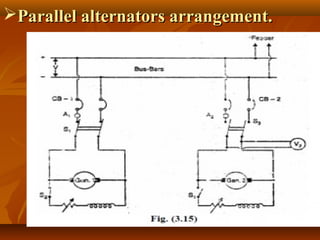
Parallel alternators arrangement.
process








In the operation there are two alternators connected in
parallel.
Bus-bar, (to which a number of alternators are connected.)
The process of connecting an alternator in parallel with
another alternator or with common bus-bar is called
synchronizing.
The system is establish on the base of requirement of load.
In the process of A.C generator mechanical input is
provided to rotate the alternator.
Conditions.











For make system efficient and free from dangerous problem
then some conditions are required.
The terminal voltage of incoming alternator must be equal
to that of another alternator the bus-bar.
Frequency.
Both alternators voltages are same or the bus-bar voltage
relative to the load.
No circulating current b/w the winding and bus-bar and the
incoming alternator.
Phase sequences must be same.
Applications.




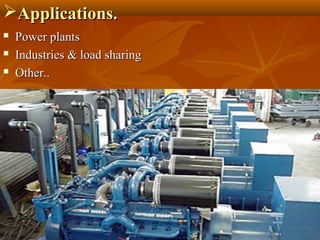
Power plants
Industries & load sharing
Other..
Advantages









Load sharing
Efficiency
Reduce losses
Easy to operate
Cheaper (reduce capital cost)
Continuity of supply
Save of fuel
Other many advantages are…
Summery




In the parallel operation of alternators, we have learn about
the hole system. And know the main advantages by this and
how we do in our electricity system, here we also studied
about the process of parallel operation and the applications
of these type of system.
Behind of everything there are one term that is WHY and
here we know about this and how we utilize it in our system
and what are the main work for complete the task of
electricity.
Questions..….?
Thanku.

Parallel Operation on Alternators.

  • 1.
    A Presentation on “Parallel Operation OfAlternators And Load Sharing” Presented By Vikas Jangir Electrical Engineering
  • 2.
    Contents          Introduction Why this systemis required Parallel operation of alternators Parallel alternator arrangement Process Conditions Applications Advantages Summery & References
  • 3.
    Introduction     It is necessaryto provide an uninterrupted continuous power supply. In case of an isolated plant, a considerable amount of reserve capacity would be required to ensure the continuity of the supply. Moreover some units are required either to be lightly loaded or floating on the lines in order to meet the unpredicted sudden increase in demand. There will be two or more alternators connected in parallel called parallel connection of alternators. The parallel operation of power station is essentially am extension of parallel operation of alternators, with the exception of resistance and reactance's of the interconnectors.
  • 4.
    Why this systemrequired.     uninterrupted continuous power supply. For fulfill the load requirement. Provide increase the overall efficiency. For reduce per unit generating cost.
  • 5.
    Parallel operation ofalternators. • • • The easiest way to setup a parallel system is to use alternators that are exactly alike, or at least have the same output rating and alternator pitch. Another flexible pitch to backing up your power requirement is to have two or more alternators of variable output. In either scenario these can be connected in parallel with paralleling switchgear to achieve maximum output during peak requirement or the desired minimal output during other times.
  • 6.
  • 7.
    process      In the operationthere are two alternators connected in parallel. Bus-bar, (to which a number of alternators are connected.) The process of connecting an alternator in parallel with another alternator or with common bus-bar is called synchronizing. The system is establish on the base of requirement of load. In the process of A.C generator mechanical input is provided to rotate the alternator.
  • 8.
    Conditions.       For make systemefficient and free from dangerous problem then some conditions are required. The terminal voltage of incoming alternator must be equal to that of another alternator the bus-bar. Frequency. Both alternators voltages are same or the bus-bar voltage relative to the load. No circulating current b/w the winding and bus-bar and the incoming alternator. Phase sequences must be same.
  • 9.
  • 10.
    Advantages         Load sharing Efficiency Reduce losses Easyto operate Cheaper (reduce capital cost) Continuity of supply Save of fuel Other many advantages are…
  • 11.
    Summery   In the paralleloperation of alternators, we have learn about the hole system. And know the main advantages by this and how we do in our electricity system, here we also studied about the process of parallel operation and the applications of these type of system. Behind of everything there are one term that is WHY and here we know about this and how we utilize it in our system and what are the main work for complete the task of electricity.
  • 12.
  • 13.