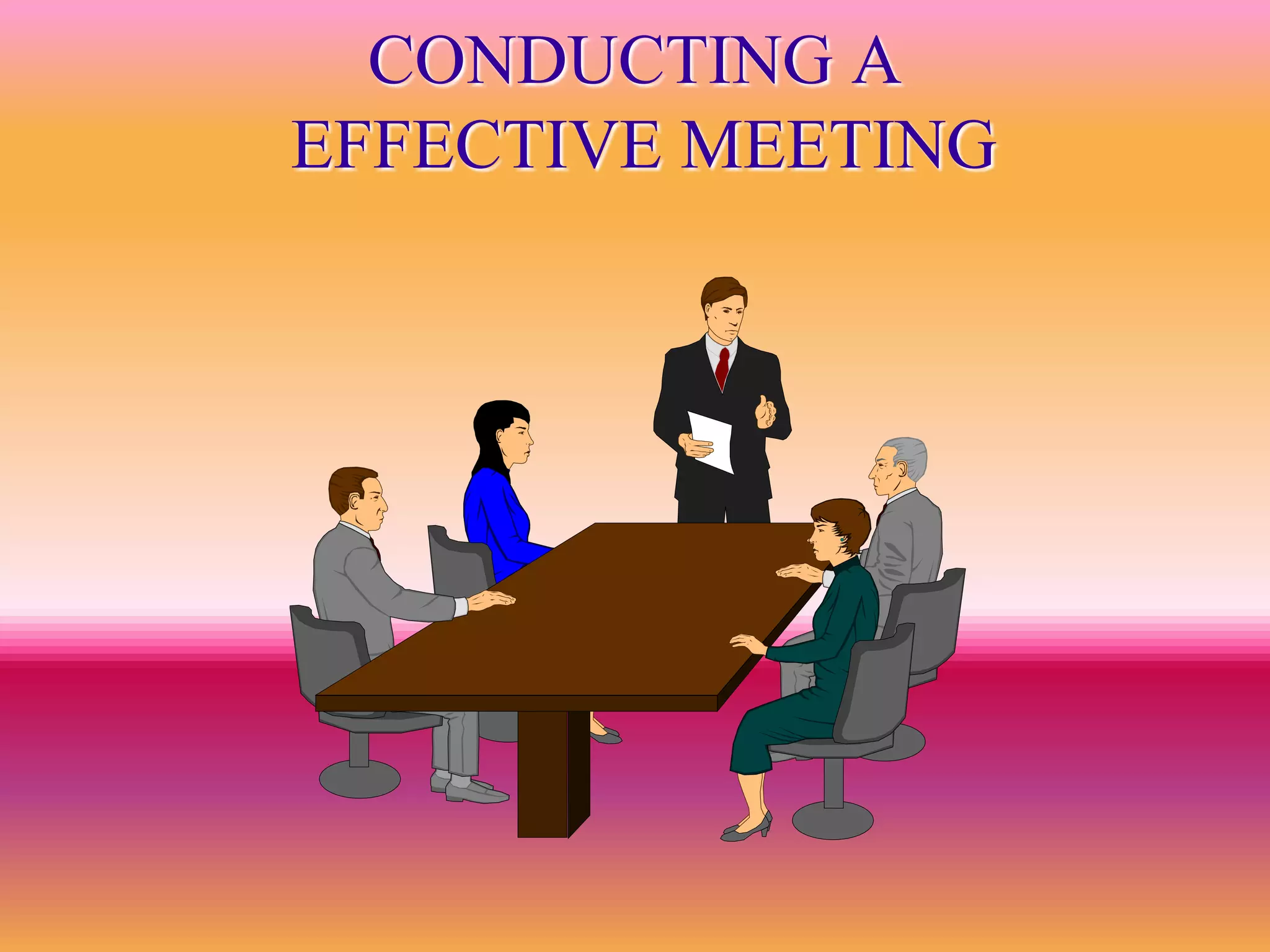
CONDUCTING A
EFFECTIVE MEETING
MEETING PREPARATION

   Continuous Cycle
     Preparation
     Conducting  a meeting
     Follow-up to meeting


                              Pawan Kumar Singh
INFORMATION GATHERING
   Collect ballot results
   Review correspondence
   Review minutes and action
    items from previous meeting
   Contact TG chairman
   Review jurisdiction list
   Contact staff manager
   Prepare agenda
Essential Questions

 What are some characteristics of
  effective meetings?
 What structures and processes can be
  used by teams to ensure that their
  meetings are effective?
 What facilitation skills can leaders and
  other team members use to encourage
  members to participate in effective
  meetings?
                              Pawan Kumar Yadav
Tips for Leading
           Effective Meetings

Effective Meetings Need to Have:

   Good structures
   Good processes
   Good leadership/facilitation
Creating Productive Processes
   Use agendas with timelines
      Have the group agree on the agenda ahead of time, or
      Come with a partial agenda and ask for input
      If there’s too much to do, prioritize and stick to your timelines
   Use roles and share them when possible
      Typical roles include: facilitator, recorder, timekeeper
      The facilitator’s role can be shared, even if there’s one “official” leader
      Shared roles help to create a sense that all members are equally valued
   Find ways to develop trust and a sense of shared responsibility
   Pay attention to the use of good communication skills
        Build in processing time to discuss what the group is doing well and
         what needs to be improved
WHY IS AN AGENDA
       IMPORTANT??

Prepares  chairman
Prepares attendees
Creates an interest
Clearly defines objectives
Provides a valuable organizational
 tool

                           PIYUSH PANDEY
INFORMATION AGENDA
          INCLUDES:

 Meeting   date, time,
  location
 General information
 Agenda/minutes approvals
 Agenda items with
  background/goals
 Old/New Business
 Summary/ Assignments
DISTRIBUTION OF AGENDAS

 Provide   electronic copy to staff manager
    –manager will post to members only
     section of home page
    –ensure copies are available at the
     meeting
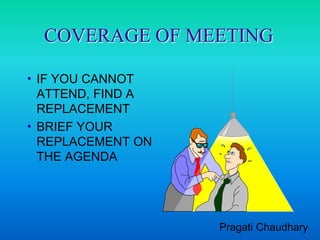
COVERAGE OF MEETING

 IFYOU CANNOT
  ATTEND, FIND A
  REPLACEMENT
 BRIEF YOUR
  REPLACEMENT ON
  THE AGENDA


                   Pragati Chaudhary
AT THE MEETING

 Is the room set properly
 Audio visual
 Number of seats
Creating Strong Structures

   Teams need to decide how they will be
    structured to conduct their business
     Decide on regular meeting times
     Identify group norms and purpose
     Decide how meetings will be conducted
      (e.g., use of agendas and roles, etc.)
     Talk about how decisions will be made
      (e.g., consensus, democratic, etc.)
     Talk about how members will communicate
      between meetings
Opening Discussion

   Think about a meeting that you’ve been to
    lately that you consider to have been
    effective.

   How do effective team meetings contribute
    to collaboration?


                                    Pragati Kumar
Think, Pair, Share Activity
   Individually, list as many ideas as you can
    about factors that contribute to effective team
    meetings.
   In pairs or triads, talk about your ideas and
    identify five ideas that and your partner
    consider most important to effective team
    meetings.
   Share your ideas with the whole group to
    begin thinking about tips for conducting
    effective meetings.
Paying Attention to Leadership and
           Facilitation

   Remember to balance the task and
    relationship aspects of collaboration
     Focus   both on getting tasks done and
      developing good relationships
     Try to read the energy of a group and adapt
      as necessary
     Use humor-- wisely


                                   PRAJESH RAWAT
Paying Attention to Facilitation
                   (cont’d)

   Use your role to help develop a sense of equity
    among team members
       Encourage equal participation among all members
       Remind members that participating means listening as well
        as talking
   Use your role as a way to identify when decisions are
    being made
       Note the difference between “discussion time” and “deciding
        time”
   When necessary, step in to help resolve conflict
    and/or to help in doing so
CONDUCTING A MEETING

 START  ON TIME!!
 Delegate the task of taking minutes if
  you haven’t a subcommittee secretary
 Review the agenda/obtain agreement on
  the meetings objectives and goals
 Revise agenda if necessary


                                Prakhar Gupta
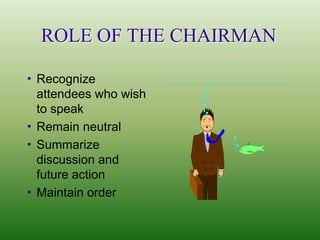
ROLE OF THE CHAIRMAN

 Recognize
  attendees who wish
  to speak
 Remain neutral
 Summarize
  discussion and
  future action
 Maintain order
WHY DO WE RUN OUT OF
         TIME??

 Repetition
 Wander  from the agenda
 Lengthy discussion of controversial
  issues


                           Prashant Kumar Singh
MEETING TECHNIQUES

 Focus   attention on the agenda
 Set time limits
 Identify different opinions
 Establish task groups/chairmen as
  needed
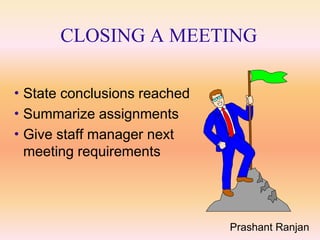
CLOSING A MEETING

 State conclusions reached
 Summarize assignments
 Give staff manager next
  meeting requirements


                              Prashant Ranjan
AFTER THE MEETING

   Prepare minutes as soon as possible
    after the meeting
       – actions and discussions that took place are
         fresh in the writer’s mind
       – committee members may rely on receipt of
         minutes before they implement promised
         actions
   Send electronic version of minutes to
    the staff manager
PREPARING MINUTES
Follow the format of the meeting agenda and
 include:
    –the committee number and title, date/location
     of meeting, and time called to order
    –an accurate summary of the decisions and
     conclusions reached
    –the assignments that were made
    –the follow-up action required
    –time of adjournment and notice of the next
     meeting date, time and location
Efficient meeting ppt

Efficient meeting ppt

  • 1.
  • 2.
    MEETING PREPARATION  Continuous Cycle  Preparation  Conducting a meeting  Follow-up to meeting Pawan Kumar Singh
  • 3.
    INFORMATION GATHERING  Collect ballot results  Review correspondence  Review minutes and action items from previous meeting  Contact TG chairman  Review jurisdiction list  Contact staff manager  Prepare agenda
  • 4.
    Essential Questions  Whatare some characteristics of effective meetings?  What structures and processes can be used by teams to ensure that their meetings are effective?  What facilitation skills can leaders and other team members use to encourage members to participate in effective meetings? Pawan Kumar Yadav
  • 5.
    Tips for Leading Effective Meetings Effective Meetings Need to Have:  Good structures  Good processes  Good leadership/facilitation
  • 6.
    Creating Productive Processes  Use agendas with timelines  Have the group agree on the agenda ahead of time, or  Come with a partial agenda and ask for input  If there’s too much to do, prioritize and stick to your timelines  Use roles and share them when possible  Typical roles include: facilitator, recorder, timekeeper  The facilitator’s role can be shared, even if there’s one “official” leader  Shared roles help to create a sense that all members are equally valued  Find ways to develop trust and a sense of shared responsibility  Pay attention to the use of good communication skills  Build in processing time to discuss what the group is doing well and what needs to be improved
  • 7.
    WHY IS ANAGENDA IMPORTANT?? Prepares chairman Prepares attendees Creates an interest Clearly defines objectives Provides a valuable organizational tool PIYUSH PANDEY
  • 8.
    INFORMATION AGENDA INCLUDES:  Meeting date, time, location  General information  Agenda/minutes approvals  Agenda items with background/goals  Old/New Business  Summary/ Assignments
  • 9.
    DISTRIBUTION OF AGENDAS Provide electronic copy to staff manager –manager will post to members only section of home page –ensure copies are available at the meeting
  • 10.
    COVERAGE OF MEETING IFYOU CANNOT ATTEND, FIND A REPLACEMENT  BRIEF YOUR REPLACEMENT ON THE AGENDA Pragati Chaudhary
  • 11.
    AT THE MEETING Is the room set properly  Audio visual  Number of seats
  • 12.
    Creating Strong Structures  Teams need to decide how they will be structured to conduct their business  Decide on regular meeting times  Identify group norms and purpose  Decide how meetings will be conducted (e.g., use of agendas and roles, etc.)  Talk about how decisions will be made (e.g., consensus, democratic, etc.)  Talk about how members will communicate between meetings
  • 13.
    Opening Discussion  Think about a meeting that you’ve been to lately that you consider to have been effective.  How do effective team meetings contribute to collaboration? Pragati Kumar
  • 14.
    Think, Pair, ShareActivity  Individually, list as many ideas as you can about factors that contribute to effective team meetings.  In pairs or triads, talk about your ideas and identify five ideas that and your partner consider most important to effective team meetings.  Share your ideas with the whole group to begin thinking about tips for conducting effective meetings.
  • 15.
    Paying Attention toLeadership and Facilitation  Remember to balance the task and relationship aspects of collaboration  Focus both on getting tasks done and developing good relationships  Try to read the energy of a group and adapt as necessary  Use humor-- wisely PRAJESH RAWAT
  • 16.
    Paying Attention toFacilitation (cont’d)  Use your role to help develop a sense of equity among team members  Encourage equal participation among all members  Remind members that participating means listening as well as talking  Use your role as a way to identify when decisions are being made  Note the difference between “discussion time” and “deciding time”  When necessary, step in to help resolve conflict and/or to help in doing so
  • 17.
    CONDUCTING A MEETING START ON TIME!!  Delegate the task of taking minutes if you haven’t a subcommittee secretary  Review the agenda/obtain agreement on the meetings objectives and goals  Revise agenda if necessary Prakhar Gupta
  • 18.
    ROLE OF THECHAIRMAN  Recognize attendees who wish to speak  Remain neutral  Summarize discussion and future action  Maintain order
  • 19.
    WHY DO WERUN OUT OF TIME??  Repetition  Wander from the agenda  Lengthy discussion of controversial issues Prashant Kumar Singh
  • 20.
    MEETING TECHNIQUES  Focus attention on the agenda  Set time limits  Identify different opinions  Establish task groups/chairmen as needed
  • 21.
    CLOSING A MEETING State conclusions reached  Summarize assignments  Give staff manager next meeting requirements Prashant Ranjan
  • 22.
    AFTER THE MEETING  Prepare minutes as soon as possible after the meeting – actions and discussions that took place are fresh in the writer’s mind – committee members may rely on receipt of minutes before they implement promised actions  Send electronic version of minutes to the staff manager
  • 23.
    PREPARING MINUTES Follow theformat of the meeting agenda and include: –the committee number and title, date/location of meeting, and time called to order –an accurate summary of the decisions and conclusions reached –the assignments that were made –the follow-up action required –time of adjournment and notice of the next meeting date, time and location