WHAT IS A FORMAL
MEETING
By Skillmaker
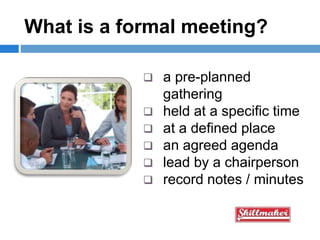
What is a formal meeting?
 a pre-planned
gathering
 held at a specific time
 at a defined place
 an agreed agenda
 lead by a chairperson
 record notes / minutes
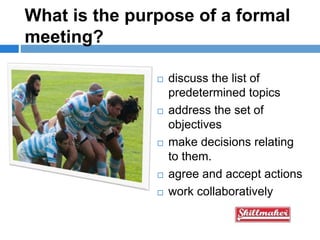
What is formal meeting like?
 like a conductor and
musicians playing a pre-
planned musical piece
 keeping order and only
playing when asked / told
 recording of live play to
then review and improve
What is the purpose of a formal
meeting?
 discuss the list of
predetermined topics
 address the set of
objectives
 make decisions relating
to them.
 agree and accept actions
 work collaboratively
What are the different types of
formal meetings?
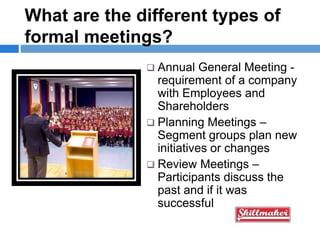
 Annual General Meeting -
requirement of a company
with Employees and
Shareholders
 Planning Meetings –
Segment groups plan new
initiatives or changes
 Review Meetings –
Participants discuss the
past and if it was
successful
What’s involved with a formal
meeting?
 follow a set pattern.
 Pre meeting day - send out an
agenda
 Start of meeting - agree to
accuracy of last meeting
minutes.
 Attendees give updates on
any action items from the
previous meeting.
 Meeting - agenda items are
discussed
 Minutes (official notes) taken
throughout the meeting.
Where does a formal meeting fit
into the organisational
management?
 Formal meetings are
an essential part of
 Planning
 Directing
 Controlling
How do formal meetings impact
on organisational goals?
 help attendees to
understand the
organisational goals
of the company
 whilst giving them
the chance to
discuss and amend
these organisational
goals.
What terms are used in
managing formal meetings?
 Agenda –sets out the
structure of the meeting.
 Minutes –a formal record
of the meeting.
 Motion –is a proposal.
 Chairperson –is in charge
 Order –if the meeting is
becoming an argument,
the chair may call “order”.
 Quorum –the minimum
number of people required
for a valid meeting.
Where can I find more
information about formal
meetings?
http://www.skillmaker.edu.au/formal-meeting/

Formal meeting

  • 1.
    WHAT IS AFORMAL MEETING By Skillmaker
  • 2.
    What is aformal meeting?  a pre-planned gathering  held at a specific time  at a defined place  an agreed agenda  lead by a chairperson  record notes / minutes
  • 3.
    What is formalmeeting like?  like a conductor and musicians playing a pre- planned musical piece  keeping order and only playing when asked / told  recording of live play to then review and improve
  • 4.
    What is thepurpose of a formal meeting?  discuss the list of predetermined topics  address the set of objectives  make decisions relating to them.  agree and accept actions  work collaboratively
  • 5.
    What are thedifferent types of formal meetings?  Annual General Meeting - requirement of a company with Employees and Shareholders  Planning Meetings – Segment groups plan new initiatives or changes  Review Meetings – Participants discuss the past and if it was successful
  • 6.
    What’s involved witha formal meeting?  follow a set pattern.  Pre meeting day - send out an agenda  Start of meeting - agree to accuracy of last meeting minutes.  Attendees give updates on any action items from the previous meeting.  Meeting - agenda items are discussed  Minutes (official notes) taken throughout the meeting.
  • 7.
    Where does aformal meeting fit into the organisational management?  Formal meetings are an essential part of  Planning  Directing  Controlling
  • 8.
    How do formalmeetings impact on organisational goals?  help attendees to understand the organisational goals of the company  whilst giving them the chance to discuss and amend these organisational goals.
  • 9.
    What terms areused in managing formal meetings?  Agenda –sets out the structure of the meeting.  Minutes –a formal record of the meeting.  Motion –is a proposal.  Chairperson –is in charge  Order –if the meeting is becoming an argument, the chair may call “order”.  Quorum –the minimum number of people required for a valid meeting.
  • 10.
    Where can Ifind more information about formal meetings? http://www.skillmaker.edu.au/formal-meeting/