WHAT IS AN AGENDA?


                DEFINITION:


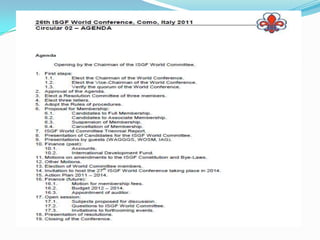
                        Agenda is a document that outlines the contents
                 of a forthcoming meeting.

                        It is usually sent along with the notice of the
                 meeting. Sometimes the agenda is prepared after the
                 circulation of the notice in order to enable the members
                 to get included in the agenda any time that they would
                 like to be discussed at the meeting.
VARIOUS IMPORTANT FUNCTIONS OF AGENDA:

                • It forces the meeting leader or group to think out

                   what need to be accomplished.

                • Provided ahead of time, the agenda lets people

                   know what to expect and allows them to prepare
                   as necessary.

                • It provides a blueprint or path for the meeting to

                   follow.

                • It reminds people of what there is left to cover if

                   time gets to be an issue.
Creating an effective agenda is one of the
  most important elements for a productive
  meeting. Here are some reasons why the meeting
  agenda          is         so          imporatant.


The Agenda:

   communicates important information such as:


1. Topics for discussion

2. Presenter or discussion leader for each topic
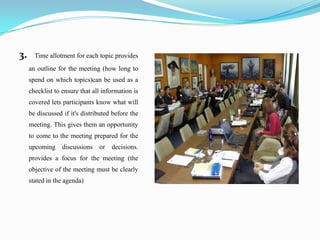
3.     Time allotment for each topic provides
     an outline for the meeting (how long to
     spend on which topics)can be used as a
     checklist to ensure that all information is
     covered lets participants know what will
     be discussed if it's distributed before the
     meeting. This gives them an opportunity
     to come to the meeting prepared for the
     upcoming     discussions   or   decisions.
     provides a focus for the meeting (the
     objective of the meeting must be clearly
     stated in the agenda)
One of the keys to a great meeting is following a
set agenda. Depending on your needs, there are
different meeting agenda formats. Stay organized
by learning which meeting agenda format is best
for your next meeting.

Purpose of Meeting Agendas

The main purpose of meeting agendas is to keep
the meeting focused. The agenda is basically an
outline of all topics that need to be covered during
the course of the meeting. In addition, there is
typically a set amount of time in which to cover
each topic in order to have a more
productive, faster meeting. When given in
advance, meeting participants have time to
prepare any questions or comments before the
meeting. Below, you'll find some common
       meeting agenda formats you can utilize.
FORM OF AGENDA:


         The Agenda is usually headed with the date, time and location of the
  meeting, by a series of points outlining the order of the meeting.

  Points on a typical AGENDA may include:

 Welcome/Open meeting

 Support for absence

 Approve minutes of the previous meeting
 Matters arising from the previous meeting

 A list of specific points to be discussed

 Arrange/announce details of the next meeting

 Tea and Biscuits

 Close meeting
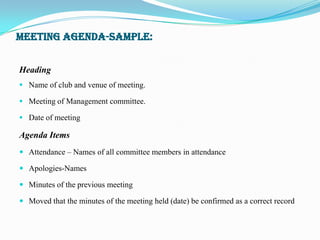
MEETING AGENDA-SAMPLE:


Heading
 Name of club and venue of meeting.

 Meeting of Management committee.

 Date of meeting

Agenda Items
 Attendance – Names of all committee members in attendance

 Apologies-Names

 Minutes of the previous meeting

 Moved that the minutes of the meeting held (date) be confirmed as a correct record
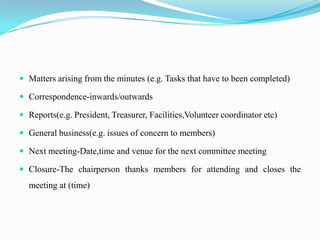
 Matters arising from the minutes (e.g. Tasks that have to been completed)

 Correspondence-inwards/outwards

 Reports(e.g. President, Treasurer, Facilities,Volunteer coordinator etc)

 General business(e.g. issues of concern to members)

 Next meeting-Date,time and venue for the next committee meeting

 Closure-The chairperson thanks members for attending and closes the
  meeting at (time)
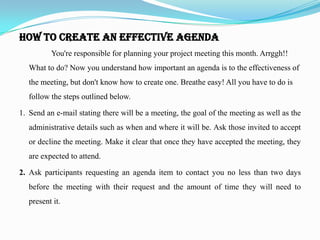
How to Create an Effective Agenda
          You're responsible for planning your project meeting this month. Arrggh!!
   What to do? Now you understand how important an agenda is to the effectiveness of
   the meeting, but don't know how to create one. Breathe easy! All you have to do is
   follow the steps outlined below.

1. Send an e-mail stating there will be a meeting, the goal of the meeting as well as the
   administrative details such as when and where it will be. Ask those invited to accept
   or decline the meeting. Make it clear that once they have accepted the meeting, they
   are expected to attend.

2. Ask participants requesting an agenda item to contact you no less than two days
   before the meeting with their request and the amount of time they will need to
   present it.
3. Once all of the agenda requests have been submitted to you, summarize them in
a table format with the headings Agenda Item, Presenter and Time. It's your
responsibility to ensure that each agenda item is directly related to the goals of this
particular meeting. If an inappropriate request is made, suggest that person send an
e-mail or memo instead or recommend that this agenda item be discussed in
another meeting. Also, you must be realistic in the amount of time you allocate to
each presenter. Don't cram an unrealistic number of agenda items into an hour
meeting. When people accept an hour meeting, they expect to be finished in an
hour. When meetings go over time, people generally tend to get uneasy. It's better
to schedule 50 minutes of discussion into an hour time slot. This way you have 10
minutes to spare and if you get done a little early, people will be pleased.
4. Send the agenda to all the meeting participants the day before the meeting with a
     reminder of the meeting goals, location, time and duration. At this time, ask the
     presenters if they are happy with the order in which they will be speaking and the
     amount of time they have been allocated.

5.    Of course, the most important part of creating an effective agenda is to follow it
     during the meeting!
SAMPLE OF AN AGENDA                        :
     Sample 1:
           The next Quarterly meeting of the Board of Directors will take place on
     Monday, 18th September, 2009 at 5 p.m. in the conference room.
     Agenda
1.     Minutes of the last meeting.
2.     Matters arising for the minutes
3.     Financial irregularities in Madurai branch
4.     Reorganization of work in Bangalore branch
5.     Any other business
6.     Date of Next Meeting
Agenda
Agenda
Agenda
Agenda
Agenda
Agenda
Agenda

Agenda

  • 2.
    WHAT IS ANAGENDA? DEFINITION: Agenda is a document that outlines the contents of a forthcoming meeting. It is usually sent along with the notice of the meeting. Sometimes the agenda is prepared after the circulation of the notice in order to enable the members to get included in the agenda any time that they would like to be discussed at the meeting.
  • 6.
    VARIOUS IMPORTANT FUNCTIONSOF AGENDA: • It forces the meeting leader or group to think out what need to be accomplished. • Provided ahead of time, the agenda lets people know what to expect and allows them to prepare as necessary. • It provides a blueprint or path for the meeting to follow. • It reminds people of what there is left to cover if time gets to be an issue.
  • 7.
    Creating an effectiveagenda is one of the most important elements for a productive meeting. Here are some reasons why the meeting agenda is so imporatant. The Agenda: communicates important information such as: 1. Topics for discussion 2. Presenter or discussion leader for each topic
  • 8.
    3. Time allotment for each topic provides an outline for the meeting (how long to spend on which topics)can be used as a checklist to ensure that all information is covered lets participants know what will be discussed if it's distributed before the meeting. This gives them an opportunity to come to the meeting prepared for the upcoming discussions or decisions. provides a focus for the meeting (the objective of the meeting must be clearly stated in the agenda)
  • 9.
    One of thekeys to a great meeting is following a set agenda. Depending on your needs, there are different meeting agenda formats. Stay organized by learning which meeting agenda format is best for your next meeting. Purpose of Meeting Agendas The main purpose of meeting agendas is to keep the meeting focused. The agenda is basically an outline of all topics that need to be covered during the course of the meeting. In addition, there is typically a set amount of time in which to cover each topic in order to have a more productive, faster meeting. When given in advance, meeting participants have time to prepare any questions or comments before the meeting. Below, you'll find some common meeting agenda formats you can utilize.
  • 10.
    FORM OF AGENDA: The Agenda is usually headed with the date, time and location of the meeting, by a series of points outlining the order of the meeting. Points on a typical AGENDA may include:  Welcome/Open meeting  Support for absence  Approve minutes of the previous meeting
  • 11.
     Matters arisingfrom the previous meeting  A list of specific points to be discussed  Arrange/announce details of the next meeting  Tea and Biscuits  Close meeting
  • 12.
    MEETING AGENDA-SAMPLE: Heading  Nameof club and venue of meeting.  Meeting of Management committee.  Date of meeting Agenda Items  Attendance – Names of all committee members in attendance  Apologies-Names  Minutes of the previous meeting  Moved that the minutes of the meeting held (date) be confirmed as a correct record
  • 13.
     Matters arisingfrom the minutes (e.g. Tasks that have to been completed)  Correspondence-inwards/outwards  Reports(e.g. President, Treasurer, Facilities,Volunteer coordinator etc)  General business(e.g. issues of concern to members)  Next meeting-Date,time and venue for the next committee meeting  Closure-The chairperson thanks members for attending and closes the meeting at (time)
  • 15.
    How to Createan Effective Agenda You're responsible for planning your project meeting this month. Arrggh!! What to do? Now you understand how important an agenda is to the effectiveness of the meeting, but don't know how to create one. Breathe easy! All you have to do is follow the steps outlined below. 1. Send an e-mail stating there will be a meeting, the goal of the meeting as well as the administrative details such as when and where it will be. Ask those invited to accept or decline the meeting. Make it clear that once they have accepted the meeting, they are expected to attend. 2. Ask participants requesting an agenda item to contact you no less than two days before the meeting with their request and the amount of time they will need to present it.
  • 16.
    3. Once allof the agenda requests have been submitted to you, summarize them in a table format with the headings Agenda Item, Presenter and Time. It's your responsibility to ensure that each agenda item is directly related to the goals of this particular meeting. If an inappropriate request is made, suggest that person send an e-mail or memo instead or recommend that this agenda item be discussed in another meeting. Also, you must be realistic in the amount of time you allocate to each presenter. Don't cram an unrealistic number of agenda items into an hour meeting. When people accept an hour meeting, they expect to be finished in an hour. When meetings go over time, people generally tend to get uneasy. It's better to schedule 50 minutes of discussion into an hour time slot. This way you have 10 minutes to spare and if you get done a little early, people will be pleased.
  • 17.
    4. Send theagenda to all the meeting participants the day before the meeting with a reminder of the meeting goals, location, time and duration. At this time, ask the presenters if they are happy with the order in which they will be speaking and the amount of time they have been allocated. 5. Of course, the most important part of creating an effective agenda is to follow it during the meeting!
  • 20.
    SAMPLE OF ANAGENDA : Sample 1: The next Quarterly meeting of the Board of Directors will take place on Monday, 18th September, 2009 at 5 p.m. in the conference room. Agenda 1. Minutes of the last meeting. 2. Matters arising for the minutes 3. Financial irregularities in Madurai branch 4. Reorganization of work in Bangalore branch 5. Any other business 6. Date of Next Meeting