Persuasive
Presentations
Persuasive Messages Are All
Around Us
 TV Commercials
 Political Campaign Speech
 Product sample in the mail
 Children convincing parents
    Buy toy
    Stay up late
What is Persuasion?
 Persuasion
          encourages audience
 members to change

 Their opinions
        or
 Their behavior
Informative VS Persuasive
 Informative   Presentations
    Speaker TELLS something to an audience
 Persuasive   Presentations
    Speaker ASKS for something from the
     audience
      Theiragreement or a change in their
       opinions/behavior
Opinions & Behavior
    Opinion                       Behavior
   Nike makes the best          Buy Nike shoes
    athletic shoes               Cut red meat from
   Vegetarian diets are          your diet
    good for your body –         Eat dinner with your
    and good for the planet
                                  family at least five
   Your family is more           times a week
    important than your job
                                 Write a letter to your
   Stricter drunk driving        state legislator
    laws and punishments          supporting stricter
    are needed.
                                  drunk driving laws
Audience Analysis
 No  matter what your persuasive purpose
 is, you must understand and adapt your
 message to the people in your audience.
When Audience Members
Agree With You
 You   can strengthen their agreement
 EX:
 Most people agree that pollution is a
 problem, but most of them probably
 don’t spend an hour a week cleaning up
 their neighborhood.
When Audience Members
Agree With You
 Presents  new information
 Strengthens audience resistance to
  counter persuasion
 Excites the audience’s emotions
 Provides a personal model
 Advocates a course of action
When Audience DISAGREES
with you
 Changing their opinions or behavior is
 challenging
When Audience DISAGREES
with you
 As much as you may want an audience that
  doesn’t agree with you to come over to your
  way of thinking, a modest goal is more
  realistic.
EX:
 You are unlikely to convince avid meat eaters
  to give up their steaks and become strict
  vegetarians.
       You may be able to convince them that eating
        smaller portions is healthier
Audience Members Are
Undecided
 UninformedAudiences: Don’t know
 anything about the topic and hasn’t
 formed an opinion
    Can be persuaded easier
 Unconcerned   Audiences: See no reason
 to care or to have an opinion about a
 topic
    Get their attention with VALUE STEP
Persuasive
Strategies
Claim
   State your argument.

           Example: I am going to
           try to convince you that
           chocolate is a healthy
           snack.
Big Names
Important people or experts can
make your argument seem more
convincing.
 Example: Former U.S.
 president Bill Clinton
 thinks that junk food
 should be taken out of
 vending machines.
Logos
Facts, numbers, and information
can be very convincing.

                  Example: A
                  Snickers bar has
                  280 calories and 30
                  grams of sugar.
                  That’s not very
                  healthy.
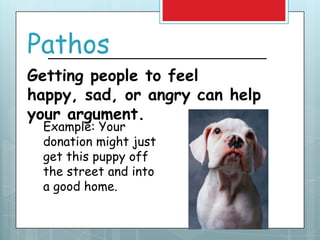
Pathos
Getting people to feel
happy, sad, or angry can help
your argument.
 Example: Your
 donation might just
 get this puppy off
 the street and into
 a good home.
Ethos
If people believe and trust in
you, you’re more likely to
persuade them.
                  Example: Believe
                  me! I’ve been there
                  before. I’m just
                  like you.
Kairos
Try to convince your audience that
this issue is so important they
must act now.
   Example: This is a
   one-time offer. You
   can’t get this price
   after today.
Research
Using reliable research can help
your argument seem convincing.
               Example: A recent
               study found that
               students who watch
               TV during the week
               don’t do as well in
               school.

Persuasive presentations

  • 1.
  • 2.
    Persuasive Messages AreAll Around Us  TV Commercials  Political Campaign Speech  Product sample in the mail  Children convincing parents  Buy toy  Stay up late
  • 4.
    What is Persuasion? Persuasion encourages audience members to change Their opinions or Their behavior
  • 5.
    Informative VS Persuasive Informative Presentations  Speaker TELLS something to an audience  Persuasive Presentations  Speaker ASKS for something from the audience  Theiragreement or a change in their opinions/behavior
  • 6.
    Opinions & Behavior Opinion Behavior  Nike makes the best  Buy Nike shoes athletic shoes  Cut red meat from  Vegetarian diets are your diet good for your body –  Eat dinner with your and good for the planet family at least five  Your family is more times a week important than your job  Write a letter to your  Stricter drunk driving state legislator laws and punishments supporting stricter are needed. drunk driving laws
  • 7.
    Audience Analysis  No matter what your persuasive purpose is, you must understand and adapt your message to the people in your audience.
  • 8.
    When Audience Members AgreeWith You  You can strengthen their agreement  EX:  Most people agree that pollution is a problem, but most of them probably don’t spend an hour a week cleaning up their neighborhood.
  • 9.
    When Audience Members AgreeWith You  Presents new information  Strengthens audience resistance to counter persuasion  Excites the audience’s emotions  Provides a personal model  Advocates a course of action
  • 10.
    When Audience DISAGREES withyou  Changing their opinions or behavior is challenging
  • 11.
    When Audience DISAGREES withyou  As much as you may want an audience that doesn’t agree with you to come over to your way of thinking, a modest goal is more realistic. EX:  You are unlikely to convince avid meat eaters to give up their steaks and become strict vegetarians.  You may be able to convince them that eating smaller portions is healthier
  • 12.
    Audience Members Are Undecided UninformedAudiences: Don’t know anything about the topic and hasn’t formed an opinion  Can be persuaded easier  Unconcerned Audiences: See no reason to care or to have an opinion about a topic  Get their attention with VALUE STEP
  • 13.
  • 14.
    Claim State your argument. Example: I am going to try to convince you that chocolate is a healthy snack.
  • 15.
    Big Names Important peopleor experts can make your argument seem more convincing. Example: Former U.S. president Bill Clinton thinks that junk food should be taken out of vending machines.
  • 16.
    Logos Facts, numbers, andinformation can be very convincing. Example: A Snickers bar has 280 calories and 30 grams of sugar. That’s not very healthy.
  • 17.
    Pathos Getting people tofeel happy, sad, or angry can help your argument. Example: Your donation might just get this puppy off the street and into a good home.
  • 18.
    Ethos If people believeand trust in you, you’re more likely to persuade them. Example: Believe me! I’ve been there before. I’m just like you.
  • 19.
    Kairos Try to convinceyour audience that this issue is so important they must act now. Example: This is a one-time offer. You can’t get this price after today.
  • 20.
    Research Using reliable researchcan help your argument seem convincing. Example: A recent study found that students who watch TV during the week don’t do as well in school.