1
Effective Communications
for Better Leadership
Hope Generation
@2015
2
Learning Objectives
 Understand communication and
communication process
 Identify the basic forms of communication in
organizations
 Discuss formal and informal communication,
including its various forms and types
 Describe how the communication process
can be managed so as to recognize and
overcome barriers.
 Listening skills and its importance.
3
Communications
Communication
 The process of transmitting information from
one person to another.
 Is the single most important leadership skill
 Is a process, and if the process breaks down,
communication will fail.
Communications
 Effective communication
 Existence of (At least) two actors (S & R).
 Message transmission.
 Understand message equally.
 Message can be verbal or non verbal
4
5
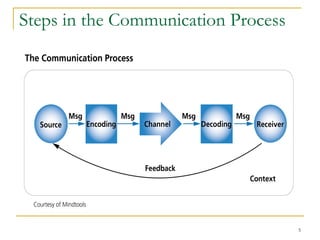
Steps in the Communication Process
6
Communications
How to Improve Communications
 Individual skills
 Encourage two-way communication
 Be aware of language and meaning
 Be sensitive to sender’s and receiver’s perspective
 Develop good listening skills
 Organizational skills
 Follow up
 Regulate information flow
 Understand the richness of media
7
Communications
Feedback
 The receiver becomes the sender and the
sender becomes the receiver.
 Is important to verify meaning and complete
the effective communication process
Willingness to Communicate
 High WTCs are viewed as more credible
and attractive
 People who speak frequently in small
groups are more likely to hold leadership
positions.
 Talkative people are more likely to be
hired and promoted
 High WTCs are more open to change and
enjoy tasks that require thought
8
9
Barriers to Communication
Individual barriers
 Conflicting or inconsistent cues
 Credibility about the subject
 Reluctance to communicate
 Poor listening skills
10
Barriers to Communications
Organizational barriers
 Semantics
 Status or power differences
 Different perceptions
 Noise
 Overload
11
Characteristics of Information
 Accurate
 A valid and reliable reflection of reality
 Timely
 Information delivered in time for managerial action
 Complete
 Information that tells a complete story, rather than being
incomplete or distorted
 Relevant
 Meets the needs and circumstances (understanding) of the
leader/follower
Types of Communication
 Verbal
 Oral Communication
 Written.
• Electronic.
• Non Electronic.
 Non verbal
 Body language.
12
13
Formal and Informal Communications
 Formal Communication follows official reporting
relationships and/or prescribed organizational
channels.
 Non formal may not follow official reporting
system usually used for friendship.
 Common forms of informal communications are
the grapevine.
Factors Impacting Understanding of
Message
 Cultural diversity
 Status differences (power)
 Gender
 Previous experiences
 Level of interest
 Speaking or writing abilities
14
15
How Leaders Should Communicate
 Determining what to say and to whom you send to.
 Deliver the leadership message by getting the
message across verbally, mentally, and
methophorically.
 Sustain the leadership message by keeping the
message alive, fresh and meaningful.
Leadership is Enacted Through
Communication
 Communication Oriented
 Responsive and receptive to questions
 from participants
 Ask and persuade rather than order or
command
 Explain the reasons behind changes and
policies
16
17
Poor Communications
 When leaders are not clear with their
communications.
 When the leader makes the assumption that
his or her followers are on the same plain of
thought he or she is operating.
 When this happens the leader becomes
ineffective and fails to complete the mission.
Why listening skill is important
 Improves relationships
 Improves our knowledge
 Improves our understanding
 Prevents problems escalating
 Saves time and energy
 Can save money
 Leads to better results
18
Hearing Versus Listening
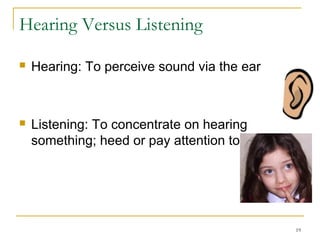
 Hearing: To perceive sound via the ear
 Listening: To concentrate on hearing
something; heed or pay attention to
19
Barriers to effective listening
 Interrupting – knowing the answer
 Trying to be helpful
 Seeing discussion as competition
 Distraction - red flag words
 Gap searching
20
Approaches to improve communication
 Get ready.
 Put your self at the point of your audience.
 In verbal, use simple language.
 Practice, Practice and Practice.
21
END
22

Effective communications for better leadership

  • 1.
    1 Effective Communications for BetterLeadership Hope Generation @2015
  • 2.
    2 Learning Objectives  Understandcommunication and communication process  Identify the basic forms of communication in organizations  Discuss formal and informal communication, including its various forms and types  Describe how the communication process can be managed so as to recognize and overcome barriers.  Listening skills and its importance.
  • 3.
    3 Communications Communication  The processof transmitting information from one person to another.  Is the single most important leadership skill  Is a process, and if the process breaks down, communication will fail.
  • 4.
    Communications  Effective communication Existence of (At least) two actors (S & R).  Message transmission.  Understand message equally.  Message can be verbal or non verbal 4
  • 5.
    5 Steps in theCommunication Process
  • 6.
    6 Communications How to ImproveCommunications  Individual skills  Encourage two-way communication  Be aware of language and meaning  Be sensitive to sender’s and receiver’s perspective  Develop good listening skills  Organizational skills  Follow up  Regulate information flow  Understand the richness of media
  • 7.
    7 Communications Feedback  The receiverbecomes the sender and the sender becomes the receiver.  Is important to verify meaning and complete the effective communication process
  • 8.
    Willingness to Communicate High WTCs are viewed as more credible and attractive  People who speak frequently in small groups are more likely to hold leadership positions.  Talkative people are more likely to be hired and promoted  High WTCs are more open to change and enjoy tasks that require thought 8
  • 9.
    9 Barriers to Communication Individualbarriers  Conflicting or inconsistent cues  Credibility about the subject  Reluctance to communicate  Poor listening skills
  • 10.
    10 Barriers to Communications Organizationalbarriers  Semantics  Status or power differences  Different perceptions  Noise  Overload
  • 11.
    11 Characteristics of Information Accurate  A valid and reliable reflection of reality  Timely  Information delivered in time for managerial action  Complete  Information that tells a complete story, rather than being incomplete or distorted  Relevant  Meets the needs and circumstances (understanding) of the leader/follower
  • 12.
    Types of Communication Verbal  Oral Communication  Written. • Electronic. • Non Electronic.  Non verbal  Body language. 12
  • 13.
    13 Formal and InformalCommunications  Formal Communication follows official reporting relationships and/or prescribed organizational channels.  Non formal may not follow official reporting system usually used for friendship.  Common forms of informal communications are the grapevine.
  • 14.
    Factors Impacting Understandingof Message  Cultural diversity  Status differences (power)  Gender  Previous experiences  Level of interest  Speaking or writing abilities 14
  • 15.
    15 How Leaders ShouldCommunicate  Determining what to say and to whom you send to.  Deliver the leadership message by getting the message across verbally, mentally, and methophorically.  Sustain the leadership message by keeping the message alive, fresh and meaningful.
  • 16.
    Leadership is EnactedThrough Communication  Communication Oriented  Responsive and receptive to questions  from participants  Ask and persuade rather than order or command  Explain the reasons behind changes and policies 16
  • 17.
    17 Poor Communications  Whenleaders are not clear with their communications.  When the leader makes the assumption that his or her followers are on the same plain of thought he or she is operating.  When this happens the leader becomes ineffective and fails to complete the mission.
  • 18.
    Why listening skillis important  Improves relationships  Improves our knowledge  Improves our understanding  Prevents problems escalating  Saves time and energy  Can save money  Leads to better results 18
  • 19.
    Hearing Versus Listening Hearing: To perceive sound via the ear  Listening: To concentrate on hearing something; heed or pay attention to 19
  • 20.
    Barriers to effectivelistening  Interrupting – knowing the answer  Trying to be helpful  Seeing discussion as competition  Distraction - red flag words  Gap searching 20
  • 21.
    Approaches to improvecommunication  Get ready.  Put your self at the point of your audience.  In verbal, use simple language.  Practice, Practice and Practice. 21
  • 22.