
Improving your skills to communicate better Effective Communications Mahieash Johnney IFRC – Communications & Reporting Manager  Summarized presentation
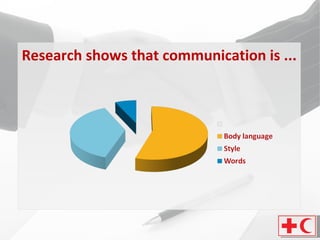
Research shows that communication is ...
to express our emotions achieve joint understanding to get things done pass on and obtain information reach decisions develop relationships Why communication?
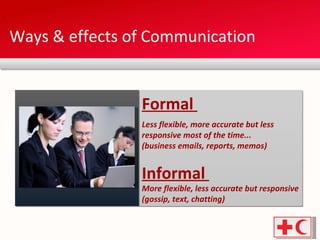
Ways & effects of Communication Formal  Less flexible, more accurate but less responsive most of the time...  (business emails, reports, memos) Informal  More flexible, less accurate but responsive  (gossip, text, chatting)
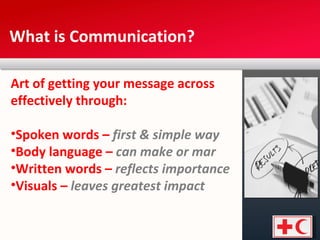
What is Communication? Art of getting your message across effectively through: Spoken words –  first & simple way Body language –  can make or mar  Written words –  reflects importance  Visuals –  leaves greatest impact
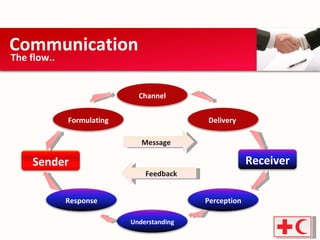
Communication The flow..  Message Feedback Sender Formulating Channel Delivery  Receiver Perception Understanding Response
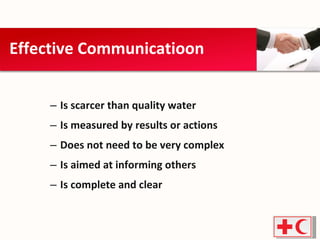
Is scarcer than quality water Is measured by results or actions Does not need to be very complex Is aimed at informing others Is complete and clear Effective Communicatioon
Personal Barriers Your style and character  (rude, polite, shy, outspoken) Preparation & presentation  Lack of clarity  (pronunciation, pitch, etc.)  Lack of credibility Timing Barriers  To effective communication
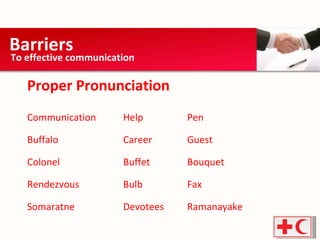
Proper Pronunciation Communication Help Pen Buffalo Career Guest  Colonel Buffet Bouquet Rendezvous Bulb Fax Somaratne Devotees Ramanayake Barriers  To effective communication
Organizational Barriers Culture Environment Size & structure Pace of activity  Barriers  To effective communication
Process Barriers Channel/Medium Irrelevant Information loading Lack of Response or Feedback Inappropriate Questions Barriers  To effective communication
Say to yourself, “I will get Response” Come up with a topic for discussion everyday Start improving upon pronunciation Develop habit of reading – start with the English newspaper / Comics Understand first, then communicate Don’t be afraid of asking questions Overcoming  the barriers
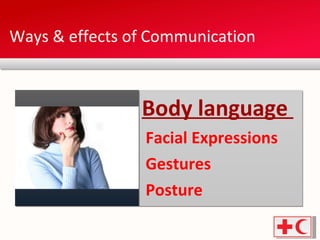
Ways & effects of Communication Facial Expressions Gestures Posture Body language
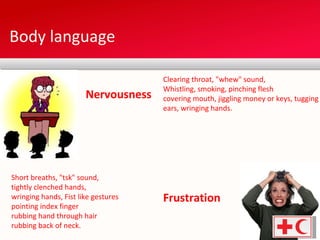
Body language  Frustration Clearing throat, "whew" sound, Whistling, smoking, pinching flesh  covering mouth, jiggling money or keys, tugging ears, wringing hands. Short breaths, "tsk" sound,  tightly clenched hands,  wringing hands, Fist like gestures  pointing index finger  rubbing hand through hair  rubbing back of neck. Nervousness
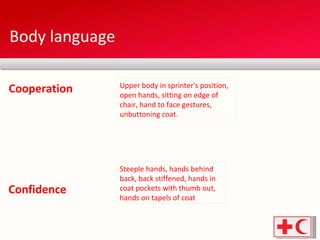
Body language  Confidence Cooperation Upper body in sprinter's position, open hands, sitting on edge of chair, hand to face gestures, unbuttoning coat. Steeple hands, hands behind back, back stiffened, hands in coat pockets with thumb out, hands on tapels of coat
Ways & effects of Communication Speaking Skills
Speaking skills “ A wise man reflects before he speaks;  a fool speaks, and then reflects on what he has uttered.” - French Proverb.
Ways & effects of Communication Writing Skills
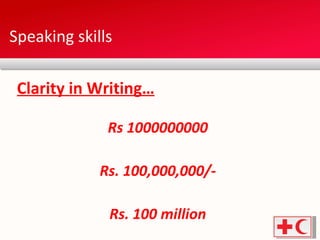
Speaking skills Clarity in Writing… Rs 1000000000 Rs. 100,000,000/- Rs. 100 million
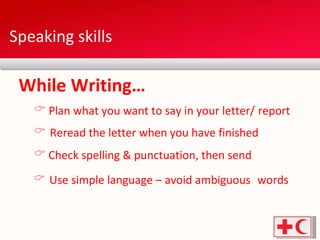
Speaking skills While Writing… Use simple language – avoid ambiguous  words Reread the letter when you have finished Plan what you want to say in your letter/  report Check spelling & punctuation, then send
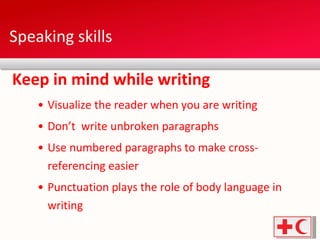
Speaking skills Visualize the reader when you are writing Don’t  write unbroken paragraphs Use numbered paragraphs to make cross-referencing easier Punctuation plays the role of body language in writing Keep in mind while writing
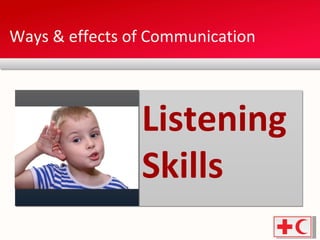
Ways & effects of Communication Listening Skills
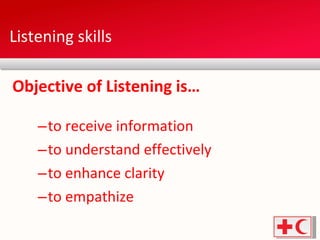
Listening skills to receive information  to understand effectively to enhance clarity to empathize Objective of Listening is…
“ I HEAR, I forget I SEE, I remember I DO, I understand” Remember
THANK YOU!

Developing the Global Executive - Effective Communications

  • 1.
    Improving your skillsto communicate better Effective Communications Mahieash Johnney IFRC – Communications & Reporting Manager Summarized presentation
  • 2.
    Research shows thatcommunication is ...
  • 3.
    to express ouremotions achieve joint understanding to get things done pass on and obtain information reach decisions develop relationships Why communication?
  • 4.
    Ways & effectsof Communication Formal Less flexible, more accurate but less responsive most of the time... (business emails, reports, memos) Informal More flexible, less accurate but responsive (gossip, text, chatting)
  • 5.
    What is Communication?Art of getting your message across effectively through: Spoken words – first & simple way Body language – can make or mar Written words – reflects importance Visuals – leaves greatest impact
  • 6.
    Communication The flow.. Message Feedback Sender Formulating Channel Delivery Receiver Perception Understanding Response
  • 7.
    Is scarcer thanquality water Is measured by results or actions Does not need to be very complex Is aimed at informing others Is complete and clear Effective Communicatioon
  • 8.
    Personal Barriers Yourstyle and character (rude, polite, shy, outspoken) Preparation & presentation Lack of clarity (pronunciation, pitch, etc.) Lack of credibility Timing Barriers To effective communication
  • 9.
    Proper Pronunciation CommunicationHelp Pen Buffalo Career Guest Colonel Buffet Bouquet Rendezvous Bulb Fax Somaratne Devotees Ramanayake Barriers To effective communication
  • 10.
    Organizational Barriers CultureEnvironment Size & structure Pace of activity Barriers To effective communication
  • 11.
    Process Barriers Channel/MediumIrrelevant Information loading Lack of Response or Feedback Inappropriate Questions Barriers To effective communication
  • 12.
    Say to yourself,“I will get Response” Come up with a topic for discussion everyday Start improving upon pronunciation Develop habit of reading – start with the English newspaper / Comics Understand first, then communicate Don’t be afraid of asking questions Overcoming the barriers
  • 13.
    Say to yourself,“I will get Response” Come up with a topic for discussion everyday Start improving upon pronunciation Develop habit of reading – start with the English newspaper / Comics Understand first, then communicate Don’t be afraid of asking questions Overcoming the barriers
  • 14.
    Ways & effectsof Communication Facial Expressions Gestures Posture Body language
  • 15.
    Body language Frustration Clearing throat, "whew" sound, Whistling, smoking, pinching flesh covering mouth, jiggling money or keys, tugging ears, wringing hands. Short breaths, "tsk" sound, tightly clenched hands, wringing hands, Fist like gestures pointing index finger rubbing hand through hair rubbing back of neck. Nervousness
  • 16.
    Body language Confidence Cooperation Upper body in sprinter's position, open hands, sitting on edge of chair, hand to face gestures, unbuttoning coat. Steeple hands, hands behind back, back stiffened, hands in coat pockets with thumb out, hands on tapels of coat
  • 17.
    Ways & effectsof Communication Speaking Skills
  • 18.
    Speaking skills “A wise man reflects before he speaks; a fool speaks, and then reflects on what he has uttered.” - French Proverb.
  • 19.
    Ways & effectsof Communication Writing Skills
  • 20.
    Speaking skills Clarityin Writing… Rs 1000000000 Rs. 100,000,000/- Rs. 100 million
  • 21.
    Speaking skills WhileWriting… Use simple language – avoid ambiguous words Reread the letter when you have finished Plan what you want to say in your letter/ report Check spelling & punctuation, then send
  • 22.
    Speaking skills Visualizethe reader when you are writing Don’t write unbroken paragraphs Use numbered paragraphs to make cross-referencing easier Punctuation plays the role of body language in writing Keep in mind while writing
  • 23.
    Ways & effectsof Communication Listening Skills
  • 24.
    Listening skills toreceive information to understand effectively to enhance clarity to empathize Objective of Listening is…
  • 25.
    “ I HEAR,I forget I SEE, I remember I DO, I understand” Remember
  • 26.