A story is not the only way 
to communicate 
information. There are 
other ways we can learn 
new information! 
• CIRCLE OR PIE 
GRAPH 
• BAR GRAPH 
• PICTORIAL GRAPH 
• LINE GRAPH 
• GRAPHIC 
ORGANIZER 
Like pictures, all 
other visual 
symbols are worth 
a thousand words 
• Physical Map 
• Relief Map 
• Commercial or Economic 
Map 
• Political Map 
Postscript--A Lot of 
Visual Symbols at Your 
Disposal
PIE GRAPH 
• Can be used to show 
the percentage of I 
whole or 100% 
• Should have a title 
and it should have a 
key/legend 
• May or may not show 
actual percentages 
BAR 
GRAPH 
• Used in comparing the 
magnitude of similar items 
at different ties or seeing 
relative sizes of the parts of 
a whole 
• uses bars to show data. 
The bars can be vertical (up 
and down), or horizontal 
(across). The data can be in 
words or numbers.
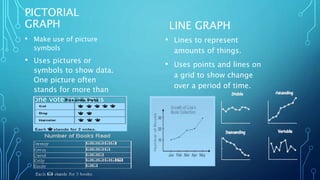
PICTORIAL 
GRAPH 
• Make use of picture 
symbols 
• Uses pictures or 
symbols to show data. 
One picture often 
stands for more than 
one vote so a key is 
necessary to understand 
the symbols. 
LINE GRAPH 
• Lines to represent 
amounts of things. 
• Uses points and lines on 
a grid to show change 
over a period of time.
GRAPHIC 
ORGANIZER 
• Visual representations of 
knowledge, concepts, 
thoughts, or ideas. 
Graphic Organizers 
historically have been 
organized bits of data in 
easy-to-understand 
formats, such as charts, 
tables, and graphs
MAPS 
Physical Map- 
Combines in a 
single projection 
data like altitude, 
temperature, 
rainfall, 
precipitation, 
vegetation and soil. 
Relief Map- 
Has three 
dimensional 
representations and 
show contours of the 
physical data of the 
earth or part of the 
earth. 
Commercial or 
Economic Map- 
Also called 
product or 
industrial map 
since they show 
land areas in 
relation to the 
economy. Political Map- 
Gives detailed 
information about 
country, provinces, 
cities and towns, 
roads and highways. 
Oceans, rivers and 
lakes are the main 
features of most 
political maps.
MAPS 
LANGUAGE 
Scale- shows how much of the actual earth’s 
surface is represented by a given measurement on 
a map. E.g. 1 inch= 15 statute miles. 
Symbols- usually a map has a legend that explains 
what each symbol means. 
Color- the different colors of the map are part of 
the map language. 
Geographic grids- 
Meridian: north and south pole line 
Parallels: lines drawn around a globe with all 
points along each line with an equal distance from 
the pole. 
Longitude: distance in degrees of any place east or 
west of the prime meridian 
Latitude: distance in degrees of any place north 
and south of the equator.
UNDERSTANDING 
MAPS, GRAPHS 
AND CHARTS 
• Summing up: 
The proper use of visual 
symbols will contribute to optimum 
learning. For these visual symbols to be 
at your fingertips, you ought to be 
skilled at making them. 
The collection, preparation and 
use of these various visual symbols 
depends to a great extent on your 
resourcefulness and creativity. If you 
use them skillfully, your classroom may 
turn into a beehive of busy students. 
1. Read the titles and 
subtitles. 
2. Read the key, and/or the 
legend, and the scale of 
miles whenever any of 
these are present. 
3. Read the information 
shown along the side and 
the bottom of graphs and 
charts and tables, if any. 
4. Determine your purpose 
for reading the map, chart, 
table, or graph. 
Creativity is 
intelligence 
having fun 
Albert Einstein
POSTSCRIPT 
• You may not realize it. But with visual symbols alone, you have an 
array of teaching materials to choose from. If you decide and 
commit yourself to using one visual symbol for every lesson, you 
will keep your teaching crispy and fresh. Only that this requires 
more preparation and more learning on your part. You must learn 
how to draw, sketch, make diagrams, graphs and charts. The 
computer can now do the graphs, the charts and some diagrams. 
You have to know what software to use and, of course, how to 
manipulate the computer.

Educational Technology I Report

  • 1.
    A story isnot the only way to communicate information. There are other ways we can learn new information! • CIRCLE OR PIE GRAPH • BAR GRAPH • PICTORIAL GRAPH • LINE GRAPH • GRAPHIC ORGANIZER Like pictures, all other visual symbols are worth a thousand words • Physical Map • Relief Map • Commercial or Economic Map • Political Map Postscript--A Lot of Visual Symbols at Your Disposal
  • 2.
    PIE GRAPH •Can be used to show the percentage of I whole or 100% • Should have a title and it should have a key/legend • May or may not show actual percentages BAR GRAPH • Used in comparing the magnitude of similar items at different ties or seeing relative sizes of the parts of a whole • uses bars to show data. The bars can be vertical (up and down), or horizontal (across). The data can be in words or numbers.
  • 3.
    PICTORIAL GRAPH •Make use of picture symbols • Uses pictures or symbols to show data. One picture often stands for more than one vote so a key is necessary to understand the symbols. LINE GRAPH • Lines to represent amounts of things. • Uses points and lines on a grid to show change over a period of time.
  • 4.
    GRAPHIC ORGANIZER •Visual representations of knowledge, concepts, thoughts, or ideas. Graphic Organizers historically have been organized bits of data in easy-to-understand formats, such as charts, tables, and graphs
  • 5.
    MAPS Physical Map- Combines in a single projection data like altitude, temperature, rainfall, precipitation, vegetation and soil. Relief Map- Has three dimensional representations and show contours of the physical data of the earth or part of the earth. Commercial or Economic Map- Also called product or industrial map since they show land areas in relation to the economy. Political Map- Gives detailed information about country, provinces, cities and towns, roads and highways. Oceans, rivers and lakes are the main features of most political maps.
  • 6.
    MAPS LANGUAGE Scale-shows how much of the actual earth’s surface is represented by a given measurement on a map. E.g. 1 inch= 15 statute miles. Symbols- usually a map has a legend that explains what each symbol means. Color- the different colors of the map are part of the map language. Geographic grids- Meridian: north and south pole line Parallels: lines drawn around a globe with all points along each line with an equal distance from the pole. Longitude: distance in degrees of any place east or west of the prime meridian Latitude: distance in degrees of any place north and south of the equator.
  • 7.
    UNDERSTANDING MAPS, GRAPHS AND CHARTS • Summing up: The proper use of visual symbols will contribute to optimum learning. For these visual symbols to be at your fingertips, you ought to be skilled at making them. The collection, preparation and use of these various visual symbols depends to a great extent on your resourcefulness and creativity. If you use them skillfully, your classroom may turn into a beehive of busy students. 1. Read the titles and subtitles. 2. Read the key, and/or the legend, and the scale of miles whenever any of these are present. 3. Read the information shown along the side and the bottom of graphs and charts and tables, if any. 4. Determine your purpose for reading the map, chart, table, or graph. Creativity is intelligence having fun Albert Einstein
  • 8.
    POSTSCRIPT • Youmay not realize it. But with visual symbols alone, you have an array of teaching materials to choose from. If you decide and commit yourself to using one visual symbol for every lesson, you will keep your teaching crispy and fresh. Only that this requires more preparation and more learning on your part. You must learn how to draw, sketch, make diagrams, graphs and charts. The computer can now do the graphs, the charts and some diagrams. You have to know what software to use and, of course, how to manipulate the computer.