Teaching with

Visual Symbols
Visual symbols
-Representations of direct reality, which comes in the form of signs
and symbols.The visual aids are what help the students understand
what the lesson is all about.
-There are different kinds of visual symbols. These include drawings,
cartoons, strip drawings, diagrams, charts, graphs and maps.
Kinds of

Visual Symbols
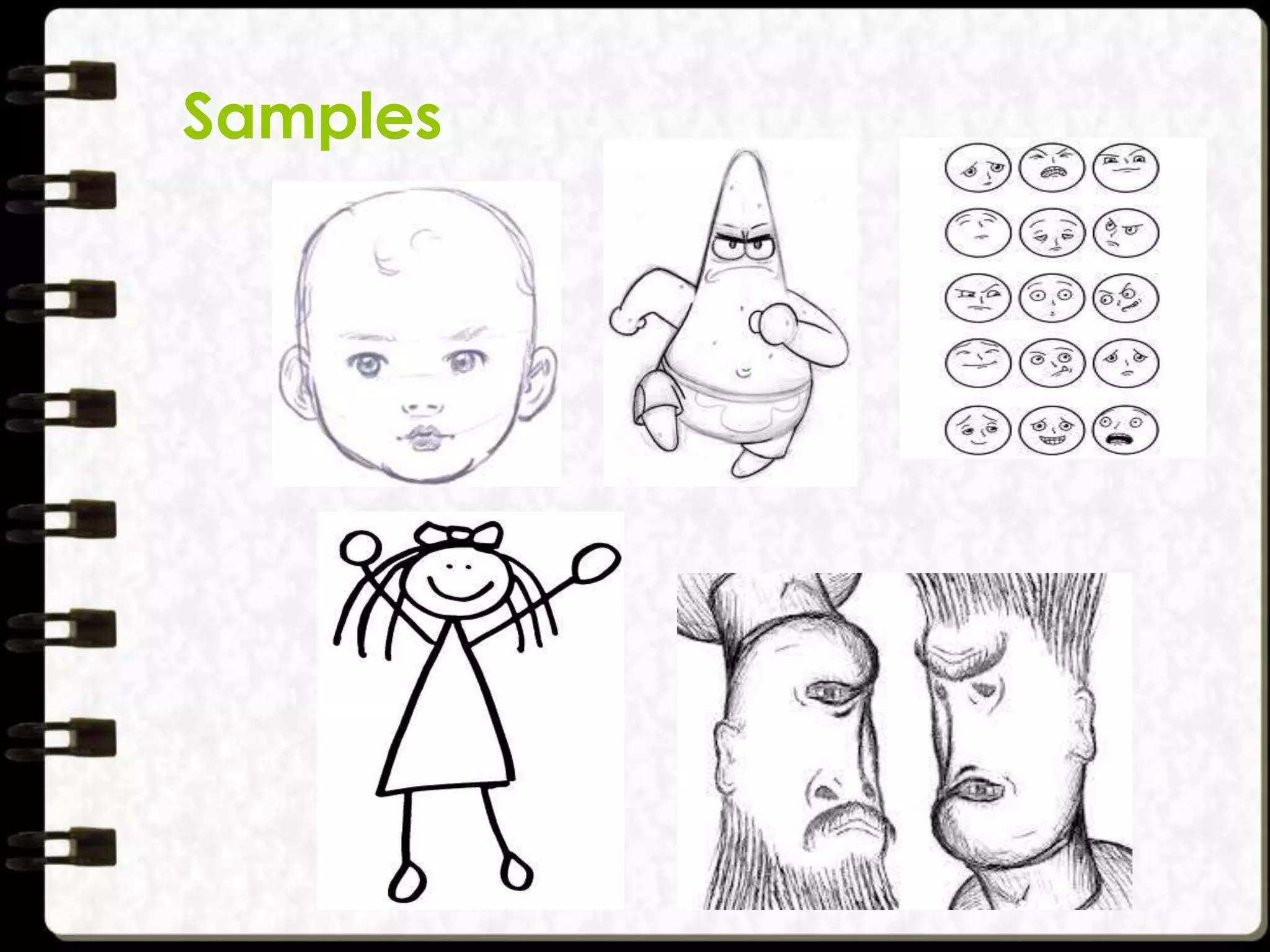
A. DRAWINGS

- Concrete visual or a representation of
a real thing. It helps illustrating our
lecture through freehand sketching in a
chalkboard.
Samples
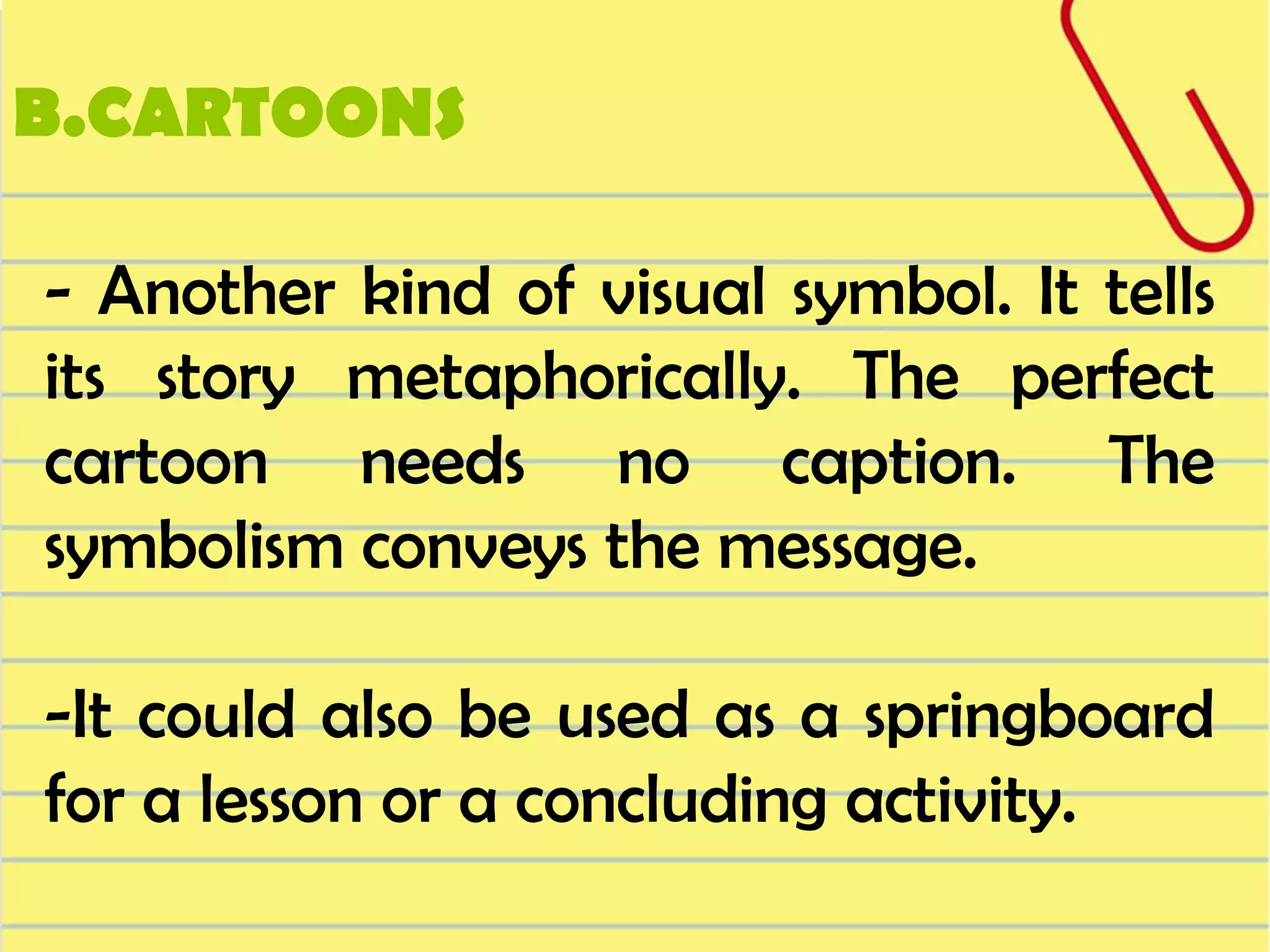
B.CARTOONS
- Another kind of visual symbol. It tells
its story metaphorically. The perfect
cartoon needs no caption. The
symbolism conveys the message.
-It could also be used as a springboard
for a lesson or a concluding activity.
SAMPLES
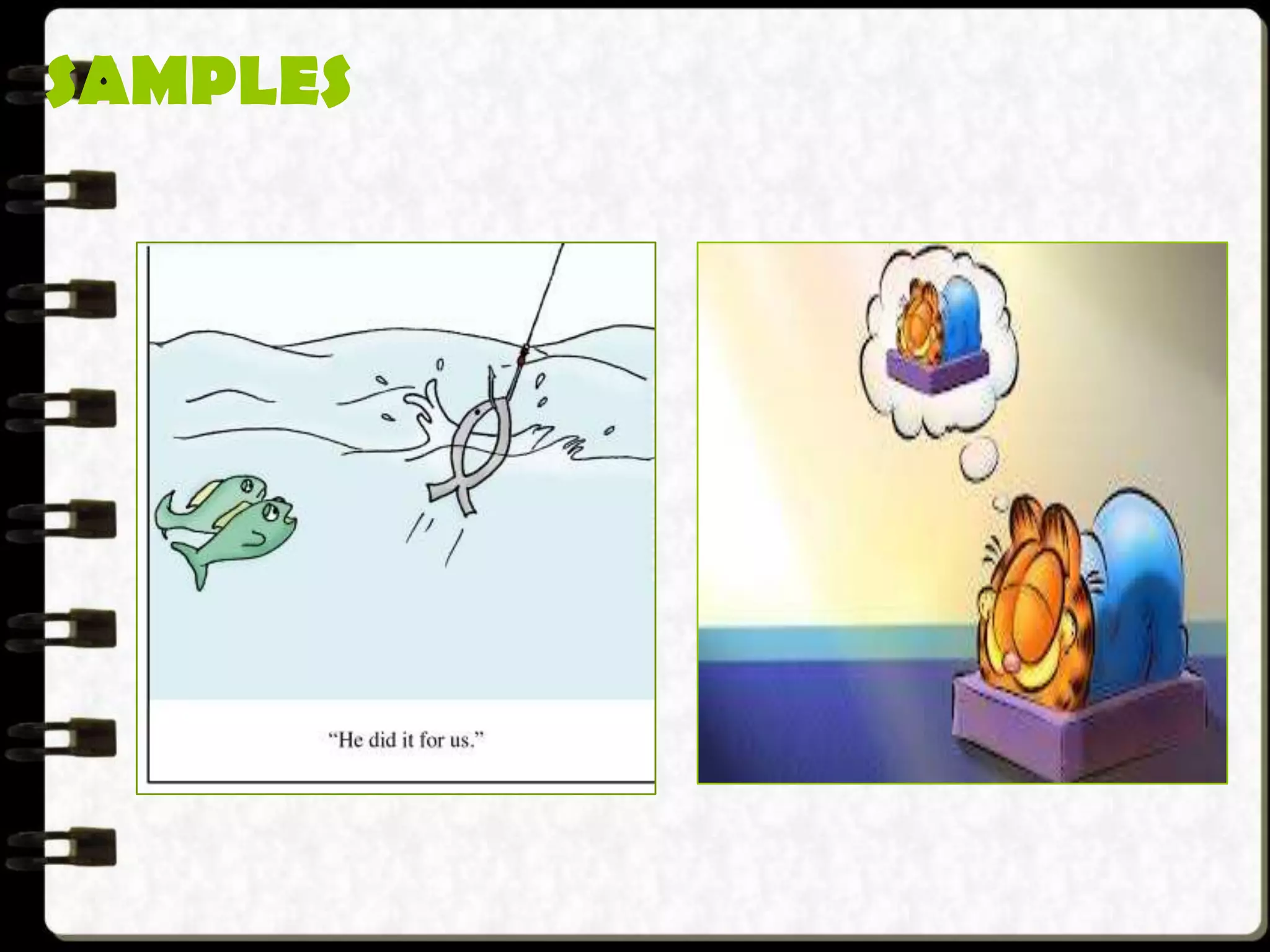
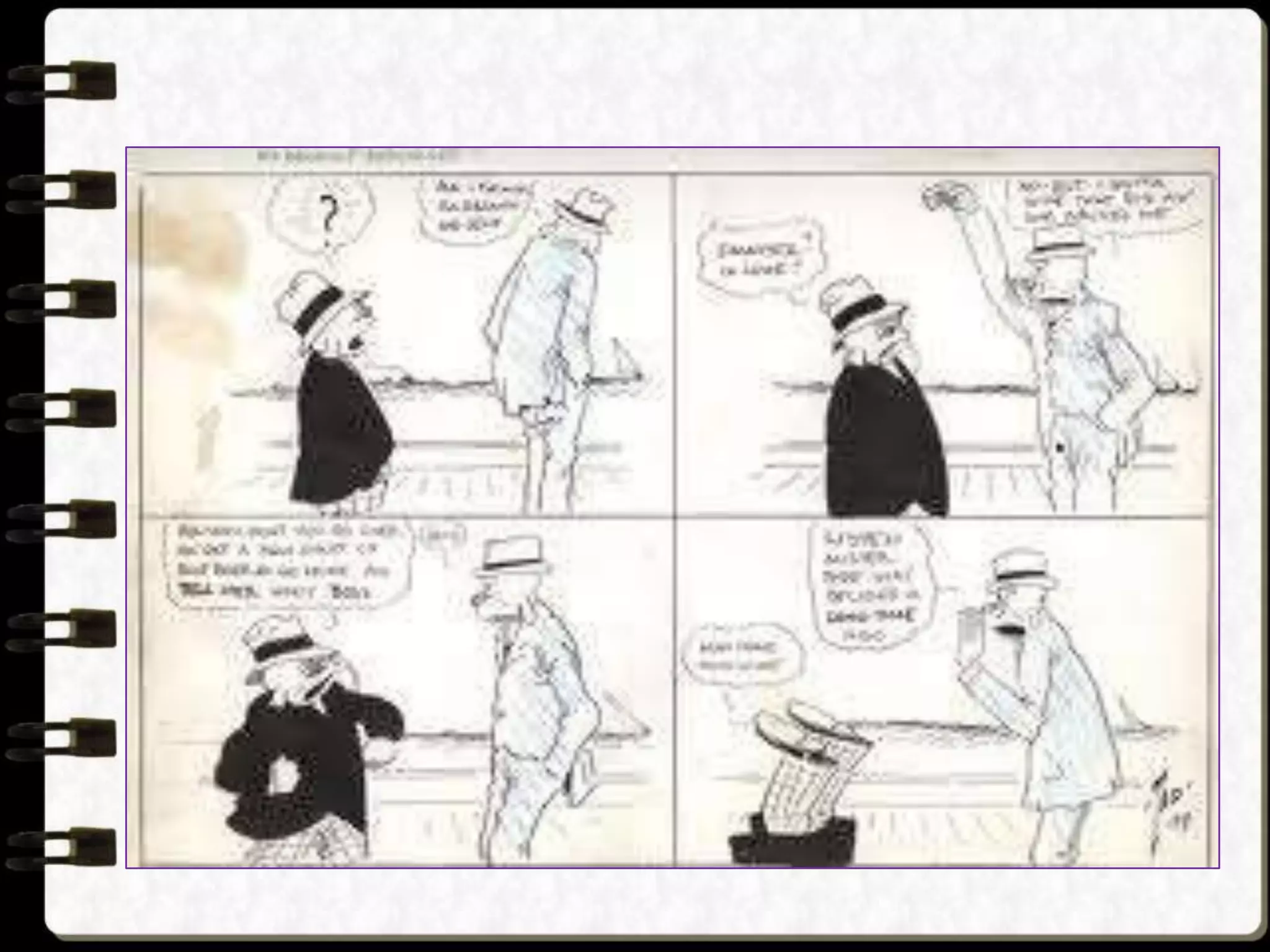
C. STRIP DRAWINGS

-commonly called comics or
comic strip. It is educational and
entertaining at the same time.

- it could also serve as
motivation and a starter of a lesson.
It can also be given as an activity for
students to express insights gained at
he conclusion of a lesson.
D. DIAGRAMS drawing
- Any line

that shows
arrangement and relations as of parts to the
whole, relative values, origins and development,
chronological fluctuations, distributions, etc. –
DALE
The word GRAPH is sometimes used as
a synonym for diagram.
Types of a Diagram
•Affinity Diagram
- used to cluster complex apparently
unrelated data into natural and
meaningful groups.
- is a tool that gathers large amounts
of language data (ideas, opinions, issues)
and organizes them into groupings based
on their natural relationships .
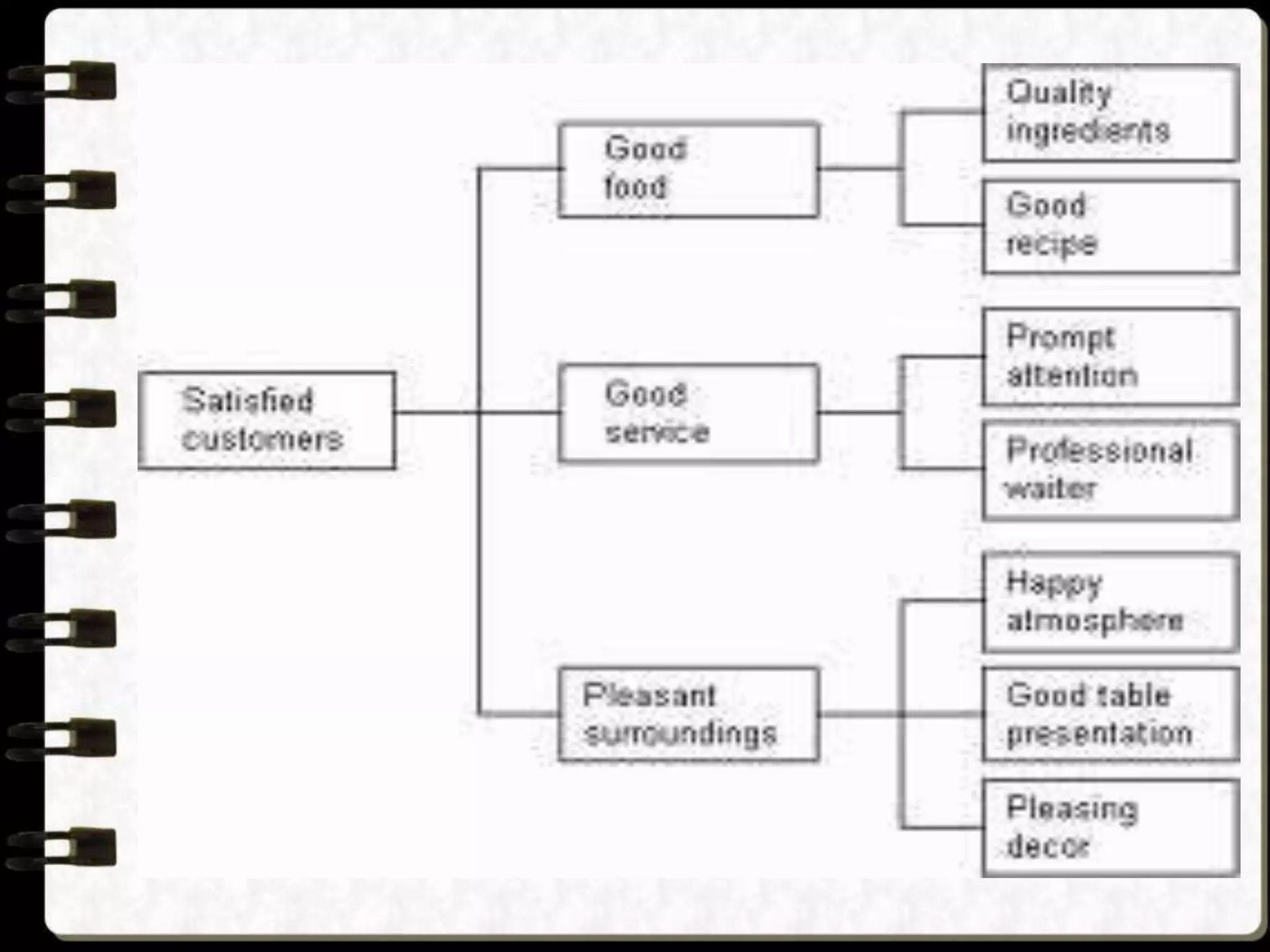
Tree Diagram

- Used to chart out, in increasing
details, the various tasks that must be
accomplished to complete a project or
achieve a specific objective.
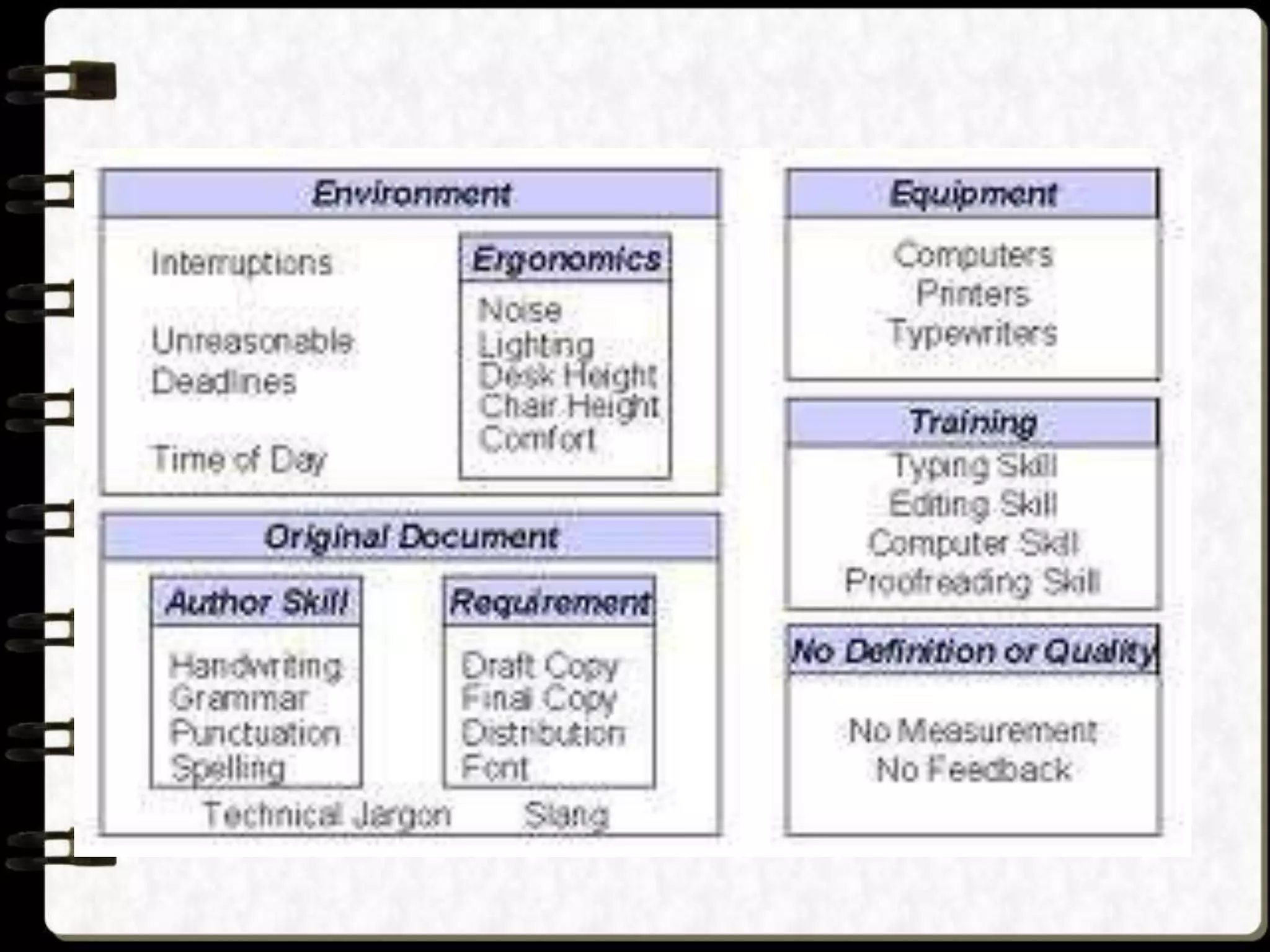
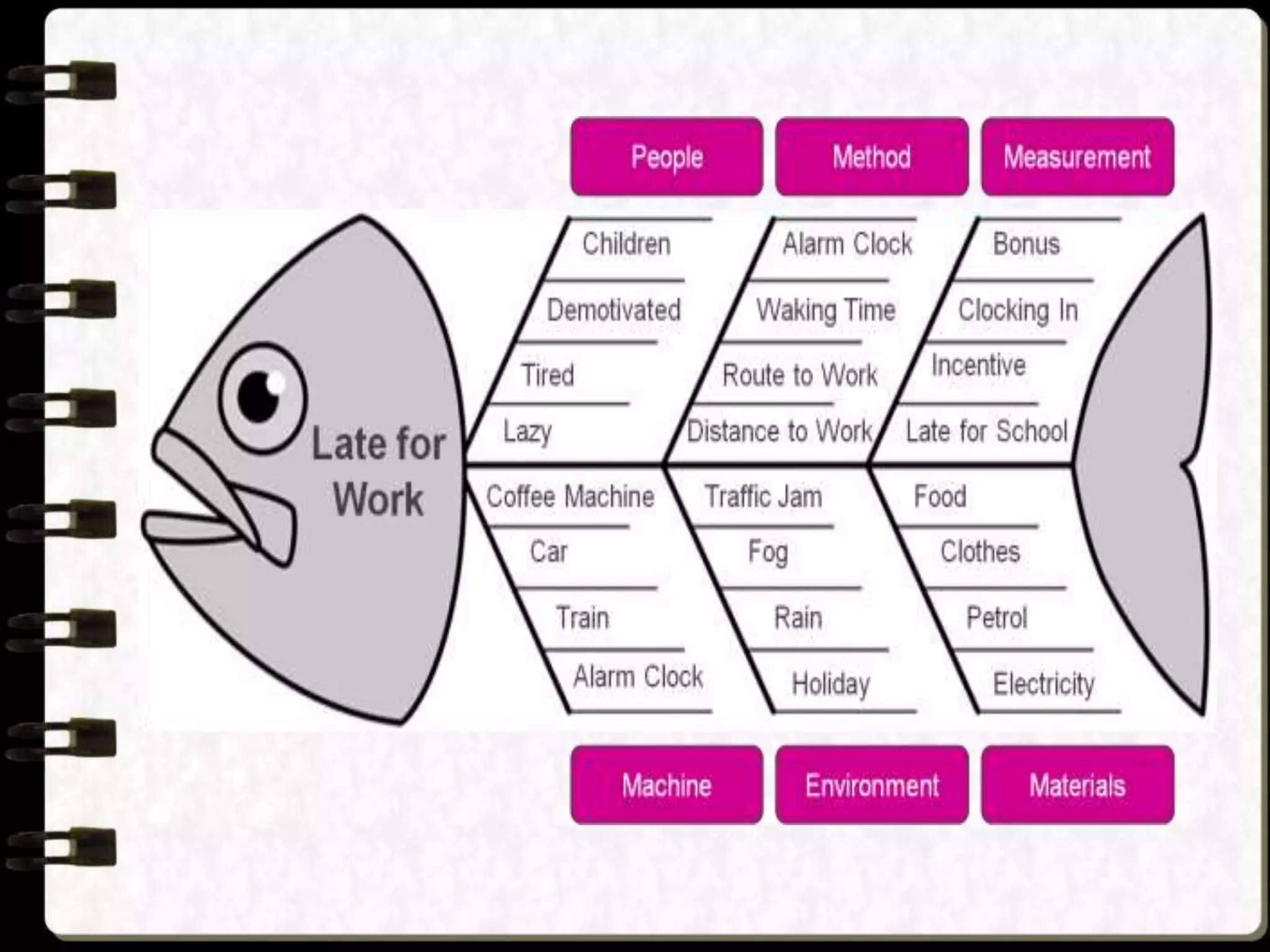
Fishbone Diagram
- Also called cause-and-effect diagram.
It is a structured form of brainstorming
that graphically shows the relationship
of possible causes and sub causes directly
related to an identified effect/problem.
It is most commonly used to analyze
work-related problems.
E. CHARTS
- diagrammatic representation of
relationships within an organizations.
• Time Chart
• Tree or Stream Chart
• Flow Chart
• Organizational Chart
• Comparison and Contrast Chart
• Pareto Chart
Time Chart
- tabular time chart that
presents data in ordinal sequence.
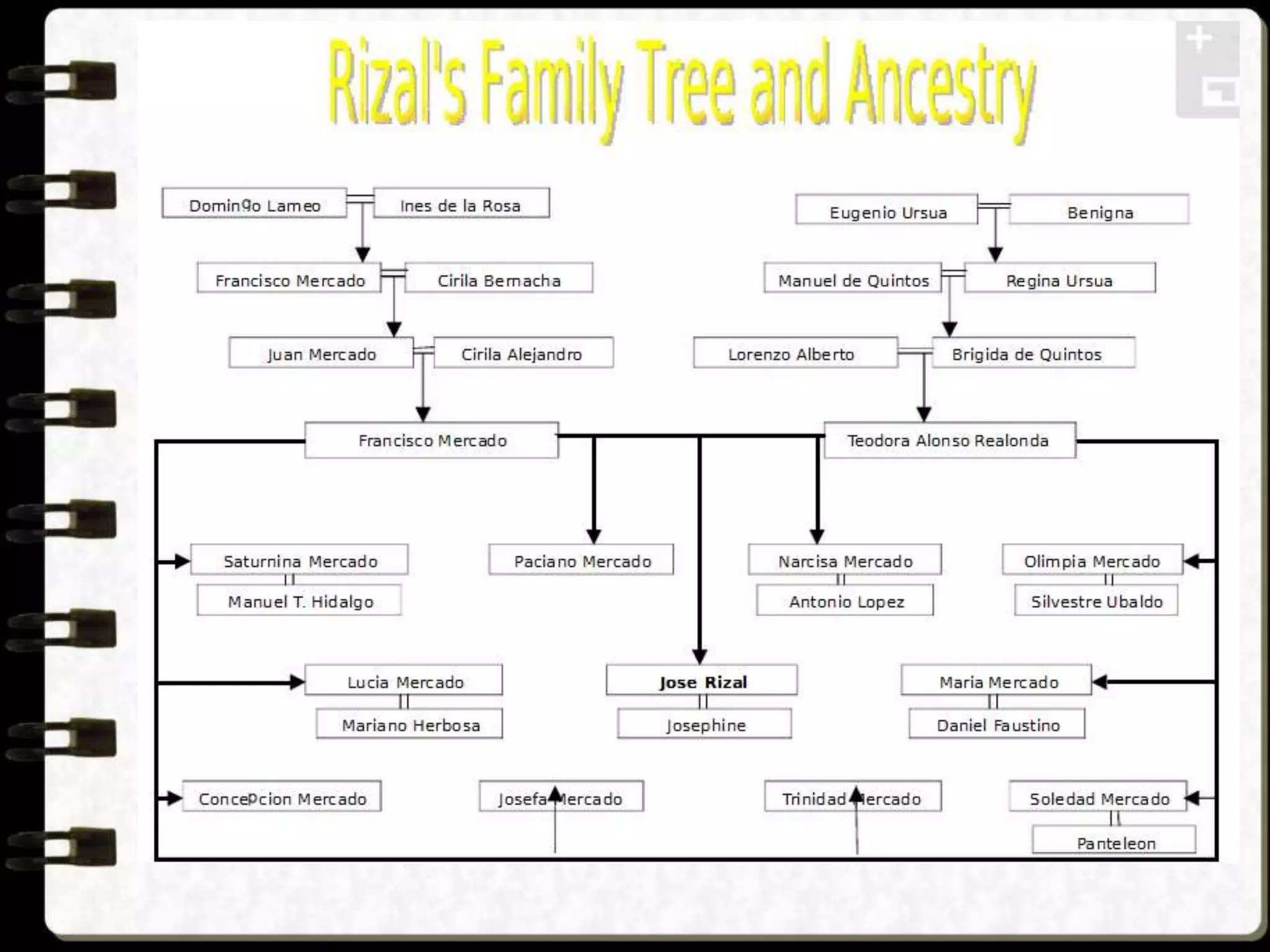
Tree or Stream Chart
-depicts development, growth
and change by beginning with a
simple course with spread outs into
many branches.
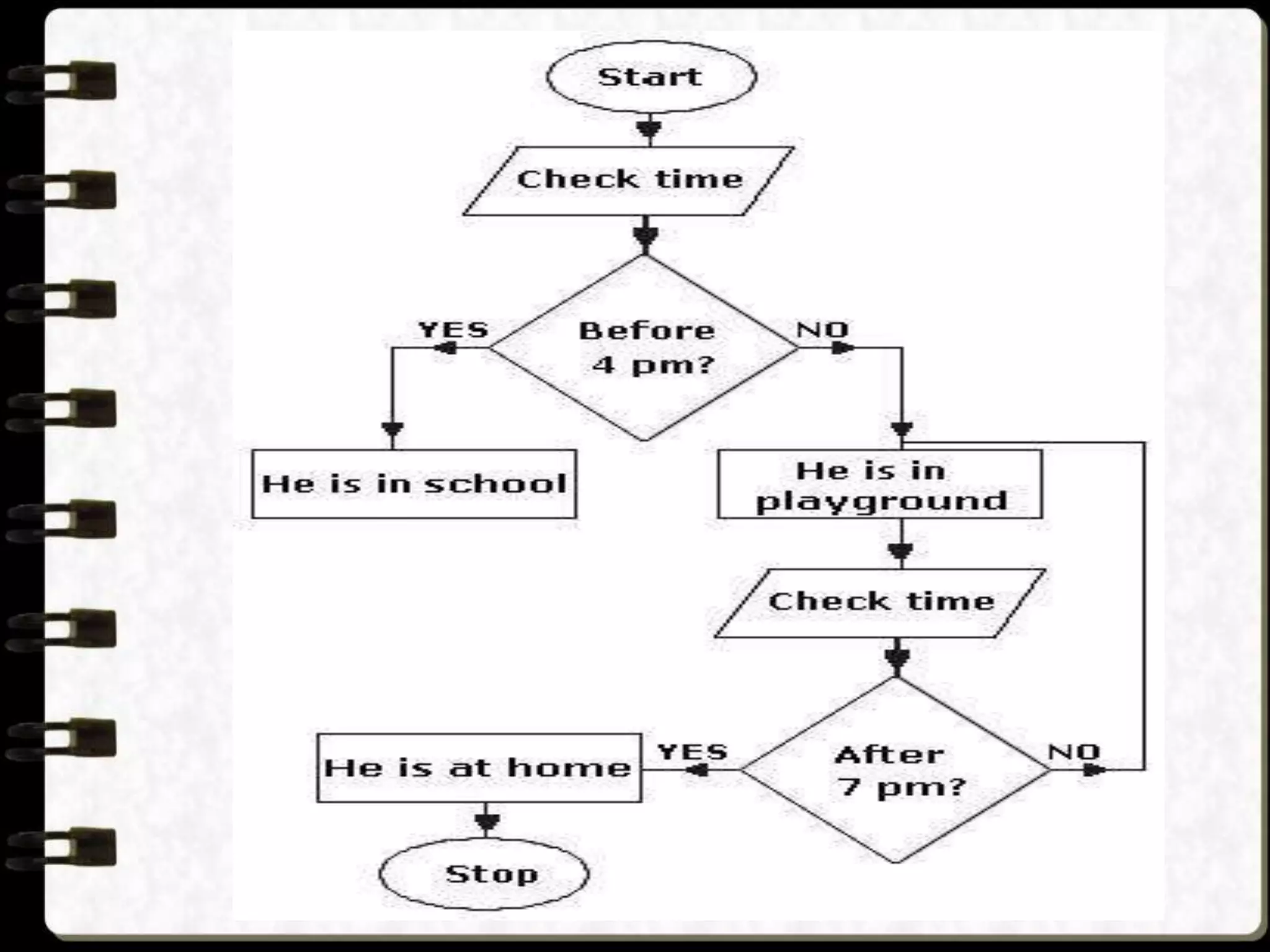
Flowchart
- visual way of charting or
showing a process from beginning
to end. It is a means of analyzing a
process. By outlining every step in
a process, you can begin to find
inefficiencies or problems.
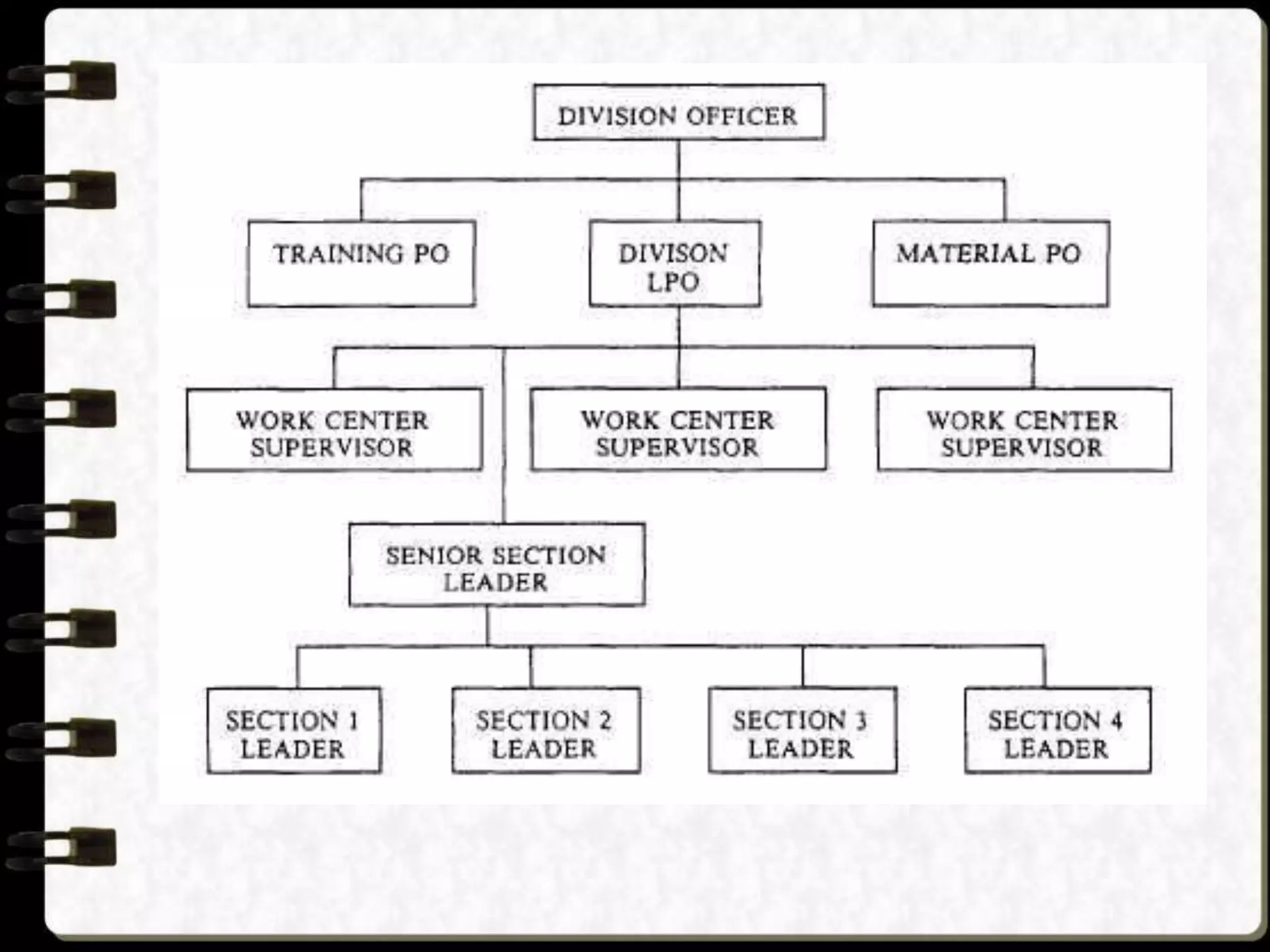
Organizational Chart
- shows how one part of the
organization relates to other
parts of the organization.
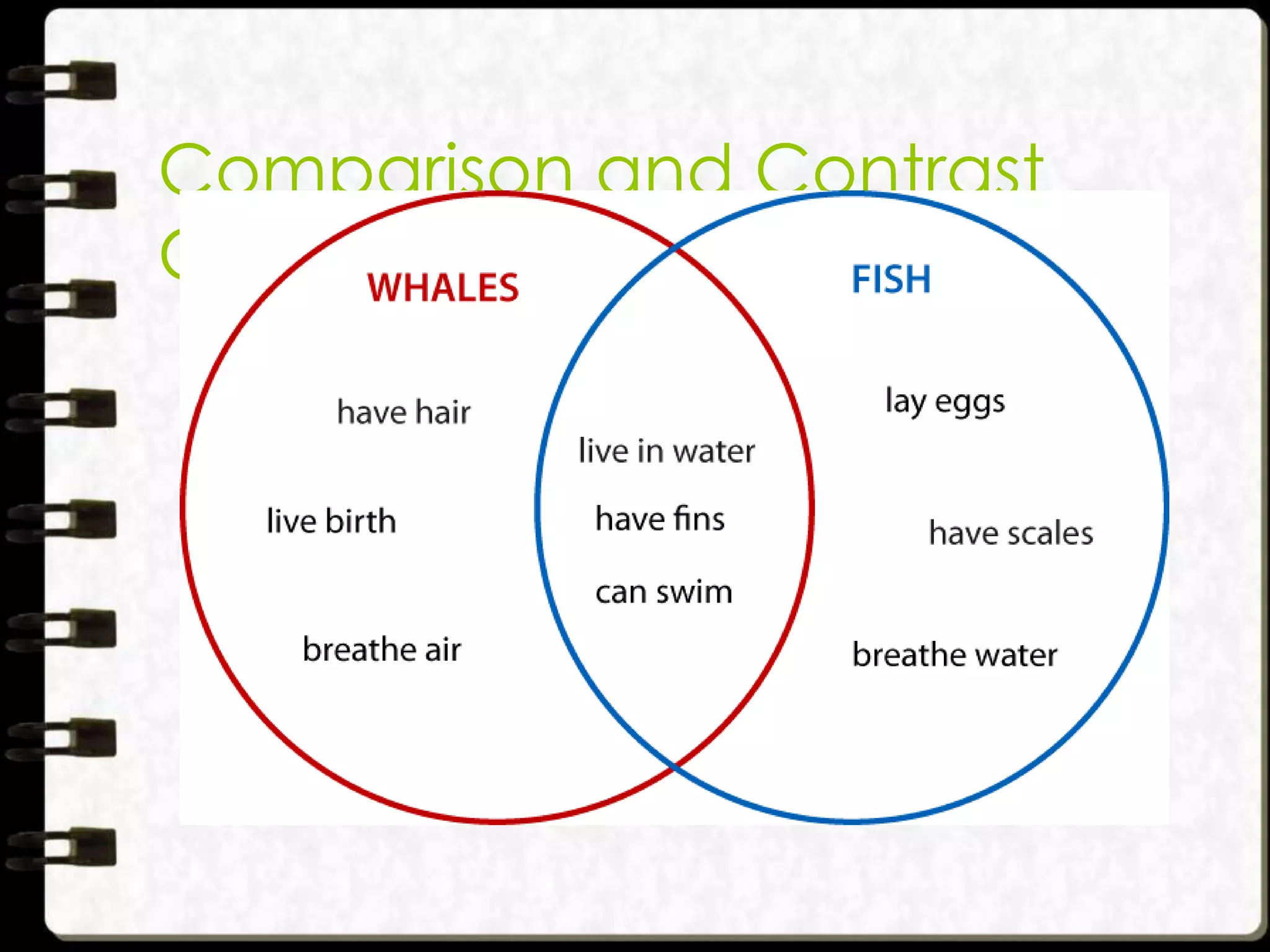
Comparison and Contrast Chart

A compare and contrast
chart used to evaluate
the similarities and
differences between two
subject or objects.
Comparison and Contrast
Chart
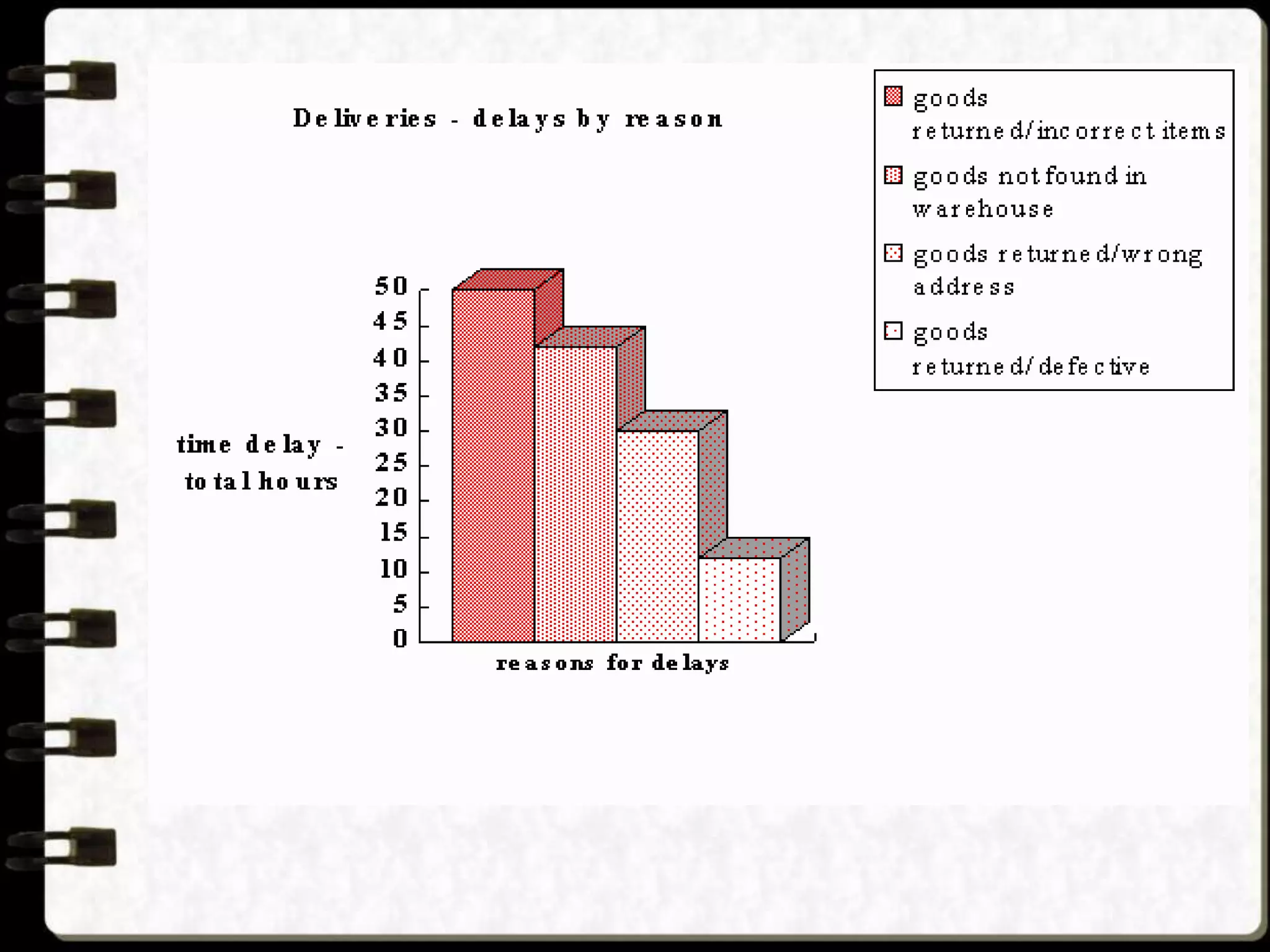
Pareto chart
- type of bar chart,
prioritized in descending order
of magnitude or importance
from left to right.
F. GRAPHS
- pictures that help us
understand
amounts.
These amounts are
called data.
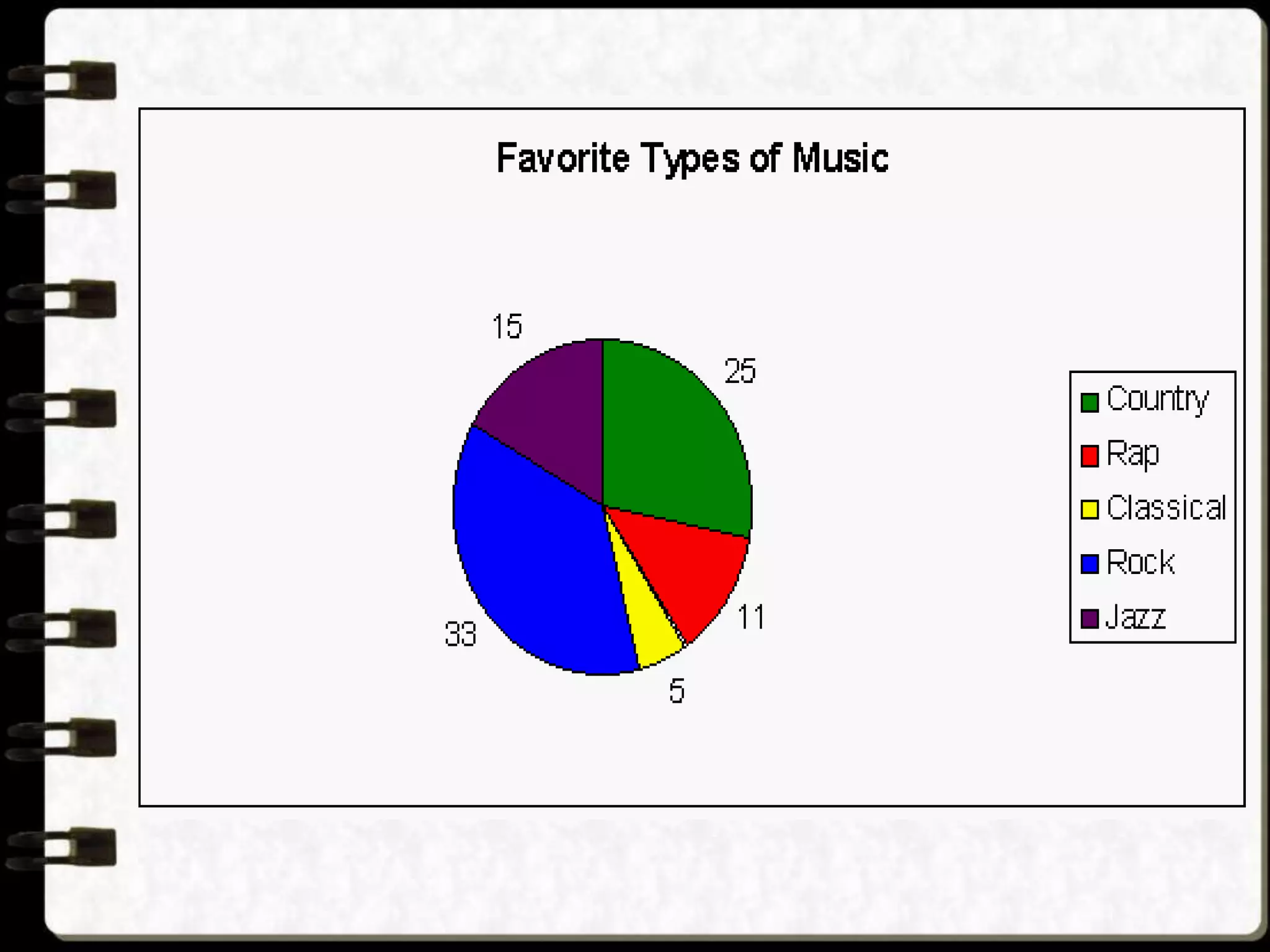
Circle Graph

- is shaped like a circle. It is
divided into fractions that look
like pieces of pie, so sometimes a
circle graph is called a pie graph.
Many times the fractional parts
are different colors and a key
explains the colors.
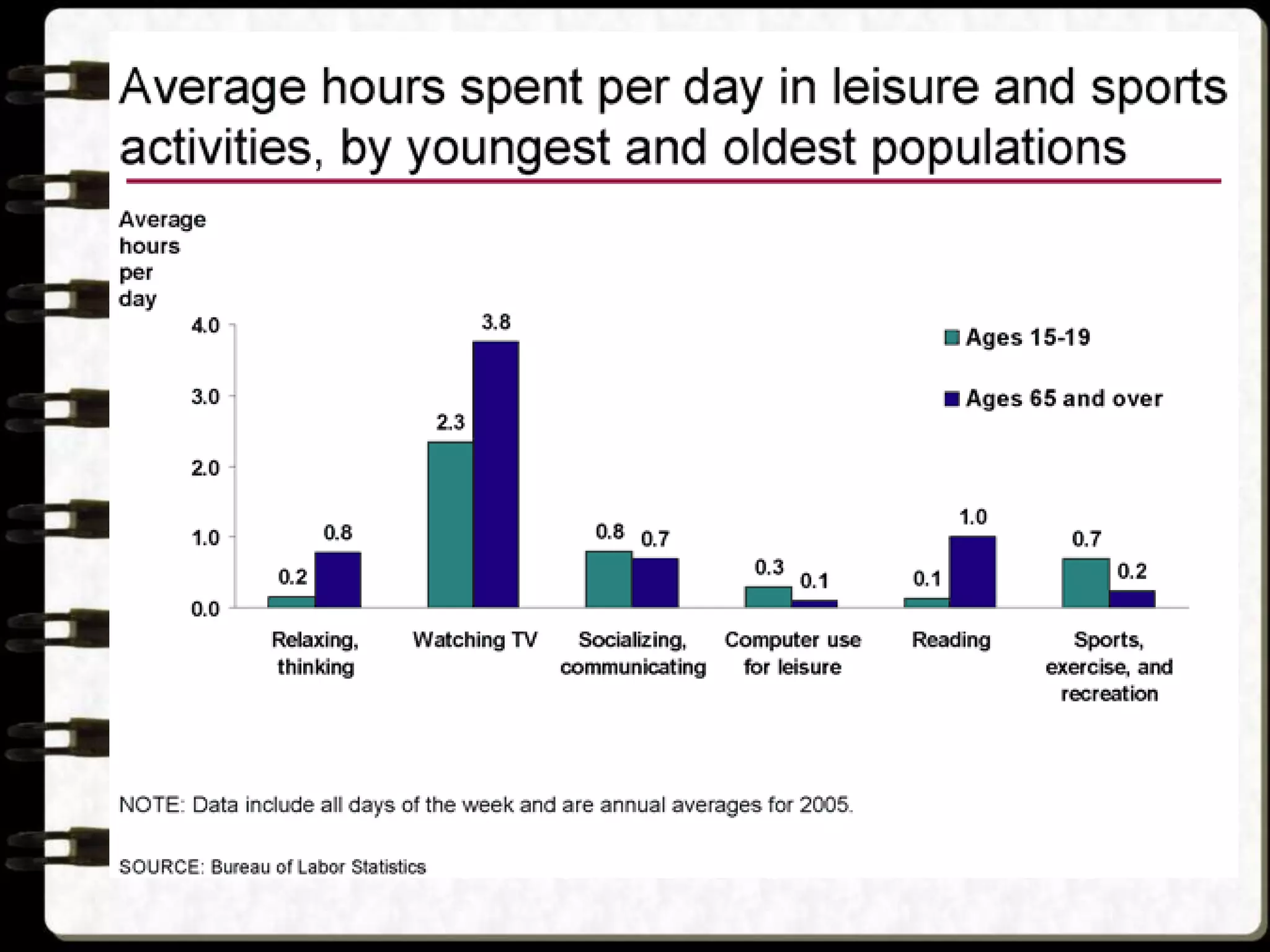
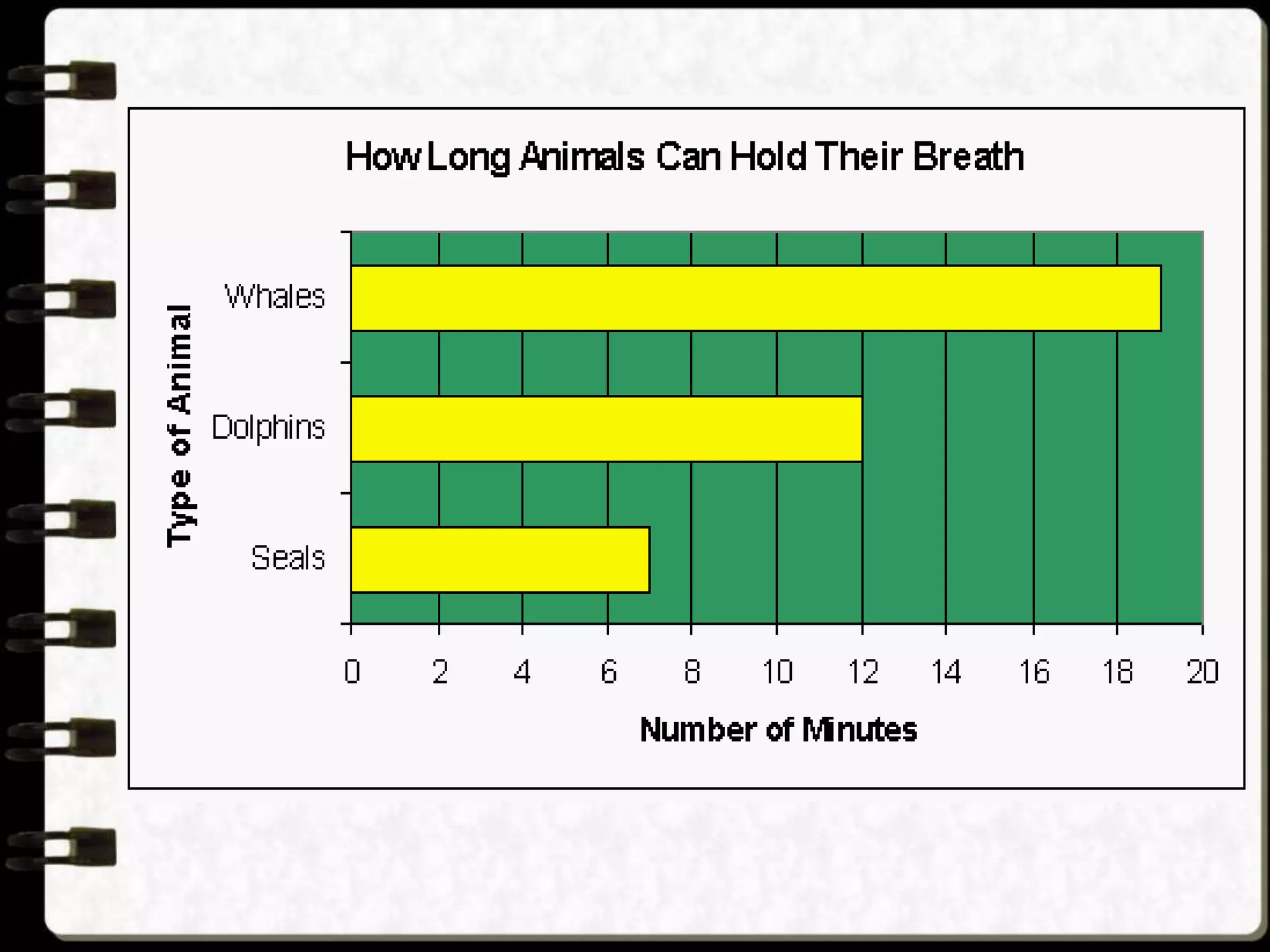
Bar Graph
- uses bars to show data. The
bars can be vertical (up and
down), or horizontal (across). The
data can be in words or
numbers.
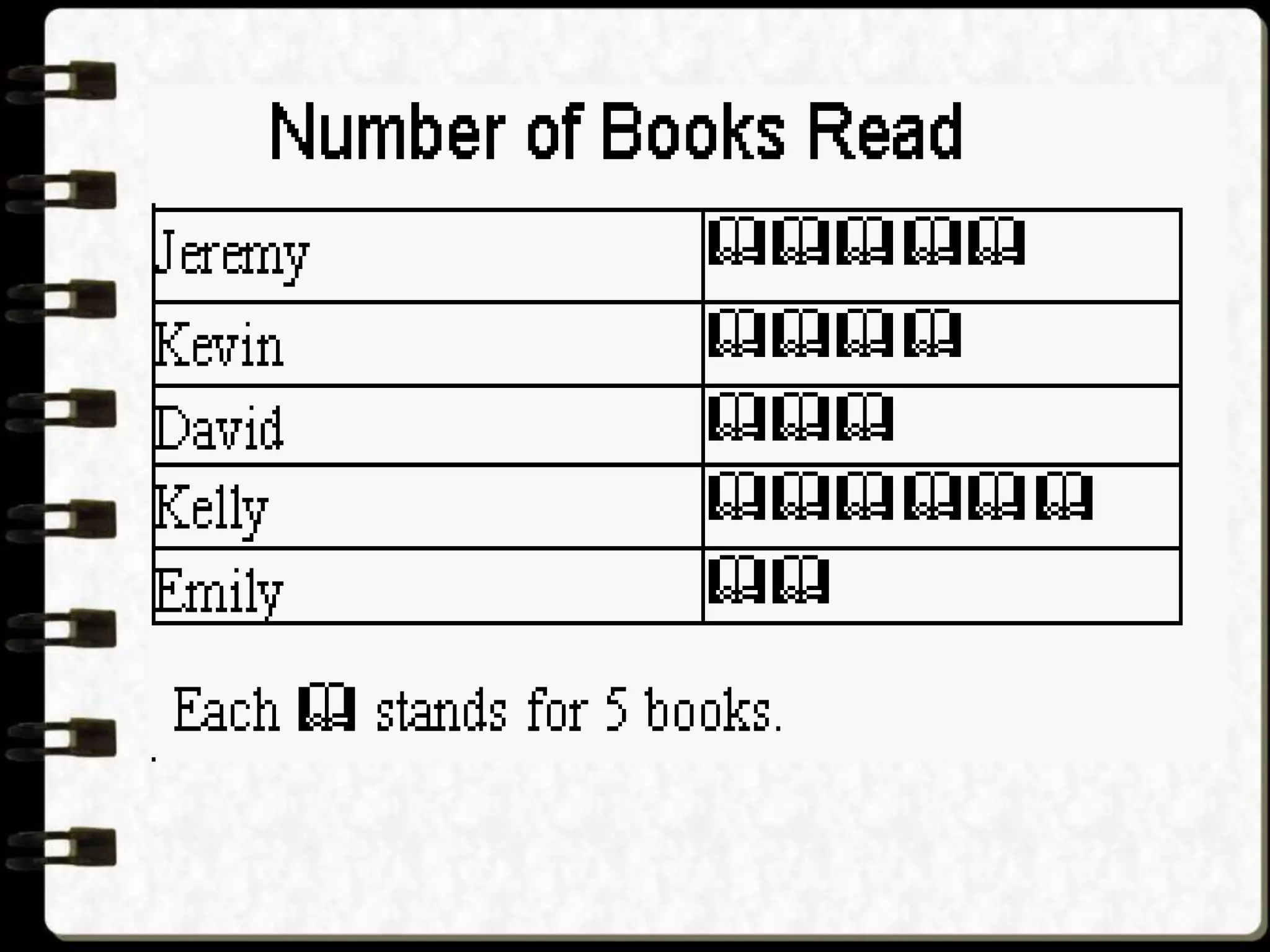
Auses pictures or symbols to show
- Picture Graph
data. One picture often stands for
more than one vote so a key is
necessary to understand the
symbols.
GRAPHIC
ORGANIZER

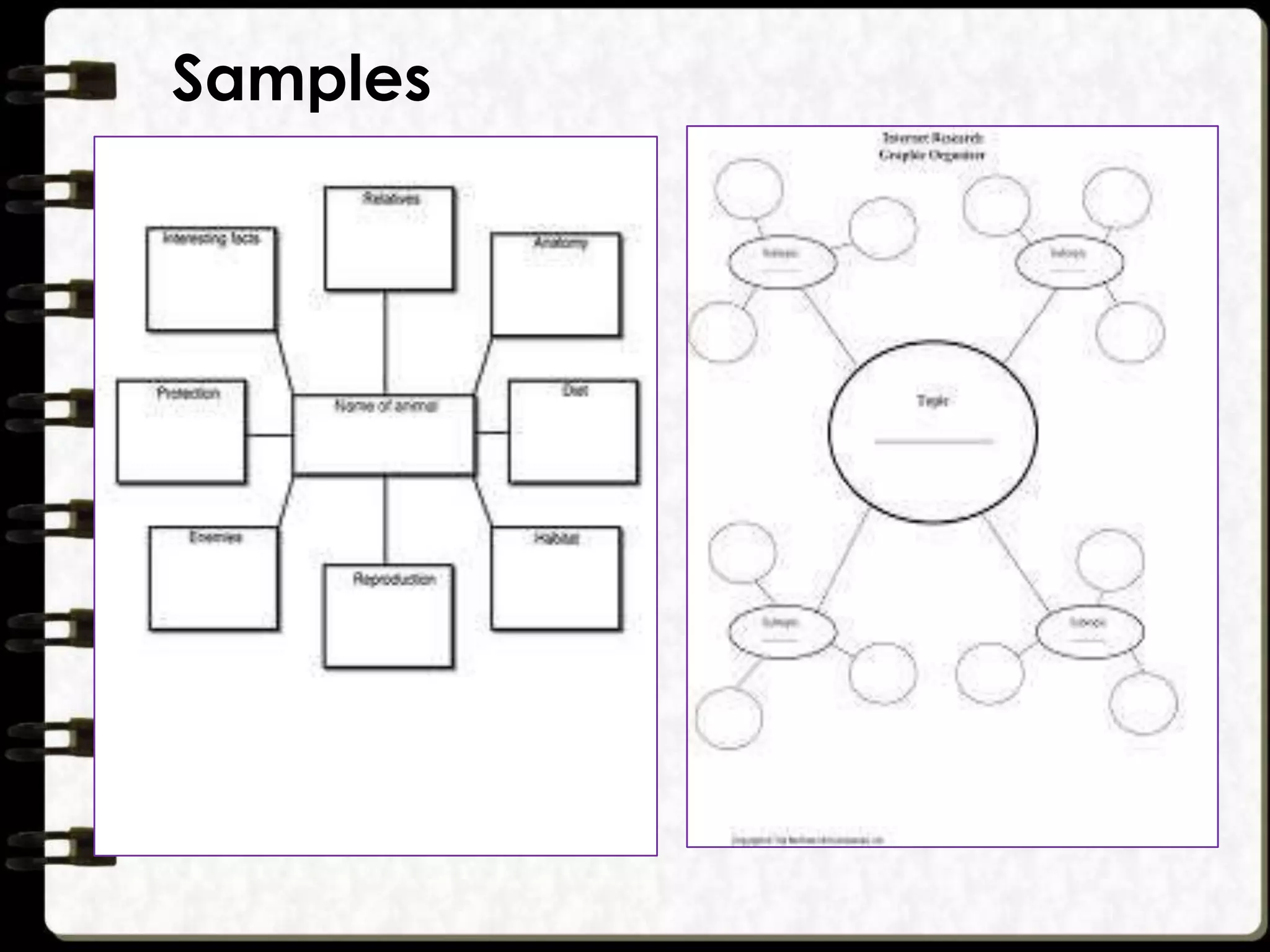
-you met several
graphic organizers in
your subject, principles
of teaching.
Samples
Map/Maps
-Maps represent the surface of the
earth. Different kinds of maps can
be used depending on what the
lesson is about.
Kinds of Map

•RELIEF MAP
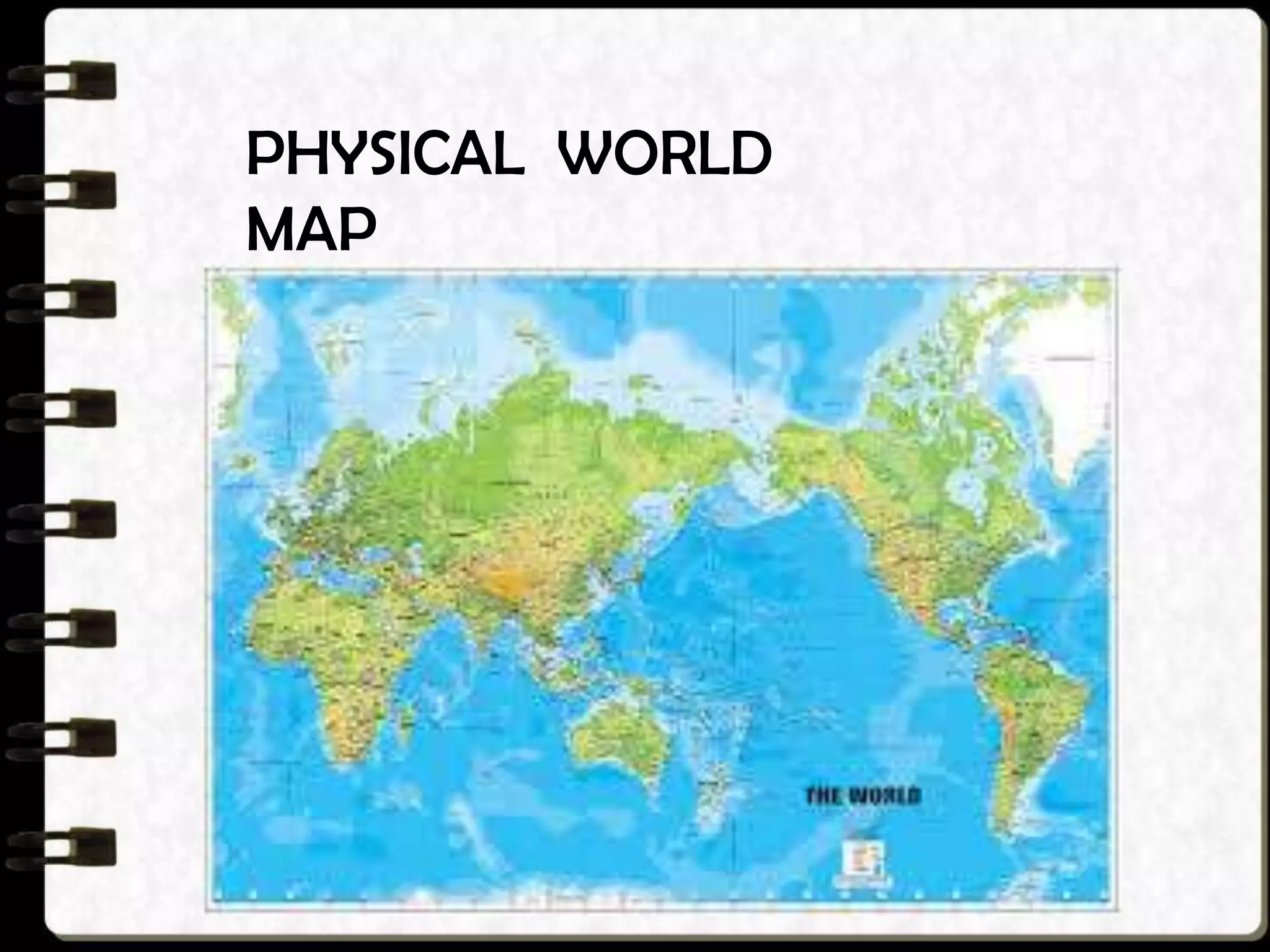
•PHYSICAL MAP
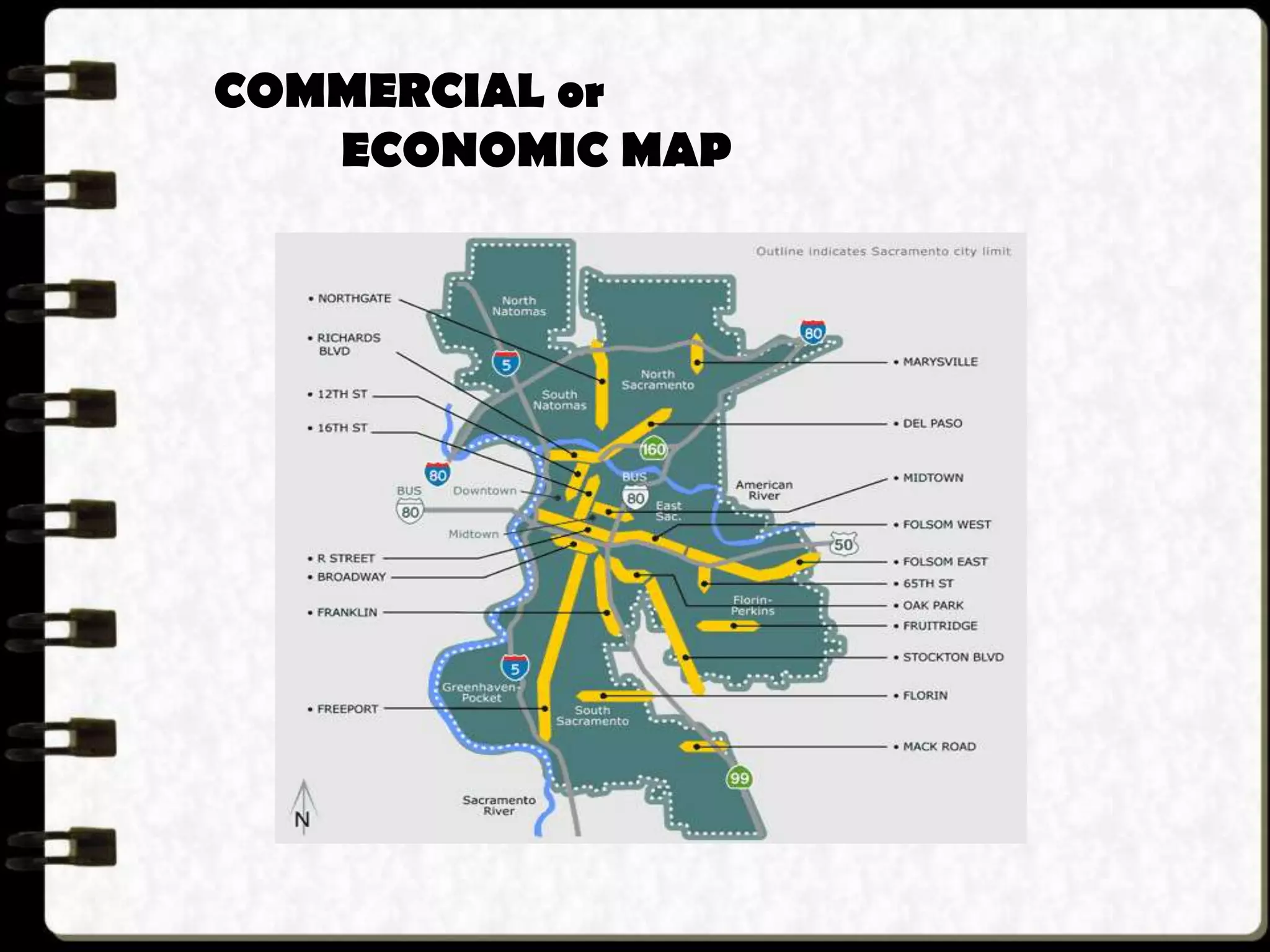
•COMMERCIAL or
ECONOMIC MAP

•POLITICAL MAP
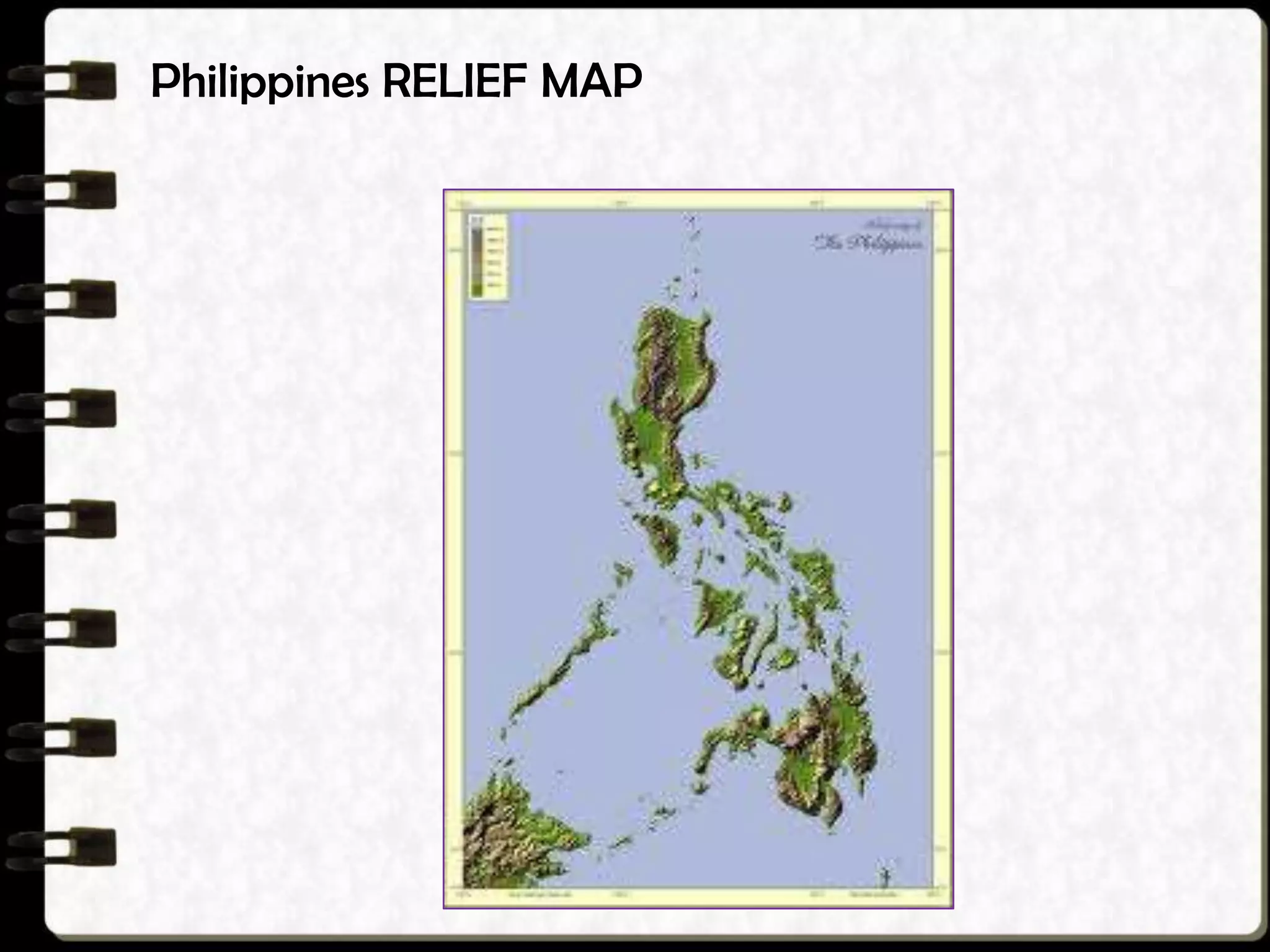
RELIEF MAP
has three dimensional
representations and show
contours of the physical data
of the earth or part of the
earth.
Philippines RELIEF MAP
PHYSICAL MAP
combine in a single projection data
like altitude, temperature, rainfall,
precipitation, vegetation and soil.
PHYSICAL WORLD
MAP
COMMERCIAL or
ECONOMIC MAP
Also called product or
industrial map since they
show land areas in relation to
the economy.
COMMERCIAL or
ECONOMIC MAP
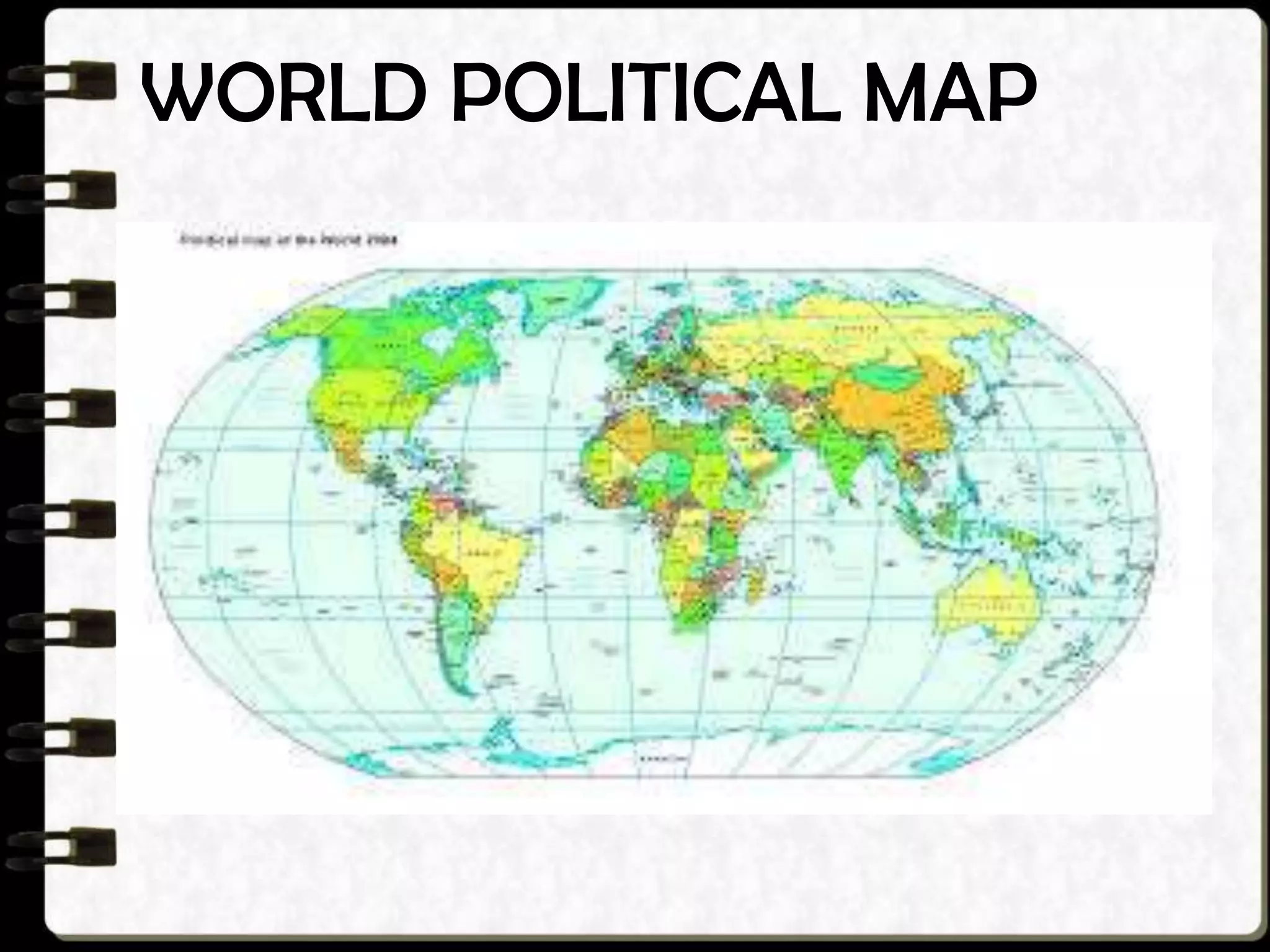
POLITICAL MAP

Gives detailed information about country,
provinces, cities and towns, roads and
highway. Oceans, rivers and lakes are
themain features of most political maps.
WORLD POLITICAL MAP
MAP LANGUAGE
• SCALE- shows how much of the actual
earth’s surface is represented by a
given measurement on a map. The
scale must be shown so thet the map
reader can use the distances and
areas shown on the map.
1 inch = 15 statute miles
SYMBOLS- usually a map has a legend
that explains what each symbol
means. Some symbols represent
• COLOR- the different colors of the map
are part of the map language.

GEOGRAPHIC GRIDS- the entire system of
•
•
•
•

these grid lines are called grid lines. These
grid lines are called mrridians and parallels.
Meridian-north to south pole line.
Parallels- lines drawn around a globe with
allpoints.
Longitude- distance in degrees of any place
east or west of the prime meridian.
Latitude- distance in degrees of any place
north and south of the equator.
Submitted by:
Ricalyn T. Obal
Student
Submitted to:
Mary Gene I. Panes
Professor

Educational technology(report) ricalyn

  • 1.
  • 2.
    Visual symbols -Representations ofdirect reality, which comes in the form of signs and symbols.The visual aids are what help the students understand what the lesson is all about. -There are different kinds of visual symbols. These include drawings, cartoons, strip drawings, diagrams, charts, graphs and maps.
  • 3.
  • 4.
    A. DRAWINGS - Concretevisual or a representation of a real thing. It helps illustrating our lecture through freehand sketching in a chalkboard.
  • 5.
  • 6.
    B.CARTOONS - Another kindof visual symbol. It tells its story metaphorically. The perfect cartoon needs no caption. The symbolism conveys the message. -It could also be used as a springboard for a lesson or a concluding activity.
  • 7.
  • 8.
    C. STRIP DRAWINGS -commonlycalled comics or comic strip. It is educational and entertaining at the same time. - it could also serve as motivation and a starter of a lesson. It can also be given as an activity for students to express insights gained at he conclusion of a lesson.
  • 10.
    D. DIAGRAMS drawing -Any line that shows arrangement and relations as of parts to the whole, relative values, origins and development, chronological fluctuations, distributions, etc. – DALE The word GRAPH is sometimes used as a synonym for diagram.
  • 11.
    Types of aDiagram
  • 12.
    •Affinity Diagram - usedto cluster complex apparently unrelated data into natural and meaningful groups. - is a tool that gathers large amounts of language data (ideas, opinions, issues) and organizes them into groupings based on their natural relationships .
  • 14.
    Tree Diagram - Usedto chart out, in increasing details, the various tasks that must be accomplished to complete a project or achieve a specific objective.
  • 16.
    Fishbone Diagram - Alsocalled cause-and-effect diagram. It is a structured form of brainstorming that graphically shows the relationship of possible causes and sub causes directly related to an identified effect/problem. It is most commonly used to analyze work-related problems.
  • 18.
    E. CHARTS - diagrammaticrepresentation of relationships within an organizations. • Time Chart • Tree or Stream Chart • Flow Chart • Organizational Chart • Comparison and Contrast Chart • Pareto Chart
  • 19.
    Time Chart - tabulartime chart that presents data in ordinal sequence.
  • 21.
    Tree or StreamChart -depicts development, growth and change by beginning with a simple course with spread outs into many branches.
  • 23.
    Flowchart - visual wayof charting or showing a process from beginning to end. It is a means of analyzing a process. By outlining every step in a process, you can begin to find inefficiencies or problems.
  • 25.
    Organizational Chart - showshow one part of the organization relates to other parts of the organization.
  • 27.
    Comparison and ContrastChart A compare and contrast chart used to evaluate the similarities and differences between two subject or objects.
  • 28.
  • 29.
    Pareto chart - typeof bar chart, prioritized in descending order of magnitude or importance from left to right.
  • 31.
    F. GRAPHS - picturesthat help us understand amounts. These amounts are called data.
  • 32.
    Circle Graph - isshaped like a circle. It is divided into fractions that look like pieces of pie, so sometimes a circle graph is called a pie graph. Many times the fractional parts are different colors and a key explains the colors.
  • 34.
    Bar Graph - usesbars to show data. The bars can be vertical (up and down), or horizontal (across). The data can be in words or numbers.
  • 36.
    Auses pictures orsymbols to show - Picture Graph data. One picture often stands for more than one vote so a key is necessary to understand the symbols.
  • 38.
    GRAPHIC ORGANIZER -you met several graphicorganizers in your subject, principles of teaching.
  • 39.
  • 40.
    Map/Maps -Maps represent thesurface of the earth. Different kinds of maps can be used depending on what the lesson is about.
  • 41.
    Kinds of Map •RELIEFMAP •PHYSICAL MAP •COMMERCIAL or ECONOMIC MAP •POLITICAL MAP
  • 42.
    RELIEF MAP has threedimensional representations and show contours of the physical data of the earth or part of the earth.
  • 43.
  • 44.
    PHYSICAL MAP combine ina single projection data like altitude, temperature, rainfall, precipitation, vegetation and soil.
  • 45.
  • 46.
    COMMERCIAL or ECONOMIC MAP Alsocalled product or industrial map since they show land areas in relation to the economy.
  • 47.
  • 48.
    POLITICAL MAP Gives detailedinformation about country, provinces, cities and towns, roads and highway. Oceans, rivers and lakes are themain features of most political maps.
  • 49.
  • 50.
    MAP LANGUAGE • SCALE-shows how much of the actual earth’s surface is represented by a given measurement on a map. The scale must be shown so thet the map reader can use the distances and areas shown on the map. 1 inch = 15 statute miles SYMBOLS- usually a map has a legend that explains what each symbol means. Some symbols represent
  • 51.
    • COLOR- thedifferent colors of the map are part of the map language. GEOGRAPHIC GRIDS- the entire system of • • • • these grid lines are called grid lines. These grid lines are called mrridians and parallels. Meridian-north to south pole line. Parallels- lines drawn around a globe with allpoints. Longitude- distance in degrees of any place east or west of the prime meridian. Latitude- distance in degrees of any place north and south of the equator.
  • 52.
    Submitted by: Ricalyn T.Obal Student Submitted to: Mary Gene I. Panes Professor