
By: Prof.Mardelyn L. Dumayas
GRAPHIC AIDS
In Making Reports
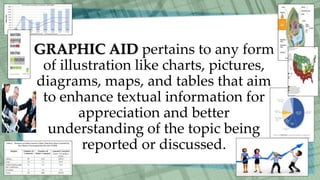
GRAPHIC AID pertains to any form
of illustration like charts, pictures,
diagrams, maps, and tables that aim
to enhance textual information for
appreciation and better
understanding of the topic being
reported or discussed.
Kinds of GRAPHIC AIDS in Reports:
• Figure
• Graph
• Inset
• Chart
• Clip Art
• Map
• Diagram
• Picture
• Pictogram
• Side Bar
• Table
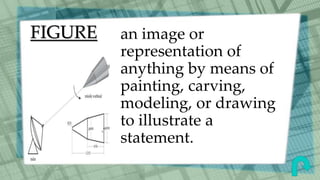
FIGURE an image or
representation of
anything by means of
painting, carving,
modeling, or drawing
to illustrate a
statement.
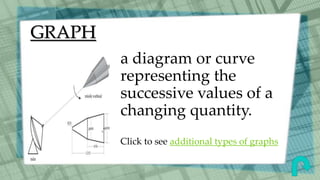
GRAPH
a diagram or curve
representing the
successive values of a
changing quantity.
Click to see additional types of graphs
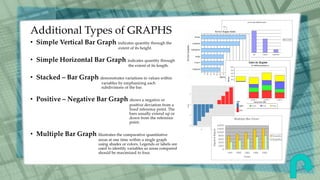
Additional Types of GRAPHS
• Simple Vertical Bar Graph indicates quantity through the
extent of its height.
• Simple Horizontal Bar Graph indicates quantity through
the extent of its length.
• Stacked – Bar Graph demonstrates variations in values within
variables by emphasizing each
subdivisions of the bar.
• Positive – Negative Bar Graph shows a negative or
positive deviation from a
fixed reference point. The
bars usually extend up or
down from the reference
point.
• Multiple Bar Graph illustrates the comparative quantitative
areas at one time within a single graph
using shades or colors. Legends or labels are
used to identify variables so areas compared
should be maximized to four.
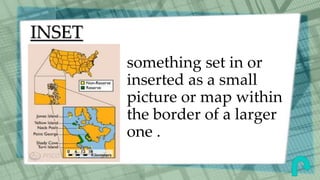
INSET
something set in or
inserted as a small
picture or map within
the border of a larger
one .
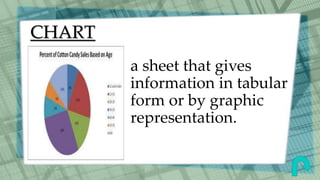
CHART
a sheet that gives
information in tabular
form or by graphic
representation.
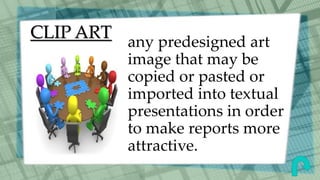
CLIP ART any predesigned art
image that may be
copied or pasted or
imported into textual
presentations in order
to make reports more
attractive.
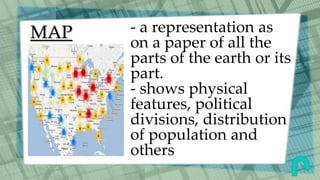
MAP - a representation as
on a paper of all the
parts of the earth or its
part.
- shows physical
features, political
divisions, distribution
of population and
others
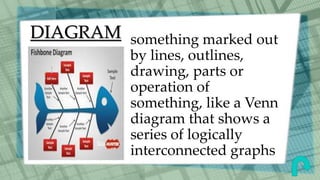
DIAGRAM something marked out
by lines, outlines,
drawing, parts or
operation of
something, like a Venn
diagram that shows a
series of logically
interconnected graphs
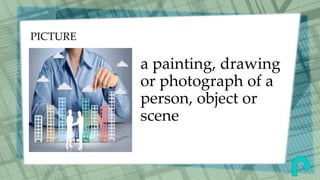
PICTURE
a painting, drawing
or photograph of a
person, object or
scene
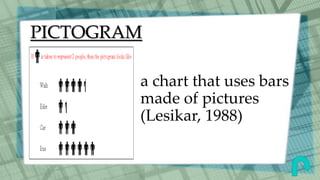
PICTOGRAM
a chart that uses bars
made of pictures
(Lesikar, 1988)
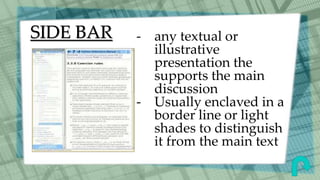
SIDE BAR - any textual or
illustrative
presentation the
supports the main
discussion
- Usually enclaved in a
border line or light
shades to distinguish
it from the main text
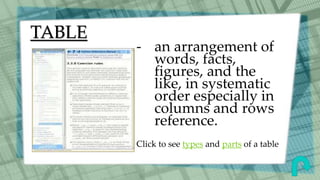
TABLE
- an arrangement of
words, facts,
figures, and the
like, in systematic
order especially in
columns and rows
reference.
Click to see types and parts of a table
TWO (2) Types of TABLES
• SPOT Table is an integral part of the text that is after,
before or in between the body of text.
• REFERENCE Table is positioned independently either near the
text, that is, at the right, or at the left side of the text to which it refers or in the
appendix.
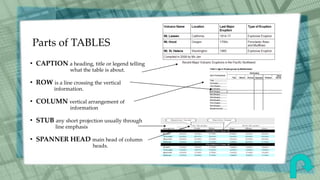
Parts of TABLES
• CAPTION a heading, title or legend telling
what the table is about.
• ROW is a line crossing the vertical
information.
• COLUMN vertical arrangement of
information
• STUB any short projection usually through
line emphasis
• SPANNER HEAD main head of column
heads.
Thank you.
By: Prof.Mardelyn L. Dumayas

Graphic Aids in Making Reports

  • 1.
    By: Prof.Mardelyn L.Dumayas GRAPHIC AIDS In Making Reports
  • 2.
    GRAPHIC AID pertainsto any form of illustration like charts, pictures, diagrams, maps, and tables that aim to enhance textual information for appreciation and better understanding of the topic being reported or discussed.
  • 3.
    Kinds of GRAPHICAIDS in Reports: • Figure • Graph • Inset • Chart • Clip Art • Map • Diagram • Picture • Pictogram • Side Bar • Table
  • 4.
    FIGURE an imageor representation of anything by means of painting, carving, modeling, or drawing to illustrate a statement.
  • 5.
    GRAPH a diagram orcurve representing the successive values of a changing quantity. Click to see additional types of graphs
  • 6.
    Additional Types ofGRAPHS • Simple Vertical Bar Graph indicates quantity through the extent of its height. • Simple Horizontal Bar Graph indicates quantity through the extent of its length. • Stacked – Bar Graph demonstrates variations in values within variables by emphasizing each subdivisions of the bar. • Positive – Negative Bar Graph shows a negative or positive deviation from a fixed reference point. The bars usually extend up or down from the reference point. • Multiple Bar Graph illustrates the comparative quantitative areas at one time within a single graph using shades or colors. Legends or labels are used to identify variables so areas compared should be maximized to four.
  • 7.
    INSET something set inor inserted as a small picture or map within the border of a larger one .
  • 8.
    CHART a sheet thatgives information in tabular form or by graphic representation.
  • 9.
    CLIP ART anypredesigned art image that may be copied or pasted or imported into textual presentations in order to make reports more attractive.
  • 10.
    MAP - arepresentation as on a paper of all the parts of the earth or its part. - shows physical features, political divisions, distribution of population and others
  • 11.
    DIAGRAM something markedout by lines, outlines, drawing, parts or operation of something, like a Venn diagram that shows a series of logically interconnected graphs
  • 12.
    PICTURE a painting, drawing orphotograph of a person, object or scene
  • 13.
    PICTOGRAM a chart thatuses bars made of pictures (Lesikar, 1988)
  • 14.
    SIDE BAR -any textual or illustrative presentation the supports the main discussion - Usually enclaved in a border line or light shades to distinguish it from the main text
  • 15.
    TABLE - an arrangementof words, facts, figures, and the like, in systematic order especially in columns and rows reference. Click to see types and parts of a table
  • 16.
    TWO (2) Typesof TABLES • SPOT Table is an integral part of the text that is after, before or in between the body of text. • REFERENCE Table is positioned independently either near the text, that is, at the right, or at the left side of the text to which it refers or in the appendix.
  • 17.
    Parts of TABLES •CAPTION a heading, title or legend telling what the table is about. • ROW is a line crossing the vertical information. • COLUMN vertical arrangement of information • STUB any short projection usually through line emphasis • SPANNER HEAD main head of column heads.
  • 18.