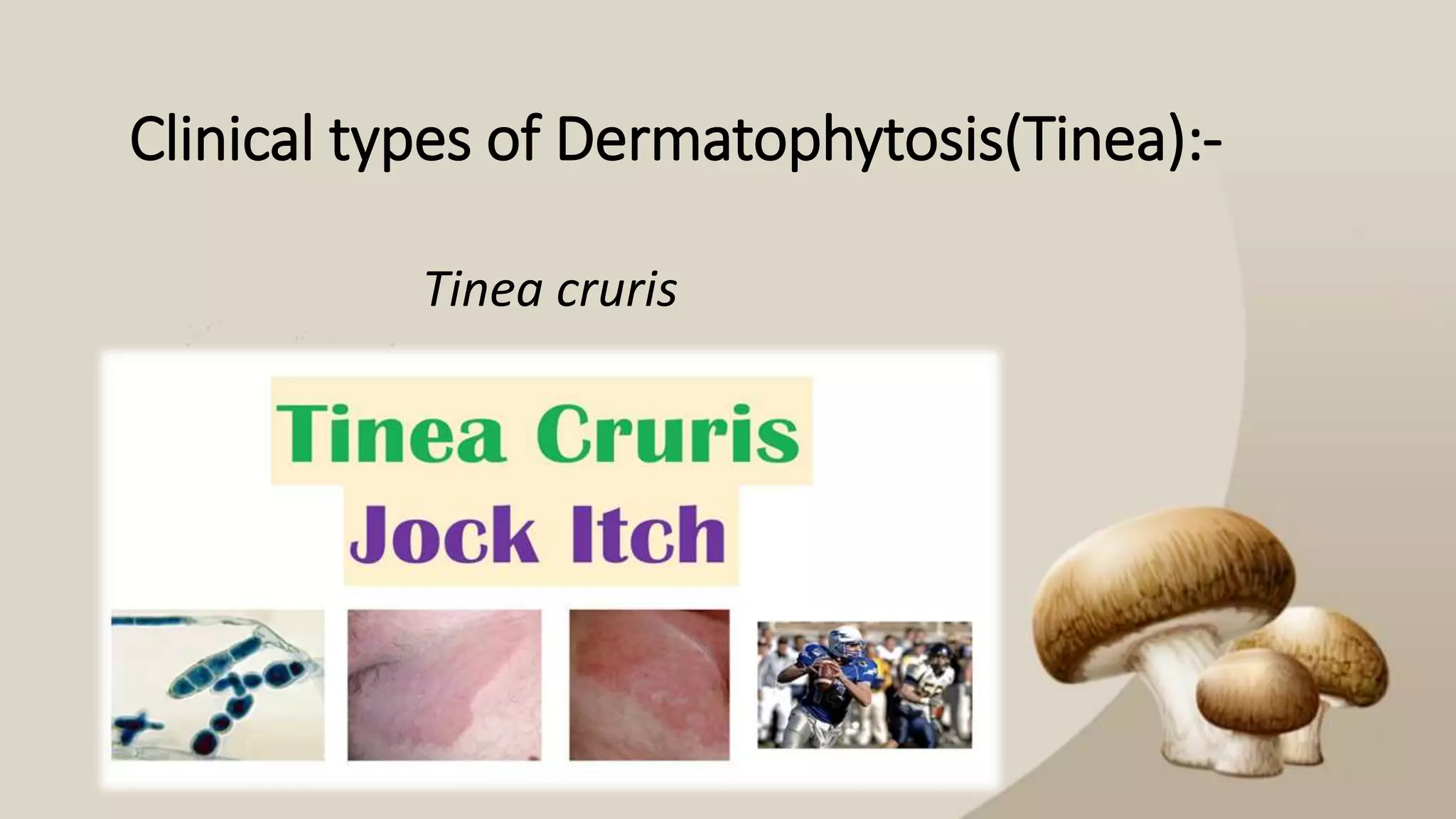
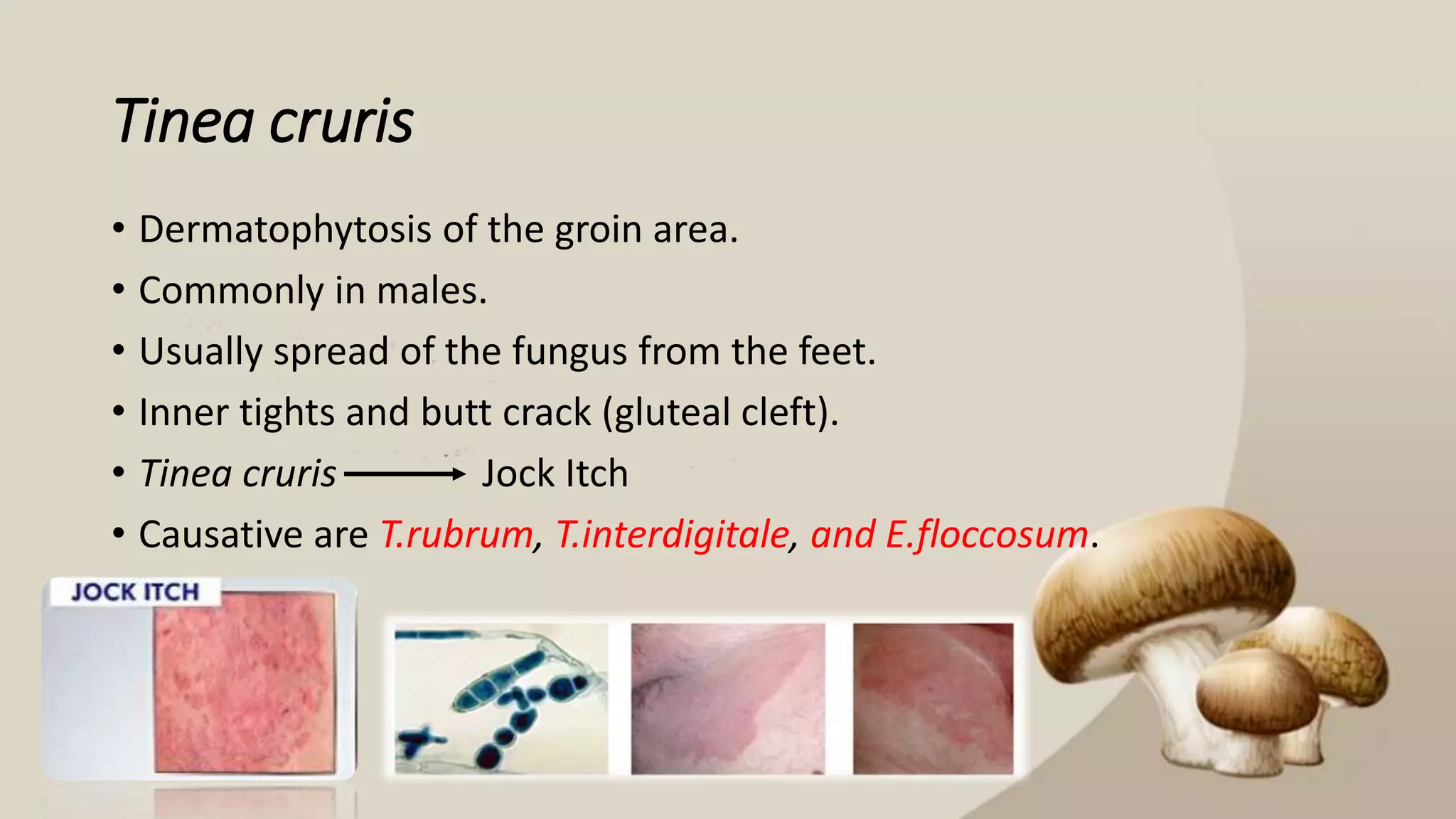
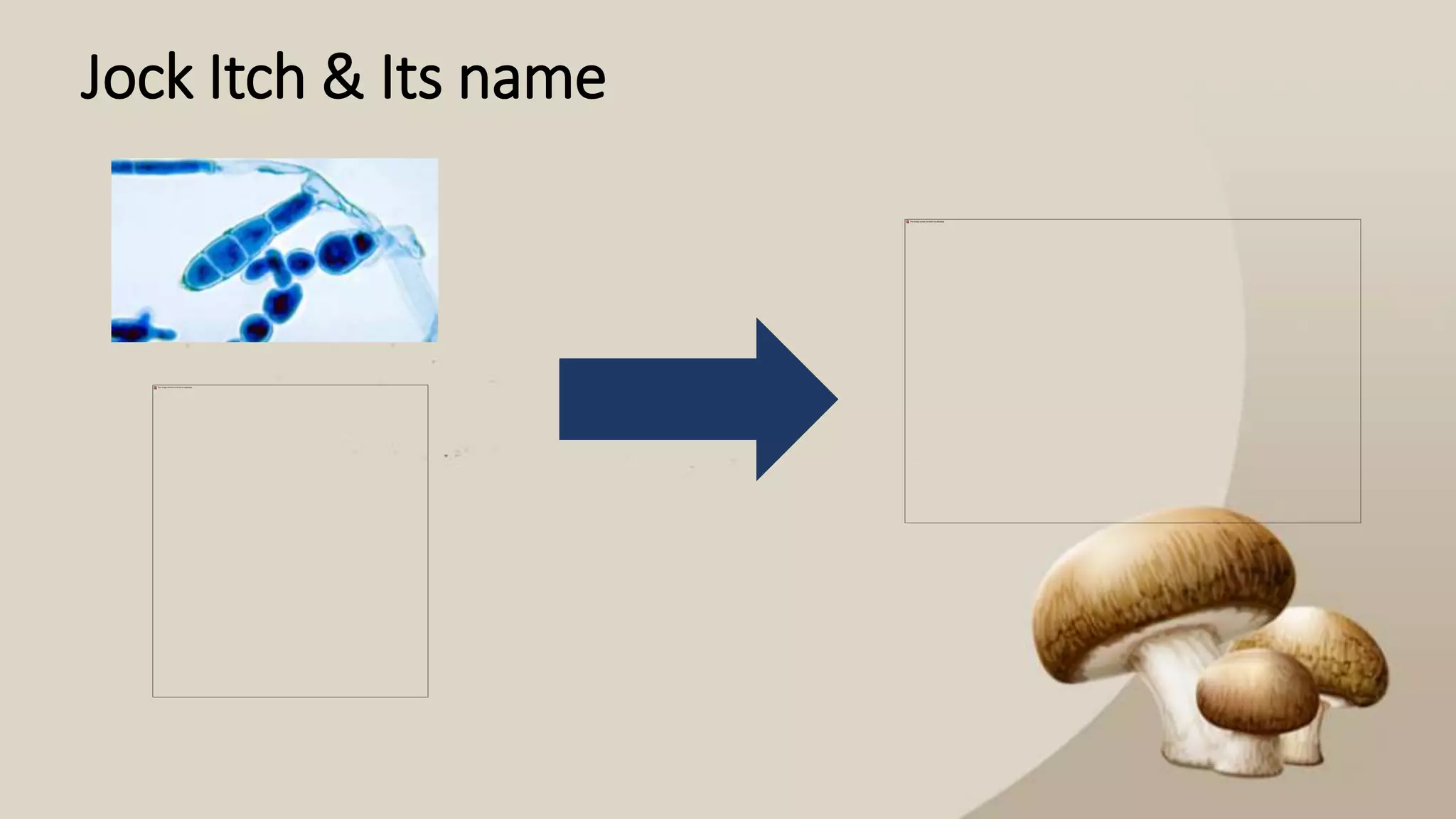
Tinea cruris
Prepared By:-
Hala Mohsen
Ghazal Abdullah
Wazira Shakir
Elham Shawkat
Aheen Ismail
Supervised By:-
Asst Prof. Asia Abdulhamid
Outlines :-
• Mycoses an overview
• Fungal Infection
• Dermatophytes
• Classification of Dermatophytes
• Clinical types of Dermatophytes
• Tinea cruris
• Jock itch and its name
• Symptoms
• Diagnosis
• Causes
• Risk factor
• Prevention
• Transmission
• Treatment
Mycoses an overview
• Augustino Bassi First Fungi causing disease(1773-1856).
• In 1904, Raymond Jacques Sabouraud (Father of Medical Mycology).
• Specialized in dermatology, mycology, painting and was a sculptor.
• Induced radiological treatment against ringworm.
• Knowledge of Scalp Diseases.
• His book (Les Teignes) media for growing fungi:-
Sabouraud ̓s Dextrose Agar (SAD)
Sabouraud ̓s Glucose Agar
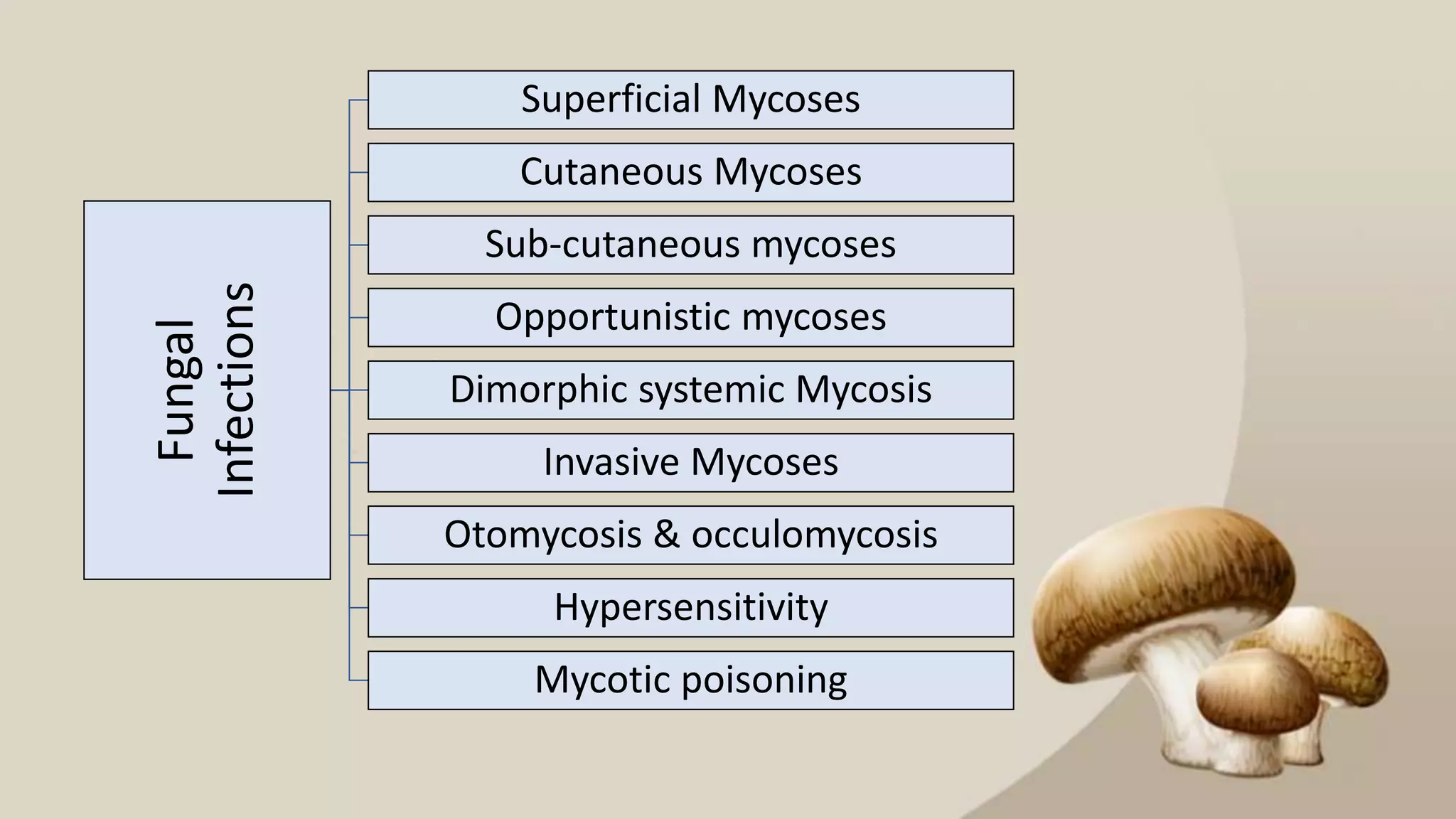
Fungal
Infections
Superficial Mycoses
Cutaneous Mycoses
Sub-cutaneous mycoses
Opportunistic mycoses
Dimorphic systemic Mycosis
Invasive Mycoses
Otomycosis & occulomycosis
Hypersensitivity
Mycotic poisoning
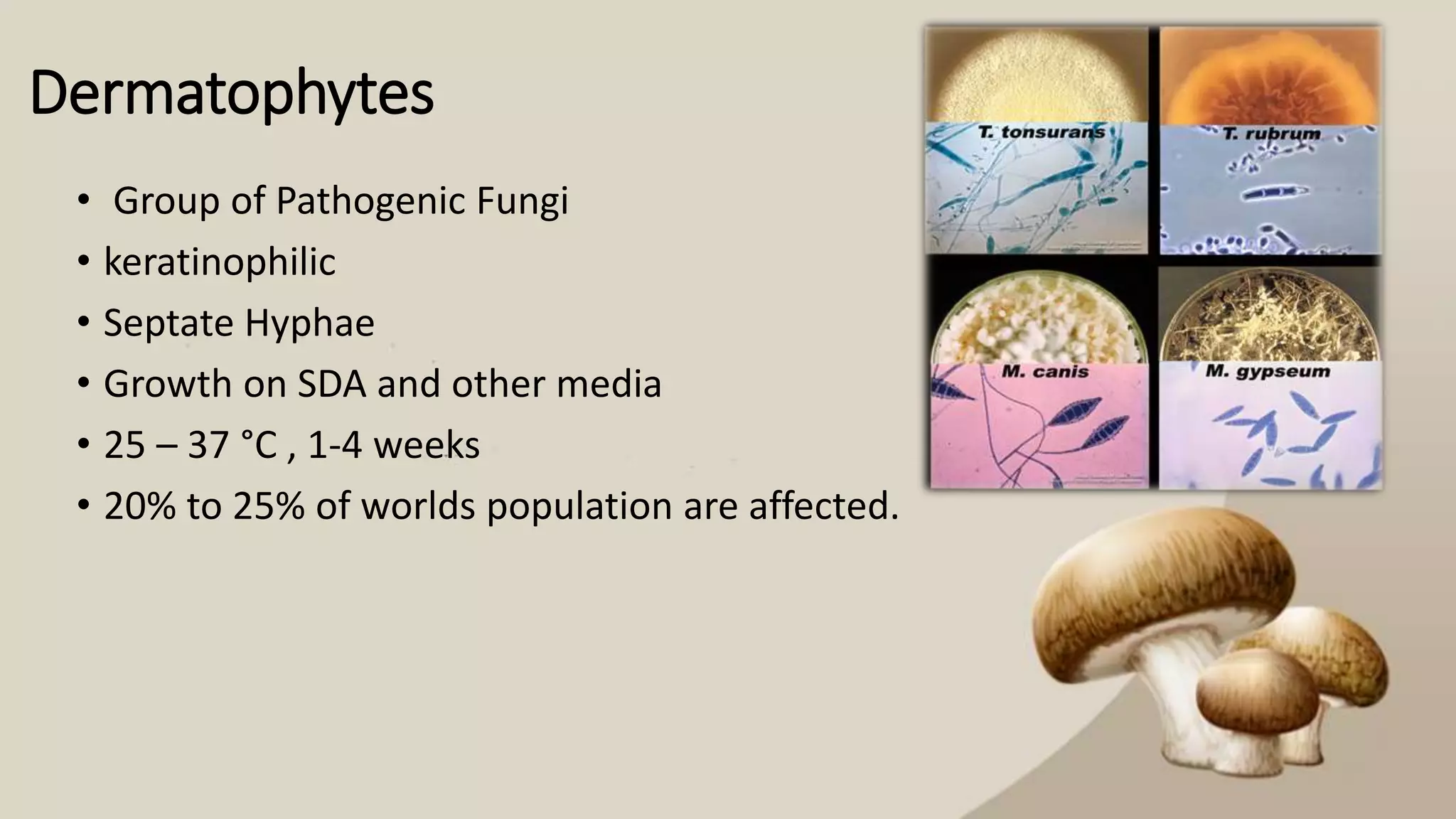
Dermatophytes
• Group of Pathogenic Fungi
• keratinophilic
• Septate Hyphae
• Growth on SDA and other media
• 25 – 37 °C , 1-4 weeks
• 20% to 25% of worlds population are affected.
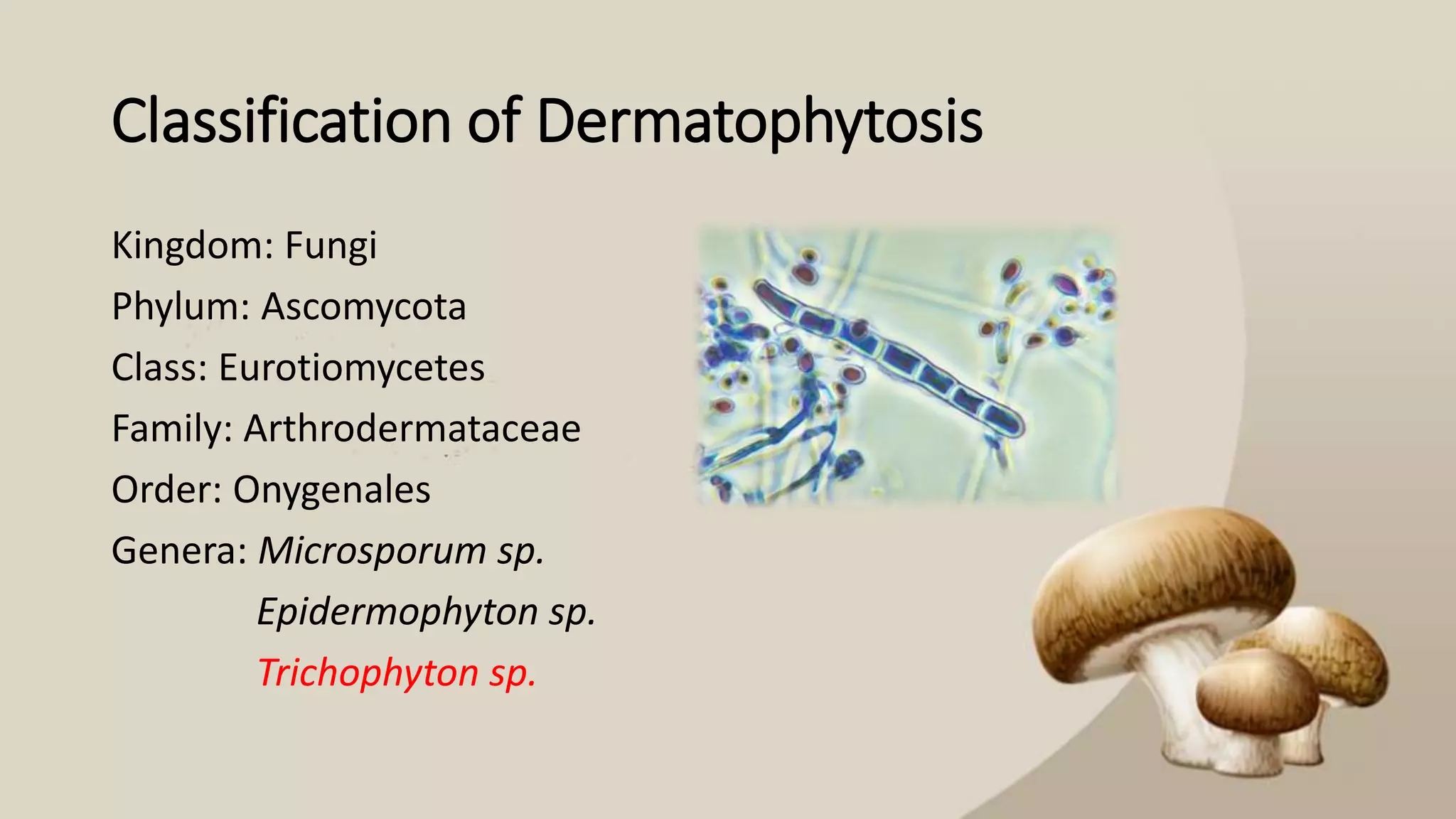
Classification of Dermatophytosis
Kingdom: Fungi
Phylum: Ascomycota
Class: Eurotiomycetes
Family: Arthrodermataceae
Order: Onygenales
Genera: Microsporum sp.
Epidermophyton sp.
Trichophyton sp.
Tinea capitis
Clinical types of Dermatophytosis(Tinea):-
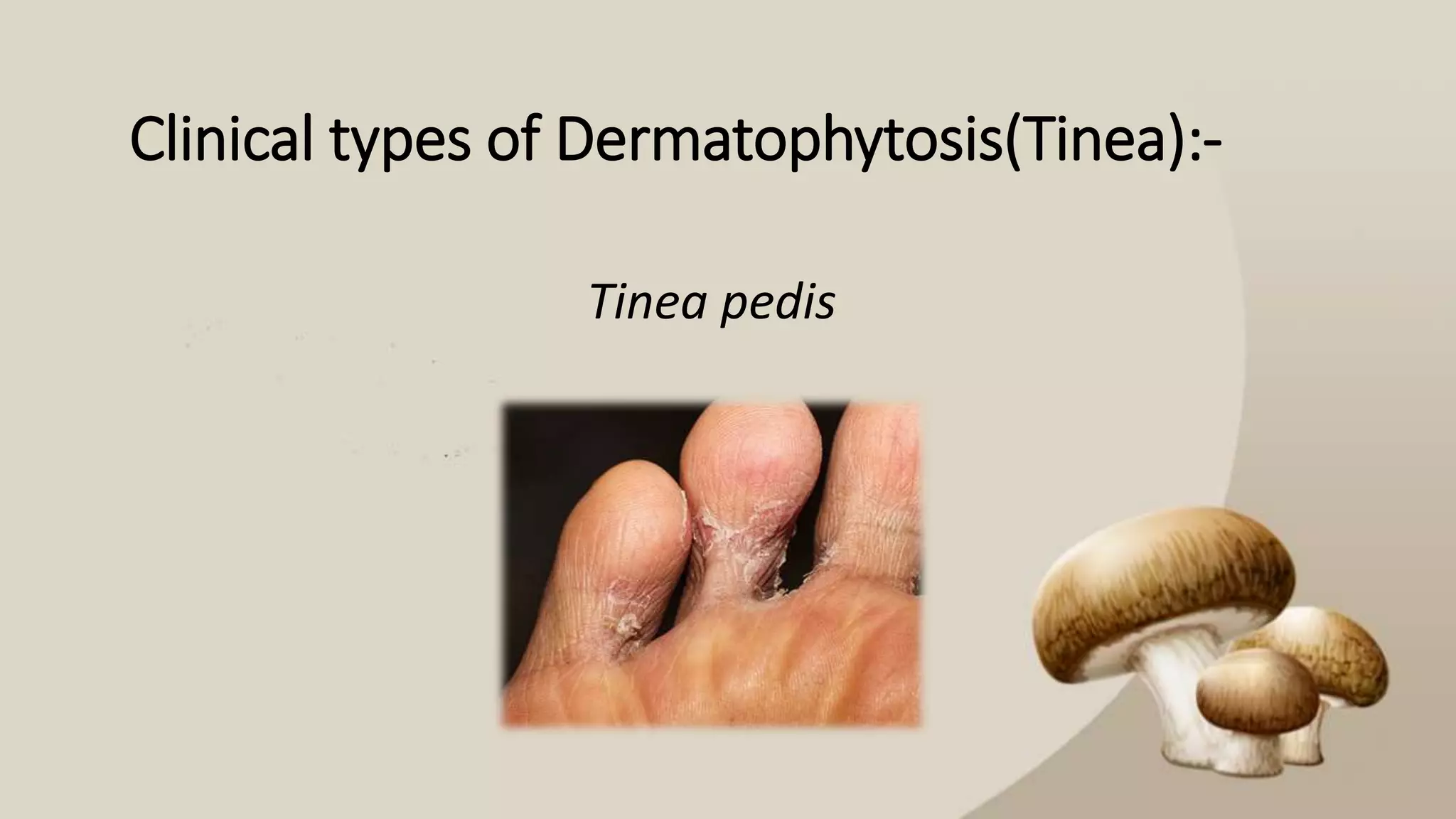
Tinea pedis
Clinical types of Dermatophytosis(Tinea):-
Tinea manuum
Clinical types of Dermatophytosis(Tinea):-
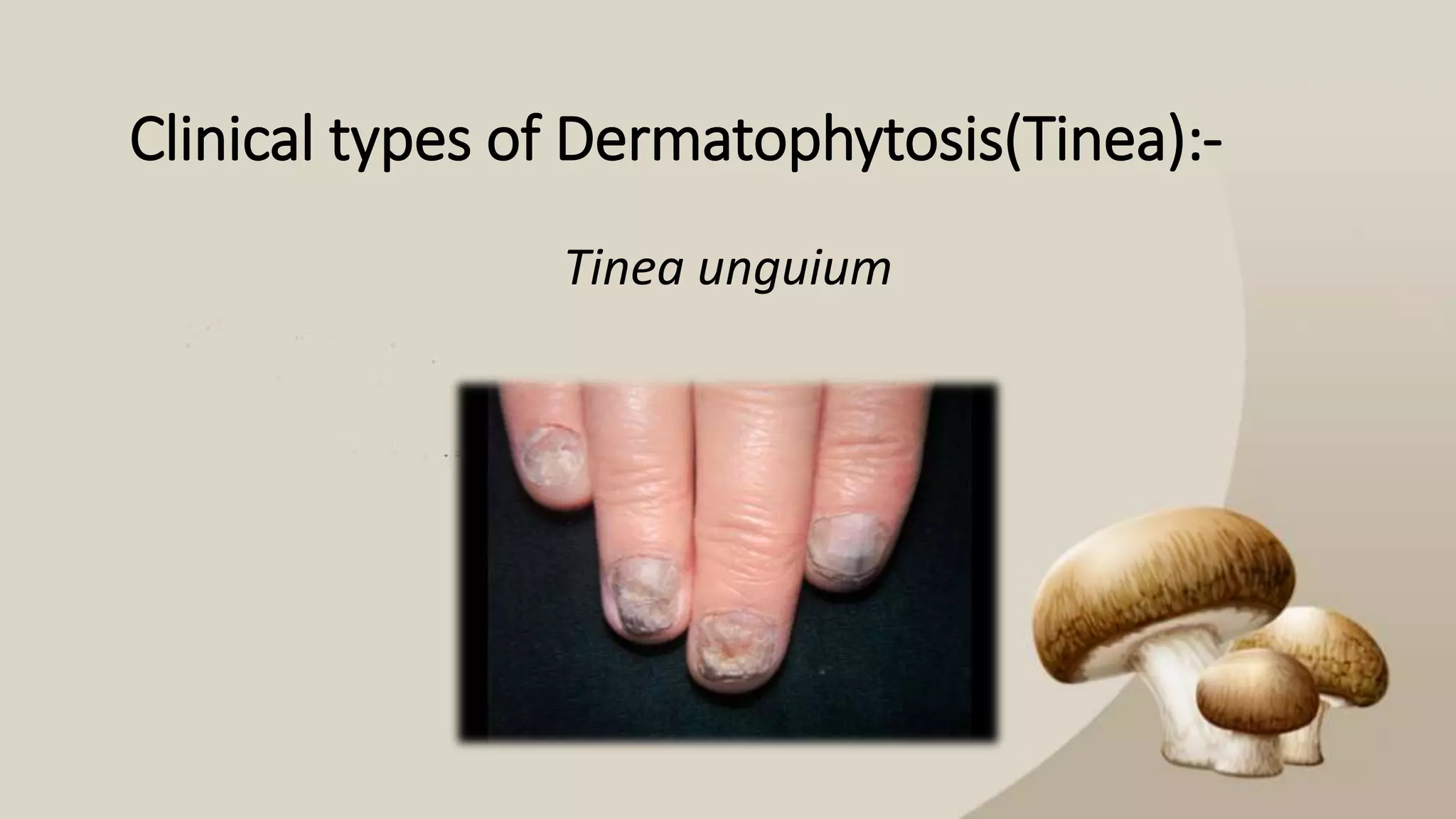
Tinea unguium
Clinical types of Dermatophytosis(Tinea):-
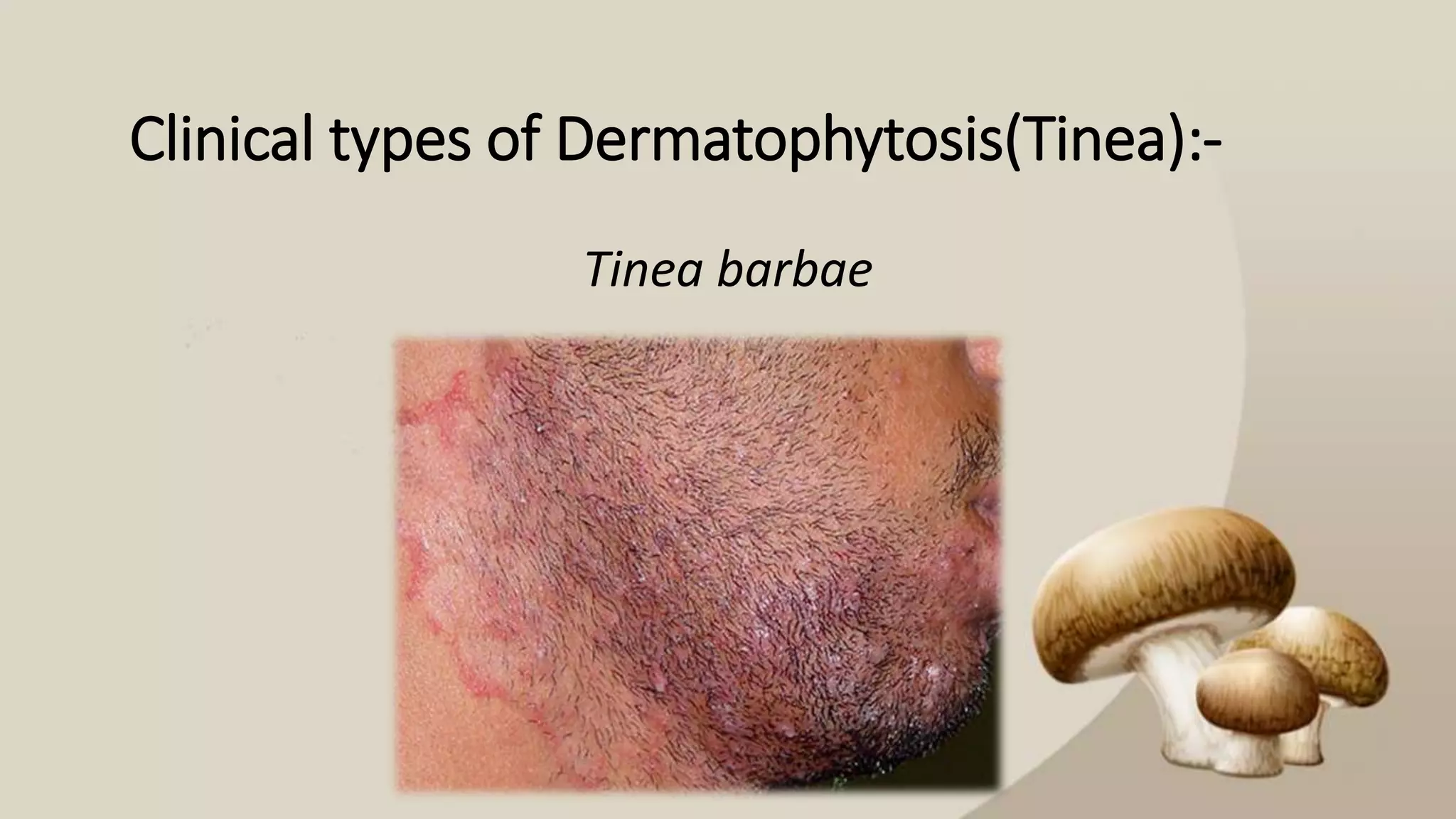
Tinea barbae
Clinical types of Dermatophytosis(Tinea):-
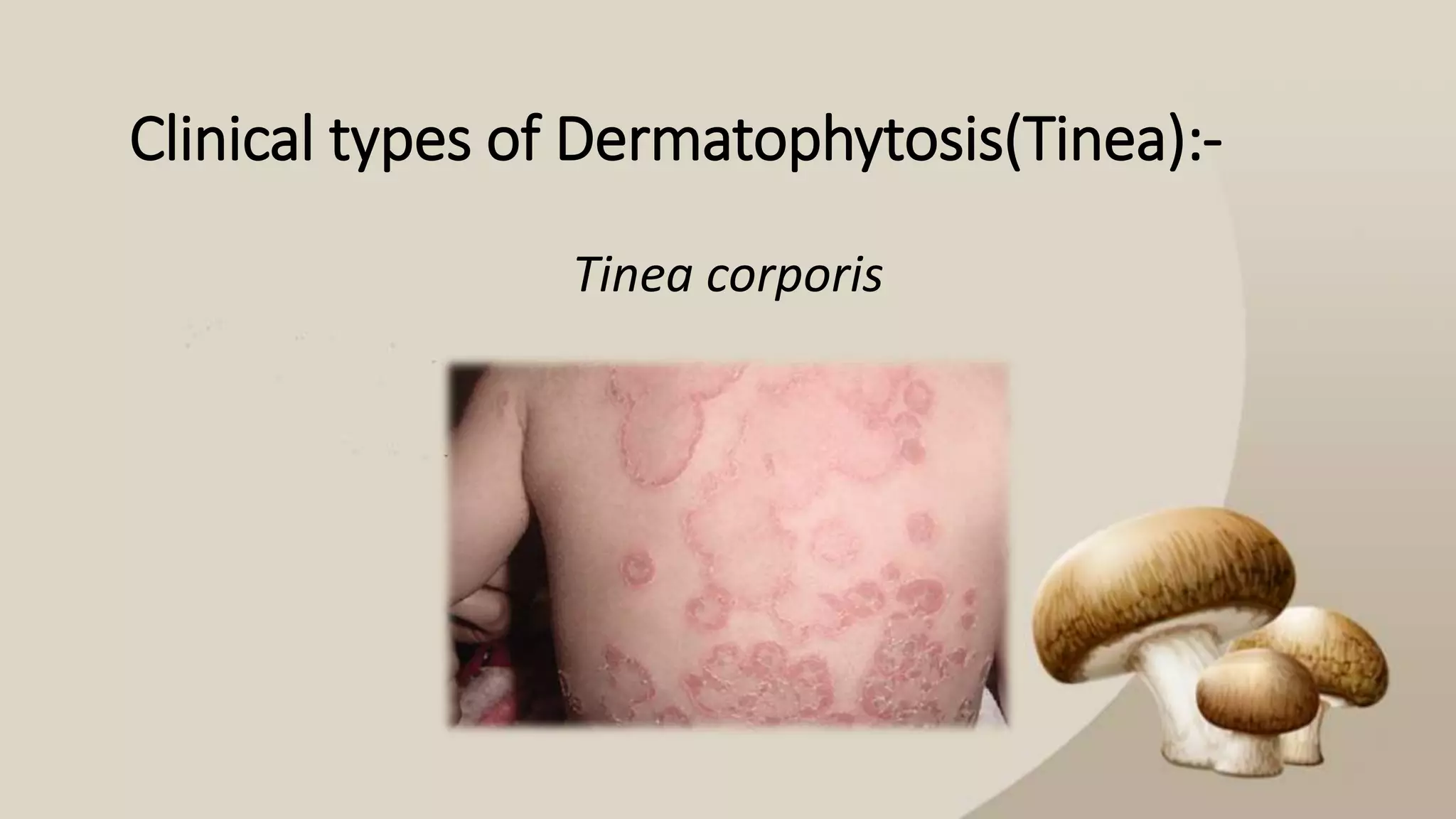
Tinea corporis
Clinical types of Dermatophytosis(Tinea):-
Tinea imbricata
Clinical types of Dermatophytosis(Tinea):-
Tinea incogito
Clinical types of Dermatophytosis(Tinea):-
Tinea cruris
Clinical types of Dermatophytosis(Tinea):-
Tinea cruris
• Dermatophytosis of the groin area.
• Commonly in males.
• Usually spread of the fungus from the feet.
• Inner tights and butt crack (gluteal cleft).
• Tinea cruris Jock Itch
• Causative are T.rubrum, T.interdigitale, and E.floccosum.
Jock Itch & Its name
Symptoms
Common symptoms of jock itch in the affected area
include:
 redness
 persistent itching
 burning sensation
 flaking, peeling, or cracking skin
 rash that gets worse with exercise or activity
 changes in skin color
 rash that doesn’t improve, worsens, or spreads after
using OTC hydrocortisone (anti-itch) cream
Jock itch typically affects the groin and inner thighs. It
may spread to the abdomen and buttocks, but it usually
doesn’t develop on the scrotum.
MICROSCOPY
Microscopic examination is central to the office diagnosis of any tinea
infection. Material is scraped from an active area of the lesion, placed in a
drop of potassium hydroxide solution and examined under a microscope.
The examination, which can be done quickly and easily, is highly sensitive
and specific for dermatophyte identification.
Diagnosis
Your doctor will likely be able to diagnose jock itch by performing a
physical exam and inspecting the affected area of skin.
In some cases, your doctor may take some scrapings of skin cells from the
area to help diagnose the condition.
so a technician can look at it by:
CULTURE
Because cultures are both expensive and time-consuming,
they are not routinely performed in suspected tinea
infections.
Causes
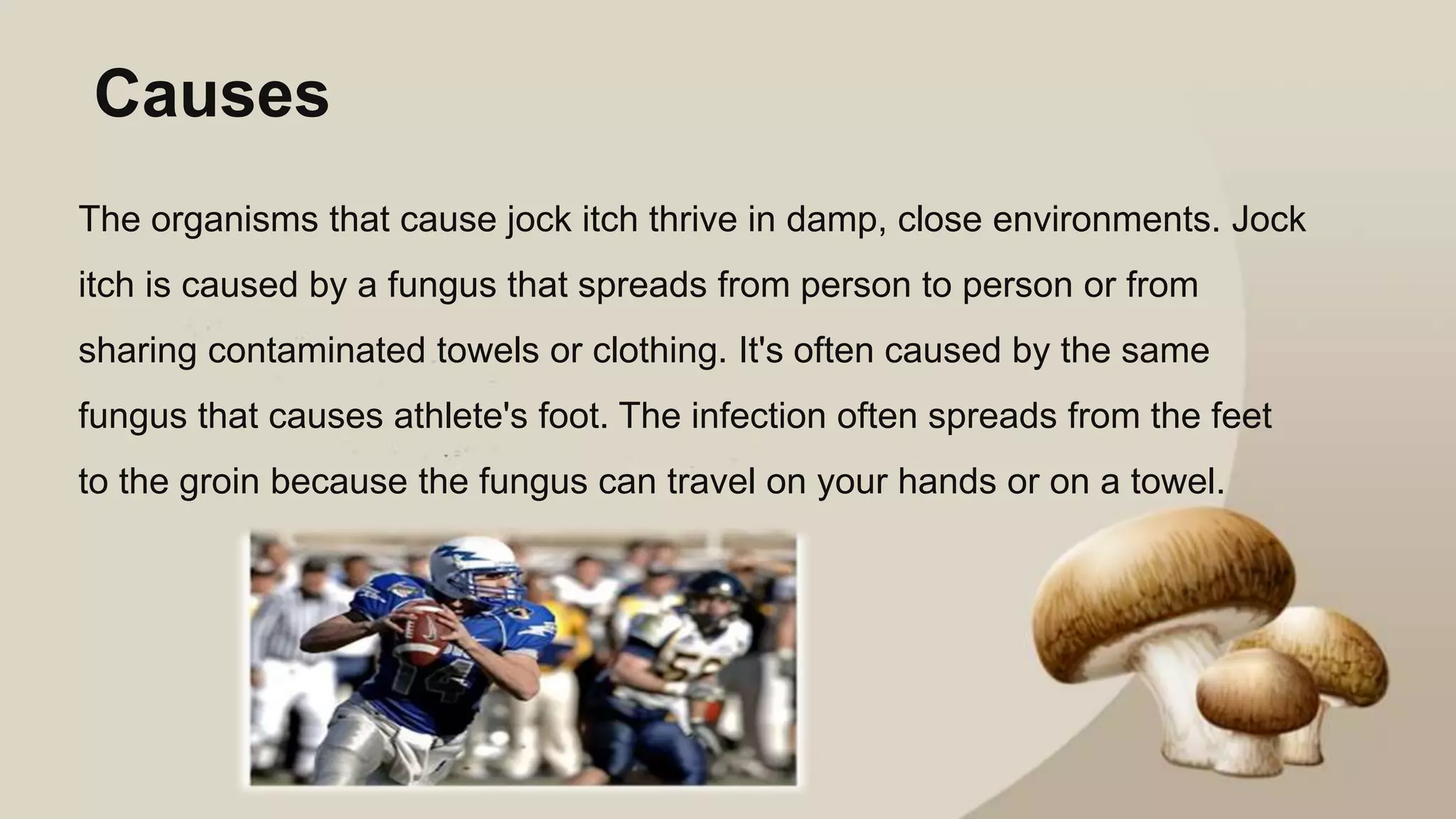
The organisms that cause jock itch thrive in damp, close environments. Jock
itch is caused by a fungus that spreads from person to person or from
sharing contaminated towels or clothing. It's often caused by the same
fungus that causes athlete's foot. The infection often spreads from the feet
to the groin because the fungus can travel on your hands or on a towel.
Risk factors
You're at greater risk of jock itch if you:
• Are male
• Are a teen or young adult
• Wear tight underwear
• Are overweight
• Sweat heavily
• Have a weakened immune system
• Have diabetes
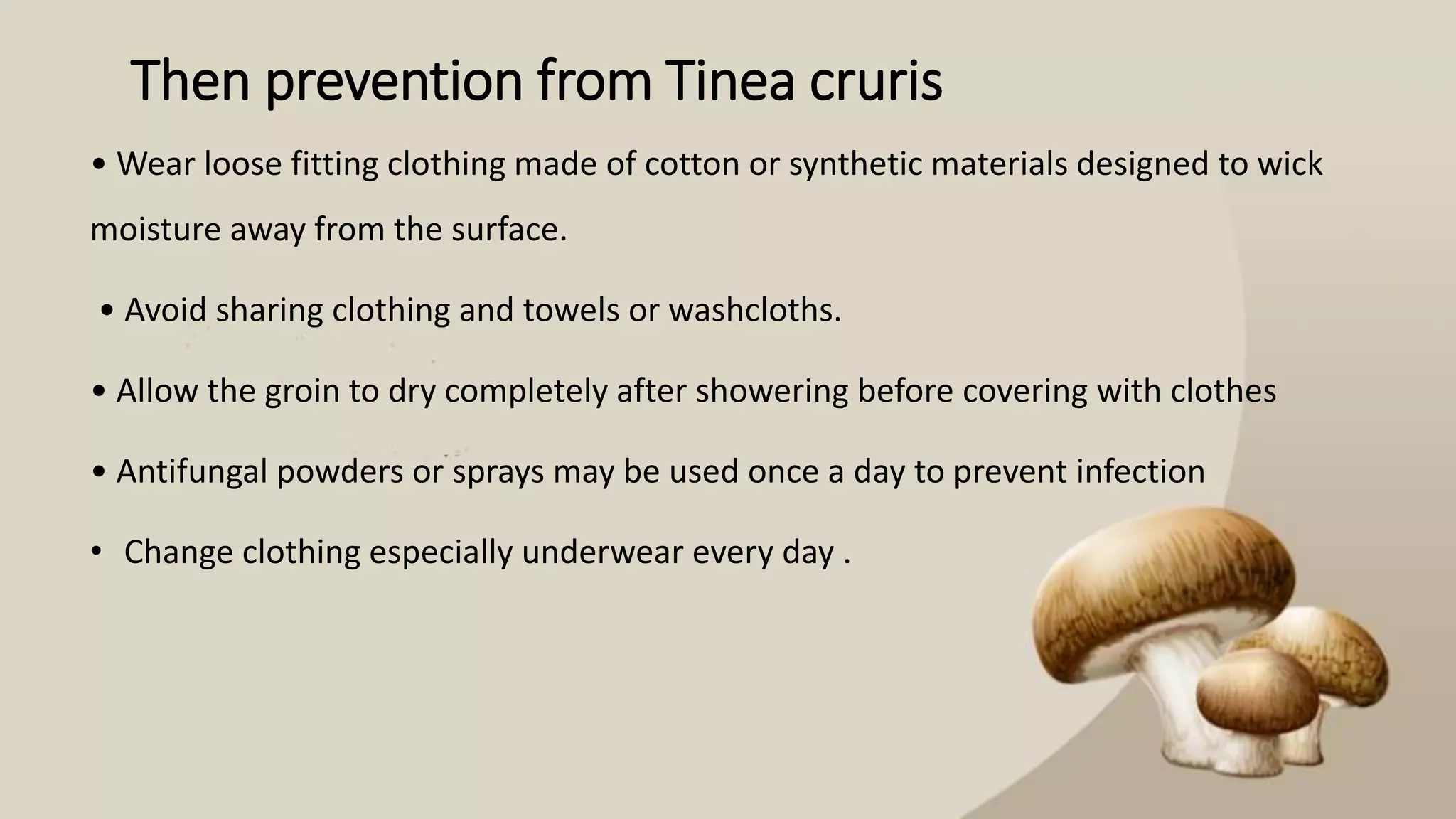
Then prevention from Tinea cruris
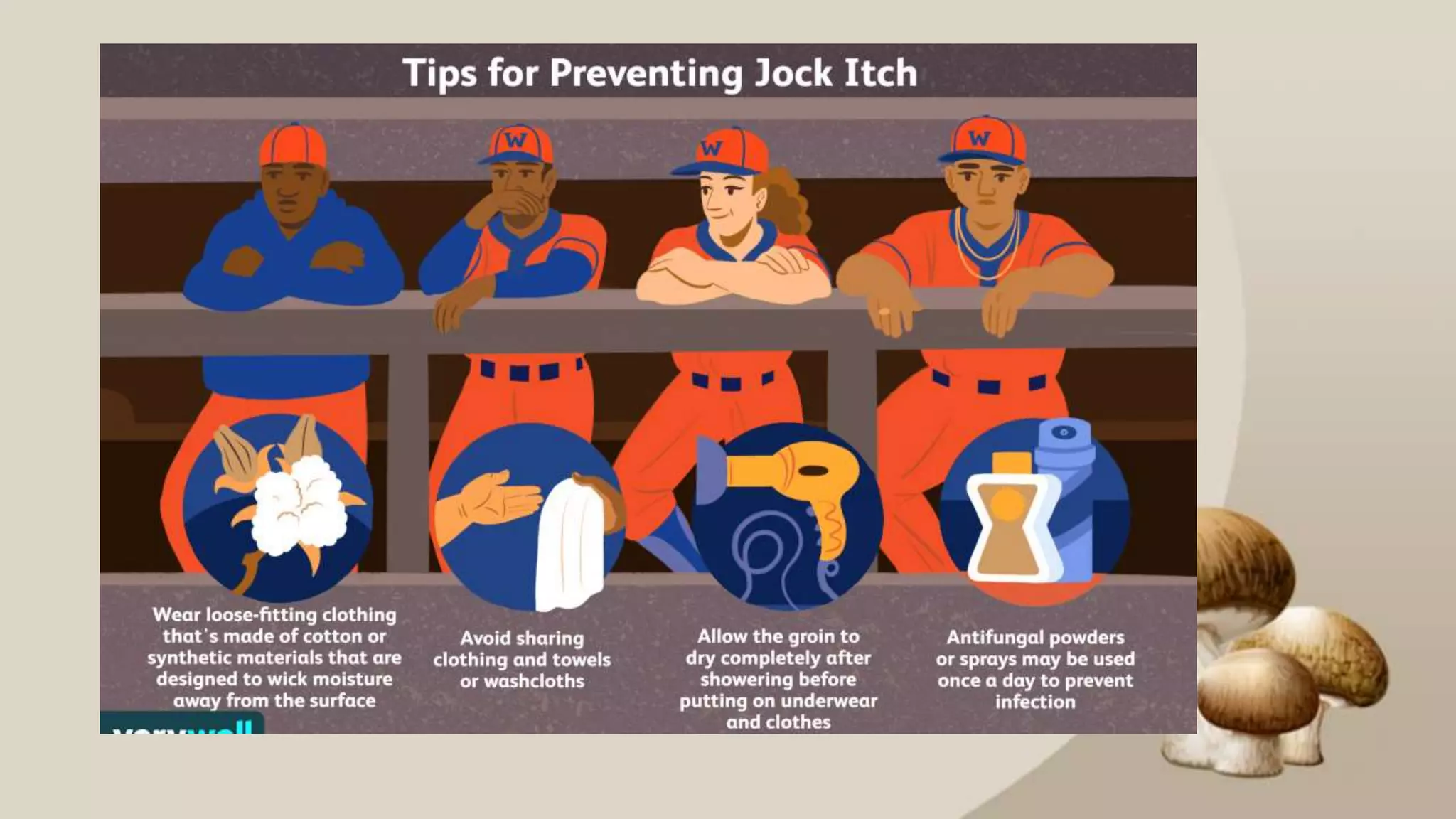
• Wear loose fitting clothing made of cotton or synthetic materials designed to wick
moisture away from the surface.
• Avoid sharing clothing and towels or washcloths.
• Allow the groin to dry completely after showering before covering with clothes
• Antifungal powders or sprays may be used once a day to prevent infection
• Change clothing especially underwear every day .
Transmission
Jock itch can spread from one person to another by skin-to-skin contact, especially
in warm, damp environments. It can also spread to other areas of the body if
someone touches the affected area and touches other body parts.
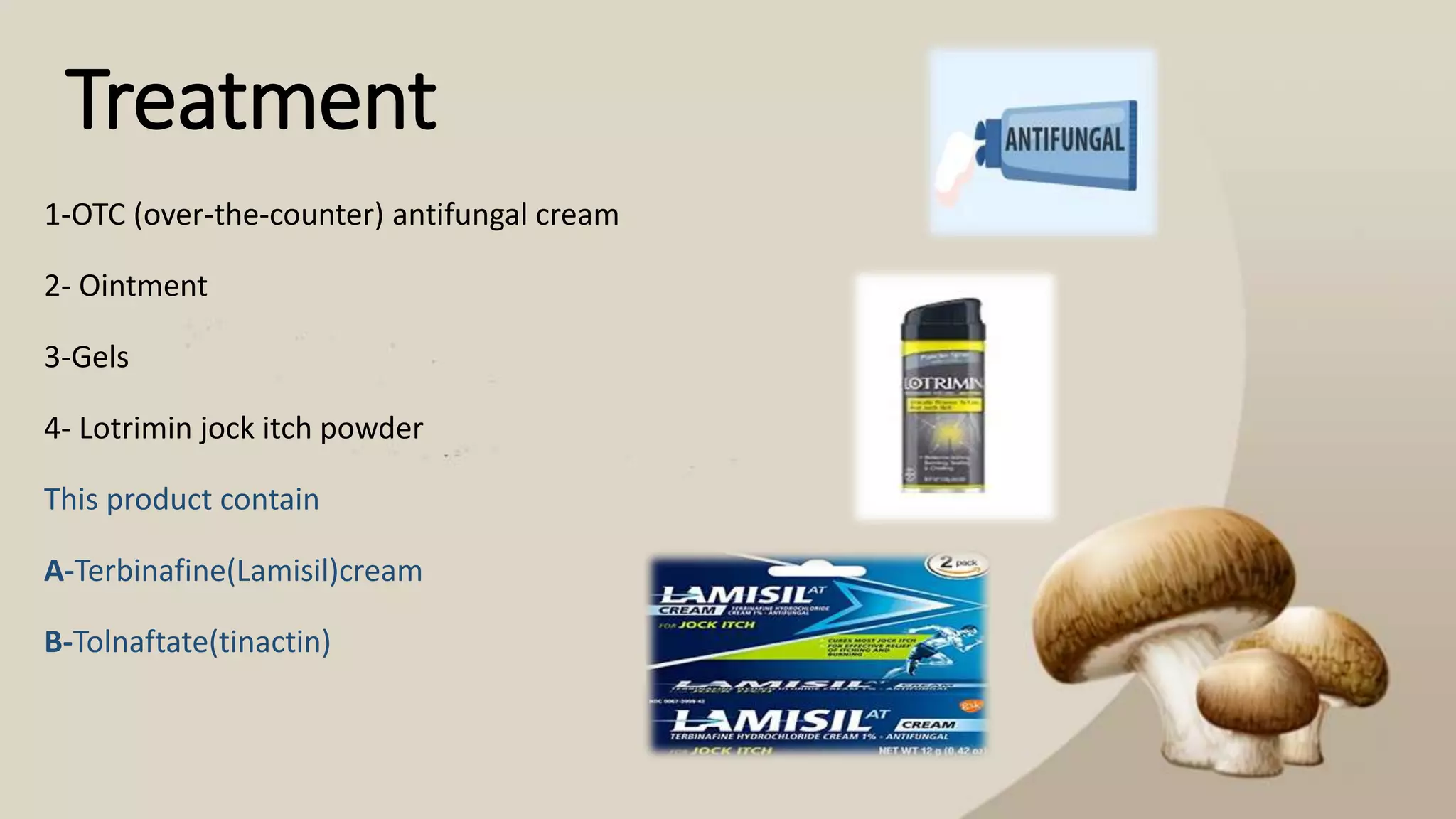
Treatment
1-OTC (over-the-counter) antifungal cream
2- Ointment
3-Gels
4- Lotrimin jock itch powder
This product contain
A-Terbinafine(Lamisil)cream
B-Tolnaftate(tinactin)
C- Clotrimazole(lotrimin)
D-Miconazole(micatin)
6-Some antifungal medication are pills
Which contain (fluconazole,itraconazole)
 Natural Treatment for Jock ̓s Itch at
home without medical description:-
-Tea tree oil
-White vinegar
-Apple Cider vinegar
Tinea cruris(Jock itch)

Tinea cruris(Jock itch)

  • 1.
    Tinea cruris Prepared By:- HalaMohsen Ghazal Abdullah Wazira Shakir Elham Shawkat Aheen Ismail Supervised By:- Asst Prof. Asia Abdulhamid
  • 2.
    Outlines :- • Mycosesan overview • Fungal Infection • Dermatophytes • Classification of Dermatophytes • Clinical types of Dermatophytes • Tinea cruris • Jock itch and its name • Symptoms • Diagnosis • Causes • Risk factor • Prevention • Transmission • Treatment
  • 3.
    Mycoses an overview •Augustino Bassi First Fungi causing disease(1773-1856). • In 1904, Raymond Jacques Sabouraud (Father of Medical Mycology). • Specialized in dermatology, mycology, painting and was a sculptor. • Induced radiological treatment against ringworm. • Knowledge of Scalp Diseases. • His book (Les Teignes) media for growing fungi:- Sabouraud ̓s Dextrose Agar (SAD) Sabouraud ̓s Glucose Agar
  • 4.
    Fungal Infections Superficial Mycoses Cutaneous Mycoses Sub-cutaneousmycoses Opportunistic mycoses Dimorphic systemic Mycosis Invasive Mycoses Otomycosis & occulomycosis Hypersensitivity Mycotic poisoning
  • 5.
    Dermatophytes • Group ofPathogenic Fungi • keratinophilic • Septate Hyphae • Growth on SDA and other media • 25 – 37 °C , 1-4 weeks • 20% to 25% of worlds population are affected.
  • 6.
    Classification of Dermatophytosis Kingdom:Fungi Phylum: Ascomycota Class: Eurotiomycetes Family: Arthrodermataceae Order: Onygenales Genera: Microsporum sp. Epidermophyton sp. Trichophyton sp.
  • 7.
    Tinea capitis Clinical typesof Dermatophytosis(Tinea):-
  • 8.
    Tinea pedis Clinical typesof Dermatophytosis(Tinea):-
  • 9.
    Tinea manuum Clinical typesof Dermatophytosis(Tinea):-
  • 10.
    Tinea unguium Clinical typesof Dermatophytosis(Tinea):-
  • 11.
    Tinea barbae Clinical typesof Dermatophytosis(Tinea):-
  • 12.
    Tinea corporis Clinical typesof Dermatophytosis(Tinea):-
  • 13.
    Tinea imbricata Clinical typesof Dermatophytosis(Tinea):-
  • 14.
    Tinea incogito Clinical typesof Dermatophytosis(Tinea):-
  • 15.
    Tinea cruris Clinical typesof Dermatophytosis(Tinea):-
  • 17.
    Tinea cruris • Dermatophytosisof the groin area. • Commonly in males. • Usually spread of the fungus from the feet. • Inner tights and butt crack (gluteal cleft). • Tinea cruris Jock Itch • Causative are T.rubrum, T.interdigitale, and E.floccosum.
  • 18.
    Jock Itch &Its name
  • 19.
    Symptoms Common symptoms ofjock itch in the affected area include:  redness  persistent itching  burning sensation  flaking, peeling, or cracking skin  rash that gets worse with exercise or activity  changes in skin color  rash that doesn’t improve, worsens, or spreads after using OTC hydrocortisone (anti-itch) cream Jock itch typically affects the groin and inner thighs. It may spread to the abdomen and buttocks, but it usually doesn’t develop on the scrotum.
  • 20.
    MICROSCOPY Microscopic examination iscentral to the office diagnosis of any tinea infection. Material is scraped from an active area of the lesion, placed in a drop of potassium hydroxide solution and examined under a microscope. The examination, which can be done quickly and easily, is highly sensitive and specific for dermatophyte identification. Diagnosis Your doctor will likely be able to diagnose jock itch by performing a physical exam and inspecting the affected area of skin. In some cases, your doctor may take some scrapings of skin cells from the area to help diagnose the condition. so a technician can look at it by: CULTURE Because cultures are both expensive and time-consuming, they are not routinely performed in suspected tinea infections.
  • 21.
    Causes The organisms thatcause jock itch thrive in damp, close environments. Jock itch is caused by a fungus that spreads from person to person or from sharing contaminated towels or clothing. It's often caused by the same fungus that causes athlete's foot. The infection often spreads from the feet to the groin because the fungus can travel on your hands or on a towel.
  • 22.
    Risk factors You're atgreater risk of jock itch if you: • Are male • Are a teen or young adult • Wear tight underwear • Are overweight • Sweat heavily • Have a weakened immune system • Have diabetes
  • 23.
    Then prevention fromTinea cruris • Wear loose fitting clothing made of cotton or synthetic materials designed to wick moisture away from the surface. • Avoid sharing clothing and towels or washcloths. • Allow the groin to dry completely after showering before covering with clothes • Antifungal powders or sprays may be used once a day to prevent infection • Change clothing especially underwear every day .
  • 25.
    Transmission Jock itch canspread from one person to another by skin-to-skin contact, especially in warm, damp environments. It can also spread to other areas of the body if someone touches the affected area and touches other body parts.
  • 26.
    Treatment 1-OTC (over-the-counter) antifungalcream 2- Ointment 3-Gels 4- Lotrimin jock itch powder This product contain A-Terbinafine(Lamisil)cream B-Tolnaftate(tinactin)
  • 27.
    C- Clotrimazole(lotrimin) D-Miconazole(micatin) 6-Some antifungalmedication are pills Which contain (fluconazole,itraconazole)  Natural Treatment for Jock ̓s Itch at home without medical description:- -Tea tree oil -White vinegar -Apple Cider vinegar