 The

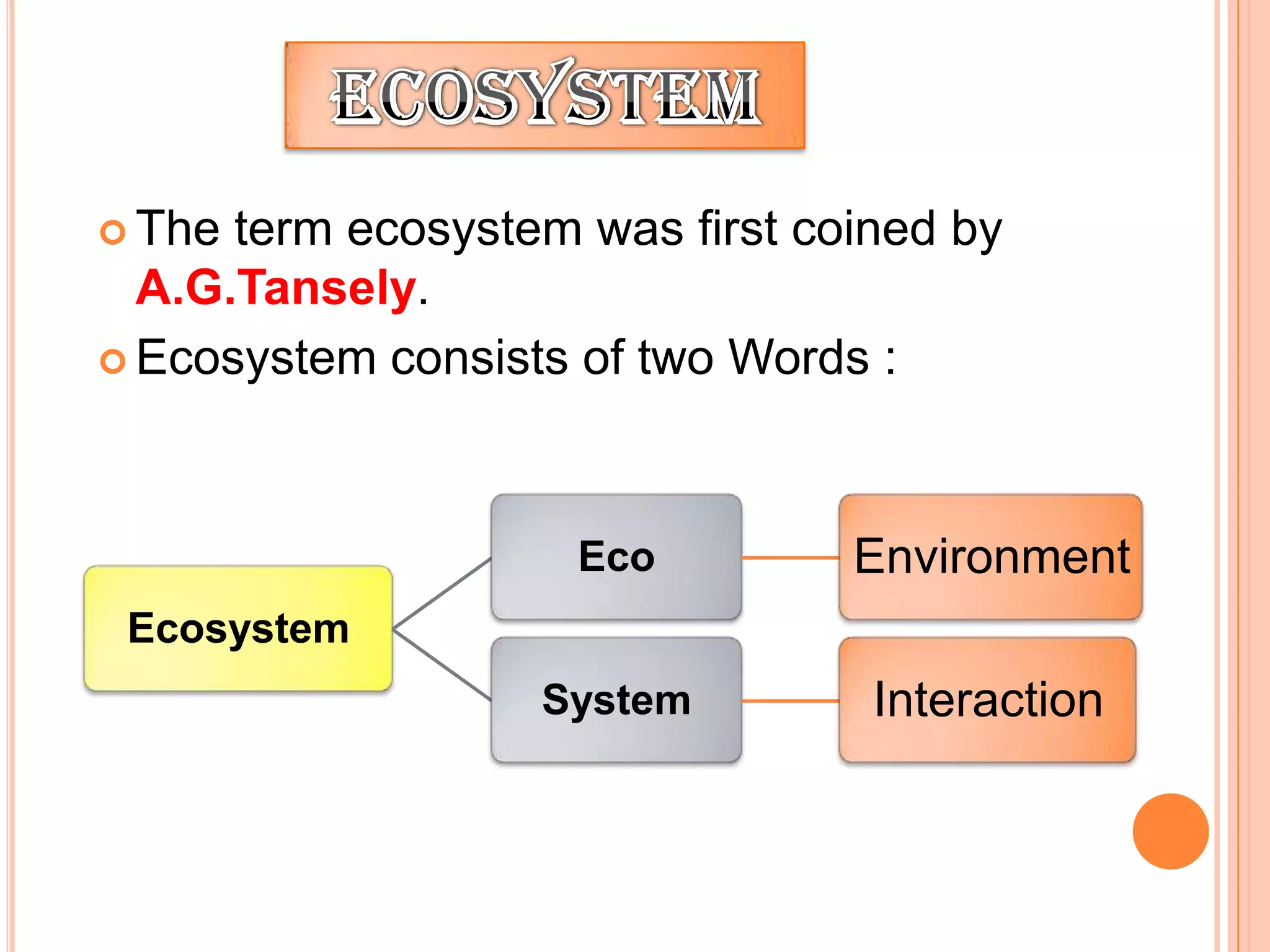
term ecosystem was first coined by
A.G.Tansely.
 Ecosystem consists of two Words :

Eco

Environment

System

Interaction

Ecosystem
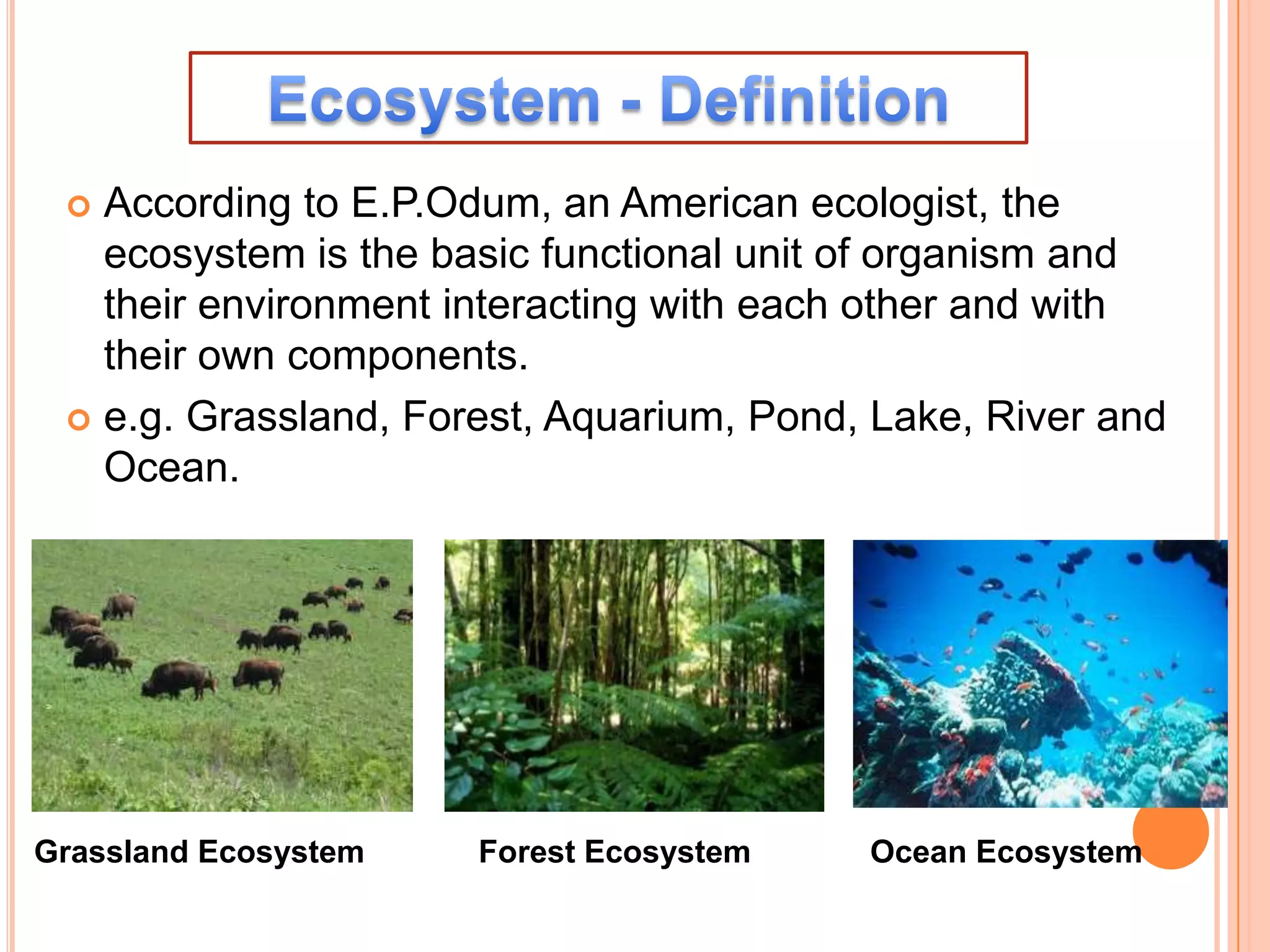
According to E.P.Odum, an American ecologist, the
ecosystem is the basic functional unit of organism and
their environment interacting with each other and with
their own components.
 e.g. Grassland, Forest, Aquarium, Pond, Lake, River and
Ocean.


Grassland Ecosystem

Forest Ecosystem

Ocean Ecosystem
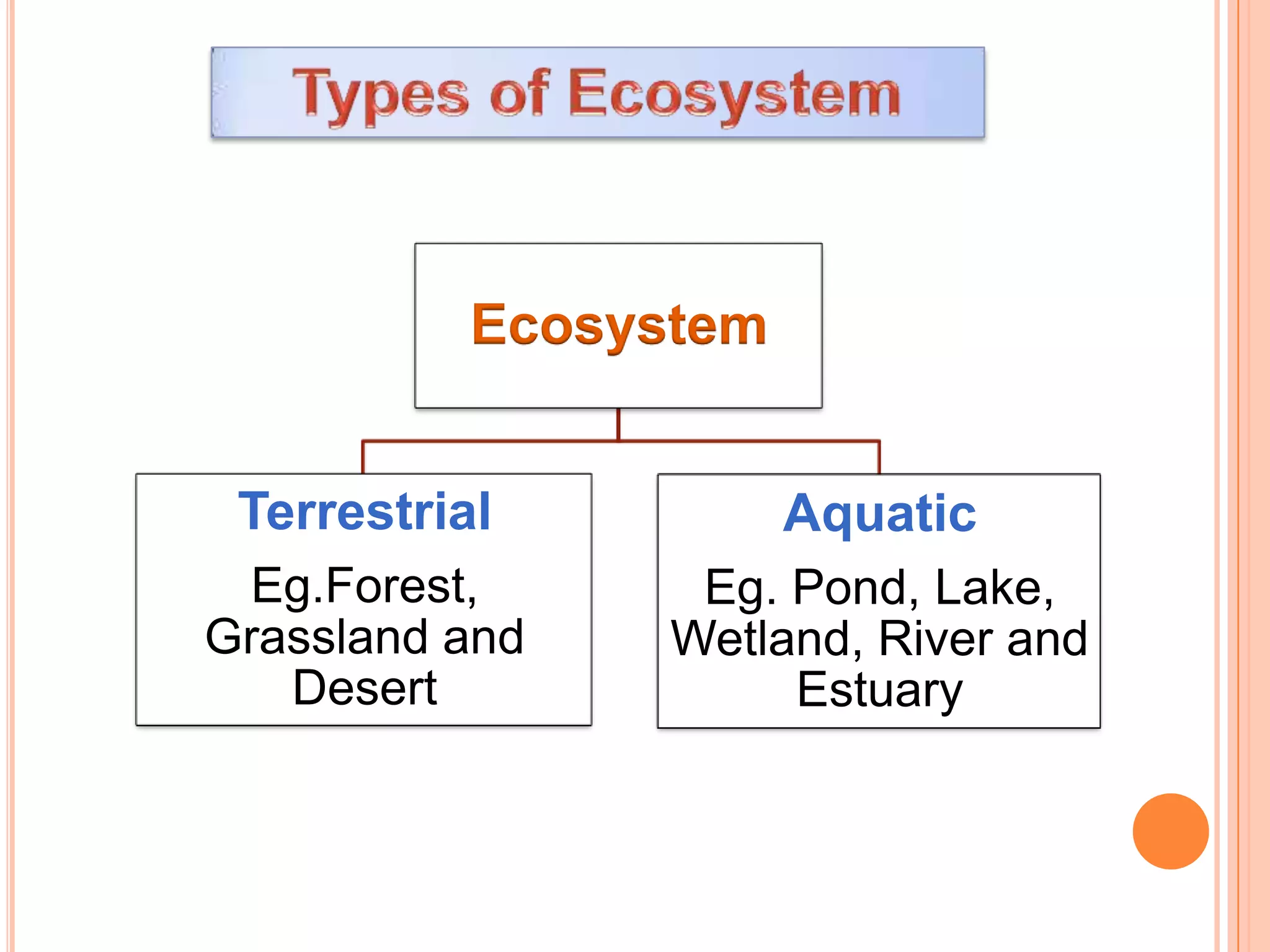
Ecosystem
Terrestrial

Aquatic

Eg.Forest,
Grassland and
Desert

Eg. Pond, Lake,
Wetland, River and
Estuary
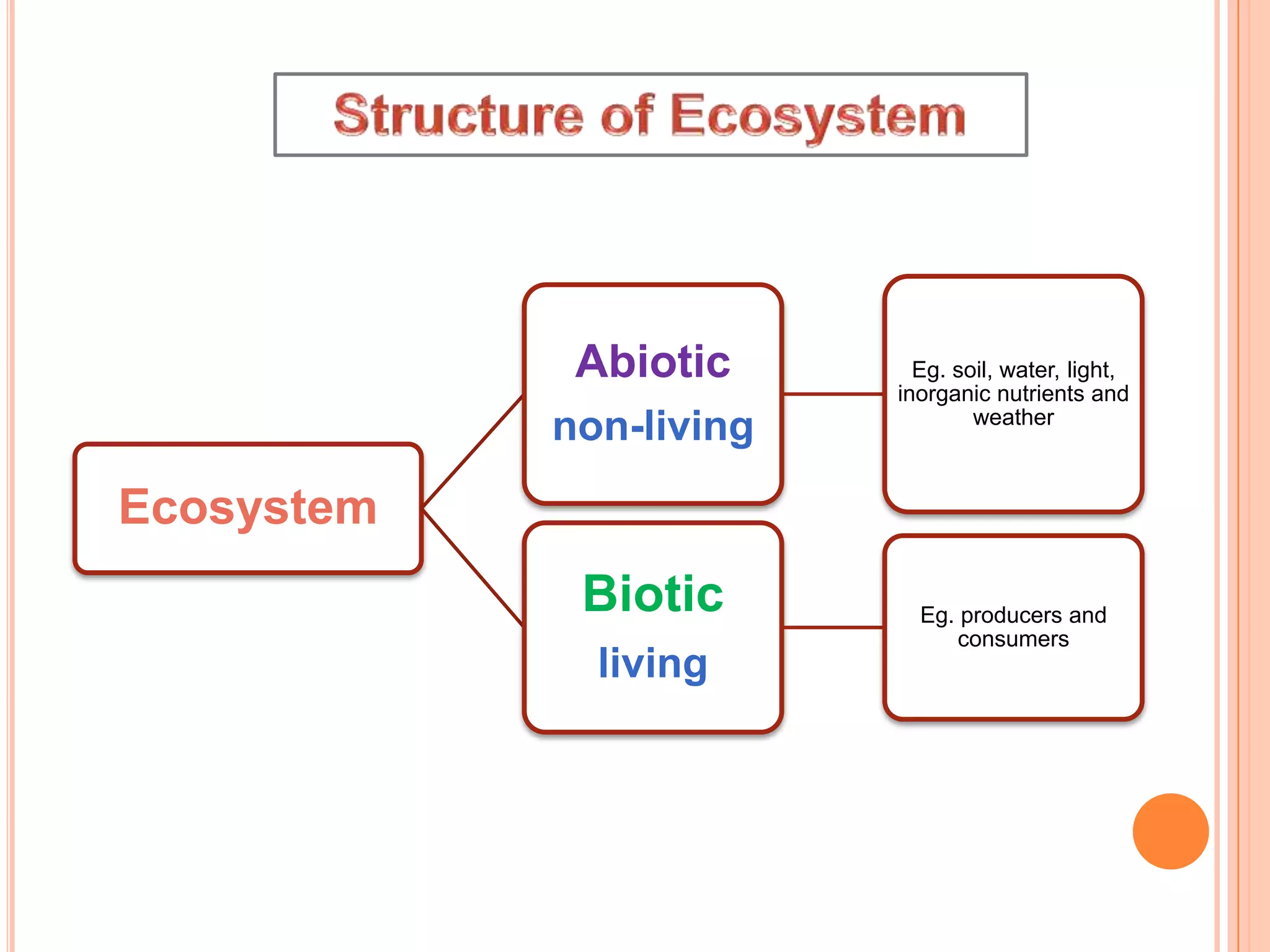
Abiotic
non-living

Eg. soil, water, light,
inorganic nutrients and
weather

Ecosystem

Biotic
living

Eg. producers and
consumers


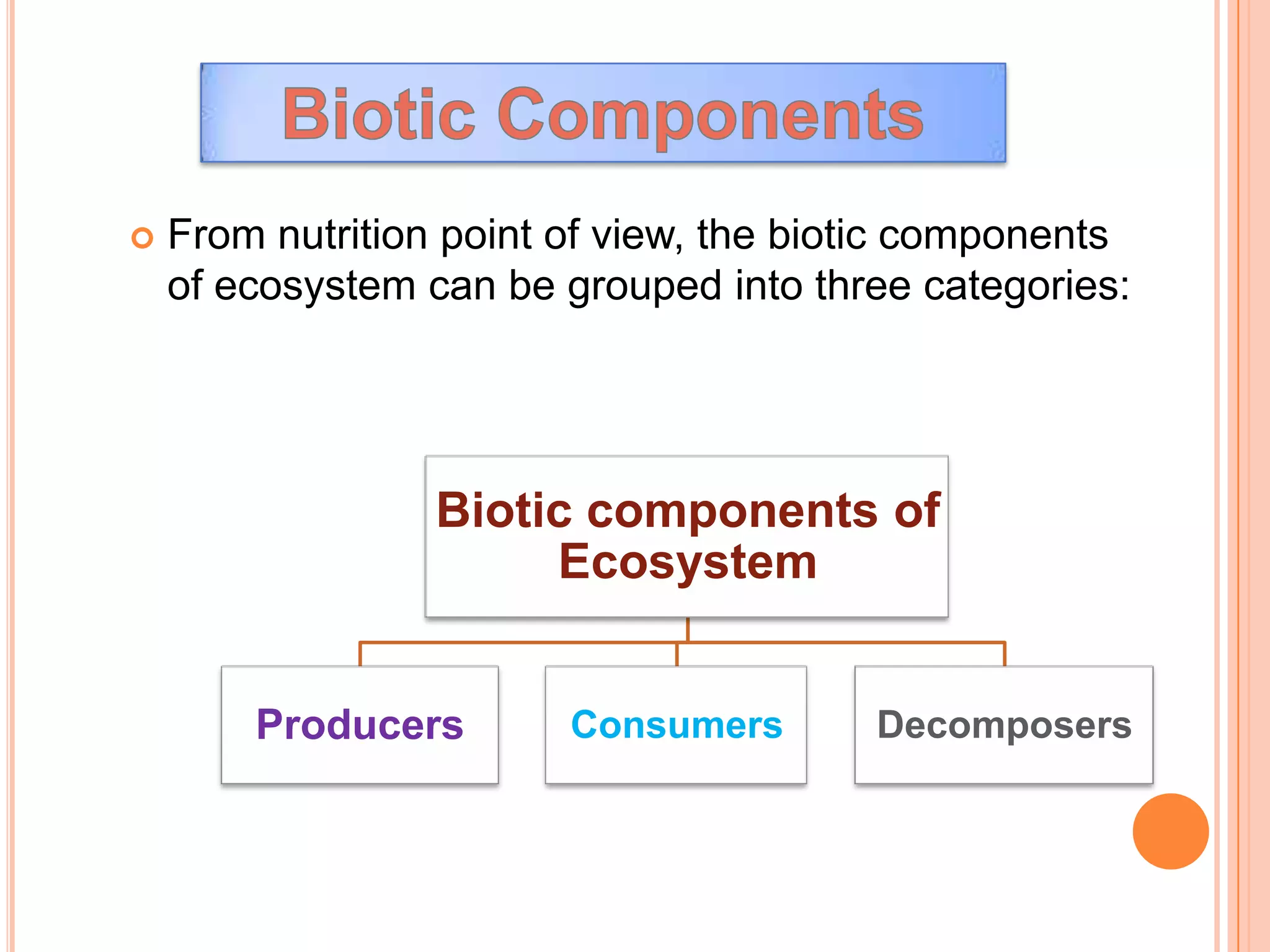
From nutrition point of view, the biotic components
of ecosystem can be grouped into three categories:

Biotic components of
Ecosystem
Producers

Consumers

Decomposers
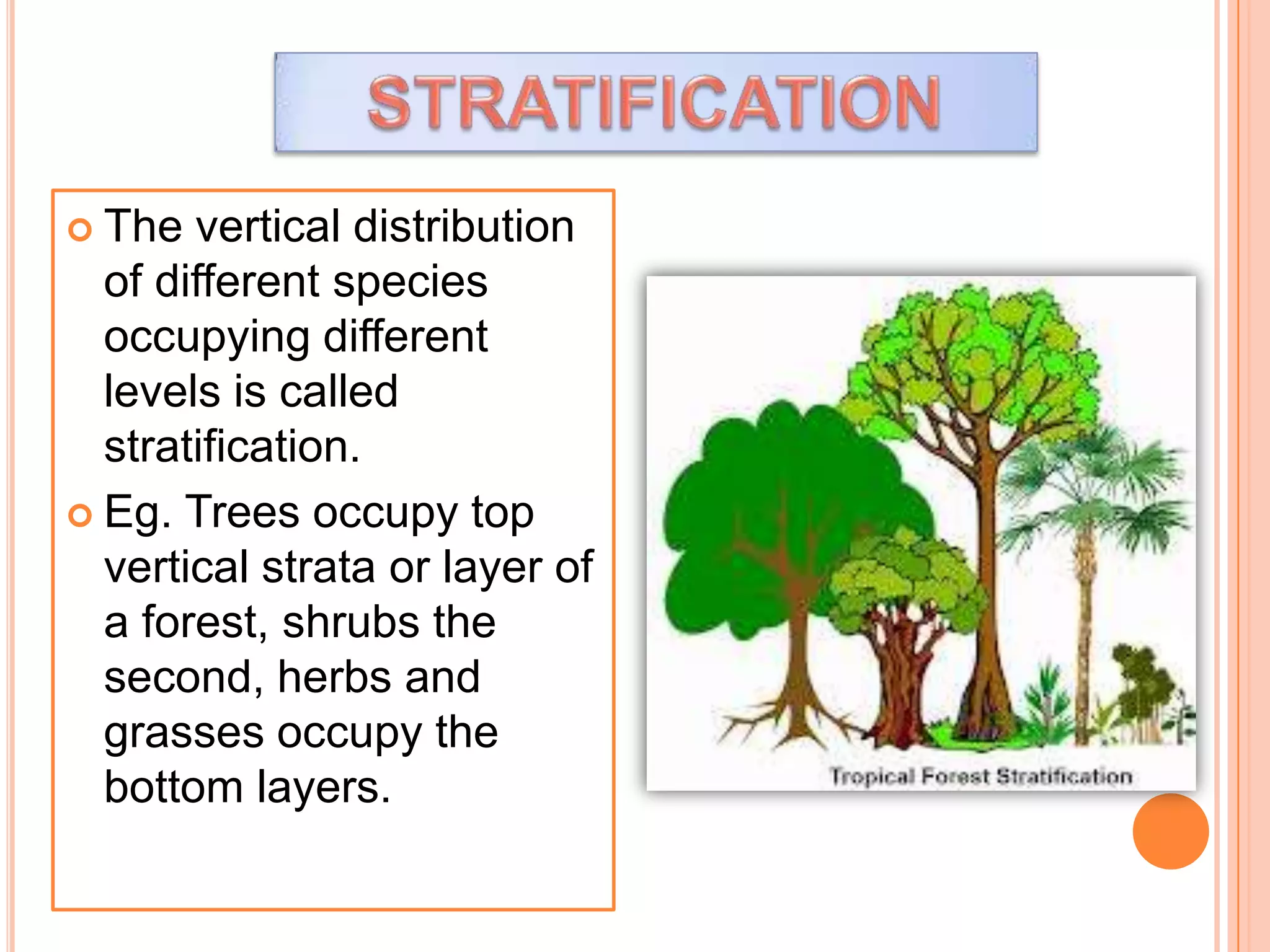
 The

vertical distribution
of different species
occupying different
levels is called
stratification.
 Eg. Trees occupy top
vertical strata or layer of
a forest, shrubs the
second, herbs and
grasses occupy the
bottom layers.
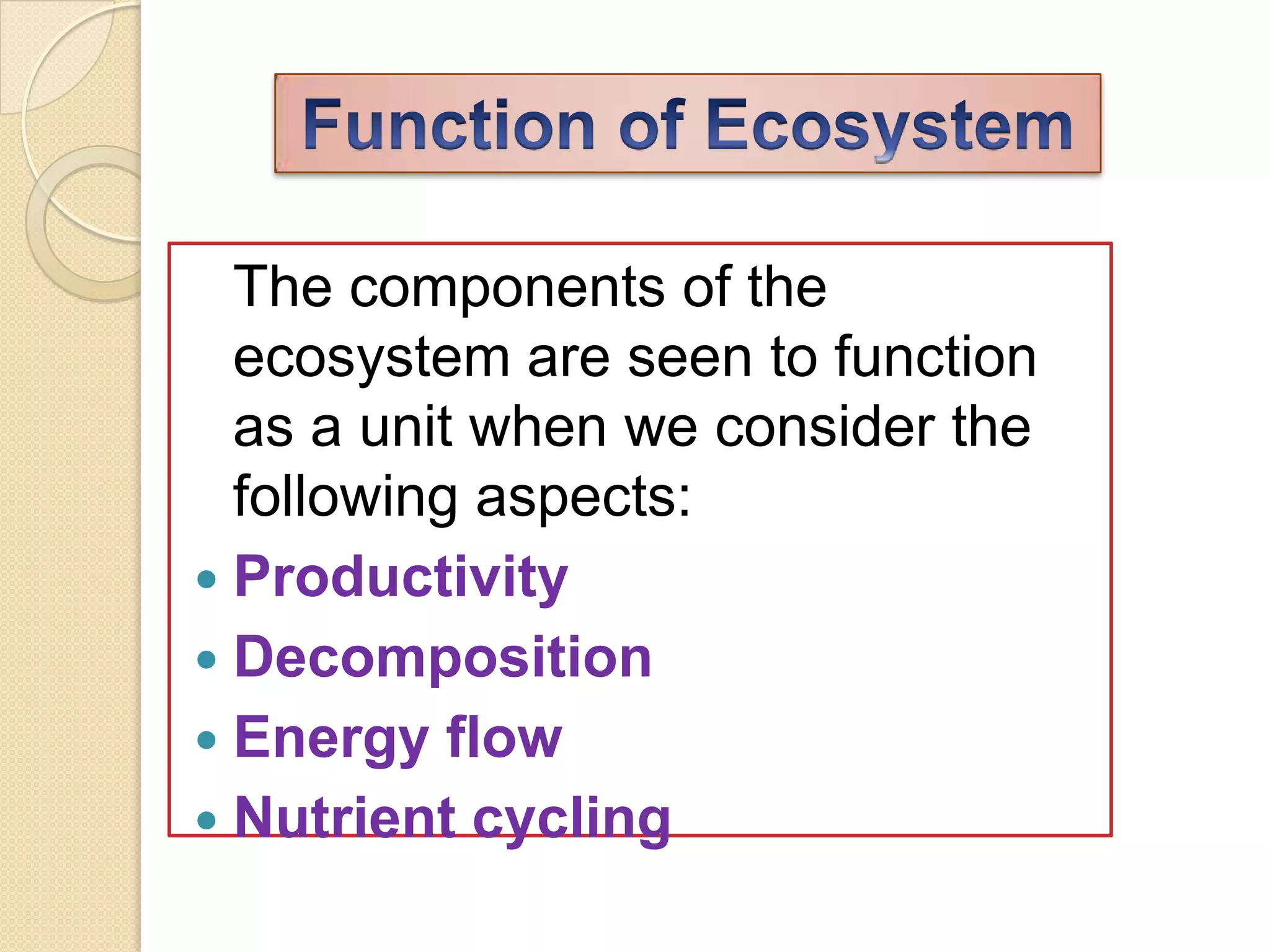
The components of the
ecosystem are seen to function
as a unit when we consider the
following aspects:
 Productivity
 Decomposition
 Energy flow
 Nutrient cycling
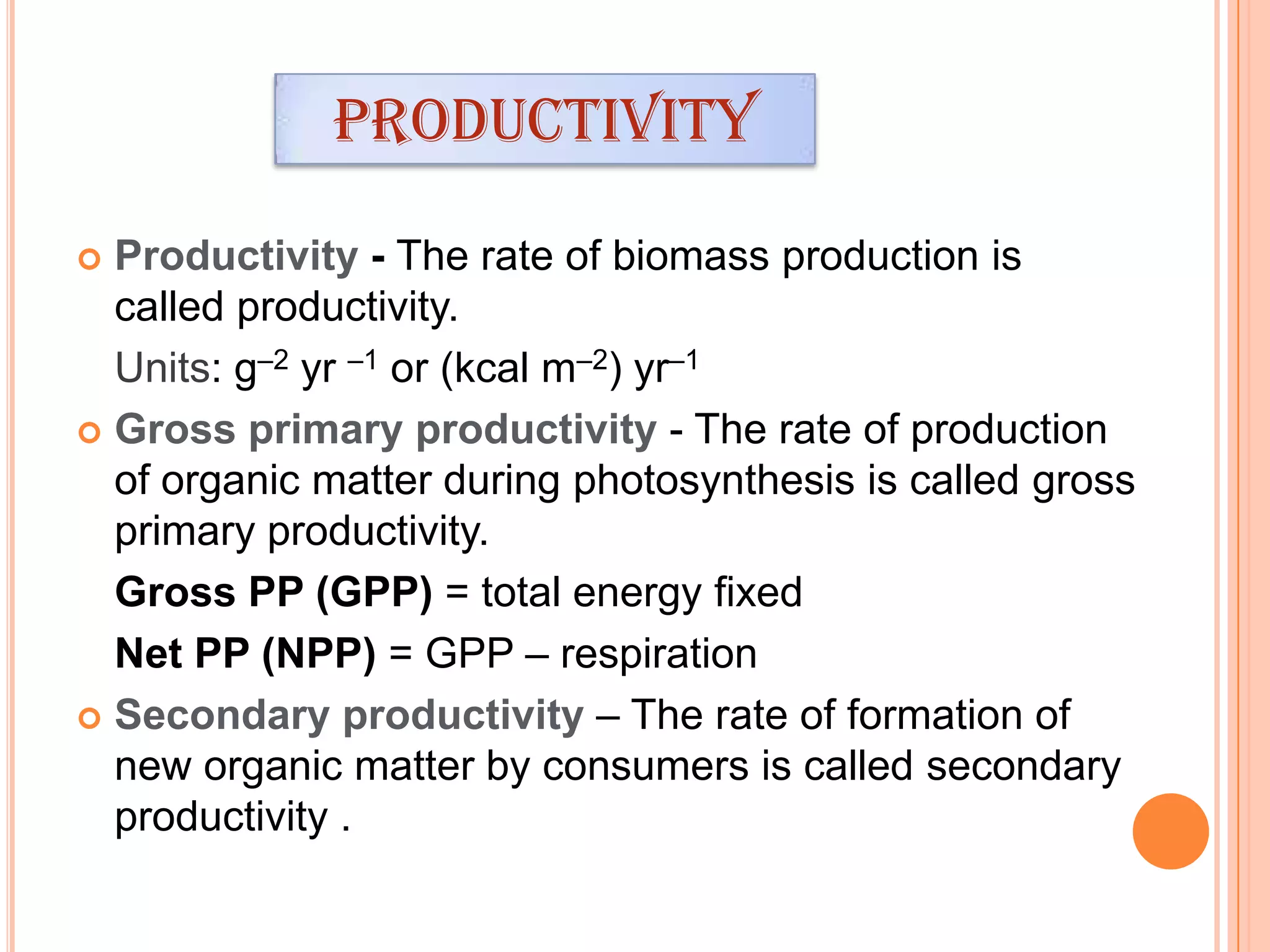
PRODUCTIVITY
Productivity - The rate of biomass production is
called productivity.
Units: g–2 yr –1 or (kcal m–2) yr–1
 Gross primary productivity - The rate of production
of organic matter during photosynthesis is called gross
primary productivity.
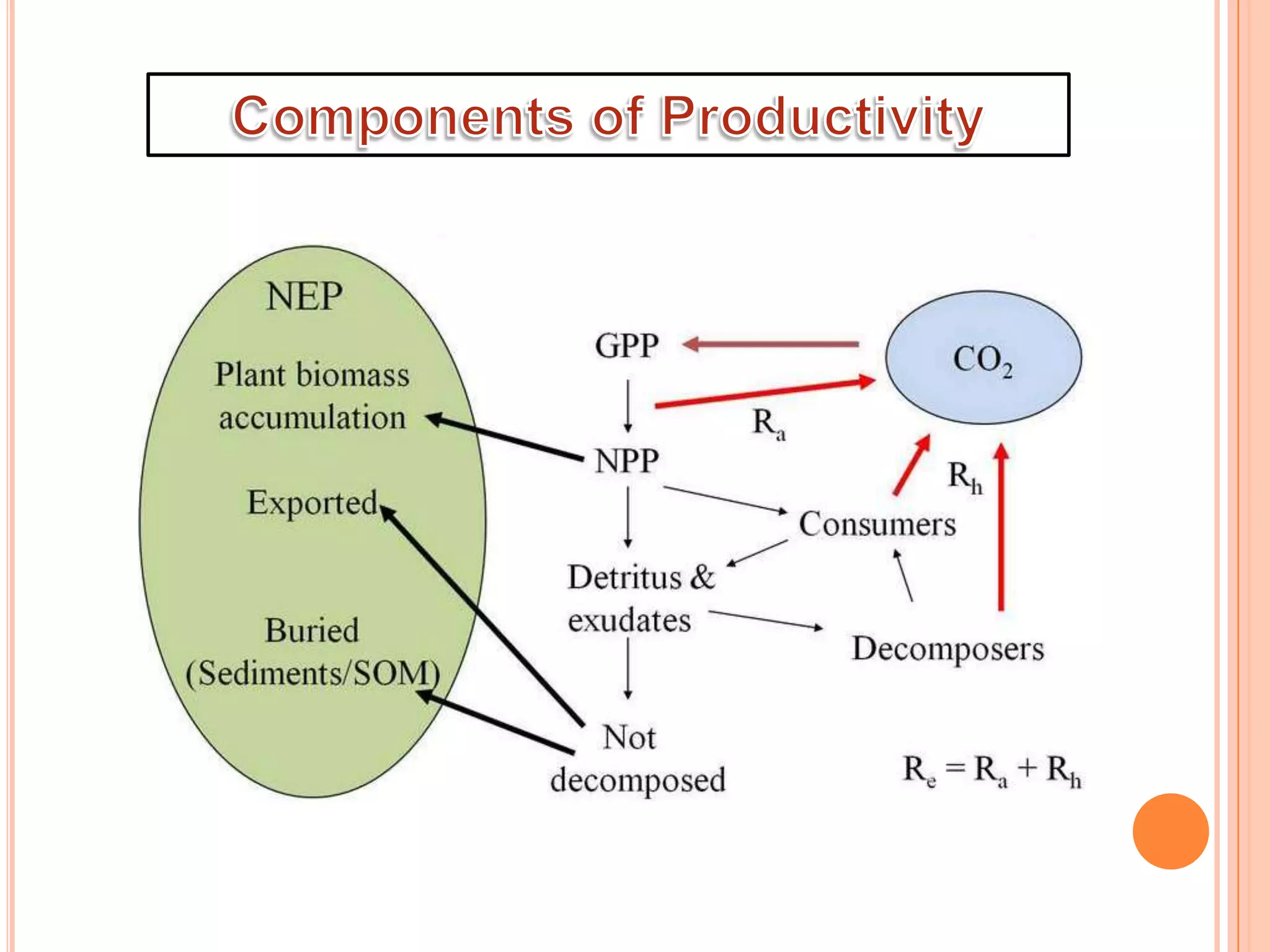
Gross PP (GPP) = total energy fixed
Net PP (NPP) = GPP – respiration
 Secondary productivity – The rate of formation of
new organic matter by consumers is called secondary
productivity .



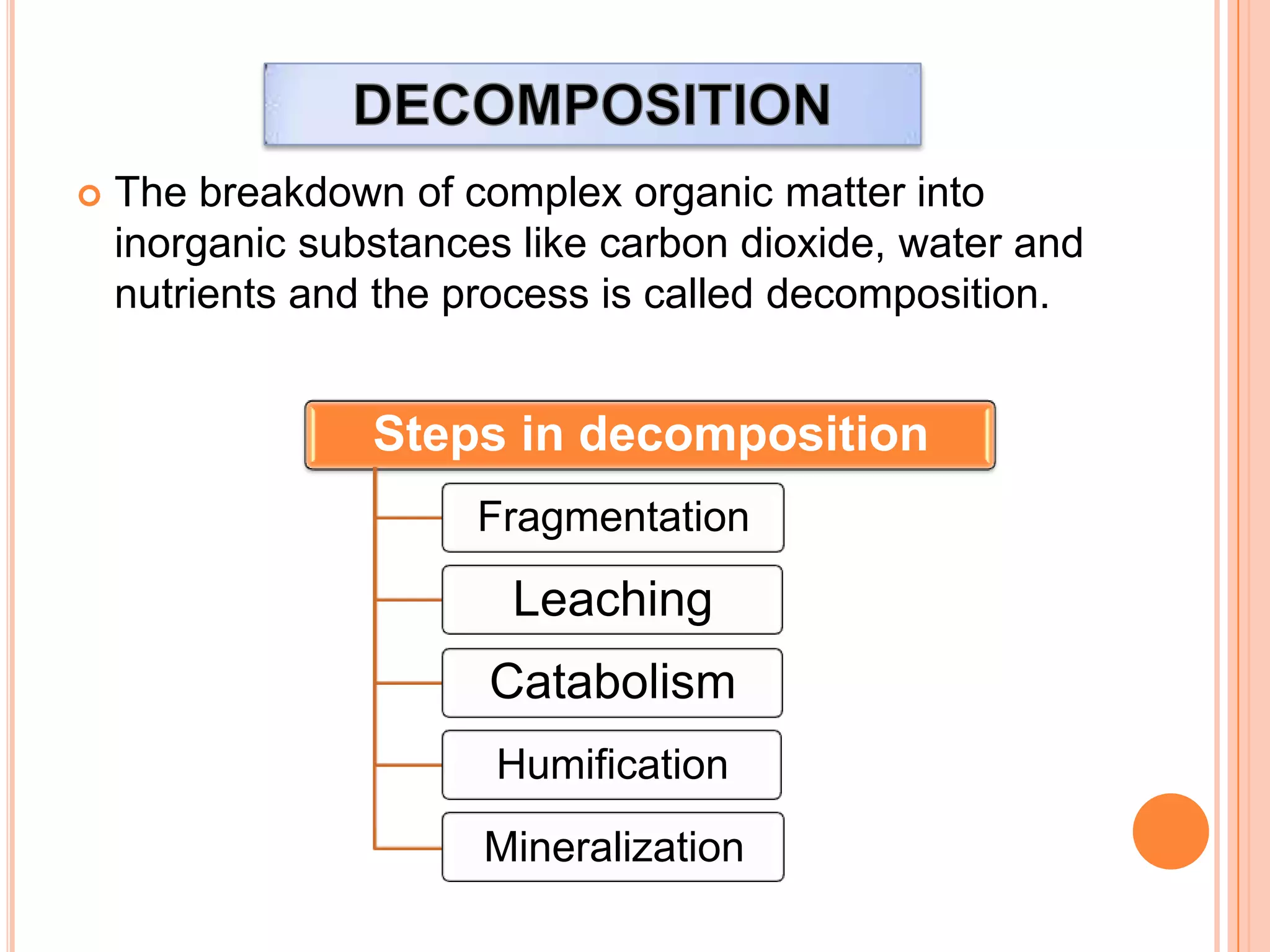
The breakdown of complex organic matter into
inorganic substances like carbon dioxide, water and
nutrients and the process is called decomposition.

Steps in decomposition
Fragmentation

Leaching
Catabolism
Humification
Mineralization
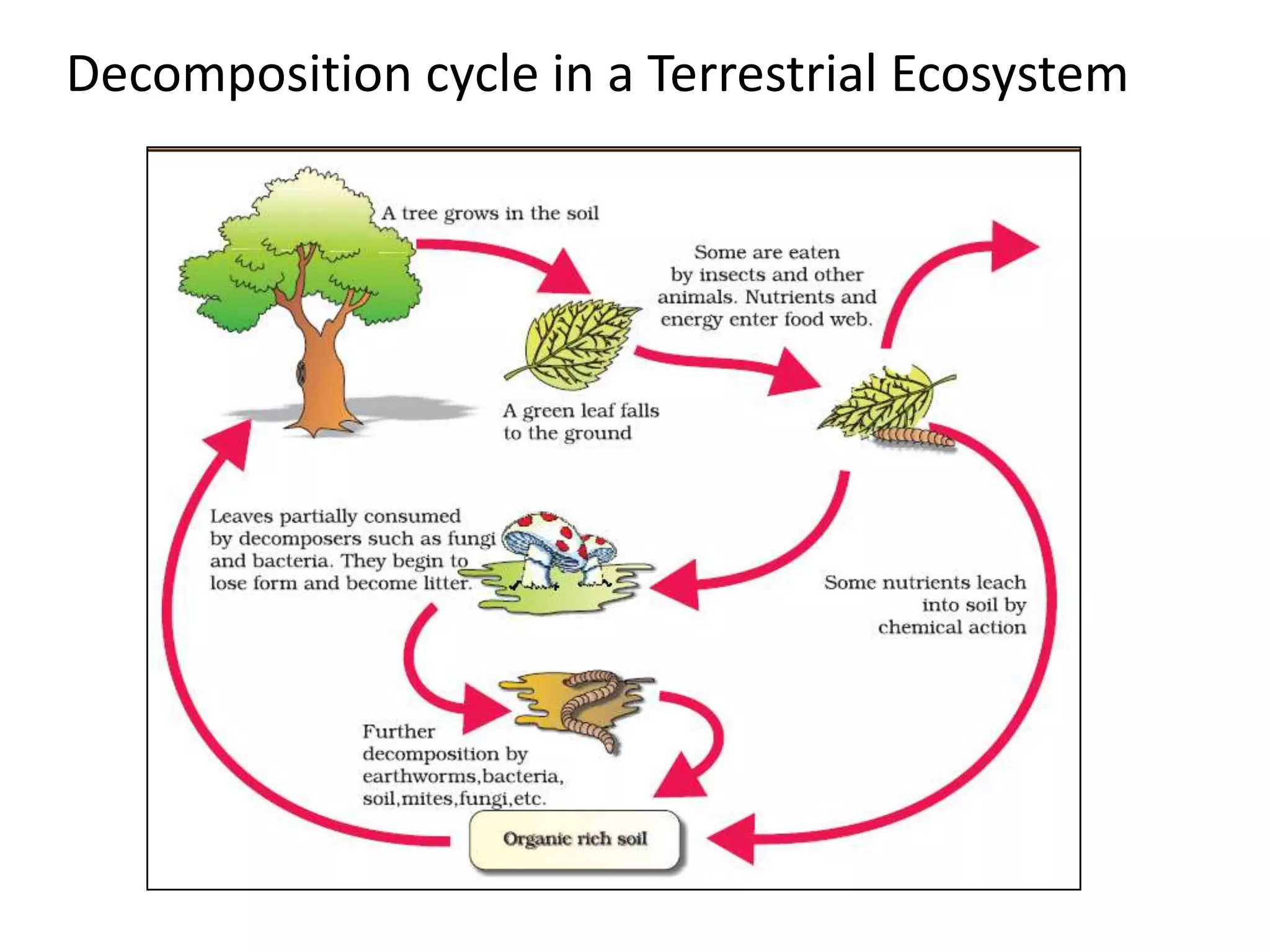
Decomposition cycle in a Terrestrial Ecosystem
 The

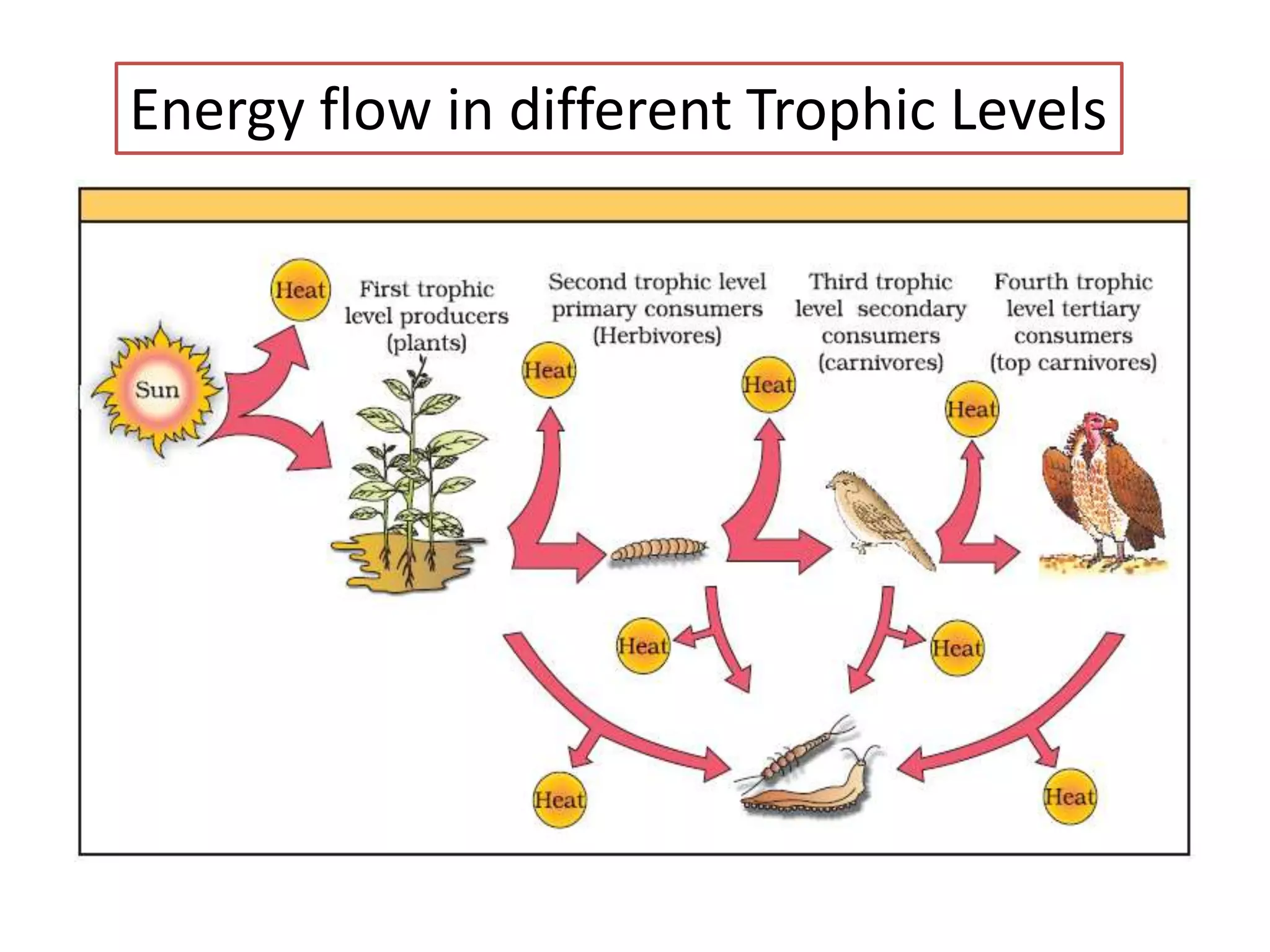
flow of energy is one way
direction from producer to
consumers, and ends in
decomposition process.
 However, a part of the energy is lost
as heat and agrees with the
phenomenon of second law of
Thermodynamics.
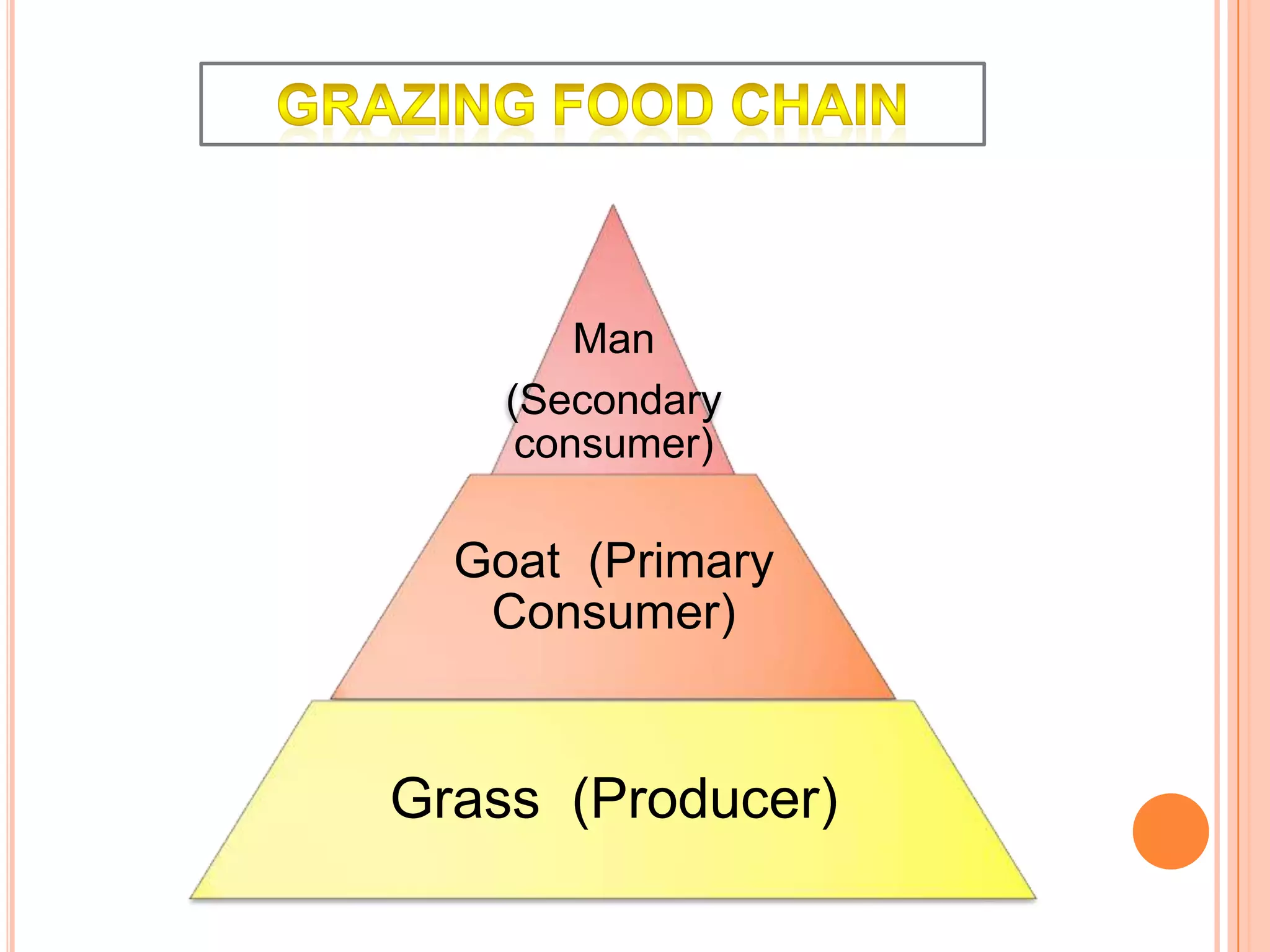
Man
(Secondary
consumer)

Goat (Primary
Consumer)

Grass (Producer)
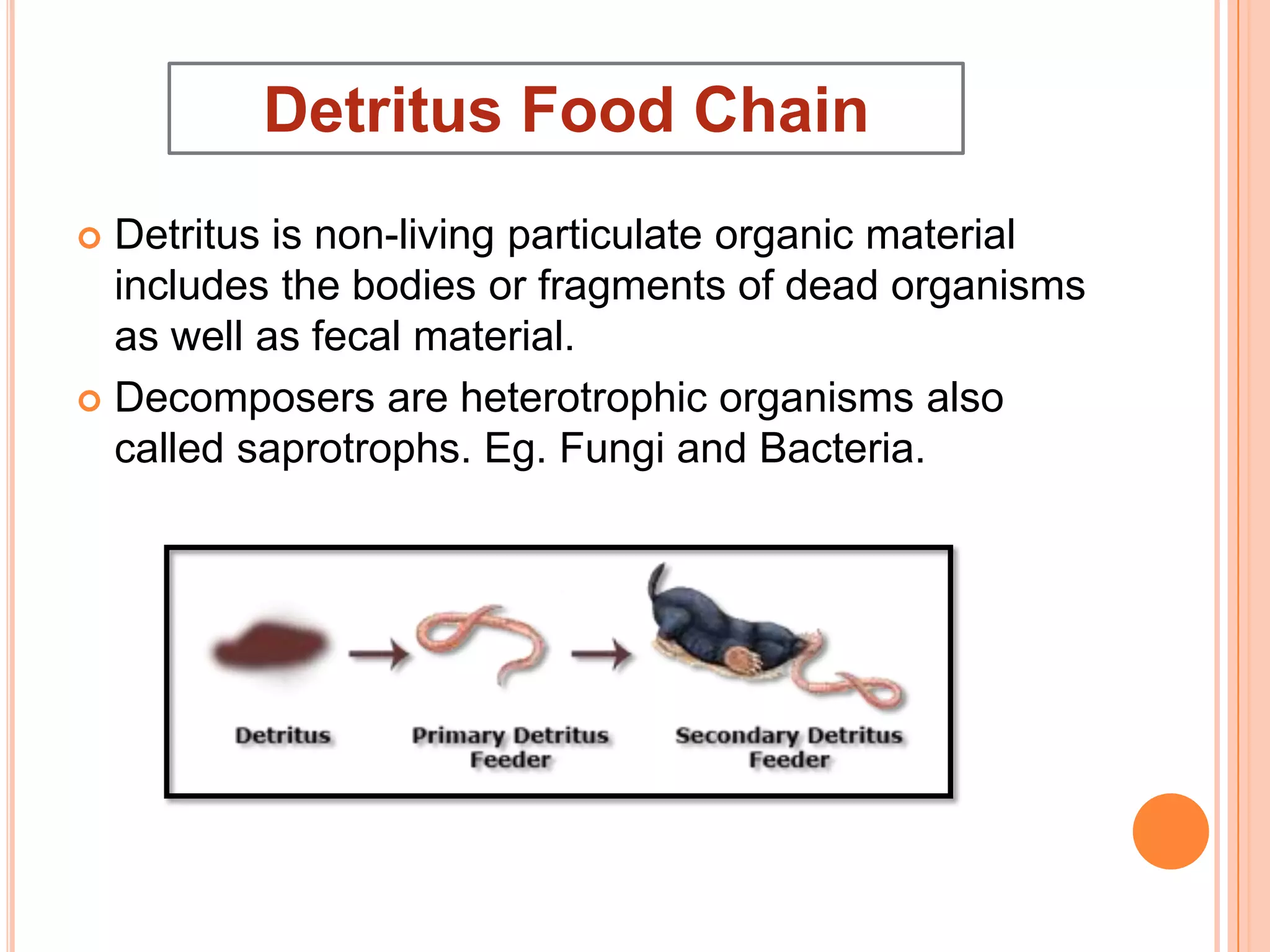
Detritus Food Chain
Detritus is non-living particulate organic material
includes the bodies or fragments of dead organisms
as well as fecal material.
 Decomposers are heterotrophic organisms also
called saprotrophs. Eg. Fungi and Bacteria.

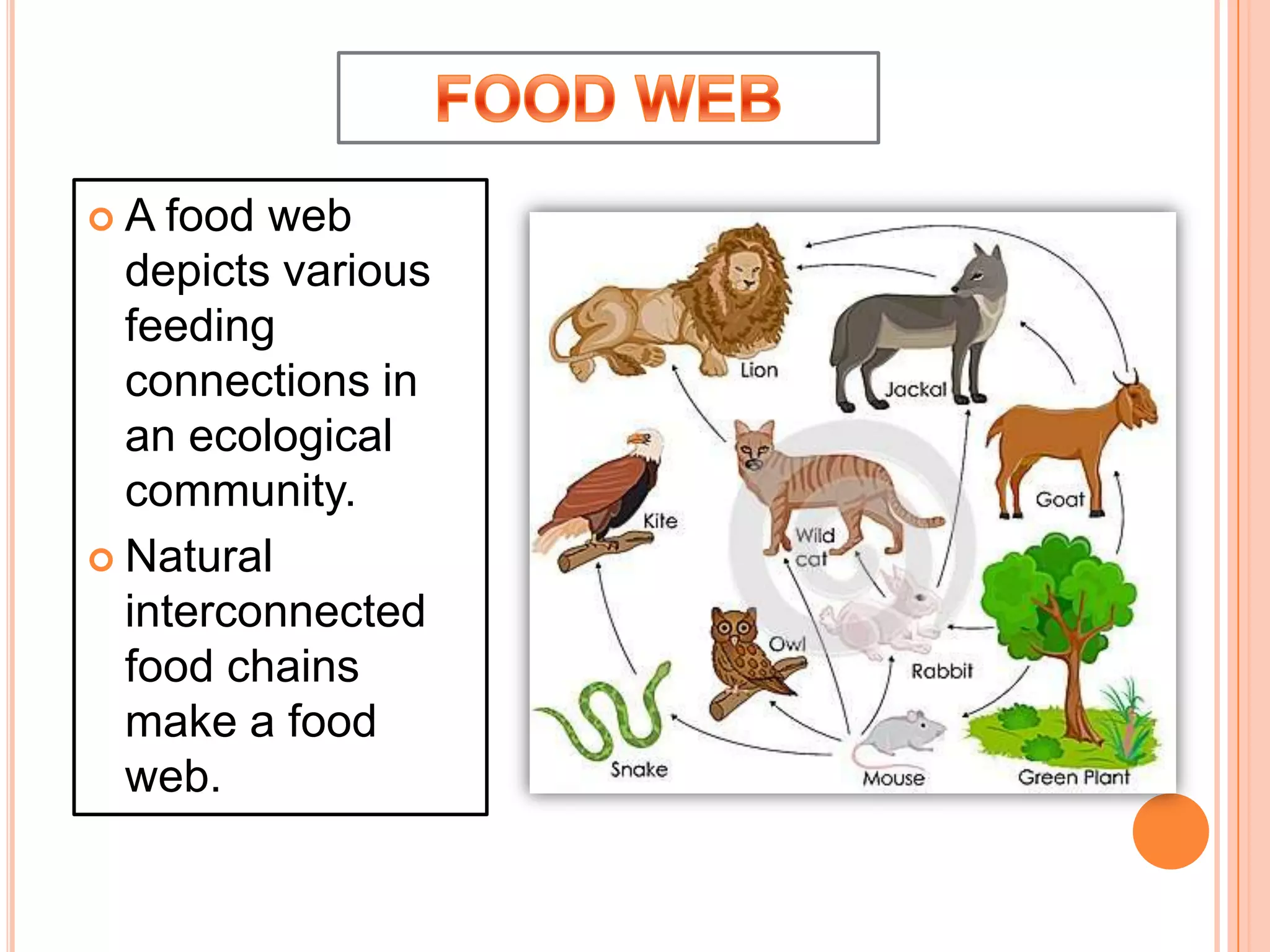
A

food web
depicts various
feeding
connections in
an ecological
community.
 Natural
interconnected
food chains
make a food
web.
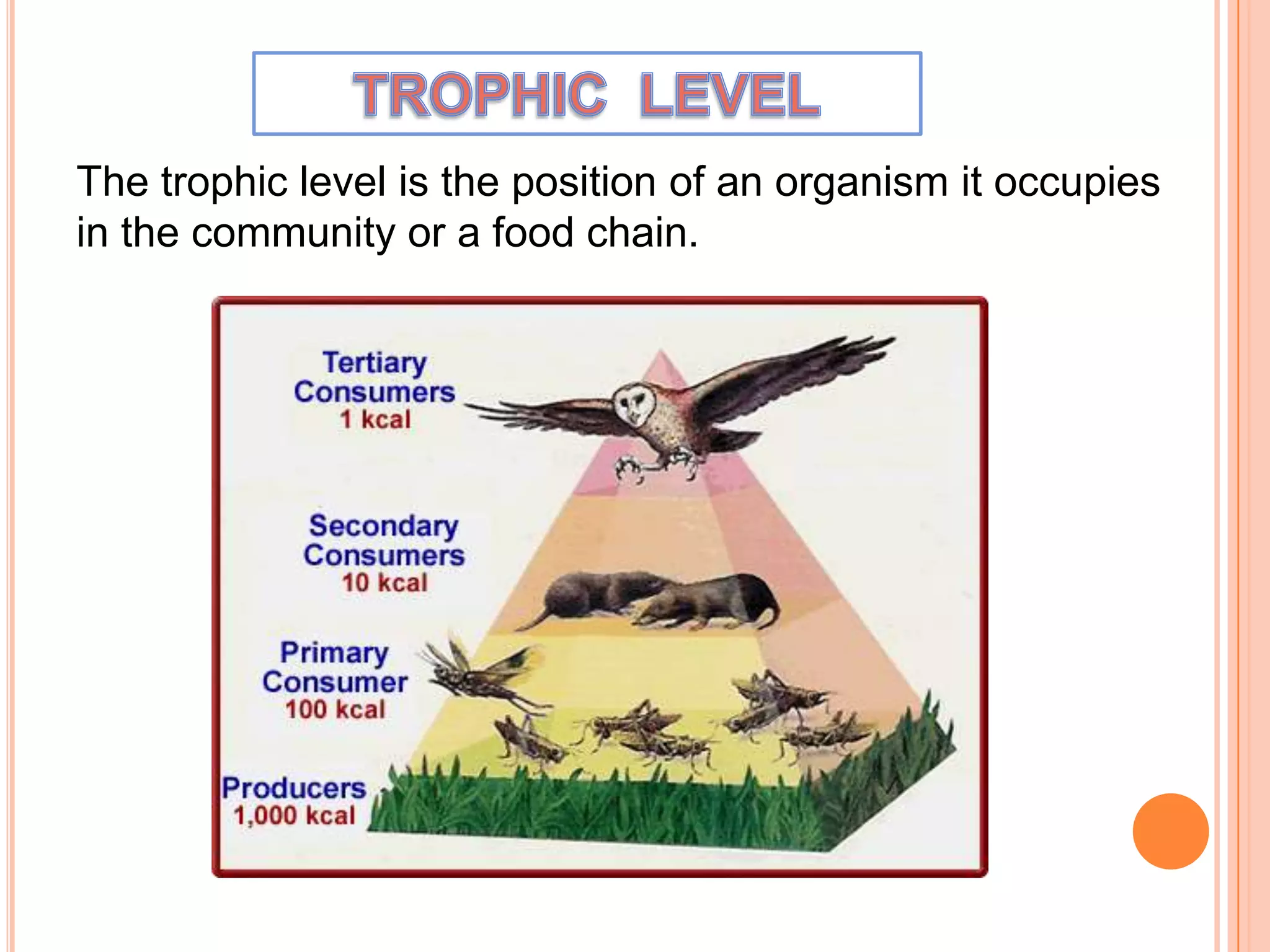
The trophic level is the position of an organism it occupies
in the community or a food chain.
Energy flow in different Trophic Levels


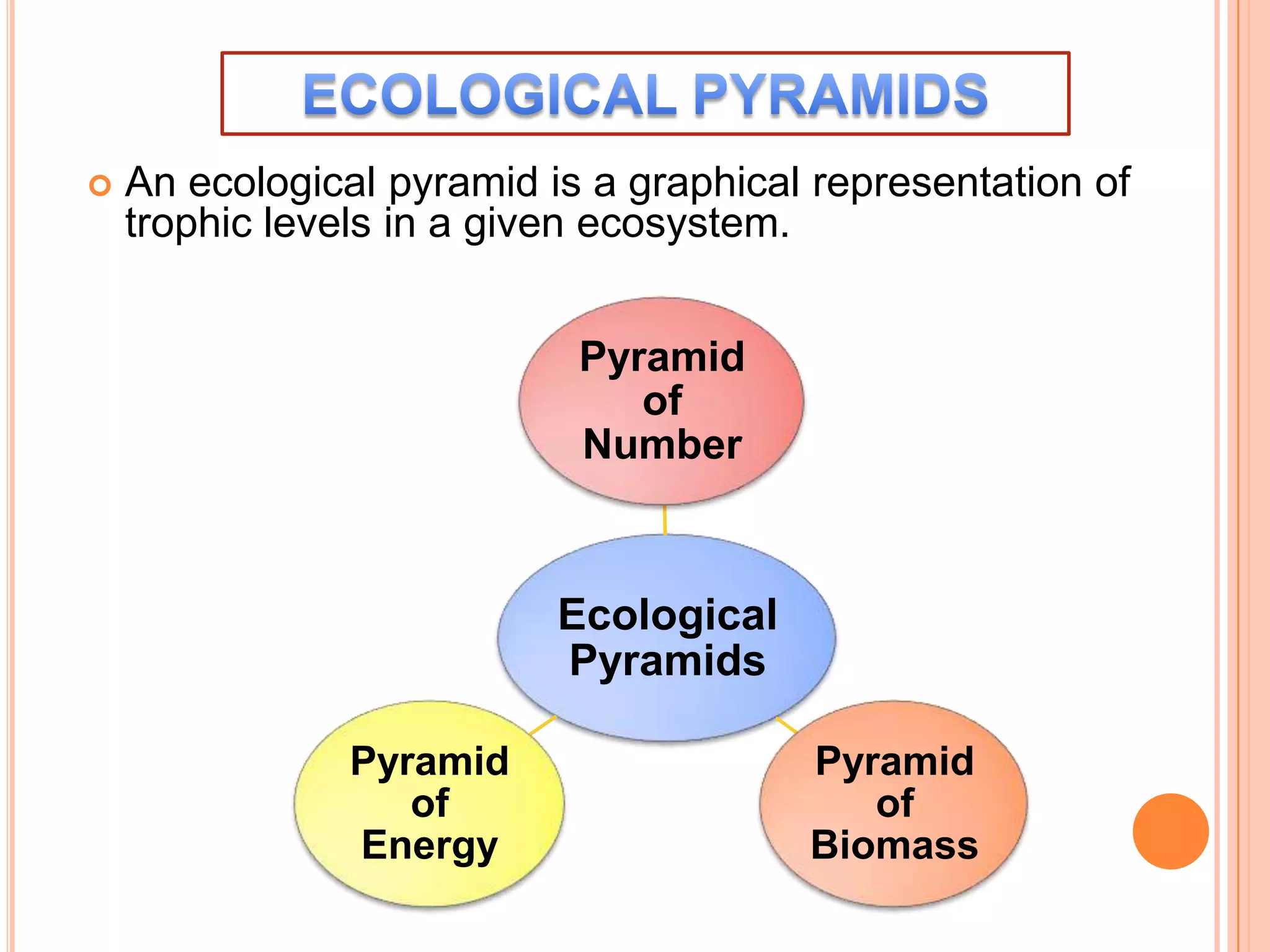
An ecological pyramid is a graphical representation of
trophic levels in a given ecosystem.
Pyramid
of
Number

Ecological
Pyramids
Pyramid
of
Energy

Pyramid
of
Biomass
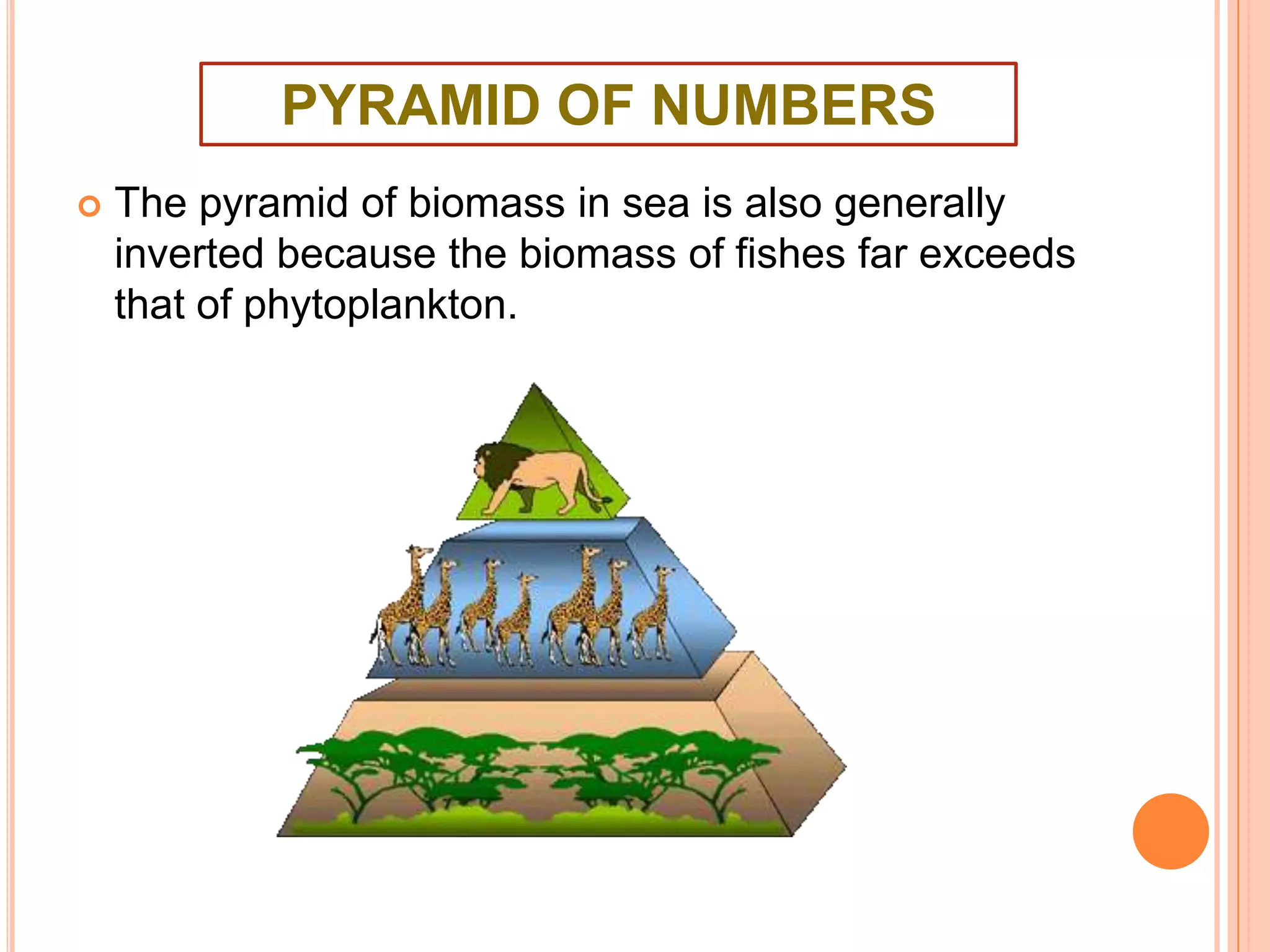
PYRAMID OF NUMBERS


The pyramid of biomass in sea is also generally
inverted because the biomass of fishes far exceeds
that of phytoplankton.
PYRAMID OF BIOMASS


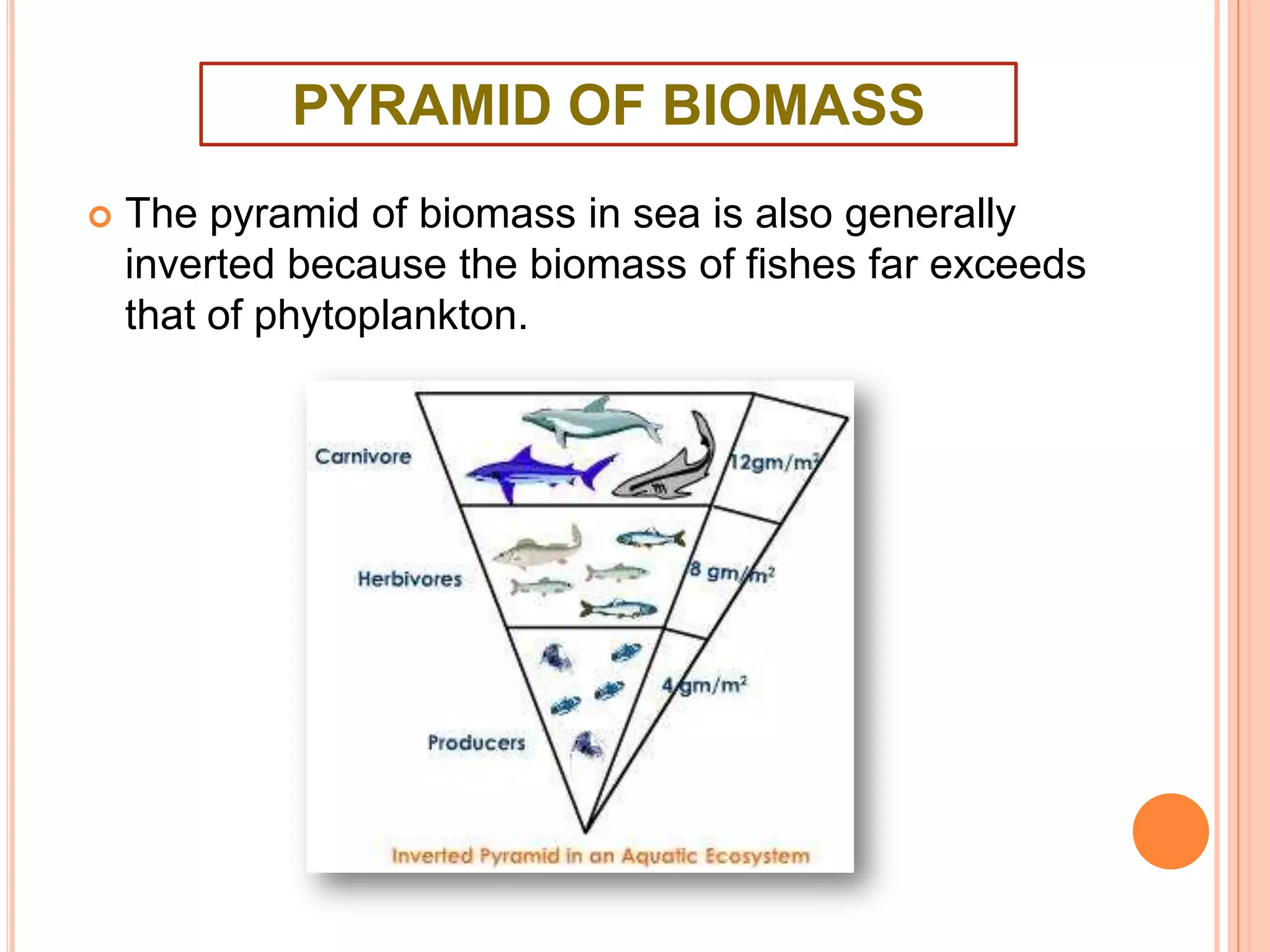
The pyramid of biomass in sea is also generally
inverted because the biomass of fishes far exceeds
that of phytoplankton.
PYRAMID OF ENERGY
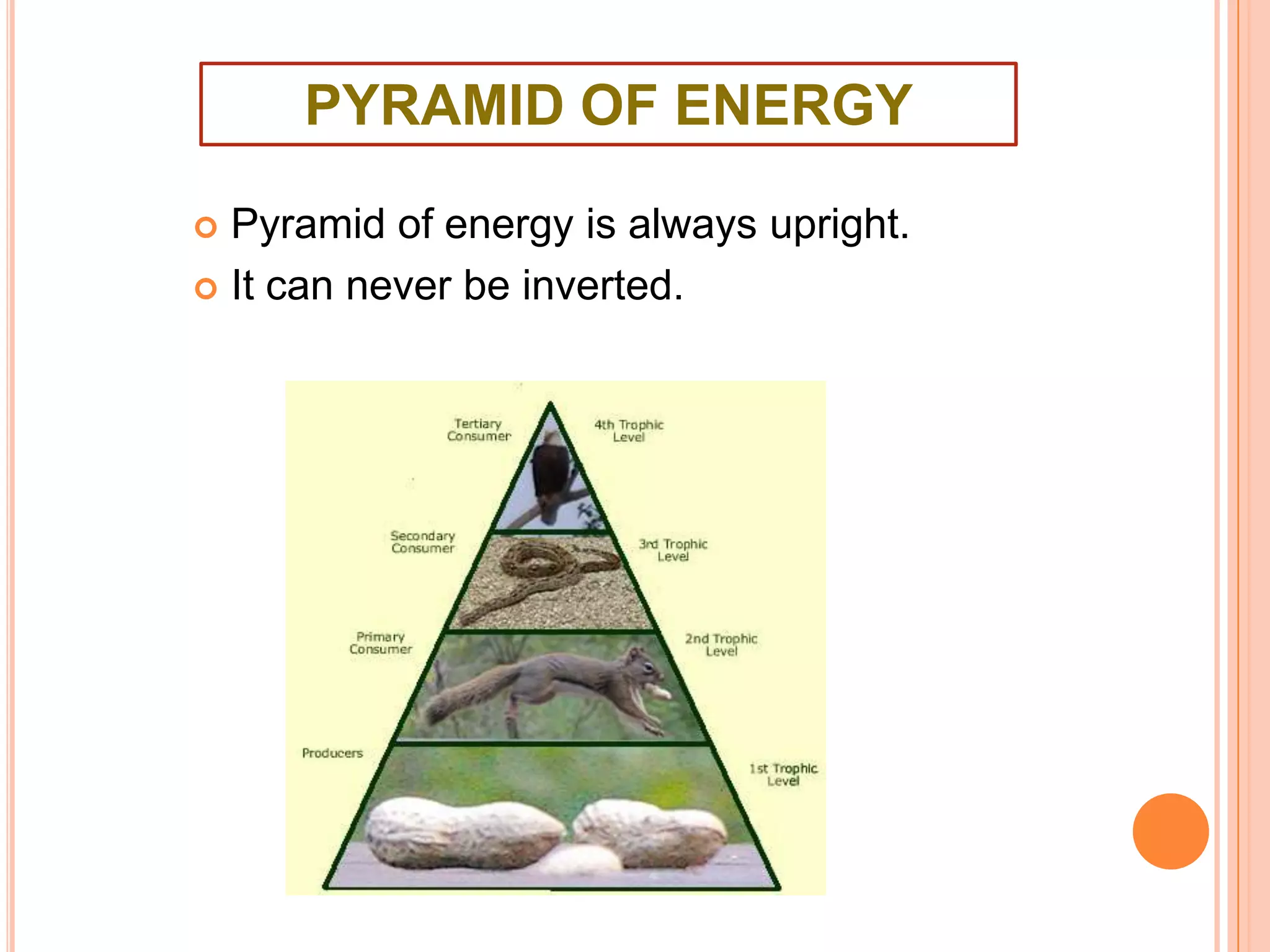
Pyramid of energy is always upright.
 It can never be inverted.


Ecosystem:Structure and Function

  • 2.
     The term ecosystemwas first coined by A.G.Tansely.  Ecosystem consists of two Words : Eco Environment System Interaction Ecosystem
  • 3.
    According to E.P.Odum,an American ecologist, the ecosystem is the basic functional unit of organism and their environment interacting with each other and with their own components.  e.g. Grassland, Forest, Aquarium, Pond, Lake, River and Ocean.  Grassland Ecosystem Forest Ecosystem Ocean Ecosystem
  • 4.
  • 5.
    Abiotic non-living Eg. soil, water,light, inorganic nutrients and weather Ecosystem Biotic living Eg. producers and consumers
  • 6.
     From nutrition pointof view, the biotic components of ecosystem can be grouped into three categories: Biotic components of Ecosystem Producers Consumers Decomposers
  • 7.
     The vertical distribution ofdifferent species occupying different levels is called stratification.  Eg. Trees occupy top vertical strata or layer of a forest, shrubs the second, herbs and grasses occupy the bottom layers.
  • 8.
    The components ofthe ecosystem are seen to function as a unit when we consider the following aspects:  Productivity  Decomposition  Energy flow  Nutrient cycling
  • 9.
    PRODUCTIVITY Productivity - Therate of biomass production is called productivity. Units: g–2 yr –1 or (kcal m–2) yr–1  Gross primary productivity - The rate of production of organic matter during photosynthesis is called gross primary productivity. Gross PP (GPP) = total energy fixed Net PP (NPP) = GPP – respiration  Secondary productivity – The rate of formation of new organic matter by consumers is called secondary productivity . 
  • 11.
     The breakdown ofcomplex organic matter into inorganic substances like carbon dioxide, water and nutrients and the process is called decomposition. Steps in decomposition Fragmentation Leaching Catabolism Humification Mineralization
  • 12.
    Decomposition cycle ina Terrestrial Ecosystem
  • 13.
     The flow ofenergy is one way direction from producer to consumers, and ends in decomposition process.  However, a part of the energy is lost as heat and agrees with the phenomenon of second law of Thermodynamics.
  • 14.
  • 15.
    Detritus Food Chain Detritusis non-living particulate organic material includes the bodies or fragments of dead organisms as well as fecal material.  Decomposers are heterotrophic organisms also called saprotrophs. Eg. Fungi and Bacteria. 
  • 16.
    A food web depicts various feeding connectionsin an ecological community.  Natural interconnected food chains make a food web.
  • 17.
    The trophic levelis the position of an organism it occupies in the community or a food chain.
  • 18.
    Energy flow indifferent Trophic Levels
  • 19.
     An ecological pyramidis a graphical representation of trophic levels in a given ecosystem. Pyramid of Number Ecological Pyramids Pyramid of Energy Pyramid of Biomass
  • 20.
    PYRAMID OF NUMBERS  Thepyramid of biomass in sea is also generally inverted because the biomass of fishes far exceeds that of phytoplankton.
  • 21.
    PYRAMID OF BIOMASS  Thepyramid of biomass in sea is also generally inverted because the biomass of fishes far exceeds that of phytoplankton.
  • 22.
    PYRAMID OF ENERGY Pyramidof energy is always upright.  It can never be inverted. 