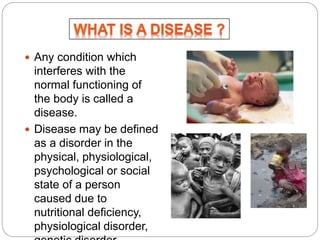
 Any condition which
interferes with the
normal functioning of
the body is called a
disease.
 Disease may be defined
as a disorder in the
physical, physiological,
psychological or social
state of a person
caused due to
nutritional deficiency,
physiological disorder,
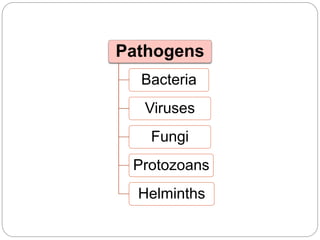
Pathogens
Bacteria
Viruses
Fungi
Protozoans
Helminths
 Pathogen : Salmonella typhi (Bacteria)
 Target organ - Small intestine
 Mode of transmission :
 Through contaminated food and water
 Confirmation Test - Widal test
 Symptoms :
 High fever (39° to 40°C)
 weakness
 stomach pain
 constipation
 headache and loss of appetite
 In severe cases intestinal perforation and death may
occur.
 Pathogen :
 Streptococcus pneumoniae and Haemophilus
influenzae (Bacteria)
 Target organ - Alveoli of the lungs
 Mode of transmission :
 By inhaling the droplets/aerosols released by an
infected person
 By sharing glasses and utensils with an infected
person
 Symptoms :
 Fever, chills, cough and headache
 In severe cases, the lips and finger nails may turn
gray to bluish in colour.
 Pathogen :
 Rhino viruses (Virus)
 Target organ - Nose and respiratory passage but
not the lungs.
 Mode of transmission :
 Through droplets from cough or sneezes of an
infected person
 Through contaminated objects such as pens, books,
cups, doorknobs, computer keyboard or mouse, etc.
 Symptoms :
 Nasal congestion and discharge
 Sore throat, hoarseness, cough, headache &
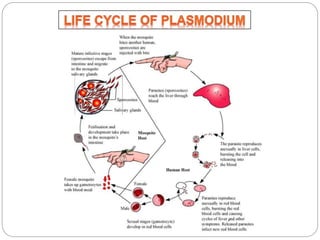
 Pathogen :
 Plasmodium vivax, P. malaria, P.falciparum
 Mode of transmission :
 By bite of female Anopheles mosquitoes
 Incubation period :
 Approximately 12 days
 Symptoms
 Headache, nausea and muscular pain.
 Feeling of chilliness and shivering followed by fever
which becomes normal along with sweating after some
time.
 The patient becomes weak and anaemic.
 If not treated properly secondary complications may lead
to death.
Prevention and cure:-
 Fitting of double door and windows (with wire
mesh) in the house to prevent entry of
mosquitoes.
 Use of mosquito net and mosquito repellents.
 No water should be allowed to collect in ditches
or other open spaces to prevent mosquito
breeding.
 Sprinkling of kerosene oil in ditches or other open
spaces where water gets collected.
 Antimalarial drugs to be taken.
 Pathogen :
 Entamoeba histolytica (Protozoan)
 Target organ - Large intestine of human
 Mode of transmission :
 Houseflies transmit the parasite from faeces of
infected person to food, food products and water.
 Symptoms :
i. Constipation
ii. Abdominal pain and cramps
iii. Stools with excess mucous and blood clots
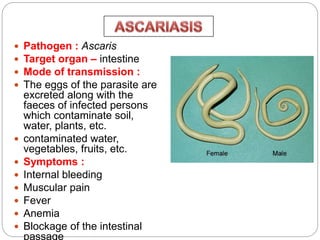
 Pathogen : Ascaris
 Target organ – intestine
 Mode of transmission :
 The eggs of the parasite are
excreted along with the
faeces of infected persons
which contaminate soil,
water, plants, etc.
 contaminated water,
vegetables, fruits, etc.
 Symptoms :
 Internal bleeding
 Muscular pain
 Fever
 Anemia
 Blockage of the intestinal
passage
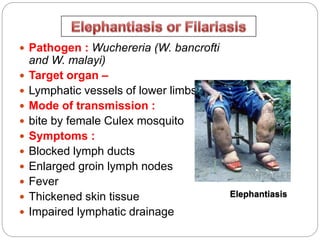
 Pathogen : Wuchereria (W. bancrofti
and W. malayi)
 Target organ –
 Lymphatic vessels of lower limbs
 Mode of transmission :
 bite by female Culex mosquito
 Symptoms :
 Blocked lymph ducts
 Enlarged groin lymph nodes
 Fever
 Thickened skin tissue
 Impaired lymphatic drainage
Elephantiasis
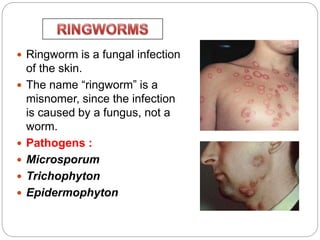
 Ringworm is a fungal infection
of the skin.
 The name “ringworm” is a
misnomer, since the infection
is caused by a fungus, not a
worm.
 Pathogens :
 Microsporum
 Trichophyton
 Epidermophyton
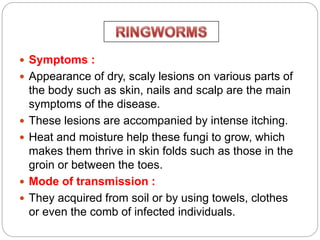
 Symptoms :
 Appearance of dry, scaly lesions on various parts of
the body such as skin, nails and scalp are the main
symptoms of the disease.
 These lesions are accompanied by intense itching.
 Heat and moisture help these fungi to grow, which
makes them thrive in skin folds such as those in the
groin or between the toes.
 Mode of transmission :
 They acquired from soil or by using towels, clothes
or even the comb of infected individuals.
 Maintenance of personal and public hygiene
 Keeping the body clean
 Consumption of clean drinking water, food,
vegetables, fruits, etc.
 Proper disposal of waste and excreta;
 Periodic cleaning and disinfection of water
reservoirs, pools, cesspools and tanks
 Vaccination and immunisation
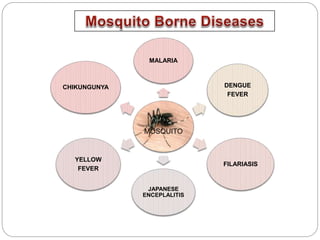
MOSQUITO
MALARIA
DENGUE
FEVER
FILARIASIS
JAPANESE
ENCEPLALITIS
YELLOW
FEVER
CHIKUNGUNYA
 To avoid stagnation of water
in and around residential
areas
 Regular cleaning of
household coolers,
 Use of mosquito nets,
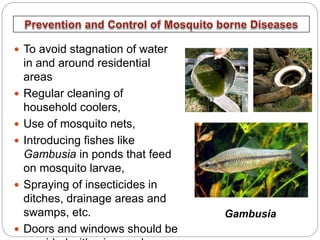
 Introducing fishes like
Gambusia in ponds that feed
on mosquito larvae,
 Spraying of insecticides in
ditches, drainage areas and
swamps, etc.
 Doors and windows should be
Gambusia

Common diseases in Human

  • 2.
     Any conditionwhich interferes with the normal functioning of the body is called a disease.  Disease may be defined as a disorder in the physical, physiological, psychological or social state of a person caused due to nutritional deficiency, physiological disorder,
  • 3.
  • 4.
     Pathogen :Salmonella typhi (Bacteria)  Target organ - Small intestine  Mode of transmission :  Through contaminated food and water  Confirmation Test - Widal test  Symptoms :  High fever (39° to 40°C)  weakness  stomach pain  constipation  headache and loss of appetite  In severe cases intestinal perforation and death may occur.
  • 5.
     Pathogen : Streptococcus pneumoniae and Haemophilus influenzae (Bacteria)  Target organ - Alveoli of the lungs  Mode of transmission :  By inhaling the droplets/aerosols released by an infected person  By sharing glasses and utensils with an infected person  Symptoms :  Fever, chills, cough and headache  In severe cases, the lips and finger nails may turn gray to bluish in colour.
  • 6.
     Pathogen : Rhino viruses (Virus)  Target organ - Nose and respiratory passage but not the lungs.  Mode of transmission :  Through droplets from cough or sneezes of an infected person  Through contaminated objects such as pens, books, cups, doorknobs, computer keyboard or mouse, etc.  Symptoms :  Nasal congestion and discharge  Sore throat, hoarseness, cough, headache &
  • 7.
     Pathogen : Plasmodium vivax, P. malaria, P.falciparum  Mode of transmission :  By bite of female Anopheles mosquitoes  Incubation period :  Approximately 12 days  Symptoms  Headache, nausea and muscular pain.  Feeling of chilliness and shivering followed by fever which becomes normal along with sweating after some time.  The patient becomes weak and anaemic.  If not treated properly secondary complications may lead to death.
  • 8.
    Prevention and cure:- Fitting of double door and windows (with wire mesh) in the house to prevent entry of mosquitoes.  Use of mosquito net and mosquito repellents.  No water should be allowed to collect in ditches or other open spaces to prevent mosquito breeding.  Sprinkling of kerosene oil in ditches or other open spaces where water gets collected.  Antimalarial drugs to be taken.
  • 10.
     Pathogen : Entamoeba histolytica (Protozoan)  Target organ - Large intestine of human  Mode of transmission :  Houseflies transmit the parasite from faeces of infected person to food, food products and water.  Symptoms : i. Constipation ii. Abdominal pain and cramps iii. Stools with excess mucous and blood clots
  • 11.
     Pathogen :Ascaris  Target organ – intestine  Mode of transmission :  The eggs of the parasite are excreted along with the faeces of infected persons which contaminate soil, water, plants, etc.  contaminated water, vegetables, fruits, etc.  Symptoms :  Internal bleeding  Muscular pain  Fever  Anemia  Blockage of the intestinal passage
  • 12.
     Pathogen :Wuchereria (W. bancrofti and W. malayi)  Target organ –  Lymphatic vessels of lower limbs  Mode of transmission :  bite by female Culex mosquito  Symptoms :  Blocked lymph ducts  Enlarged groin lymph nodes  Fever  Thickened skin tissue  Impaired lymphatic drainage Elephantiasis
  • 13.
     Ringworm isa fungal infection of the skin.  The name “ringworm” is a misnomer, since the infection is caused by a fungus, not a worm.  Pathogens :  Microsporum  Trichophyton  Epidermophyton
  • 14.
     Symptoms : Appearance of dry, scaly lesions on various parts of the body such as skin, nails and scalp are the main symptoms of the disease.  These lesions are accompanied by intense itching.  Heat and moisture help these fungi to grow, which makes them thrive in skin folds such as those in the groin or between the toes.  Mode of transmission :  They acquired from soil or by using towels, clothes or even the comb of infected individuals.
  • 15.
     Maintenance ofpersonal and public hygiene  Keeping the body clean  Consumption of clean drinking water, food, vegetables, fruits, etc.  Proper disposal of waste and excreta;  Periodic cleaning and disinfection of water reservoirs, pools, cesspools and tanks  Vaccination and immunisation
  • 16.
  • 17.
     To avoidstagnation of water in and around residential areas  Regular cleaning of household coolers,  Use of mosquito nets,  Introducing fishes like Gambusia in ponds that feed on mosquito larvae,  Spraying of insecticides in ditches, drainage areas and swamps, etc.  Doors and windows should be Gambusia