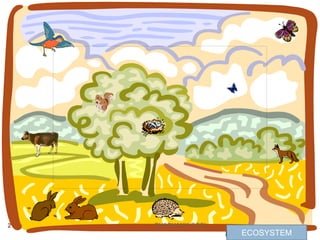
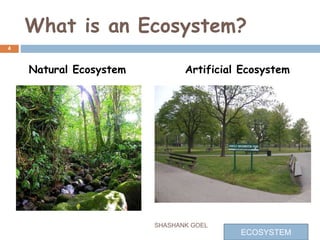
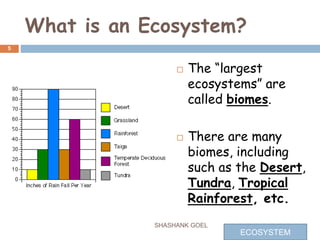
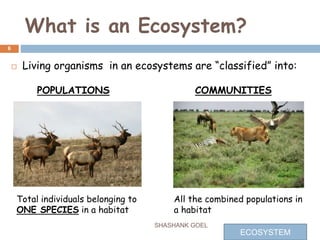
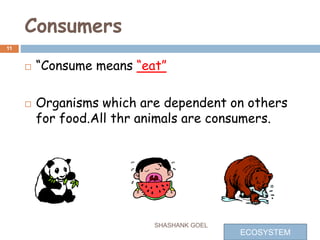
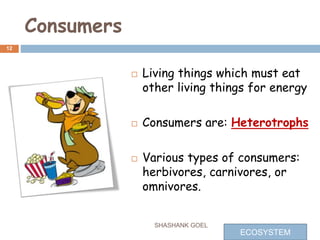
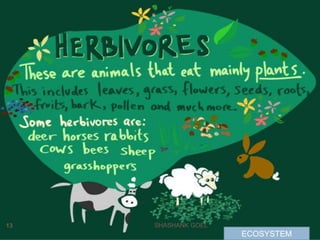
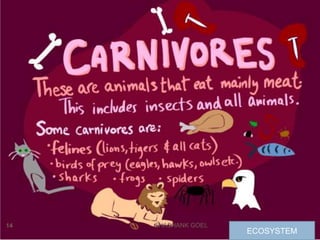
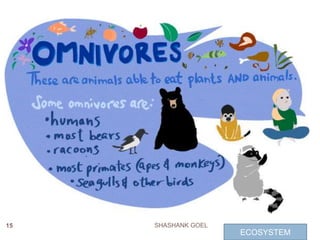
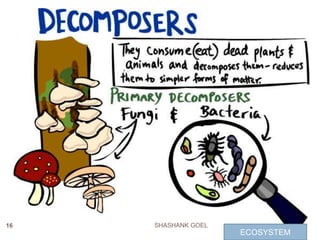
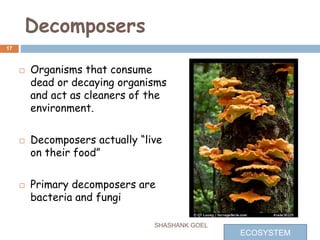
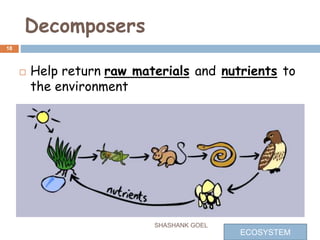
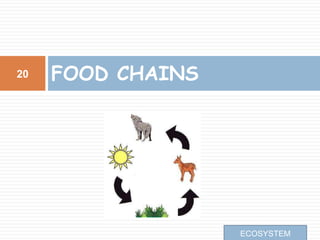
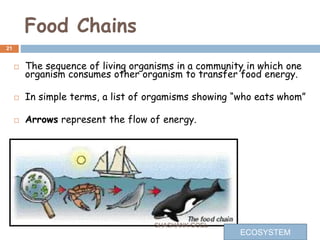
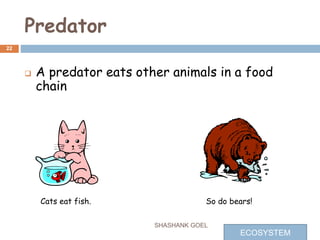
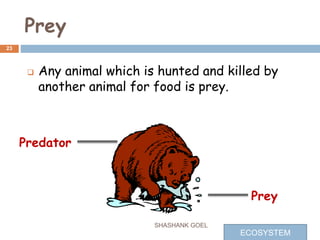
An ecosystem is defined as a complex relationship between living organisms, habitats, and resources in a given area. Organisms are typically dependent on each other and their habitat for survival. Ecosystems can be natural or artificial. The components of an ecosystem include abiotic (non-living) factors like air, water and soil, and biotic (living) factors like producers, consumers, and decomposers. Producers harness energy from the sun via photosynthesis. Consumers consume other organisms for food, and decomposers break down dead organisms and waste. Food chains show the transfer of energy as organisms consume one another.