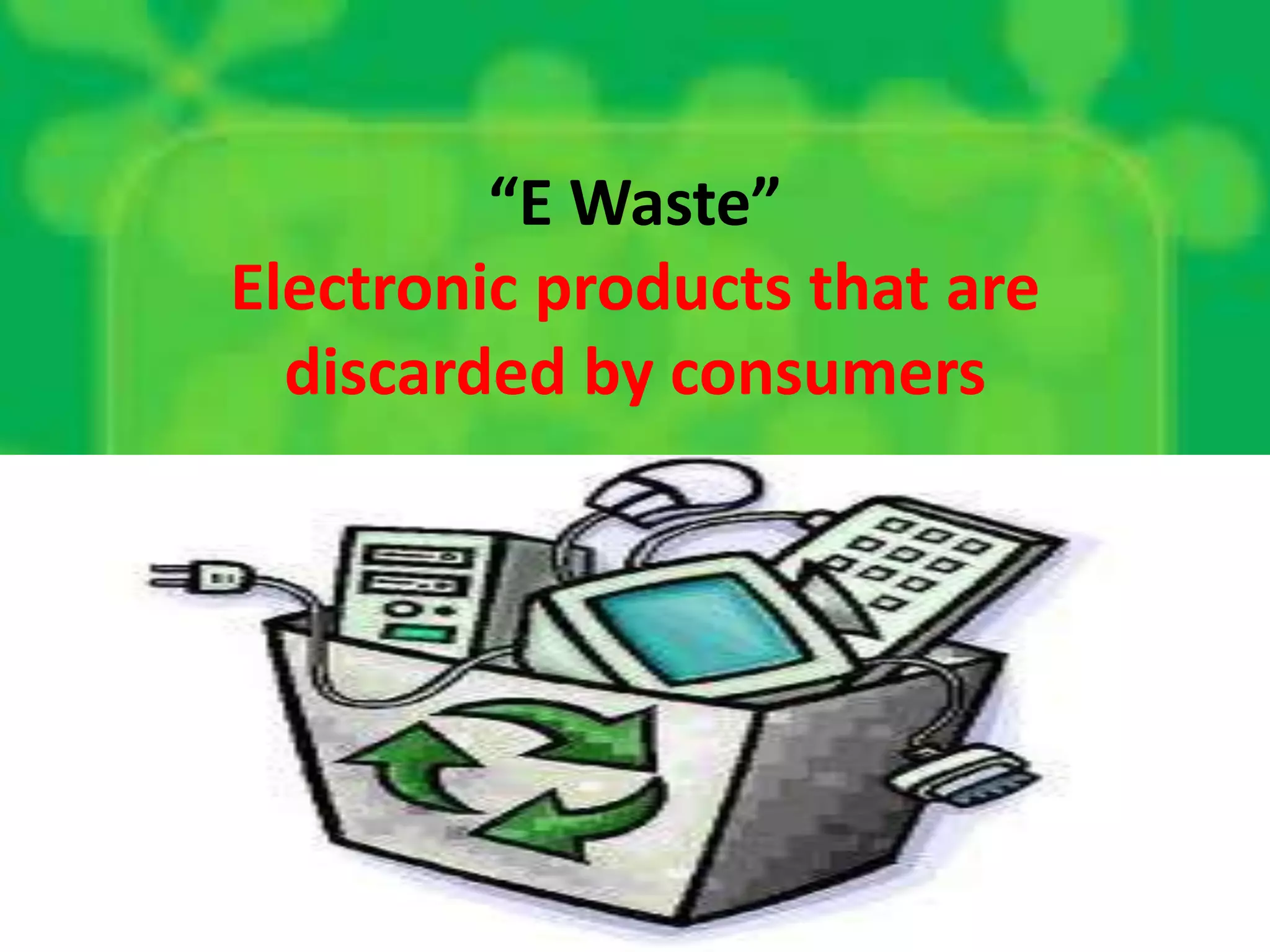
“E Waste”
Electronic products that are
discarded by consumers
• E-Waste is the disposal of electronics
products
• Improper disposal affects human and
environmental health because many of these
products contain toxic substances
Currently what happens is…
• 15-20% of e-waste is recycled, the rest of these
electronics go directly into landfills and incinerators
• Electrical waste contains hazardous but also valuable
and scarce materials
• An estimated 70% of heavy metals in landfills comes
from discarded electronics
• Environmental damage on the area
• Seven out of ten kids have too much lead in
their blood if resides in such place
All electronic items can be
recycled and from them various
metals and plastics can be
obtained
What is E waste Recycling???
How they can be Recycled ???
What can we get out of them???
Recycling of e-waste requires
sophisticated technology and
processes
These are not only very
expensive, but also need specific
skills and training for the operation
Proper recycling of complex
materials requires the expertise to
recognize or determine the
presence of hazardous or potentially
hazardous constituents as well as
desirable constituents
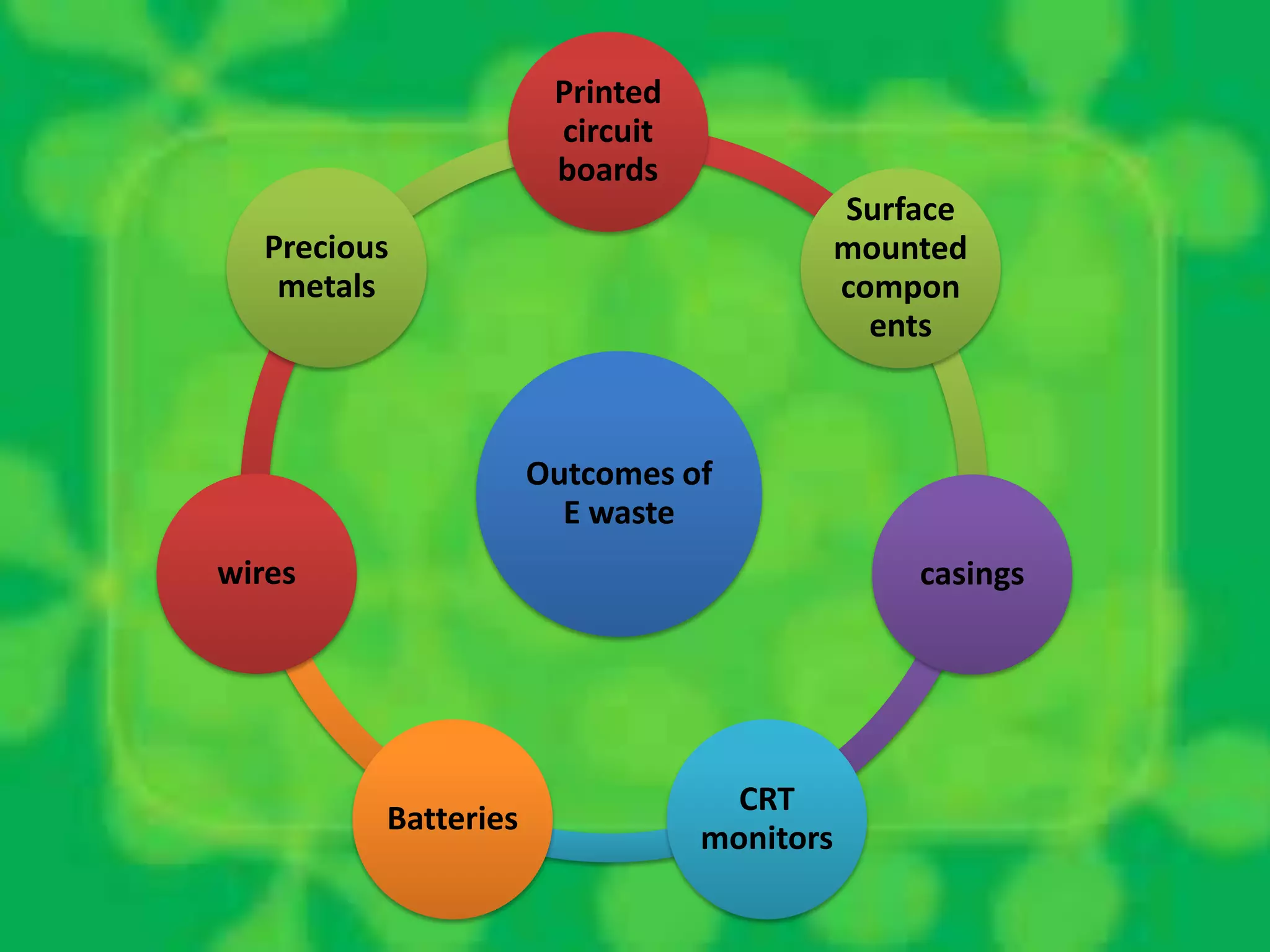
What do we get out of it???
Outcomes of
E waste
Printed
circuit
boards
Surface
mounted
compon
ents
casings
CRT
monitors
Batteries
wires
Precious
metals
• Recycling is the most effective solution to the
growing e-waste problem
• Most electronic devices contain a variety of
materials, including metals that can be
recovered for future uses
• Air and water pollution caused by hazardous
disposal is avoided
Benefits of Recycling???
• Additionally, recycling reduces the amount
of greenhouse gas emissions caused by the
manufacturing of new products
• It simply makes good sense and is efficient to
recycle and to do our part to keep the
environment green
RECYCLE
DISPOSE
REUSE
Reuse
• Preventing waste in the first place is the
preferred mngt option
• This can be achieved through repairing,
upgrading used electrical equipment
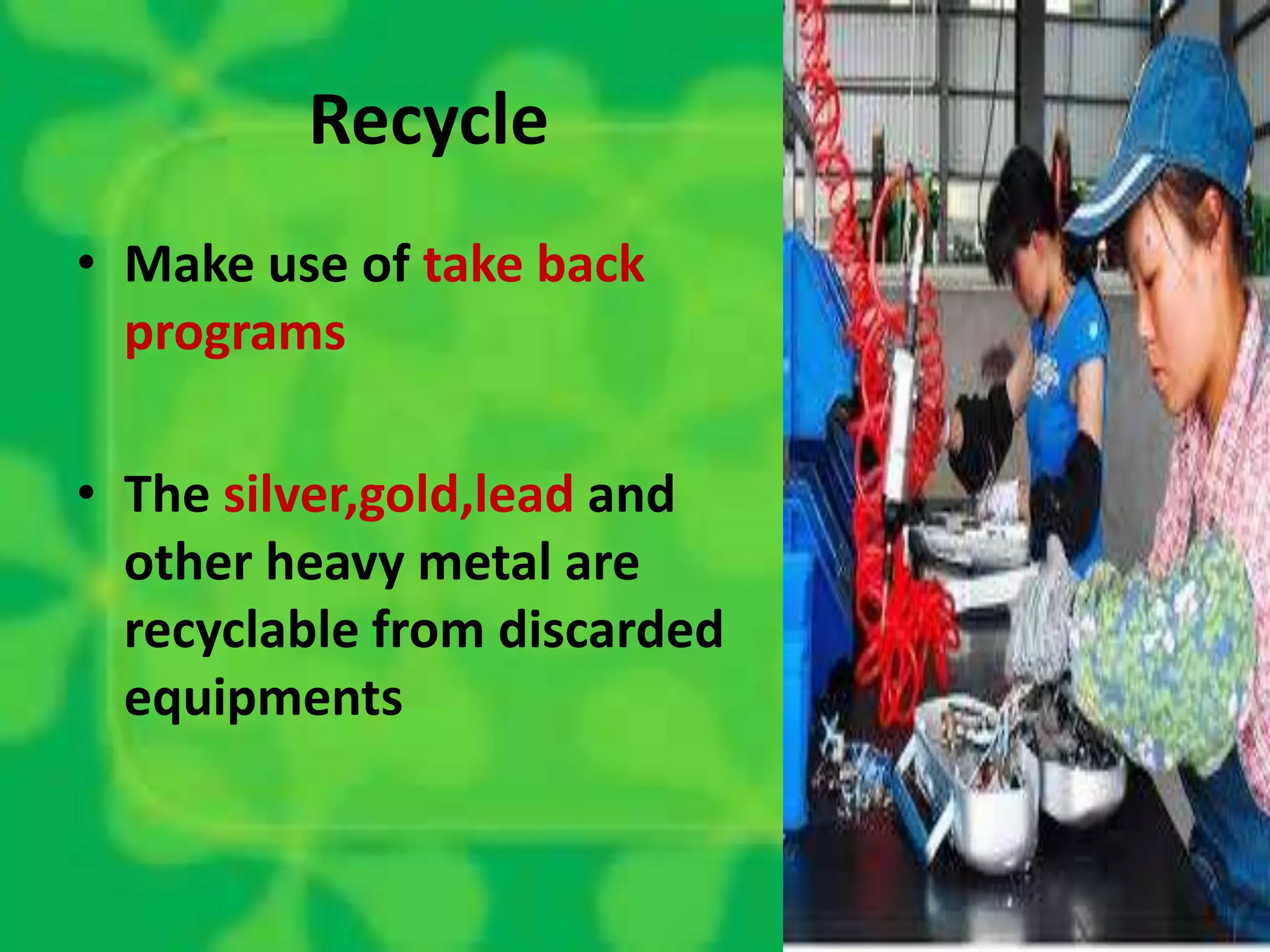
Recycle
• Make use of take back
programs
• The silver,gold,lead and
other heavy metal are
recyclable from discarded
equipments
Dispose
• The least preferred option is to landfill
electronic waste
• This should only come as a last option but
care to consult with state regulations on
disposal of any hazardous waste
Future…
• An increase in the number of
businesses that will refurbish and
recycle electronic equipment. This will
help keep more equipment in
continued use, and out of landfills
• Additional take back programs by
electronic equipment manufacturers
• Greater use of alternative products,
such as LCD panels and plasma screens
for televisions and computers. These
items contain little or no hazardous
material
Each one of us has a role to play
for better future!!
E waste recycling

E waste recycling

  • 1.
    “E Waste” Electronic productsthat are discarded by consumers
  • 3.
    • E-Waste isthe disposal of electronics products • Improper disposal affects human and environmental health because many of these products contain toxic substances
  • 4.
  • 5.
    • 15-20% ofe-waste is recycled, the rest of these electronics go directly into landfills and incinerators • Electrical waste contains hazardous but also valuable and scarce materials • An estimated 70% of heavy metals in landfills comes from discarded electronics
  • 6.
    • Environmental damageon the area • Seven out of ten kids have too much lead in their blood if resides in such place
  • 8.
    All electronic itemscan be recycled and from them various metals and plastics can be obtained
  • 10.
    What is Ewaste Recycling??? How they can be Recycled ??? What can we get out of them???
  • 11.
    Recycling of e-wasterequires sophisticated technology and processes These are not only very expensive, but also need specific skills and training for the operation
  • 12.
    Proper recycling ofcomplex materials requires the expertise to recognize or determine the presence of hazardous or potentially hazardous constituents as well as desirable constituents
  • 13.
    What do weget out of it???
  • 14.
  • 15.
    • Recycling isthe most effective solution to the growing e-waste problem • Most electronic devices contain a variety of materials, including metals that can be recovered for future uses • Air and water pollution caused by hazardous disposal is avoided
  • 16.
  • 17.
    • Additionally, recyclingreduces the amount of greenhouse gas emissions caused by the manufacturing of new products • It simply makes good sense and is efficient to recycle and to do our part to keep the environment green
  • 19.
  • 20.
    Reuse • Preventing wastein the first place is the preferred mngt option • This can be achieved through repairing, upgrading used electrical equipment
  • 21.
    Recycle • Make useof take back programs • The silver,gold,lead and other heavy metal are recyclable from discarded equipments
  • 22.
    Dispose • The leastpreferred option is to landfill electronic waste • This should only come as a last option but care to consult with state regulations on disposal of any hazardous waste
  • 23.
    Future… • An increasein the number of businesses that will refurbish and recycle electronic equipment. This will help keep more equipment in continued use, and out of landfills • Additional take back programs by electronic equipment manufacturers • Greater use of alternative products, such as LCD panels and plasma screens for televisions and computers. These items contain little or no hazardous material
  • 25.
    Each one ofus has a role to play for better future!!