What’s e-waste? 
E-waste are the outdated electronics 
or the electronics that have reached the 
end of their effective lifespan or broken 
in someway. Common e-waste of present 
include cell phones, computers, DVD 
players, televisions, and many other 
gadgets and electronics.
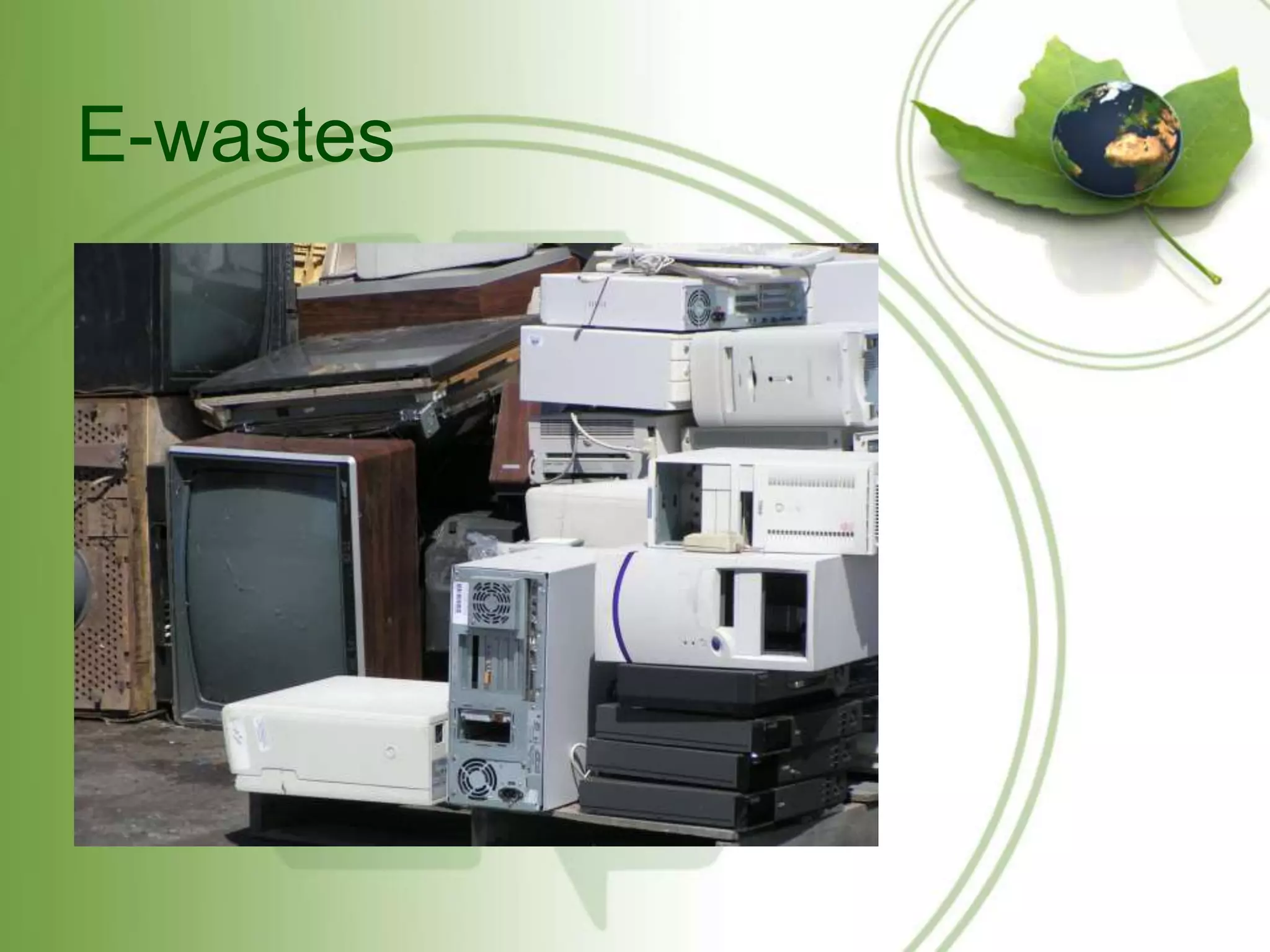
E-wastes
Types of e-waste 
Based on reason of disposal 
Disposal due to new technology 
Disposal due to break down 
Based on Electrical article 
Computer 
Telephone 
Television
What causes e-waste? 
The rapid development of science and 
technology have upgraded all electronic 
which forces the disposal of outdated 
equipments which are e-waste. 
Human mentality too account for e-waste 
which tend to buy new products for existing 
ones. 
As for other problems of pollution, 
Population also account for e-waste.
Why e-waste is harmful? 
E-waste is not bio-degradable. 
E-waste are harmful because the electronics 
are made up of hazardous materials like 
lead, mercury, arsenic,cadmium, etc., 
which makes them harmful or hazardous 
when exposed or burnt. 
Lead and Cadmium that accumulates in the 
environment has highly acute and chronic 
toxic effects on all forms of life.
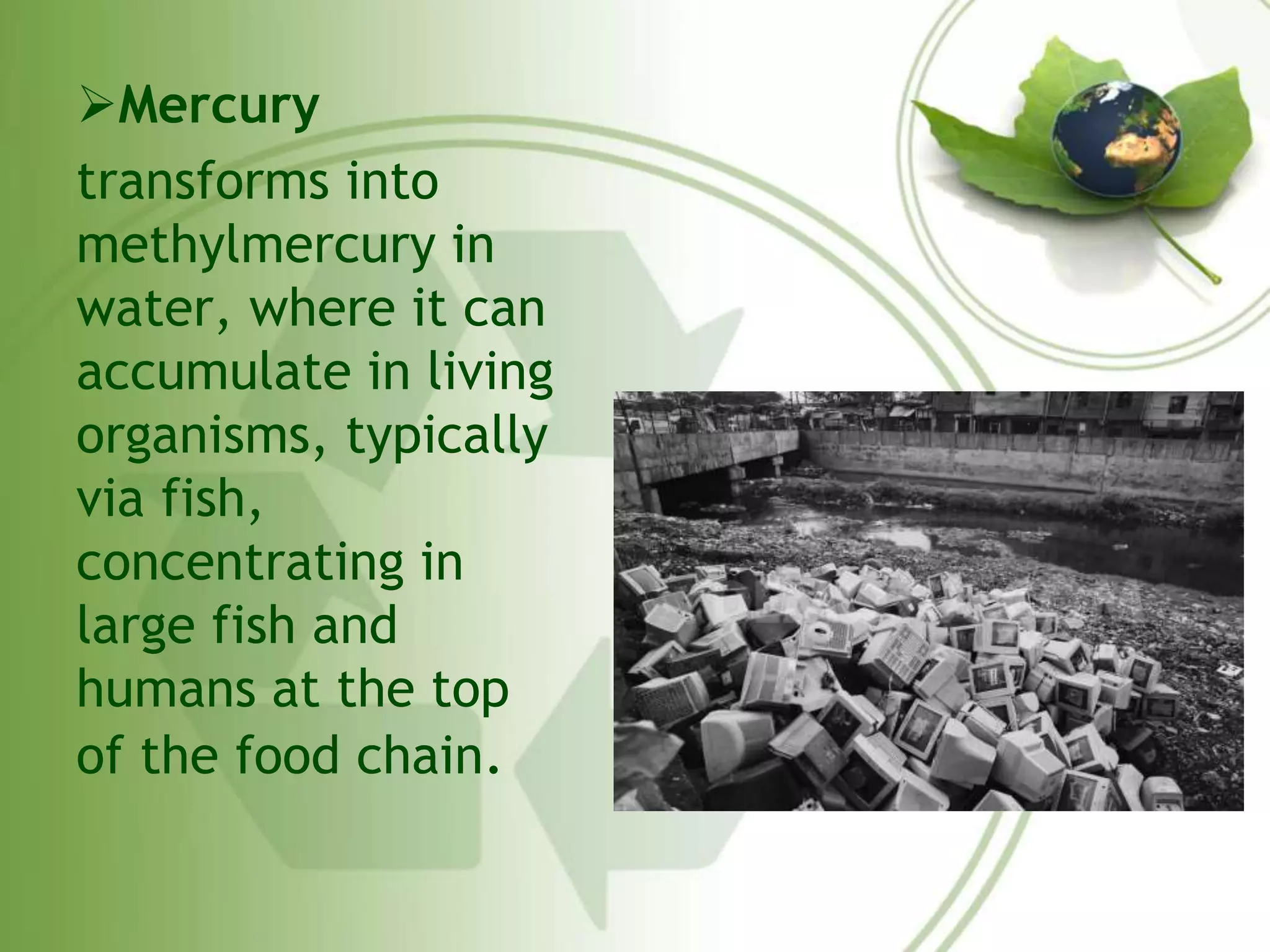
Mercury 
transforms into 
methylmercury in 
water, where it can 
accumulate in living 
organisms, typically 
via fish, 
concentrating in 
large fish and 
humans at the top 
of the food chain.
Current status of e-waste 
E-Waste is responsible for 70% of the toxic 
waste in landfills. 
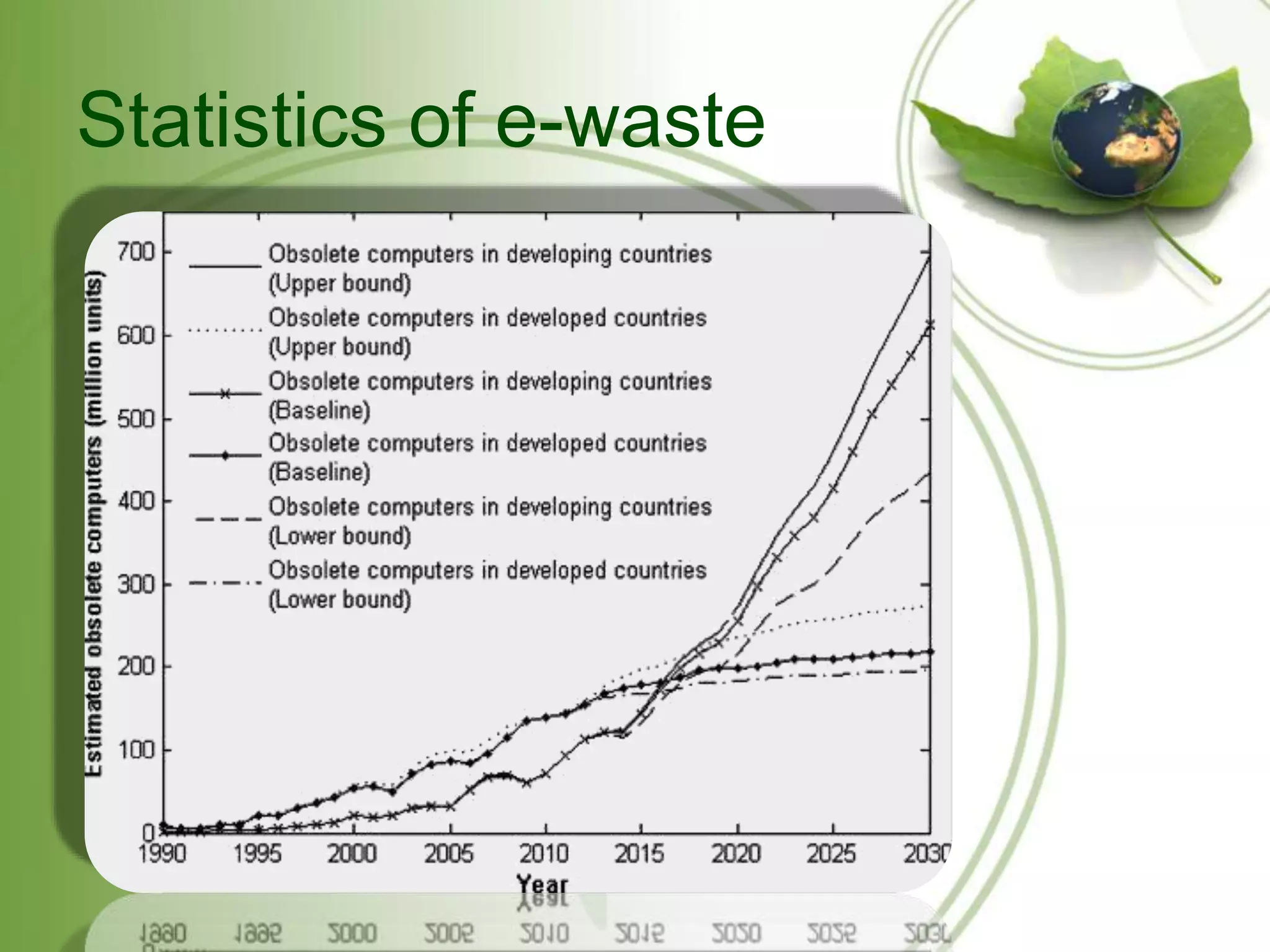
 It is estimated that there are over a billion 
obsolete personal computers in the world. 
Not only the developed countries, but also 
the developing countries face this problem. 
 This forces the world experts to turn back, 
to recycle e-waste or to dispose it safely so 
that they don’t pose any environmental 
pollution or hazards.
Statistics of e-waste
Cause of this state 
The lack of awareness about the e-waste. 
Out of reach of e-waste recycle units. 
The cost or high investment required for 
recycling of e-waste. 
The labours required for recycling and the 
hazardous materials contained.
How to control e-waste? 
Reduce by Reuse and Recycle 
The best way to control e-waste is to reuse 
the electronics that hasn’t meet its 
effective life span, by secondhand use, 
repair and use. 
On the other hand it is certain to dispose 
some electronic, in such case recycling 
should be employed.
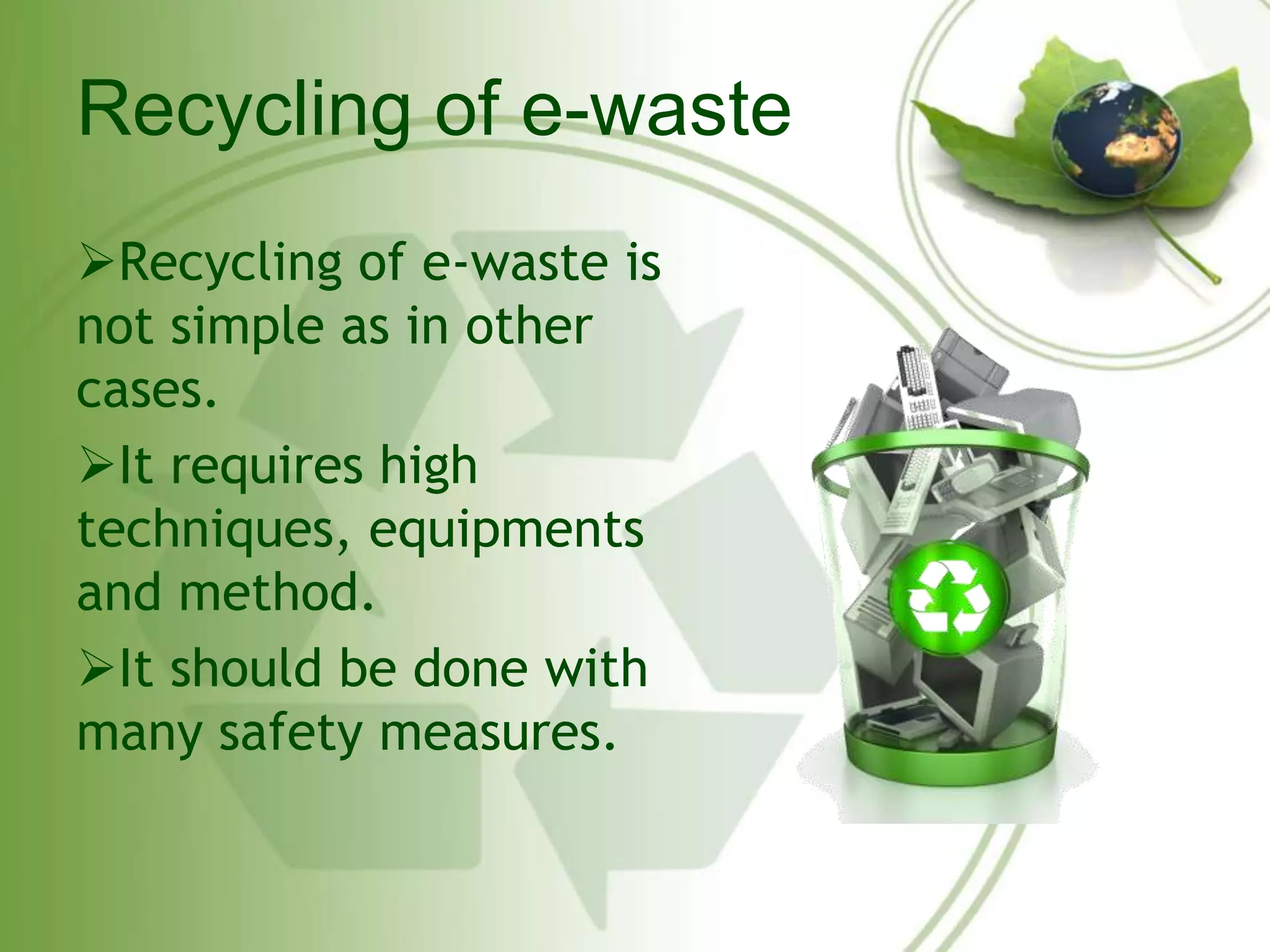
Recycling of e-waste 
Recycling of e-waste is 
not simple as in other 
cases. 
It requires high 
techniques, equipments 
and method. 
It should be done with 
many safety measures.
 It involves human resource than the 
machines. 
 It is done in many ways according to the 
material which is to be recycled. 
Common ways of e-waste recycling are 
Incineration, Landfills and Scrap yards.
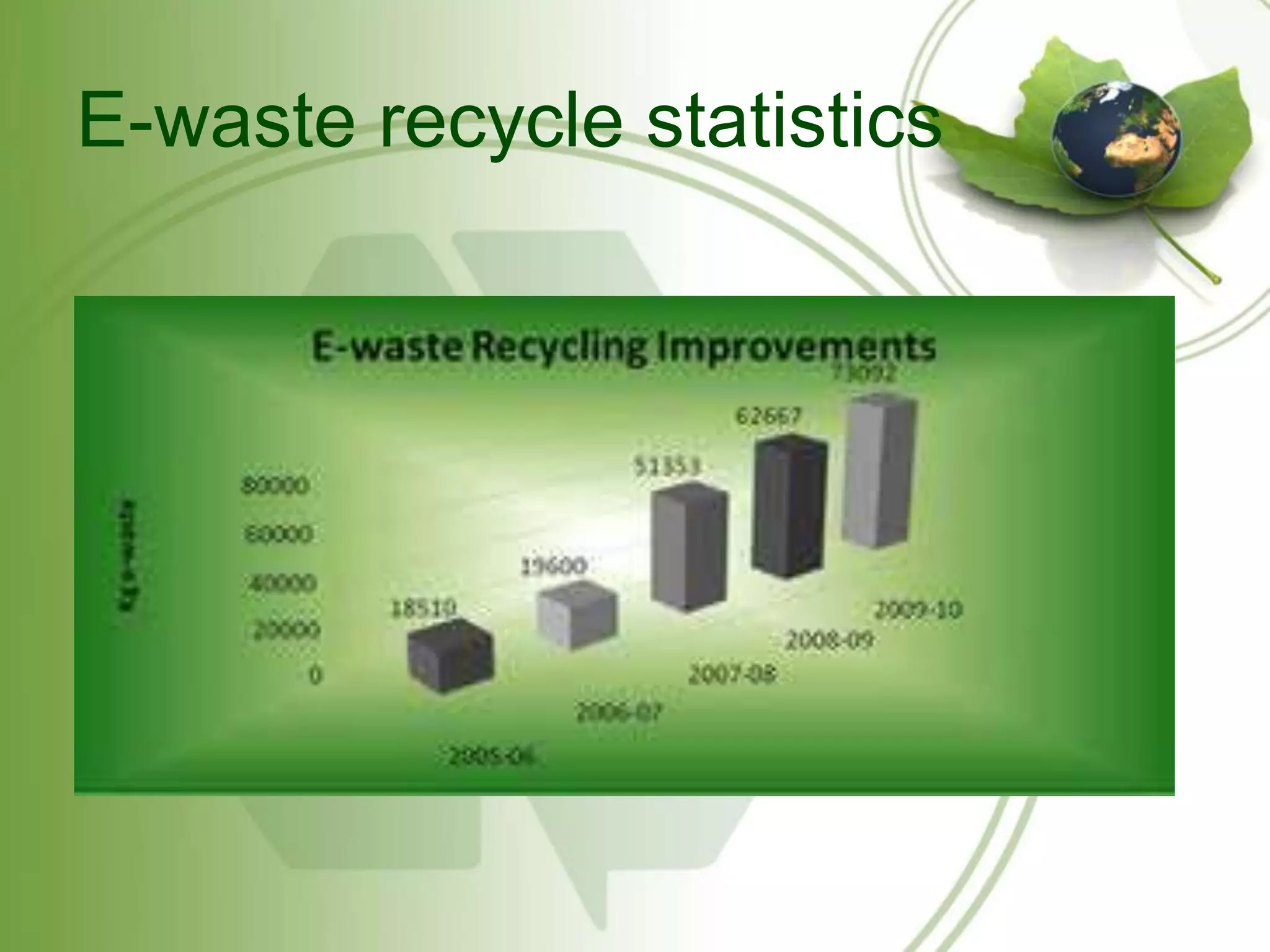
E-waste recycle statistics
Benefits of recycling e-waste 
Electronics which are made of non 
renewable resources like Lead, Copper, 
Cadmium, Mercury, etc., by recycling can be 
recovered. 
Reduces the cost of the electronics due to 
recovery of rare resources. 
Provides job opportunity for many.
For instancen the 
recycling of a computer 
gives. 
• Metal: 100% 
Recyclable 
• Glass: 99% Recyclable 
• Plastic: 100% 
Recyclable 
Recycling of old lamps 
provide glass which can 
be easily recovered.
Why recycling of E-waste 
is costly: 
The composition of the electronics are 
harmful the recycling of which should be 
done with extensive care in hi-tech manner 
with expensive tools. 
The primary aspect of recycling them is to 
categories them in metals, plastic, glass, 
etc., for further processing. 
The major constituent of E-waste is circuit 
board the de-soldering of which requires 
labour.
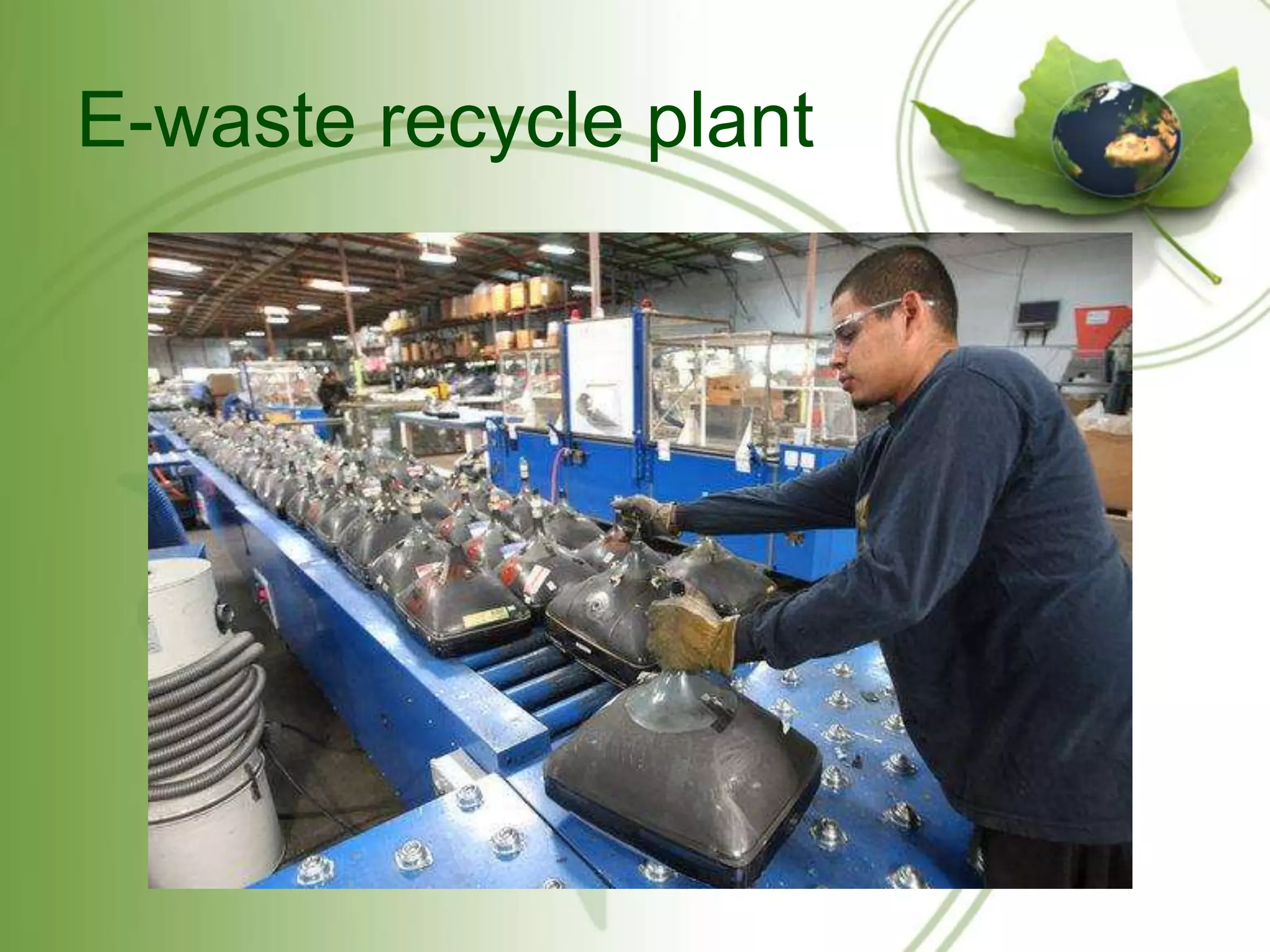
E-waste recycle plant
Steps to control & 
recycle e-waste: 
Create awareness about the harmful nature 
of the electronics when disposed by sellers. 
The e-waste recycle centers should be in 
reach of the consumers to disclose them 
safely to the recycler. 
The producer of the electronics can 
implement the e-waste recycle unit in their 
factory so as to make it simpler that the 
people can reach them easily.
The producers should employ service centers 
so as the broken ones can be repaired and 
reused. 
The bins for the e-wastes are to be kept at 
the shops of electronics, so people can know 
better about recycling options. 
The e-waste management should be 
included as a part of the corporation of 
every city.
Since e-waste recycling cannot be done free 
of cost tax should be collected for it. 
At least one e-waste recycle unit should be 
present in a district. 
There by providing a new filed of job 
opportunity to emerging engineers. 
Research and development for the 
management and handling of e-wastes 
should be implemented to find better 
efficient recycling methods.
Presented by 
SARAVANAN S 
VIGNESH K

E waste

  • 2.
    What’s e-waste? E-wasteare the outdated electronics or the electronics that have reached the end of their effective lifespan or broken in someway. Common e-waste of present include cell phones, computers, DVD players, televisions, and many other gadgets and electronics.
  • 3.
  • 4.
    Types of e-waste Based on reason of disposal Disposal due to new technology Disposal due to break down Based on Electrical article Computer Telephone Television
  • 5.
    What causes e-waste? The rapid development of science and technology have upgraded all electronic which forces the disposal of outdated equipments which are e-waste. Human mentality too account for e-waste which tend to buy new products for existing ones. As for other problems of pollution, Population also account for e-waste.
  • 6.
    Why e-waste isharmful? E-waste is not bio-degradable. E-waste are harmful because the electronics are made up of hazardous materials like lead, mercury, arsenic,cadmium, etc., which makes them harmful or hazardous when exposed or burnt. Lead and Cadmium that accumulates in the environment has highly acute and chronic toxic effects on all forms of life.
  • 7.
    Mercury transforms into methylmercury in water, where it can accumulate in living organisms, typically via fish, concentrating in large fish and humans at the top of the food chain.
  • 8.
    Current status ofe-waste E-Waste is responsible for 70% of the toxic waste in landfills.  It is estimated that there are over a billion obsolete personal computers in the world. Not only the developed countries, but also the developing countries face this problem.  This forces the world experts to turn back, to recycle e-waste or to dispose it safely so that they don’t pose any environmental pollution or hazards.
  • 9.
  • 10.
    Cause of thisstate The lack of awareness about the e-waste. Out of reach of e-waste recycle units. The cost or high investment required for recycling of e-waste. The labours required for recycling and the hazardous materials contained.
  • 11.
    How to controle-waste? Reduce by Reuse and Recycle The best way to control e-waste is to reuse the electronics that hasn’t meet its effective life span, by secondhand use, repair and use. On the other hand it is certain to dispose some electronic, in such case recycling should be employed.
  • 12.
    Recycling of e-waste Recycling of e-waste is not simple as in other cases. It requires high techniques, equipments and method. It should be done with many safety measures.
  • 13.
     It involveshuman resource than the machines.  It is done in many ways according to the material which is to be recycled. Common ways of e-waste recycling are Incineration, Landfills and Scrap yards.
  • 14.
  • 15.
    Benefits of recyclinge-waste Electronics which are made of non renewable resources like Lead, Copper, Cadmium, Mercury, etc., by recycling can be recovered. Reduces the cost of the electronics due to recovery of rare resources. Provides job opportunity for many.
  • 16.
    For instancen the recycling of a computer gives. • Metal: 100% Recyclable • Glass: 99% Recyclable • Plastic: 100% Recyclable Recycling of old lamps provide glass which can be easily recovered.
  • 17.
    Why recycling ofE-waste is costly: The composition of the electronics are harmful the recycling of which should be done with extensive care in hi-tech manner with expensive tools. The primary aspect of recycling them is to categories them in metals, plastic, glass, etc., for further processing. The major constituent of E-waste is circuit board the de-soldering of which requires labour.
  • 18.
  • 19.
    Steps to control& recycle e-waste: Create awareness about the harmful nature of the electronics when disposed by sellers. The e-waste recycle centers should be in reach of the consumers to disclose them safely to the recycler. The producer of the electronics can implement the e-waste recycle unit in their factory so as to make it simpler that the people can reach them easily.
  • 20.
    The producers shouldemploy service centers so as the broken ones can be repaired and reused. The bins for the e-wastes are to be kept at the shops of electronics, so people can know better about recycling options. The e-waste management should be included as a part of the corporation of every city.
  • 21.
    Since e-waste recyclingcannot be done free of cost tax should be collected for it. At least one e-waste recycle unit should be present in a district. There by providing a new filed of job opportunity to emerging engineers. Research and development for the management and handling of e-wastes should be implemented to find better efficient recycling methods.
  • 22.