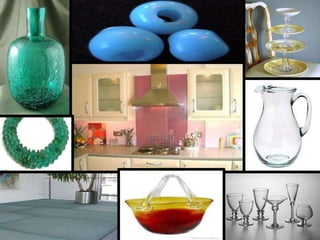
Glass Industry and
Recycling
What is Glass???
Glass is an amorphous solid material.
Glass are typically brittle and optically
transparent
Glass is a hard material normally
fragile and common in our daily life
It is composed mainly of sand and an
alkali
Main properties of glass
• Solid and hard material
• Disordered and amorphous structure
• Fragile and easily breakable into sharp
pieces
• Transparent to visible light
• One of the safest packaging materials
due to its composition and properties
Types of Glass waste
Soda glass or soda-lime glass
Coloured glass
Plate glass
Optical glass
Pyrex glass
Photo-chromatic glass
Lead crystal glass
Safety glass
Laminated glass
What is Glass Recycling???
• Process of taking old glass
products and turning them into
new, reusable glass products
• Recycling old glass uses 40% less
energy than manufacturing it from
new
• 100% recyclable
Recycling process
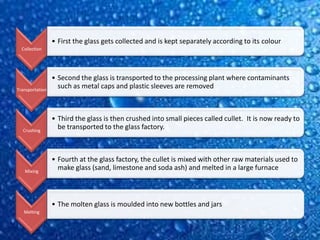
Collection
• First the glass gets collected and is kept separately according to its colour
Transportation
• Second the glass is transported to the processing plant where contaminants
such as metal caps and plastic sleeves are removed
Crushing
• Third the glass is then crushed into small pieces called cullet. It is now ready to
be transported to the glass factory.
Mixing
• Fourth at the glass factory, the cullet is mixed with other raw materials used to
make glass (sand, limestone and soda ash) and melted in a large furnace
Melting
• The molten glass is moulded into new bottles and jars
Outcomes of Recycling???
Benefits of Recycling???
• Glass can be recycled over again
and never lose its quality or quantity
• Creates less air pollution
• Reduces water pollution
• Saves enough energy to light a 100-
watt light bulb for hours
• It reduces landfill space
• Reduces CO2 emissions
• Helps the environment
• Cuts waste disposal costs
• Increases public awareness of the
benefits of recycling
• Creates employment
• Glass Recycling Pays
Negatives of Glass
Recycling???
• Manual Labor Costs
• Low Availability
• Health Hazards
Future of Glass
• Many new applications and manufacturing
processes will involve glass in
combination with other materials
• There is an increasing need to combine
optical and electronic devices for many
applications such as transmission of
audio, video and data information
• Glasses and ceramics, either alone or
composite with other materials, will find
increasing application in biological and
medical areas
Thank you

Glass recycling

  • 1.
  • 2.
  • 3.
    Glass is anamorphous solid material. Glass are typically brittle and optically transparent Glass is a hard material normally fragile and common in our daily life It is composed mainly of sand and an alkali
  • 4.
  • 5.
    • Solid andhard material • Disordered and amorphous structure • Fragile and easily breakable into sharp pieces • Transparent to visible light • One of the safest packaging materials due to its composition and properties
  • 6.
  • 7.
    Soda glass orsoda-lime glass Coloured glass Plate glass
  • 8.
  • 9.
    Lead crystal glass Safetyglass Laminated glass
  • 10.
    What is GlassRecycling???
  • 11.
    • Process oftaking old glass products and turning them into new, reusable glass products • Recycling old glass uses 40% less energy than manufacturing it from new • 100% recyclable
  • 12.
  • 13.
    Collection • First theglass gets collected and is kept separately according to its colour Transportation • Second the glass is transported to the processing plant where contaminants such as metal caps and plastic sleeves are removed Crushing • Third the glass is then crushed into small pieces called cullet. It is now ready to be transported to the glass factory. Mixing • Fourth at the glass factory, the cullet is mixed with other raw materials used to make glass (sand, limestone and soda ash) and melted in a large furnace Melting • The molten glass is moulded into new bottles and jars
  • 14.
  • 16.
  • 17.
    • Glass canbe recycled over again and never lose its quality or quantity • Creates less air pollution • Reduces water pollution • Saves enough energy to light a 100- watt light bulb for hours • It reduces landfill space
  • 18.
    • Reduces CO2emissions • Helps the environment • Cuts waste disposal costs • Increases public awareness of the benefits of recycling • Creates employment • Glass Recycling Pays
  • 19.
  • 20.
    • Manual LaborCosts • Low Availability • Health Hazards
  • 21.
    Future of Glass •Many new applications and manufacturing processes will involve glass in combination with other materials • There is an increasing need to combine optical and electronic devices for many applications such as transmission of audio, video and data information • Glasses and ceramics, either alone or composite with other materials, will find increasing application in biological and medical areas
  • 22.

Editor's Notes

  • #21 40 IS ONLY RECYCLED OTHERS GETS MIXED