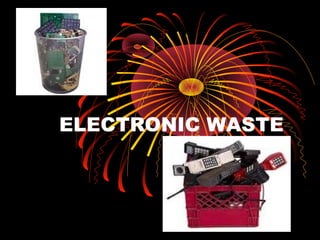
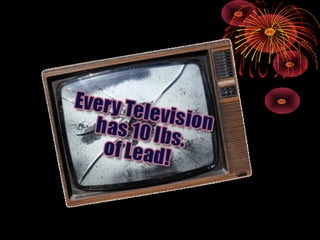
ELECTRONIC WASTE
PRESENTATION
OUTLINE
• Background
• Problems
• Management and disposal
options
• The government’s
responsibilities
BACKGROUND
• There is no generally accepted
definition of e-waste
• Unwanted, obsolete or unusable
electronic products such as
computers, computer
peripherals,televisions,VCRs,DV
D Players, stereo equipment,
hand cell phones are commonly
referred to as ‘electronic waste’
Problems
• Management and disposal of e-waste
has become a serious problem
among states nationwide, WHY?
• The problem of electronic waste (e-
waste) is growing at an
unsustainable rate.
• E-waste is now the fastest growing,
and most toxic, component of
municipal garbage.
• Local governments are facing huge
costs to handle e-waste, and even
greater costs if they do not capture
this toxic stream and handle it in an
appropriate manner.
Mobile phones; facts
• Production today- 23 phones/sec
• Sales 2003- 515 million
• Sales 2004- 665 million
• Sales 2005- 870 million
• Subscribers-1.9 billion in 2005
• Subscribers- 2.6 billion in 2009
• Lifespan- 0.5- 1.5 (with 1st user)
• (estimates from the Basel
convention based study 2006)
E-waste accumulation in
China
1.It is taking up valuable
landfill space
• A study by the USA showed that 1-
2% of municipal waste is made up of
e-waste
• A further research estimates the
growing of e-waste at 3 times the
rate of other waste streams.
• It is also estimated that between
1997 and 2007,500 million
computers would become obsolete
2.e-waste contains
hazardous material
• The leaching of heavy material
from e-waste may a pose a
potential long term human
health and environmental
impacts
• ground Water especially is more
likely to be polluted (note, more
half the country reliant on
ground water resources)
Of particular concern is
Lead in e-waste
• Lead is a toxic substances which
may cause lead poisoning and
can be especially harmful young
children.
• A typical 17-inch computer
monitor contains approximately
2.2 pounds of lead
• the 500 million computers that
will become obsolete between
1997 and 2007 will contain nearly
1.6 billion pounds of lead
Cathode ray tubes
• Much of the focus of managing e-
waste revolves around Cathode
Ray Tubes-which converts an
electronic signal into a visual
image. Computer
monitors,televisions,camcorders
and other electronic devices
contain CRT.
• Atypical CRT contains between 2
and 5 pounds of lead.
Other problems
• Illegal exporting especially to
Asia
• Uncontrolled burning and
disposal are causing env
problems
• The toxicity of some of the
substance, eg mercury,cadmium
may also pose an environmental
and health challenge
Management and
disposal options
• Due to increased
public,regulatory and
commercial scrutiny and also a
commensurate entrepreneur
interest,there has been a
diversion from energy intensive
down cycling processes to more
mature processing systems
• This has been largely achieved
through reuse and refurbishing
reuse
• Preventing waste in the first
place is the preferred mngt
option
• This can be achieved through
repairing,upgrading used
electrical equipment
• Example- adding memory to a
computer,upgrading software
recycle
• Make use of take back
programs
• Through recycling units are
either reused or dismantled for
recycling.
• The silver,gold,lead and other
heavy metal are recyclable
dispose
• The least preferred option is to
landfill electronic waste
• This should only come as a last
option but care to consult with
state regulations on disposal of
any hazardous waste
Benefits of reuse (social
and env)
• Diminished demand for new products and
their commensurate requirement for virgin
raw material
• There is lessened need for water and
energy for the associated manufacturing
• Less packaging per unit
• Availability of tech to wider swaths of
society due to greater affordability of
products
• Saved landfill space
challenges
• When materials cannot or will
not be used, conventional
recycling or disposal via landfill
will follow
• The complexity of the items to
be disposed of
• cost of env sound recycling
systems
Each one of us has a
role to play!
• Need for a e-waste policy and legislation
• Encourage and facilitate organized
recycling systems
• Should subsidies recycling and disposal
industries
• Collect fee from
manufactured/consumers for the
disposal of toxic material
• Incentive schemes for garbage
collectors and general public for
collecting and handling over e-waste
• Awareness programme on e-waste for
school children and general public
continuation
• Transparency and accountability to
the public Handling large amounts of
e-waste poses risks of toxic
contamination to workers and
surrounding communities if
conducted carelessly.
• Thus, the most basic criterion that
employees and citizens should
rightfully expect from any recycling
operation is that it be open to public
inspection.
continuation
• General compliance with
occupational health and safety
standards Observance of health and
safety standards in the workplace is
important for protecting workers
from exposure to toxics whilst
handling e-waste
• Well-trained workers, who are fully
protected by the law to seek advice
and take action to protect their
health and the environment without
fear of reprisal from their employer,
are the most effective environmental
protection.
Conclusion
• it is important that we create a
national framework for the
environmentally sound management
of e-waste including wide public
awareness and education
• Conduct detailed inventories of e-
waste
• Initiate pilot schemes on collection
and sorting of e-wastes,including
take back schemes and schemes for
repair refurbishment and recycling
THANK YOU FOR YOUR
ATTENTION
E waste

E waste

  • 1.
  • 2.
    PRESENTATION OUTLINE • Background • Problems •Management and disposal options • The government’s responsibilities
  • 3.
    BACKGROUND • There isno generally accepted definition of e-waste • Unwanted, obsolete or unusable electronic products such as computers, computer peripherals,televisions,VCRs,DV D Players, stereo equipment, hand cell phones are commonly referred to as ‘electronic waste’
  • 5.
    Problems • Management anddisposal of e-waste has become a serious problem among states nationwide, WHY? • The problem of electronic waste (e- waste) is growing at an unsustainable rate. • E-waste is now the fastest growing, and most toxic, component of municipal garbage. • Local governments are facing huge costs to handle e-waste, and even greater costs if they do not capture this toxic stream and handle it in an appropriate manner.
  • 6.
    Mobile phones; facts •Production today- 23 phones/sec • Sales 2003- 515 million • Sales 2004- 665 million • Sales 2005- 870 million • Subscribers-1.9 billion in 2005 • Subscribers- 2.6 billion in 2009 • Lifespan- 0.5- 1.5 (with 1st user) • (estimates from the Basel convention based study 2006)
  • 7.
  • 8.
    1.It is takingup valuable landfill space • A study by the USA showed that 1- 2% of municipal waste is made up of e-waste • A further research estimates the growing of e-waste at 3 times the rate of other waste streams. • It is also estimated that between 1997 and 2007,500 million computers would become obsolete
  • 9.
    2.e-waste contains hazardous material •The leaching of heavy material from e-waste may a pose a potential long term human health and environmental impacts • ground Water especially is more likely to be polluted (note, more half the country reliant on ground water resources)
  • 11.
    Of particular concernis Lead in e-waste • Lead is a toxic substances which may cause lead poisoning and can be especially harmful young children. • A typical 17-inch computer monitor contains approximately 2.2 pounds of lead • the 500 million computers that will become obsolete between 1997 and 2007 will contain nearly 1.6 billion pounds of lead
  • 13.
    Cathode ray tubes •Much of the focus of managing e- waste revolves around Cathode Ray Tubes-which converts an electronic signal into a visual image. Computer monitors,televisions,camcorders and other electronic devices contain CRT. • Atypical CRT contains between 2 and 5 pounds of lead.
  • 14.
    Other problems • Illegalexporting especially to Asia • Uncontrolled burning and disposal are causing env problems • The toxicity of some of the substance, eg mercury,cadmium may also pose an environmental and health challenge
  • 15.
    Management and disposal options •Due to increased public,regulatory and commercial scrutiny and also a commensurate entrepreneur interest,there has been a diversion from energy intensive down cycling processes to more mature processing systems • This has been largely achieved through reuse and refurbishing
  • 16.
    reuse • Preventing wastein the first place is the preferred mngt option • This can be achieved through repairing,upgrading used electrical equipment • Example- adding memory to a computer,upgrading software
  • 17.
    recycle • Make useof take back programs • Through recycling units are either reused or dismantled for recycling. • The silver,gold,lead and other heavy metal are recyclable
  • 18.
    dispose • The leastpreferred option is to landfill electronic waste • This should only come as a last option but care to consult with state regulations on disposal of any hazardous waste
  • 19.
    Benefits of reuse(social and env) • Diminished demand for new products and their commensurate requirement for virgin raw material • There is lessened need for water and energy for the associated manufacturing • Less packaging per unit • Availability of tech to wider swaths of society due to greater affordability of products • Saved landfill space
  • 20.
    challenges • When materialscannot or will not be used, conventional recycling or disposal via landfill will follow • The complexity of the items to be disposed of • cost of env sound recycling systems
  • 21.
    Each one ofus has a role to play! • Need for a e-waste policy and legislation • Encourage and facilitate organized recycling systems • Should subsidies recycling and disposal industries • Collect fee from manufactured/consumers for the disposal of toxic material • Incentive schemes for garbage collectors and general public for collecting and handling over e-waste • Awareness programme on e-waste for school children and general public
  • 23.
    continuation • Transparency andaccountability to the public Handling large amounts of e-waste poses risks of toxic contamination to workers and surrounding communities if conducted carelessly. • Thus, the most basic criterion that employees and citizens should rightfully expect from any recycling operation is that it be open to public inspection.
  • 24.
    continuation • General compliancewith occupational health and safety standards Observance of health and safety standards in the workplace is important for protecting workers from exposure to toxics whilst handling e-waste • Well-trained workers, who are fully protected by the law to seek advice and take action to protect their health and the environment without fear of reprisal from their employer, are the most effective environmental protection.
  • 25.
    Conclusion • it isimportant that we create a national framework for the environmentally sound management of e-waste including wide public awareness and education • Conduct detailed inventories of e- waste • Initiate pilot schemes on collection and sorting of e-wastes,including take back schemes and schemes for repair refurbishment and recycling
  • 26.
    THANK YOU FORYOUR ATTENTION