1
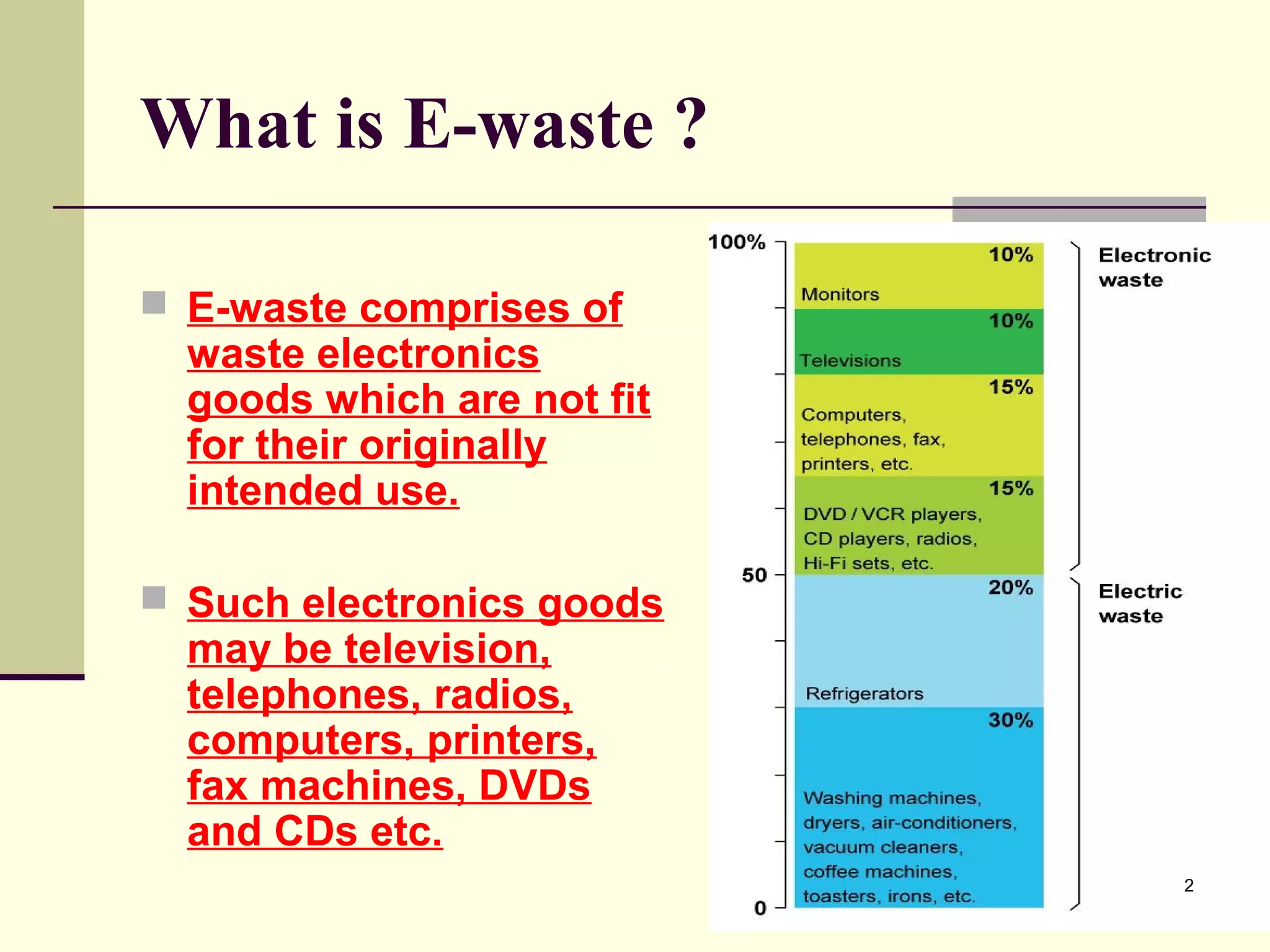
What is E-waste ?
 E-waste comprises of

waste electronics
goods which are not fit
for their originally
intended use.

 Such electronics goods

may be television,
telephones, radios,
computers, printers,
fax machines, DVDs
and CDs etc.

2
Is E-waste hazardous?
 Electronics products like computers and cell

phones contain a lot of different toxins.
 For example, Cathode Ray Tubes (CRTs) contain

heavy metals such as Lead, Barium and
Cadmium, which can damage human nervous
and respiratory system if they enter the water
system.

3
Effects of E-waste
On Environment

On Human Health

 Pollution of Ground-

 DNA damage.
 Lung Cancer.
 Damage to heart, liver

Water.
 Acidification of soil.
 Air Pollution.
 E-Waste accounts for
40 percent of the lead
and 75 percent of the
heavy metals found in
landfills.

and spleen.
 Chronic damage to
the brain.
 Asthmatic bronchitis.

4
Sources of E-waste
 IT and Telecom Equipments
 Large Household Appliances
 Small Household Appliances
 Consumer & Lighting Equipments
 Electrical & Electronic Tools
 Toys, Leisure & Sports Equipment
 Medical Devices
 Monitoring & Control Instruments
5
Dynamics of E-waste Generation
 PC sales were over 7.3 million units during 2007-

08, growing by 16 percent .

 The consumer electronics market is growing at

the rate of 13-15 percent annually.

 The cellular subscriber base was up by 96.86 per

cent during 2007-08.

 The total E-waste in India has been estimated to

be 1,46,180 Tones per year.

6
E-waste Management
The major components of E-waste Management are
 E-waste collection, sorting and transportation.
 E-waste recycling.
In industries, management of E-waste is done by
Waste
Minimization Techniques. It involves Inventory management,
 Production-process modification,
 Volume reduction,
 Recovery and reuse.

7
Recycling of
1.

Treatment Options of E-Waste

Land filling.

Incineration.

1.

Technology Currently Used in India

Decontamination.

Dismantling.

Pulverization/ Hammering.

Shredding.

Density separation using water.
8
Related Organizations
 E-Parisaraa Pvt. Ltd., Bangalore, Karnataka.
 Attero Recycling Pvt. Ltd., Roorkee, Uttarakhand.
 Eco Recycling Pvt. Ltd., Andheri(East), Mumbai.
 K. G. Nandini, near Bangalore, Karnataka.
 Trishyiraya Recycling India Pvt. Ltd., Chennai.
 Tess Amm Ltd., Chennai.
9
Impacts of Informal Recycling
 CRT breaking operations result in injuries from

cuts and acids and respiratory problems due to
shredding, burning etc.
 Waste components which does not have any

resale or reuse value are openly burnt or
disposed off in open dumps.
 Plastic casings, cables and polyvinyl chloride

(PVC) cable insulation can release highly toxic
dioxins and furans when burned.
10
Initiatives Taken
 To reduce informal recycling government has

taken following steps :




Several workshops on electronic waste management has
been organized by CPCB.
Demonstration projects have also been set up by DIT at the
Indian Telephone Industries.

 Extended producer responsibility (EPR) is an

environmental policy approach in which a
producer’s responsibility for a product is
extended to the post consumer stage.
 Indo-German-Swiss e-waste initiative has been
taken in 2004.
11
E-waste Challenges


Accurate figures not available for rapidly
increasing e-waste volumes generated
domestically and by imports.



Low level of awareness among manufacturers
and consumers of the hazards of incorrect ewaste disposal.



Major portion of e-waste is processed by the
informal (unorganized) sector using rudimentary
techniques.
12
Responsibility and Role
Industries
 Manufacturers, distributors, and retailers should
undertake the responsibility of recycling/disposal
of their own products.
 Manufacturers must be responsible for educating

consumers regarding the potential threat posed
by their products.

 Companies should adopt Waste Minimizing

Techniques.

13
Responsibility and Role
Citizens
 E-wastes should never be disposed with garbage
and other household wastes.
 Customers should opt for upgrading their

electronic items to the latest versions rather than
buying new.

 While buying electronic products consumers

should opt for those that:
•
•
•

are made with fewer toxic constituents.
use recycled content.
are energy efficient.

14
Legislation
 Basel convention for regulating trans-boundary

movement.

 The hazardous waste (management and handling)

rules, 1998 as amended in 2008.

 Municipal solid waste management and handling

rules for non-toxic content.

 The Environment Protection Act - Biomedical

Wastes (M&H) Rules 1998, Batteries (M&H) Rules
2001, etc.
15
Conclusion
 Solid waste management becoming more

complicated by the invasion of e-waste,
particularly computer waste.

 Establishment of e-waste collection, exchange

and recycling centers should be encouraged.

 Policy level interventions should include

development of e-waste regulation, control of
import and export of e-wastes.
16
17

E waste management in india

  • 1.
  • 2.
    What is E-waste?  E-waste comprises of waste electronics goods which are not fit for their originally intended use.  Such electronics goods may be television, telephones, radios, computers, printers, fax machines, DVDs and CDs etc. 2
  • 3.
    Is E-waste hazardous? Electronics products like computers and cell phones contain a lot of different toxins.  For example, Cathode Ray Tubes (CRTs) contain heavy metals such as Lead, Barium and Cadmium, which can damage human nervous and respiratory system if they enter the water system. 3
  • 4.
    Effects of E-waste OnEnvironment On Human Health  Pollution of Ground-  DNA damage.  Lung Cancer.  Damage to heart, liver Water.  Acidification of soil.  Air Pollution.  E-Waste accounts for 40 percent of the lead and 75 percent of the heavy metals found in landfills. and spleen.  Chronic damage to the brain.  Asthmatic bronchitis. 4
  • 5.
    Sources of E-waste IT and Telecom Equipments  Large Household Appliances  Small Household Appliances  Consumer & Lighting Equipments  Electrical & Electronic Tools  Toys, Leisure & Sports Equipment  Medical Devices  Monitoring & Control Instruments 5
  • 6.
    Dynamics of E-wasteGeneration  PC sales were over 7.3 million units during 2007- 08, growing by 16 percent .  The consumer electronics market is growing at the rate of 13-15 percent annually.  The cellular subscriber base was up by 96.86 per cent during 2007-08.  The total E-waste in India has been estimated to be 1,46,180 Tones per year. 6
  • 7.
    E-waste Management The majorcomponents of E-waste Management are  E-waste collection, sorting and transportation.  E-waste recycling. In industries, management of E-waste is done by Waste Minimization Techniques. It involves Inventory management,  Production-process modification,  Volume reduction,  Recovery and reuse. 7
  • 8.
    Recycling of 1. Treatment Optionsof E-Waste  Land filling.  Incineration. 1. Technology Currently Used in India  Decontamination.  Dismantling.  Pulverization/ Hammering.  Shredding.  Density separation using water. 8
  • 9.
    Related Organizations  E-ParisaraaPvt. Ltd., Bangalore, Karnataka.  Attero Recycling Pvt. Ltd., Roorkee, Uttarakhand.  Eco Recycling Pvt. Ltd., Andheri(East), Mumbai.  K. G. Nandini, near Bangalore, Karnataka.  Trishyiraya Recycling India Pvt. Ltd., Chennai.  Tess Amm Ltd., Chennai. 9
  • 10.
    Impacts of InformalRecycling  CRT breaking operations result in injuries from cuts and acids and respiratory problems due to shredding, burning etc.  Waste components which does not have any resale or reuse value are openly burnt or disposed off in open dumps.  Plastic casings, cables and polyvinyl chloride (PVC) cable insulation can release highly toxic dioxins and furans when burned. 10
  • 11.
    Initiatives Taken  Toreduce informal recycling government has taken following steps :   Several workshops on electronic waste management has been organized by CPCB. Demonstration projects have also been set up by DIT at the Indian Telephone Industries.  Extended producer responsibility (EPR) is an environmental policy approach in which a producer’s responsibility for a product is extended to the post consumer stage.  Indo-German-Swiss e-waste initiative has been taken in 2004. 11
  • 12.
    E-waste Challenges  Accurate figuresnot available for rapidly increasing e-waste volumes generated domestically and by imports.  Low level of awareness among manufacturers and consumers of the hazards of incorrect ewaste disposal.  Major portion of e-waste is processed by the informal (unorganized) sector using rudimentary techniques. 12
  • 13.
    Responsibility and Role Industries Manufacturers, distributors, and retailers should undertake the responsibility of recycling/disposal of their own products.  Manufacturers must be responsible for educating consumers regarding the potential threat posed by their products.  Companies should adopt Waste Minimizing Techniques. 13
  • 14.
    Responsibility and Role Citizens E-wastes should never be disposed with garbage and other household wastes.  Customers should opt for upgrading their electronic items to the latest versions rather than buying new.  While buying electronic products consumers should opt for those that: • • • are made with fewer toxic constituents. use recycled content. are energy efficient. 14
  • 15.
    Legislation  Basel conventionfor regulating trans-boundary movement.  The hazardous waste (management and handling) rules, 1998 as amended in 2008.  Municipal solid waste management and handling rules for non-toxic content.  The Environment Protection Act - Biomedical Wastes (M&H) Rules 1998, Batteries (M&H) Rules 2001, etc. 15
  • 16.
    Conclusion  Solid wastemanagement becoming more complicated by the invasion of e-waste, particularly computer waste.  Establishment of e-waste collection, exchange and recycling centers should be encouraged.  Policy level interventions should include development of e-waste regulation, control of import and export of e-wastes. 16
  • 17.