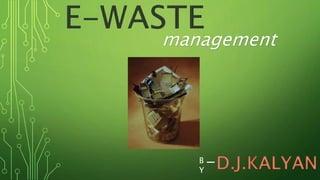
management
B
Y
-
1. Introduction
2. How it is effecting our lives
3. Facts
4. India’s scenario
5. E-waste management
6. Responsibility of citizen
7. Reference
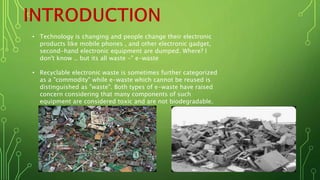
• Technology is changing and people change their electronic
products like mobile phones , and other electronic gadget,
second-hand electronic equipment are dumped. Where? I
don't know .. but its all waste -" e-waste
• Recyclable electronic waste is sometimes further categorized
as a "commodity" while e-waste which cannot be reused is
distinguished as "waste". Both types of e-waste have raised
concern considering that many components of such
equipment are considered toxic and are not biodegradable.
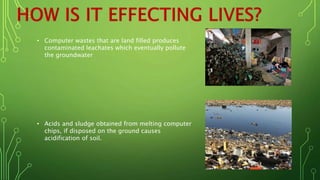
• Computer wastes that are land filled produces
contaminated leachates which eventually pollute
the groundwater
• Acids and sludge obtained from melting computer
chips, if disposed on the ground causes
acidification of soil.
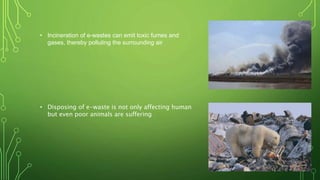
• Incineration of e-wastes can emit toxic fumes and
gases, thereby polluting the surrounding air
• Disposing of e-waste is not only affecting human
but even poor animals are suffering
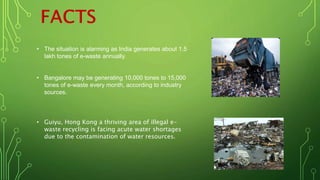
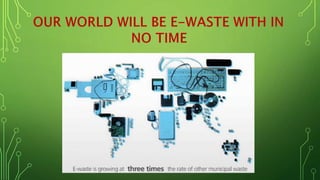
• The situation is alarming as India generates about 1.5
lakh tones of e-waste annually.
• Bangalore may be generating 10,000 tones to 15,000
tones of e-waste every month, according to industry
sources.
• Guiyu, Hong Kong a thriving area of illegal e-
waste recycling is facing acute water shortages
due to the contamination of water resources.
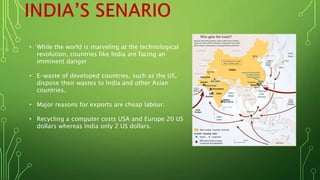
• While the world is marveling at the technological
revolution, countries like India are facing an
imminent danger
• E-waste of developed countries, such as the US,
dispose their wastes to India and other Asian
countries.
• Major reasons for exports are cheap labour.
• Recycling a computer costs USA and Europe 20 US
dollars whereas India only 2 US dollars.
• It is estimated that 75% of electronic items
are stored due to uncertainty of how to
manage it. These electronic junks lie
unattended in houses, offices, warehouses
etc. and normally mixed with household
wastes, which are finally disposed off at
landfills. This necessitates implementable
management measures.
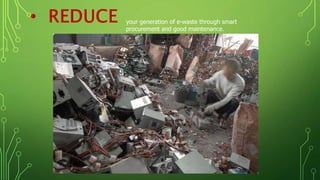
your generation of e-waste through smart
procurement and good maintenance.
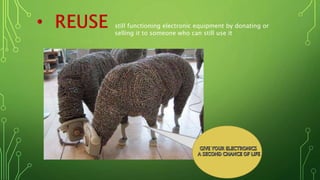
still functioning electronic equipment by donating or
selling it to someone who can still use it
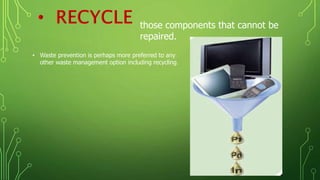
those components that cannot be
repaired.
• Waste prevention is perhaps more preferred to any
other waste management option including recycling.
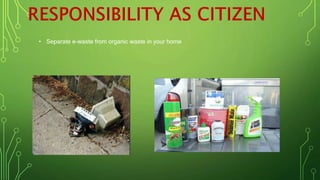
• Separate e-waste from organic waste in your home
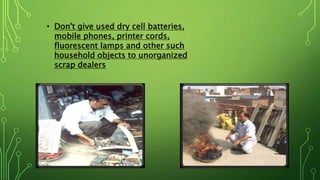
• Don't give used dry cell batteries,
mobile phones, printer cords,
fluorescent lamps and other such
household objects to unorganized
scrap dealers
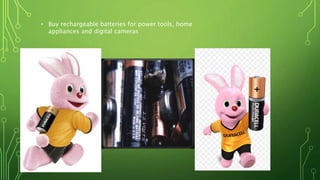
• Buy rechargeable batteries for power tools, home
appliances and digital cameras
• http://epaper.livemint.com/artMailDisp.aspx?article=15_04_
2008_012_005&t
• https://en.wikipedia.org/wiki/Electronic_waste
• http://www.bostonelectronicwaste.com/go-
green/what-is-ewaste
• https://searchdatacenter.techtarget.com/definition/e-waste
E waste Management
E waste Management

E waste Management

  • 1.
  • 2.
    1. Introduction 2. Howit is effecting our lives 3. Facts 4. India’s scenario 5. E-waste management 6. Responsibility of citizen 7. Reference
  • 3.
    • Technology ischanging and people change their electronic products like mobile phones , and other electronic gadget, second-hand electronic equipment are dumped. Where? I don't know .. but its all waste -" e-waste • Recyclable electronic waste is sometimes further categorized as a "commodity" while e-waste which cannot be reused is distinguished as "waste". Both types of e-waste have raised concern considering that many components of such equipment are considered toxic and are not biodegradable.
  • 4.
    • Computer wastesthat are land filled produces contaminated leachates which eventually pollute the groundwater • Acids and sludge obtained from melting computer chips, if disposed on the ground causes acidification of soil.
  • 5.
    • Incineration ofe-wastes can emit toxic fumes and gases, thereby polluting the surrounding air • Disposing of e-waste is not only affecting human but even poor animals are suffering
  • 6.
    • The situationis alarming as India generates about 1.5 lakh tones of e-waste annually. • Bangalore may be generating 10,000 tones to 15,000 tones of e-waste every month, according to industry sources. • Guiyu, Hong Kong a thriving area of illegal e- waste recycling is facing acute water shortages due to the contamination of water resources.
  • 7.
    • While theworld is marveling at the technological revolution, countries like India are facing an imminent danger • E-waste of developed countries, such as the US, dispose their wastes to India and other Asian countries. • Major reasons for exports are cheap labour. • Recycling a computer costs USA and Europe 20 US dollars whereas India only 2 US dollars.
  • 10.
    • It isestimated that 75% of electronic items are stored due to uncertainty of how to manage it. These electronic junks lie unattended in houses, offices, warehouses etc. and normally mixed with household wastes, which are finally disposed off at landfills. This necessitates implementable management measures.
  • 13.
    your generation ofe-waste through smart procurement and good maintenance.
  • 14.
    still functioning electronicequipment by donating or selling it to someone who can still use it
  • 15.
    those components thatcannot be repaired. • Waste prevention is perhaps more preferred to any other waste management option including recycling.
  • 16.
    • Separate e-wastefrom organic waste in your home
  • 17.
    • Don't giveused dry cell batteries, mobile phones, printer cords, fluorescent lamps and other such household objects to unorganized scrap dealers
  • 18.
    • Buy rechargeablebatteries for power tools, home appliances and digital cameras
  • 19.
    • http://epaper.livemint.com/artMailDisp.aspx?article=15_04_ 2008_012_005&t • https://en.wikipedia.org/wiki/Electronic_waste •http://www.bostonelectronicwaste.com/go- green/what-is-ewaste • https://searchdatacenter.techtarget.com/definition/e-waste