T.Ramya
&
N.Shafiya
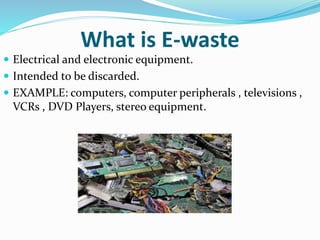
What is E-waste
 Electrical and electronic equipment.
 Intended to be discarded.
 EXAMPLE: computers, computer peripherals , televisions ,
VCRs , DVD Players, stereo equipment.
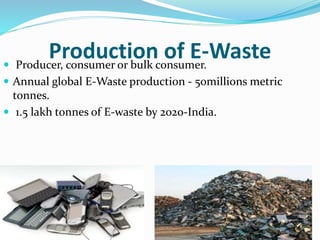
Production of E-Waste Producer, consumer or bulk consumer.
 Annual global E-Waste production - 50millions metric
tonnes.
 1.5 lakh tonnes of E-waste by 2020-India.
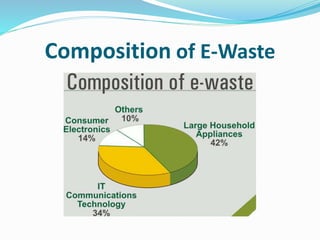
Composition of E-Waste
Disposal of E-waste
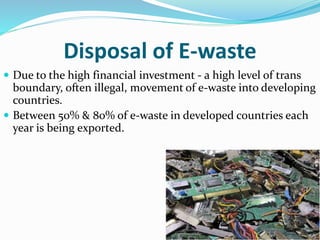
 Due to the high financial investment - a high level of trans
boundary, often illegal, movement of e-waste into developing
countries.
 Between 50% & 80% of e-waste in developed countries each
year is being exported.
Problems of E-Waste
 Products - Obsolete and Discarded
 This is coupled with explosive sales in consumer
electronics.
 More products are being disposed.
 Electronics - Difficult To Recycle
 Proper and safe recycling -costs more money
Problems of E-Waste
 Electronics are not designed for recycling
 Physical designs make recycling challenging.
 “Green electronics,”- we are a far way from truly green
products.
 Electronics contain many toxic materials
 Monitors and televisions - 4 and 8 pounds of lead in
them.
 About 40% of the heavy metals- in landfills come from
electronic equipment.
Health Problems of E-Waste
 The gases released during the burning e-waste
 PVC- dangerous for both live creatures & atmosphere.
 Inhalation of open burning emissions.
 If open fires burn with a lack of oxygen, it forms
carbon monoxide, which poisons the blood when
inhaled.
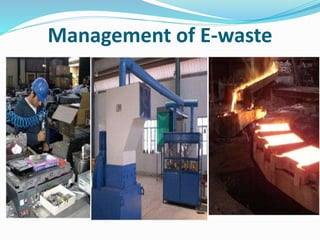
Management of E-waste
 There are several steps to recycle or reuse the e-
waste. They are listed below:
 Detoxication
 Shredding
 Refining
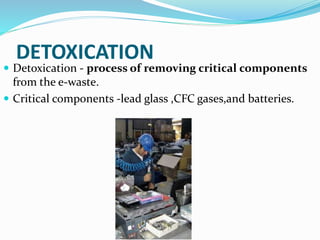
DETOXICATION
 Detoxication - process of removing critical components
from the e-waste.
 Critical components -lead glass ,CFC gases,and batteries.
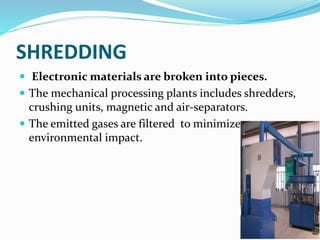
SHREDDING
 Electronic materials are broken into pieces.
 The mechanical processing plants includes shredders,
crushing units, magnetic and air-separators.
 The emitted gases are filtered to minimize
environmental impact.
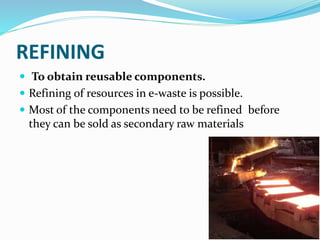
REFINING
 To obtain reusable components.
 Refining of resources in e-waste is possible.
 Most of the components need to be refined before
they can be sold as secondary raw materials
Management of E-waste
E waste and management

E waste and management

  • 1.
  • 2.
    What is E-waste Electrical and electronic equipment.  Intended to be discarded.  EXAMPLE: computers, computer peripherals , televisions , VCRs , DVD Players, stereo equipment.
  • 3.
    Production of E-WasteProducer, consumer or bulk consumer.  Annual global E-Waste production - 50millions metric tonnes.  1.5 lakh tonnes of E-waste by 2020-India.
  • 4.
  • 5.
    Disposal of E-waste Due to the high financial investment - a high level of trans boundary, often illegal, movement of e-waste into developing countries.  Between 50% & 80% of e-waste in developed countries each year is being exported.
  • 6.
    Problems of E-Waste Products - Obsolete and Discarded  This is coupled with explosive sales in consumer electronics.  More products are being disposed.  Electronics - Difficult To Recycle  Proper and safe recycling -costs more money
  • 7.
    Problems of E-Waste Electronics are not designed for recycling  Physical designs make recycling challenging.  “Green electronics,”- we are a far way from truly green products.  Electronics contain many toxic materials  Monitors and televisions - 4 and 8 pounds of lead in them.  About 40% of the heavy metals- in landfills come from electronic equipment.
  • 8.
    Health Problems ofE-Waste  The gases released during the burning e-waste  PVC- dangerous for both live creatures & atmosphere.  Inhalation of open burning emissions.  If open fires burn with a lack of oxygen, it forms carbon monoxide, which poisons the blood when inhaled.
  • 9.
    Management of E-waste There are several steps to recycle or reuse the e- waste. They are listed below:  Detoxication  Shredding  Refining
  • 10.
    DETOXICATION  Detoxication -process of removing critical components from the e-waste.  Critical components -lead glass ,CFC gases,and batteries.
  • 11.
    SHREDDING  Electronic materialsare broken into pieces.  The mechanical processing plants includes shredders, crushing units, magnetic and air-separators.  The emitted gases are filtered to minimize environmental impact.
  • 12.
    REFINING  To obtainreusable components.  Refining of resources in e-waste is possible.  Most of the components need to be refined before they can be sold as secondary raw materials
  • 13.