Siilas campus
Presentation
E-Commerce
Presented By- Vinay Kumar Verma
BBA/1/A/35
index
1.Definition of e-commerce
2.Brief history of e-commerce
3.Types of E-commerce
4.Advantage of e-commerce
5.The process of E-commerce
6.Benefits of E-commerce
7.Business Application
8.Conclusion
Definition of E-Commerce
E-Commerce or Electronic
commerce is a process of buying,
selling, transferring, or exchanging
products, services, and/or
information via electronic networks
and computers
Definition of Commerce
 The exchange of goods and service for
money.
 Consists of:
Buyers - these are people with money
who want to purchase a good or service.
Sellers - these are the people who offer
goods and services to buyers.
Producers - these are the people who
create the products and services that
sellers offer to buyers.
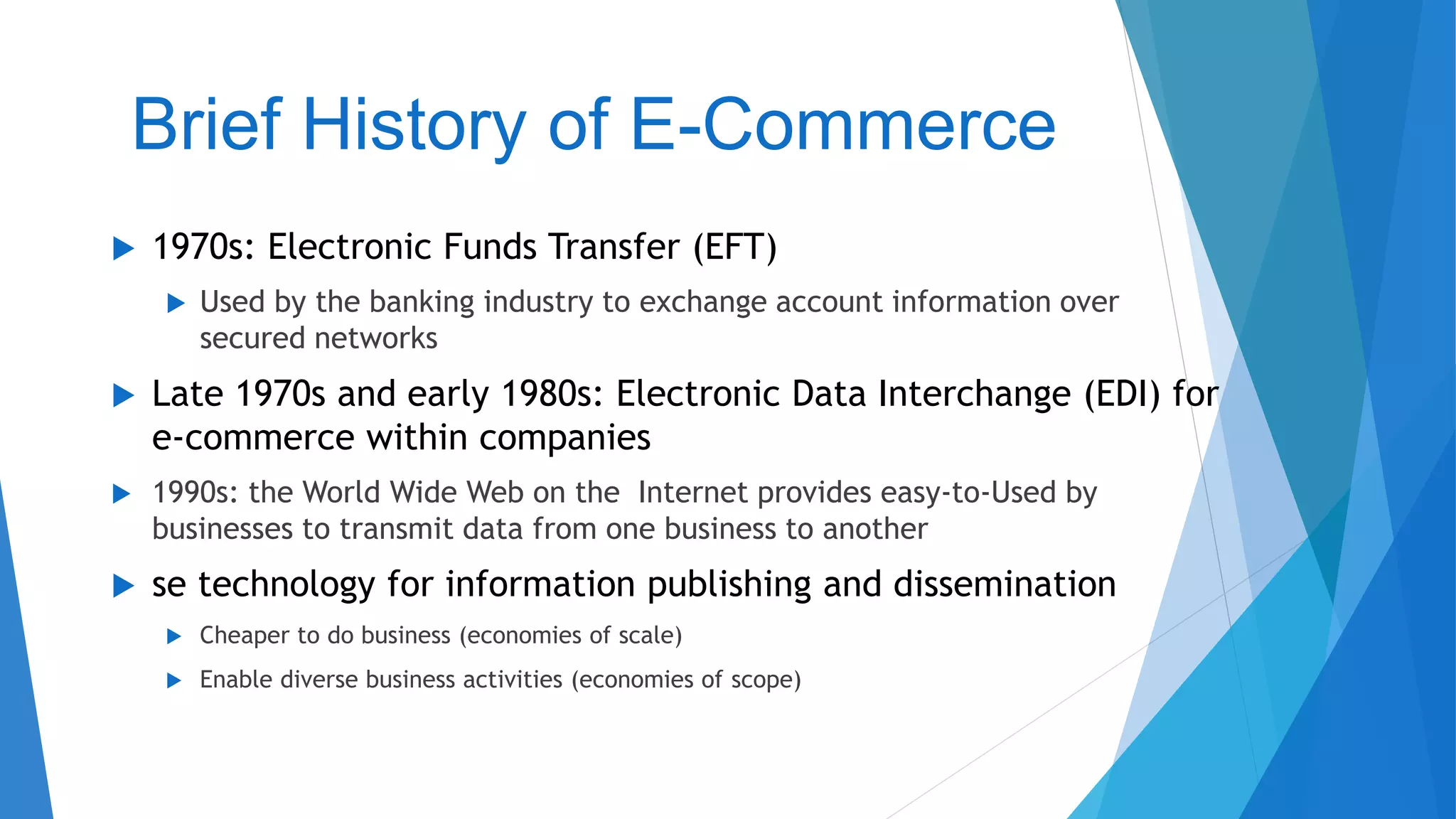
Brief History of E-Commerce
 1970s: Electronic Funds Transfer (EFT)
 Used by the banking industry to exchange account information over
secured networks
 Late 1970s and early 1980s: Electronic Data Interchange (EDI) for
e-commerce within companies
 1990s: the World Wide Web on the Internet provides easy-to-Used by
businesses to transmit data from one business to another
 se technology for information publishing and dissemination
 Cheaper to do business (economies of scale)
 Enable diverse business activities (economies of scope)
Why Use E-Commerce?
LOW ENTRY COST
REDUCES TRANSACTION COSTS
ACCESS TO THE GLOBAL MARKET
 SECURE MARKET SHARE
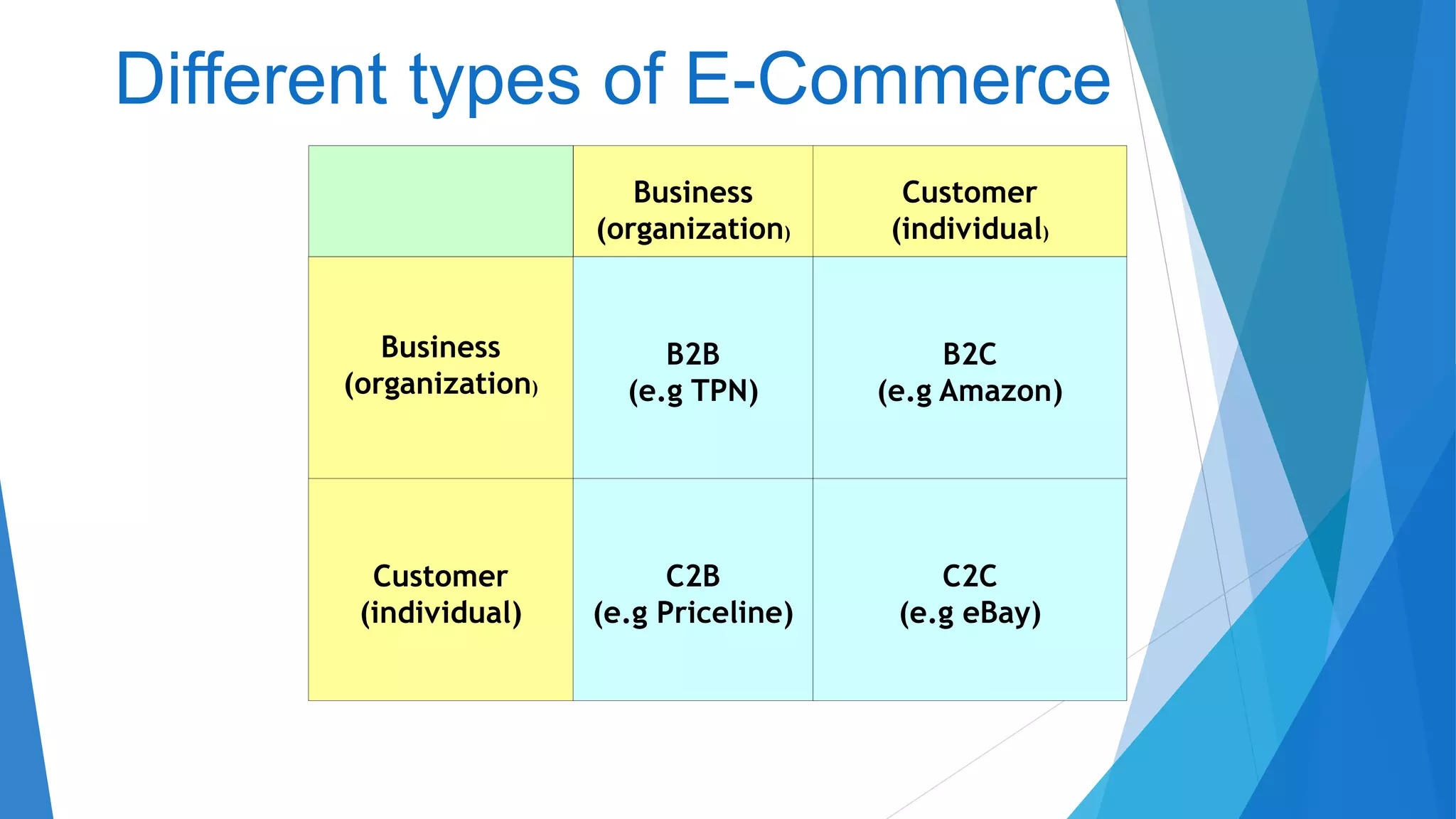
Different types of E-Commerce
Business
(organization)
Customer
(individual)
Business
(organization)
Customer
(individual)
B2C
(e.g Amazon)
C2B
(e.g Priceline)
C2C
(e.g eBay)
B2B
(e.g TPN)
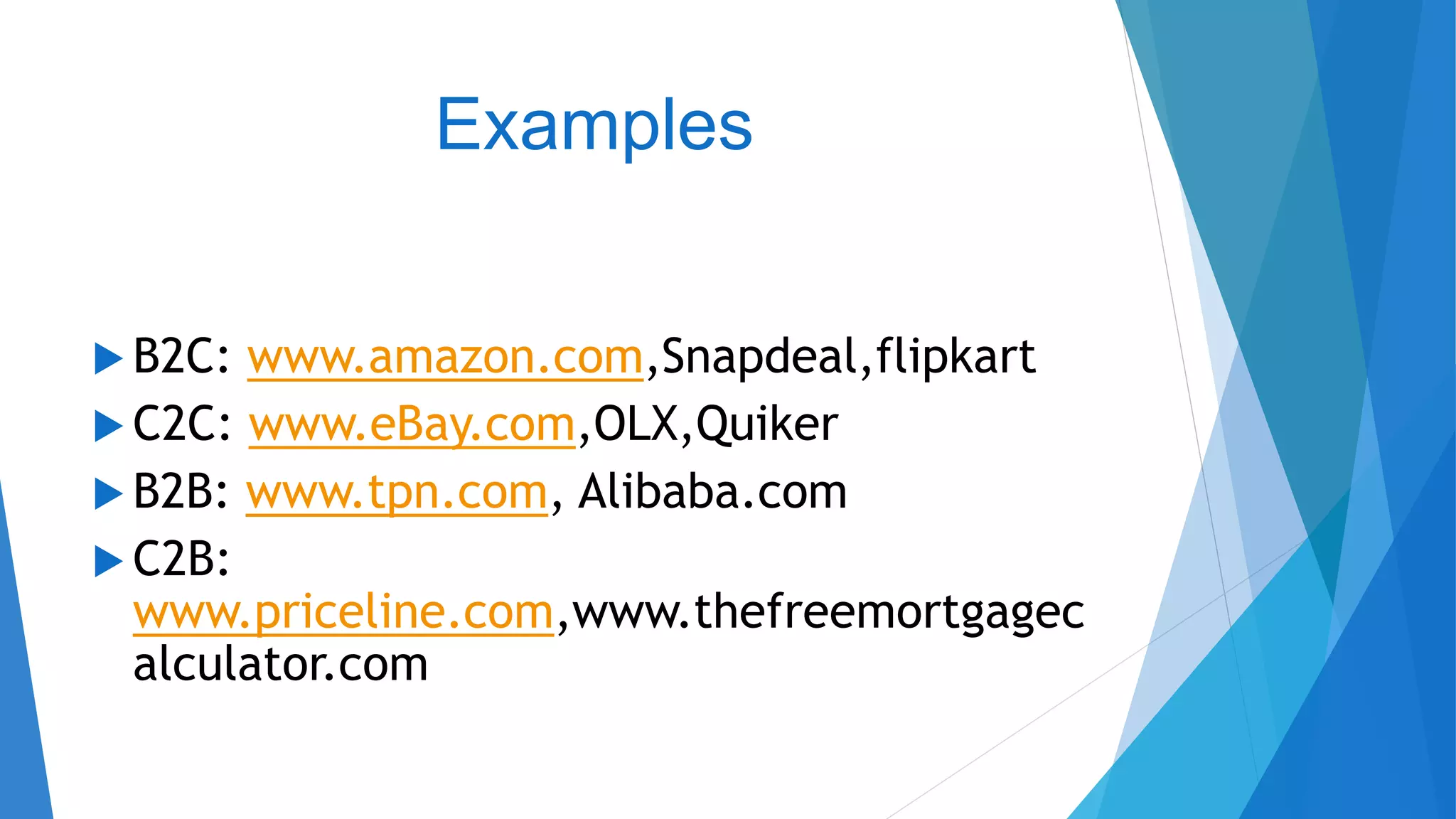
Examples
 B2C: www.amazon.com,Snapdeal,flipkart
 C2C: www.eBay.com,OLX,Quiker
 B2B: www.tpn.com, Alibaba.com
 C2B:
www.priceline.com,www.thefreemortgagec
alculator.com
Advantages of E-Commerce
 Faster buying/selling procedure, as well as easy to find
products.
 Buying/selling 24/7.
 More reach to customers, there is no theoretical geographic
limitations.
 Low operational costs and better quality of services.
 No need of physical company set-ups.
 Easy to start and manage a business.
 Customers can easily select products from different
providers without moving around physically.
Discussion
 How should different departments participate
in an e-commerce project?
 Management
 Marketing
 Production
 Finance
 Procurement
 Customer support
THE PROCESS OF E-COMMERCE
Benefits of E-Commerce
Benefits to organizations
Benefits to consumers
Benefits to
organizations
Global reach
Cost reduction
Extended hours: 24/7/365
Customization
Improved customer relations
Benefits to consumers
More products and services
Cheaper products and services
Instant delivery
Information availability
Business applications
Email
Instant messaging
Online shopping and order tracking
Online banking
Shopping cart software
Teleconferencing
Electronic tickets
Conclusion
As the Internet and in turn E-
commerce has developed, and
continues to evolve and grow, it is
vital that any organization, in any
particular industry, must base its
strategic planning around such a
rapidly growing medium.
Thank You


E commerce ppt

  • 1.
  • 3.
    index 1.Definition of e-commerce 2.Briefhistory of e-commerce 3.Types of E-commerce 4.Advantage of e-commerce 5.The process of E-commerce 6.Benefits of E-commerce 7.Business Application 8.Conclusion
  • 4.
    Definition of E-Commerce E-Commerceor Electronic commerce is a process of buying, selling, transferring, or exchanging products, services, and/or information via electronic networks and computers
  • 5.
    Definition of Commerce The exchange of goods and service for money.  Consists of: Buyers - these are people with money who want to purchase a good or service. Sellers - these are the people who offer goods and services to buyers. Producers - these are the people who create the products and services that sellers offer to buyers.
  • 6.
    Brief History ofE-Commerce  1970s: Electronic Funds Transfer (EFT)  Used by the banking industry to exchange account information over secured networks  Late 1970s and early 1980s: Electronic Data Interchange (EDI) for e-commerce within companies  1990s: the World Wide Web on the Internet provides easy-to-Used by businesses to transmit data from one business to another  se technology for information publishing and dissemination  Cheaper to do business (economies of scale)  Enable diverse business activities (economies of scope)
  • 7.
    Why Use E-Commerce? LOWENTRY COST REDUCES TRANSACTION COSTS ACCESS TO THE GLOBAL MARKET  SECURE MARKET SHARE
  • 8.
    Different types ofE-Commerce Business (organization) Customer (individual) Business (organization) Customer (individual) B2C (e.g Amazon) C2B (e.g Priceline) C2C (e.g eBay) B2B (e.g TPN)
  • 9.
    Examples  B2C: www.amazon.com,Snapdeal,flipkart C2C: www.eBay.com,OLX,Quiker  B2B: www.tpn.com, Alibaba.com  C2B: www.priceline.com,www.thefreemortgagec alculator.com
  • 10.
    Advantages of E-Commerce Faster buying/selling procedure, as well as easy to find products.  Buying/selling 24/7.  More reach to customers, there is no theoretical geographic limitations.  Low operational costs and better quality of services.  No need of physical company set-ups.  Easy to start and manage a business.  Customers can easily select products from different providers without moving around physically.
  • 11.
    Discussion  How shoulddifferent departments participate in an e-commerce project?  Management  Marketing  Production  Finance  Procurement  Customer support
  • 12.
    THE PROCESS OFE-COMMERCE
  • 13.
    Benefits of E-Commerce Benefitsto organizations Benefits to consumers
  • 14.
    Benefits to organizations Global reach Costreduction Extended hours: 24/7/365 Customization Improved customer relations
  • 15.
    Benefits to consumers Moreproducts and services Cheaper products and services Instant delivery Information availability
  • 16.
    Business applications Email Instant messaging Onlineshopping and order tracking Online banking Shopping cart software Teleconferencing Electronic tickets
  • 17.
    Conclusion As the Internetand in turn E- commerce has developed, and continues to evolve and grow, it is vital that any organization, in any particular industry, must base its strategic planning around such a rapidly growing medium.
  • 18.