E-COMMERCE
Definition of E-Commerce
 E-Commerce or Electronic commerce is a process of
buying, selling, transferring, or exchanging products,
services, and/or information via electronic networks
and computers
E-Commerce Categories
 Two major categories
 Other categories
Two Major Categories
 Business-to-consumer (B2C) :
Online transactions are made between
businesses and individual consumers. E.g.
Amazon.com, eBay.com.
 Business-to-business (B2B):
Businesses make online transactions with
other businesses.
Other Categories
 Consumer-to-consumer (C2C)
 Mobile commerce (m-commerce)
 E-learning
 E-government
Benefits of E-Commerce
 Benefits to organizations
 Benefits to consumers
Benefits to organizations
 Global reach
 Cost reduction
 Supply chain improvements
 Extended hours: 24/7/365
 Customization
 Improved customer relations
Benefits to consumers
 More products and services
 Cheaper products and services
 Instant delivery
 Information availability
 Participation in auctions
Business applications
 Email
 Instant messaging
 Online shopping and order tracking
 Online banking
 Shopping cart software
 Teleconferencing
 Electronic tickets
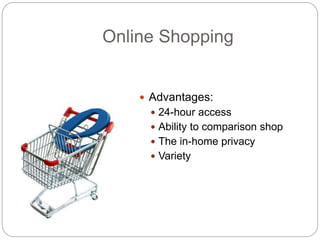
Online Shopping
 Advantages:
 24-hour access
 Ability to comparison shop
 The in-home privacy
 Variety
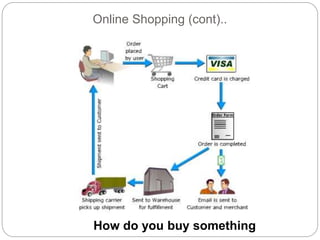
Online Shopping (cont)..
How do you buy something
Interesting Facts and Statistics
 Every 1.2 seconds, a Canadian makes a purchase with their PayPal
account
 Almost 20 per cent of Canadians make three or more online
purchases per month (comScore 2009).
ADVANTAGES OF E-
COMMERCE
 Faster buying/selling procedure, as well as easy
to find products.
 Buying/selling 24/7.
 More reach to customers, there is no theoretical
geographic limitations.
 Low operational costs and better quality of
services.
 No need of physical company set-ups.
 Easy to start and manage a business.
 Customers can easily select products from
different providers without moving around
physically.
DISADVANTAGES OF E-
COMMERCE
 Unable to examine products personally
 Not everyone is connected to the Internet
 There is the possibility of credit card number theft
 Mechanical failures can cause unpredictable
effects on the total processes.
What is Digital Marketing?
 Promoting products and services using digital
distribution and social media channels to reach
consumers in a timely ,relevant, personal and
cost-effective manner.
 leverages traditional marketing areas such as
direct marketing by providing the same method of
communicating with an audience but in a digital
fashion.
 delivered via internet, mobile text messaging ,
display / banner ads and digital outdoor signage.
Why Use Digital Marketing?
 Increase website traffic
 Increase brand recognition
 Improve search engine rankling
 Generate leads
 Increase online sales conversions
 Improve internal communications
Who's Using Digital Marketing?
 Small to medium businesses increasingly
rely upon online digital marketing techniques
and distribution channels.
 Digital communications and multimedia
technologies are significantly changing the
way SMBs :-
 Communicate with their customers
 Promote products and
 Market services
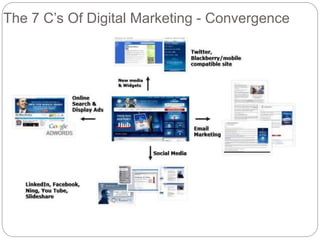
The 7 C’s Of Digital Marketing - Convergence
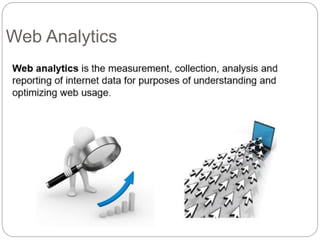
Web Analytics
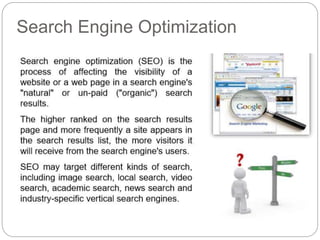
Search Engine Optimization
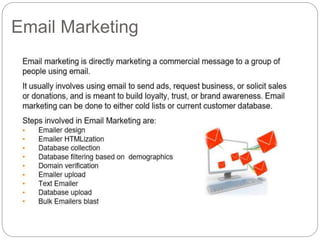
Email Marketing
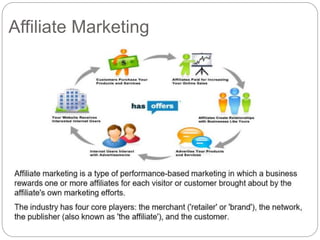
Affiliate Marketing
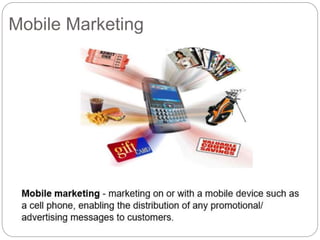
Mobile Marketing
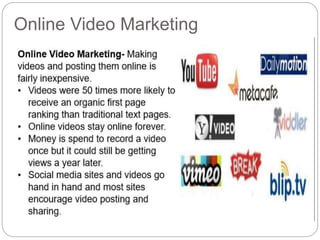
Online Video Marketing
Conclusion
 The Internet has lead to the birth and
evolution E-commerce. E-commerce has now
become a key component of many
organizations in the daily running of their
business.
 As the Internet and in turn E-commerce has
developed, and continues to evolve and grow,
it is vital that any organization, in any
particular industry, must base its strategic
planning around such a rapidly growing
medium.
References (content)
 Web. 10 Apr. 2010.
www.rogeliodavila.com/tie/TIE%20notas/EC2004_ch01.ppt
 Web. 10 Apr. 2010. http://en.wikipedia.org/wiki/E-commerce
 Web. 10 Apr. 2010. http://wiki.media-
culture.org.au/index.php/E-commerce_-_Overview_-_E-
Commerce_Major_Categories
 Web. 10 Apr. 2010.
http://www.exampleessays.com/viewpaper/19642.html
 Web. 12 Apr. 2010.
http://www.newswire.ca/en/releases/archive/October2009/3
0/c4231.html
 Kerin, Roger A., Steven William. Hartley, and William
Rudelius. "Retailing and Wholesaling." Marketing: the Core.
Boston, Mass.: McGraw-Hill/Irwin, 2009. 217-19. Print.
Thank You

Are there any questions?

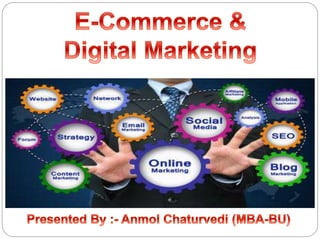
E.commerce & Digital marketing

  • 3.
  • 4.
    Definition of E-Commerce E-Commerce or Electronic commerce is a process of buying, selling, transferring, or exchanging products, services, and/or information via electronic networks and computers
  • 5.
    E-Commerce Categories  Twomajor categories  Other categories
  • 6.
    Two Major Categories Business-to-consumer (B2C) : Online transactions are made between businesses and individual consumers. E.g. Amazon.com, eBay.com.  Business-to-business (B2B): Businesses make online transactions with other businesses.
  • 7.
    Other Categories  Consumer-to-consumer(C2C)  Mobile commerce (m-commerce)  E-learning  E-government
  • 8.
    Benefits of E-Commerce Benefits to organizations  Benefits to consumers
  • 9.
    Benefits to organizations Global reach  Cost reduction  Supply chain improvements  Extended hours: 24/7/365  Customization  Improved customer relations
  • 10.
    Benefits to consumers More products and services  Cheaper products and services  Instant delivery  Information availability  Participation in auctions
  • 11.
    Business applications  Email Instant messaging  Online shopping and order tracking  Online banking  Shopping cart software  Teleconferencing  Electronic tickets
  • 12.
    Online Shopping  Advantages: 24-hour access  Ability to comparison shop  The in-home privacy  Variety
  • 13.
    Online Shopping (cont).. Howdo you buy something
  • 14.
    Interesting Facts andStatistics  Every 1.2 seconds, a Canadian makes a purchase with their PayPal account  Almost 20 per cent of Canadians make three or more online purchases per month (comScore 2009).
  • 15.
    ADVANTAGES OF E- COMMERCE Faster buying/selling procedure, as well as easy to find products.  Buying/selling 24/7.  More reach to customers, there is no theoretical geographic limitations.  Low operational costs and better quality of services.  No need of physical company set-ups.  Easy to start and manage a business.  Customers can easily select products from different providers without moving around physically.
  • 16.
    DISADVANTAGES OF E- COMMERCE Unable to examine products personally  Not everyone is connected to the Internet  There is the possibility of credit card number theft  Mechanical failures can cause unpredictable effects on the total processes.
  • 18.
    What is DigitalMarketing?  Promoting products and services using digital distribution and social media channels to reach consumers in a timely ,relevant, personal and cost-effective manner.  leverages traditional marketing areas such as direct marketing by providing the same method of communicating with an audience but in a digital fashion.  delivered via internet, mobile text messaging , display / banner ads and digital outdoor signage.
  • 19.
    Why Use DigitalMarketing?  Increase website traffic  Increase brand recognition  Improve search engine rankling  Generate leads  Increase online sales conversions  Improve internal communications
  • 20.
    Who's Using DigitalMarketing?  Small to medium businesses increasingly rely upon online digital marketing techniques and distribution channels.  Digital communications and multimedia technologies are significantly changing the way SMBs :-  Communicate with their customers  Promote products and  Market services
  • 21.
    The 7 C’sOf Digital Marketing - Convergence
  • 22.
  • 23.
  • 24.
  • 25.
  • 26.
  • 27.
  • 28.
    Conclusion  The Internethas lead to the birth and evolution E-commerce. E-commerce has now become a key component of many organizations in the daily running of their business.  As the Internet and in turn E-commerce has developed, and continues to evolve and grow, it is vital that any organization, in any particular industry, must base its strategic planning around such a rapidly growing medium.
  • 29.
    References (content)  Web.10 Apr. 2010. www.rogeliodavila.com/tie/TIE%20notas/EC2004_ch01.ppt  Web. 10 Apr. 2010. http://en.wikipedia.org/wiki/E-commerce  Web. 10 Apr. 2010. http://wiki.media- culture.org.au/index.php/E-commerce_-_Overview_-_E- Commerce_Major_Categories  Web. 10 Apr. 2010. http://www.exampleessays.com/viewpaper/19642.html  Web. 12 Apr. 2010. http://www.newswire.ca/en/releases/archive/October2009/3 0/c4231.html  Kerin, Roger A., Steven William. Hartley, and William Rudelius. "Retailing and Wholesaling." Marketing: the Core. Boston, Mass.: McGraw-Hill/Irwin, 2009. 217-19. Print.
  • 30.