MAJOR DISORDERS  OF THE ENDOCRINE SYSTEM Nio C. Noveno, RN, MAN
 
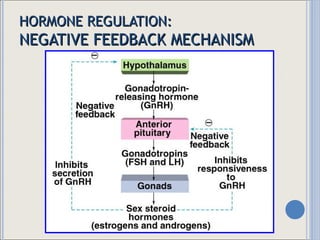
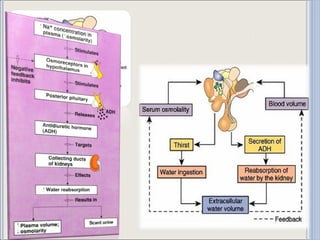
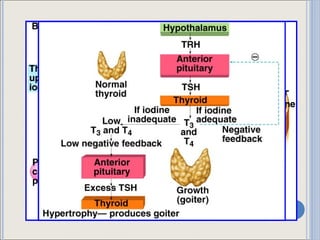
HORMONE REGULATION: NEGATIVE FEEDBACK MECHANISM If the client is healthy, the concentration of hormones is maintained at a constant level. When the hormone concentration rises, further production of that hormone is inhibited. When the hormone concentration falls, the rate of production of that hormone increases.
HORMONE REGULATION: NEGATIVE FEEDBACK MECHANISM
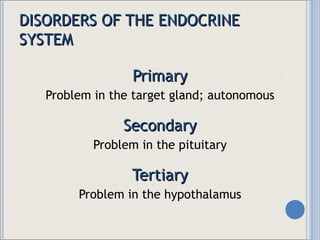
DISORDERS OF THE ENDOCRINE SYSTEM Primary Problem in the target gland; autonomous Secondary Problem in the pituitary Tertiary Problem in the hypothalamus
ANTERIOR PITUITARY DISORDERS
 
 
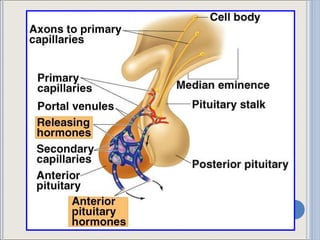
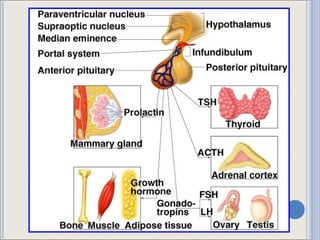
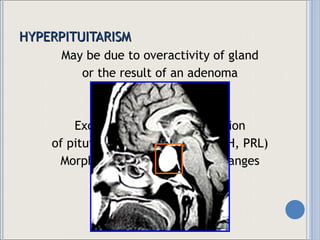
HYPERPITUITARISM May be due to overactivity of gland or the result of an adenoma Characterized by: Excessive serum concentration of pituitary hormones (GH, ACTH, PRL) Morphologic and functional changes in the anterior pituitary
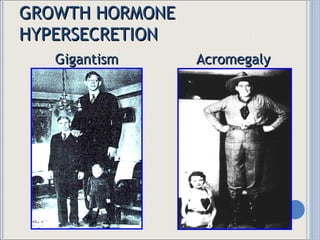
GROWTH HORMONE HYPERSECRETION Gigantism Prior to closure of the epiphyses;  proportional growth Acromegaly After closure of the epiphyses;  disproportional  growth
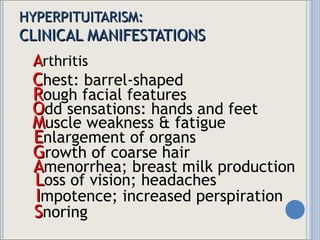
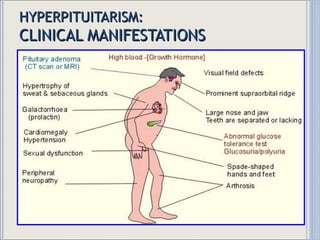
HYPERPITUITARISM: CLINICAL MANIFESTATIONS A rthritis C hest: barrel-shaped R ough facial features O dd sensations: hands and feet M uscle weakness & fatigue E nlargement of organs G rowth of coarse hair A menorrhea; breast milk production L oss of vision; headaches I mpotence; increased perspiration  S noring
HYPERPITUITARISM: CLINICAL MANIFESTATIONS
HYPERPITUITARISM: MANAGEMENT Medication Bromocriptine- Cabergoline  (dopamine agonists)  GH hypersecretion and prolactinoma Ocreotide  (somatostatin) GH hypersecretion Radiation Indicated for larger  tumors Surgery Trans-sphenoidal  hypophysectomy
TRANS-SPHENOIDAL HYPOPHYSECTOMY Post-surgery nursing care Semi- to high- Fowler’s position Protect from infection and stressful situations Hormone replacement Constant neurologic checks MIOW to check for DI WOF CSF leak Encourage deep-breathing, but not coughing Institute measures to prevent constipation [straining increases ICP]
HYPOPITUITARISM Deficiency of one or more anterior pituitary hormones Causes Infections / Inflammatory disorders Autoimmune diseases Congenital absence Tumor Surgery / Radiation therapy
HYPOPITUITARISM Simmonds' disease [Panhypopituitarism] Complete absence of pituitary hormones  Cachexia: most prominent feature Follows destruction of the pituitary by surgery, infection,  injury, or a tumor Sheehan’s syndrome [Post-partum  pituitary necrosis] A complication of delivery Results from severe  blood loss and  hypovolemia    Pituitary ischemia
HYPOPITUITARISM: CLINICAL MANIFESTATIONS Hypo   -thermia, -glycemia, -tension Loss  of vision, strength, libido, & secondary sexual  characteristics
HYPOPITUITARISM: MANAGEMENT Medication Hormonal substitution  [maybe for life] Corticosteroids Levothyroxine Androgen / Estrogen Growth hormone Radiation Indicated for larger  tumors Surgery Trans-sphenoidal  hypophysectomy
POSTERIOR PITUITARY DISORDERS
 
 
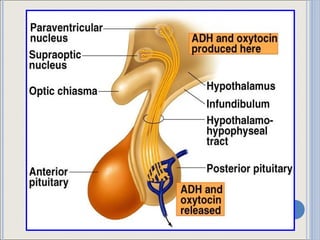
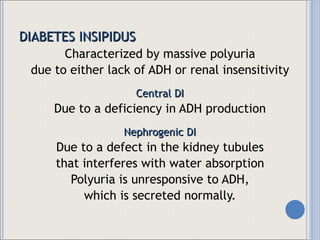
DIABETES INSIPIDUS Characterized by massive polyuria due to either lack of ADH or renal insensitivity Central DI Due to a deficiency in ADH production Nephrogenic DI Due to a defect in the kidney tubules that interferes with water absorption Polyuria is unresponsive to ADH, which is secreted normally.
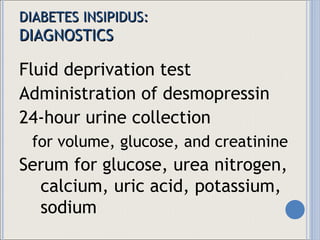
DIABETES INSIPIDUS: DIAGNOSTICS Fluid deprivation test Administration of desmopressin 24-hour urine collection for volume, glucose, and creatinine Serum for glucose, urea nitrogen, calcium, uric acid, potassium, sodium
DIABETES INSIPIDUS: MANAGEMENT Central DI : Desmopressin, Lypressin [intranasal] Vasopressin tannate in oil [IM] Nephrogenic DI : Indomethacin- -hydrochlorothiazide -desmopressin -amiloride Clofibrate, chlorpropamide
SYNDROME OF INAPPROPRIATE ADH Disorder due to excessive ADH release Clinical Manifestations Persistent excretion of concentrated urine Signs of fluid overload Hyponatremia LOC changes No edema
SIADH: DIAGNOSTICS Low serum sodium [<135 mEq/L] Low serum osmolality High urine osmolality [>100 mOsmol/kg] High urine sodium excretion [>20 mmol/L] Normal renal function: low BUN [<10 mg/dL]
SIADH: MANAGEMENT Maintain fluid balance MIOW Fluid restriction Loop diuretic [If with evidence of fluid overload] Lithium or demeclocycline [Chronic treatment] Maintain Na balance Increased Na intake Emergency treatment of  3% NaCl,  followed by  furosemide [If serum Na <120, or if patient is seizing] Excessively rapid correction of hyponatremia may cause central pontine myelinolysis!
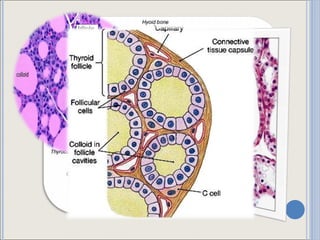
THYROID DISORDERS
 
 
THYROID FUNCTION TESTS Serum TSH Single best screening test [high sensitivity] 0.38 – 6.15  mcU/mL If TSH is normal, fT 4  should be normal. Screening required beginning 35 years, then q 5 years thereafter Also used for monitoring thyroid hormone  replacement therapy
THYROID FUNCTION TESTS Serum fT 4 A direct measurement of free thyroxine,  the only metabolic fraction of T 4 0.9 to 1.7 ng/L (11.5 to 21.8 pmol/L) Used to confirm an abnormal TSH
THYROID FUNCTION TESTS Total serum T 3  and T 4 T 3  70 to 220 ng/dL (1.15 to 3.10 nmol/L) T 4  4.5 to 11.5 mcg/dL (58.5 to 150 nmol/L) T 3  levels appear to be a more accurate indicator of hyperthyroidism.
THYROID FUNCTION TESTS T 3  resin uptake test Indirect measurement of unsaturated thyroid-binding globulin (TBG) 25 – 35% uptake Thyroid antibodies 5 – 10% of the population Grave’s: 80% Hashimoto’s: 100%
THYROID FUNCTION TESTS Thyroid scan / Radioscan / Scintiscan Utilizes a gamma camera and radioisotopes 123 I, thallium, americium, technetium-99m [ 99m Tc] pertechnetate Results Hot areas: increased activity Cold areas: decreased activity
THYROID FUNCTION TESTS Radioactive iodine uptake (RAIU) Measures the proportion of administered tracer  dose of ¹²³I present in the thyroid gland at a specific time after administration Results Hyper: high uptake Hypo: low uptake
THYROID FUNCTION TESTS Fine-needle aspiration biopsy Sampling of thyroid tissue to detect malignancy Initial test for evaluation of thyroid masses Results Negative [benign] Positive [malignant] Indeterminate [suspicious] Inadequate [non-diagnostic]
THYROID FUNCTION TESTS Nursing Implications Determine whether the patient has taken medications or agents that contain iodine  [antiseptics, multivitamins, cough syrup, amiodarone]  because these may alter the test results. Assess for allergy to iodine or shellfish. For scans, tell patient that radiation is only minimal.
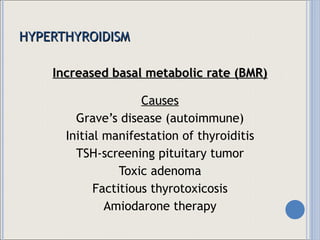
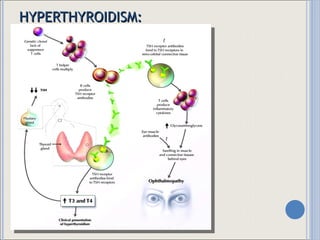
HYPERTHYROIDISM Increased basal metabolic rate (BMR) Causes Grave’s disease (autoimmune) Initial manifestation of thyroiditis TSH-screening pituitary tumor Toxic adenoma Factitious thyrotoxicosis Amiodarone therapy
HYPERTHYROIDISM: CLINICAL MANIFESTATIONS G I hypermotility R apid weight loss A pprehension V olume deficit; voracious appetite E xophthalmos; erratic menses S ystolic BP elevated; sweating [tremors, tachycardia, palpitations]    in secondary disease    in primary disease TSH
HYPERTHYROIDISM: CLINICAL MANIFESTATIONS
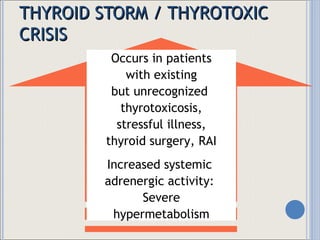
THYROID STORM / THYROTOXIC CRISIS Marked delirium Severe tachycardia Vomiting Diarrhea Dehydration High fever Occurs in patients with existing but unrecognized  thyrotoxicosis, stressful illness, thyroid surgery, RAI Increased systemic  adrenergic activity:  Severe hypermetabolism
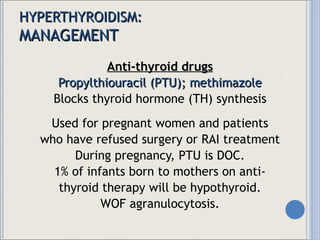
HYPERTHYROIDISM: MANAGEMENT Anti-thyroid drugs Propylthiouracil (PTU); methimazole Blocks thyroid hormone (TH) synthesis Used for pregnant women and patients who have refused surgery or RAI treatment During pregnancy, PTU is DOC. 1% of infants born to mothers on anti- thyroid therapy will be hypothyroid. WOF agranulocytosis.
HYPERTHYROIDISM: MANAGEMENT RAI (¹³¹I), K or Na iodide, SSKI (Lugol’s) Adjunct to other anti-thyroid drugs in preparation for thyroidectomy Treatment for thyrotoxic crisis Inhibit release and synthesis of TH Decrease vascularity of the thyroid gland Decrease thyroidal uptake of RAI
HYPERTHYROIDISM: MANAGEMENT Medications to relieve the symptoms related to the increased metabolic rate:  Digitalis, propranolol (Inderal), phenobarbital Well-balanced, high-calorie diet with vitamin and mineral supplements Subtotal or total thyroidectomy
RAI THERAPY : NURSING IMPLICATIONS NPO post-midnight prior to administration  [Food may delay absorption] After initial dose: Urine and saliva slightly radioactive x 24H Vomitus highly radioactive x 6-8H Institute full radiation precautions. Instruct the patient to use appropriate disposal methods when coughing and expectorating.
K OR NA IODIDE, SSKI (LUGOL’S) : NURSING IMPLICATIONS Dilute oral doses in water or fruit juice and give with meals to prevent gastric irritation, to hydrate the patient, and to mask the very salty taste. Give iodides through a straw to avoid teeth discoloration. Force fluids to prevent fluid volume deficit. Warn patient that sudden withdrawal may precipitate a thyrotoxic crisis. Store in a light-resistant container.
HYPOTHYROIDISM A state of low serum TH levels or cellular resistance to TH A utoimmune D evelopmental D ietary I odine deficiency O ncologic D rugs I atrogenic N on-thyroidal E ndocrine
HYPOTHYROIDISM Causes Chronic autoimmune [Hashimoto’s] thyroiditis Hypothalamic failure to produce TRH Pituitary failure to produce TSH Inborn errors of TH synthesis Thyroidectomy / Radiation therapy Anti-thyroid therapy Iodine deficiency
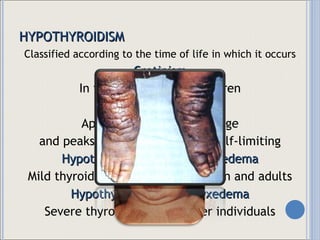
HYPOTHYROIDISM Classified according to the time of life in which it occurs Cretinism In infants and young children Lymphocytic thyroiditis Appears after 6 years of age and peaks during adolescence; self-limiting Hypothyroidism without myxedema Mild thyroid failure in older children and adults Hypothyroidism with myxedema Severe thyroid failure in older individuals
HYPOTHYROIDISM: CLINICAL MANIFESTATIONS D ry, brittle hair; dry, coarse skin E dema (periorbital) R educed BMR  [bradycardia, bradypnea] A pathy; anorexia; anemia I ncreased weight; intolerance to cold L ethargy; loss of libido E nlarged tongue D rooling    in secondary disease    in primary disease TSH
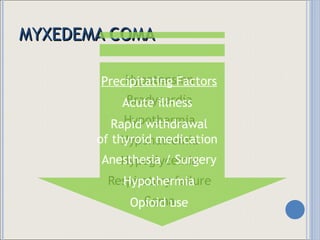
MYXEDEMA COMA Hypotension Bradycardia Hypothermia Hyponatremia Hypoglycemia Respiratory failure Coma Precipitating Factors Acute illness  Rapid withdrawal of thyroid medication  Anesthesia / Surgery Hypothermia Opioid use
HYPOTHYROIDISM: MANAGEMENT Prevention Prophylactic iodine supplements to decrease the incidence of iodine-deficient goiter Symptomatic cases Hormonal replacement Levothyroxine (Synthroid) Liothyronine  (Cytomel) Liotrix (Thyrolar) Dosage increased q 2-3 weeks especially in elderly patients
HYPOTHYROIDISM: MANAGEMENT Tell patient to WOF: Chest pain, palpitations, sweating, nervousness, and other S/S of overdosage Instruct the patient to take TH at the same time  each day to maintain constant hormone levels. Suggest a morning dosage to prevent insomnia. Monitor apical pulse and BP. If pulse >100 bpm, withhold drug.
HYPOTHYROIDISM: NURSING INTERVENTIONS Diet : high-bulk, low-calorie Encourage activity Maintain warm environment Administer cathartics and stool softeners To prevent myxedema coma , tell patient to continue  course of thyroid  medication even if  symptoms subside. Maintain patent airway Administer medications: Synthroid, glucose,  corticosteroids IV fluid replacement Wrap patient in blanket Treat infection or any underlying illness
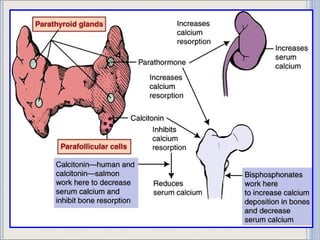
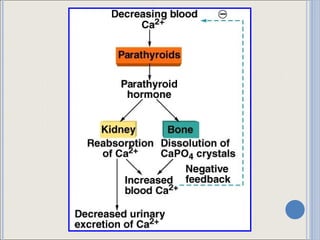
PARATHYROID DISORDERS
 
 
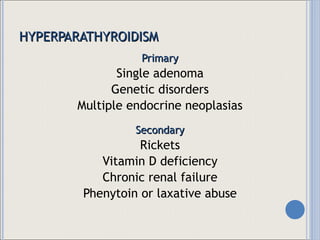
HYPERPARATHYROIDISM Primary Single adenoma Genetic disorders Multiple endocrine neoplasias Secondary Rickets Vitamin D deficiency Chronic renal failure Phenytoin or laxative abuse
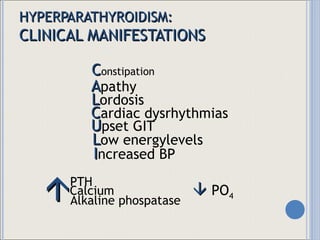
HYPERPARATHYROIDISM: CLINICAL MANIFESTATIONS C onstipation A pathy L ordosis C ardiac dysrhythmias U pset GIT L ow energylevels I ncreased BP    PO 4  PTH Calcium Alkaline phospatase
HYPERPARATHYROIDISM: MANAGEMENT Surgery to remove adenoma Force fluids; limit dietary calcium intake For life-threatening hypercalcemia: Furosemide Bisphosphonates [Etidroanate (Didrodinel), pamidronate] Calcitonin  (Cibacalcin, Miacalcin)  Plicamycin  (Mithracin)  + glucocorticoid Mithramycin
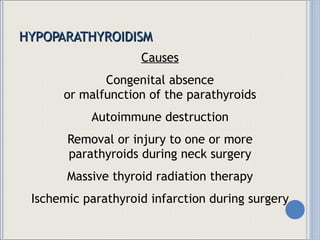
HYPOPARATHYROIDISM Causes Congenital absence or malfunction of the parathyroids Autoimmune destruction Removal or injury to one or more parathyroids during neck surgery Massive thyroid radiation therapy Ischemic parathyroid infarction during surgery
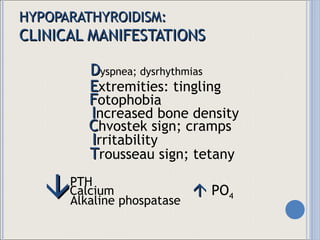
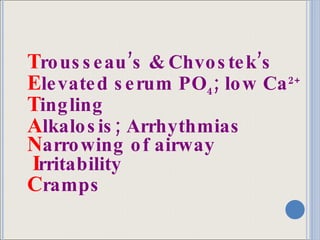
HYPOPARATHYROIDISM: CLINICAL MANIFESTATIONS D yspnea; dysrhythmias E xtremities: tingling F otophobia I ncreased bone density C hvostek sign; cramps I rritability T rousseau sign; tetany    PO 4  PTH Calcium Alkaline phospatase
HYPERTHYROIDISM: MANAGEMENT IV Ca chloride or gluconate  [emergency treatment] DOC post-thyroidectomy Oral Ca salts (Ca carbonate or gluconate) Vitamin D supplementation Increase intestinal Ca absorption Dihydrotachysterol, ergocalciferol
T rousseau’s & Chvostek’s E levated serum PO 4 ; low Ca 2+ T ingling A lkalosis; Arrhythmias N arrowing of airway I rritability C ramps
HYPOPARATHYROIDISM Parathormone injections [in acute attacks] WOF allergies Diet:  High-calcium [spinach], low-phosphate [milk, cheese, egg yolks] Al(OH) 2 , Gelusil, Amphogel  p.c.   Pentobarbital (Nembutal)  [calm environment]
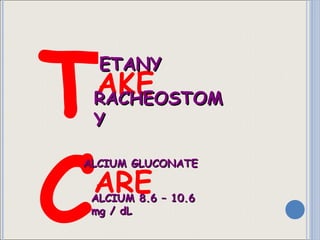
T  C  AKE ARE ETANY RACHEOSTOMY ALCIUM GLUCONATE ALCIUM 8.6 – 10.6 mg / dL
PHEOCHROMOCYTOMA
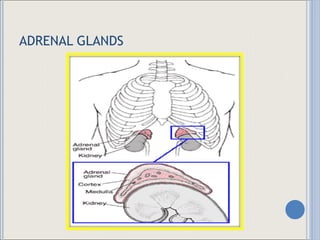
ADRENAL GLANDS
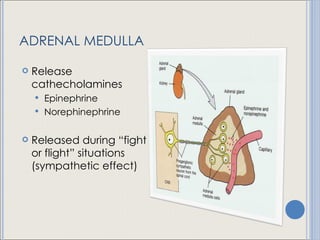
ADRENAL MEDULLA Release cathecholamines Epinephrine Norephinephrine Released during “fight or flight” situations (sympathetic effect)
PHEOCHROMOCYTOMA Adrenal tumor Increased Epi and NEpi Heredity
PHEOCHROMOCYTOMA H eadache A nxiety N ausea E ye disturbances S evere hypertension
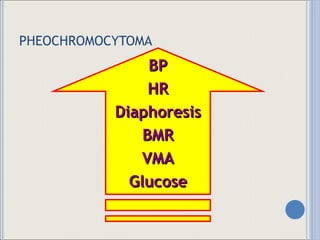
PHEOCHROMOCYTOMA BP HR Diaphoresis BMR VMA Glucose
PHEOCHROMOCYTOMA Adrenalectomy Steroid treatment Antihypertensive and antidysrhythmic nitroprusside (Nipride)  propranolol (Inderal) phentolamine (Regitine)
PHEOCHROMOCYTOMA MBP / MIO Fluid replacements Decrease environmental stimulation Maintenance doses of steroids  Follow-up check up 24-hour urine specimens  [VMA and catecholamine studies] Avoid :  coffee, chocolate, beer, wine, citrus fruit, bananas, and vanilla 24h before test
ADDISON'S DISEASE
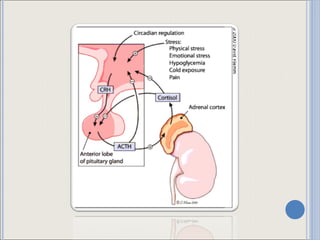
ADRENAL CORTEX HORMONES  Glucocorticoids Cortisol, corticosterone Increase blood glucose levels by increasing rate of gluconeogenesis Increase protein catabolism Increase mobilization of fatty acids Promote sodium and water retention Anti-inflammatory effect Aid the body in coping with stress
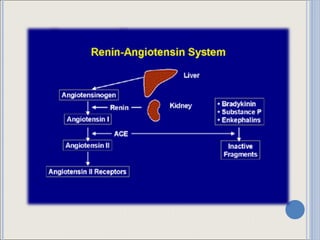
ADRENAL CORTEX HORMONES Mineralocorticoids Aldosterone, Corticosterone, Deoxycorticosterone Regulate fluid and electrolyte balance Stimulate reabsorption of sodium, chloride and water Stimulate potassium excretion Under the control of Renin-Angiotensin-Aldosterone system (RAAS)
 
ADRENAL CORTEX HORMONES Sex hormones Androgens, Estrogens Influences the development of sexual characteristics
 
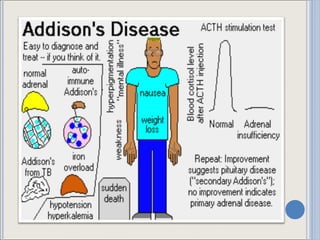
ADDISON'S DISEASE Hyposecretion of adrenocortical hormones Destruction of the cortex  Idiopathic atrophy
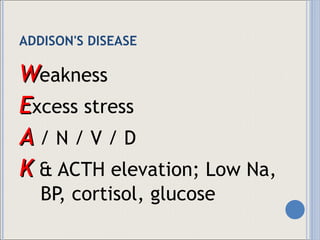
ADDISON'S DISEASE W eakness  E xcess stress A  / N / V / D K  & ACTH elevation; Low Na, BP, cortisol, glucose
 
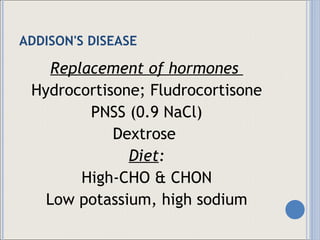
ADDISON'S DISEASE Replacement of hormones  Hydrocortisone; Fludrocortisone PNSS (0.9 NaCl) Dextrose  Diet : High-CHO & CHON Low potassium, high sodium
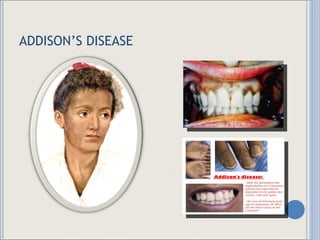
ADDISON'S DISEASE VS, weight, and serum glucose level 24-hour urine specimens [LOW 17- hydroxycorticosteroids & 17-ketosteroids] Electrolyte levels:   K;   Na Bronze-skin Changes in energy or activity
ADDISON’S DISEASE
ADDISON'S DISEASE MVS [4x / day] Infection, Addisonian crisis, dehydration MIOW / MBP / MBG Give steroids with milk or an antacid Avoid : Contacts & Stress
CUSHING'S SYNDROME
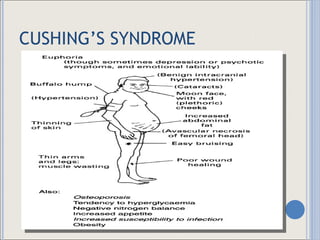
CUSHING'S DISEASE A drenal hyperplasia / tumor C ushing’s disease T umor-secreting ACTH H ypothalamic
B uffalo hump U nusual behavior  (depression, personality changes, fatigability) F acial features  (moonface, hirsutism in women) F at (truncal obesity) A CTH and cortisol in blood elevated;  L oss of muscle mass O verextended skin (abdominal striae with easy bruisability)
H ypertension, hyperglycemia, hypernatremia U rinary cortisol elevated M enstrual irregularities P orosity   of bones (osteoporosis)
CUSHING’S SYNDROME
CUSHING'S SYNDROME Remove exogenous steroids Hypophysectomy or irradiation Adrenalectomy
CUSHING'S SYNDROME Cyproheptadine (Periactin) Metyrapone Mitotane (Lysodren) Aminoglutethamide (Cytadren) Potassium supplements High-CHON; Low Na
CUSHING'S SYNDROME MVS, MIOW, MBP, MBG Electrolyte levels: Na & K Urine specimens [LOW 17- hydroxycorticosteroids & 17-ketosteroids] Physical appearance Changes in coping & sexuality [verbalization] Stress reduction
DIABETES MELLITUS
DIABETES MELLITUS Insulin resistance [GDM, age] Failure in production Blockage of insulin supply Autoimmune response Excess body fat Heredity
DIABETES MELLITUS Type I [juvenile ]/IDDM Type II [adult- onset type]/ NIDDM gradual onset  diet and exercise obesity Pancreatectomy, Cushing's syndrome, drugs
DIABETES MELLITUS Low insulin leads to : Hyperglycemia  Glucosuria  Polyuria  Gluconeogenesis
DIABETES MELLITUS Complications Microvascular Retinopathy & Renal failure Macrovascular  CV and PVD Peripheral neuropathy
P  olyuria olydipsia olyphagia ruritus aresthesia oor healing oor eyesight
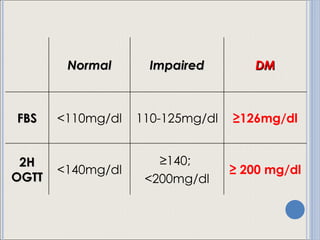
Normal Impaired DM FBS <110mg/dl 110-125mg/dl ≥ 126mg/dl 2H OGTT <140mg/dl ≥ 140;  <200mg/dl ≥  200 mg/dl
DIABETES MELLITUS Diet complex CHO  [50% to 60%]  water-soluble fiber oat, bran, peas, beans, pectin-rich  FV CHON  [12% to 20%]  60 and 85 g CHOO  [<30%]  70 to 90 g/day / MUFA
DIABETES MELLITUS Insulin dose adjustments depend on : physical and emotional stresses specific type of insulin condition and needs of the client
Insulin Onset Peak Duration Ultra rapid acting insulin analog (humalog) 10-15 min 1 H 3 H SAI (humulin regular) ½ - 1 H 2-4 H 4-6 (8) H IAI (humulin lente, Humulin NPH) 3-4 H 4-12 H 16-20 H LAI (Protamine zinc, humulin ultralente) 6-8 H 12-16 H 20-30 H Premixed insulin (NPH-regular [80-20, 70-30, 50-50]) ½-1 H 2-12 H 18-24 hrs Insulin glargine  (Lantus ) Slower than NPH No Peak 24 H
DIABETES MELLITUS Somogyi effect Epinephrine & Glucagon Glycogenolysis  [iatrogenically-induced hyperglycemia] Lowering insulin dosage at night  MBG
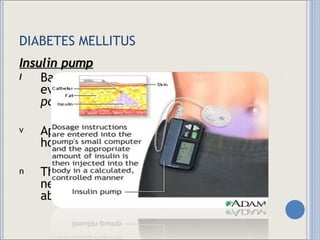
DIABETES MELLITUS Insulin pump Basal doses of regular insulin delivered every few minutes bolus doses delivered  pc Appropriate amount of insulin for 24 hours plus priming is drawn into syringe The administration set is primed and needle inserted aseptically, usually into abdomen
DIABETES MELLITUS Client teaching points: Proper insulin preparation using aseptic technique When to remove the pump (e.g., before showering or sexual relations) MBG at home
INSULIN ADMINISTRATION Increases the hypoglycemic effects  of insulin Aspirin, alcohol, oral anticoagulants, oral hypoglycemics, beta blockers, tricyclic antidepressants, tetracycline, MAOIs Increases blood glucose  levels Glucocorticoids, thiazide diuretics, thyroid agents, oral contraceptives Increase the need for increased insulin dose Illness, infection, and stress
ORAL HYPOGLYCEMIC AGENTS Sulfonylureas Promotes increase insulin secretion from pancreatic beta cells through direct stimulation First Generation Agents : Acetohexamide  Tolbutamide (Orinase) Tolzamide (Tolinase) Chlorpropamide (Diabenese) Second Generation Agents : Glipizide (Minidiab, Glucotrol) Glyburide (DiaBeta, Glynase, Micronase) Glimepiride (Amaryl)
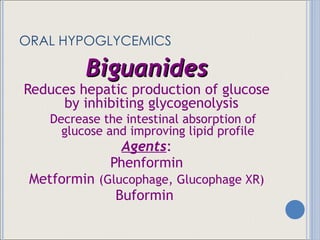
ORAL HYPOGLYCEMICS Biguanides Reduces hepatic production of glucose by inhibiting glycogenolysis Decrease the intestinal absorption of glucose and improving lipid profile Agents : Phenformin Metformin  (Glucophage, Glucophage XR) Buformin
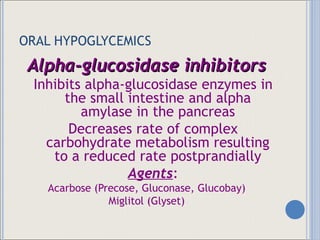
ORAL HYPOGLYCEMICS Alpha-glucosidase inhibitors Inhibits alpha-glucosidase enzymes in the small intestine and alpha amylase in the pancreas Decreases rate of complex carbohydrate metabolism resulting to a reduced rate postprandially Agents : Acarbose (Precose, Gluconase, Glucobay) Miglitol (Glyset)
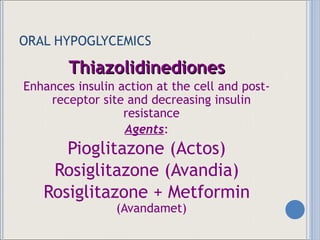
ORAL HYPOGLYCEMICS Thiazolidinediones Enhances insulin action at the cell and post-receptor site and decreasing insulin resistance Agents : Pioglitazone (Actos) Rosiglitazone (Avandia) Rosiglitazone + Metformin  (Avandamet)
DIABETES MELLITUS Other therapies include: pancreas islet cell grafts pancreas transplants implantable insulin pumps cyclosporin [Sandimmune, Neoral]
DIABETES MELLITUS MBG   [done  pc  and  hs ] + HbA1C MBP + weight Renal function + MIO Eye examination
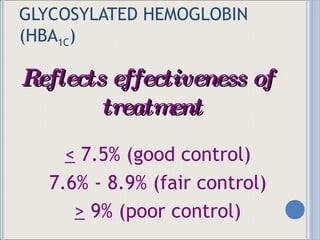
GLYCOSYLATED HEMOGLOBIN (HBA 1C ) Reflects effectiveness of treatment <  7.5% (good control) 7.6% - 8.9% (fair control) >  9% (poor control)
DIABETES MELLITUS diet & weight ketonuria  note infection  legs / feet / toenails check [keep in between toes dry] acceptance & understanding
DIABETES MELLITUS Administer insulin sterile technique rotating injection sites dosage / types / strengths / peak  CHO source Avoid : tight shoes; smoking; heat
DIABETES MELLITUS hypoglycemia Headache Nervousness Diaphoresis Rapid, thready pulse Slurred speech
THE CLIENT IS TIRED! T I rritability R estlessness  E D iaphoresis Hypoglycemia: <50 mg/dL   Causes: Overtreated hyperglycemia Increased exercise β -blockers Gastric paresis Alcohol intake Erratic insulin absorption achycardia xcessive hunger xcitability remors
Mild : S hakiness T remors E xcessive hunger P aresthesias P allor D iaphoresis Rx : 10-15 gm carbohydrate  2 oz. (1 small tube of) cake icing 4 oz. orange juice 6 oz. regular soda 6-8 oz 2% skim milk (4 to) 10 pieces of hard candy
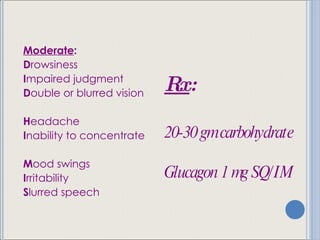
Moderate : D rowsiness  I mpaired judgment D ouble or blurred vision H eadache  I nability to concentrate M ood swings  I rritability  S lurred speech Rx : 20-30 gm carbohydrate Glucagon 1 mg SQ/IM
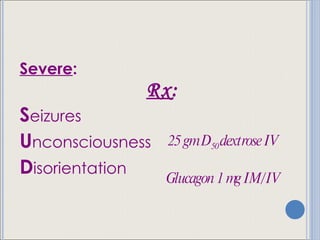
Severe : S eizures U nconsciousness D isorientation Rx : 25 gm D 50  dextrose IV Glucagon 1 mg IM/IV
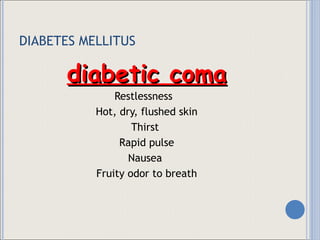
DIABETES MELLITUS diabetic coma Restlessness  Hot, dry, flushed skin Thirst  Rapid pulse Nausea  Fruity odor to breath
K etoacidosis U rinary changes S unken eyeballs S kin is warm & flushed M embranes are dry A rrhythmias U pset GI system L ow BP S aline solution Rx : Regular insulin drip 0.9% or 0.45% NSS 1:1 [100U:100cc] Nursing care: Check glucose 250-300 mg/dL [q30-60mins] 250 mg/dL  DC the drip
NON K etosis is absent E lectrolyte imbalance [K +  decrease] T hirst O btundation T reat with regular insulin drip I nitiate diet C orrect hyperglycemia
N ormal creatinine? E rythrocyte sedimentation rate [ESR: 0-20 mm/hr] P oor glycemic control H emodialysis R estrict: Na + , CHON, K + , weight O utput & input (MIO) N o symptoms
R educed O 2  in the eye E levated sugar & BP T ension is high in the retina I ncreased lens opacity  N O eyesight A nnual eye exam [every 6-12 months]
MAJOR DISORDERS  OF THE ENDOCRINE SYSTEM THANK YOU! Nio C. Noveno, RN, MAN

Endocrine Disorders

  • 1.
    MAJOR DISORDERS OF THE ENDOCRINE SYSTEM Nio C. Noveno, RN, MAN
  • 2.
  • 3.
    HORMONE REGULATION: NEGATIVEFEEDBACK MECHANISM If the client is healthy, the concentration of hormones is maintained at a constant level. When the hormone concentration rises, further production of that hormone is inhibited. When the hormone concentration falls, the rate of production of that hormone increases.
  • 4.
    HORMONE REGULATION: NEGATIVEFEEDBACK MECHANISM
  • 5.
    DISORDERS OF THEENDOCRINE SYSTEM Primary Problem in the target gland; autonomous Secondary Problem in the pituitary Tertiary Problem in the hypothalamus
  • 6.
  • 7.
  • 8.
  • 9.
    HYPERPITUITARISM May bedue to overactivity of gland or the result of an adenoma Characterized by: Excessive serum concentration of pituitary hormones (GH, ACTH, PRL) Morphologic and functional changes in the anterior pituitary
  • 10.
    GROWTH HORMONE HYPERSECRETIONGigantism Prior to closure of the epiphyses; proportional growth Acromegaly After closure of the epiphyses; disproportional growth
  • 11.
    HYPERPITUITARISM: CLINICAL MANIFESTATIONSA rthritis C hest: barrel-shaped R ough facial features O dd sensations: hands and feet M uscle weakness & fatigue E nlargement of organs G rowth of coarse hair A menorrhea; breast milk production L oss of vision; headaches I mpotence; increased perspiration S noring
  • 12.
  • 13.
    HYPERPITUITARISM: MANAGEMENT MedicationBromocriptine- Cabergoline (dopamine agonists) GH hypersecretion and prolactinoma Ocreotide (somatostatin) GH hypersecretion Radiation Indicated for larger tumors Surgery Trans-sphenoidal hypophysectomy
  • 14.
    TRANS-SPHENOIDAL HYPOPHYSECTOMY Post-surgerynursing care Semi- to high- Fowler’s position Protect from infection and stressful situations Hormone replacement Constant neurologic checks MIOW to check for DI WOF CSF leak Encourage deep-breathing, but not coughing Institute measures to prevent constipation [straining increases ICP]
  • 15.
    HYPOPITUITARISM Deficiency ofone or more anterior pituitary hormones Causes Infections / Inflammatory disorders Autoimmune diseases Congenital absence Tumor Surgery / Radiation therapy
  • 16.
    HYPOPITUITARISM Simmonds' disease[Panhypopituitarism] Complete absence of pituitary hormones Cachexia: most prominent feature Follows destruction of the pituitary by surgery, infection, injury, or a tumor Sheehan’s syndrome [Post-partum pituitary necrosis] A complication of delivery Results from severe blood loss and hypovolemia  Pituitary ischemia
  • 17.
    HYPOPITUITARISM: CLINICAL MANIFESTATIONSHypo -thermia, -glycemia, -tension Loss of vision, strength, libido, & secondary sexual characteristics
  • 18.
    HYPOPITUITARISM: MANAGEMENT MedicationHormonal substitution [maybe for life] Corticosteroids Levothyroxine Androgen / Estrogen Growth hormone Radiation Indicated for larger tumors Surgery Trans-sphenoidal hypophysectomy
  • 19.
  • 20.
  • 21.
  • 22.
    DIABETES INSIPIDUS Characterizedby massive polyuria due to either lack of ADH or renal insensitivity Central DI Due to a deficiency in ADH production Nephrogenic DI Due to a defect in the kidney tubules that interferes with water absorption Polyuria is unresponsive to ADH, which is secreted normally.
  • 23.
    DIABETES INSIPIDUS: DIAGNOSTICSFluid deprivation test Administration of desmopressin 24-hour urine collection for volume, glucose, and creatinine Serum for glucose, urea nitrogen, calcium, uric acid, potassium, sodium
  • 24.
    DIABETES INSIPIDUS: MANAGEMENTCentral DI : Desmopressin, Lypressin [intranasal] Vasopressin tannate in oil [IM] Nephrogenic DI : Indomethacin- -hydrochlorothiazide -desmopressin -amiloride Clofibrate, chlorpropamide
  • 25.
    SYNDROME OF INAPPROPRIATEADH Disorder due to excessive ADH release Clinical Manifestations Persistent excretion of concentrated urine Signs of fluid overload Hyponatremia LOC changes No edema
  • 26.
    SIADH: DIAGNOSTICS Lowserum sodium [<135 mEq/L] Low serum osmolality High urine osmolality [>100 mOsmol/kg] High urine sodium excretion [>20 mmol/L] Normal renal function: low BUN [<10 mg/dL]
  • 27.
    SIADH: MANAGEMENT Maintainfluid balance MIOW Fluid restriction Loop diuretic [If with evidence of fluid overload] Lithium or demeclocycline [Chronic treatment] Maintain Na balance Increased Na intake Emergency treatment of 3% NaCl, followed by furosemide [If serum Na <120, or if patient is seizing] Excessively rapid correction of hyponatremia may cause central pontine myelinolysis!
  • 28.
  • 29.
  • 30.
  • 31.
    THYROID FUNCTION TESTSSerum TSH Single best screening test [high sensitivity] 0.38 – 6.15 mcU/mL If TSH is normal, fT 4 should be normal. Screening required beginning 35 years, then q 5 years thereafter Also used for monitoring thyroid hormone replacement therapy
  • 32.
    THYROID FUNCTION TESTSSerum fT 4 A direct measurement of free thyroxine, the only metabolic fraction of T 4 0.9 to 1.7 ng/L (11.5 to 21.8 pmol/L) Used to confirm an abnormal TSH
  • 33.
    THYROID FUNCTION TESTSTotal serum T 3 and T 4 T 3 70 to 220 ng/dL (1.15 to 3.10 nmol/L) T 4 4.5 to 11.5 mcg/dL (58.5 to 150 nmol/L) T 3 levels appear to be a more accurate indicator of hyperthyroidism.
  • 34.
    THYROID FUNCTION TESTST 3 resin uptake test Indirect measurement of unsaturated thyroid-binding globulin (TBG) 25 – 35% uptake Thyroid antibodies 5 – 10% of the population Grave’s: 80% Hashimoto’s: 100%
  • 35.
    THYROID FUNCTION TESTSThyroid scan / Radioscan / Scintiscan Utilizes a gamma camera and radioisotopes 123 I, thallium, americium, technetium-99m [ 99m Tc] pertechnetate Results Hot areas: increased activity Cold areas: decreased activity
  • 36.
    THYROID FUNCTION TESTSRadioactive iodine uptake (RAIU) Measures the proportion of administered tracer dose of ¹²³I present in the thyroid gland at a specific time after administration Results Hyper: high uptake Hypo: low uptake
  • 37.
    THYROID FUNCTION TESTSFine-needle aspiration biopsy Sampling of thyroid tissue to detect malignancy Initial test for evaluation of thyroid masses Results Negative [benign] Positive [malignant] Indeterminate [suspicious] Inadequate [non-diagnostic]
  • 38.
    THYROID FUNCTION TESTSNursing Implications Determine whether the patient has taken medications or agents that contain iodine [antiseptics, multivitamins, cough syrup, amiodarone] because these may alter the test results. Assess for allergy to iodine or shellfish. For scans, tell patient that radiation is only minimal.
  • 39.
    HYPERTHYROIDISM Increased basalmetabolic rate (BMR) Causes Grave’s disease (autoimmune) Initial manifestation of thyroiditis TSH-screening pituitary tumor Toxic adenoma Factitious thyrotoxicosis Amiodarone therapy
  • 40.
    HYPERTHYROIDISM: CLINICAL MANIFESTATIONSG I hypermotility R apid weight loss A pprehension V olume deficit; voracious appetite E xophthalmos; erratic menses S ystolic BP elevated; sweating [tremors, tachycardia, palpitations]  in secondary disease  in primary disease TSH
  • 41.
  • 42.
    THYROID STORM /THYROTOXIC CRISIS Marked delirium Severe tachycardia Vomiting Diarrhea Dehydration High fever Occurs in patients with existing but unrecognized thyrotoxicosis, stressful illness, thyroid surgery, RAI Increased systemic adrenergic activity: Severe hypermetabolism
  • 43.
    HYPERTHYROIDISM: MANAGEMENT Anti-thyroiddrugs Propylthiouracil (PTU); methimazole Blocks thyroid hormone (TH) synthesis Used for pregnant women and patients who have refused surgery or RAI treatment During pregnancy, PTU is DOC. 1% of infants born to mothers on anti- thyroid therapy will be hypothyroid. WOF agranulocytosis.
  • 44.
    HYPERTHYROIDISM: MANAGEMENT RAI(¹³¹I), K or Na iodide, SSKI (Lugol’s) Adjunct to other anti-thyroid drugs in preparation for thyroidectomy Treatment for thyrotoxic crisis Inhibit release and synthesis of TH Decrease vascularity of the thyroid gland Decrease thyroidal uptake of RAI
  • 45.
    HYPERTHYROIDISM: MANAGEMENT Medicationsto relieve the symptoms related to the increased metabolic rate: Digitalis, propranolol (Inderal), phenobarbital Well-balanced, high-calorie diet with vitamin and mineral supplements Subtotal or total thyroidectomy
  • 46.
    RAI THERAPY :NURSING IMPLICATIONS NPO post-midnight prior to administration [Food may delay absorption] After initial dose: Urine and saliva slightly radioactive x 24H Vomitus highly radioactive x 6-8H Institute full radiation precautions. Instruct the patient to use appropriate disposal methods when coughing and expectorating.
  • 47.
    K OR NAIODIDE, SSKI (LUGOL’S) : NURSING IMPLICATIONS Dilute oral doses in water or fruit juice and give with meals to prevent gastric irritation, to hydrate the patient, and to mask the very salty taste. Give iodides through a straw to avoid teeth discoloration. Force fluids to prevent fluid volume deficit. Warn patient that sudden withdrawal may precipitate a thyrotoxic crisis. Store in a light-resistant container.
  • 48.
    HYPOTHYROIDISM A stateof low serum TH levels or cellular resistance to TH A utoimmune D evelopmental D ietary I odine deficiency O ncologic D rugs I atrogenic N on-thyroidal E ndocrine
  • 49.
    HYPOTHYROIDISM Causes Chronicautoimmune [Hashimoto’s] thyroiditis Hypothalamic failure to produce TRH Pituitary failure to produce TSH Inborn errors of TH synthesis Thyroidectomy / Radiation therapy Anti-thyroid therapy Iodine deficiency
  • 50.
    HYPOTHYROIDISM Classified accordingto the time of life in which it occurs Cretinism In infants and young children Lymphocytic thyroiditis Appears after 6 years of age and peaks during adolescence; self-limiting Hypothyroidism without myxedema Mild thyroid failure in older children and adults Hypothyroidism with myxedema Severe thyroid failure in older individuals
  • 51.
    HYPOTHYROIDISM: CLINICAL MANIFESTATIONSD ry, brittle hair; dry, coarse skin E dema (periorbital) R educed BMR [bradycardia, bradypnea] A pathy; anorexia; anemia I ncreased weight; intolerance to cold L ethargy; loss of libido E nlarged tongue D rooling  in secondary disease  in primary disease TSH
  • 52.
    MYXEDEMA COMA HypotensionBradycardia Hypothermia Hyponatremia Hypoglycemia Respiratory failure Coma Precipitating Factors Acute illness Rapid withdrawal of thyroid medication Anesthesia / Surgery Hypothermia Opioid use
  • 53.
    HYPOTHYROIDISM: MANAGEMENT PreventionProphylactic iodine supplements to decrease the incidence of iodine-deficient goiter Symptomatic cases Hormonal replacement Levothyroxine (Synthroid) Liothyronine (Cytomel) Liotrix (Thyrolar) Dosage increased q 2-3 weeks especially in elderly patients
  • 54.
    HYPOTHYROIDISM: MANAGEMENT Tellpatient to WOF: Chest pain, palpitations, sweating, nervousness, and other S/S of overdosage Instruct the patient to take TH at the same time each day to maintain constant hormone levels. Suggest a morning dosage to prevent insomnia. Monitor apical pulse and BP. If pulse >100 bpm, withhold drug.
  • 55.
    HYPOTHYROIDISM: NURSING INTERVENTIONSDiet : high-bulk, low-calorie Encourage activity Maintain warm environment Administer cathartics and stool softeners To prevent myxedema coma , tell patient to continue course of thyroid medication even if symptoms subside. Maintain patent airway Administer medications: Synthroid, glucose, corticosteroids IV fluid replacement Wrap patient in blanket Treat infection or any underlying illness
  • 56.
  • 57.
  • 58.
  • 59.
    HYPERPARATHYROIDISM Primary Singleadenoma Genetic disorders Multiple endocrine neoplasias Secondary Rickets Vitamin D deficiency Chronic renal failure Phenytoin or laxative abuse
  • 60.
    HYPERPARATHYROIDISM: CLINICAL MANIFESTATIONSC onstipation A pathy L ordosis C ardiac dysrhythmias U pset GIT L ow energylevels I ncreased BP  PO 4  PTH Calcium Alkaline phospatase
  • 61.
    HYPERPARATHYROIDISM: MANAGEMENT Surgeryto remove adenoma Force fluids; limit dietary calcium intake For life-threatening hypercalcemia: Furosemide Bisphosphonates [Etidroanate (Didrodinel), pamidronate] Calcitonin (Cibacalcin, Miacalcin) Plicamycin (Mithracin) + glucocorticoid Mithramycin
  • 62.
    HYPOPARATHYROIDISM Causes Congenitalabsence or malfunction of the parathyroids Autoimmune destruction Removal or injury to one or more parathyroids during neck surgery Massive thyroid radiation therapy Ischemic parathyroid infarction during surgery
  • 63.
    HYPOPARATHYROIDISM: CLINICAL MANIFESTATIONSD yspnea; dysrhythmias E xtremities: tingling F otophobia I ncreased bone density C hvostek sign; cramps I rritability T rousseau sign; tetany  PO 4  PTH Calcium Alkaline phospatase
  • 64.
    HYPERTHYROIDISM: MANAGEMENT IVCa chloride or gluconate [emergency treatment] DOC post-thyroidectomy Oral Ca salts (Ca carbonate or gluconate) Vitamin D supplementation Increase intestinal Ca absorption Dihydrotachysterol, ergocalciferol
  • 65.
    T rousseau’s &Chvostek’s E levated serum PO 4 ; low Ca 2+ T ingling A lkalosis; Arrhythmias N arrowing of airway I rritability C ramps
  • 66.
    HYPOPARATHYROIDISM Parathormone injections[in acute attacks] WOF allergies Diet: High-calcium [spinach], low-phosphate [milk, cheese, egg yolks] Al(OH) 2 , Gelusil, Amphogel p.c. Pentobarbital (Nembutal) [calm environment]
  • 67.
    T C AKE ARE ETANY RACHEOSTOMY ALCIUM GLUCONATE ALCIUM 8.6 – 10.6 mg / dL
  • 68.
  • 69.
  • 70.
    ADRENAL MEDULLA Releasecathecholamines Epinephrine Norephinephrine Released during “fight or flight” situations (sympathetic effect)
  • 71.
    PHEOCHROMOCYTOMA Adrenal tumorIncreased Epi and NEpi Heredity
  • 72.
    PHEOCHROMOCYTOMA H eadacheA nxiety N ausea E ye disturbances S evere hypertension
  • 73.
    PHEOCHROMOCYTOMA BP HRDiaphoresis BMR VMA Glucose
  • 74.
    PHEOCHROMOCYTOMA Adrenalectomy Steroidtreatment Antihypertensive and antidysrhythmic nitroprusside (Nipride) propranolol (Inderal) phentolamine (Regitine)
  • 75.
    PHEOCHROMOCYTOMA MBP /MIO Fluid replacements Decrease environmental stimulation Maintenance doses of steroids Follow-up check up 24-hour urine specimens [VMA and catecholamine studies] Avoid : coffee, chocolate, beer, wine, citrus fruit, bananas, and vanilla 24h before test
  • 76.
  • 77.
    ADRENAL CORTEX HORMONES Glucocorticoids Cortisol, corticosterone Increase blood glucose levels by increasing rate of gluconeogenesis Increase protein catabolism Increase mobilization of fatty acids Promote sodium and water retention Anti-inflammatory effect Aid the body in coping with stress
  • 78.
    ADRENAL CORTEX HORMONESMineralocorticoids Aldosterone, Corticosterone, Deoxycorticosterone Regulate fluid and electrolyte balance Stimulate reabsorption of sodium, chloride and water Stimulate potassium excretion Under the control of Renin-Angiotensin-Aldosterone system (RAAS)
  • 79.
  • 80.
    ADRENAL CORTEX HORMONESSex hormones Androgens, Estrogens Influences the development of sexual characteristics
  • 81.
  • 82.
    ADDISON'S DISEASE Hyposecretionof adrenocortical hormones Destruction of the cortex Idiopathic atrophy
  • 83.
    ADDISON'S DISEASE Weakness E xcess stress A / N / V / D K & ACTH elevation; Low Na, BP, cortisol, glucose
  • 84.
  • 85.
    ADDISON'S DISEASE Replacementof hormones Hydrocortisone; Fludrocortisone PNSS (0.9 NaCl) Dextrose Diet : High-CHO & CHON Low potassium, high sodium
  • 86.
    ADDISON'S DISEASE VS,weight, and serum glucose level 24-hour urine specimens [LOW 17- hydroxycorticosteroids & 17-ketosteroids] Electrolyte levels:  K;  Na Bronze-skin Changes in energy or activity
  • 87.
  • 88.
    ADDISON'S DISEASE MVS[4x / day] Infection, Addisonian crisis, dehydration MIOW / MBP / MBG Give steroids with milk or an antacid Avoid : Contacts & Stress
  • 89.
  • 90.
    CUSHING'S DISEASE Adrenal hyperplasia / tumor C ushing’s disease T umor-secreting ACTH H ypothalamic
  • 91.
    B uffalo humpU nusual behavior (depression, personality changes, fatigability) F acial features (moonface, hirsutism in women) F at (truncal obesity) A CTH and cortisol in blood elevated; L oss of muscle mass O verextended skin (abdominal striae with easy bruisability)
  • 92.
    H ypertension, hyperglycemia,hypernatremia U rinary cortisol elevated M enstrual irregularities P orosity of bones (osteoporosis)
  • 93.
  • 94.
    CUSHING'S SYNDROME Removeexogenous steroids Hypophysectomy or irradiation Adrenalectomy
  • 95.
    CUSHING'S SYNDROME Cyproheptadine(Periactin) Metyrapone Mitotane (Lysodren) Aminoglutethamide (Cytadren) Potassium supplements High-CHON; Low Na
  • 96.
    CUSHING'S SYNDROME MVS,MIOW, MBP, MBG Electrolyte levels: Na & K Urine specimens [LOW 17- hydroxycorticosteroids & 17-ketosteroids] Physical appearance Changes in coping & sexuality [verbalization] Stress reduction
  • 97.
  • 98.
    DIABETES MELLITUS Insulinresistance [GDM, age] Failure in production Blockage of insulin supply Autoimmune response Excess body fat Heredity
  • 99.
    DIABETES MELLITUS TypeI [juvenile ]/IDDM Type II [adult- onset type]/ NIDDM gradual onset diet and exercise obesity Pancreatectomy, Cushing's syndrome, drugs
  • 100.
    DIABETES MELLITUS Lowinsulin leads to : Hyperglycemia Glucosuria Polyuria Gluconeogenesis
  • 101.
    DIABETES MELLITUS ComplicationsMicrovascular Retinopathy & Renal failure Macrovascular CV and PVD Peripheral neuropathy
  • 102.
    P olyuriaolydipsia olyphagia ruritus aresthesia oor healing oor eyesight
  • 103.
    Normal Impaired DMFBS <110mg/dl 110-125mg/dl ≥ 126mg/dl 2H OGTT <140mg/dl ≥ 140; <200mg/dl ≥ 200 mg/dl
  • 104.
    DIABETES MELLITUS Dietcomplex CHO [50% to 60%] water-soluble fiber oat, bran, peas, beans, pectin-rich FV CHON [12% to 20%] 60 and 85 g CHOO [<30%] 70 to 90 g/day / MUFA
  • 105.
    DIABETES MELLITUS Insulindose adjustments depend on : physical and emotional stresses specific type of insulin condition and needs of the client
  • 106.
    Insulin Onset PeakDuration Ultra rapid acting insulin analog (humalog) 10-15 min 1 H 3 H SAI (humulin regular) ½ - 1 H 2-4 H 4-6 (8) H IAI (humulin lente, Humulin NPH) 3-4 H 4-12 H 16-20 H LAI (Protamine zinc, humulin ultralente) 6-8 H 12-16 H 20-30 H Premixed insulin (NPH-regular [80-20, 70-30, 50-50]) ½-1 H 2-12 H 18-24 hrs Insulin glargine (Lantus ) Slower than NPH No Peak 24 H
  • 107.
    DIABETES MELLITUS Somogyieffect Epinephrine & Glucagon Glycogenolysis [iatrogenically-induced hyperglycemia] Lowering insulin dosage at night MBG
  • 108.
    DIABETES MELLITUS Insulinpump Basal doses of regular insulin delivered every few minutes bolus doses delivered pc Appropriate amount of insulin for 24 hours plus priming is drawn into syringe The administration set is primed and needle inserted aseptically, usually into abdomen
  • 109.
    DIABETES MELLITUS Clientteaching points: Proper insulin preparation using aseptic technique When to remove the pump (e.g., before showering or sexual relations) MBG at home
  • 110.
    INSULIN ADMINISTRATION Increasesthe hypoglycemic effects of insulin Aspirin, alcohol, oral anticoagulants, oral hypoglycemics, beta blockers, tricyclic antidepressants, tetracycline, MAOIs Increases blood glucose levels Glucocorticoids, thiazide diuretics, thyroid agents, oral contraceptives Increase the need for increased insulin dose Illness, infection, and stress
  • 111.
    ORAL HYPOGLYCEMIC AGENTSSulfonylureas Promotes increase insulin secretion from pancreatic beta cells through direct stimulation First Generation Agents : Acetohexamide Tolbutamide (Orinase) Tolzamide (Tolinase) Chlorpropamide (Diabenese) Second Generation Agents : Glipizide (Minidiab, Glucotrol) Glyburide (DiaBeta, Glynase, Micronase) Glimepiride (Amaryl)
  • 112.
    ORAL HYPOGLYCEMICS BiguanidesReduces hepatic production of glucose by inhibiting glycogenolysis Decrease the intestinal absorption of glucose and improving lipid profile Agents : Phenformin Metformin (Glucophage, Glucophage XR) Buformin
  • 113.
    ORAL HYPOGLYCEMICS Alpha-glucosidaseinhibitors Inhibits alpha-glucosidase enzymes in the small intestine and alpha amylase in the pancreas Decreases rate of complex carbohydrate metabolism resulting to a reduced rate postprandially Agents : Acarbose (Precose, Gluconase, Glucobay) Miglitol (Glyset)
  • 114.
    ORAL HYPOGLYCEMICS ThiazolidinedionesEnhances insulin action at the cell and post-receptor site and decreasing insulin resistance Agents : Pioglitazone (Actos) Rosiglitazone (Avandia) Rosiglitazone + Metformin (Avandamet)
  • 115.
    DIABETES MELLITUS Othertherapies include: pancreas islet cell grafts pancreas transplants implantable insulin pumps cyclosporin [Sandimmune, Neoral]
  • 116.
    DIABETES MELLITUS MBG [done pc and hs ] + HbA1C MBP + weight Renal function + MIO Eye examination
  • 117.
    GLYCOSYLATED HEMOGLOBIN (HBA1C ) Reflects effectiveness of treatment < 7.5% (good control) 7.6% - 8.9% (fair control) > 9% (poor control)
  • 118.
    DIABETES MELLITUS diet& weight ketonuria note infection legs / feet / toenails check [keep in between toes dry] acceptance & understanding
  • 119.
    DIABETES MELLITUS Administerinsulin sterile technique rotating injection sites dosage / types / strengths / peak CHO source Avoid : tight shoes; smoking; heat
  • 120.
    DIABETES MELLITUS hypoglycemiaHeadache Nervousness Diaphoresis Rapid, thready pulse Slurred speech
  • 121.
    THE CLIENT ISTIRED! T I rritability R estlessness E D iaphoresis Hypoglycemia: <50 mg/dL Causes: Overtreated hyperglycemia Increased exercise β -blockers Gastric paresis Alcohol intake Erratic insulin absorption achycardia xcessive hunger xcitability remors
  • 122.
    Mild : Shakiness T remors E xcessive hunger P aresthesias P allor D iaphoresis Rx : 10-15 gm carbohydrate 2 oz. (1 small tube of) cake icing 4 oz. orange juice 6 oz. regular soda 6-8 oz 2% skim milk (4 to) 10 pieces of hard candy
  • 123.
    Moderate : Drowsiness I mpaired judgment D ouble or blurred vision H eadache I nability to concentrate M ood swings I rritability S lurred speech Rx : 20-30 gm carbohydrate Glucagon 1 mg SQ/IM
  • 124.
    Severe : Seizures U nconsciousness D isorientation Rx : 25 gm D 50 dextrose IV Glucagon 1 mg IM/IV
  • 125.
    DIABETES MELLITUS diabeticcoma Restlessness Hot, dry, flushed skin Thirst Rapid pulse Nausea Fruity odor to breath
  • 126.
    K etoacidosis Urinary changes S unken eyeballs S kin is warm & flushed M embranes are dry A rrhythmias U pset GI system L ow BP S aline solution Rx : Regular insulin drip 0.9% or 0.45% NSS 1:1 [100U:100cc] Nursing care: Check glucose 250-300 mg/dL [q30-60mins] 250 mg/dL DC the drip
  • 127.
    NON K etosisis absent E lectrolyte imbalance [K + decrease] T hirst O btundation T reat with regular insulin drip I nitiate diet C orrect hyperglycemia
  • 128.
    N ormal creatinine?E rythrocyte sedimentation rate [ESR: 0-20 mm/hr] P oor glycemic control H emodialysis R estrict: Na + , CHON, K + , weight O utput & input (MIO) N o symptoms
  • 129.
    R educed O2 in the eye E levated sugar & BP T ension is high in the retina I ncreased lens opacity N O eyesight A nnual eye exam [every 6-12 months]
  • 130.
    MAJOR DISORDERS OF THE ENDOCRINE SYSTEM THANK YOU! Nio C. Noveno, RN, MAN