PITUITARY GLAND
DISORDERS
By
Lorita Furtado
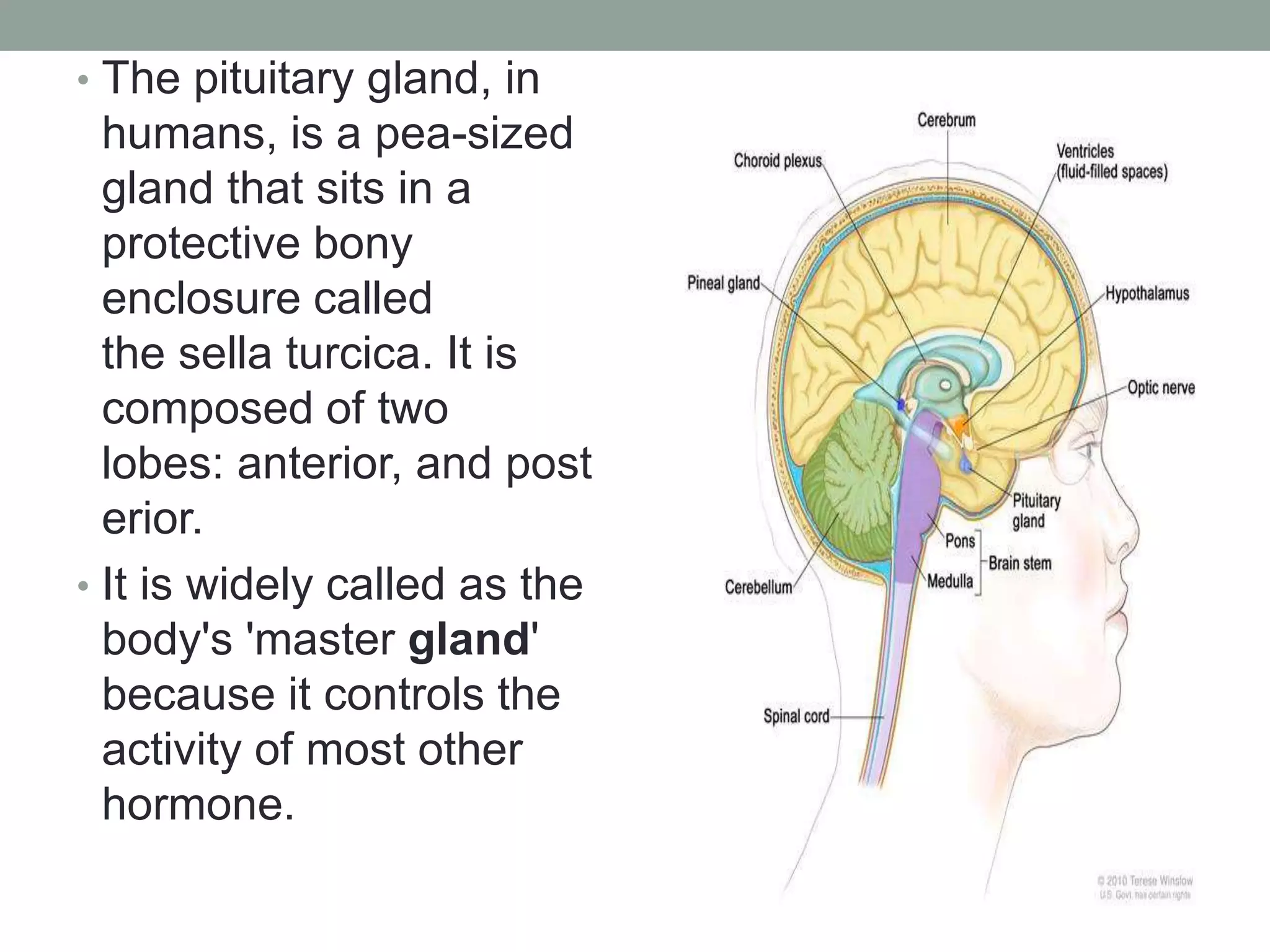
• The pituitary gland, in
humans, is a pea-sized
gland that sits in a
protective bony
enclosure called
the sella turcica. It is
composed of two
lobes: anterior, and post
erior.
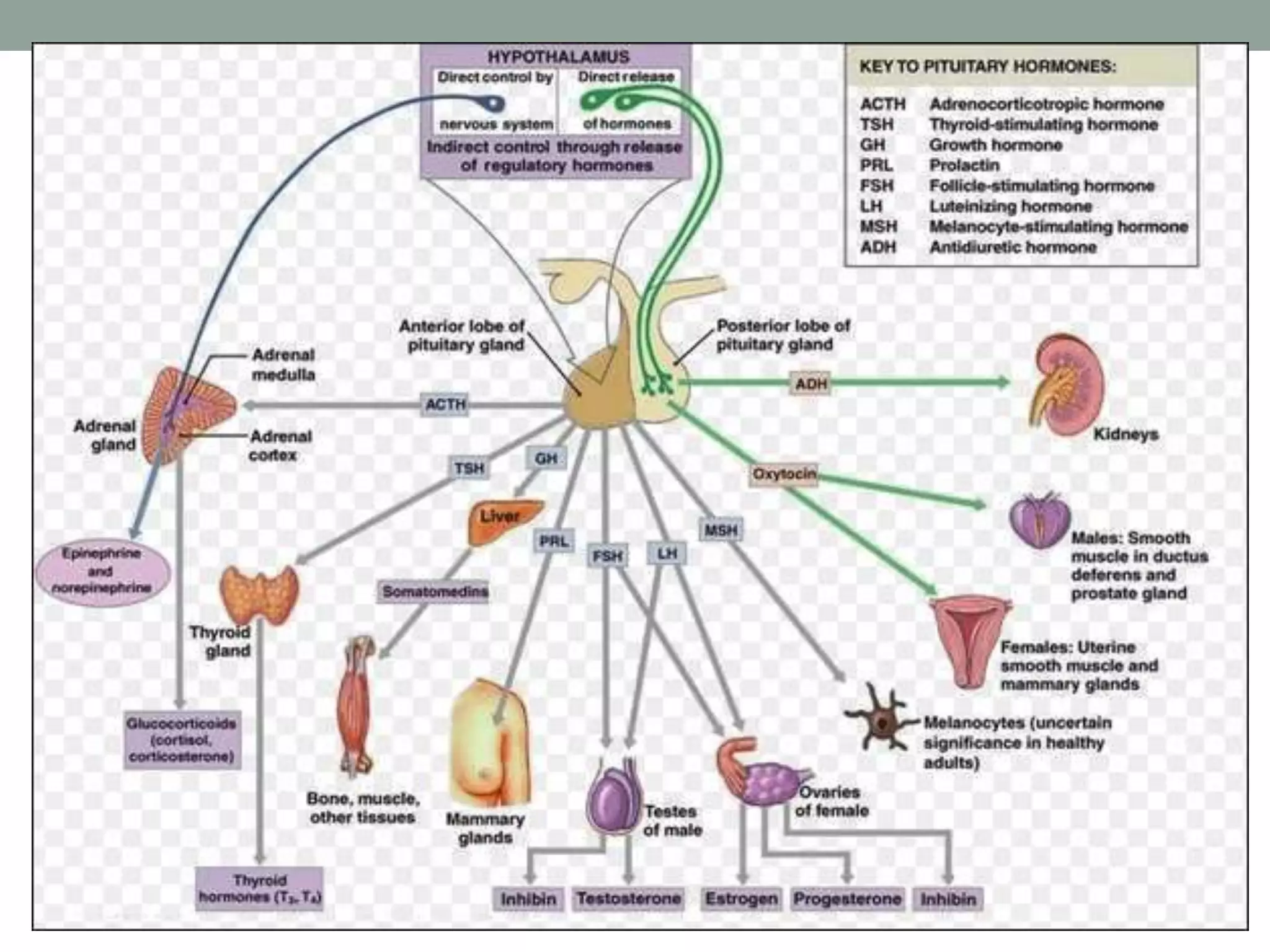
• It is widely called as the
body's 'master gland'
because it controls the
activity of most other
hormone.
Acromegaly
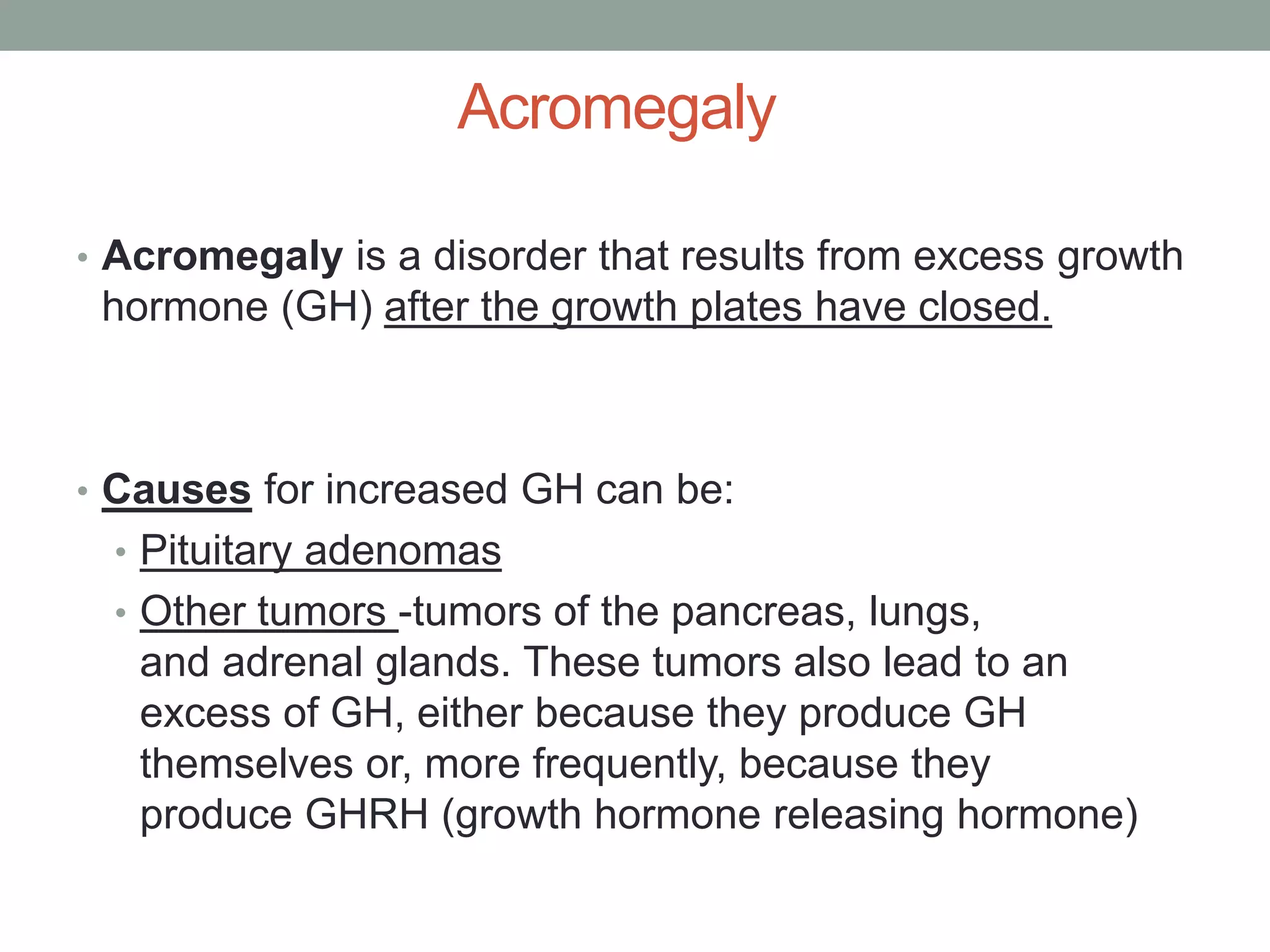
• Acromegaly is a disorder that results from excess growth
hormone (GH) after the growth plates have closed.
• Causes for increased GH can be:
• Pituitary adenomas
• Other tumors -tumors of the pancreas, lungs,
and adrenal glands. These tumors also lead to an
excess of GH, either because they produce GH
themselves or, more frequently, because they
produce GHRH (growth hormone releasing hormone)
Complications
• Problems with bones and joints, including osteoarthritis, nerve
compression syndrome due to bony overgrowth, and carpal
tunnel syndrome
• Hypertension
• Diabetes mellitus
• Cardiomyopathy, potentially leading to heart failure
• Colorectal cancer
• Sleep Apnea
• Thyroid nodules and thyroid cancer
• Hypogonadism
• Compression of the optic chiasm by the growth of pituitary
adenoma leading to visual problems
(Insulin-like growth factor 1 (IGF-1), also called somatomedin C, is
a hormone similar in molecular structure to insulin which plays an
important role in childhood growth, and has anabolic effects in adults)
Treatment of Acromegaly
Medical
• Somatostatin analogues-stop GH production-Eg: Octreotide
• Dopamine agonists –eg: bromocriptine
• Growth hormone receptor antagonists
Surgery
• Endonasal transphenoidal surgery involves the surgeon
reaching the pituitary through an incision in the nasal
cavity wall.
• Transphenoidal surgery - incision is made into the gum
beneath the upper lip
Radiation therapy
• usually reserved for people who have tumor remaining after
surgery
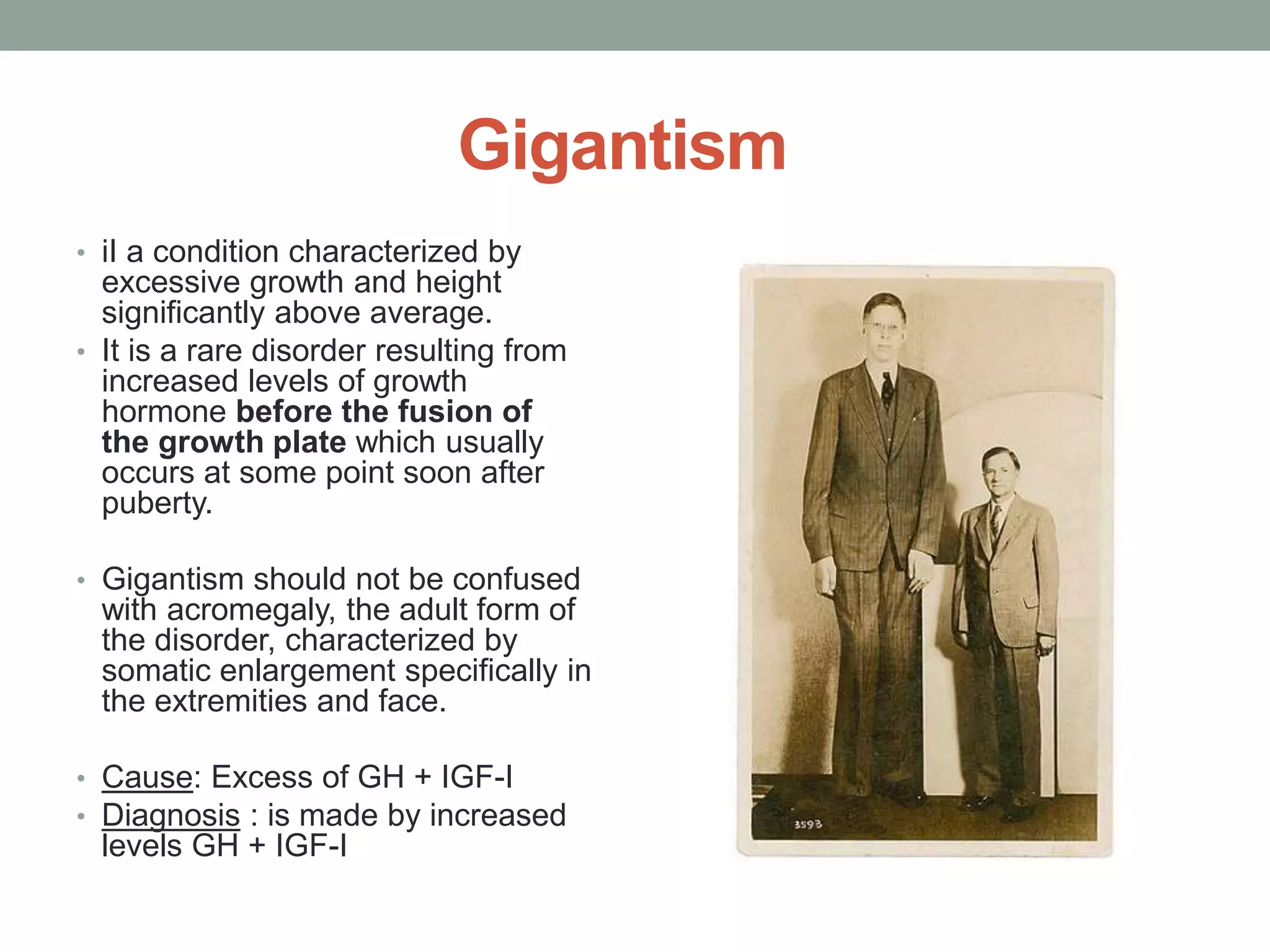
Gigantism
• iI a condition characterized by
excessive growth and height
significantly above average.
• It is a rare disorder resulting from
increased levels of growth
hormone before the fusion of
the growth plate which usually
occurs at some point soon after
puberty.
• Gigantism should not be confused
with acromegaly, the adult form of
the disorder, characterized by
somatic enlargement specifically in
the extremities and face.
• Cause: Excess of GH + IGF-I
• Diagnosis : is made by increased
levels GH + IGF-I
Dwarfism/short stature
• Defined as an adult height of
less than 147 cms (4 ft 10 in),
regardless of sex, although
some individuals with
dwarfism are slightly taller.
• Intelligence is usually normal,
and most have a nearly normal
life expectancy.
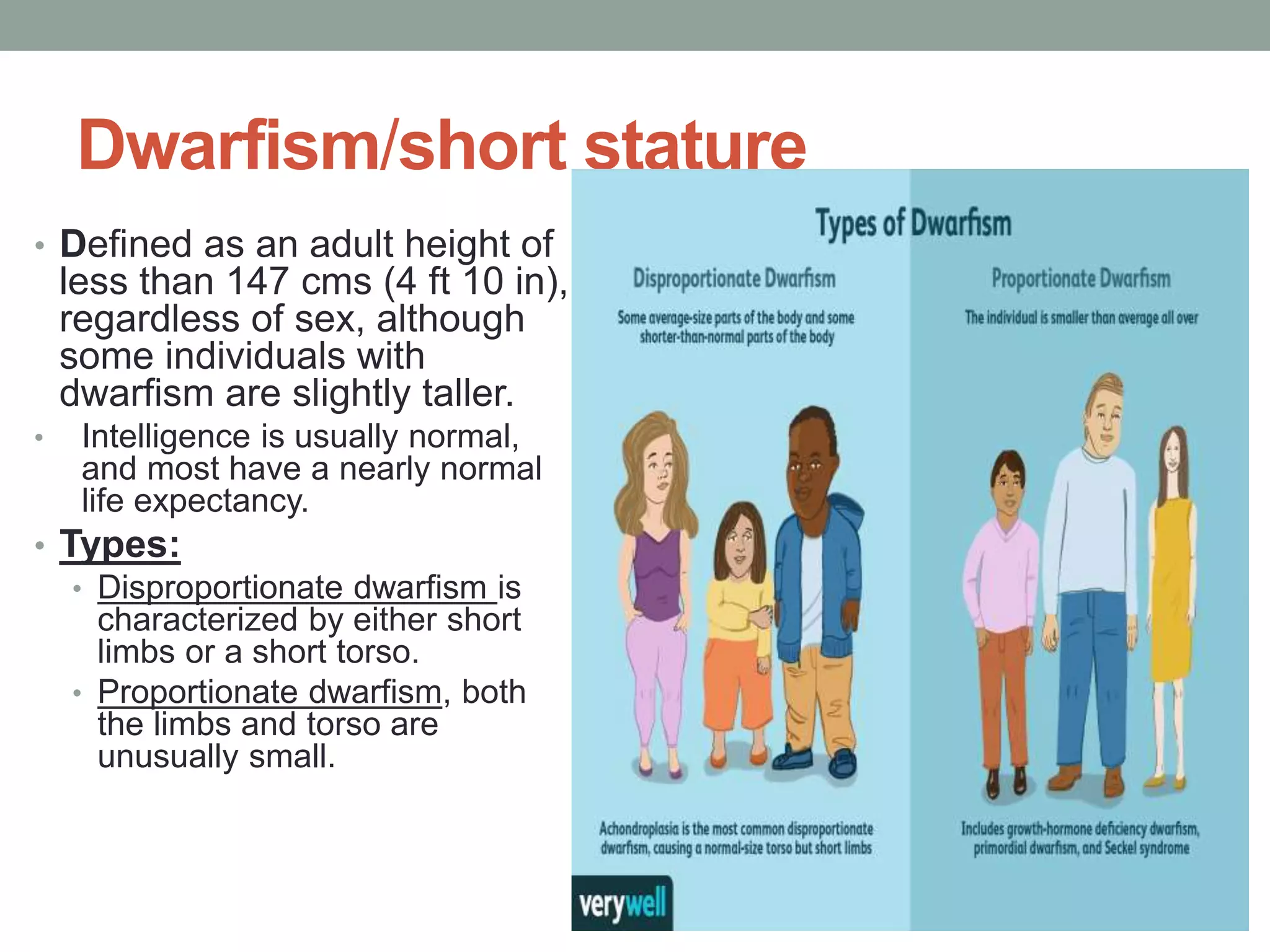
• Types:
• Disproportionate dwarfism is
characterized by either short
limbs or a short torso.
• Proportionate dwarfism, both
the limbs and torso are
unusually small.
Clinical Manifestations of Dwarfism
• A defining characteristic of dwarfism is
an adult height less than the 2.3rd
percentile of the CDC standard growth
charts.
• Disproportionate dwarfism is
characterized by shortened limbs or a
shortened torso. In Achondroplasia one
has an average-sized trunk with short
limbs and a larger forehead.
• Proportionate dwarfism is marked by a
short torso with short limbs
• Spinal stenosis, ear infection, and
hydrocephalus are common.
• In case of spinal dysostosis, one has a
small trunk, with average-sized limbs.
• Delayed or impaired Sexual
development
• Early degenerative joint disease,
exaggerated lordosis or scoliosis, and
constriction of spinal cord or nerve roots
• Bowed knees and unusually short
fingers can lead to back problems and
difficulty in walking and handling objects.
• Reduced thoracic size can restrict lung
growth and reduce pulmonary function.
• Some forms of dwarfism are associated
with disordered function of other organs,
such as the brain or liver too
• The psycho-social limitations of society
may be more disabling than the physical
symptoms:
• Social prejudice
• reduced employment opportunities
• interfere with activities of daily living,
like driving or using countertops built
for taller people.
• Children with dwarfism are
particularly vulnerable to teasing and
ridicule from classmates. Because
dwarfism is relatively uncommon,
children may feel isolated from their
peers.
Dwarfism/short stature
 CAUSES
• Achondroplasia
• GH deficiency
• Other causes -spondyloepiphyseal
dysplasia congenita, diastrophic
dysplasia, pseudoachondroplasia, h
ypochondroplasia, Noonan
syndrome, primordial
dwarfism, Turner
syndrome, osteogenesis
imperfecta (OI), and hypothyroidis
DIAGNOSIS
• Physical Examination
• Genetic Testing
• GH levels
• Diagnostic Imaging
 MANAGEMENT
Genetic mutations cannot be altered yet, so
therapeutic interventions are typically aimed
at preventing or reducing pain or physical
disability,
 Forms of dwarfism associated with the
endocrine system may be treated
using hormonal therapy.
 Pain and disability may be ameliorated by
physical therapy, braces or other orthotic
devices, or by surgical procedures.
 Dress enhancements, such as shoe lifts or
hairstyle for increasing perceived adult
height .
 Distraction Osteogenesis is a process used
in orthopediac surgery, podiatric surgery,
and oral and maxillofacial surgery to repair
skeletal deformities and in reconstructive
surgery)
Syndrome of inappropriate antidiuretic
hormone secretion
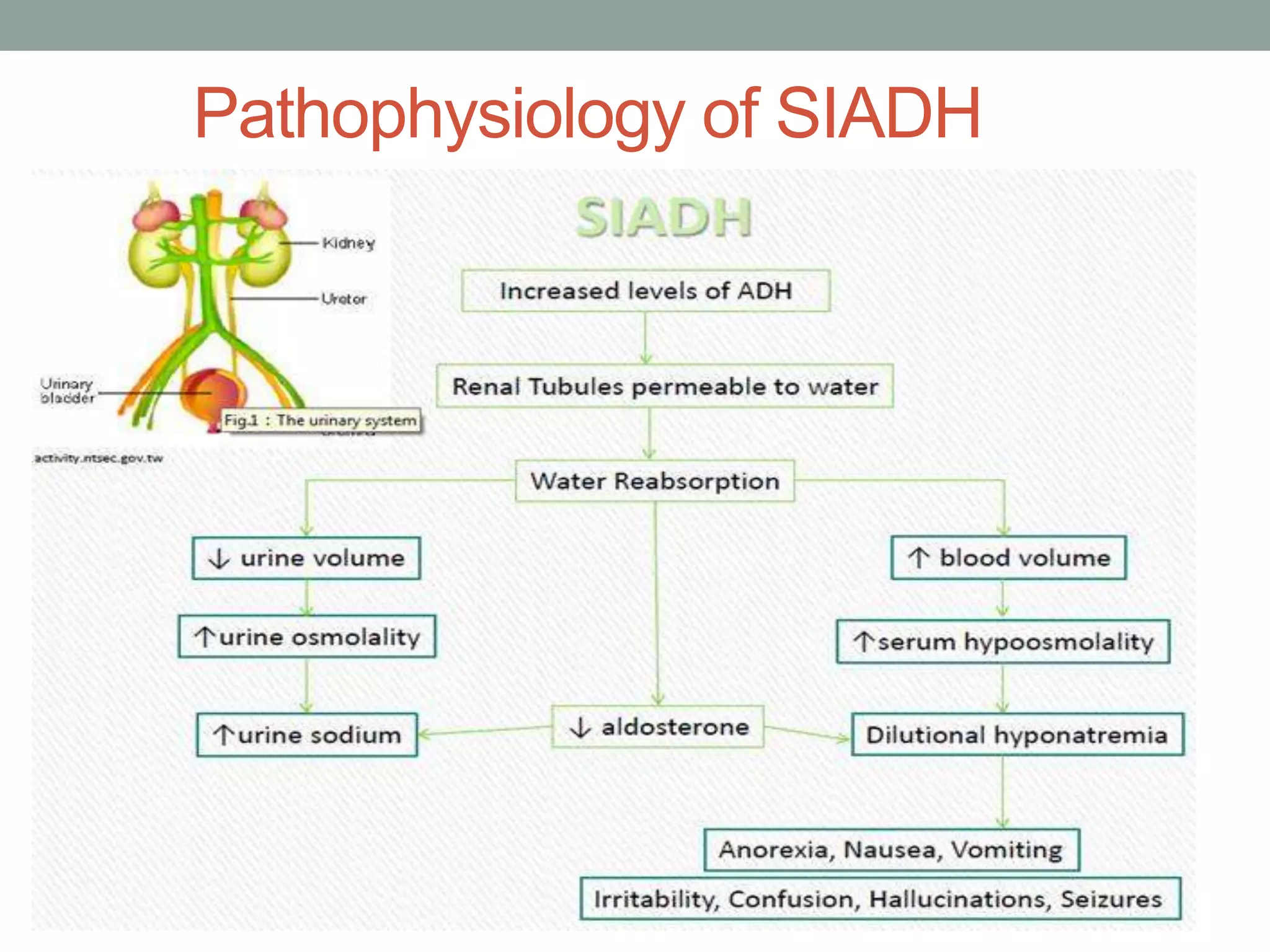
SIADH is characterized by excessive
unsuppressible release of antidiuretic
hormone (ADH) either from the posterior
pituitary gland, or an abnormal non-
pituitary source.
 CAUSES
Central nervous system-related causes
• Infections like
Meningitis, encephalitis, brain
abscess, rocky mountain spotted
fever, AIDS,Perinatal asphyxia, Mass
bleed due to
trauma/hemorrhage/hematoma/throm
bosis,Hydrocephalus, GB syndrome,
Acute porphyria, Multiple system
atrophy, Multiple sclerosis
 Cancers
• Carcinomas of lung, stomach,
duodenum, pancreas, bladder,
urethral, prostate and endometrium;
Lymphoma; Sarcomas (Ewing's
sarcoma)
• Pulmonary causes -Infections and
abscess, Asthma ,Cystic fibrosis
 Drugs
• Chlorpropamide,Phenothiazine,Cyclo
phosphamide, Carbamazepine,
Valproic acid etc
 Transient causes
• Endurance exercise
• General anesthesia
 Hereditary causes
Pathophysiology of SIADH
Diagnosis of SIADH
A confirmed diagnosis has seven elements:
1) a decreased effective serum osmolality
2) urinary sodium concentration high in spite of adequate
dietary salt intake;
3) no recent diuretic usage;
4) no signs of ECF volume depletion or excess;
5) no signs of decreased arterial blood volume - cirrhosis,
nephrosis, or congestive heart failure;
6) normal adrenal and thyroid function; and
7) no evidence of hyperglycemia, hypertriglyceridemia, or
hyperproteinia
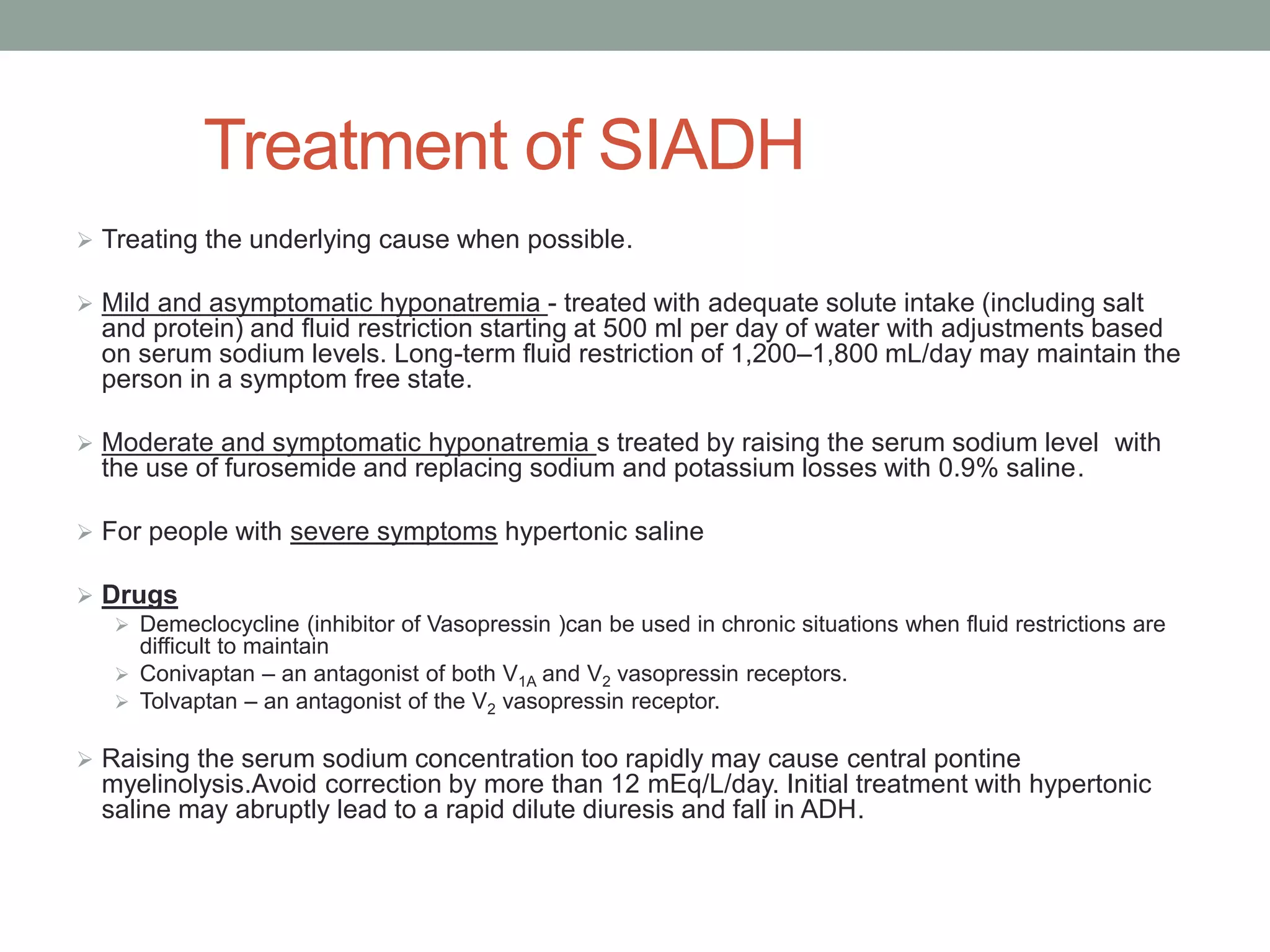
Treatment of SIADH
 Treating the underlying cause when possible.
 Mild and asymptomatic hyponatremia - treated with adequate solute intake (including salt
and protein) and fluid restriction starting at 500 ml per day of water with adjustments based
on serum sodium levels. Long-term fluid restriction of 1,200–1,800 mL/day may maintain the
person in a symptom free state.
 Moderate and symptomatic hyponatremia s treated by raising the serum sodium level with
the use of furosemide and replacing sodium and potassium losses with 0.9% saline.
 For people with severe symptoms hypertonic saline
 Drugs
 Demeclocycline (inhibitor of Vasopressin )can be used in chronic situations when fluid restrictions are
difficult to maintain
 Conivaptan – an antagonist of both V1A and V2 vasopressin receptors.
 Tolvaptan – an antagonist of the V2 vasopressin receptor.
 Raising the serum sodium concentration too rapidly may cause central pontine
myelinolysis.Avoid correction by more than 12 mEq/L/day. Initial treatment with hypertonic
saline may abruptly lead to a rapid dilute diuresis and fall in ADH.
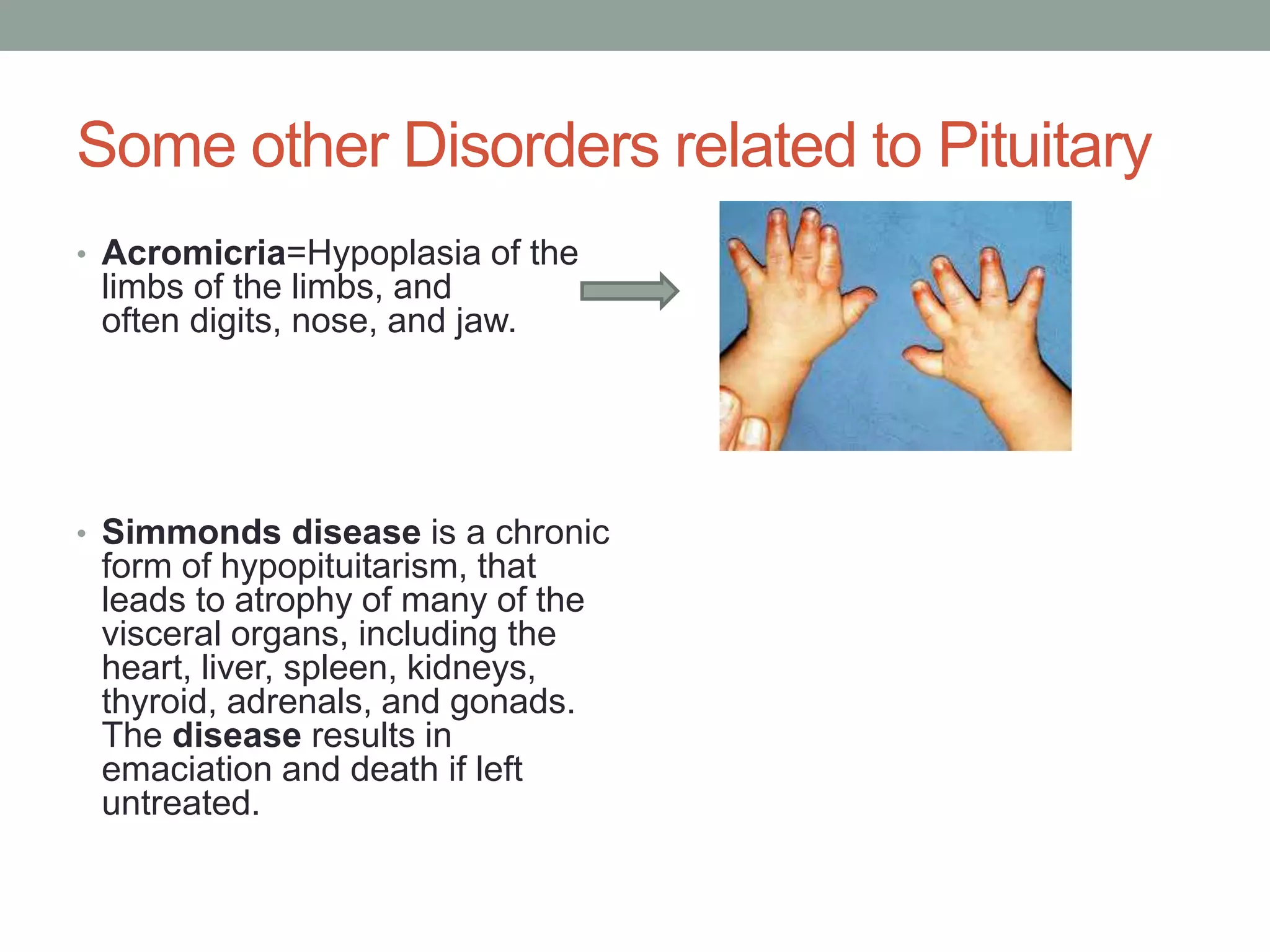
Some other Disorders related to Pituitary
• Acromicria=Hypoplasia of the
limbs of the limbs, and
often digits, nose, and jaw.
• Simmonds disease is a chronic
form of hypopituitarism, that
leads to atrophy of many of the
visceral organs, including the
heart, liver, spleen, kidneys,
thyroid, adrenals, and gonads.
The disease results in
emaciation and death if left
untreated.
Thank You

Pituitary gland disorders

  • 1.
  • 2.
    • The pituitarygland, in humans, is a pea-sized gland that sits in a protective bony enclosure called the sella turcica. It is composed of two lobes: anterior, and post erior. • It is widely called as the body's 'master gland' because it controls the activity of most other hormone.
  • 6.
    Acromegaly • Acromegaly isa disorder that results from excess growth hormone (GH) after the growth plates have closed. • Causes for increased GH can be: • Pituitary adenomas • Other tumors -tumors of the pancreas, lungs, and adrenal glands. These tumors also lead to an excess of GH, either because they produce GH themselves or, more frequently, because they produce GHRH (growth hormone releasing hormone)
  • 8.
    Complications • Problems withbones and joints, including osteoarthritis, nerve compression syndrome due to bony overgrowth, and carpal tunnel syndrome • Hypertension • Diabetes mellitus • Cardiomyopathy, potentially leading to heart failure • Colorectal cancer • Sleep Apnea • Thyroid nodules and thyroid cancer • Hypogonadism • Compression of the optic chiasm by the growth of pituitary adenoma leading to visual problems
  • 9.
    (Insulin-like growth factor1 (IGF-1), also called somatomedin C, is a hormone similar in molecular structure to insulin which plays an important role in childhood growth, and has anabolic effects in adults)
  • 10.
    Treatment of Acromegaly Medical •Somatostatin analogues-stop GH production-Eg: Octreotide • Dopamine agonists –eg: bromocriptine • Growth hormone receptor antagonists Surgery • Endonasal transphenoidal surgery involves the surgeon reaching the pituitary through an incision in the nasal cavity wall. • Transphenoidal surgery - incision is made into the gum beneath the upper lip Radiation therapy • usually reserved for people who have tumor remaining after surgery
  • 11.
    Gigantism • iI acondition characterized by excessive growth and height significantly above average. • It is a rare disorder resulting from increased levels of growth hormone before the fusion of the growth plate which usually occurs at some point soon after puberty. • Gigantism should not be confused with acromegaly, the adult form of the disorder, characterized by somatic enlargement specifically in the extremities and face. • Cause: Excess of GH + IGF-I • Diagnosis : is made by increased levels GH + IGF-I
  • 12.
    Dwarfism/short stature • Definedas an adult height of less than 147 cms (4 ft 10 in), regardless of sex, although some individuals with dwarfism are slightly taller. • Intelligence is usually normal, and most have a nearly normal life expectancy. • Types: • Disproportionate dwarfism is characterized by either short limbs or a short torso. • Proportionate dwarfism, both the limbs and torso are unusually small.
  • 13.
    Clinical Manifestations ofDwarfism • A defining characteristic of dwarfism is an adult height less than the 2.3rd percentile of the CDC standard growth charts. • Disproportionate dwarfism is characterized by shortened limbs or a shortened torso. In Achondroplasia one has an average-sized trunk with short limbs and a larger forehead. • Proportionate dwarfism is marked by a short torso with short limbs • Spinal stenosis, ear infection, and hydrocephalus are common. • In case of spinal dysostosis, one has a small trunk, with average-sized limbs. • Delayed or impaired Sexual development • Early degenerative joint disease, exaggerated lordosis or scoliosis, and constriction of spinal cord or nerve roots • Bowed knees and unusually short fingers can lead to back problems and difficulty in walking and handling objects. • Reduced thoracic size can restrict lung growth and reduce pulmonary function. • Some forms of dwarfism are associated with disordered function of other organs, such as the brain or liver too • The psycho-social limitations of society may be more disabling than the physical symptoms: • Social prejudice • reduced employment opportunities • interfere with activities of daily living, like driving or using countertops built for taller people. • Children with dwarfism are particularly vulnerable to teasing and ridicule from classmates. Because dwarfism is relatively uncommon, children may feel isolated from their peers.
  • 14.
    Dwarfism/short stature  CAUSES •Achondroplasia • GH deficiency • Other causes -spondyloepiphyseal dysplasia congenita, diastrophic dysplasia, pseudoachondroplasia, h ypochondroplasia, Noonan syndrome, primordial dwarfism, Turner syndrome, osteogenesis imperfecta (OI), and hypothyroidis DIAGNOSIS • Physical Examination • Genetic Testing • GH levels • Diagnostic Imaging  MANAGEMENT Genetic mutations cannot be altered yet, so therapeutic interventions are typically aimed at preventing or reducing pain or physical disability,  Forms of dwarfism associated with the endocrine system may be treated using hormonal therapy.  Pain and disability may be ameliorated by physical therapy, braces or other orthotic devices, or by surgical procedures.  Dress enhancements, such as shoe lifts or hairstyle for increasing perceived adult height .  Distraction Osteogenesis is a process used in orthopediac surgery, podiatric surgery, and oral and maxillofacial surgery to repair skeletal deformities and in reconstructive surgery)
  • 15.
    Syndrome of inappropriateantidiuretic hormone secretion SIADH is characterized by excessive unsuppressible release of antidiuretic hormone (ADH) either from the posterior pituitary gland, or an abnormal non- pituitary source.  CAUSES Central nervous system-related causes • Infections like Meningitis, encephalitis, brain abscess, rocky mountain spotted fever, AIDS,Perinatal asphyxia, Mass bleed due to trauma/hemorrhage/hematoma/throm bosis,Hydrocephalus, GB syndrome, Acute porphyria, Multiple system atrophy, Multiple sclerosis  Cancers • Carcinomas of lung, stomach, duodenum, pancreas, bladder, urethral, prostate and endometrium; Lymphoma; Sarcomas (Ewing's sarcoma) • Pulmonary causes -Infections and abscess, Asthma ,Cystic fibrosis  Drugs • Chlorpropamide,Phenothiazine,Cyclo phosphamide, Carbamazepine, Valproic acid etc  Transient causes • Endurance exercise • General anesthesia  Hereditary causes
  • 16.
  • 17.
    Diagnosis of SIADH Aconfirmed diagnosis has seven elements: 1) a decreased effective serum osmolality 2) urinary sodium concentration high in spite of adequate dietary salt intake; 3) no recent diuretic usage; 4) no signs of ECF volume depletion or excess; 5) no signs of decreased arterial blood volume - cirrhosis, nephrosis, or congestive heart failure; 6) normal adrenal and thyroid function; and 7) no evidence of hyperglycemia, hypertriglyceridemia, or hyperproteinia
  • 18.
    Treatment of SIADH Treating the underlying cause when possible.  Mild and asymptomatic hyponatremia - treated with adequate solute intake (including salt and protein) and fluid restriction starting at 500 ml per day of water with adjustments based on serum sodium levels. Long-term fluid restriction of 1,200–1,800 mL/day may maintain the person in a symptom free state.  Moderate and symptomatic hyponatremia s treated by raising the serum sodium level with the use of furosemide and replacing sodium and potassium losses with 0.9% saline.  For people with severe symptoms hypertonic saline  Drugs  Demeclocycline (inhibitor of Vasopressin )can be used in chronic situations when fluid restrictions are difficult to maintain  Conivaptan – an antagonist of both V1A and V2 vasopressin receptors.  Tolvaptan – an antagonist of the V2 vasopressin receptor.  Raising the serum sodium concentration too rapidly may cause central pontine myelinolysis.Avoid correction by more than 12 mEq/L/day. Initial treatment with hypertonic saline may abruptly lead to a rapid dilute diuresis and fall in ADH.
  • 19.
    Some other Disordersrelated to Pituitary • Acromicria=Hypoplasia of the limbs of the limbs, and often digits, nose, and jaw. • Simmonds disease is a chronic form of hypopituitarism, that leads to atrophy of many of the visceral organs, including the heart, liver, spleen, kidneys, thyroid, adrenals, and gonads. The disease results in emaciation and death if left untreated.
  • 20.