GENERAL INTRODUCTION OF
NEUOTRANSMITTERS,
DIFFERENCE FROM
NEUROMODULATORS
• Neurotransmitters are chemicals that allow the movement of
information from one neuron across the gap between it and the
adjacent neuron.
• The release of neurotransmitters from one area of a neuron and the
recognition of the chemicals by a receptor site on the adjacent
neuron causes an electrical reaction that facilitates the release of the
neurotransmitter and its movement across the gap.
In 1921, an Austrian scientist named Otto Loewi discovered the
first neurotransmitter. He named the compound "vagusstoff," as
he was experimenting with the vagus nerve of frog hearts. Now,
this compound is known as acetylcholine
• Excitatory NTs are those which propagate nerve impulses in the
receiving neuron.
• Those which inhibit nerve impulses are called inhibitory
neurotransmitters
CRITERIA FOR NEUROTRANSMITTER
• The molecule is synthesised in the neuron
• The molecule is present in presynaptic neuron and is released on
depolarisation in physiologically significant amount
• When administered exogenically as a drug , the exogenous drug
mimics the effects of endogenious neurotransmitter
• A mechanism in the neurons or the synaptic cleft act to remove or
deactivate the neurotransmitter
PROPERTIES OF NEUROTRANSMITTERS
1) Synthesized in the presynaptic neuron
2) Localized to vesicles in the presynaptic neuron
3) Released from the presynaptic neuron under physiological condition
4) Rapidly removed from the synaptic cleft by uptake or degradation
5) Presence of receptor on the post-synaptic neuron.
6) Binding to the receptor elicits a biological response
CLASSIFICATION OF
NEUROTRANSMITTERS
• Amino acids:
1.Amino acids:
Excitatory: Aspartate, Glutamate (Glutamic Acid, Glu)
Inhibitory : γ-Aminobutyric acid (GABA), Glycine (Gly)
2.Acetylcholines: Acetylcholine
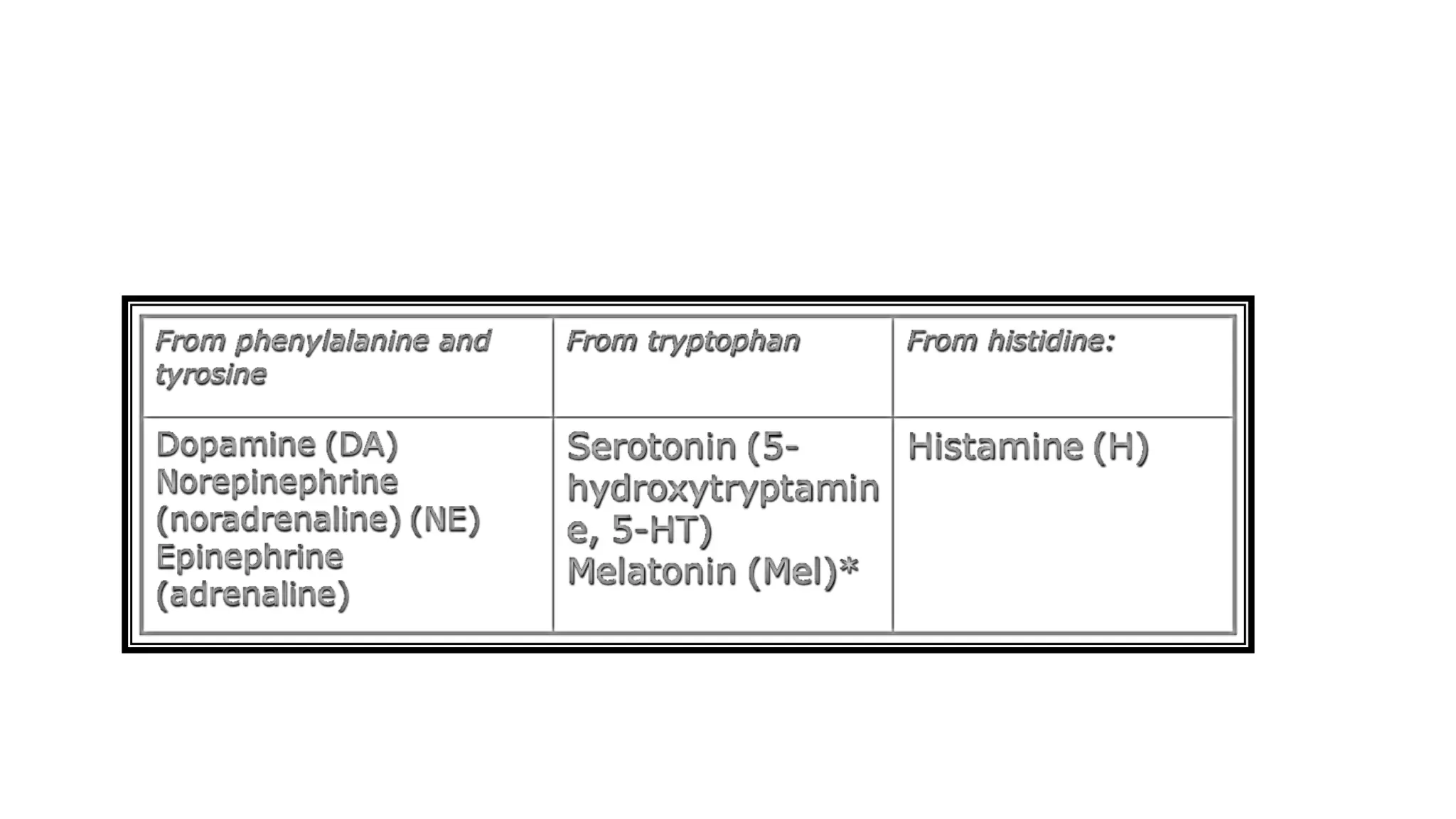
3.Monoamines:
4.Polypeptides (neuropeptides) :
• Gastrin releasing peptide (GRP)
• Gastrins: Gastrin ,Cholecystokinin (CCK)
• Neurohypophyseals : Vasopressin, Oxytocin, Neurophysin-I, Neurophysin-II
• Neuropeptide Y : Neuropeptide Y (NY), Pancreatic polypeptide (PP), Peptide YY (PYY).
• Opioids : Beta-lipotropin, Dynorphin ,Endorphin ,Enkephaline
• Corticotropin (adrenocorticotropic hormone, ACTH)
• Secretins : Secretin Motilin Glucagon Vasoactive intestinal peptide (VIP)
• Growth hormone-releasing factor (GRF)
• Somatostatins
• Tachykinins : Neurokinin A, Neurokinin B, Neuropeptide A, Neuropeptide gamma,
Substance P
5.Other neurotransmitters
• Gases: Nitric oxide (NO), Carbon monoxide (CO) ,H2S
• Lipids : Anandamide
• Purines : Adenosine triphosphate (ATP), Adenosine
• Pyrimidine: UTP.
MECHANISM OF ACTION
• Release of Neurotransmitter: Transmission of nerve impulse causes the
rupture of vesicles containing NTs.
• Interaction with Receptor: The NT crosses the synapse and interacts with
receptors located on the membrane of the next neuron. This interaction
may produce membrane permeability changes which result in an excitatory
response
• Degradation of Neurotransmitter: necessary to inactivate or terminate the
neurotransmitter's action. Example is hydrolysis of acetylcholine after its
action.
• Diffusion from the Receptor: The NT may simply diffuse from the receptor
site after a short period of time
• Resynthesize or restore or reuptake
PROPERTIES OF RECEPTORS
• For each ligand there are many subtypes of receptors. For e.g. α1 and α2
subtypes of α receptor. Similarly β1, β2 & β3 receptors. These subtypes allow
more specific action for the ligands.
• Receptors are present both on the presynaptic and postsynaptic elements.
Presynaptic receptors or autoreceptors provide a feed back control by inhibiting
further secretion. E.g. α2 receptors.
• Receptors tend to group in large families as far as their structure and function are
concerned. Many are serpentine receptors that act via G protein and protein
kinases. Others are ion channels.
• Receptors are concentrated in postsynaptic structures close to the endings of
neurons that secrete the NT specific for them.
• Prolonged exposure to their ligands causes most receptors to become
unresponsive, i.e. to undergo desensitization. It may be homologous or
heterologous desensitization.
NEUROMODULATORS
• A neuromodulator is a chemical messenger released from a neuron in
the central nervous system, or in the periphery, that affects a diverse
population of neurons that has the appropriate receptor.
• This large range of influence contrasts with neurotransmitters, which
has only one presynaptic neuron directly influencing a single
postsynaptic neuron connected to it.
• the function of neuromodulatorsis to alter the strength of signal
transmissions between neurons
• Nueromodulators can alter neuronal signal transmission by
controlling the amount of neurotransmitters synthesized and released
by the neurons.
• neuromodulators have a very long range of action compared to
regular neurotransmitters.
• The release of neuromodulators may influence the neurons near the
site or release, or may affect neurons quite far from the site of release
• neuromodulators are longer-lasting than regular neurotransmitters
this is due to the fact that neuromodulators aren’t reabsorbed by
their presynaptic neuron.
• neuromodulators bind to metabotropic receptors. Metabotropic
receptors have a slow-acting effect, sensitizing or desensitizing
neurons by changing the strength of signal transmission between
neurons
• The main things distinguish neuromodulators as a subclass of
neurotransmitter :
• 1. They are released “diffusely” via “volume transmission”, that is, the
neurotransmitter is generally released into the neural tissue and not
at a specific synapse
• 2. The neurotransmitters use fast-acting “ionic” neuroreceptors that
transmit positive (+) and negative (-) electrical signals into the target
neuron. Neuromodulators, however, use so-called “metabotropic” or
“G-protein” neuroreceptors of three types: Gs, Gi, and Gq. These are
slow-acting receptors that tune and modulate the functioning of the
neuron over longer periods.
Neurohormone
• A neurohormone is a chemical messenger that is released by
neuroendocrine cells. Neuroendocrine cells are cells that receive an
input from neurons like neurotransmitters, and in response output or
release messenger molecules (a.k.a. hormones) into the blood
stream.
• By releasing the hormones into the blood stream, neurohormones
can exert its effect on very distant peripheral targets. Neurohormones
differ from neuromodulator in the extent of their actions.
Some important neurotransmitters
DOPAMINE
• Dopamine is a phenethylamine naturally produced by the human body.
• First synthesised artificially in 1954
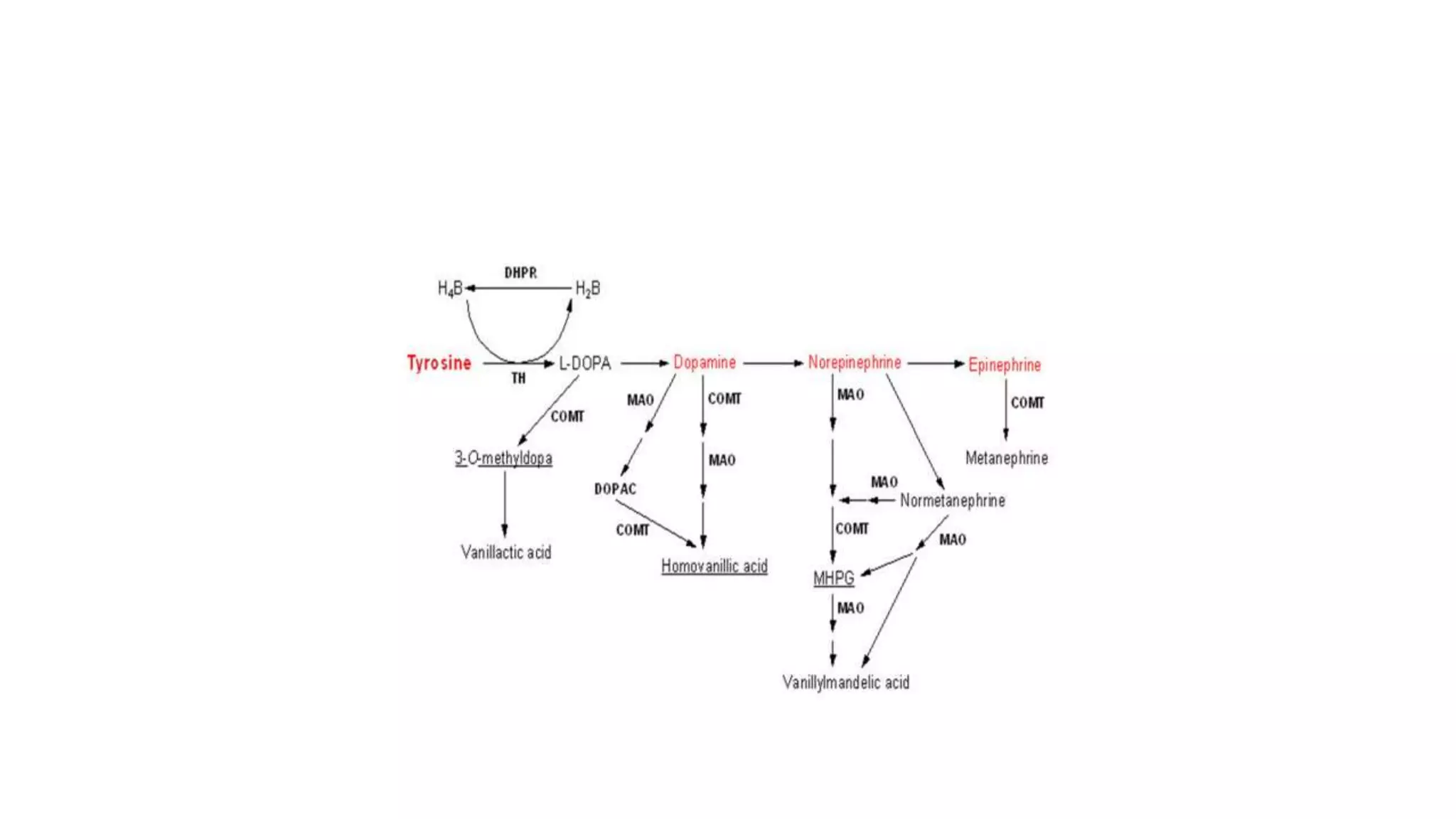
• Biosynthesized in the body from tyrosine.
• Dopamine is also a neurohormone released by the hypothalamus and
inhibit the release of prolactin.
• Inactivation mechanism:
1) uptake via a specific transporter-- plays major role in inactivation
2) enzymatic breakdown; and
3) diffusion.
Major dopamine pathways
• Mesocortical pathway
• Mesolimbic pathway
• Tuberohypophyseal pathway
• Nigrostriatal pathway
Dopamine receptors
• D1 like – D1,D5 (excitatory)
• D2 LIKE- D2,D3,D4 (inhibitory)
GABA
• Gamma-aminobutyric acid (GABA) is the chief inhibitory
neurotransmitter in the CNS and also in the retina.
• The formation of GABA occurs by the decarboxylation of glutamate
catalyzed by glutamate decarboxylase (GAD).
• GABA is catabolised by GABA transaminase (GABA-T) to yield succinic
semialdehyde
Action and receptors :
• GABA receptor are of three general classes
• Ionotropic Receptors: GABA A and GABA C which are ion channels
themselves. The binding of GABA to GABA-A receptors increases the
Cl- conductance of presynaptic neurons.
• Metabotropic Receptors: GABA B is a G protein-coupled receptors
that open ion channels via intermediaries (G proteins). Act by
increasing conductance of an associated K+ channel.
NOREPINEPHRINE
• Norepinephrine is a catecholamine. It is released from the medulla of
the adrenal glands as a hormone into the blood, but it is also a
neurotransmitter in the CNS and sympathetic nervous system where
it is released from noradrenergic neurons during synaptic
transmission.
• Major stress hormone related to fight-or-flight response, by directly
increasing heart rate, triggering the release of glucose from energy
stores, and increasing skeletal muscle readiness.
• Norepinephrine is released in response to stress from locus ceruleus.
This nucleus is the origin of most norepinephrine pathways and
project bilaterally along distinct pathways to many locations,
including the cerebral cortex, limbic system, and the spinal cord.
• At synapses, norepinephrine acts on both alpha and beta
adrenoreceptors.
SEROTONIN
• Serotonin is synthesized extensively in the human gastrointestinal
tract (about 90%), and the major storage place is platelets in the
blood stream.
• Synthesized directly from the essential aminoacid Tryptophan, which
comes from diet with the help of vitamin B6 and carbohydrate.
• The metabolic pathway consists of two enzymes – tryptophan
hydroxylase (TPH) and amino acid decarboxylase (DDC). The TPH
mediated reaction is the rate limiting step in the pathway.
Serotonin receptors
• 5HT1A - Antidepressant action,partial agonist, anxiolytic (decreases
AC)
• 5HT1B – role in locomotor activity, aggression(decreases AC)
• 5HT1D – target of sumatriptan(decrease AC)
• 5HT1E – unknown(decrease AC)
• 5HT1F - target of sumatriptan(decrease AC)
• 5HT2A – target of hallucinoglens, atypical antipsychotic(increased PI
turnover)
• 5HT2B – regulation of stomach contraction(increased PI)
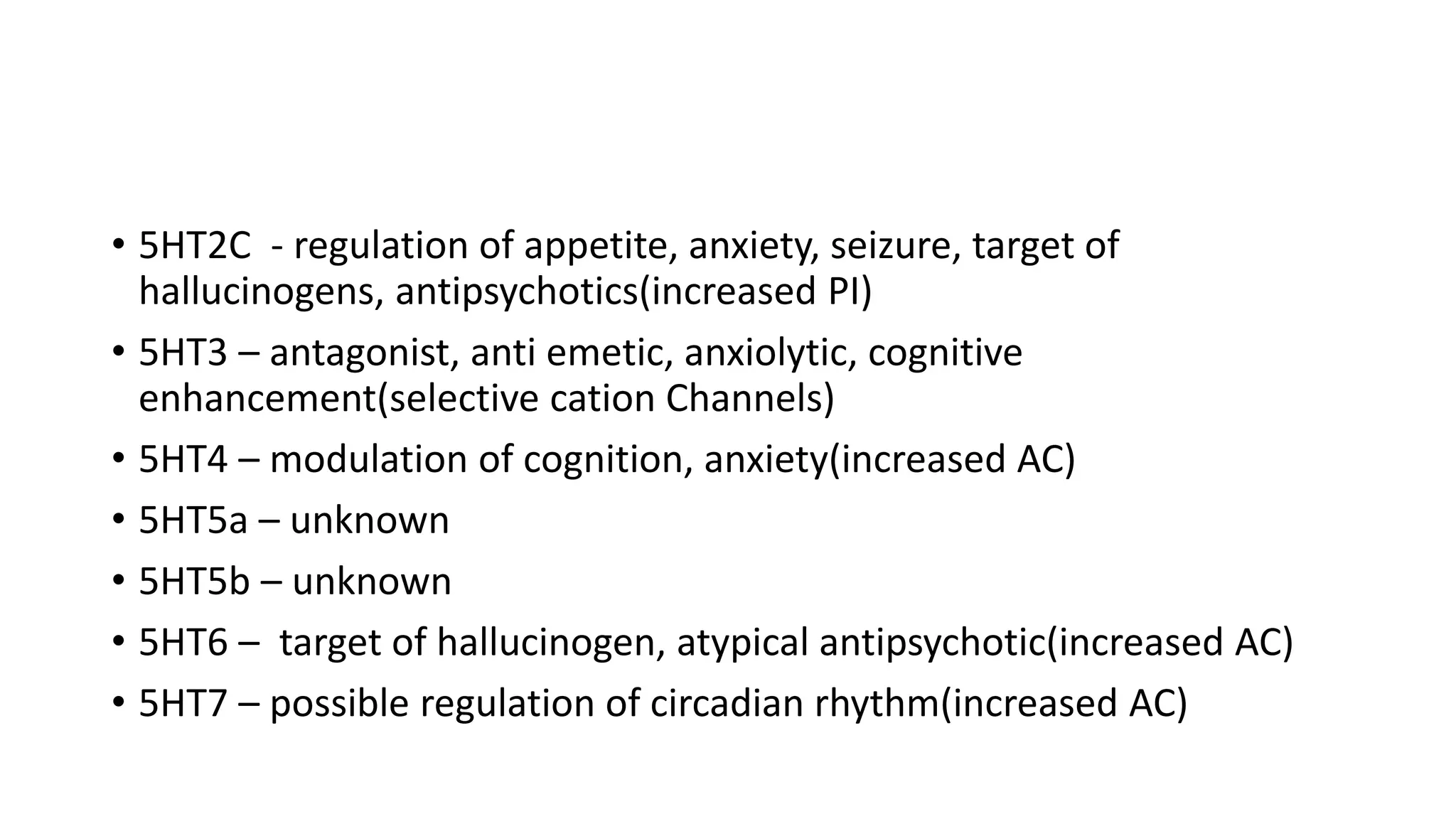
• 5HT2C - regulation of appetite, anxiety, seizure, target of
hallucinogens, antipsychotics(increased PI)
• 5HT3 – antagonist, anti emetic, anxiolytic, cognitive
enhancement(selective cation Channels)
• 5HT4 – modulation of cognition, anxiety(increased AC)
• 5HT5a – unknown
• 5HT5b – unknown
• 5HT6 – target of hallucinogen, atypical antipsychotic(increased AC)
• 5HT7 – possible regulation of circadian rhythm(increased AC)
ACETYL CHOLINE
• first neurotransmitter to be identified.
• Acetylcholine is the neurotransmitter in all autonomic ganglia.
• MECHANISM OF ACTION:
When an action potential reaches the terminal button of a presynaptic
neuron a voltage-gated calcium channel is opened.
The influx of calcium ions, Ca2+, stimulates the exocytosis of presynaptic
vesicles containing ACh, which is thereby released into the synaptic cleft.
Removed rapidly by the enzyme, acetylcholinesterase, found at nerve
endings.
ACh receptors are ligand-gated cation channels composed of four different
polypeptide subunits.
• Two main classes of ACh receptors – muscarinic and nicotinic.
• The activation of ACh receptors by the binding of Ach leads to an
influx of Na+ into the cell and an efflux of K+, resulting in a
depolarization of the postsynaptic neuron and the initiation of a new
action potential
HISTAMINE
• Histamine is a biogenic amine chemical involved in local immune
responses as well as regulating physiological function in the gut and
acting as a neurotransmitter
• Synthesised from histidine.
• Histamine released into the synapses is broken down by acetaldehyde
dehydrogenase. It is the deficiency of this enzyme that triggers an
allergic reaction.
• Histamine is broken down by histamine-N-methyltransferase and
diamine oxidase, and is also possibly taken up by a transporter
GLUTAMATE
• It is acidic amino acid NT, with a carboxylic acid component to its side
• Glutamate is a key molecule in cellular metabolism and help in amino
acid degradation by transamination.
• A very common α-ketoacid is α-ketoglutarate, an intermediate in the
citric acid cycle.
• Plays an important role in the body's disposal of excess or waste
nitrogen by deamination, an oxidative reaction catalysed by
glutamate dehydrogenase and produces ammonia
ASPARTATE
• Aspartic acid is the carboxylic acid analog of asparagine. It is non-
essential in mammals, and might serve as an excitatory
neurotransmitter.
• Also a metabolite in the urea cycle, and participates in
gluconeogenesis.
GLYCINE
• Glycine is a non-essential amino acid NT.
• An inhibitory neurotransmitter in the CNS, especially in the spinal
cord, brainstem and retina. When glycine receptors are activated, Cl-
enters the neuron via ionotropic receptors, causing an Inhibitory
postsynaptic potential (IPSP).
• Strychnine is an antagonist at ionotropic glycine receptors.
NEUROPEPTIDE Y
• Neuropeptide Y (NPY) is a 36 amino acid peptide neurotransmitter
found in the brain and autonomic nervous system. It augments the
vasoconstrictor effects of noradrenergic neurons.
• Associated with a number of physiologic processes in the brain,
including the regulation of energy balance, memory and learning, and
epilepsy.
• Role in regulation of feeding: NPY's form part of the "lipostat" system
along with leptin and corticotropin-releasing hormone (CRH). High
NPY levels in the CSF are associated with high food intake and
decreased physical activity.
ENDOGENOUS OPIODS
Opioid-peptides that are produced in the body:
• Endorphins
• Dynorphins
• Enkephalins
• Nociceptin
SUBSTANCE P
• Intense peripheral noxious stimulation may induce release of
substance P into the dorsal horn, causing central hyperexcitability and
an increased sensitivity to pain
NITRIC OXIDE(NO)
• Also known as EDRF(endothelial erived relaxing factor)
• Snthesised from arginine requiring NADPH, O2 and enzyme nitric
oxide synthetase(NOS).
• Produced post synapticaly.Retrograde neurontransmitter
• Does not require membrane receptors but the target is iron in the
active site of guanyl cyclase(GC). Once GC is activated and cGMP is
formed. The action of cGMP is terminated by
phosphodiesterase(PDE).

General introduction of neuotransmitters, difference from neuromodulators

  • 1.
  • 2.
    • Neurotransmitters arechemicals that allow the movement of information from one neuron across the gap between it and the adjacent neuron. • The release of neurotransmitters from one area of a neuron and the recognition of the chemicals by a receptor site on the adjacent neuron causes an electrical reaction that facilitates the release of the neurotransmitter and its movement across the gap.
  • 3.
    In 1921, anAustrian scientist named Otto Loewi discovered the first neurotransmitter. He named the compound "vagusstoff," as he was experimenting with the vagus nerve of frog hearts. Now, this compound is known as acetylcholine
  • 4.
    • Excitatory NTsare those which propagate nerve impulses in the receiving neuron. • Those which inhibit nerve impulses are called inhibitory neurotransmitters
  • 5.
    CRITERIA FOR NEUROTRANSMITTER •The molecule is synthesised in the neuron • The molecule is present in presynaptic neuron and is released on depolarisation in physiologically significant amount • When administered exogenically as a drug , the exogenous drug mimics the effects of endogenious neurotransmitter • A mechanism in the neurons or the synaptic cleft act to remove or deactivate the neurotransmitter
  • 6.
    PROPERTIES OF NEUROTRANSMITTERS 1)Synthesized in the presynaptic neuron 2) Localized to vesicles in the presynaptic neuron 3) Released from the presynaptic neuron under physiological condition 4) Rapidly removed from the synaptic cleft by uptake or degradation 5) Presence of receptor on the post-synaptic neuron. 6) Binding to the receptor elicits a biological response
  • 7.
    CLASSIFICATION OF NEUROTRANSMITTERS • Aminoacids: 1.Amino acids: Excitatory: Aspartate, Glutamate (Glutamic Acid, Glu) Inhibitory : γ-Aminobutyric acid (GABA), Glycine (Gly) 2.Acetylcholines: Acetylcholine 3.Monoamines:
  • 9.
    4.Polypeptides (neuropeptides) : •Gastrin releasing peptide (GRP) • Gastrins: Gastrin ,Cholecystokinin (CCK) • Neurohypophyseals : Vasopressin, Oxytocin, Neurophysin-I, Neurophysin-II • Neuropeptide Y : Neuropeptide Y (NY), Pancreatic polypeptide (PP), Peptide YY (PYY). • Opioids : Beta-lipotropin, Dynorphin ,Endorphin ,Enkephaline • Corticotropin (adrenocorticotropic hormone, ACTH) • Secretins : Secretin Motilin Glucagon Vasoactive intestinal peptide (VIP) • Growth hormone-releasing factor (GRF) • Somatostatins • Tachykinins : Neurokinin A, Neurokinin B, Neuropeptide A, Neuropeptide gamma, Substance P
  • 10.
    5.Other neurotransmitters • Gases:Nitric oxide (NO), Carbon monoxide (CO) ,H2S • Lipids : Anandamide • Purines : Adenosine triphosphate (ATP), Adenosine • Pyrimidine: UTP.
  • 11.
    MECHANISM OF ACTION •Release of Neurotransmitter: Transmission of nerve impulse causes the rupture of vesicles containing NTs. • Interaction with Receptor: The NT crosses the synapse and interacts with receptors located on the membrane of the next neuron. This interaction may produce membrane permeability changes which result in an excitatory response • Degradation of Neurotransmitter: necessary to inactivate or terminate the neurotransmitter's action. Example is hydrolysis of acetylcholine after its action. • Diffusion from the Receptor: The NT may simply diffuse from the receptor site after a short period of time • Resynthesize or restore or reuptake
  • 12.
    PROPERTIES OF RECEPTORS •For each ligand there are many subtypes of receptors. For e.g. α1 and α2 subtypes of α receptor. Similarly β1, β2 & β3 receptors. These subtypes allow more specific action for the ligands. • Receptors are present both on the presynaptic and postsynaptic elements. Presynaptic receptors or autoreceptors provide a feed back control by inhibiting further secretion. E.g. α2 receptors. • Receptors tend to group in large families as far as their structure and function are concerned. Many are serpentine receptors that act via G protein and protein kinases. Others are ion channels. • Receptors are concentrated in postsynaptic structures close to the endings of neurons that secrete the NT specific for them. • Prolonged exposure to their ligands causes most receptors to become unresponsive, i.e. to undergo desensitization. It may be homologous or heterologous desensitization.
  • 13.
    NEUROMODULATORS • A neuromodulatoris a chemical messenger released from a neuron in the central nervous system, or in the periphery, that affects a diverse population of neurons that has the appropriate receptor. • This large range of influence contrasts with neurotransmitters, which has only one presynaptic neuron directly influencing a single postsynaptic neuron connected to it.
  • 14.
    • the functionof neuromodulatorsis to alter the strength of signal transmissions between neurons • Nueromodulators can alter neuronal signal transmission by controlling the amount of neurotransmitters synthesized and released by the neurons.
  • 15.
    • neuromodulators havea very long range of action compared to regular neurotransmitters. • The release of neuromodulators may influence the neurons near the site or release, or may affect neurons quite far from the site of release • neuromodulators are longer-lasting than regular neurotransmitters this is due to the fact that neuromodulators aren’t reabsorbed by their presynaptic neuron. • neuromodulators bind to metabotropic receptors. Metabotropic receptors have a slow-acting effect, sensitizing or desensitizing neurons by changing the strength of signal transmission between neurons
  • 16.
    • The mainthings distinguish neuromodulators as a subclass of neurotransmitter : • 1. They are released “diffusely” via “volume transmission”, that is, the neurotransmitter is generally released into the neural tissue and not at a specific synapse • 2. The neurotransmitters use fast-acting “ionic” neuroreceptors that transmit positive (+) and negative (-) electrical signals into the target neuron. Neuromodulators, however, use so-called “metabotropic” or “G-protein” neuroreceptors of three types: Gs, Gi, and Gq. These are slow-acting receptors that tune and modulate the functioning of the neuron over longer periods.
  • 17.
    Neurohormone • A neurohormoneis a chemical messenger that is released by neuroendocrine cells. Neuroendocrine cells are cells that receive an input from neurons like neurotransmitters, and in response output or release messenger molecules (a.k.a. hormones) into the blood stream. • By releasing the hormones into the blood stream, neurohormones can exert its effect on very distant peripheral targets. Neurohormones differ from neuromodulator in the extent of their actions.
  • 18.
  • 19.
    DOPAMINE • Dopamine isa phenethylamine naturally produced by the human body. • First synthesised artificially in 1954 • Biosynthesized in the body from tyrosine. • Dopamine is also a neurohormone released by the hypothalamus and inhibit the release of prolactin. • Inactivation mechanism: 1) uptake via a specific transporter-- plays major role in inactivation 2) enzymatic breakdown; and 3) diffusion.
  • 21.
    Major dopamine pathways •Mesocortical pathway • Mesolimbic pathway • Tuberohypophyseal pathway • Nigrostriatal pathway
  • 22.
    Dopamine receptors • D1like – D1,D5 (excitatory) • D2 LIKE- D2,D3,D4 (inhibitory)
  • 23.
    GABA • Gamma-aminobutyric acid(GABA) is the chief inhibitory neurotransmitter in the CNS and also in the retina. • The formation of GABA occurs by the decarboxylation of glutamate catalyzed by glutamate decarboxylase (GAD). • GABA is catabolised by GABA transaminase (GABA-T) to yield succinic semialdehyde
  • 24.
    Action and receptors: • GABA receptor are of three general classes • Ionotropic Receptors: GABA A and GABA C which are ion channels themselves. The binding of GABA to GABA-A receptors increases the Cl- conductance of presynaptic neurons. • Metabotropic Receptors: GABA B is a G protein-coupled receptors that open ion channels via intermediaries (G proteins). Act by increasing conductance of an associated K+ channel.
  • 25.
    NOREPINEPHRINE • Norepinephrine isa catecholamine. It is released from the medulla of the adrenal glands as a hormone into the blood, but it is also a neurotransmitter in the CNS and sympathetic nervous system where it is released from noradrenergic neurons during synaptic transmission. • Major stress hormone related to fight-or-flight response, by directly increasing heart rate, triggering the release of glucose from energy stores, and increasing skeletal muscle readiness.
  • 26.
    • Norepinephrine isreleased in response to stress from locus ceruleus. This nucleus is the origin of most norepinephrine pathways and project bilaterally along distinct pathways to many locations, including the cerebral cortex, limbic system, and the spinal cord. • At synapses, norepinephrine acts on both alpha and beta adrenoreceptors.
  • 27.
    SEROTONIN • Serotonin issynthesized extensively in the human gastrointestinal tract (about 90%), and the major storage place is platelets in the blood stream. • Synthesized directly from the essential aminoacid Tryptophan, which comes from diet with the help of vitamin B6 and carbohydrate. • The metabolic pathway consists of two enzymes – tryptophan hydroxylase (TPH) and amino acid decarboxylase (DDC). The TPH mediated reaction is the rate limiting step in the pathway.
  • 28.
    Serotonin receptors • 5HT1A- Antidepressant action,partial agonist, anxiolytic (decreases AC) • 5HT1B – role in locomotor activity, aggression(decreases AC) • 5HT1D – target of sumatriptan(decrease AC) • 5HT1E – unknown(decrease AC) • 5HT1F - target of sumatriptan(decrease AC) • 5HT2A – target of hallucinoglens, atypical antipsychotic(increased PI turnover) • 5HT2B – regulation of stomach contraction(increased PI)
  • 29.
    • 5HT2C -regulation of appetite, anxiety, seizure, target of hallucinogens, antipsychotics(increased PI) • 5HT3 – antagonist, anti emetic, anxiolytic, cognitive enhancement(selective cation Channels) • 5HT4 – modulation of cognition, anxiety(increased AC) • 5HT5a – unknown • 5HT5b – unknown • 5HT6 – target of hallucinogen, atypical antipsychotic(increased AC) • 5HT7 – possible regulation of circadian rhythm(increased AC)
  • 30.
    ACETYL CHOLINE • firstneurotransmitter to be identified. • Acetylcholine is the neurotransmitter in all autonomic ganglia. • MECHANISM OF ACTION: When an action potential reaches the terminal button of a presynaptic neuron a voltage-gated calcium channel is opened. The influx of calcium ions, Ca2+, stimulates the exocytosis of presynaptic vesicles containing ACh, which is thereby released into the synaptic cleft. Removed rapidly by the enzyme, acetylcholinesterase, found at nerve endings. ACh receptors are ligand-gated cation channels composed of four different polypeptide subunits.
  • 31.
    • Two mainclasses of ACh receptors – muscarinic and nicotinic. • The activation of ACh receptors by the binding of Ach leads to an influx of Na+ into the cell and an efflux of K+, resulting in a depolarization of the postsynaptic neuron and the initiation of a new action potential
  • 32.
    HISTAMINE • Histamine isa biogenic amine chemical involved in local immune responses as well as regulating physiological function in the gut and acting as a neurotransmitter • Synthesised from histidine. • Histamine released into the synapses is broken down by acetaldehyde dehydrogenase. It is the deficiency of this enzyme that triggers an allergic reaction. • Histamine is broken down by histamine-N-methyltransferase and diamine oxidase, and is also possibly taken up by a transporter
  • 33.
    GLUTAMATE • It isacidic amino acid NT, with a carboxylic acid component to its side • Glutamate is a key molecule in cellular metabolism and help in amino acid degradation by transamination. • A very common α-ketoacid is α-ketoglutarate, an intermediate in the citric acid cycle. • Plays an important role in the body's disposal of excess or waste nitrogen by deamination, an oxidative reaction catalysed by glutamate dehydrogenase and produces ammonia
  • 34.
    ASPARTATE • Aspartic acidis the carboxylic acid analog of asparagine. It is non- essential in mammals, and might serve as an excitatory neurotransmitter. • Also a metabolite in the urea cycle, and participates in gluconeogenesis.
  • 35.
    GLYCINE • Glycine isa non-essential amino acid NT. • An inhibitory neurotransmitter in the CNS, especially in the spinal cord, brainstem and retina. When glycine receptors are activated, Cl- enters the neuron via ionotropic receptors, causing an Inhibitory postsynaptic potential (IPSP). • Strychnine is an antagonist at ionotropic glycine receptors.
  • 36.
    NEUROPEPTIDE Y • NeuropeptideY (NPY) is a 36 amino acid peptide neurotransmitter found in the brain and autonomic nervous system. It augments the vasoconstrictor effects of noradrenergic neurons. • Associated with a number of physiologic processes in the brain, including the regulation of energy balance, memory and learning, and epilepsy. • Role in regulation of feeding: NPY's form part of the "lipostat" system along with leptin and corticotropin-releasing hormone (CRH). High NPY levels in the CSF are associated with high food intake and decreased physical activity.
  • 37.
    ENDOGENOUS OPIODS Opioid-peptides thatare produced in the body: • Endorphins • Dynorphins • Enkephalins • Nociceptin
  • 38.
    SUBSTANCE P • Intenseperipheral noxious stimulation may induce release of substance P into the dorsal horn, causing central hyperexcitability and an increased sensitivity to pain
  • 39.
    NITRIC OXIDE(NO) • Alsoknown as EDRF(endothelial erived relaxing factor) • Snthesised from arginine requiring NADPH, O2 and enzyme nitric oxide synthetase(NOS). • Produced post synapticaly.Retrograde neurontransmitter • Does not require membrane receptors but the target is iron in the active site of guanyl cyclase(GC). Once GC is activated and cGMP is formed. The action of cGMP is terminated by phosphodiesterase(PDE).