⦁ Psychomotor stimulants
◦ Cause excitement and euphoria
◦ Decrease feeling of fatigue
◦ Increase motor activity
⦁ Hallucinogens (psychomimetic drugs)
◦ Produce changes in thought patterns and mood
⦁ Psychomotor stimulants
◦ Amphetamine
◦ Dextroamephetamine
◦ Methylphenidate
◦ Methylxanthines
◦ Caffeine
◦ Nicotine
◦ Cocaine
⦁ Hallucinogens
◦ Lysergic acid diethylamide (LSD)
◦ Tetrahydrocannabinol
⦁ Include theophylline (tea); theobromine (cocoa); and
caffeine (coffee, tea, cocoa, chocolates, cola drinks)
⦁ Mechanism of action
◦ Translocation of extracellular calcium
◦ Increase in cAMP and cGMP caused by inhibition of
phosphodiesterase
◦ Blockade of adenosine receptors
⦁ Actions
◦ CNS stimulant
🞄 Reduces fatigue and increase mental alertness due to
stimulation of the cortex and other areas of the brain
🞄 At very high doses, can produce anxiety and tremor
🞄 Tolerance to caffeine can develop and withdrawal consists of
feelings of fatigue and sedation
◦ At high doses, has positive inotropic and chronotropic
effects, can be harmful to angina patients and can
trigger premature ventricular contractions
◦ Caffeine has a mild diuretic effect increasing urinary
output of Na, K, and Cl
◦ Stimulate secretion of hydrochloric acid from gastric
mucosa, should be avoided in peptic ulcer
⦁ Therapeutic uses
◦ All methylxanthines relax the smooth muscles of the
bronchioles
◦ Theophylline was used for asthma but it is being replaced
by β2-agonists and corticosteroids
⦁ Adverse effects
◦ Insomnia
◦ Anxiety
◦ Agitation
⦁ CNS stimulant
🞄 Not used therapeutically (except in smoking cessation
therapy)
⦁ Stimulation of sympathetic ganglia increases blood pressure
and heart rate
⦁ Particularly harmful in hypertensive patients
🞄 Nicotine induced vasoconstriction can decrease coronary
blood flow, adversely affecting a patient with angina
⦁ High doses of nicotine result in central respiratory paralysis
and severe hypotension caused by medullary paralysis
⦁ Along with other components of cigarettes like tars and
carbon monoxide, nicotine is a risk factor for lung and
cardiovascular diseases and cancer
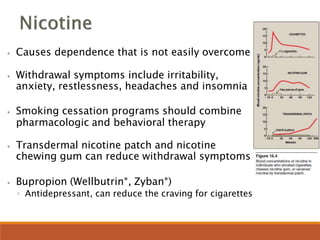
⦁ Causes dependence that is not easily overcome
⦁ Withdrawal symptoms include irritability,
anxiety, restlessness, headaches and insomnia
⦁ Smoking cessation programs should combine
pharmacologic and behavioral therapy
⦁ Transdermal nicotine patch and nicotine
chewing gum can reduce withdrawal symptoms
⦁ Bupropion (Wellbutrin®, Zyban®)
◦ Antidepressant, can reduce the craving for cigarettes
⦁ Varenicline (Champix®)
◦ Partial agonist at neuronal nicotinic acetylcholine
receptors in the CNS
◦ Produces less euphoric effects than nicotine
◦ Useful as an adjunct in the management of smoking
cessation in patients with nicotine withdrawal symptoms
◦ Attenuate the rewarding effects of nicotine if a person
relapses and uses tobacco
◦ Patients should be monitored for suicidal thoughts and
mood changes
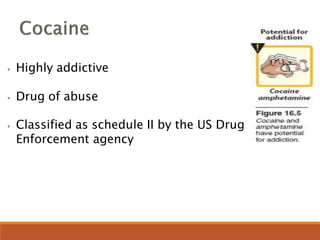
⦁ Highly addictive
⦁ Drug of abuse
⦁ Classified as schedule II by the US Drug
Enforcement agency
Mechanism:
⦁ Inhibit reuptake of norepinephrine, serotonin and
dopamine into the presynaptic terminals
⦁ Binds to the monoaminergic reuptake transporters
⦁ Potentiates and prolongs the CNS and peripheral
actions of these monoamines
⦁ Prolongs dopaminergic effects in the brain’s pleasure
system, produces the intense euphoria initially
⦁ Chronic intake of cocaine depletes dopamine causing
craving for cocaine
⦁ Actions:
◦ CNS stimulant, produces euphoria, increases mental
awareness, can cause hallucinations
◦ At high doses, it causes convulsions, followed
by respiratory depression
◦ Activates sympathetic nervous system causing
tachycardia and hypertension
◦ Baroreceptor reflexes may be impaired
◦ Hyperthermia: Cocaine is unique among illicit drugs in
that death can result also from the drug’s ability to
cause hyperthermia.
⦁ Therapeutic uses:
◦ Cocaine has a local anesthetic action that represents its
only current therapeutic use
◦ Cocaine is applied topically as a local anesthetic during
eye, ear, nose, and throat surgery
◦ The local anesthetic action of cocaine is due to a block of
voltage-activated sodium channels
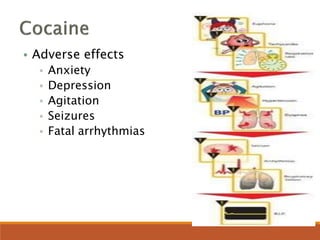
• Adverse effects
• Anxiety
• Depression
• Agitation
• Seizures
• Fatal arrhythmias
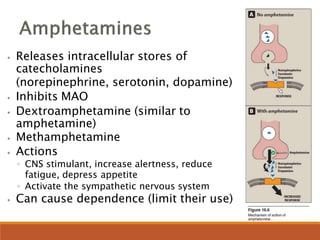
⦁ Releases intracellular stores of
catecholamines
(norepinephrine, serotonin, dopamine)
⦁ Inhibits MAO
⦁ Dextroamphetamine (similar to
amphetamine)
⦁ Methamphetamine
⦁ Actions
◦ CNS stimulant, increase alertness, reduce
fatigue, depress appetite
◦ Activate the sympathetic nervous system
⦁ Can cause dependence (limit their use)
⦁ Therapeutic use:
◦ Treatment of hyperactivity in children
Attention Deficit Hyperactivity Disorder
(ADHD)
◦ Appetite control
◦ Narcolepsy (uncontrollable urge to sleep)
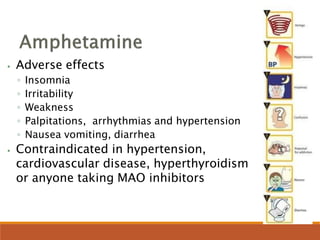
⦁ Adverse effects
◦ Insomnia
◦ Irritability
◦ Weakness
◦ Palpitations, arrhythmias and hypertension
◦ Nausea vomiting, diarrhea
⦁ Contraindicated in hypertension,
cardiovascular disease, hyperthyroidism
or anyone taking MAO inhibitors
⦁ CNS stimulant
⦁ Mechanism of action:
◦ Children with ADHD may produce weak dopamine signals,
which suggests that once-interesting activities provide
fewer rewards to these children.
◦ Methylphenidate is a dopamine transport inhibitor and
may act by increasing dopamine in the synaptic space.
⦁ Used for ADHD in children
⦁ Can cause dependence
⦁ Adverse reactions
◦ Abdominal pain and nausea
◦ Anorexia
◦ Insomnia, nervousness, and fever
⦁ Methylphenidate can interfere in the metabolism of
warfarin, phenytoin, phenobarbital, primidone, and
the tricyclic antidepressants
⦁ Psychomimetics, drugs that induce altered
perceptual states accompanied by visions of bright,
colorful changes in the environment
⦁ These drugs impair normal decision-making
because they interfere with rational thought
⦁ Lysergic acid diethylamide (LSD)
◦ Serotonin agonist
◦ Activation of the sympathetic nervous system occurs
causing pupillary dilation, increased blood pressure,
and increased body temperature
◦ Taken orally, low doses of LSD can induce
hallucinations with brilliant colors
◦ Haloperidol and other neuroleptics can block the
hallucinatory action of LSD
◦ Adverse effects
🞄 Hyperreflexia, nausea, and muscular weakness
🞄 High doses may produce long-lasting psychotic changes
⦁ Tetrahydrocannabinol
◦ Found in marijuana
◦ Produce euphoria followed by drowsiness and relaxation
◦ Cause hallucinations
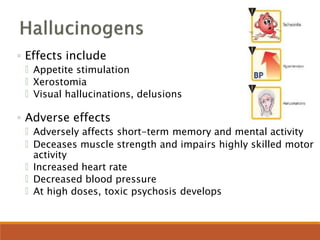
◦ Effects include
🞄 Appetite stimulation
🞄 Xerostomia
🞄 Visual hallucinations, delusions
◦ Adverse effects
🞄 Adversely affects short-term memory and mental activity
🞄 Deceases muscle strength and impairs highly skilled motor
activity
🞄 Increased heart rate
🞄 Decreased blood pressure
🞄 At high doses, toxic psychosis develops

CNS Stimulants.pptx

  • 2.
    ⦁ Psychomotor stimulants ◦Cause excitement and euphoria ◦ Decrease feeling of fatigue ◦ Increase motor activity ⦁ Hallucinogens (psychomimetic drugs) ◦ Produce changes in thought patterns and mood
  • 3.
    ⦁ Psychomotor stimulants ◦Amphetamine ◦ Dextroamephetamine ◦ Methylphenidate ◦ Methylxanthines ◦ Caffeine ◦ Nicotine ◦ Cocaine ⦁ Hallucinogens ◦ Lysergic acid diethylamide (LSD) ◦ Tetrahydrocannabinol
  • 4.
    ⦁ Include theophylline(tea); theobromine (cocoa); and caffeine (coffee, tea, cocoa, chocolates, cola drinks) ⦁ Mechanism of action ◦ Translocation of extracellular calcium ◦ Increase in cAMP and cGMP caused by inhibition of phosphodiesterase ◦ Blockade of adenosine receptors
  • 5.
    ⦁ Actions ◦ CNSstimulant 🞄 Reduces fatigue and increase mental alertness due to stimulation of the cortex and other areas of the brain 🞄 At very high doses, can produce anxiety and tremor 🞄 Tolerance to caffeine can develop and withdrawal consists of feelings of fatigue and sedation ◦ At high doses, has positive inotropic and chronotropic effects, can be harmful to angina patients and can trigger premature ventricular contractions ◦ Caffeine has a mild diuretic effect increasing urinary output of Na, K, and Cl ◦ Stimulate secretion of hydrochloric acid from gastric mucosa, should be avoided in peptic ulcer
  • 6.
    ⦁ Therapeutic uses ◦All methylxanthines relax the smooth muscles of the bronchioles ◦ Theophylline was used for asthma but it is being replaced by β2-agonists and corticosteroids ⦁ Adverse effects ◦ Insomnia ◦ Anxiety ◦ Agitation
  • 7.
    ⦁ CNS stimulant 🞄Not used therapeutically (except in smoking cessation therapy) ⦁ Stimulation of sympathetic ganglia increases blood pressure and heart rate ⦁ Particularly harmful in hypertensive patients 🞄 Nicotine induced vasoconstriction can decrease coronary blood flow, adversely affecting a patient with angina ⦁ High doses of nicotine result in central respiratory paralysis and severe hypotension caused by medullary paralysis ⦁ Along with other components of cigarettes like tars and carbon monoxide, nicotine is a risk factor for lung and cardiovascular diseases and cancer
  • 8.
    ⦁ Causes dependencethat is not easily overcome ⦁ Withdrawal symptoms include irritability, anxiety, restlessness, headaches and insomnia ⦁ Smoking cessation programs should combine pharmacologic and behavioral therapy ⦁ Transdermal nicotine patch and nicotine chewing gum can reduce withdrawal symptoms ⦁ Bupropion (Wellbutrin®, Zyban®) ◦ Antidepressant, can reduce the craving for cigarettes
  • 9.
    ⦁ Varenicline (Champix®) ◦Partial agonist at neuronal nicotinic acetylcholine receptors in the CNS ◦ Produces less euphoric effects than nicotine ◦ Useful as an adjunct in the management of smoking cessation in patients with nicotine withdrawal symptoms ◦ Attenuate the rewarding effects of nicotine if a person relapses and uses tobacco ◦ Patients should be monitored for suicidal thoughts and mood changes
  • 10.
    ⦁ Highly addictive ⦁Drug of abuse ⦁ Classified as schedule II by the US Drug Enforcement agency
  • 11.
    Mechanism: ⦁ Inhibit reuptakeof norepinephrine, serotonin and dopamine into the presynaptic terminals ⦁ Binds to the monoaminergic reuptake transporters ⦁ Potentiates and prolongs the CNS and peripheral actions of these monoamines ⦁ Prolongs dopaminergic effects in the brain’s pleasure system, produces the intense euphoria initially ⦁ Chronic intake of cocaine depletes dopamine causing craving for cocaine
  • 12.
    ⦁ Actions: ◦ CNSstimulant, produces euphoria, increases mental awareness, can cause hallucinations ◦ At high doses, it causes convulsions, followed by respiratory depression ◦ Activates sympathetic nervous system causing tachycardia and hypertension ◦ Baroreceptor reflexes may be impaired ◦ Hyperthermia: Cocaine is unique among illicit drugs in that death can result also from the drug’s ability to cause hyperthermia.
  • 13.
    ⦁ Therapeutic uses: ◦Cocaine has a local anesthetic action that represents its only current therapeutic use ◦ Cocaine is applied topically as a local anesthetic during eye, ear, nose, and throat surgery ◦ The local anesthetic action of cocaine is due to a block of voltage-activated sodium channels
  • 14.
    • Adverse effects •Anxiety • Depression • Agitation • Seizures • Fatal arrhythmias
  • 15.
    ⦁ Releases intracellularstores of catecholamines (norepinephrine, serotonin, dopamine) ⦁ Inhibits MAO ⦁ Dextroamphetamine (similar to amphetamine) ⦁ Methamphetamine ⦁ Actions ◦ CNS stimulant, increase alertness, reduce fatigue, depress appetite ◦ Activate the sympathetic nervous system ⦁ Can cause dependence (limit their use)
  • 16.
    ⦁ Therapeutic use: ◦Treatment of hyperactivity in children Attention Deficit Hyperactivity Disorder (ADHD) ◦ Appetite control ◦ Narcolepsy (uncontrollable urge to sleep)
  • 17.
    ⦁ Adverse effects ◦Insomnia ◦ Irritability ◦ Weakness ◦ Palpitations, arrhythmias and hypertension ◦ Nausea vomiting, diarrhea ⦁ Contraindicated in hypertension, cardiovascular disease, hyperthyroidism or anyone taking MAO inhibitors
  • 18.
    ⦁ CNS stimulant ⦁Mechanism of action: ◦ Children with ADHD may produce weak dopamine signals, which suggests that once-interesting activities provide fewer rewards to these children. ◦ Methylphenidate is a dopamine transport inhibitor and may act by increasing dopamine in the synaptic space. ⦁ Used for ADHD in children ⦁ Can cause dependence
  • 19.
    ⦁ Adverse reactions ◦Abdominal pain and nausea ◦ Anorexia ◦ Insomnia, nervousness, and fever ⦁ Methylphenidate can interfere in the metabolism of warfarin, phenytoin, phenobarbital, primidone, and the tricyclic antidepressants
  • 20.
    ⦁ Psychomimetics, drugsthat induce altered perceptual states accompanied by visions of bright, colorful changes in the environment ⦁ These drugs impair normal decision-making because they interfere with rational thought
  • 21.
    ⦁ Lysergic aciddiethylamide (LSD) ◦ Serotonin agonist ◦ Activation of the sympathetic nervous system occurs causing pupillary dilation, increased blood pressure, and increased body temperature ◦ Taken orally, low doses of LSD can induce hallucinations with brilliant colors ◦ Haloperidol and other neuroleptics can block the hallucinatory action of LSD ◦ Adverse effects 🞄 Hyperreflexia, nausea, and muscular weakness 🞄 High doses may produce long-lasting psychotic changes
  • 22.
    ⦁ Tetrahydrocannabinol ◦ Foundin marijuana ◦ Produce euphoria followed by drowsiness and relaxation ◦ Cause hallucinations
  • 23.
    ◦ Effects include 🞄Appetite stimulation 🞄 Xerostomia 🞄 Visual hallucinations, delusions ◦ Adverse effects 🞄 Adversely affects short-term memory and mental activity 🞄 Deceases muscle strength and impairs highly skilled motor activity 🞄 Increased heart rate 🞄 Decreased blood pressure 🞄 At high doses, toxic psychosis develops