Neurotransmitters
Domina Petric, MD
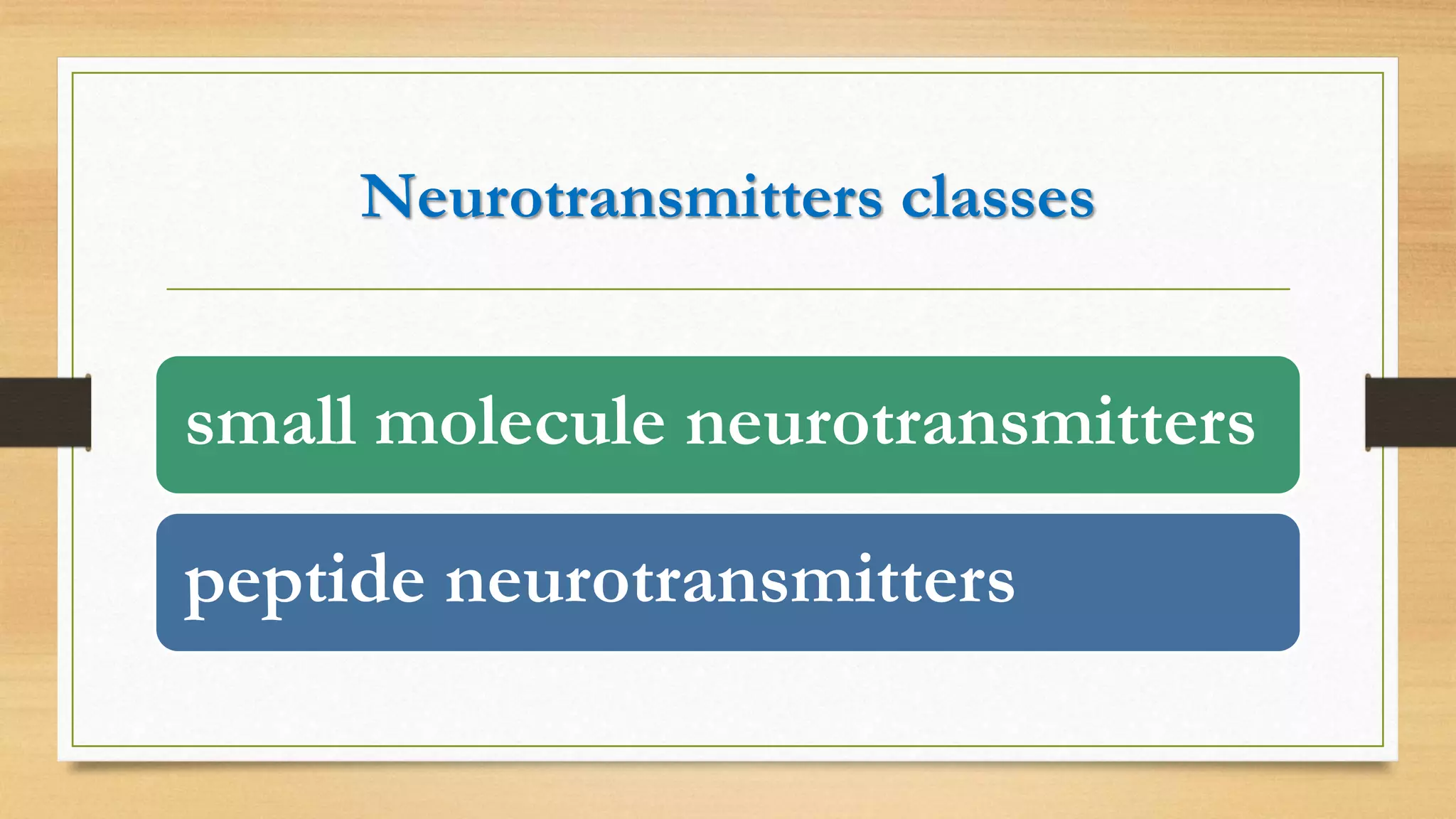
Neurotransmitters classes
small molecule neurotransmitters
peptide neurotransmitters
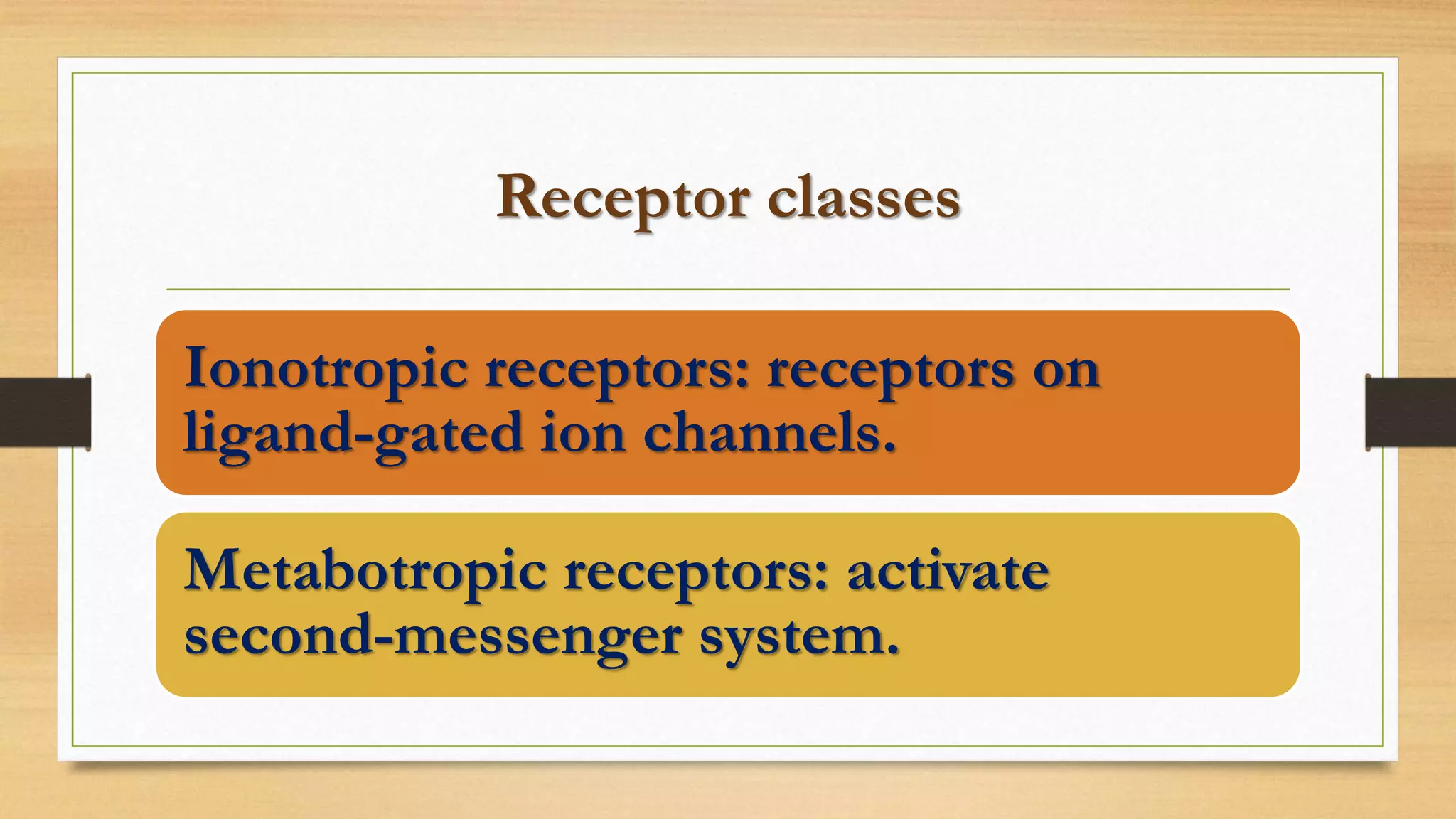
Receptor classes
Ionotropic receptors: receptors on
ligand-gated ion channels.
Metabotropic receptors: activate
second-messenger system.
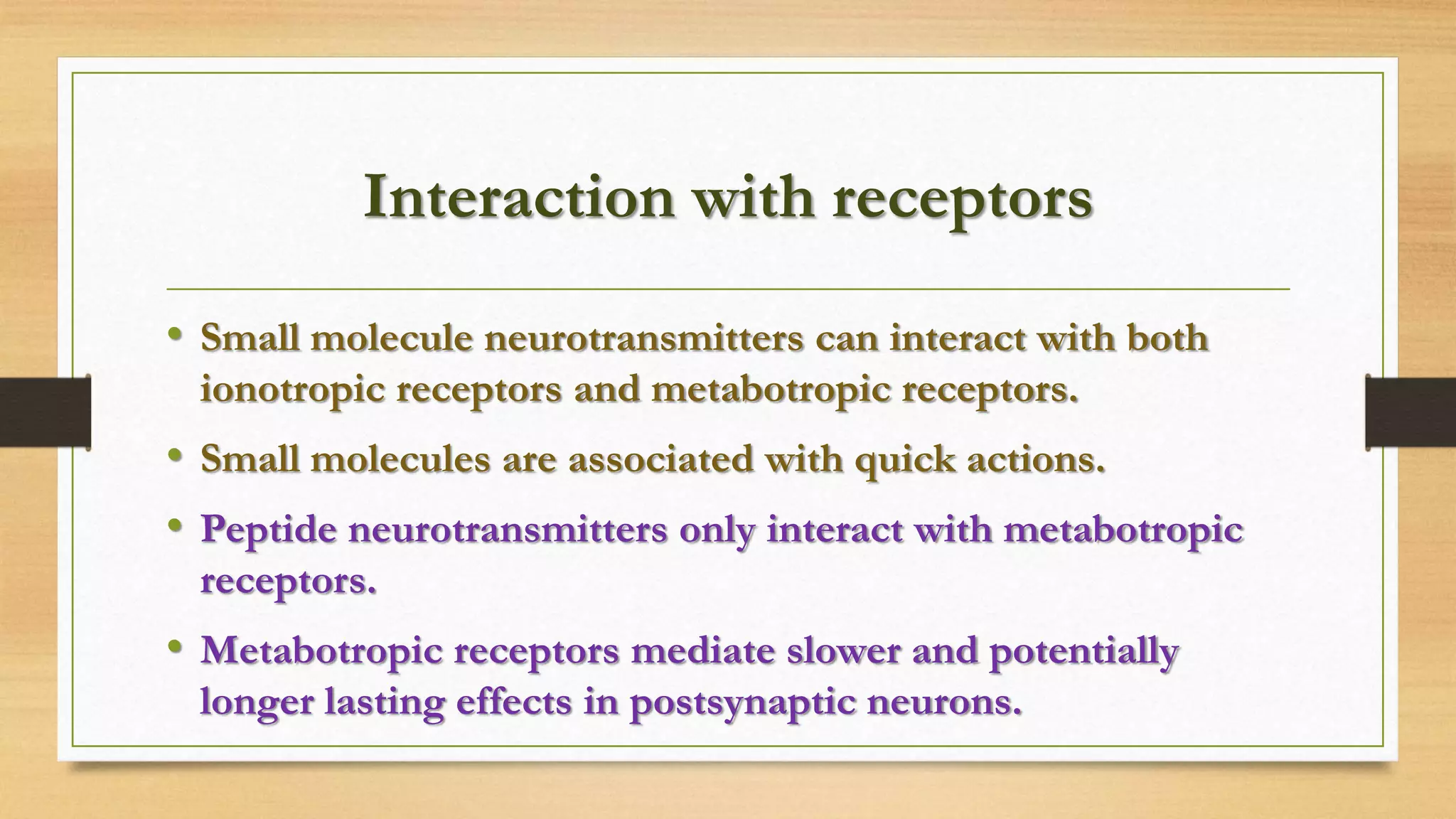
Interaction with receptors
• Small molecule neurotransmitters can interact with both
ionotropic receptors and metabotropic receptors.
• Small molecules are associated with quick actions.
• Peptide neurotransmitters only interact with metabotropic
receptors.
• Metabotropic receptors mediate slower and potentially
longer lasting effects in postsynaptic neurons.
Small molecule neurotransmitters
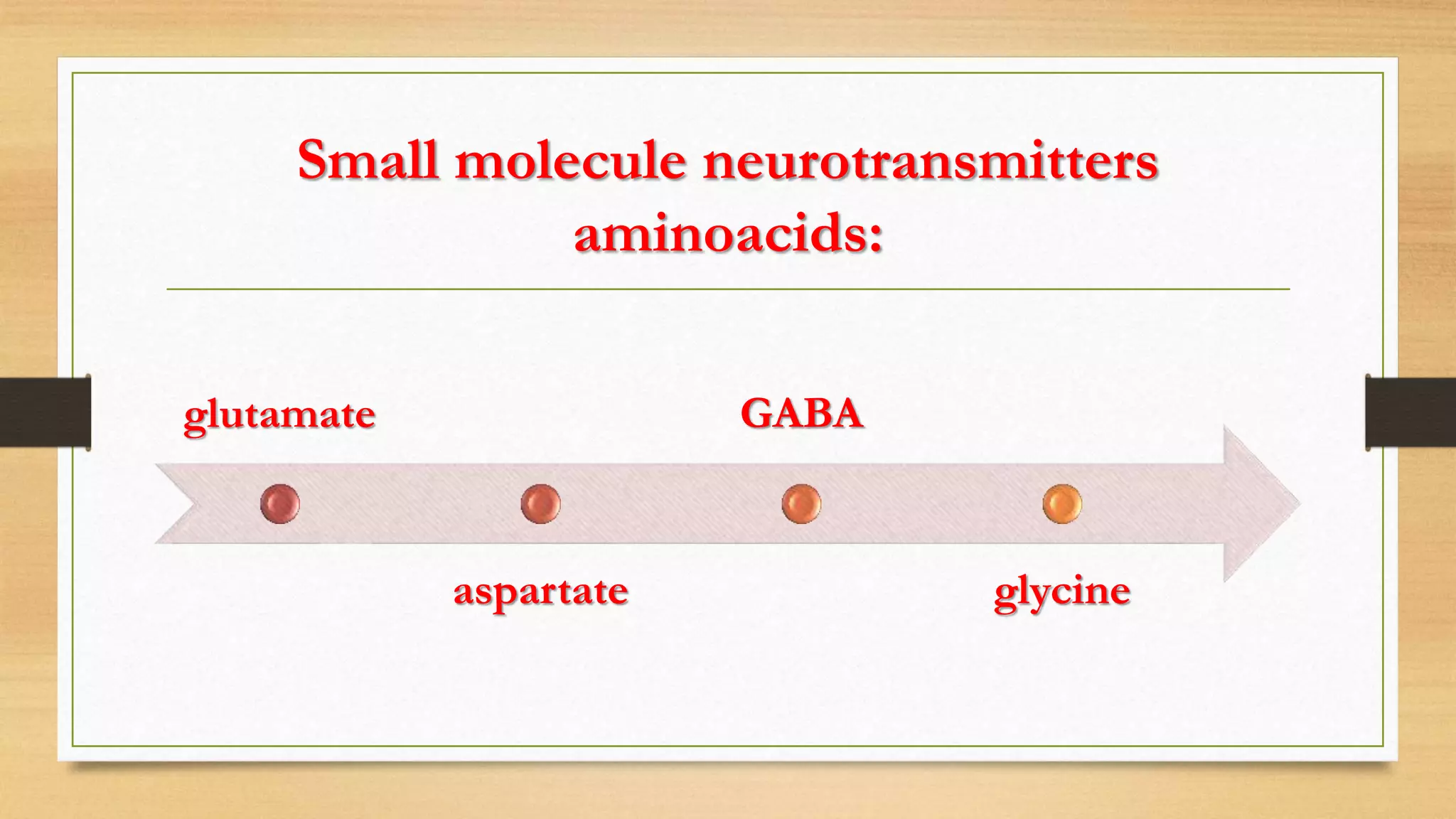
aminoacids:
glutamate
aspartate
GABA
glycine
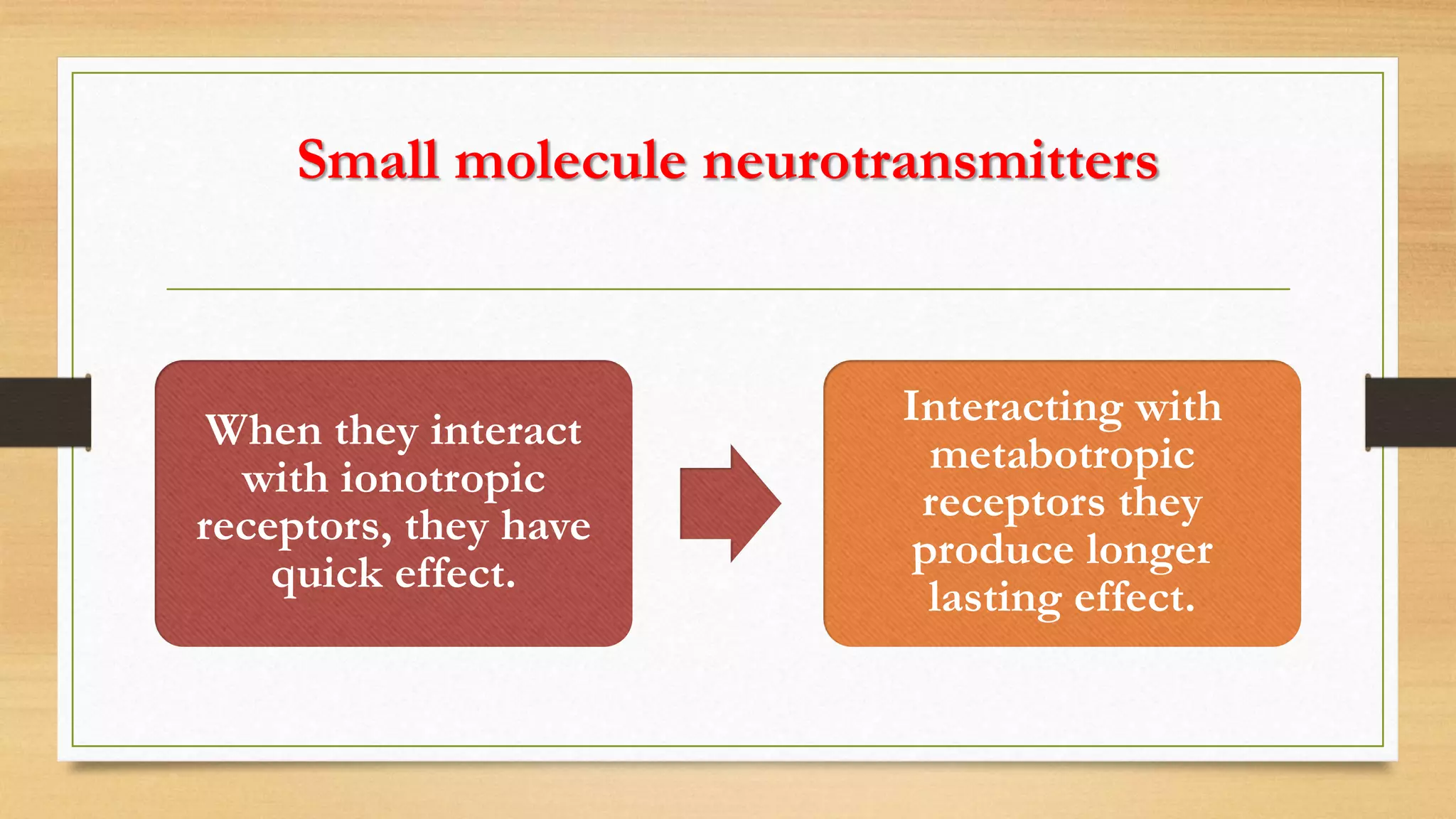
Small molecule neurotransmitters
When they interact
with ionotropic
receptors, they have
quick effect.
Interacting with
metabotropic
receptors they
produce longer
lasting effect.
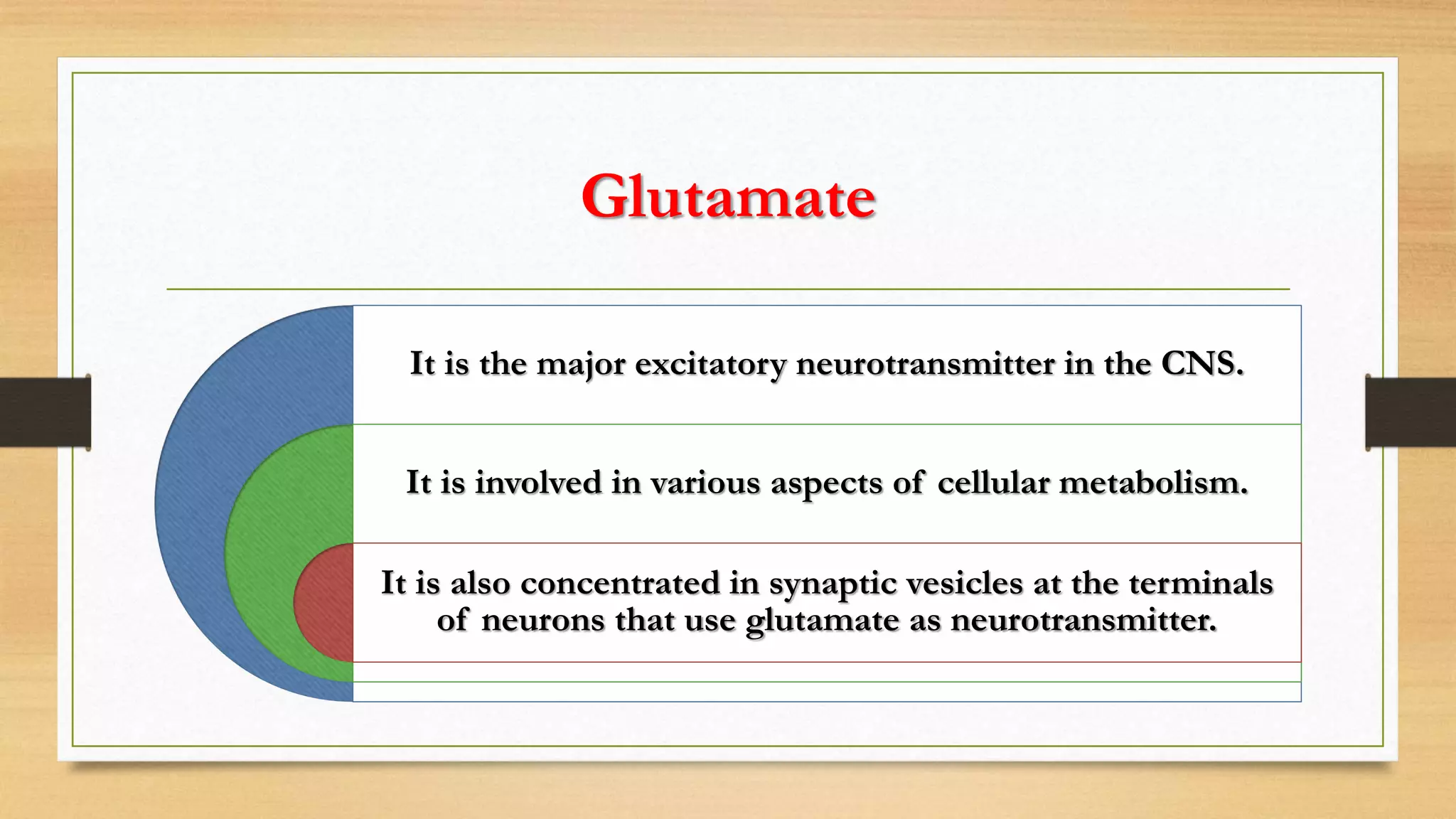
Glutamate
It is the major excitatory neurotransmitter in the CNS.
It is involved in various aspects of cellular metabolism.
It is also concentrated in synaptic vesicles at the terminals
of neurons that use glutamate as neurotransmitter.
GABA (gama-aminobutyric acid) and
glycine
• GABA is a metabolite of glutamate.
• GABA and glycine have inhibitory role in mature nervous system.
• GABA is the most important transmitter in the brain that mediates synaptic
inhibition.
• Glycine is very important neurotransmitter in spinal cord especially for
synaptic inhibition.
• Glycine serves as co-transmitter in synapses that release glutamate: binding
of glycine is important for the activity of one type of glutamate receptor.
Acetylcholine
• It is small molecule neurotransmitter, but not an amino acid.
• Outside the CNS it is major excitatory neurotransmitter of human
somatic motor neurons.
• It is released on muscle fibre leading to the contraction of muscles.
• It is also a major excitatory neurotransmitter in autonomic ganglia.
• It is the neurotransmitter of many postganglionic parasympathetic
fibres.
Acetylcholine
Small molecules neurotransmitters
biogenic amines
dopamine norepinephrine epinephrine serotinin histamine
Biogenic amines modulate the function of neuronal circuits.
Biogenic amines
• Those are very important in motivation and reward systems.
• Dopamine is critical for modulating movement in circuits such as
basal ganglia.
• Dopamine is involved in activation of circuits in the prefrontal cortex
(mediates various aspects of cognition).
• Norepinephrine is also very important in cognitive functioning (for
example attention).
Dopamine
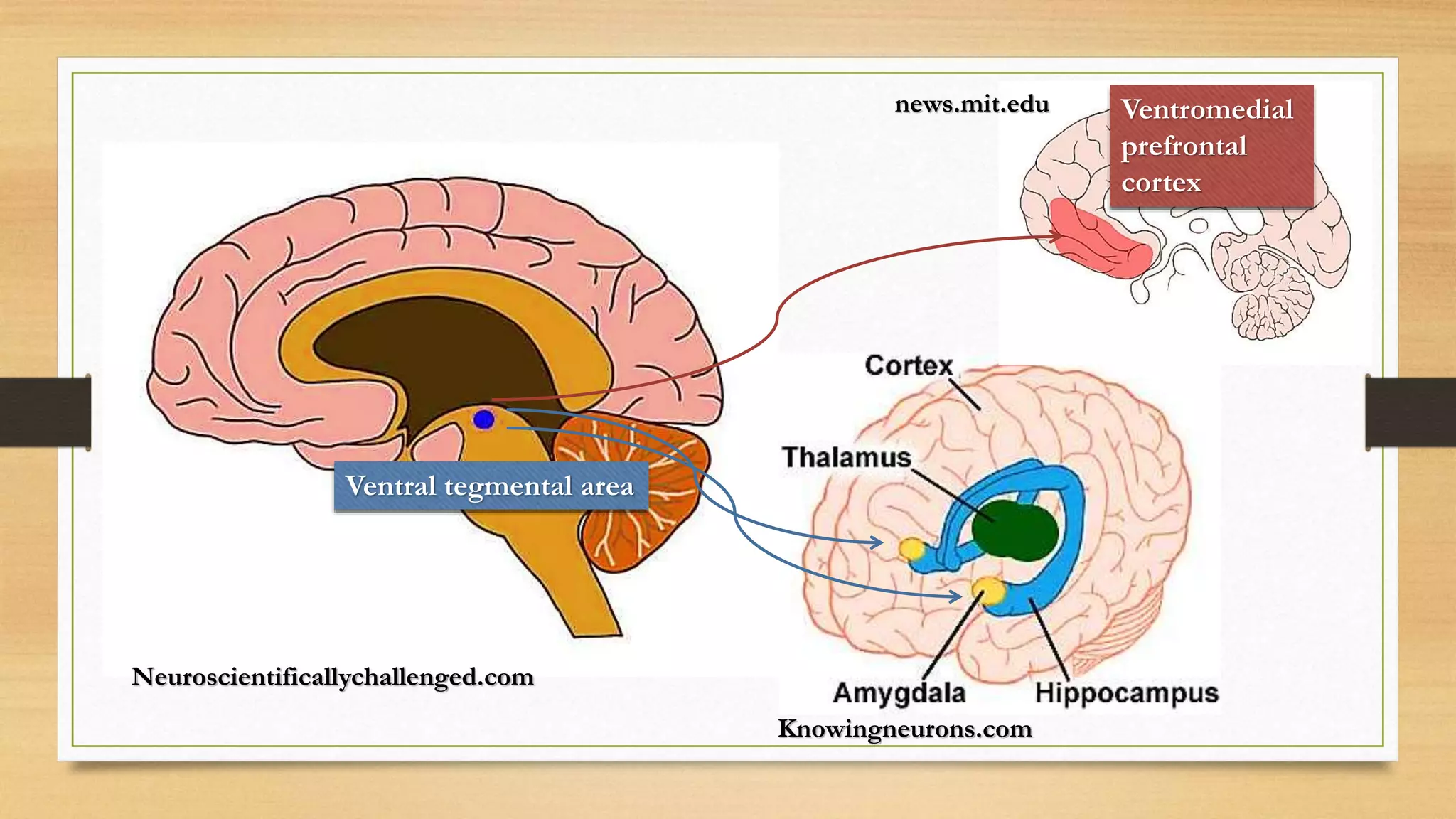
• Dopamine is derived from cells with cell bodies in midbrain:
substantia nigra (pars compacta) and ventral tegmental areas.
• Cells from substantia nigra are sending their axons to the
striatum.
• Cells from the ventral tegmental areas are sending their axons
into medial temporal lobe structures (for example amygdala)
and to the ventral and medial aspects of prefrontal cortex.
Neuroscientificallychallenged.com
Striatum
Neuroscientificallychallenged.com
Ventral tegmental area
Knowingneurons.com
news.mit.edu Ventromedial
prefrontal
cortex
Norepinephrine
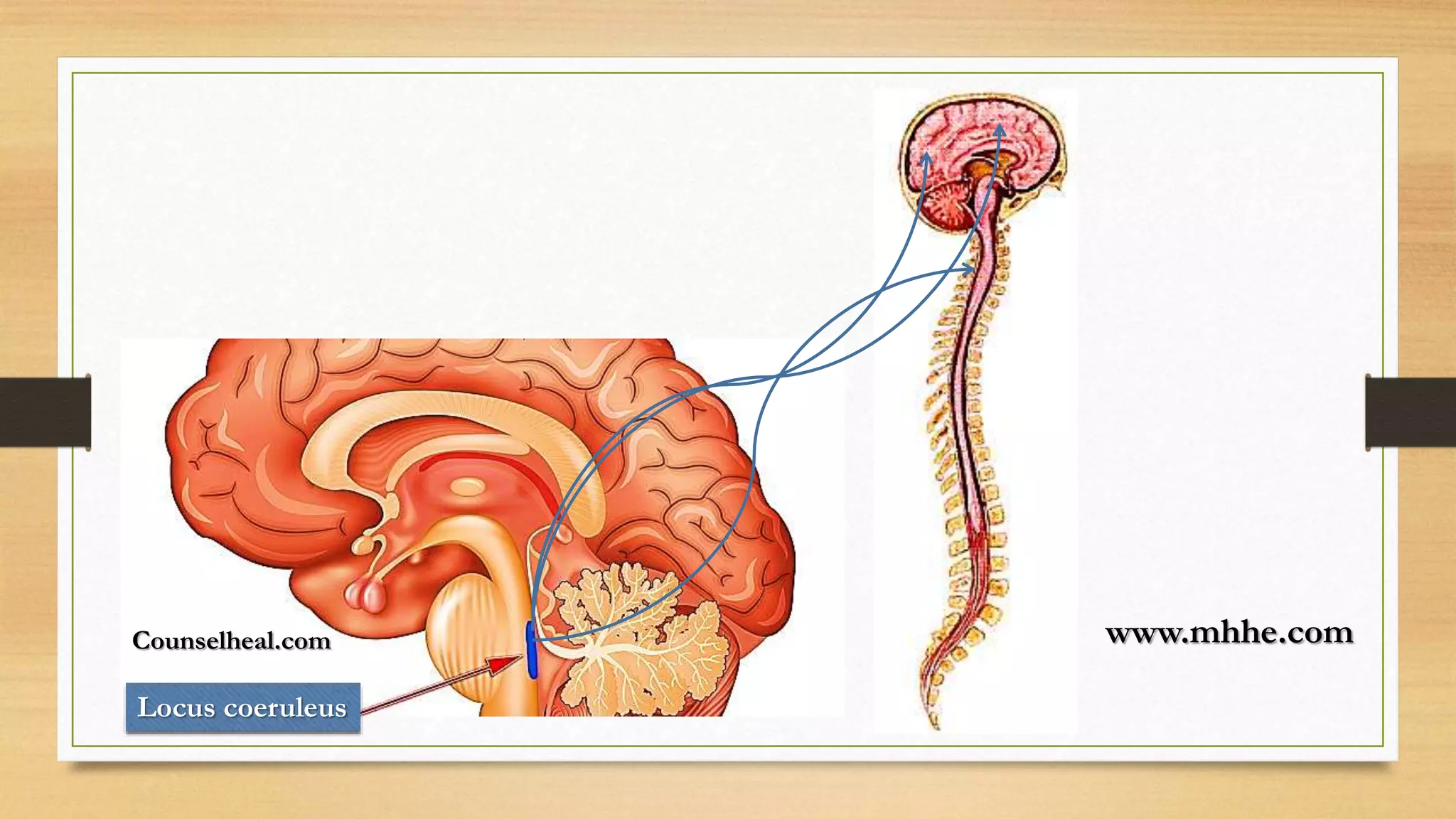
Derived from cells with cell bodies in the dorsal
part of the pons: locus coeruleus.
These cells are sending their axons everywhere
in the CNS including the spinal cord.
Counselheal.com
Locus coeruleus
www.mhhe.com
Serotonin
Comes from a group
of cells found in
different areas of the
brainstem: the seam
nuclei (Raphe nuclei).
Bethopedia.com
Neuropeptides (peptide neurotransmitters)
• Larger molecules: usually 3-30 amino acids long, but can be
more than 100 amino acids long.
• Enkephalins are opioids that have analgesic effects in the
brain, they bind to receptors in various places including the
spinal cord.
• Substance P is very important in modulating the transmission
of pain signals in the dorsal horn of the spinal cord.
Neuropeptides (peptide neurotransmitters)
Many of
hypothalamic
releasing
hormones are
neuropeptides.
Unconventional neurotransmitters
• Purinergic neurotransmitters: adenosine triphosphate or ATP has some
biological activity at synapses in CNS.
• ATP can be co-released with small molecule neurotransmitters.
• It is metabolised in extracellular space into adenosine.
• Adenosine has its own biological activity: binds to various receptors, for
example in hypothalamus (adenosine is important trigger that leads to
drowsiness).
• Caffeinated beverages block adenosine receptors.
Unconventional neurotransmitters
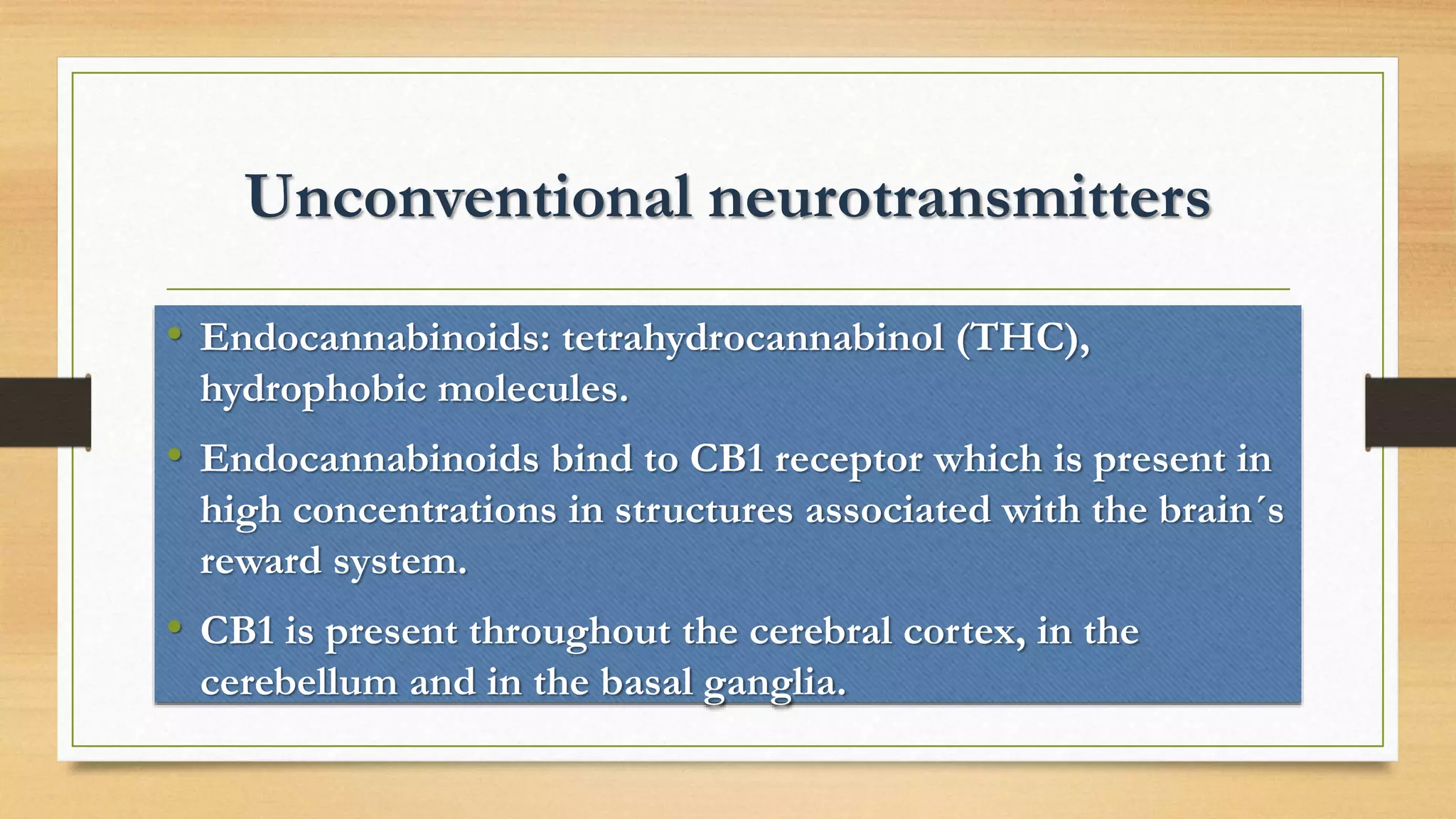
• Endocannabinoids: tetrahydrocannabinol (THC),
hydrophobic molecules.
• Endocannabinoids bind to CB1 receptor which is present in
high concentrations in structures associated with the brain´s
reward system.
• CB1 is present throughout the cerebral cortex, in the
cerebellum and in the basal ganglia.
Unconventional neurotransmitters
Endocannabinoids have role in
modulating plasticity, especially
plasticity at inhibitory synapses.
Nitric oxide
• It is a gas which is produced from the metabolism of the
amino acid arginine.
• Arginine is processed by nitric oxide synthase.
• Nitric oxide has ability to diffuse freely from postsynaptic
cell to a presynaptic cell: retrograde messenger?
• NO is vasodilatator.
Synthesis
Small molecule transmitters are
synthesized in the presynaptic terminal.
Peptide neurotransmitters are
synthesized in the cell body.
Vesicles
Small molecule transmitters are packaged into vesicles that are
concentrated along the active zones at the presynaptic membrane.
Peptide transmitters are found in vesicles that are diffusing around
the presynaptic terminal further away from that active zone.
Peptide transmitters are released only when there is intensive
depolarisation of the presynaptic terminal (large calcium influx).
Literature
• https://www.coursera.org/learn/medical-
neuroscience/lecture: Leonard E. White, PhD,
Duke University
• Neuroscientificallychallenged.com
• Knowingneurons.com
Literature
•News.mit.edu
•Counselheal.com
•www.mhhe.com
•Bethopedia.com

Neurotransmitters

  • 1.
  • 2.
    Neurotransmitters classes small moleculeneurotransmitters peptide neurotransmitters
  • 3.
    Receptor classes Ionotropic receptors:receptors on ligand-gated ion channels. Metabotropic receptors: activate second-messenger system.
  • 4.
    Interaction with receptors •Small molecule neurotransmitters can interact with both ionotropic receptors and metabotropic receptors. • Small molecules are associated with quick actions. • Peptide neurotransmitters only interact with metabotropic receptors. • Metabotropic receptors mediate slower and potentially longer lasting effects in postsynaptic neurons.
  • 5.
  • 6.
    Small molecule neurotransmitters Whenthey interact with ionotropic receptors, they have quick effect. Interacting with metabotropic receptors they produce longer lasting effect.
  • 7.
    Glutamate It is themajor excitatory neurotransmitter in the CNS. It is involved in various aspects of cellular metabolism. It is also concentrated in synaptic vesicles at the terminals of neurons that use glutamate as neurotransmitter.
  • 8.
    GABA (gama-aminobutyric acid)and glycine • GABA is a metabolite of glutamate. • GABA and glycine have inhibitory role in mature nervous system. • GABA is the most important transmitter in the brain that mediates synaptic inhibition. • Glycine is very important neurotransmitter in spinal cord especially for synaptic inhibition. • Glycine serves as co-transmitter in synapses that release glutamate: binding of glycine is important for the activity of one type of glutamate receptor.
  • 9.
    Acetylcholine • It issmall molecule neurotransmitter, but not an amino acid. • Outside the CNS it is major excitatory neurotransmitter of human somatic motor neurons. • It is released on muscle fibre leading to the contraction of muscles. • It is also a major excitatory neurotransmitter in autonomic ganglia. • It is the neurotransmitter of many postganglionic parasympathetic fibres.
  • 10.
  • 11.
    Small molecules neurotransmitters biogenicamines dopamine norepinephrine epinephrine serotinin histamine Biogenic amines modulate the function of neuronal circuits.
  • 12.
    Biogenic amines • Thoseare very important in motivation and reward systems. • Dopamine is critical for modulating movement in circuits such as basal ganglia. • Dopamine is involved in activation of circuits in the prefrontal cortex (mediates various aspects of cognition). • Norepinephrine is also very important in cognitive functioning (for example attention).
  • 13.
    Dopamine • Dopamine isderived from cells with cell bodies in midbrain: substantia nigra (pars compacta) and ventral tegmental areas. • Cells from substantia nigra are sending their axons to the striatum. • Cells from the ventral tegmental areas are sending their axons into medial temporal lobe structures (for example amygdala) and to the ventral and medial aspects of prefrontal cortex.
  • 14.
  • 15.
  • 16.
    Norepinephrine Derived from cellswith cell bodies in the dorsal part of the pons: locus coeruleus. These cells are sending their axons everywhere in the CNS including the spinal cord.
  • 17.
  • 18.
    Serotonin Comes from agroup of cells found in different areas of the brainstem: the seam nuclei (Raphe nuclei). Bethopedia.com
  • 19.
    Neuropeptides (peptide neurotransmitters) •Larger molecules: usually 3-30 amino acids long, but can be more than 100 amino acids long. • Enkephalins are opioids that have analgesic effects in the brain, they bind to receptors in various places including the spinal cord. • Substance P is very important in modulating the transmission of pain signals in the dorsal horn of the spinal cord.
  • 20.
    Neuropeptides (peptide neurotransmitters) Manyof hypothalamic releasing hormones are neuropeptides.
  • 21.
    Unconventional neurotransmitters • Purinergicneurotransmitters: adenosine triphosphate or ATP has some biological activity at synapses in CNS. • ATP can be co-released with small molecule neurotransmitters. • It is metabolised in extracellular space into adenosine. • Adenosine has its own biological activity: binds to various receptors, for example in hypothalamus (adenosine is important trigger that leads to drowsiness). • Caffeinated beverages block adenosine receptors.
  • 22.
    Unconventional neurotransmitters • Endocannabinoids:tetrahydrocannabinol (THC), hydrophobic molecules. • Endocannabinoids bind to CB1 receptor which is present in high concentrations in structures associated with the brain´s reward system. • CB1 is present throughout the cerebral cortex, in the cerebellum and in the basal ganglia.
  • 23.
    Unconventional neurotransmitters Endocannabinoids haverole in modulating plasticity, especially plasticity at inhibitory synapses.
  • 24.
    Nitric oxide • Itis a gas which is produced from the metabolism of the amino acid arginine. • Arginine is processed by nitric oxide synthase. • Nitric oxide has ability to diffuse freely from postsynaptic cell to a presynaptic cell: retrograde messenger? • NO is vasodilatator.
  • 25.
    Synthesis Small molecule transmittersare synthesized in the presynaptic terminal. Peptide neurotransmitters are synthesized in the cell body.
  • 26.
    Vesicles Small molecule transmittersare packaged into vesicles that are concentrated along the active zones at the presynaptic membrane. Peptide transmitters are found in vesicles that are diffusing around the presynaptic terminal further away from that active zone. Peptide transmitters are released only when there is intensive depolarisation of the presynaptic terminal (large calcium influx).
  • 27.
    Literature • https://www.coursera.org/learn/medical- neuroscience/lecture: LeonardE. White, PhD, Duke University • Neuroscientificallychallenged.com • Knowingneurons.com
  • 28.