1
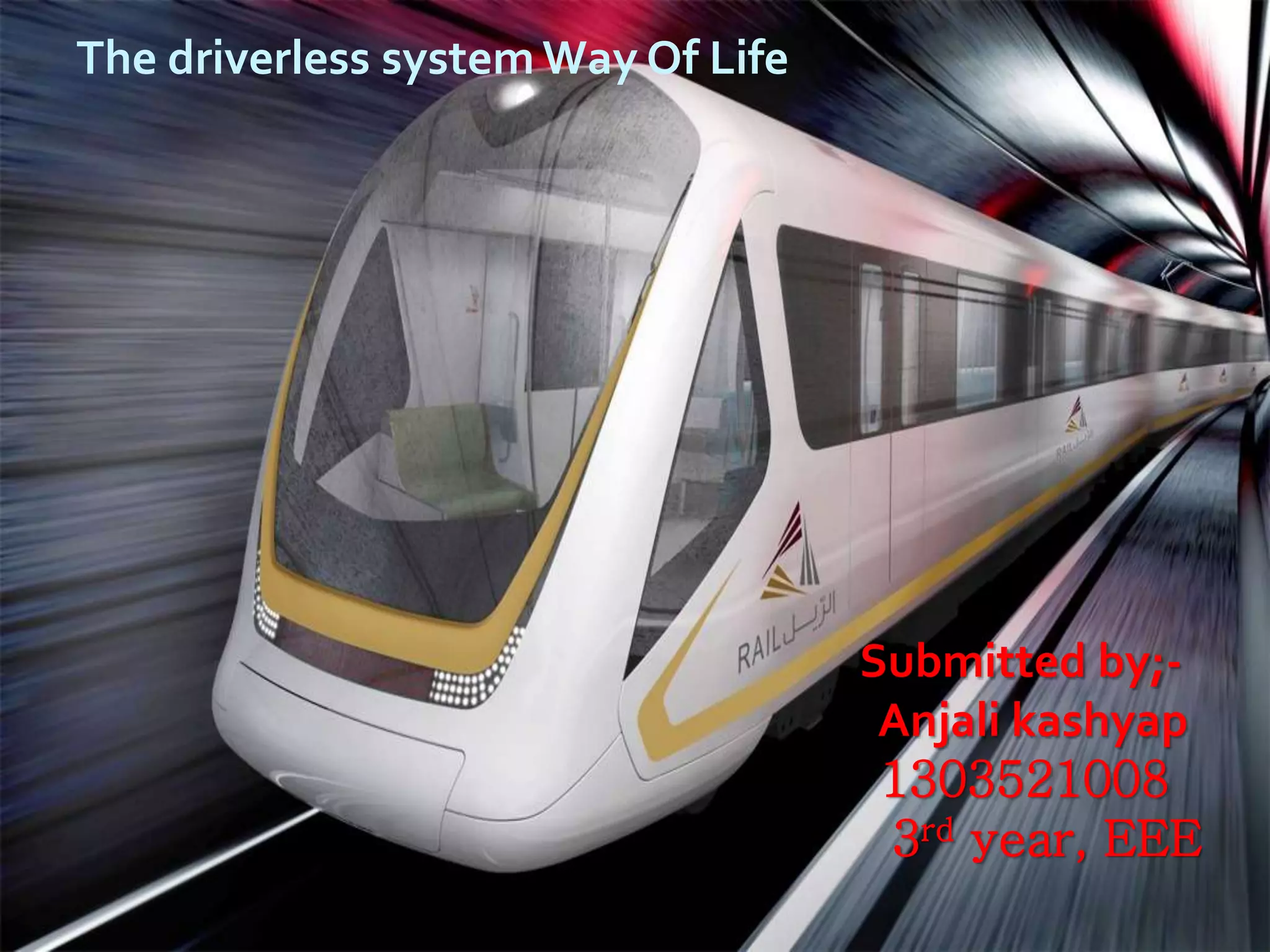
The driverless system Way Of Life
Submitted by;-
Anjali kashyap
1303521008
3rd year, EEE
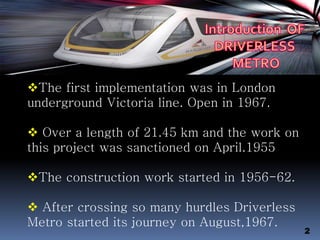
The first implementation was in London
underground Victoria line. Open in 1967.
 Over a length of 21.45 km and the work on
this project was sanctioned on April.1955
The construction work started in 1956-62.
 After crossing so many hurdles Driverless
Metro started its journey on August,1967.
2
3
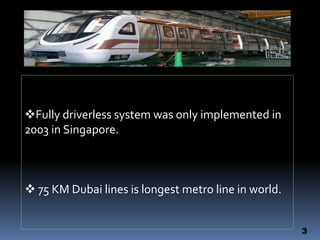
Fully driverless system was only implemented in
2003 in Singapore.
 75 KM Dubai lines is longest metro line in world.
4
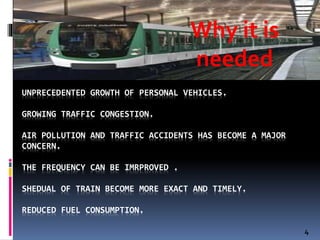
UNPRECEDENTED GROWTH OF PERSONAL VEHICLES.
GROWING TRAFFIC CONGESTION.
AIR POLLUTION AND TRAFFIC ACCIDENTS HAS BECOME A MAJOR
CONCERN.
THE FREQUENCY CAN BE IMRPROVED .
SHEDUAL OF TRAIN BECOME MORE EXACT AND TIMELY.
REDUCED FUEL CONSUMPTION.
Why it is
needed
 Requires 1/5th energy per passenger km
compared to road-based transport system.
 Causes less noise, no air pollution and eco
friendly transport system.
 Occupies no road space if underground and
only about 2.60 meters width of the road if
elevated.
 Reduces journey time.
 Cost effective mass transport system.
 Reducing traffic transport problems.
5
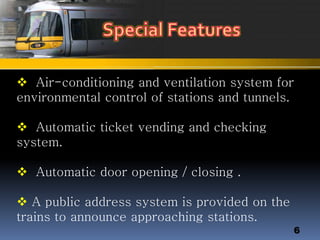
 Air-conditioning and ventilation system for
environmental control of stations and tunnels.
 Automatic ticket vending and checking
system.
 Automatic door opening / closing .
 A public address system is provided on the
trains to announce approaching stations.
6
7
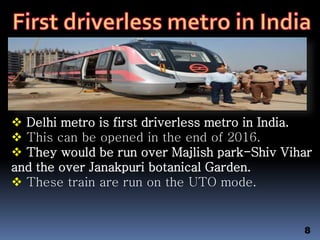
 Delhi metro is first driverless metro in India.
 This can be opened in the end of 2016.
 They would be run over Majlish park-Shiv Vihar
and the over Janakpuri botanical Garden.
 These train are run on the UTO mode.
8
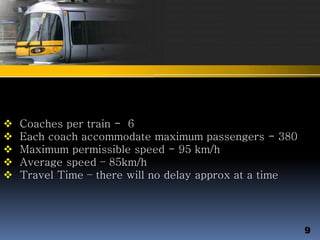
 Coaches per train - 6
 Each coach accommodate maximum passengers - 380
 Maximum permissible speed - 95 km/h
 Average speed – 85km/h
 Travel Time – there will no delay approx at a time
9
10
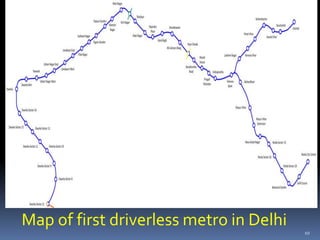
Map of first driverless metro in Delhi
11
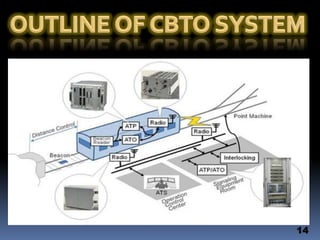
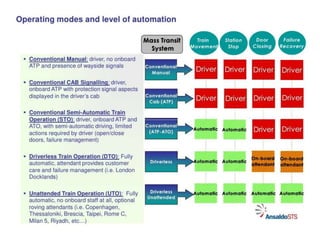
 Delhi metro runs on a UTO mode.
 DTO system is communication based system
(CBTO).
 Wireless network is present here.
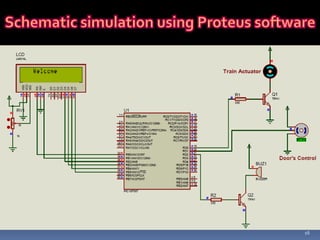
 PROTEOUS software is used in system
simulation.
 PIC microcontroller are used.
12
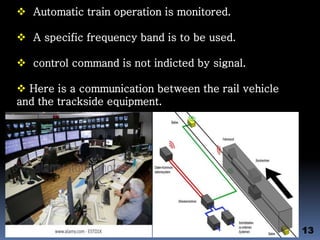
 Automatic train operation is monitored.
 A specific frequency band is to be used.
 control command is not indicted by signal.
 Here is a communication between the rail vehicle
and the trackside equipment.
13
14
15
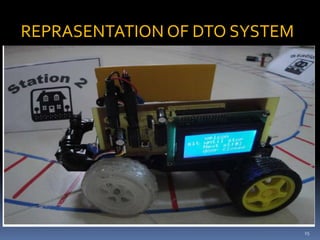
REPRASENTATION OF DTO SYSTEM
16
17
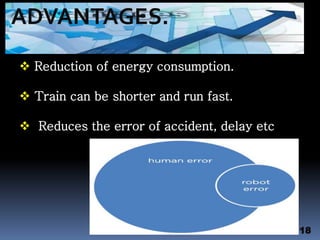
 Reduction of energy consumption.
 Train can be shorter and run fast.
 Reduces the error of accident, delay etc
18
ADVANTAGES.
 Attractiveness of public transport is increased.
 High quality of service with high frequencies.
 Train turnover time at terminal is extremely
short.
 DTO and UTO system is echo friendly.
19
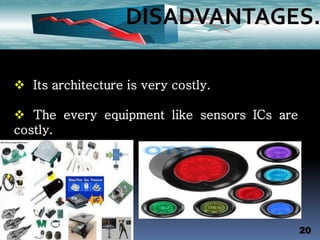
 Its architecture is very costly.
 The every equipment like sensors ICs are
costly.
20
DISADVANTAGES.
21
Although UTO Metro systems are more reliable,
comfortable and safer than road based systems
& it reduce congestion on the roads. However systems
planned in India shows that cost overrunning and under
utilization of capacity. Technology integration may look
like for the modernization of difference service
sector,transport. Estimation of passenger demand for
transit services should consider complete journey of
commuters including access time.
22
23
24

Driverless metro

  • 1.
    1 The driverless systemWay Of Life Submitted by;- Anjali kashyap 1303521008 3rd year, EEE
  • 2.
    The first implementationwas in London underground Victoria line. Open in 1967.  Over a length of 21.45 km and the work on this project was sanctioned on April.1955 The construction work started in 1956-62.  After crossing so many hurdles Driverless Metro started its journey on August,1967. 2
  • 3.
    3 Fully driverless systemwas only implemented in 2003 in Singapore.  75 KM Dubai lines is longest metro line in world.
  • 4.
    4 UNPRECEDENTED GROWTH OFPERSONAL VEHICLES. GROWING TRAFFIC CONGESTION. AIR POLLUTION AND TRAFFIC ACCIDENTS HAS BECOME A MAJOR CONCERN. THE FREQUENCY CAN BE IMRPROVED . SHEDUAL OF TRAIN BECOME MORE EXACT AND TIMELY. REDUCED FUEL CONSUMPTION. Why it is needed
  • 5.
     Requires 1/5thenergy per passenger km compared to road-based transport system.  Causes less noise, no air pollution and eco friendly transport system.  Occupies no road space if underground and only about 2.60 meters width of the road if elevated.  Reduces journey time.  Cost effective mass transport system.  Reducing traffic transport problems. 5
  • 6.
     Air-conditioning andventilation system for environmental control of stations and tunnels.  Automatic ticket vending and checking system.  Automatic door opening / closing .  A public address system is provided on the trains to announce approaching stations. 6
  • 7.
  • 8.
     Delhi metrois first driverless metro in India.  This can be opened in the end of 2016.  They would be run over Majlish park-Shiv Vihar and the over Janakpuri botanical Garden.  These train are run on the UTO mode. 8
  • 9.
     Coaches pertrain - 6  Each coach accommodate maximum passengers - 380  Maximum permissible speed - 95 km/h  Average speed – 85km/h  Travel Time – there will no delay approx at a time 9
  • 10.
    10 Map of firstdriverless metro in Delhi
  • 11.
  • 12.
     Delhi metroruns on a UTO mode.  DTO system is communication based system (CBTO).  Wireless network is present here.  PROTEOUS software is used in system simulation.  PIC microcontroller are used. 12
  • 13.
     Automatic trainoperation is monitored.  A specific frequency band is to be used.  control command is not indicted by signal.  Here is a communication between the rail vehicle and the trackside equipment. 13
  • 14.
  • 15.
  • 16.
  • 17.
  • 18.
     Reduction ofenergy consumption.  Train can be shorter and run fast.  Reduces the error of accident, delay etc 18 ADVANTAGES.
  • 19.
     Attractiveness ofpublic transport is increased.  High quality of service with high frequencies.  Train turnover time at terminal is extremely short.  DTO and UTO system is echo friendly. 19
  • 20.
     Its architectureis very costly.  The every equipment like sensors ICs are costly. 20 DISADVANTAGES.
  • 21.
  • 22.
    Although UTO Metrosystems are more reliable, comfortable and safer than road based systems & it reduce congestion on the roads. However systems planned in India shows that cost overrunning and under utilization of capacity. Technology integration may look like for the modernization of difference service sector,transport. Estimation of passenger demand for transit services should consider complete journey of commuters including access time. 22
  • 23.
  • 24.