Doxycycline
• Doxycycline is an antibiotic that is used in the
treatment of a number of types of infections
caused by bacteria and protozoa.
• It is useful for bacterial pneumonia, acne,
chlamydia infections, early Lyme disease,
cholera and syphilis.
• It is also useful for the treatment of malaria
when used with quinine and for the prevention
of malaria.
• Doxycycline can be used either by mouth or
intravenously.
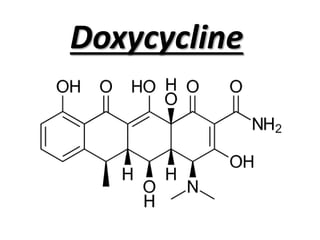
Doxycycline
Common side effects
• diarrhea,
• nausea,
• vomiting,
• a red rash,
• and an increased risk of a
sunburn.
Common side effects
• If used during pregnancy or in young
children may result in permanent
problems with the teeth including
changes in their color.
• Its use during breastfeeding is probably
safe.
• Doxycycline is a broad-spectrum
antibiotic of the tetracycline class.
Medical use
• Antiprotozoal
• It is used in prophylaxis against malaria.
• Antibacterial
• It is used in the treatment and prophylaxis of
anthrax and Leptospirosis.
• Antihelminthic
• Doxycycline kills the symbiotic Wolbachia
bacteria in the reproductive tracts of
parasitic filarial nematodes
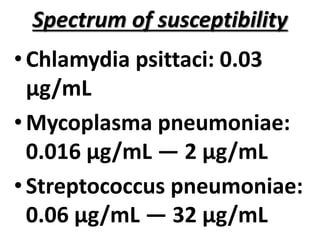
Spectrum of susceptibility
•Chlamydia psittaci: 0.03
μg/mL
•Mycoplasma pneumoniae:
0.016 μg/mL — 2 μg/mL
•Streptococcus pneumoniae:
0.06 μg/mL — 32 μg/mL
Adverse effects
•An erythematous rash in
sun-exposed parts of the
body has been reported to
occur in 7.3–21.2% of
persons taking doxycycline
for malaria prophylaxis.
Interactions
• Dairy, antacids, calcium
supplements, iron products, and
laxatives containing magnesium is
not inherently dangerous, but any
of these foods and supplements
may decrease doxycycline's
effectiveness.
Pregnancy and lactation
•It is contraindicated in
pregnancy through infancy
and childhood up to eight
years of age, due to the
potential for disrupting
bone and tooth
development.

Doxycycline

  • 1.
    Doxycycline • Doxycycline isan antibiotic that is used in the treatment of a number of types of infections caused by bacteria and protozoa. • It is useful for bacterial pneumonia, acne, chlamydia infections, early Lyme disease, cholera and syphilis. • It is also useful for the treatment of malaria when used with quinine and for the prevention of malaria. • Doxycycline can be used either by mouth or intravenously.
  • 2.
  • 3.
    Common side effects •diarrhea, • nausea, • vomiting, • a red rash, • and an increased risk of a sunburn.
  • 4.
    Common side effects •If used during pregnancy or in young children may result in permanent problems with the teeth including changes in their color. • Its use during breastfeeding is probably safe. • Doxycycline is a broad-spectrum antibiotic of the tetracycline class.
  • 5.
    Medical use • Antiprotozoal •It is used in prophylaxis against malaria. • Antibacterial • It is used in the treatment and prophylaxis of anthrax and Leptospirosis. • Antihelminthic • Doxycycline kills the symbiotic Wolbachia bacteria in the reproductive tracts of parasitic filarial nematodes
  • 6.
    Spectrum of susceptibility •Chlamydiapsittaci: 0.03 μg/mL •Mycoplasma pneumoniae: 0.016 μg/mL — 2 μg/mL •Streptococcus pneumoniae: 0.06 μg/mL — 32 μg/mL
  • 7.
    Adverse effects •An erythematousrash in sun-exposed parts of the body has been reported to occur in 7.3–21.2% of persons taking doxycycline for malaria prophylaxis.
  • 8.
    Interactions • Dairy, antacids,calcium supplements, iron products, and laxatives containing magnesium is not inherently dangerous, but any of these foods and supplements may decrease doxycycline's effectiveness.
  • 9.
    Pregnancy and lactation •Itis contraindicated in pregnancy through infancy and childhood up to eight years of age, due to the potential for disrupting bone and tooth development.