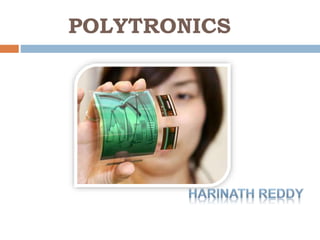
POLYTRONICS
WHAT IS POLYTRONICS…??
 Polymer + electronics
 Influence of plastic in electronics
 Certain plastic(polymers) have conductive & light
emitting property
 providing the basis of a new technology for flat–panel
displays with excellent visibility
PLASTIC ELECTRONICS
 Plastics could be made to conduct through doping(adding
impurities)
 depending on their chemical structure plastics may exhibit
electrically conductive, semi-conductive or insulating properties
 Chemical composition of plastics or conjugated polymers is
changed by doping to make them conducting
 Polymers such as polythiophenes, oligothiophenes and
pentacene have conductive property
 electronic behavior of these polymers is very different from
inorganic semiconductors such as silicon or gallium arsenide
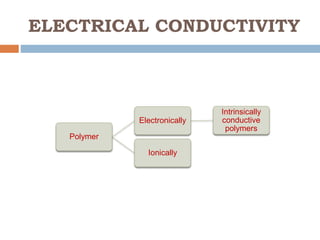
ELECTRICAL CONDUCTIVITY
Polymer
Electronically
Intrinsically
conductive
polymers
Ionically
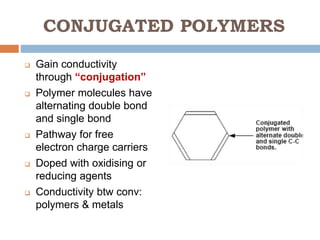
CONJUGATED POLYMERS
 Gain conductivity
through “conjugation”
 Polymer molecules have
alternating double bond
and single bond
 Pathway for free
electron charge carriers
 Doped with oxidising or
reducing agents
 Conductivity btw conv:
polymers & metals
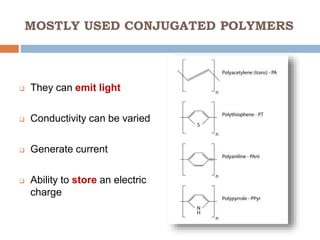
MOSTLY USED CONJUGATED POLYMERS
 They can emit light
 Conductivity can be varied
 Generate current
 Ability to store an electric
charge
MANUFACTURING TECHNIQUES
 Printing polymer circuits is known as Polymer
Mechatronics or Flexonics
 Developed by university of California in Berkeley
 No need of “assemble and build” technique
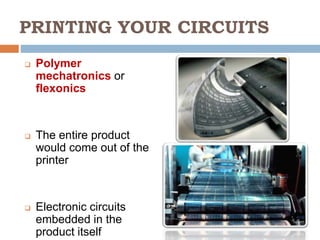
PRINTING YOUR CIRCUITS
 Polymer
mechatronics or
flexonics
 The entire product
would come out of the
printer
 Electronic circuits
embedded in the
product itself
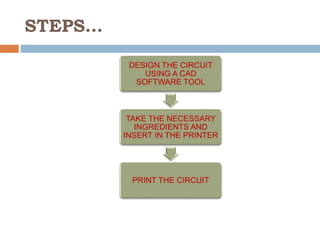
STEPS…
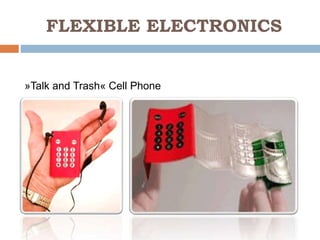
FLEXIBLE ELECTRONICS
»Talk and Trash« Cell Phone
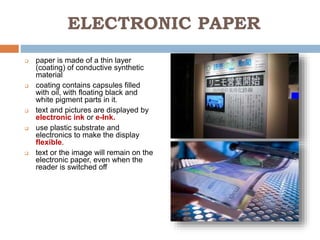
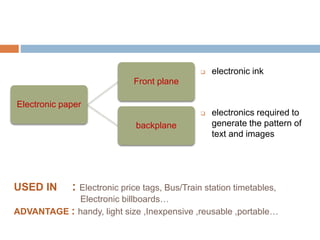
ELECTRONIC PAPER
 paper is made of a thin layer
(coating) of conductive synthetic
material
 coating contains capsules filled
with oil, with floating black and
white pigment parts in it.
 text and pictures are displayed by
electronic ink or e-Ink.
 use plastic substrate and
electronics to make the display
flexible.
 text or the image will remain on the
electronic paper, even when the
reader is switched off
USED IN : Electronic price tags, Bus/Train station timetables,
Electronic billboards…
ADVANTAGE : handy, light size ,Inexpensive ,reusable ,portable…
 electronic ink
 electronics required to
generate the pattern of
text and images
Electronic paper
Front plane
backplane
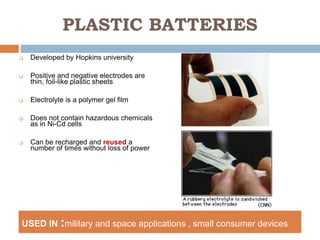
PLASTIC BATTERIES
 Developed by Hopkins university
 Positive and negative electrodes are
thin, foil-like plastic sheets
 Electrolyte is a polymer gel film
 Does not contain hazardous chemicals
as in Ni-Cd cells
 Can be recharged and reused a
number of times without loss of power
USED IN :military and space applications , small consumer devices
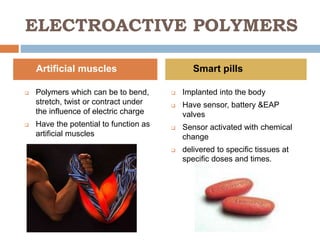
ELECTROACTIVE POLYMERS
 Polymers which can be to bend,
stretch, twist or contract under
the influence of electric charge
 Have the potential to function as
artificial muscles
 Implanted into the body
 Have sensor, battery &EAP
valves
 Sensor activated with chemical
change
 delivered to specific tissues at
specific doses and times.
Artificial muscles Smart pills
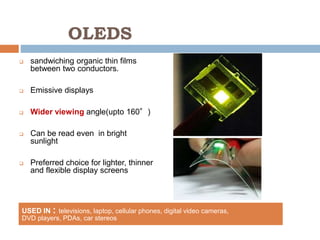
OLEDS
 sandwiching organic thin films
between two conductors.
 Emissive displays
 Wider viewing angle(upto 160°)
 Can be read even in bright
sunlight
 Preferred choice for lighter, thinner
and flexible display screens
USED IN : televisions, laptop, cellular phones, digital video cameras,
DVD players, PDAs, car stereos
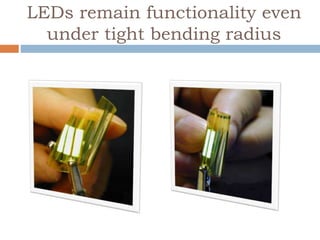
LEDs remain functionality even
under tight bending radius
ADVANTAGES
 freedom in design
 cheap foil substrates
 light-weight
 compact portable products
 cost-effective assembly with reel-to-reel processing
 environment-friendly
 printing instead of lithography
 Scale :printing can be done with almost unlimited length
DISADVANTAGES
 Need low temperature processes
 Substrates are not flat and have many defects
 Plastics are highly permeable for water and oxygen and
offer little protection for electronic components
FUTURE
 Rollable or foldable thin film
computers
 Electronic newspaper which
continually updated
 Fruit and vegetables labels
 Invisible chips will one day be
integrated in paper, postage
stamps, bank notes etc with
intelligence
CONCLUSION
 provide a cheap method for the fabrication of simple low-cost electronic products
 Polymer materials offer a high degree of freedom and flexibility in the design of the
materials, devices and systems
 Scarcity of semiconductors and power compels the new generation to move to
polytronics.
 “THE IDEA OF POLYTRONICS IS NOT TO REPLACE SILICON TECHNOLOGY BUT TO DEVELOP
NEW APPLICATION IN CONJUNCTION WITH SILICON”
Documents.mx polytronics

Documents.mx polytronics

  • 3.
  • 4.
    WHAT IS POLYTRONICS…?? Polymer + electronics  Influence of plastic in electronics  Certain plastic(polymers) have conductive & light emitting property  providing the basis of a new technology for flat–panel displays with excellent visibility
  • 5.
    PLASTIC ELECTRONICS  Plasticscould be made to conduct through doping(adding impurities)  depending on their chemical structure plastics may exhibit electrically conductive, semi-conductive or insulating properties  Chemical composition of plastics or conjugated polymers is changed by doping to make them conducting  Polymers such as polythiophenes, oligothiophenes and pentacene have conductive property  electronic behavior of these polymers is very different from inorganic semiconductors such as silicon or gallium arsenide
  • 6.
  • 7.
    CONJUGATED POLYMERS  Gainconductivity through “conjugation”  Polymer molecules have alternating double bond and single bond  Pathway for free electron charge carriers  Doped with oxidising or reducing agents  Conductivity btw conv: polymers & metals
  • 8.
    MOSTLY USED CONJUGATEDPOLYMERS  They can emit light  Conductivity can be varied  Generate current  Ability to store an electric charge
  • 9.
    MANUFACTURING TECHNIQUES  Printingpolymer circuits is known as Polymer Mechatronics or Flexonics  Developed by university of California in Berkeley  No need of “assemble and build” technique
  • 10.
    PRINTING YOUR CIRCUITS Polymer mechatronics or flexonics  The entire product would come out of the printer  Electronic circuits embedded in the product itself
  • 11.
  • 12.
  • 13.
    ELECTRONIC PAPER  paperis made of a thin layer (coating) of conductive synthetic material  coating contains capsules filled with oil, with floating black and white pigment parts in it.  text and pictures are displayed by electronic ink or e-Ink.  use plastic substrate and electronics to make the display flexible.  text or the image will remain on the electronic paper, even when the reader is switched off
  • 14.
    USED IN :Electronic price tags, Bus/Train station timetables, Electronic billboards… ADVANTAGE : handy, light size ,Inexpensive ,reusable ,portable…  electronic ink  electronics required to generate the pattern of text and images Electronic paper Front plane backplane
  • 15.
    PLASTIC BATTERIES  Developedby Hopkins university  Positive and negative electrodes are thin, foil-like plastic sheets  Electrolyte is a polymer gel film  Does not contain hazardous chemicals as in Ni-Cd cells  Can be recharged and reused a number of times without loss of power USED IN :military and space applications , small consumer devices
  • 16.
    ELECTROACTIVE POLYMERS  Polymerswhich can be to bend, stretch, twist or contract under the influence of electric charge  Have the potential to function as artificial muscles  Implanted into the body  Have sensor, battery &EAP valves  Sensor activated with chemical change  delivered to specific tissues at specific doses and times. Artificial muscles Smart pills
  • 17.
    OLEDS  sandwiching organicthin films between two conductors.  Emissive displays  Wider viewing angle(upto 160°)  Can be read even in bright sunlight  Preferred choice for lighter, thinner and flexible display screens USED IN : televisions, laptop, cellular phones, digital video cameras, DVD players, PDAs, car stereos
  • 18.
    LEDs remain functionalityeven under tight bending radius
  • 19.
    ADVANTAGES  freedom indesign  cheap foil substrates  light-weight  compact portable products  cost-effective assembly with reel-to-reel processing  environment-friendly  printing instead of lithography  Scale :printing can be done with almost unlimited length
  • 20.
    DISADVANTAGES  Need lowtemperature processes  Substrates are not flat and have many defects  Plastics are highly permeable for water and oxygen and offer little protection for electronic components
  • 21.
    FUTURE  Rollable orfoldable thin film computers  Electronic newspaper which continually updated  Fruit and vegetables labels  Invisible chips will one day be integrated in paper, postage stamps, bank notes etc with intelligence
  • 22.
    CONCLUSION  provide acheap method for the fabrication of simple low-cost electronic products  Polymer materials offer a high degree of freedom and flexibility in the design of the materials, devices and systems  Scarcity of semiconductors and power compels the new generation to move to polytronics.  “THE IDEA OF POLYTRONICS IS NOT TO REPLACE SILICON TECHNOLOGY BUT TO DEVELOP NEW APPLICATION IN CONJUNCTION WITH SILICON”