FLEXIBLE ELECTRONICS
INTRODUCTION
• The electronic circuits has driven advances in
technology for over a half century.
• Today your cell phones, computer and even car
all rely on the engineering that has made
electronics circuit smaller, faster and smarter, but
circuits are mechanically limits they are rigid.
• Now several scientists are hoping
to change that as a new type of electronics
are developing that are FLEXIBLE as humans
WHAT IS FLEXIBLE
ELECTRONICS?
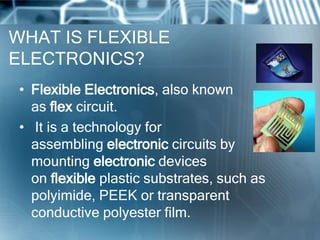
• Flexible Electronics, also known
as flex circuit.
• It is a technology for
assembling electronic circuits by
mounting electronic devices
on flexible plastic substrates, such as
polyimide, PEEK or transparent
conductive polyester film.
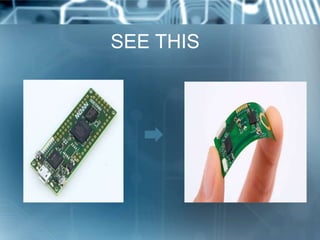
SEE THIS
Manufacturing method
Flexible electronics are composed of Backplane and
Frontplane optoelectronics and Encapsulation that are
fabricated as fully integrated circuits on flexible substrates.
Two basic approaches have been employed to make
Flexible electronics:
1) Transfer and Bonding of completed circuits to a
flexible substrate.
2) Fabrication of the circuits directly on the flexible
substrate.
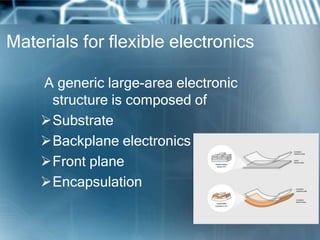
Materials for flexible electronics
A generic large-area electronic
structure is composed of
Substrate
Backplane electronics
Front plane
Encapsulation
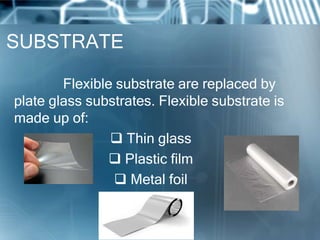
SUBSTRATE
Flexible substrate are replaced by
plate glass substrates. Flexible substrate is
made up of:
 Thin glass
 Plastic film
 Metal foil
Backplane technology
• Backplanes provide or collect power
and signal to or from frontplanes
• Backplanes may be active or passive
• Backplane electronics include:
 Silicon Thin-Film Transistors
 Organic Thin-Film Transistors
 Transparent Thin-Film Transistors
Materials for Interconnects and
contacts
Frontplane technology
• Frontplane carry the specific optoelectronic
application.
• Frontplane materials of Display include:
Liquid Crystal Displays
Electrophoretic Displays
Organic Light-Emitting Displays
Sensors
Actuators
Electronic Textiles
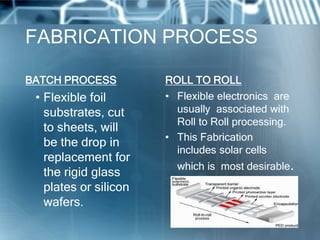
FABRICATION PROCESS
BATCH PROCESS
• Flexible foil
substrates, cut
to sheets, will
be the drop in
replacement for
the rigid glass
plates or silicon
wafers.
ROLL TO ROLL
• Flexible electronics are
usually associated with
Roll to Roll processing.
• This Fabrication
includes solar cells
which is most desirable.
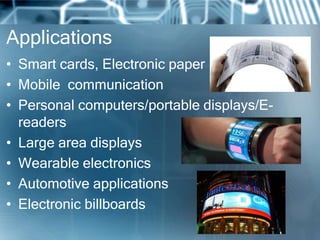
Applications
• Smart cards, Electronic paper
• Mobile communication
• Personal computers/portable displays/E-
readers
• Large area displays
• Wearable electronics
• Automotive applications
• Electronic billboards
Advantages Disadvantages
• Response time is
much faster
• Thinner Display
• Better contrast ratio
• Wider viewing
angles
• Light weight
• Less Energy
consumption
• Expensive
• Limited market
availability
• Integration of
components would
be challenge
• Precision methods
required
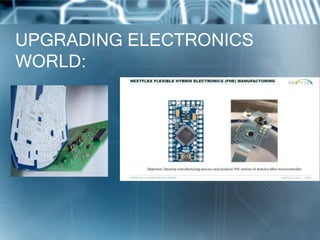
UPGRADING ELECTRONICS
WORLD:
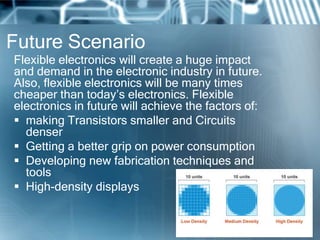
Future Scenario
Flexible electronics will create a huge impact
and demand in the electronic industry in future.
Also, flexible electronics will be many times
cheaper than today’s electronics. Flexible
electronics in future will achieve the factors of:
 making Transistors smaller and Circuits
denser
 Getting a better grip on power consumption
 Developing new fabrication techniques and
tools
 High-density displays
Conclusion
Based on the current trends we outlined
the more likely technological Future needs
and discussed the potential exploits of
Flexible Electronics in various manners.
The research on Flexible Electronics may
lead to development of many innovative
applications.
Thank you

Flelectronic

  • 1.
  • 2.
    INTRODUCTION • The electroniccircuits has driven advances in technology for over a half century. • Today your cell phones, computer and even car all rely on the engineering that has made electronics circuit smaller, faster and smarter, but circuits are mechanically limits they are rigid. • Now several scientists are hoping to change that as a new type of electronics are developing that are FLEXIBLE as humans
  • 3.
    WHAT IS FLEXIBLE ELECTRONICS? •Flexible Electronics, also known as flex circuit. • It is a technology for assembling electronic circuits by mounting electronic devices on flexible plastic substrates, such as polyimide, PEEK or transparent conductive polyester film.
  • 4.
  • 5.
    Manufacturing method Flexible electronicsare composed of Backplane and Frontplane optoelectronics and Encapsulation that are fabricated as fully integrated circuits on flexible substrates. Two basic approaches have been employed to make Flexible electronics: 1) Transfer and Bonding of completed circuits to a flexible substrate. 2) Fabrication of the circuits directly on the flexible substrate.
  • 6.
    Materials for flexibleelectronics A generic large-area electronic structure is composed of Substrate Backplane electronics Front plane Encapsulation
  • 7.
    SUBSTRATE Flexible substrate arereplaced by plate glass substrates. Flexible substrate is made up of:  Thin glass  Plastic film  Metal foil
  • 8.
    Backplane technology • Backplanesprovide or collect power and signal to or from frontplanes • Backplanes may be active or passive • Backplane electronics include:  Silicon Thin-Film Transistors  Organic Thin-Film Transistors  Transparent Thin-Film Transistors Materials for Interconnects and contacts
  • 9.
    Frontplane technology • Frontplanecarry the specific optoelectronic application. • Frontplane materials of Display include: Liquid Crystal Displays Electrophoretic Displays Organic Light-Emitting Displays Sensors Actuators Electronic Textiles
  • 10.
    FABRICATION PROCESS BATCH PROCESS •Flexible foil substrates, cut to sheets, will be the drop in replacement for the rigid glass plates or silicon wafers. ROLL TO ROLL • Flexible electronics are usually associated with Roll to Roll processing. • This Fabrication includes solar cells which is most desirable.
  • 11.
    Applications • Smart cards,Electronic paper • Mobile communication • Personal computers/portable displays/E- readers • Large area displays • Wearable electronics • Automotive applications • Electronic billboards
  • 12.
    Advantages Disadvantages • Responsetime is much faster • Thinner Display • Better contrast ratio • Wider viewing angles • Light weight • Less Energy consumption • Expensive • Limited market availability • Integration of components would be challenge • Precision methods required
  • 13.
  • 14.
    Future Scenario Flexible electronicswill create a huge impact and demand in the electronic industry in future. Also, flexible electronics will be many times cheaper than today’s electronics. Flexible electronics in future will achieve the factors of:  making Transistors smaller and Circuits denser  Getting a better grip on power consumption  Developing new fabrication techniques and tools  High-density displays
  • 15.
    Conclusion Based on thecurrent trends we outlined the more likely technological Future needs and discussed the potential exploits of Flexible Electronics in various manners. The research on Flexible Electronics may lead to development of many innovative applications.
  • 16.