S 1
Presented By:
Mohsin Shad (2013-Bc-005)
Asmat Shahzad (2013-Bc-026)
Muhammad Zulqarnain (2013-Bc-027)
Hamza Zafar (2013-Bc-032)
Presented To :
Miss Huma Mujahad
DNA AND RNA POLYMERASES 2
DNA Polymerases
• The enzymes that create DNA molecules by assembling
nucleotides
• These enzymes are essential to DNA replication
• They usually work in pairs to create two
identical DNA strands from a single original DNA molecule
• There are three main types of prokaryotic DNA polymerases
• DNA polymerases I
• DNA polymerases II
• DNA polymerases III
3
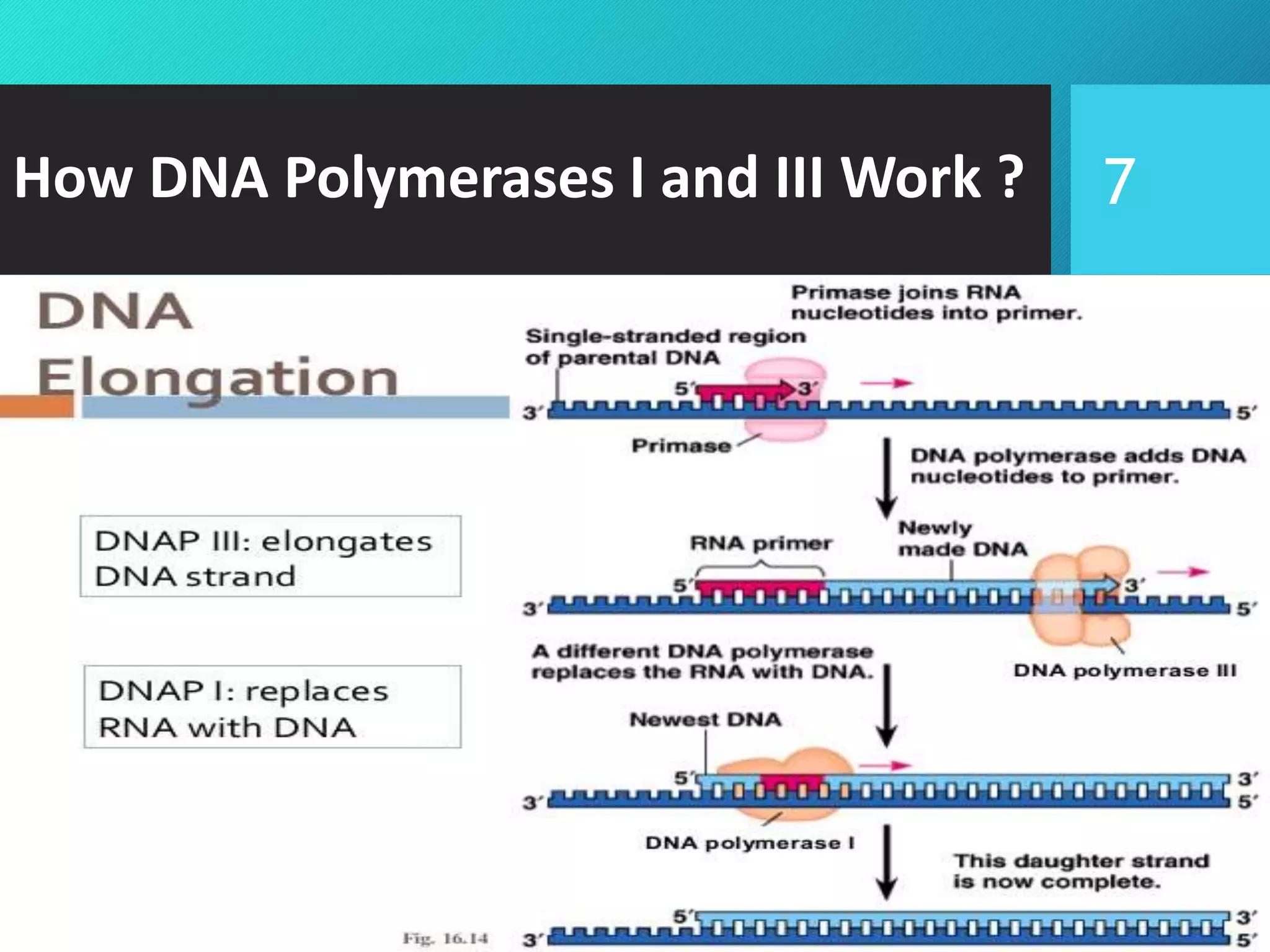
DNA Polymerases I
• DNA Polymerases I was firstly discovered in 1958 by
Arthur Kornberg who received Noble Prize in
Physiology and Medicine in 1959
• DNA Polymerases I is mainly responsible for:
• Proofreading of DNA strand
• Repairing of damage DNA
• Filling the gap between the okazaki fragments
• Removal of RNA primer
4
DNA Polymerases II
• DNA Polymerases II was identified later during
the experiment on mutant E.coli cell line
• DNA Polymerases II have temporary function
when DNA Polymerases I and DNA Polymerases
III are not functional
• Still capable for doing synthesis on damage
template
• Participating in DNA repairing
5
DNA Polymerases III
• DNA Polymerases III was identified later during
the experiment on mutant E.coli cell line.
• DNA Polymerases III is heterodimer enzyme
composed of ten different subunits
• It is true enzyme that is responsible for the
elongation process
• It also responsible for the polymerization of
Nucleotide and make most of the DNA during
replication.
6
How DNA Polymerases I and III Work ? 7
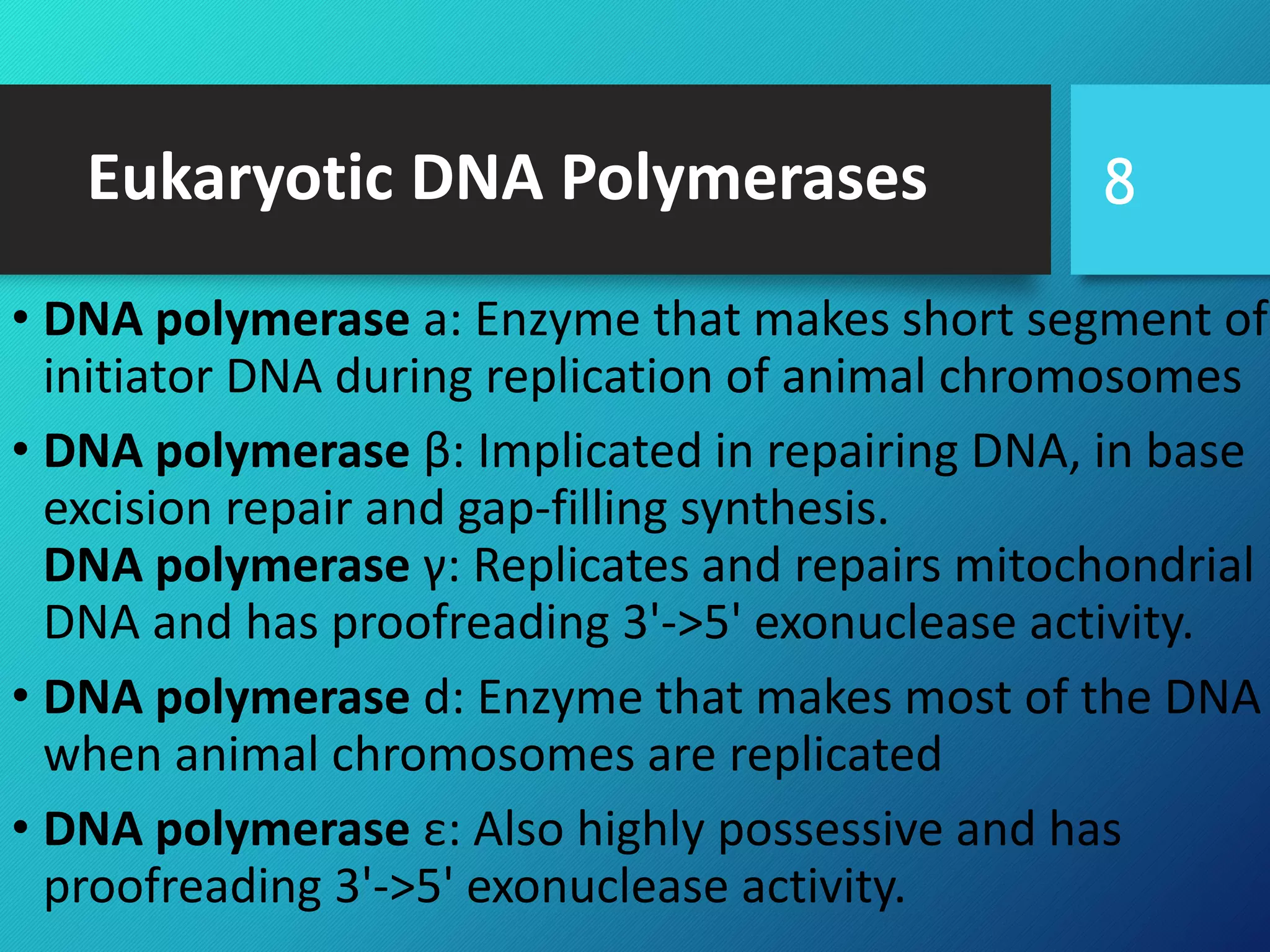
Eukaryotic DNA Polymerases
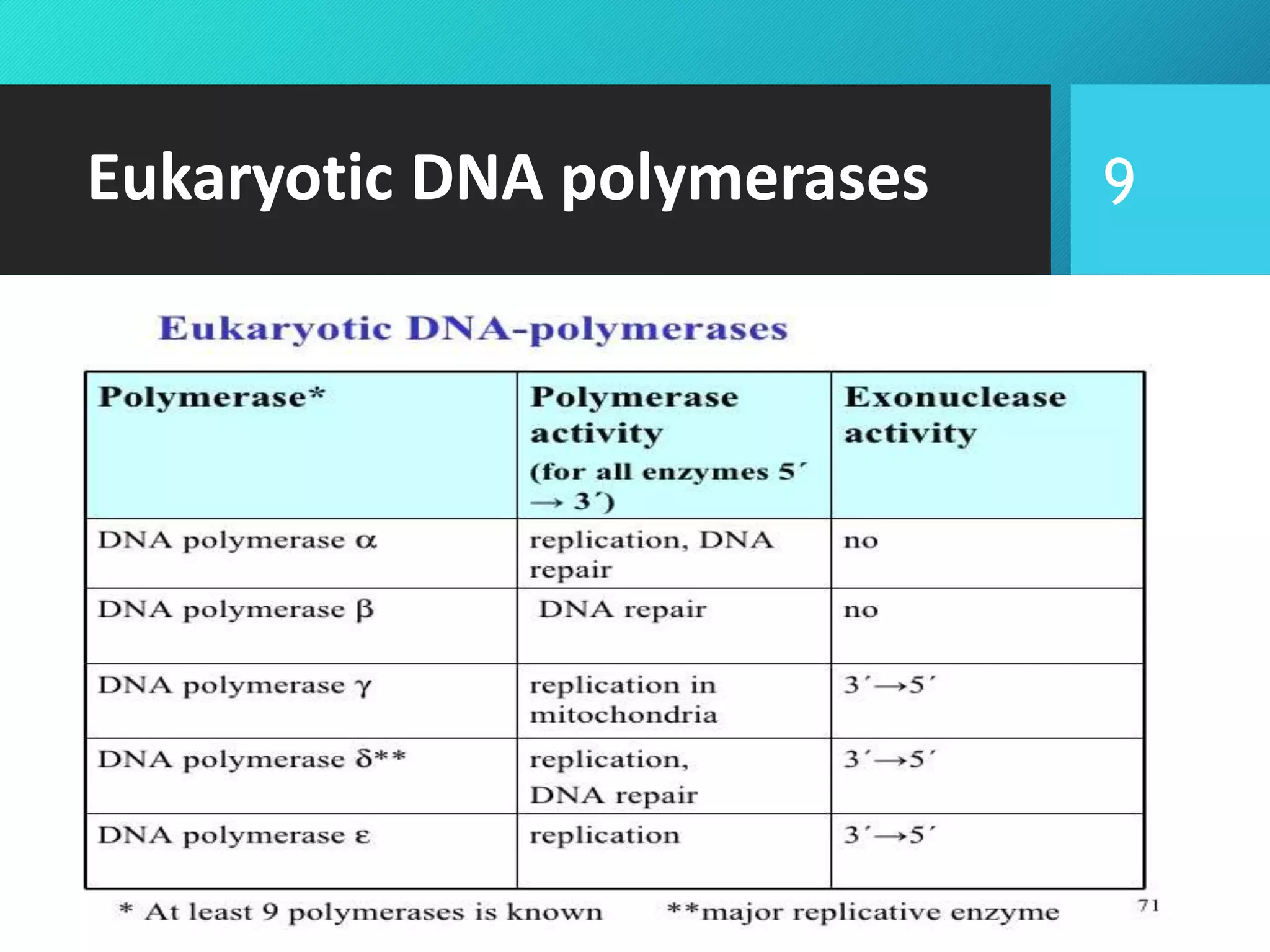
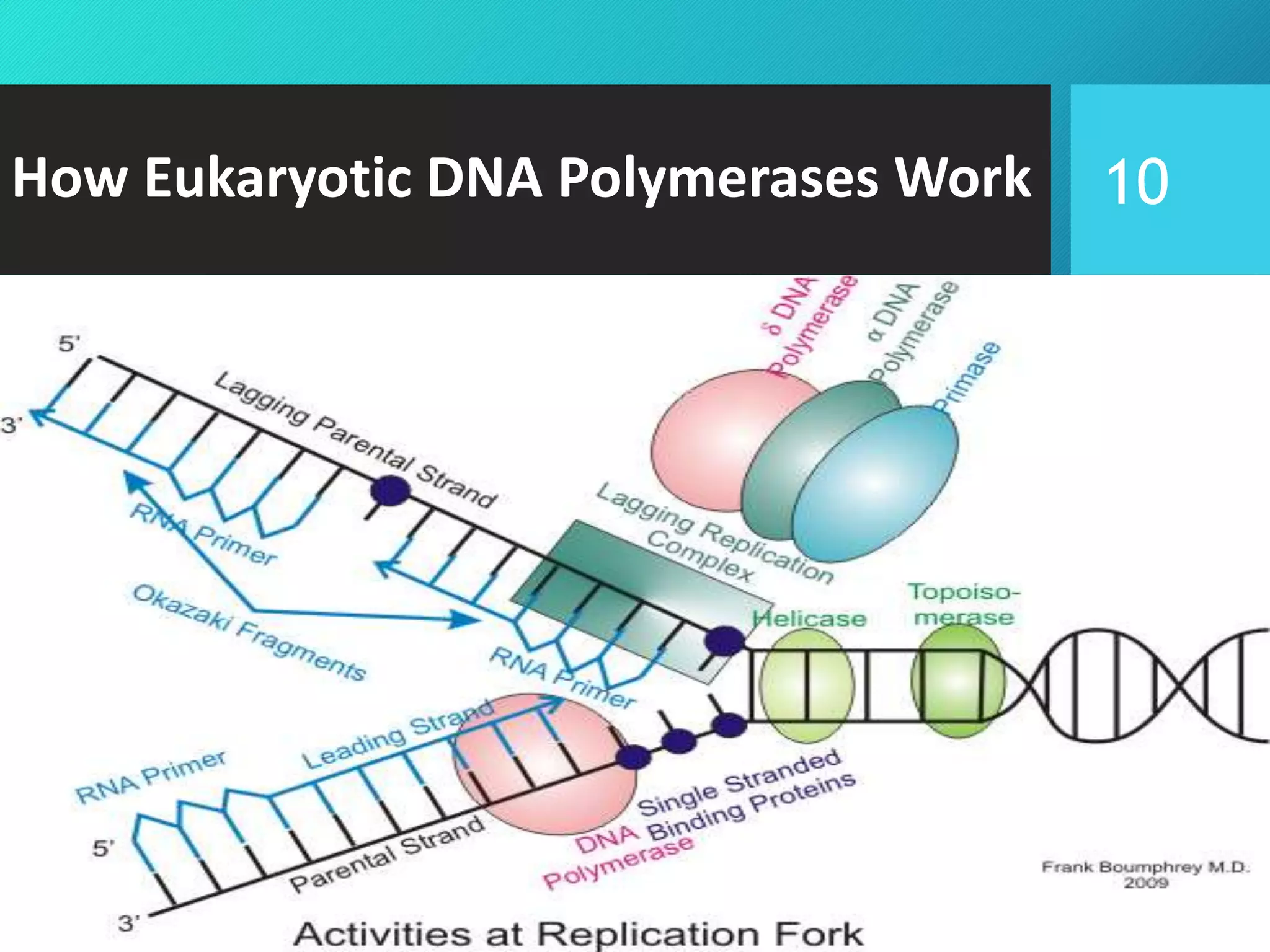
• DNA polymerase a: Enzyme that makes short segment of
initiator DNA during replication of animal chromosomes
• DNA polymerase β: Implicated in repairing DNA, in base
excision repair and gap-filling synthesis.
DNA polymerase γ: Replicates and repairs mitochondrial
DNA and has proofreading 3'->5' exonuclease activity.
• DNA polymerase d: Enzyme that makes most of the DNA
when animal chromosomes are replicated
• DNA polymerase ε: Also highly possessive and has
proofreading 3'->5' exonuclease activity.
8
Eukaryotic DNA polymerases 9
How Eukaryotic DNA Polymerases Work 10
RNA Polymerase
• Enzyme that synthesizes RNA using a DNA
template through a process called transcription
• RNA polymerase enzymes are essential to life and
are found in all organisms and many viruses
• It polymerizes ribonucleotide at the 3 end of an
RNA transcript
11
Bacterial RNA Polymerases
• RNA polymerases is enzyme that synthesizes RNA
using a DNA template
• In bacteria only one RNA polymerases is
participate in transcription
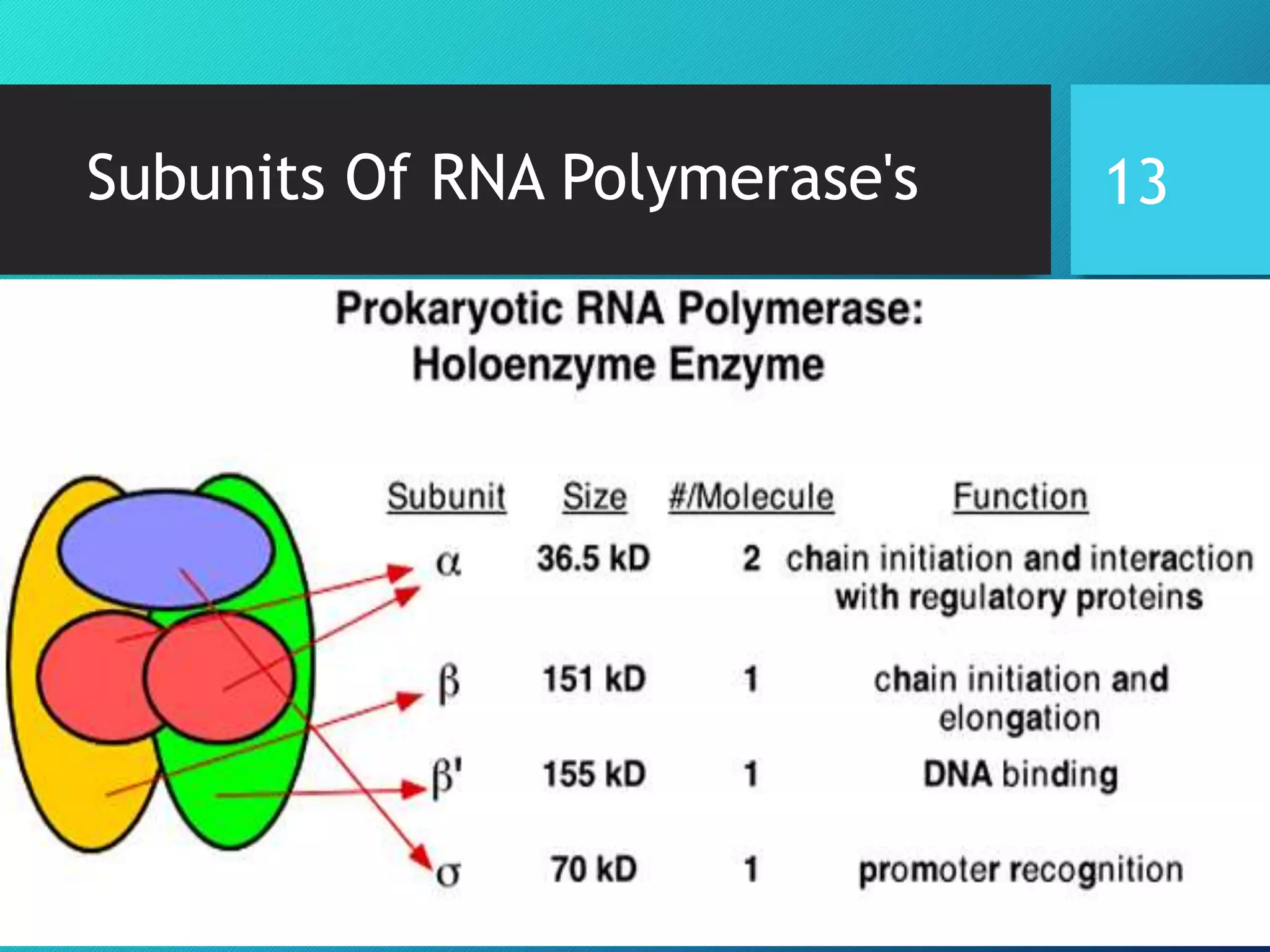
• Bacterial RNA polymerases has four subunit.
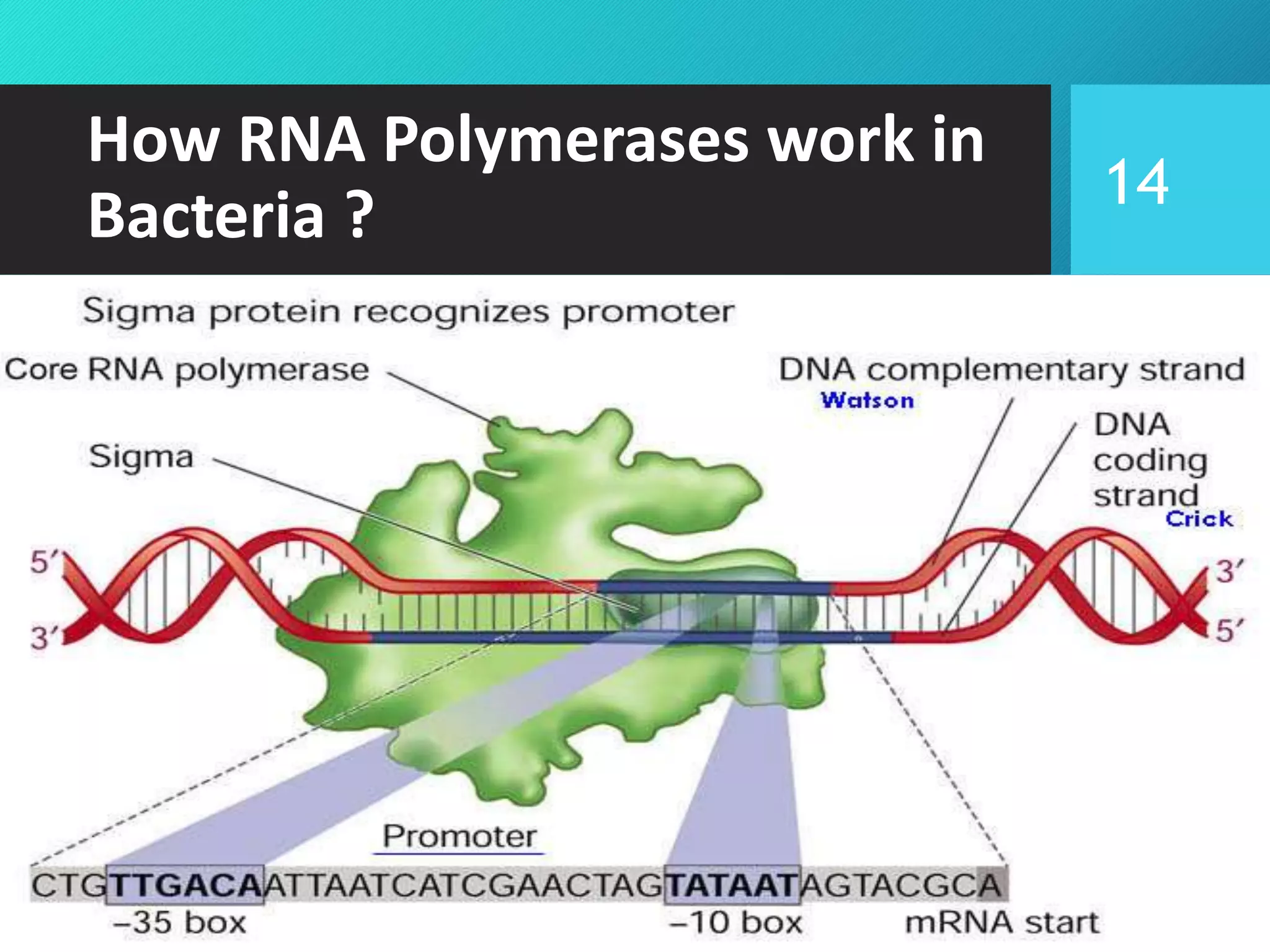
• The sigma subunit of bacterial RNA polymerases
recognized promoter
• In bacteria it form monocistronic and polycistronic
mRNA
12
Subunits Of RNA Polymerase's 13
How RNA Polymerases work in
Bacteria ? 14
Eukaryotic RNA Polymerases
There are three types of RNA polymerases used for
eukaryotic transcription
• RNA polymerase I Eukaryotic RNA polymerase that
transcribes the genes for the large ribosomal RNAs
• RNA polymerase II Eukaryotic RNA polymerase
that transcribes the genes encoding proteins
• RNA polymerase III Eukaryotic RNA polymerase
that transcribes the genes for 5S ribosomal RNA
and transfer RNA
15
Prokaryotic vs Eukaryotic RNA
Polymerases 16
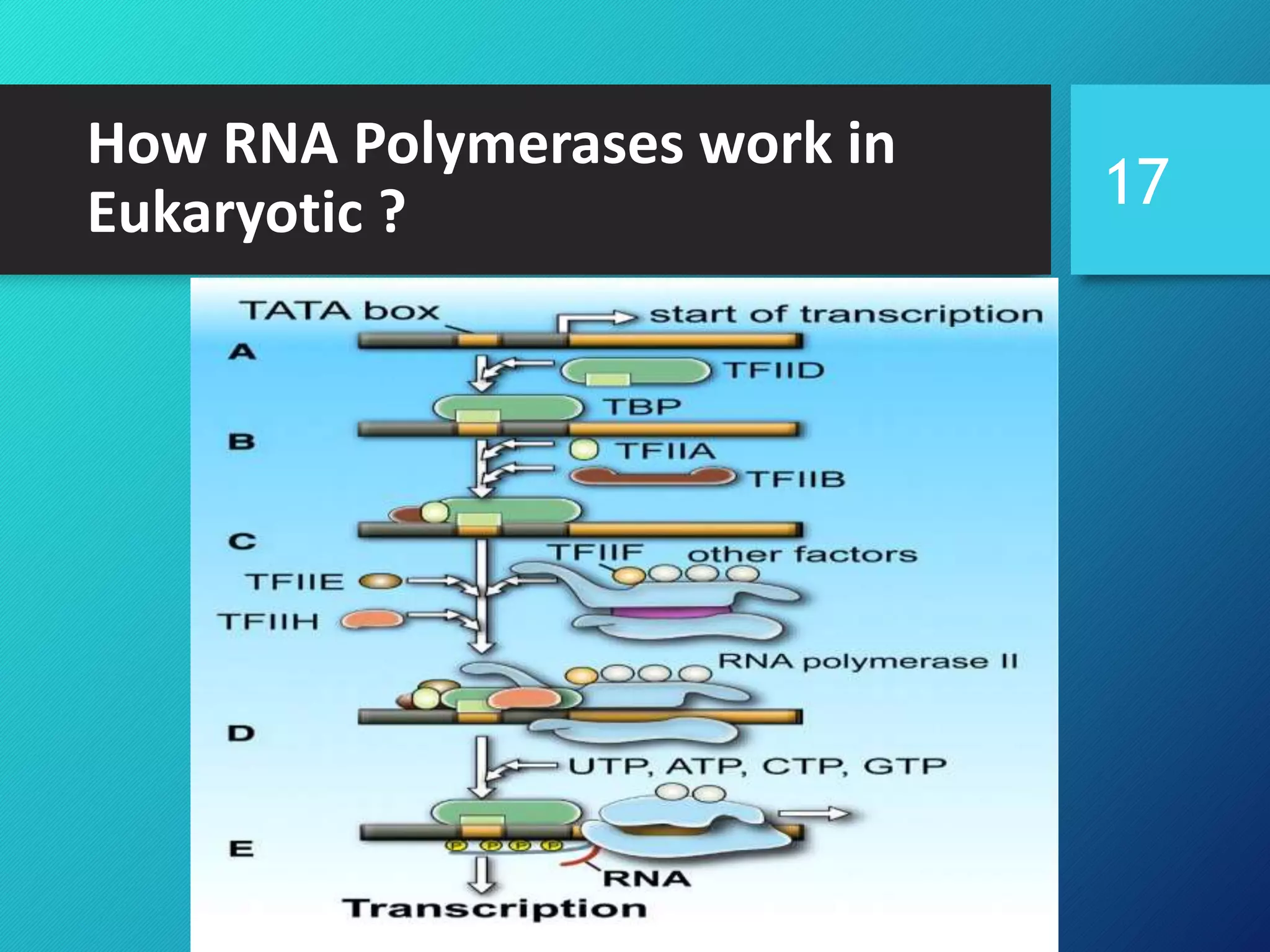
How RNA Polymerases work in
Eukaryotic ? 17
Any Question ? 18
For Listening Our Presentation

dna-and-rna-polymerases-160213130043 (1).pdf

  • 1.
    S 1 Presented By: MohsinShad (2013-Bc-005) Asmat Shahzad (2013-Bc-026) Muhammad Zulqarnain (2013-Bc-027) Hamza Zafar (2013-Bc-032) Presented To : Miss Huma Mujahad
  • 2.
    DNA AND RNAPOLYMERASES 2
  • 3.
    DNA Polymerases • Theenzymes that create DNA molecules by assembling nucleotides • These enzymes are essential to DNA replication • They usually work in pairs to create two identical DNA strands from a single original DNA molecule • There are three main types of prokaryotic DNA polymerases • DNA polymerases I • DNA polymerases II • DNA polymerases III 3
  • 4.
    DNA Polymerases I •DNA Polymerases I was firstly discovered in 1958 by Arthur Kornberg who received Noble Prize in Physiology and Medicine in 1959 • DNA Polymerases I is mainly responsible for: • Proofreading of DNA strand • Repairing of damage DNA • Filling the gap between the okazaki fragments • Removal of RNA primer 4
  • 5.
    DNA Polymerases II •DNA Polymerases II was identified later during the experiment on mutant E.coli cell line • DNA Polymerases II have temporary function when DNA Polymerases I and DNA Polymerases III are not functional • Still capable for doing synthesis on damage template • Participating in DNA repairing 5
  • 6.
    DNA Polymerases III •DNA Polymerases III was identified later during the experiment on mutant E.coli cell line. • DNA Polymerases III is heterodimer enzyme composed of ten different subunits • It is true enzyme that is responsible for the elongation process • It also responsible for the polymerization of Nucleotide and make most of the DNA during replication. 6
  • 7.
    How DNA PolymerasesI and III Work ? 7
  • 8.
    Eukaryotic DNA Polymerases •DNA polymerase a: Enzyme that makes short segment of initiator DNA during replication of animal chromosomes • DNA polymerase β: Implicated in repairing DNA, in base excision repair and gap-filling synthesis. DNA polymerase γ: Replicates and repairs mitochondrial DNA and has proofreading 3'->5' exonuclease activity. • DNA polymerase d: Enzyme that makes most of the DNA when animal chromosomes are replicated • DNA polymerase ε: Also highly possessive and has proofreading 3'->5' exonuclease activity. 8
  • 9.
  • 10.
    How Eukaryotic DNAPolymerases Work 10
  • 11.
    RNA Polymerase • Enzymethat synthesizes RNA using a DNA template through a process called transcription • RNA polymerase enzymes are essential to life and are found in all organisms and many viruses • It polymerizes ribonucleotide at the 3 end of an RNA transcript 11
  • 12.
    Bacterial RNA Polymerases •RNA polymerases is enzyme that synthesizes RNA using a DNA template • In bacteria only one RNA polymerases is participate in transcription • Bacterial RNA polymerases has four subunit. • The sigma subunit of bacterial RNA polymerases recognized promoter • In bacteria it form monocistronic and polycistronic mRNA 12
  • 13.
    Subunits Of RNAPolymerase's 13
  • 14.
    How RNA Polymeraseswork in Bacteria ? 14
  • 15.
    Eukaryotic RNA Polymerases Thereare three types of RNA polymerases used for eukaryotic transcription • RNA polymerase I Eukaryotic RNA polymerase that transcribes the genes for the large ribosomal RNAs • RNA polymerase II Eukaryotic RNA polymerase that transcribes the genes encoding proteins • RNA polymerase III Eukaryotic RNA polymerase that transcribes the genes for 5S ribosomal RNA and transfer RNA 15
  • 16.
    Prokaryotic vs EukaryoticRNA Polymerases 16
  • 17.
    How RNA Polymeraseswork in Eukaryotic ? 17
  • 18.
    Any Question ?18 For Listening Our Presentation