DNA Replication
Created By: Patrick Fedigan
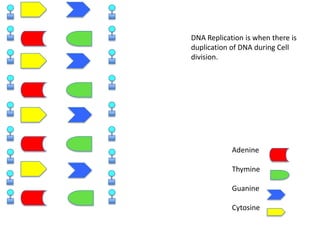
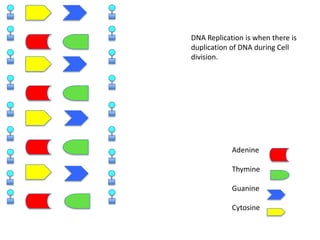
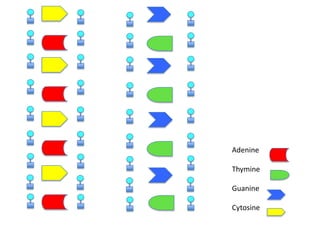
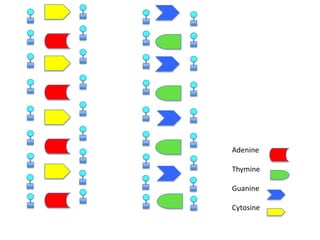
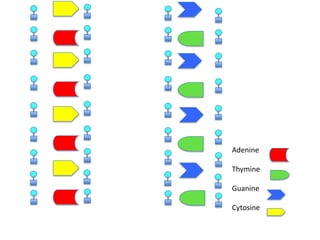
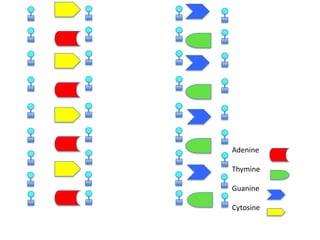
DNA Replication is when there is
duplication of DNA during Cell
division.

Adenine
Thymine
Guanine
Cytosine
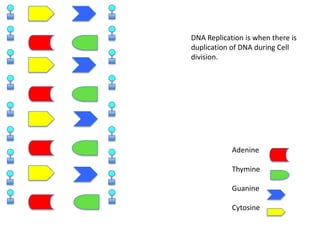
DNA Replication is when there is
duplication of DNA during Cell
division.

Adenine
Thymine
Guanine
Cytosine
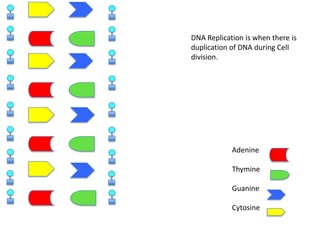
DNA Replication is when there is
duplication of DNA during Cell
division.

Adenine
Thymine
Guanine
Cytosine
DNA Replication is when there is
duplication of DNA during Cell
division.

Adenine
Thymine
Guanine
Cytosine
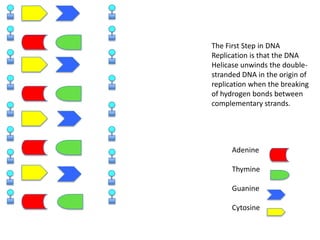
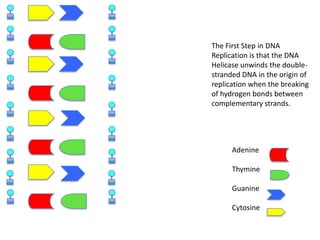
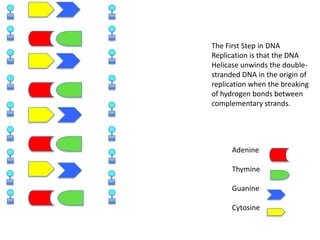
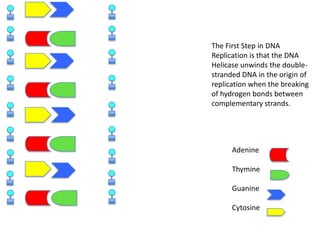
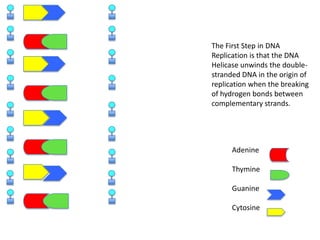
The First Step in DNA
Replication is that the DNA
Helicase unwinds the doublestranded DNA in the origin of
replication when the breaking
of hydrogen bonds between
complementary strands.

Adenine
Thymine
Guanine
Cytosine
The First Step in DNA
Replication is that the DNA
Helicase unwinds the doublestranded DNA in the origin of
replication when the breaking
of hydrogen bonds between
complementary strands.

Adenine
Thymine
Guanine
Cytosine
The First Step in DNA
Replication is that the DNA
Helicase unwinds the doublestranded DNA in the origin of
replication when the breaking
of hydrogen bonds between
complementary strands.

Adenine
Thymine
Guanine
Cytosine
The First Step in DNA
Replication is that the DNA
Helicase unwinds the doublestranded DNA in the origin of
replication when the breaking
of hydrogen bonds between
complementary strands.

Adenine
Thymine
Guanine
Cytosine
The First Step in DNA
Replication is that the DNA
Helicase unwinds the doublestranded DNA in the origin of
replication when the breaking
of hydrogen bonds between
complementary strands.

Adenine
Thymine
Guanine
Cytosine
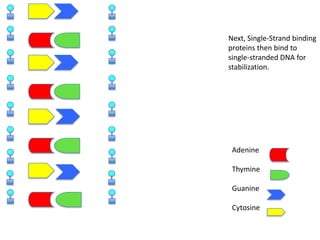
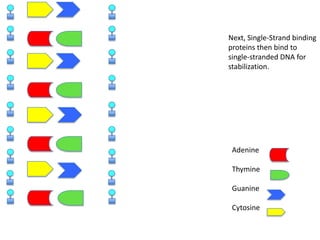
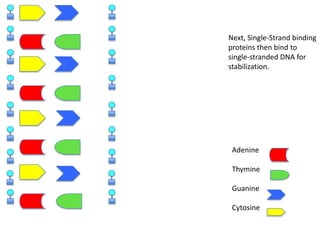
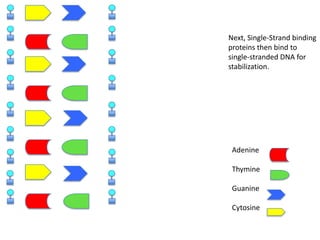
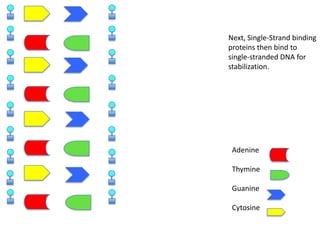
Next, Single-Strand binding
proteins then bind to
single-stranded DNA for
stabilization.

Adenine
Thymine
Guanine
Cytosine
Next, Single-Strand binding
proteins then bind to
single-stranded DNA for
stabilization.

Adenine
Thymine
Guanine
Cytosine
Next, Single-Strand binding
proteins then bind to
single-stranded DNA for
stabilization.

Adenine
Thymine
Guanine
Cytosine
Next, Single-Strand binding
proteins then bind to
single-stranded DNA for
stabilization.

Adenine
Thymine
Guanine
Cytosine
Next, Single-Strand binding
proteins then bind to
single-stranded DNA for
stabilization.

Adenine
Thymine
Guanine
Cytosine
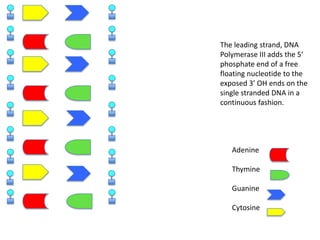
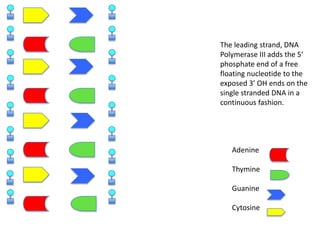
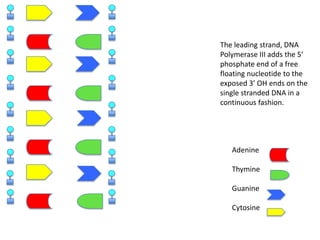
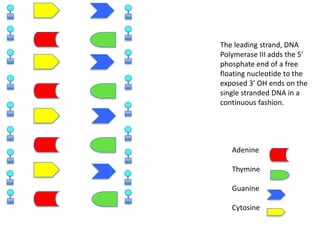
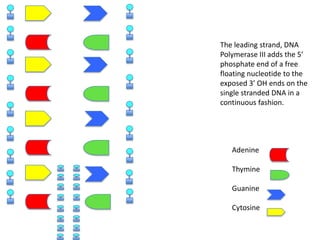
The leading strand, DNA
Polymerase III adds the 5’
phosphate end of a free
floating nucleotide to the
exposed 3’ OH ends on the
single stranded DNA in a
continuous fashion.

Adenine
Thymine
Guanine
Cytosine
The leading strand, DNA
Polymerase III adds the 5’
phosphate end of a free
floating nucleotide to the
exposed 3’ OH ends on the
single stranded DNA in a
continuous fashion.

Adenine
Thymine
Guanine
Cytosine
The leading strand, DNA
Polymerase III adds the 5’
phosphate end of a free
floating nucleotide to the
exposed 3’ OH ends on the
single stranded DNA in a
continuous fashion.

Adenine
Thymine
Guanine
Cytosine
The leading strand, DNA
Polymerase III adds the 5’
phosphate end of a free
floating nucleotide to the
exposed 3’ OH ends on the
single stranded DNA in a
continuous fashion.

Adenine
Thymine
Guanine
Cytosine
The leading strand, DNA
Polymerase III adds the 5’
phosphate end of a free
floating nucleotide to the
exposed 3’ OH ends on the
single stranded DNA in a
continuous fashion.

Adenine
Thymine
Guanine
Cytosine
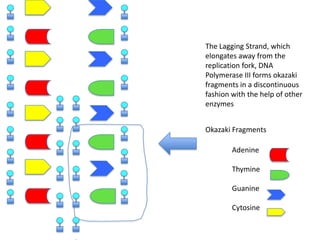
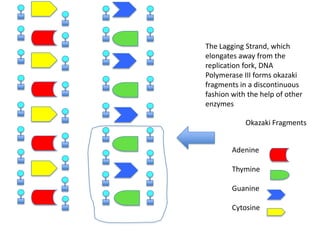
The Lagging Strand, which
elongates away from the
replication fork, DNA
Polymerase III forms okazaki
fragments in a discontinuous
fashion with the help of other
enzymes
Okazaki Fragments
Adenine
Thymine
Guanine
Cytosine
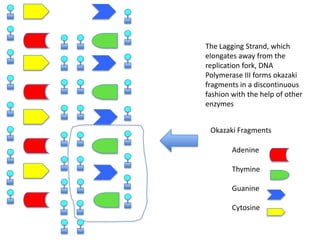
The Lagging Strand, which
elongates away from the
replication fork, DNA
Polymerase III forms okazaki
fragments in a discontinuous
fashion with the help of other
enzymes
Okazaki Fragments
Adenine
Thymine
Guanine
Cytosine
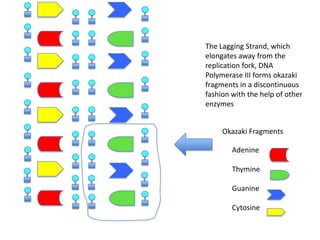
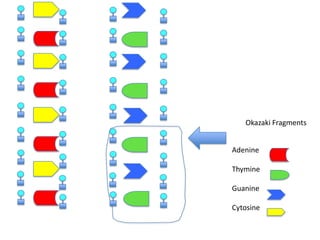
The Lagging Strand, which
elongates away from the
replication fork, DNA
Polymerase III forms okazaki
fragments in a discontinuous
fashion with the help of other
enzymes
Okazaki Fragments
Adenine
Thymine
Guanine
Cytosine
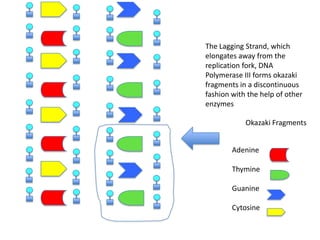
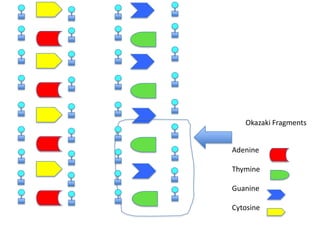
The Lagging Strand, which
elongates away from the
replication fork, DNA
Polymerase III forms okazaki
fragments in a discontinuous
fashion with the help of other
enzymes

Okazaki Fragments
Adenine
Thymine
Guanine
Cytosine
The Lagging Strand, which
elongates away from the
replication fork, DNA
Polymerase III forms okazaki
fragments in a discontinuous
fashion with the help of other
enzymes

Okazaki Fragments
Adenine
Thymine
Guanine
Cytosine
Okazaki Fragments
Adenine
Thymine
Guanine
Cytosine
Okazaki Fragments
Adenine
Thymine
Guanine
Cytosine
Adenine
Thymine
Guanine
Cytosine
Adenine
Thymine
Guanine
Cytosine
Adenine
Thymine
Guanine
Cytosine
Adenine
Thymine
Guanine
Cytosine
Adenine
Thymine
Guanine
Cytosine
Adenine
Thymine
Guanine
Cytosine
Adenine
Thymine
Guanine
Cytosine

DNA Replication Project P. Fedigan

  • 1.
  • 2.
    DNA Replication iswhen there is duplication of DNA during Cell division. Adenine Thymine Guanine Cytosine
  • 3.
    DNA Replication iswhen there is duplication of DNA during Cell division. Adenine Thymine Guanine Cytosine
  • 4.
    DNA Replication iswhen there is duplication of DNA during Cell division. Adenine Thymine Guanine Cytosine
  • 5.
    DNA Replication iswhen there is duplication of DNA during Cell division. Adenine Thymine Guanine Cytosine
  • 6.
    The First Stepin DNA Replication is that the DNA Helicase unwinds the doublestranded DNA in the origin of replication when the breaking of hydrogen bonds between complementary strands. Adenine Thymine Guanine Cytosine
  • 7.
    The First Stepin DNA Replication is that the DNA Helicase unwinds the doublestranded DNA in the origin of replication when the breaking of hydrogen bonds between complementary strands. Adenine Thymine Guanine Cytosine
  • 8.
    The First Stepin DNA Replication is that the DNA Helicase unwinds the doublestranded DNA in the origin of replication when the breaking of hydrogen bonds between complementary strands. Adenine Thymine Guanine Cytosine
  • 9.
    The First Stepin DNA Replication is that the DNA Helicase unwinds the doublestranded DNA in the origin of replication when the breaking of hydrogen bonds between complementary strands. Adenine Thymine Guanine Cytosine
  • 10.
    The First Stepin DNA Replication is that the DNA Helicase unwinds the doublestranded DNA in the origin of replication when the breaking of hydrogen bonds between complementary strands. Adenine Thymine Guanine Cytosine
  • 11.
    Next, Single-Strand binding proteinsthen bind to single-stranded DNA for stabilization. Adenine Thymine Guanine Cytosine
  • 12.
    Next, Single-Strand binding proteinsthen bind to single-stranded DNA for stabilization. Adenine Thymine Guanine Cytosine
  • 13.
    Next, Single-Strand binding proteinsthen bind to single-stranded DNA for stabilization. Adenine Thymine Guanine Cytosine
  • 14.
    Next, Single-Strand binding proteinsthen bind to single-stranded DNA for stabilization. Adenine Thymine Guanine Cytosine
  • 15.
    Next, Single-Strand binding proteinsthen bind to single-stranded DNA for stabilization. Adenine Thymine Guanine Cytosine
  • 16.
    The leading strand,DNA Polymerase III adds the 5’ phosphate end of a free floating nucleotide to the exposed 3’ OH ends on the single stranded DNA in a continuous fashion. Adenine Thymine Guanine Cytosine
  • 17.
    The leading strand,DNA Polymerase III adds the 5’ phosphate end of a free floating nucleotide to the exposed 3’ OH ends on the single stranded DNA in a continuous fashion. Adenine Thymine Guanine Cytosine
  • 18.
    The leading strand,DNA Polymerase III adds the 5’ phosphate end of a free floating nucleotide to the exposed 3’ OH ends on the single stranded DNA in a continuous fashion. Adenine Thymine Guanine Cytosine
  • 19.
    The leading strand,DNA Polymerase III adds the 5’ phosphate end of a free floating nucleotide to the exposed 3’ OH ends on the single stranded DNA in a continuous fashion. Adenine Thymine Guanine Cytosine
  • 20.
    The leading strand,DNA Polymerase III adds the 5’ phosphate end of a free floating nucleotide to the exposed 3’ OH ends on the single stranded DNA in a continuous fashion. Adenine Thymine Guanine Cytosine
  • 21.
    The Lagging Strand,which elongates away from the replication fork, DNA Polymerase III forms okazaki fragments in a discontinuous fashion with the help of other enzymes Okazaki Fragments Adenine Thymine Guanine Cytosine
  • 22.
    The Lagging Strand,which elongates away from the replication fork, DNA Polymerase III forms okazaki fragments in a discontinuous fashion with the help of other enzymes Okazaki Fragments Adenine Thymine Guanine Cytosine
  • 23.
    The Lagging Strand,which elongates away from the replication fork, DNA Polymerase III forms okazaki fragments in a discontinuous fashion with the help of other enzymes Okazaki Fragments Adenine Thymine Guanine Cytosine
  • 24.
    The Lagging Strand,which elongates away from the replication fork, DNA Polymerase III forms okazaki fragments in a discontinuous fashion with the help of other enzymes Okazaki Fragments Adenine Thymine Guanine Cytosine
  • 25.
    The Lagging Strand,which elongates away from the replication fork, DNA Polymerase III forms okazaki fragments in a discontinuous fashion with the help of other enzymes Okazaki Fragments Adenine Thymine Guanine Cytosine
  • 26.
  • 27.
  • 28.
  • 29.
  • 30.
  • 31.
  • 32.
  • 33.
  • 34.