DNA Respiration
Model
Alexis vite

KEY
Guanine
Thymine
Adenine
Cytosine
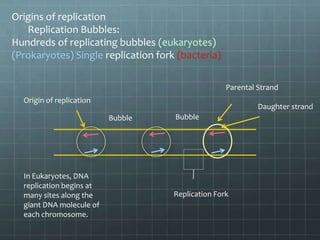
Origins of replication
Replication Bubbles:
Hundreds of replicating bubbles (eukaryotes)
(Prokaryotes) Single replication fork (bacteria)
Parental Strand
Origin of replication

Daughter strand
Bubble

In Eukaryotes, DNA
replication begins at
many sites along the
giant DNA molecule of
each chromosome.

Bubble

Replication Fork
Strand Seperation:

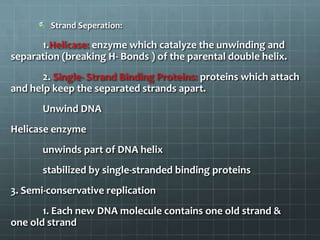
1.Helicase: enzyme which catalyze the unwinding and
separation (breaking H- Bonds ) of the parental double helix.
2. Single- Strand Binding Proteins: proteins which attach
and help keep the separated strands apart.

Unwind DNA
Helicase enzyme
unwinds part of DNA helix

stabilized by single-stranded binding proteins
3. Semi-conservative replication
1. Each new DNA molecule contains one old strand &
one old strand
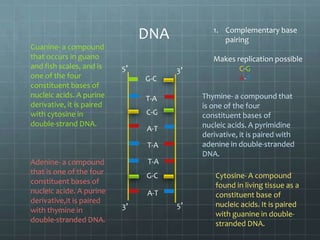
1. Complementary base
pairing

DNA
Guanine- a compound
that occurs in guano
and fish scales, and is
one of the four
constituent bases of
nucleic acids. A purine
derivative, it is paired
with cytosine in
double-strand DNA.

5’

3’
G-C

Thymine- a compound that
is one of the four
constituent bases of
nucleic acids. A pyrimidine
derivative, it is paired with
adenine in double-stranded
DNA.

T-A
C-G
A-T

T-A
Adenine- a compound
that is one of the four
constituent bases of
nucleic acide. A purine
derivative,it is paired
with thymine in
double-stranded DNA.

T-A
G-C
A-T
3’

Makes replication possible
C-G
A-T

5’

Cytosine- A compound
found in living tissue as a
constituent base of
nucleic acids. It is paired
with guanine in doublestranded DNA.
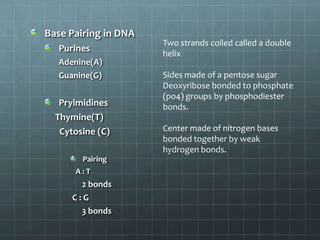
Base Pairing in DNA
Purines
Adenine(A)
Guanine(G)

Pryimidines
Thymine(T)
Cytosine (C)
Pairing
A:T

2 bonds
C:G
3 bonds

Two strands coiled called a double
helix
Sides made of a pentose sugar
Deoxyribose bonded to phosphate
(po4) groups by phosphodiester
bonds.
Center made of nitrogen bases
bonded together by weak
hydrogen bonds.
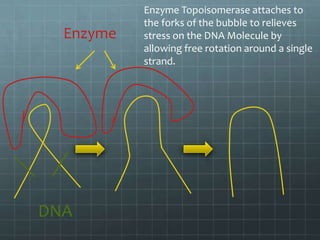
Enzyme

DNA

Enzyme Topoisomerase attaches to
the forks of the bubble to relieves
stress on the DNA Molecule by
allowing free rotation around a single
strand.
DNA
5’

3’

T-A
C-G
A-T

3’

5’
G-C
T-A

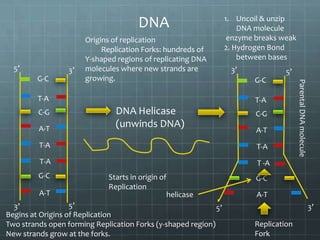
DNA Helicase
(unwinds DNA)

C-G

A-T

T-A

T-A

T-A

Parental DNA molecule

G-C

Origins of replication
Replication Forks: hundreds of
Y-shaped regions of replicating DNA
molecules where new strands are
growing.

1. Uncoil & unzip
DNA molecule
enzyme breaks weak
2. Hydrogen Bond
between bases

T -A

G-C
A-T

Starts in origin of
Replication
helicase

5’
3’
5’
Begins at Origins of Replication
Two strands open forming Replication Forks (y-shaped region)
New strands grow at the forks.

G-C
A-T
3’
Replication
Fork
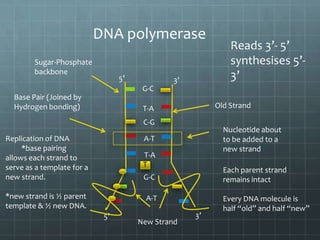
DNA polymerase
Sugar-Phosphate
backbone

5’

3’

Reads 3’- 5’
synthesises 5’3’

G-C
Base Pair (Joined by
Hydrogen bonding)

Old Strand

T-A
C-G

Replication of DNA
*base pairing
allows each strand to
serve as a template for a
new strand.

T-A
T

*new strand is ½ parent
template & ½ new DNA.

Nucleotide about
to be added to a
new strand

A-T

A-T

Each parent strand
remains intact

G-C

5’

New Strand

3’

Every DNA molecule is
half “old” and half “new”
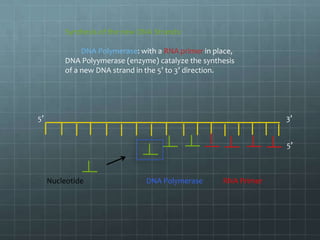
Synthesis of the new DNA Strands:
DNA Polymerase: with a RNA primer in place,
DNA Polyymerase (enzyme) catalyze the synthesis
of a new DNA strand in the 5’ to 3’ direction.

5’

3’
5’

Nucleotide

DNA Polymerase

RNA Primer
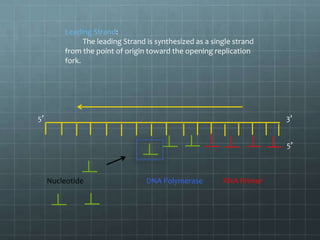
Leading Strand:
The leading Strand is synthesized as a single strand
from the point of origin toward the opening replication
fork.

5’

3’
5’

Nucleotide

DNA Polymerase

RNA Primer
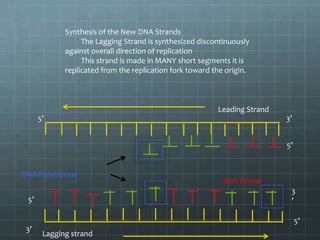
Synthesis of the New DNA Strands
The Lagging Strand is synthesized discontinuously
against overall direction of replication
This strand is made in MANY short segments it is
replicated from the replication fork toward the origin.

Leading Strand
5’

3’
5’

DNA Polymerase

RNA Primer
3
’

5’

5’
3’

Lagging strand
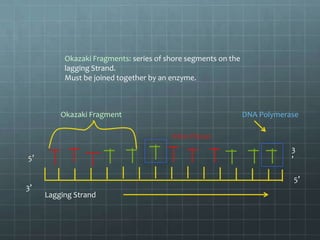
Okazaki Fragments: series of shore segments on the
lagging Strand.
Must be joined together by an enzyme.

Okazaki Fragment

DNA Polymerase
RNA Primer
3
’

5’

5’
3’

Lagging Strand
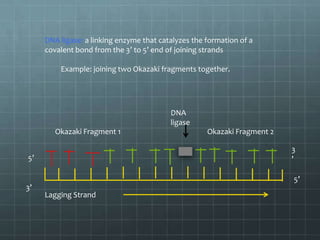
DNA ligase: a linking enzyme that catalyzes the formation of a
covalent bond from the 3’ to 5’ end of joining strands
Example: joining two Okazaki fragments together.

DNA
ligase
Okazaki Fragment 1

Okazaki Fragment 2
3
’

5’

5’
3’

Lagging Strand
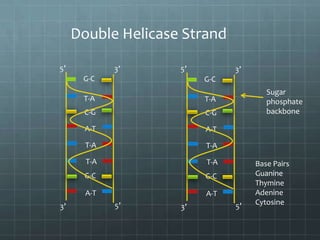
Double Helicase Strand
5’

3’

5’

G-C

3’
G-C

T-A

C-G

A-T

A-T

T-A

T-A

T-A

T-A

G-C

G-C

A-T
3’

T-A

C-G

Sugar
phosphate
backbone

A-T
5’

3’

5’

Base Pairs
Guanine
Thymine
Adenine
Cytosine

ViteamDNAReplication_model

  • 1.
  • 2.
    Origins of replication ReplicationBubbles: Hundreds of replicating bubbles (eukaryotes) (Prokaryotes) Single replication fork (bacteria) Parental Strand Origin of replication Daughter strand Bubble In Eukaryotes, DNA replication begins at many sites along the giant DNA molecule of each chromosome. Bubble Replication Fork
  • 3.
    Strand Seperation: 1.Helicase: enzymewhich catalyze the unwinding and separation (breaking H- Bonds ) of the parental double helix. 2. Single- Strand Binding Proteins: proteins which attach and help keep the separated strands apart. Unwind DNA Helicase enzyme unwinds part of DNA helix stabilized by single-stranded binding proteins 3. Semi-conservative replication 1. Each new DNA molecule contains one old strand & one old strand
  • 4.
    1. Complementary base pairing DNA Guanine-a compound that occurs in guano and fish scales, and is one of the four constituent bases of nucleic acids. A purine derivative, it is paired with cytosine in double-strand DNA. 5’ 3’ G-C Thymine- a compound that is one of the four constituent bases of nucleic acids. A pyrimidine derivative, it is paired with adenine in double-stranded DNA. T-A C-G A-T T-A Adenine- a compound that is one of the four constituent bases of nucleic acide. A purine derivative,it is paired with thymine in double-stranded DNA. T-A G-C A-T 3’ Makes replication possible C-G A-T 5’ Cytosine- A compound found in living tissue as a constituent base of nucleic acids. It is paired with guanine in doublestranded DNA.
  • 5.
    Base Pairing inDNA Purines Adenine(A) Guanine(G) Pryimidines Thymine(T) Cytosine (C) Pairing A:T 2 bonds C:G 3 bonds Two strands coiled called a double helix Sides made of a pentose sugar Deoxyribose bonded to phosphate (po4) groups by phosphodiester bonds. Center made of nitrogen bases bonded together by weak hydrogen bonds.
  • 6.
    Enzyme DNA Enzyme Topoisomerase attachesto the forks of the bubble to relieves stress on the DNA Molecule by allowing free rotation around a single strand.
  • 7.
    DNA 5’ 3’ T-A C-G A-T 3’ 5’ G-C T-A DNA Helicase (unwinds DNA) C-G A-T T-A T-A T-A ParentalDNA molecule G-C Origins of replication Replication Forks: hundreds of Y-shaped regions of replicating DNA molecules where new strands are growing. 1. Uncoil & unzip DNA molecule enzyme breaks weak 2. Hydrogen Bond between bases T -A G-C A-T Starts in origin of Replication helicase 5’ 3’ 5’ Begins at Origins of Replication Two strands open forming Replication Forks (y-shaped region) New strands grow at the forks. G-C A-T 3’ Replication Fork
  • 8.
    DNA polymerase Sugar-Phosphate backbone 5’ 3’ Reads 3’-5’ synthesises 5’3’ G-C Base Pair (Joined by Hydrogen bonding) Old Strand T-A C-G Replication of DNA *base pairing allows each strand to serve as a template for a new strand. T-A T *new strand is ½ parent template & ½ new DNA. Nucleotide about to be added to a new strand A-T A-T Each parent strand remains intact G-C 5’ New Strand 3’ Every DNA molecule is half “old” and half “new”
  • 9.
    Synthesis of thenew DNA Strands: DNA Polymerase: with a RNA primer in place, DNA Polyymerase (enzyme) catalyze the synthesis of a new DNA strand in the 5’ to 3’ direction. 5’ 3’ 5’ Nucleotide DNA Polymerase RNA Primer
  • 10.
    Leading Strand: The leadingStrand is synthesized as a single strand from the point of origin toward the opening replication fork. 5’ 3’ 5’ Nucleotide DNA Polymerase RNA Primer
  • 11.
    Synthesis of theNew DNA Strands The Lagging Strand is synthesized discontinuously against overall direction of replication This strand is made in MANY short segments it is replicated from the replication fork toward the origin. Leading Strand 5’ 3’ 5’ DNA Polymerase RNA Primer 3 ’ 5’ 5’ 3’ Lagging strand
  • 12.
    Okazaki Fragments: seriesof shore segments on the lagging Strand. Must be joined together by an enzyme. Okazaki Fragment DNA Polymerase RNA Primer 3 ’ 5’ 5’ 3’ Lagging Strand
  • 13.
    DNA ligase: alinking enzyme that catalyzes the formation of a covalent bond from the 3’ to 5’ end of joining strands Example: joining two Okazaki fragments together. DNA ligase Okazaki Fragment 1 Okazaki Fragment 2 3 ’ 5’ 5’ 3’ Lagging Strand
  • 14.