DNA
Replication
Project
By:
Joseph Whitman
Period 2
How its done
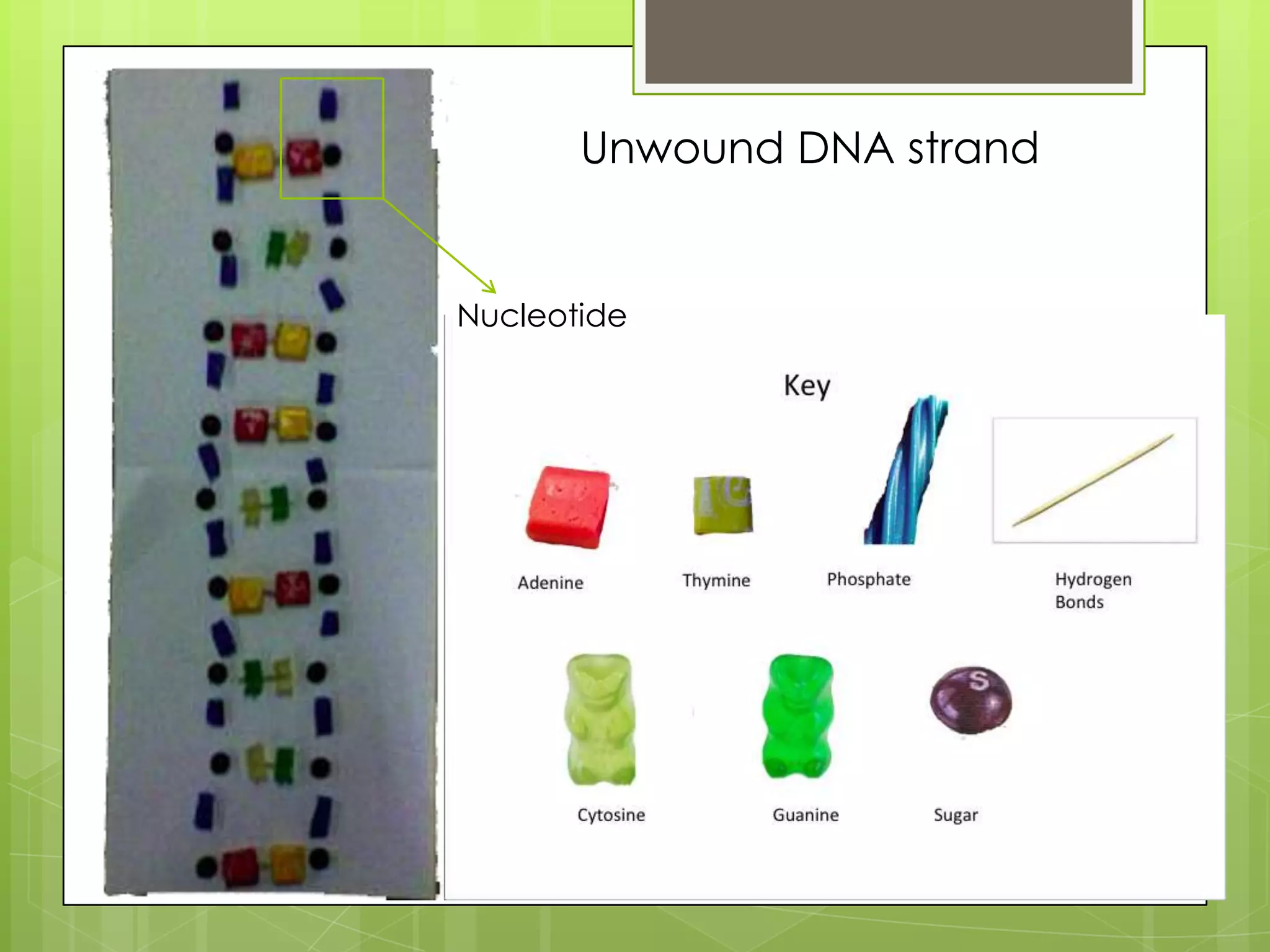
   In DNA replication the double helix is
    unwound with the help of DNA helicase to
    look like a ladder. From there the DNA
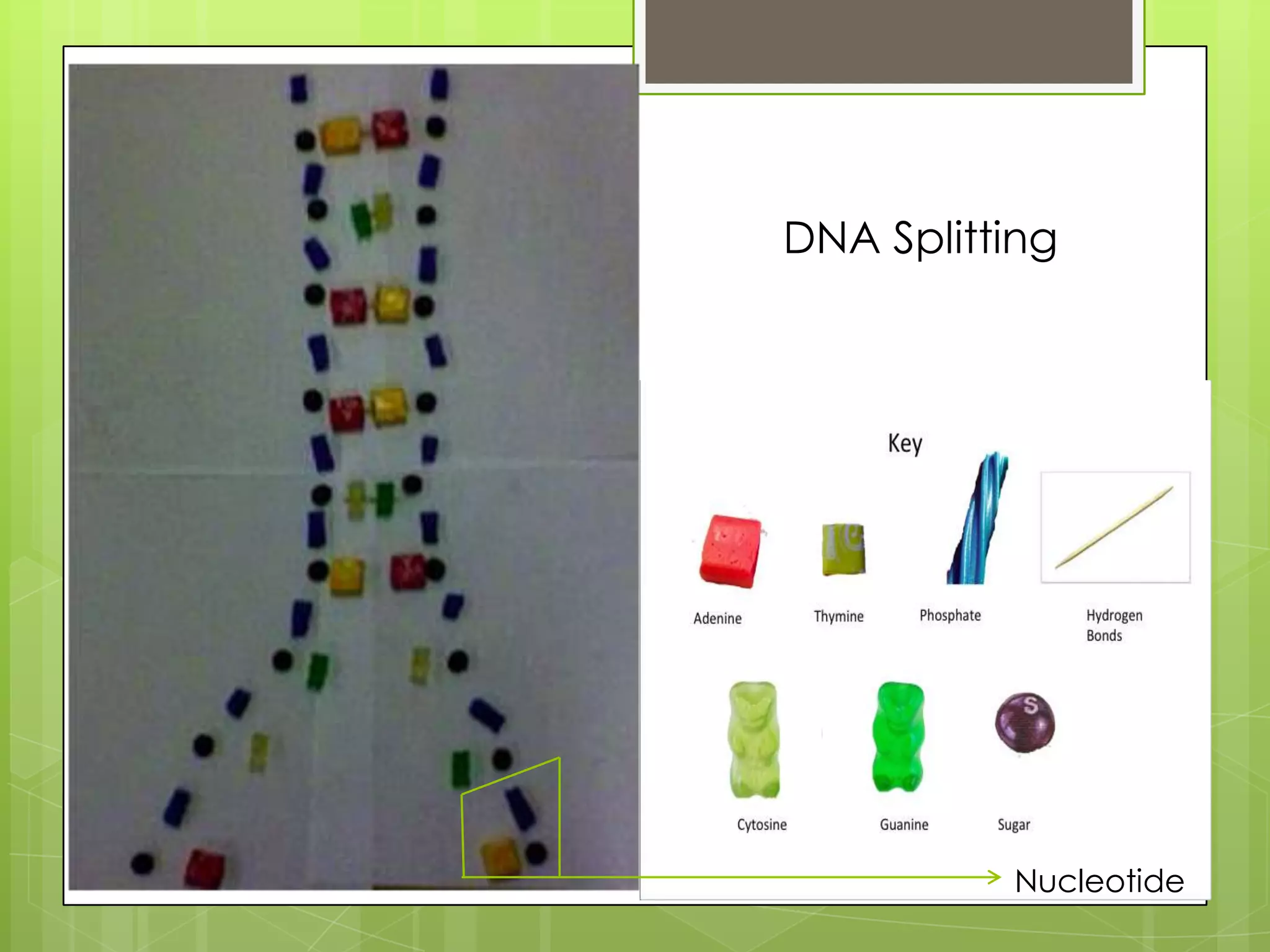
    splits, and the DNA polymerase copies a new
    set of nucleotides for the side which then is
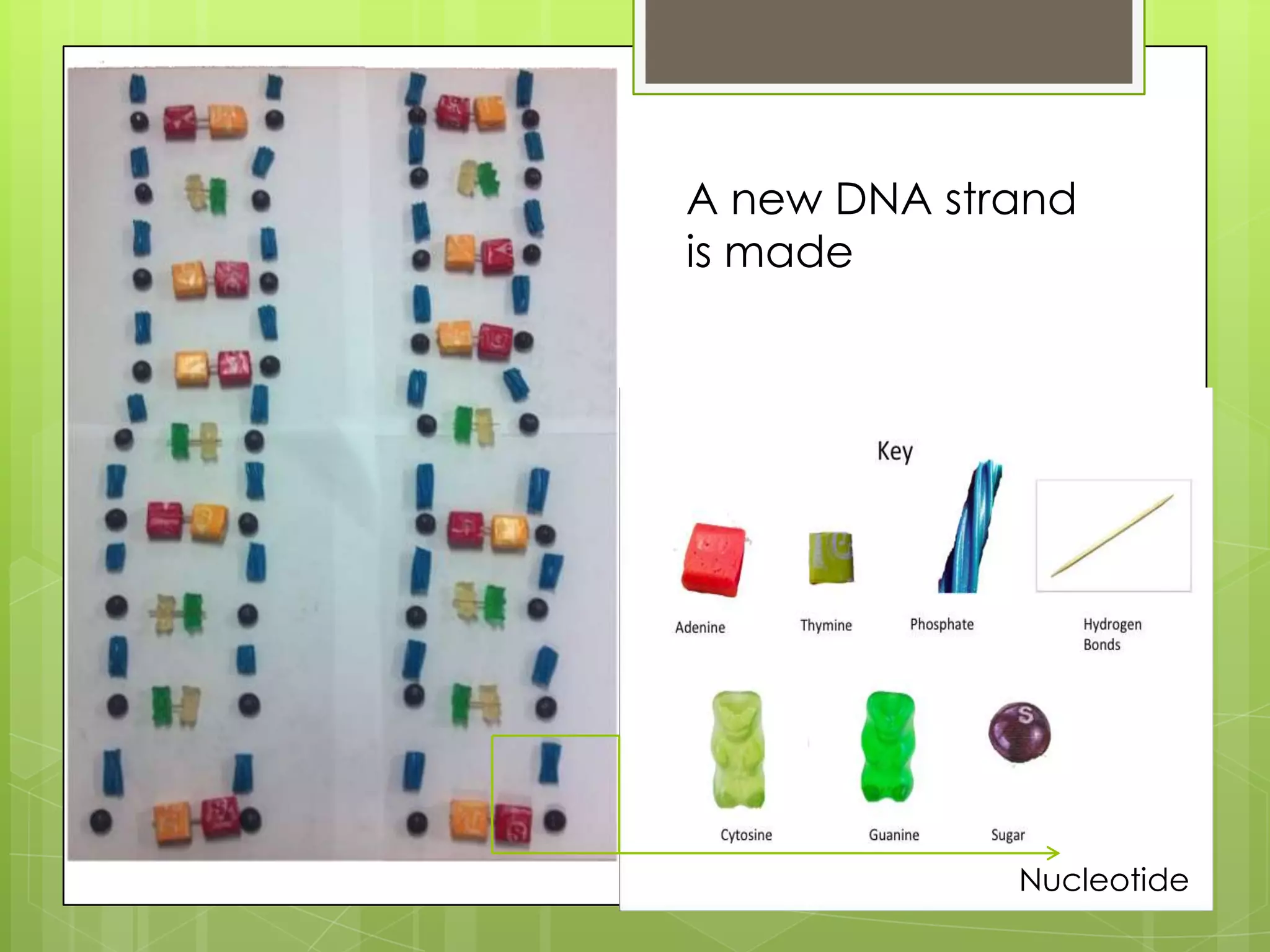
    zipped up by DNA ligase forming two different
    DNA strands. The strands then just twist back
    up into the double helix. This occurs in the
    interphase part of mitosis.
   This process is important because it allows for
    us all to grow by making new cells
Unwound DNA strand


Nucleotide
DNA Splitting


          Nucleotide
A new DNA strand
is made


             Nucleotide
Telomeres
   Telomeres are important to every eukaryotic
    cell. They are bits of chromosomes at the end
    of a chromosome that makes it so the
    chromosomes do not attach to one another.
   As a person grows older their telomeres
    become frayed and worn down and when
    they get to short it can begin to destroy and
    fray the important part of our genes and lead
    to cellular death.
   In cloning the subject would get shortened
    telomeres, which could lead to a shortened
    life.
Telomerase
 Telomerase  is an enzyme that adds the
 telomere code to the end of a
 chromosome on the 3’ end so it can
 replicate longer. Cancerous cells find
 telomerase very useful as most of the
 cancer cells need them for continuous
 growth and so the cancer will spread
 throughout the body.
Transplanted Cells
 Transplanted  cells are now being studied.
 This is where the infected cells would be
 taken out, treated, and then would be
 put back in to the body.
Okazaki Fragments
    Okazaki fragments are fragments of DNA that
    are being replicated on the 5’ to 3’ side of
    the DNA. Replication on the 5’ to 3’ strand
    cannot be done all at once, so when the
    DNA fork gets wide enough, the DNA
    polymerase is able to make a new
    complementary half for that side. After there
    are many Okazaki fragments lined up an
    enzyme called DNA ligase can come through
    and attach them so you get one continuous
    strand of DNA.

Dna Replication Project Joseph Whitman

  • 1.
  • 2.
    How its done  In DNA replication the double helix is unwound with the help of DNA helicase to look like a ladder. From there the DNA splits, and the DNA polymerase copies a new set of nucleotides for the side which then is zipped up by DNA ligase forming two different DNA strands. The strands then just twist back up into the double helix. This occurs in the interphase part of mitosis.  This process is important because it allows for us all to grow by making new cells
  • 4.
  • 5.
    DNA Splitting Nucleotide
  • 6.
    A new DNAstrand is made Nucleotide
  • 7.
    Telomeres  Telomeres are important to every eukaryotic cell. They are bits of chromosomes at the end of a chromosome that makes it so the chromosomes do not attach to one another.  As a person grows older their telomeres become frayed and worn down and when they get to short it can begin to destroy and fray the important part of our genes and lead to cellular death.  In cloning the subject would get shortened telomeres, which could lead to a shortened life.
  • 8.
    Telomerase  Telomerase is an enzyme that adds the telomere code to the end of a chromosome on the 3’ end so it can replicate longer. Cancerous cells find telomerase very useful as most of the cancer cells need them for continuous growth and so the cancer will spread throughout the body.
  • 9.
    Transplanted Cells  Transplanted cells are now being studied. This is where the infected cells would be taken out, treated, and then would be put back in to the body.
  • 10.
    Okazaki Fragments  Okazaki fragments are fragments of DNA that are being replicated on the 5’ to 3’ side of the DNA. Replication on the 5’ to 3’ strand cannot be done all at once, so when the DNA fork gets wide enough, the DNA polymerase is able to make a new complementary half for that side. After there are many Okazaki fragments lined up an enzyme called DNA ligase can come through and attach them so you get one continuous strand of DNA.