Download to read offline
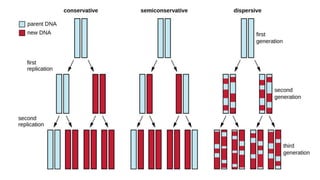
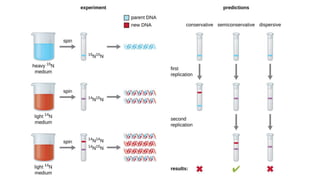

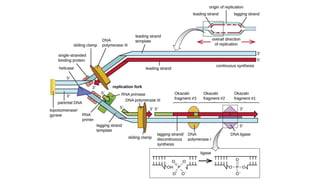
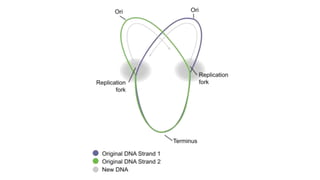
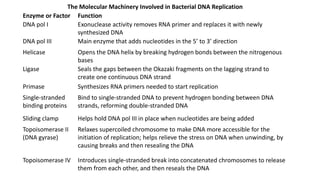

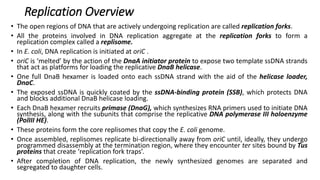
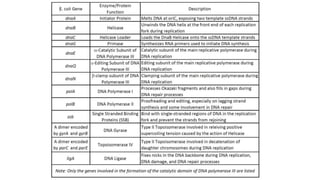
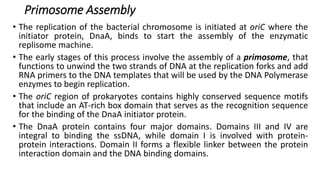
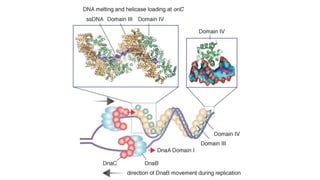
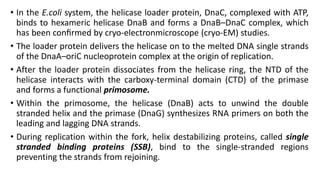
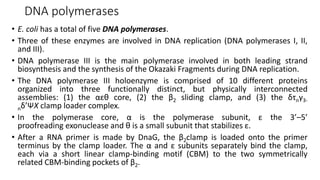
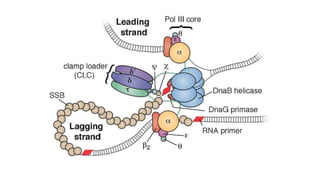
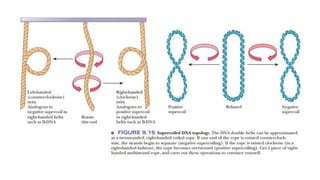
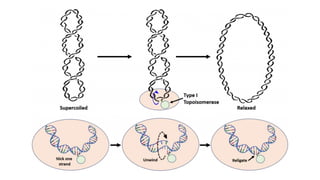
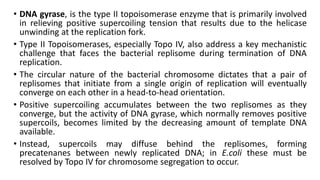
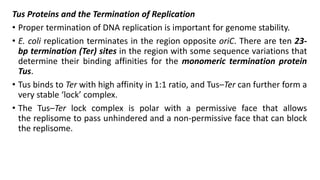
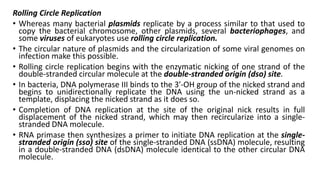
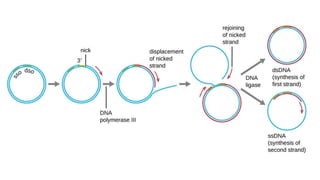


DNA replication in bacteria occurs through a semiconservative process whereby the parental double-stranded DNA separates and each strand serves as a template for synthesis of a new complementary strand. Meselson and Stahl's experiment provided evidence that replication occurs through this semiconservative model. DNA replication involves multiple enzymes that work together at the replication fork, including DNA polymerase III, helicase, primase, ligase, and topoisomerases. Replication initiates at the origin of replication and proceeds bidirectionally until termination is complete.


