DNA REPLICATION
Dr Rama Kant Upadhyay
Definition
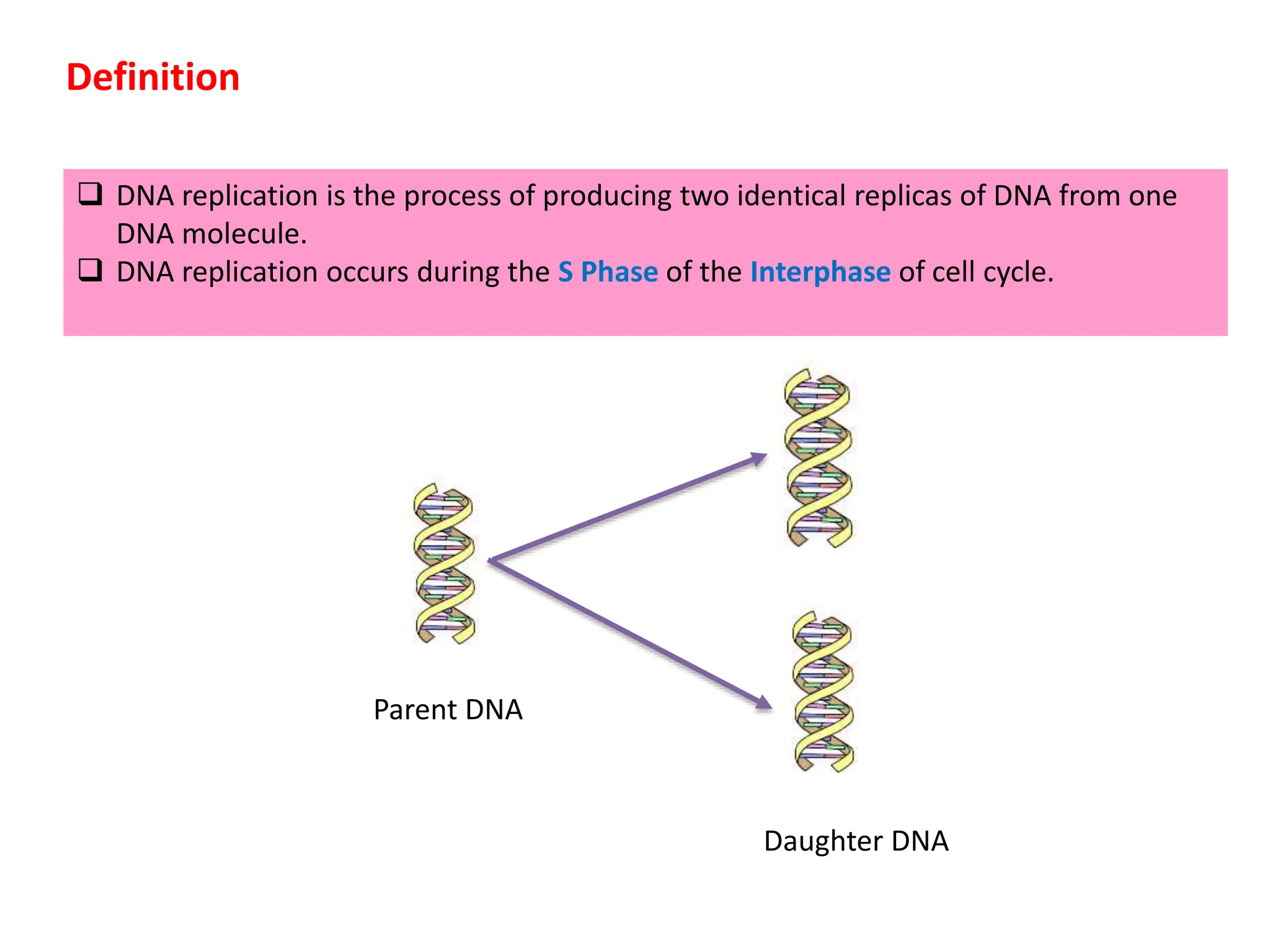
 DNA replication is the process of producing two identical replicas of DNA from one
DNA molecule.
 DNA replication occurs during the S Phase of the Interphase of cell cycle.
Parent DNA
Daughter DNA
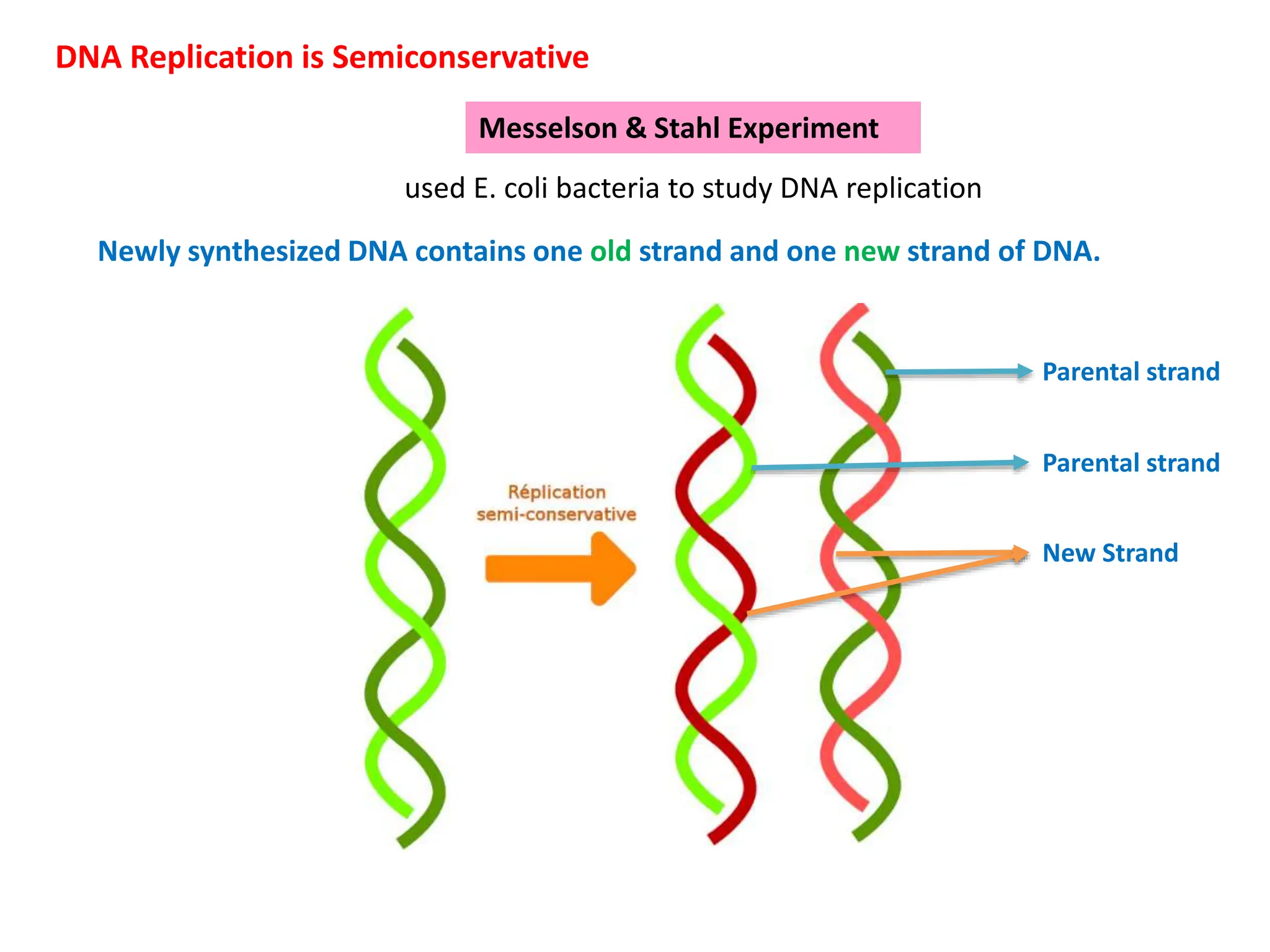
DNA Replication is Semiconservative
Messelson & Stahl Experiment
Newly synthesized DNA contains one old strand and one new strand of DNA.
Parental strand
Parental strand
New Strand
used E. coli bacteria to study DNA replication
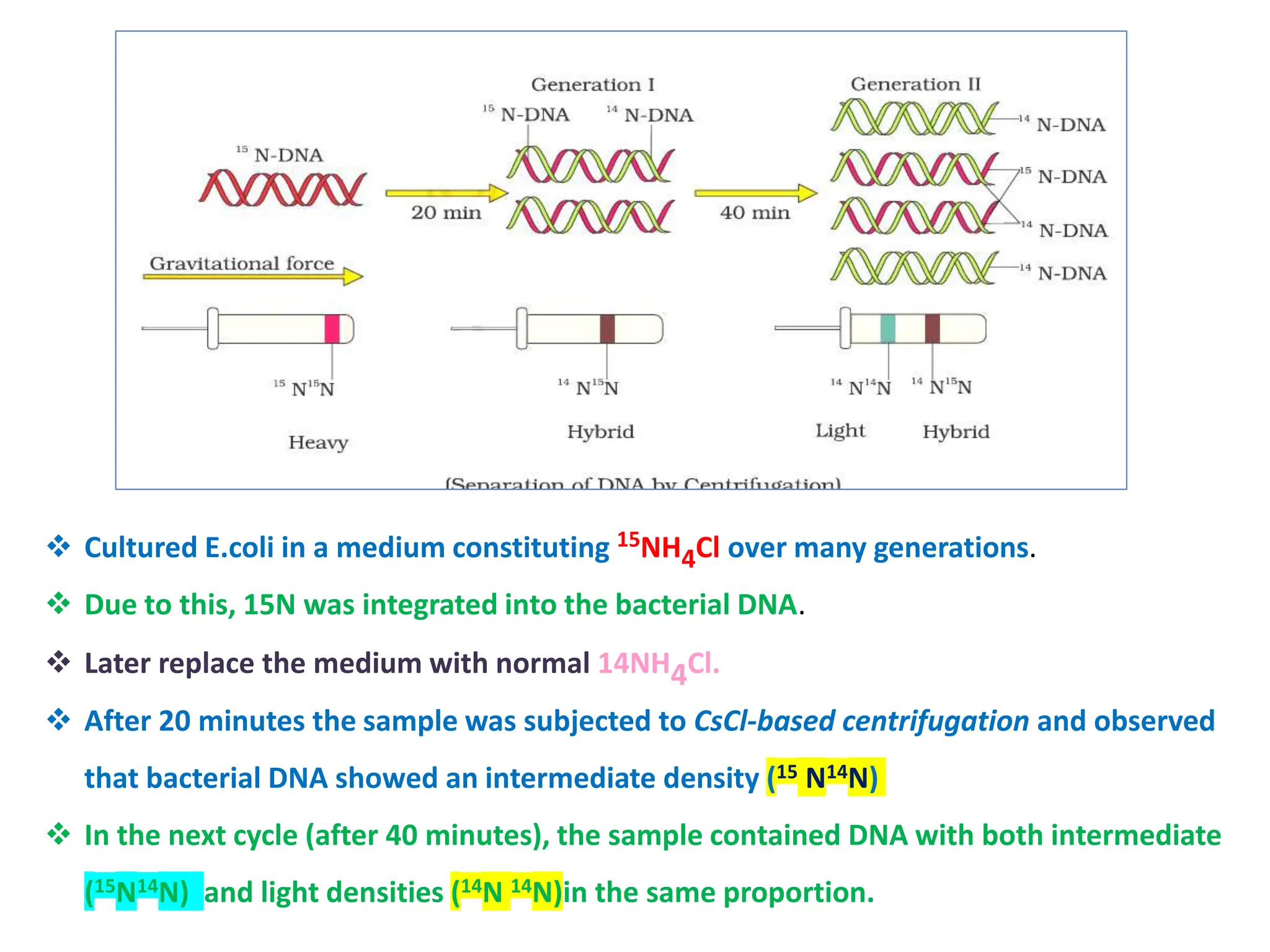
 Cultured E.coli in a medium constituting 15NH4Cl over many generations.
 Due to this, 15N was integrated into the bacterial DNA.
 Later replace the medium with normal 14NH4Cl.
 After 20 minutes the sample was subjected to CsCl-based centrifugation and observed
that bacterial DNA showed an intermediate density (15 N14N)
 In the next cycle (after 40 minutes), the sample contained DNA with both intermediate
(15N14N) and light densities (14N 14N)in the same proportion.
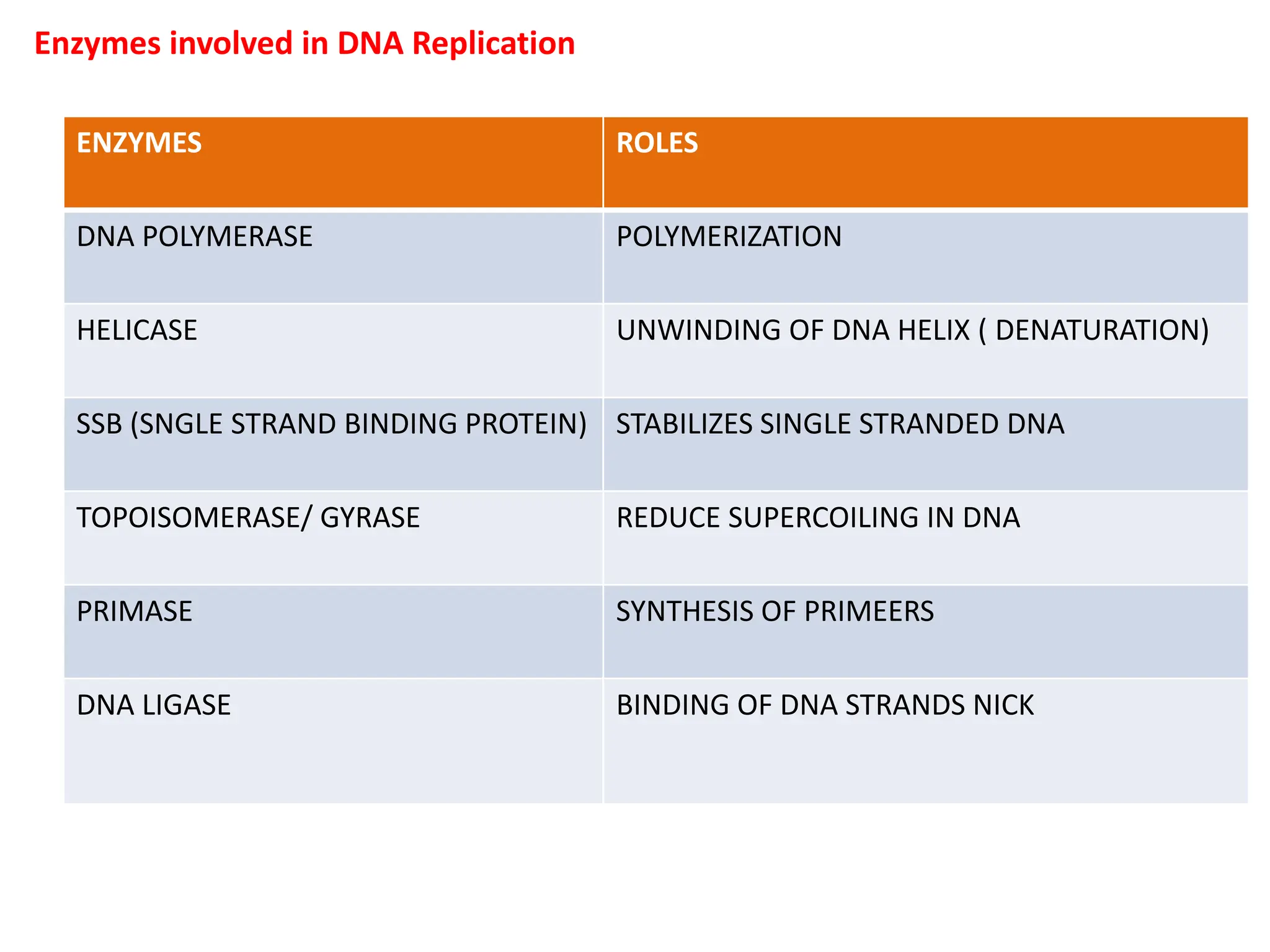
ENZYMES ROLES
DNA POLYMERASE POLYMERIZATION
HELICASE UNWINDING OF DNA HELIX ( DENATURATION)
SSB (SNGLE STRAND BINDING PROTEIN) STABILIZES SINGLE STRANDED DNA
TOPOISOMERASE/ GYRASE REDUCE SUPERCOILING IN DNA
PRIMASE SYNTHESIS OF PRIMEERS
DNA LIGASE BINDING OF DNA STRANDS NICK
Enzymes involved in DNA Replication
Steps
Initiation
Elongation
Termination
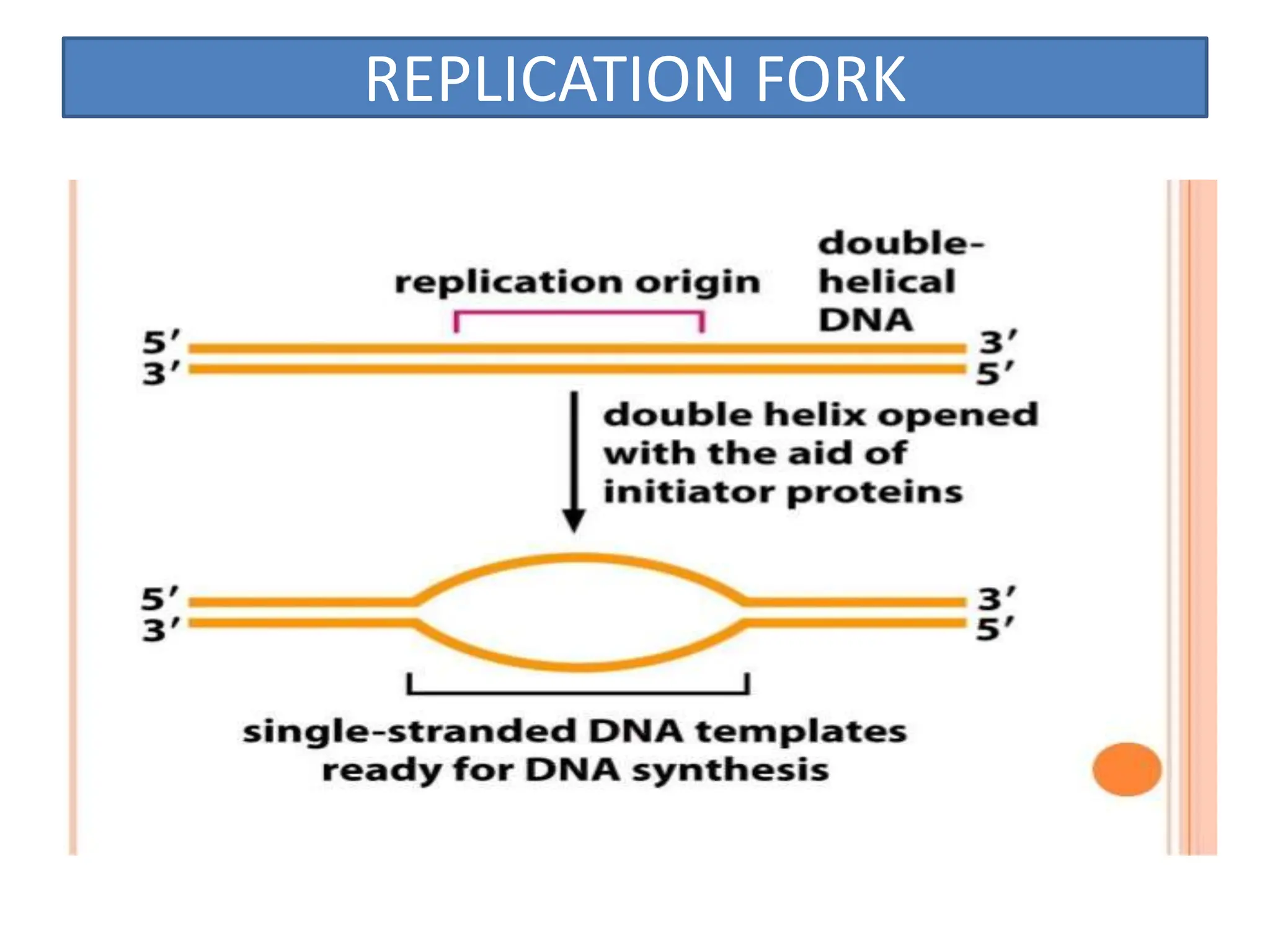
Replication begins at specific sites on the DNA called origins
of replication (Ori)
Polymerase enzymes synthesize the complementary
sequence in each of the strands as they separate
the lagging strand is the strand of daughter DNA that is
synthesized discontinuously
Termination of replication occurs in different ways in
different organisms
Initiation
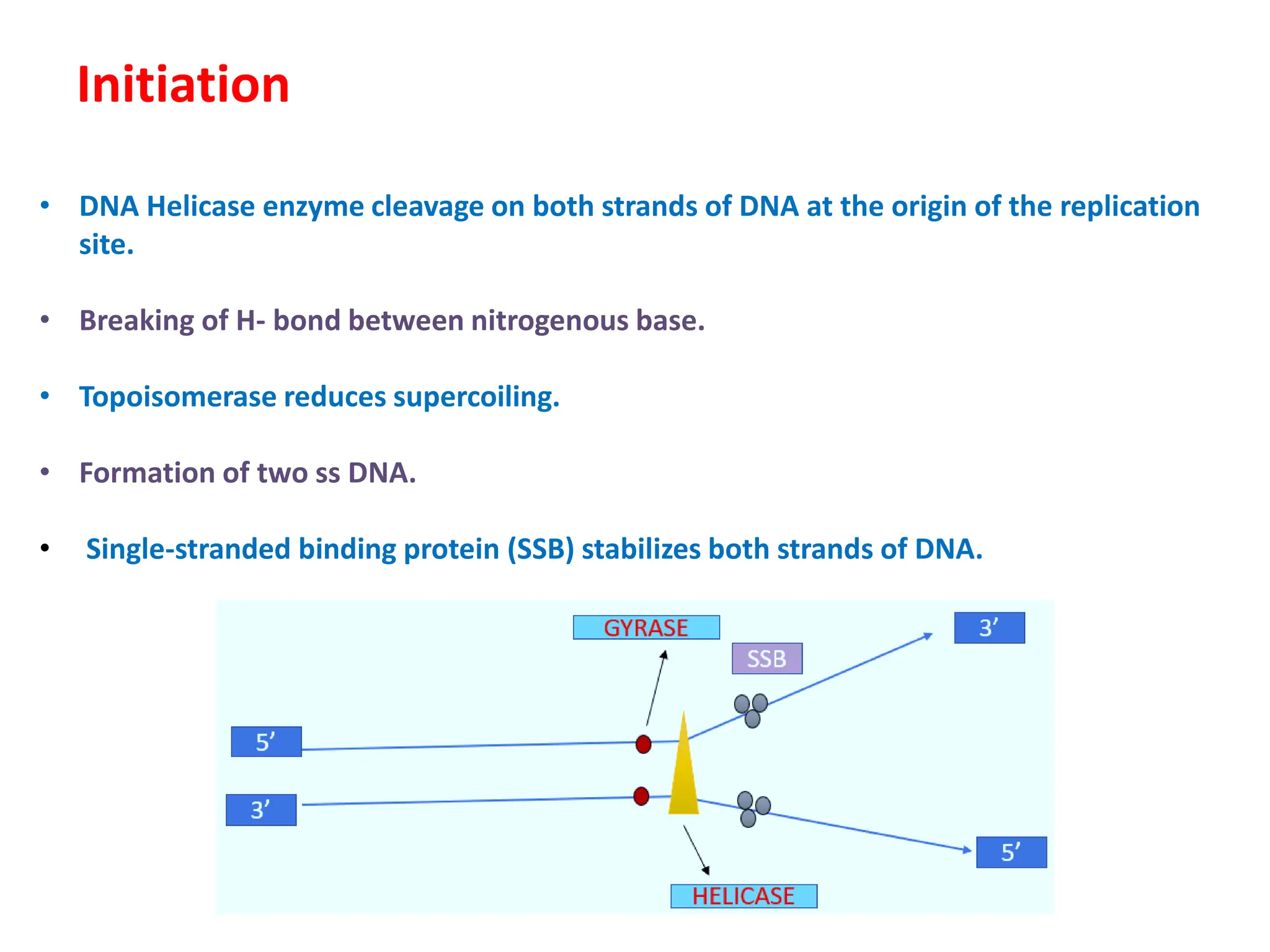
• DNA Helicase enzyme cleavage on both strands of DNA at the origin of the replication
site.
• Breaking of H- bond between nitrogenous base.
• Topoisomerase reduces supercoiling.
• Formation of two ss DNA.
• Single-stranded binding protein (SSB) stabilizes both strands of DNA.
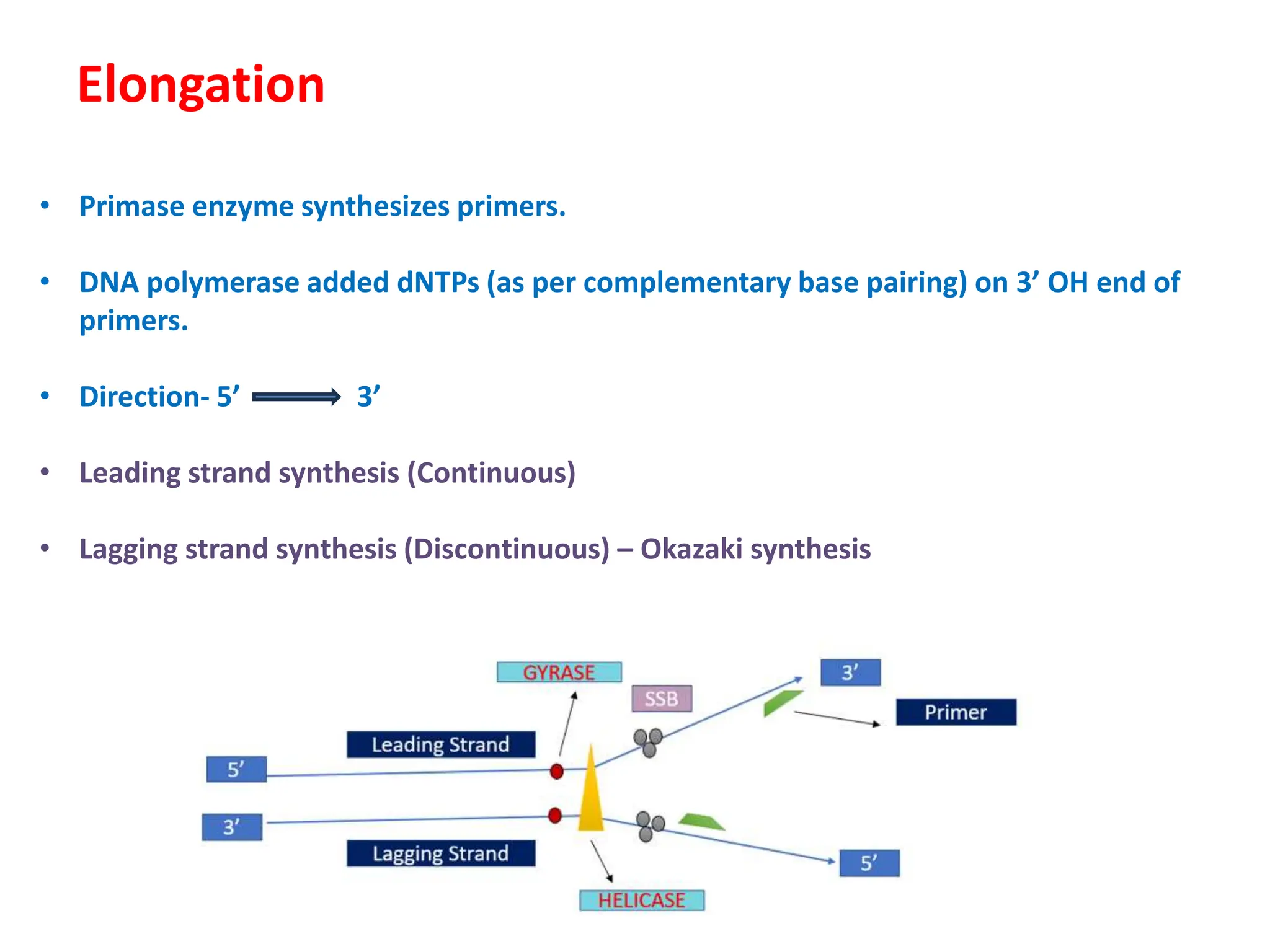
REPLICATION FORK
Elongation
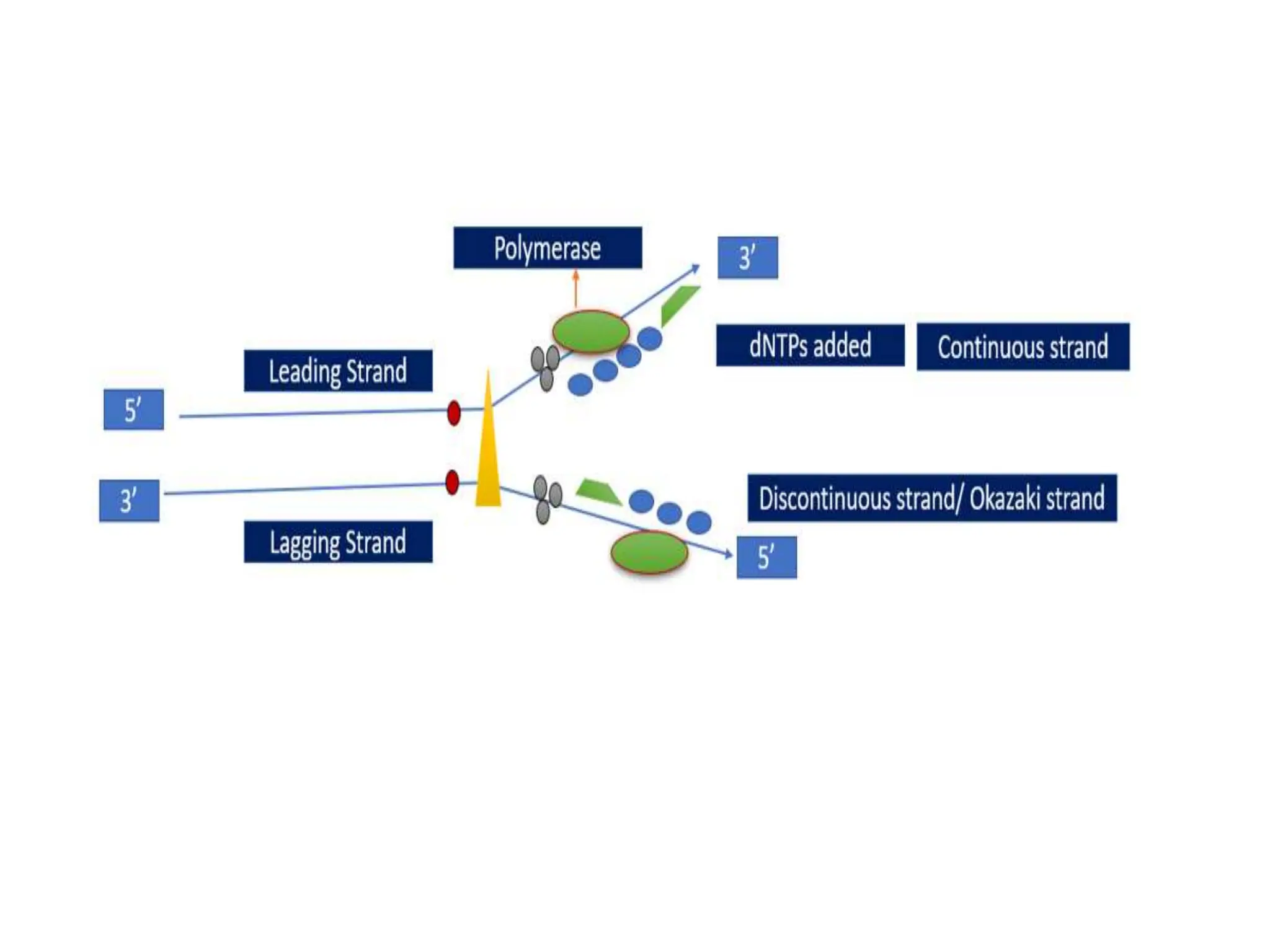
• Primase enzyme synthesizes primers.
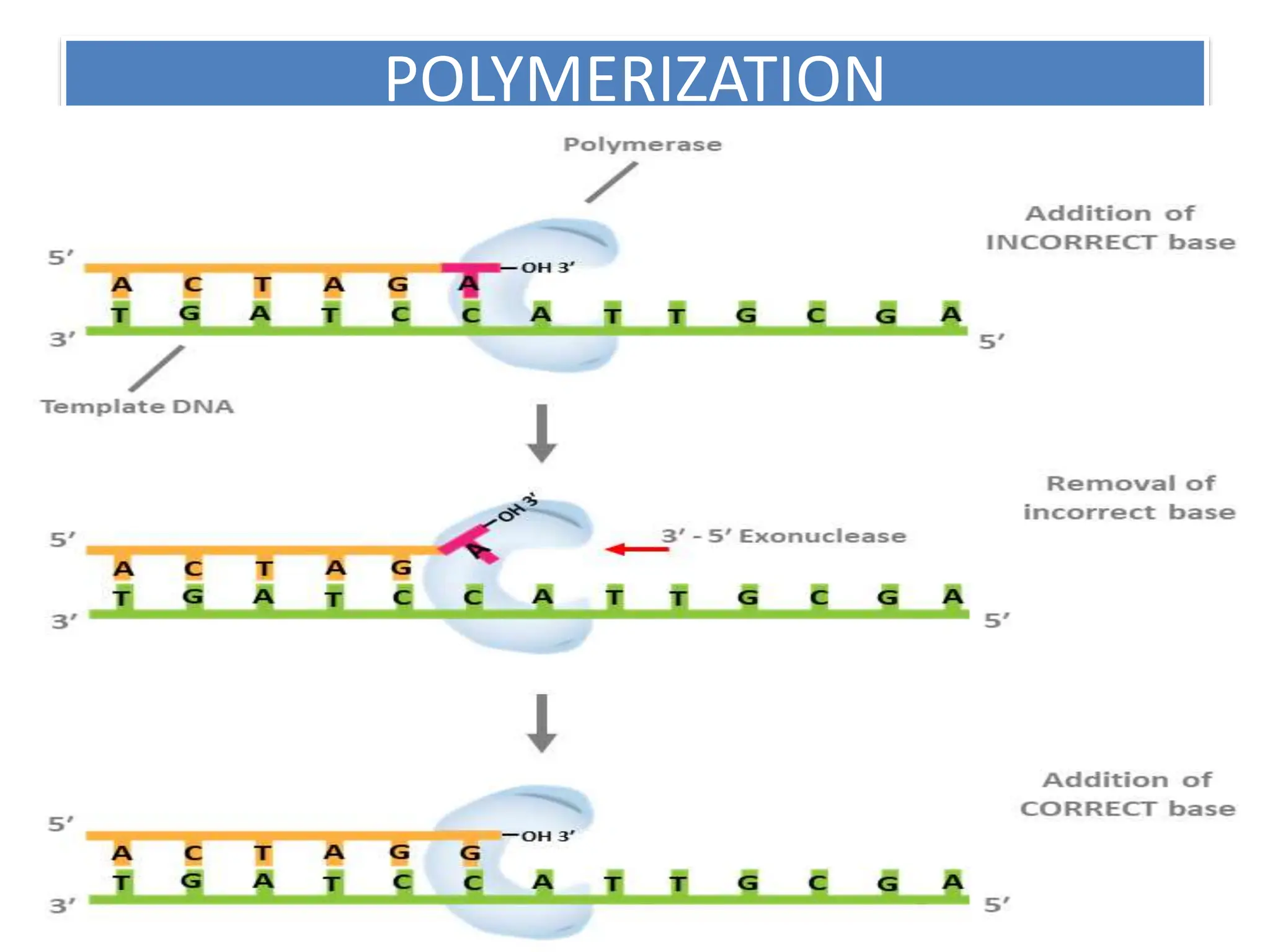
• DNA polymerase added dNTPs (as per complementary base pairing) on 3’ OH end of
primers.
• Direction- 5’ 3’
• Leading strand synthesis (Continuous)
• Lagging strand synthesis (Discontinuous) – Okazaki synthesis
POLYMERIZATION
Ligation
Joining of two nucleotides
3’OH and 5 ‘ Phosphate group
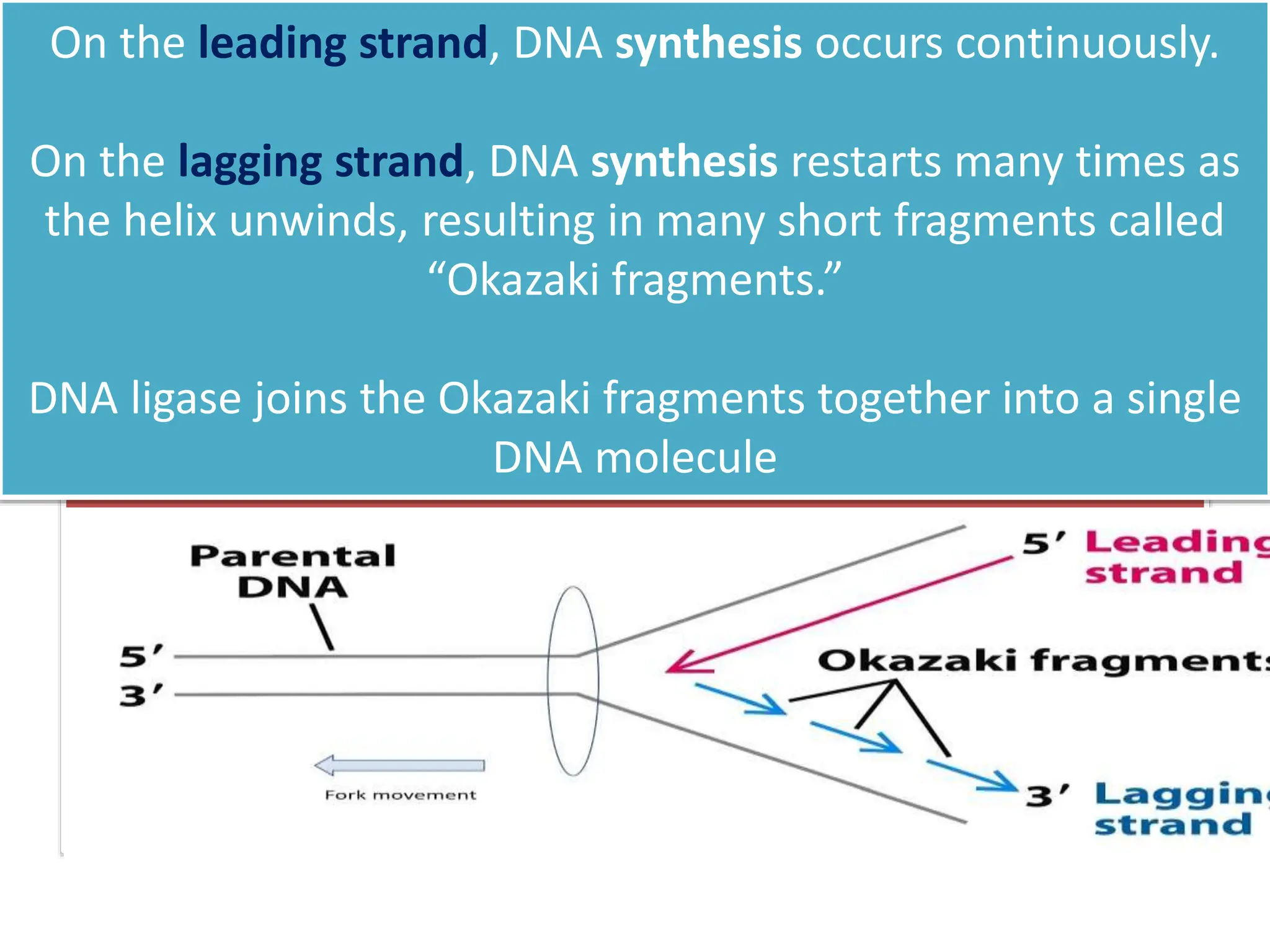
On the leading strand, DNA synthesis occurs continuously.
On the lagging strand, DNA synthesis restarts many times as
the helix unwinds, resulting in many short fragments called
“Okazaki fragments.”
DNA ligase joins the Okazaki fragments together into a single
DNA molecule
• The lagging strand is synthesized discontinuously by DNA polymerase in sections
called Okazaki fragments.
• These fragments are later connected by DNA ligase to form a complete
complementary strand.
These are short DNA nucleotide sequences are discontinuously synthesized
discovered in the 1960s by the Japanese molecular biologists Reiji and Tsuneko Okazaki
Okazaki fragments
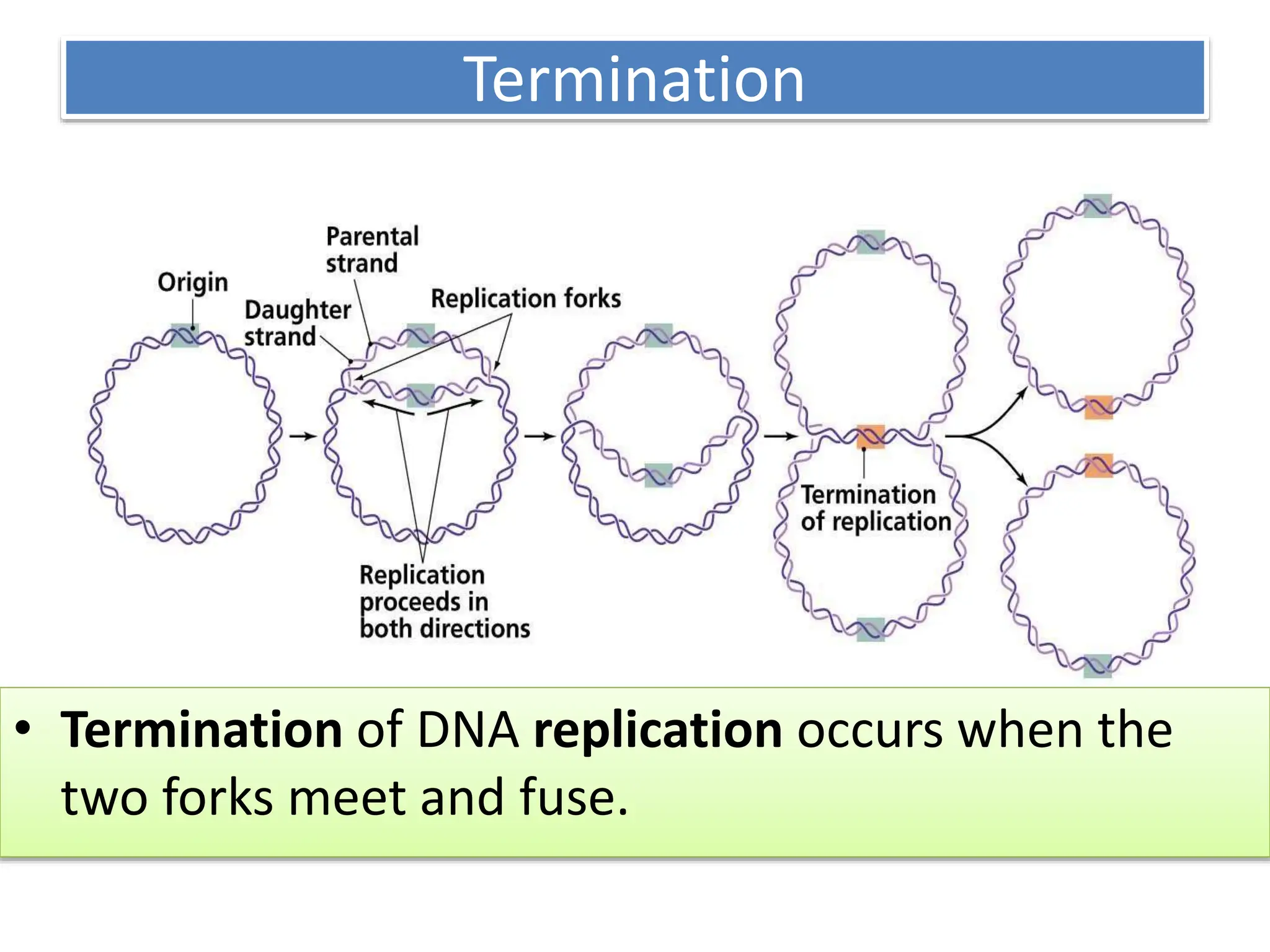
Termination
• Termination of DNA replication occurs when the
two forks meet and fuse.
DNA REPLICATION class XII Biology based NCERT Text book .pptx

DNA REPLICATION class XII Biology based NCERT Text book .pptx

  • 1.
  • 2.
    Definition  DNA replicationis the process of producing two identical replicas of DNA from one DNA molecule.  DNA replication occurs during the S Phase of the Interphase of cell cycle. Parent DNA Daughter DNA
  • 3.
    DNA Replication isSemiconservative Messelson & Stahl Experiment Newly synthesized DNA contains one old strand and one new strand of DNA. Parental strand Parental strand New Strand used E. coli bacteria to study DNA replication
  • 4.
     Cultured E.coliin a medium constituting 15NH4Cl over many generations.  Due to this, 15N was integrated into the bacterial DNA.  Later replace the medium with normal 14NH4Cl.  After 20 minutes the sample was subjected to CsCl-based centrifugation and observed that bacterial DNA showed an intermediate density (15 N14N)  In the next cycle (after 40 minutes), the sample contained DNA with both intermediate (15N14N) and light densities (14N 14N)in the same proportion.
  • 5.
    ENZYMES ROLES DNA POLYMERASEPOLYMERIZATION HELICASE UNWINDING OF DNA HELIX ( DENATURATION) SSB (SNGLE STRAND BINDING PROTEIN) STABILIZES SINGLE STRANDED DNA TOPOISOMERASE/ GYRASE REDUCE SUPERCOILING IN DNA PRIMASE SYNTHESIS OF PRIMEERS DNA LIGASE BINDING OF DNA STRANDS NICK Enzymes involved in DNA Replication
  • 6.
    Steps Initiation Elongation Termination Replication begins atspecific sites on the DNA called origins of replication (Ori) Polymerase enzymes synthesize the complementary sequence in each of the strands as they separate the lagging strand is the strand of daughter DNA that is synthesized discontinuously Termination of replication occurs in different ways in different organisms
  • 7.
    Initiation • DNA Helicaseenzyme cleavage on both strands of DNA at the origin of the replication site. • Breaking of H- bond between nitrogenous base. • Topoisomerase reduces supercoiling. • Formation of two ss DNA. • Single-stranded binding protein (SSB) stabilizes both strands of DNA.
  • 8.
  • 10.
    Elongation • Primase enzymesynthesizes primers. • DNA polymerase added dNTPs (as per complementary base pairing) on 3’ OH end of primers. • Direction- 5’ 3’ • Leading strand synthesis (Continuous) • Lagging strand synthesis (Discontinuous) – Okazaki synthesis
  • 11.
  • 12.
    Ligation Joining of twonucleotides 3’OH and 5 ‘ Phosphate group
  • 13.
    On the leadingstrand, DNA synthesis occurs continuously. On the lagging strand, DNA synthesis restarts many times as the helix unwinds, resulting in many short fragments called “Okazaki fragments.” DNA ligase joins the Okazaki fragments together into a single DNA molecule
  • 14.
    • The laggingstrand is synthesized discontinuously by DNA polymerase in sections called Okazaki fragments. • These fragments are later connected by DNA ligase to form a complete complementary strand. These are short DNA nucleotide sequences are discontinuously synthesized discovered in the 1960s by the Japanese molecular biologists Reiji and Tsuneko Okazaki Okazaki fragments
  • 15.
    Termination • Termination ofDNA replication occurs when the two forks meet and fuse.