IMMUNIT
Y
2
Ability of the host to fight the disease-causing organisms/
antigen is Immunity
 Innate Immunity- present at the time of birth
 Acquired immunity- pathogen specific after birth
3
Humoral and Cell mediated
immunity
Humoral immunity (antibody-mediated immunity)
• Activated by B cells and produces antibodies that bind to and neutralize
antigens.
• Humoral immunity targets extracellular pathogens and their toxins and
develops quickly.
Cell-mediated immunity
• Occurs inside infected cells and is primarily driven by T cells,
macrophages, and cytokines.
• Cell-mediated immunity doesn't depend on antibodies and instead uses
receptors to identify antigens and activate phagocytic cells.
• Cell-mediated immunity protects the body against intracellular
pathogens.
4
Lymphocytes
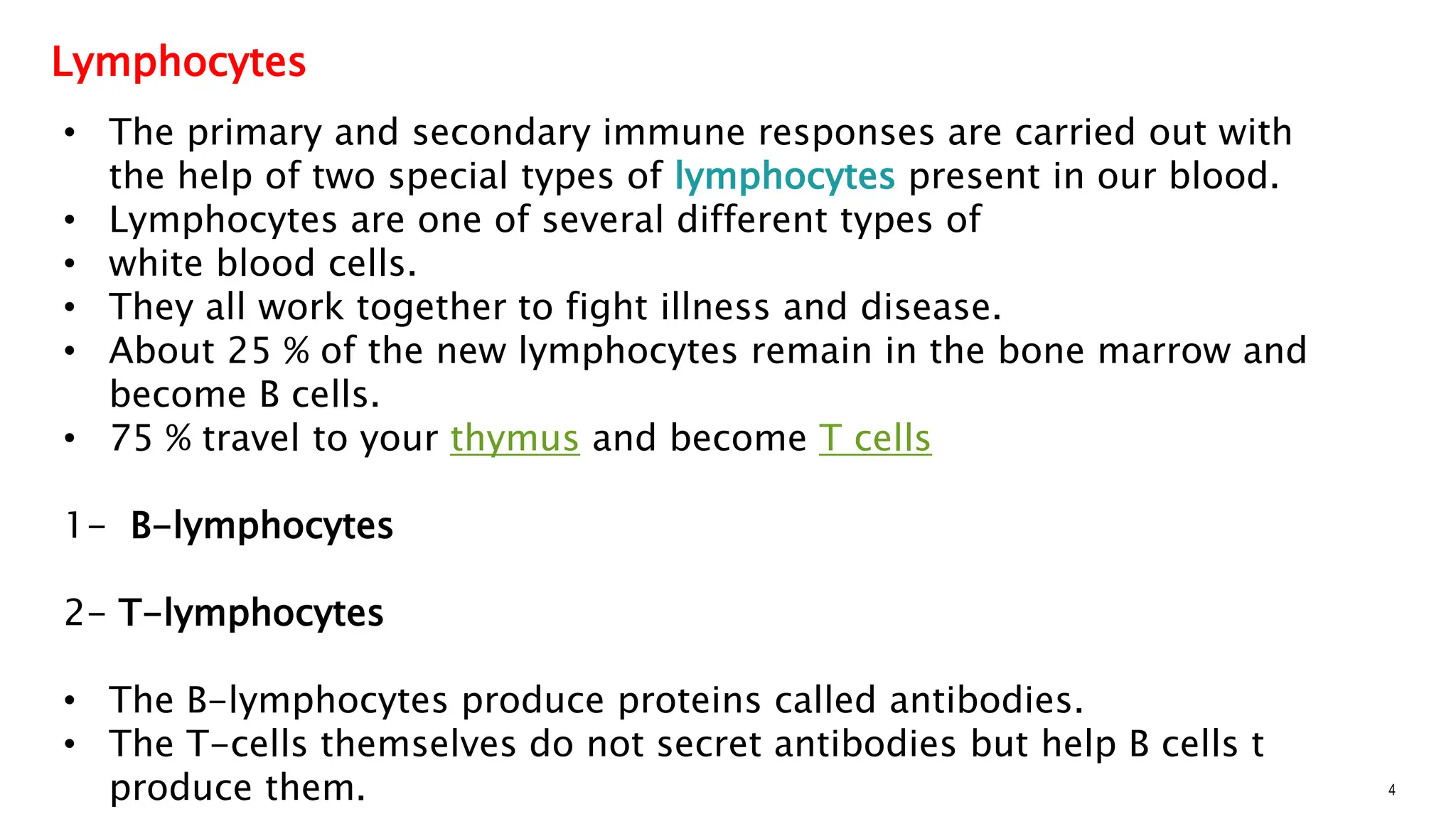
• The primary and secondary immune responses are carried out with
the help of two special types of lymphocytes present in our blood.
• Lymphocytes are one of several different types of
• white blood cells.
• They all work together to fight illness and disease.
• About 25 % of the new lymphocytes remain in the bone marrow and
become B cells.
• 75 % travel to your thymus and become T cells
1- B-lymphocytes
2- T-lymphocytes
• The B-lymphocytes produce proteins called antibodies.
• The T-cells themselves do not secret antibodies but help B cells t
produce them.
5
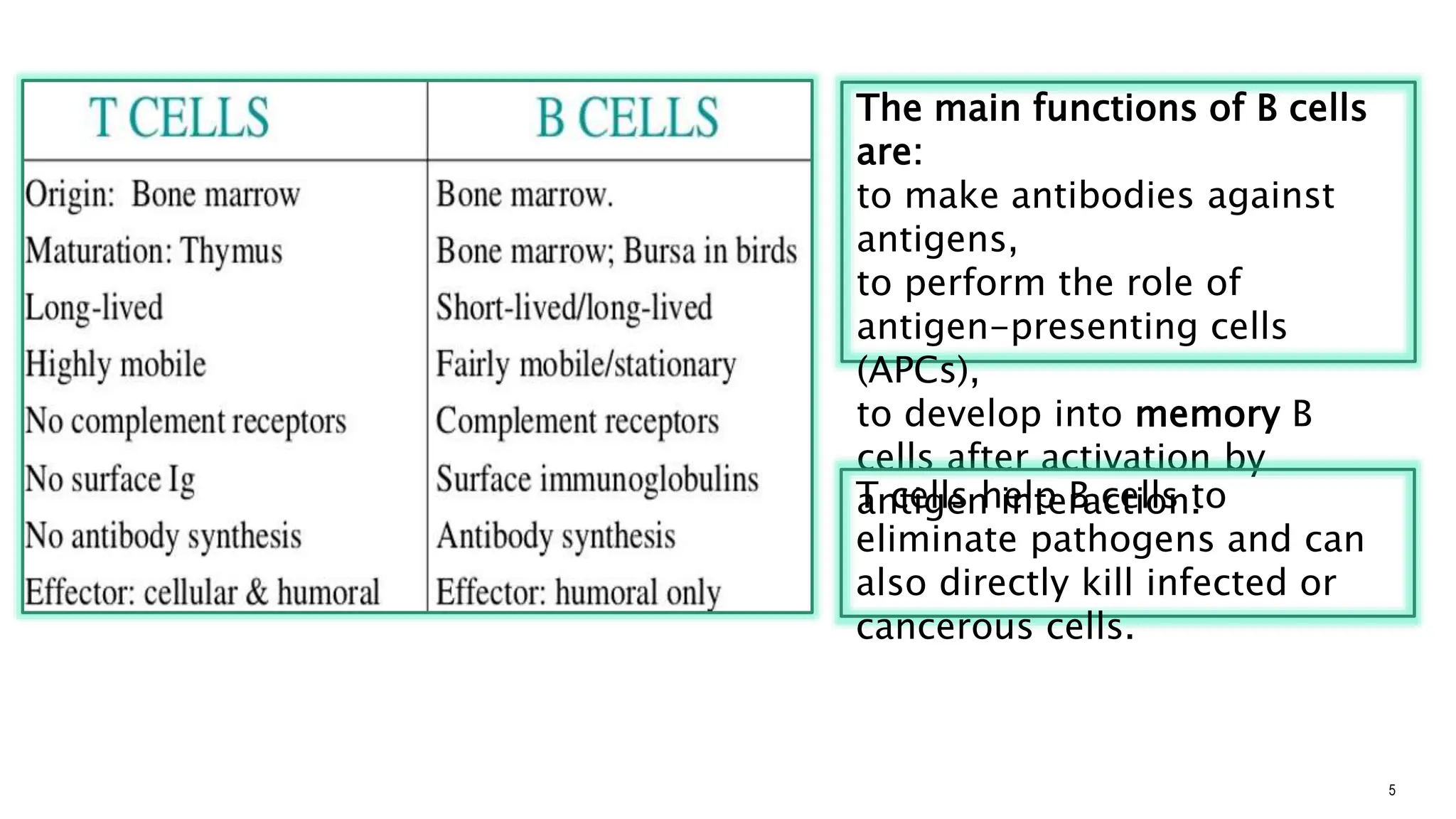
The main functions of B cells
are:
to make antibodies against
antigens,
to perform the role of
antigen-presenting cells
(APCs),
to develop into memory B
cells after activation by
antigen interaction.
T cells help B cells to
eliminate pathogens and can
also directly kill infected or
cancerous cells.
6
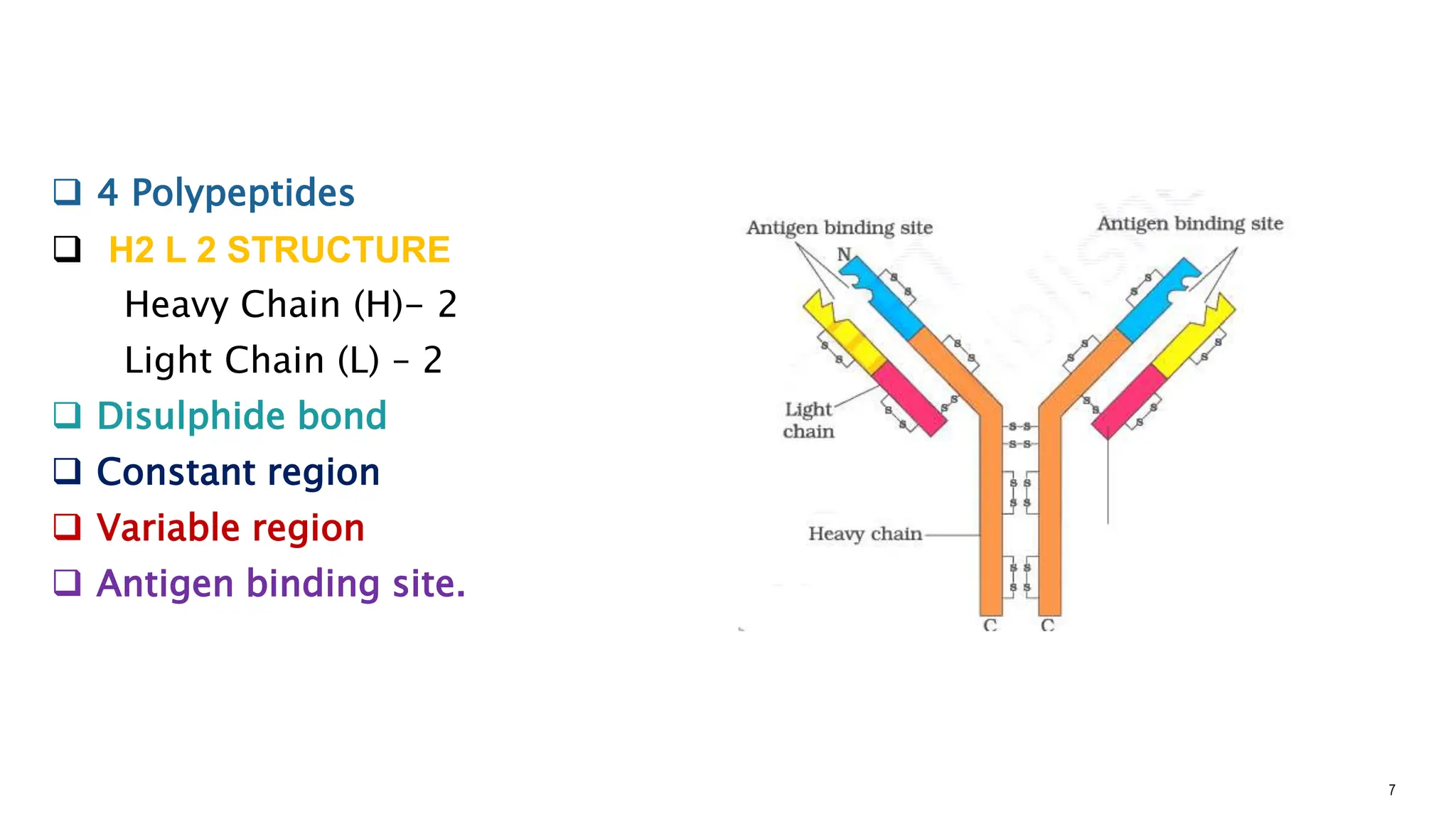
Structure of B cell - Immunoglobin
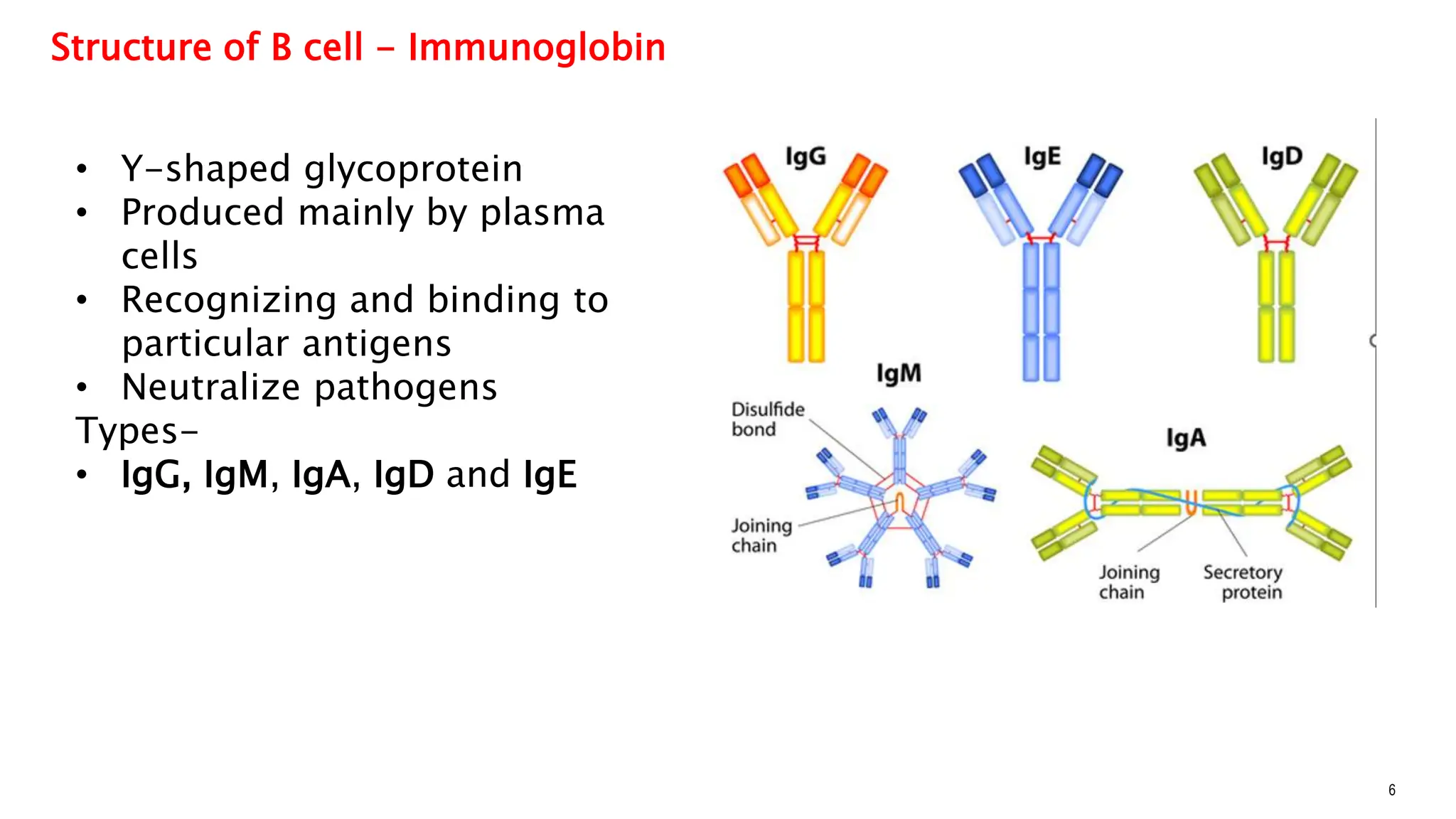
• Y-shaped glycoprotein
• Produced mainly by plasma
cells
• Recognizing and binding to
particular antigens
• Neutralize pathogens
Types-
• IgG, IgM, IgA, IgD and IgE
7
 4 Polypeptides
 H2 L 2 STRUCTURE
Heavy Chain (H)- 2
Light Chain (L) – 2
 Disulphide bond
 Constant region
 Variable region
 Antigen binding site.
8
Active Immunity
When a host is exposed to antigens
antibodies are produced in the host body.
Active immunity is slow and takes time to
give its full effective response.
Example
1- natural infection
2- vaccination
PASSIVE IMMUNITY
 When ready-made antibodies are
directly given to protec the body
against foreign agents, it is called
passive immunity
 Its action is fast
Examples-
1- Colostrums (Ig A) is passive
immunity
2- Ready-made antibodies
3- Antitoxin
4- Antibodies against the snake venom
Active and Passive Immunity
9
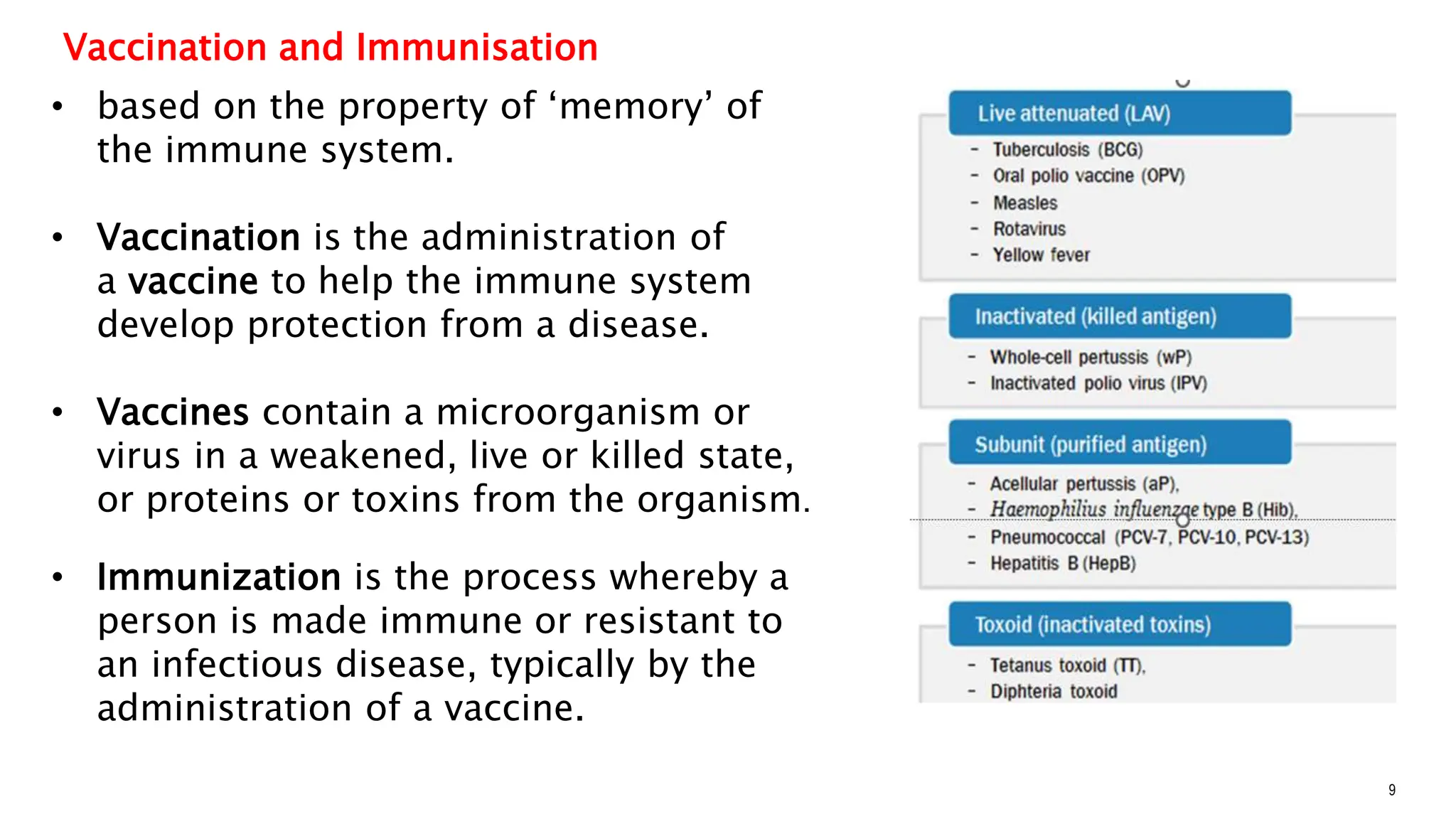
Vaccination and Immunisation
• based on the property of ‘memory’ of
the immune system.
• Vaccination is the administration of
a vaccine to help the immune system
develop protection from a disease.
• Vaccines contain a microorganism or
virus in a weakened, live or killed state,
or proteins or toxins from the organism.
• Immunization is the process whereby a
person is made immune or resistant to
an infectious disease, typically by the
administration of a vaccine.
10
Lymphoid organs
Tissue cells
Antibodies
Immune System in the Body
11
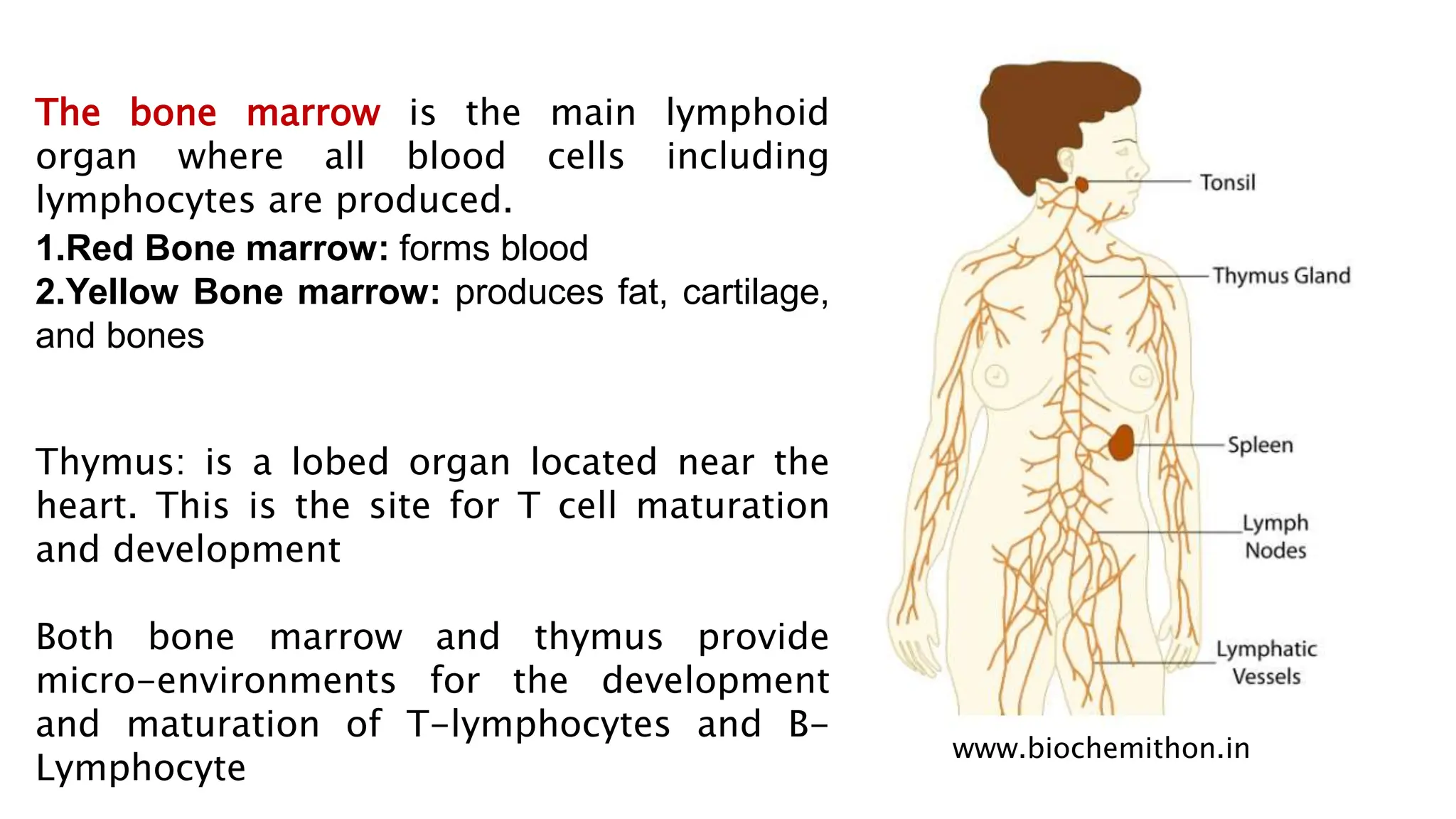
Lymphoid organs:
 These are the organs where origin
and/or maturation and proliferation
of lymphocytes occur.
 The primary lymphoid organs are
bone marrow and thymus where
immature lymphocytes differentiate
into antigen-sensitive lymphocytes.
 After maturation the lymphocytes
migrate to secondary lymphoid
organs like spleen, lymph nodes,
tonsils, Peyer’s patches of small
intestine and appendix.
 The secondary lymphoid organs
provide the sites for interaction of
lymphocytes with the antigen, which
then proliferate to become effector
Source:
@Britannica
12
The bone marrow is the main lymphoid
organ where all blood cells including
lymphocytes are produced.
1.Red Bone marrow: forms blood
2.Yellow Bone marrow: produces fat, cartilage,
and bones
Thymus: is a lobed organ located near the
heart. This is the site for T cell maturation
and development
Both bone marrow and thymus provide
micro-environments for the development
and maturation of T-lymphocytes and B-
Lymphocyte
www.biochemithon.in
- The spleen is a large bean shaped organ.
-It mainly contains lymphocytes and phagocytes.
-It acts as a filter of the blood by trapping blood-borne
microorganisms.
- Spleen also has a large reservoir of RBC.
Lymph nodes serve to trap the micro-organisms or other antigens, which
happen to get into the lymph and tissue fluid.
Antigens trapped in the lymph nodes are responsible for the activation of
lymphocytes present there and cause the immune response.
13
14
MALT- Mucosa associated Lymphoid
tisse • Within the lining of the major tracts (respiratory, digestive and
urogenital tracts
• It constitutes about 50 % of the lymphoid tissue in human body.
Allergies
• The exaggerated response of the immune system to certain
antigens present in the environment is called allergy
• Allergens - substances to which such an immune response
• The antibodies produced Ig E
• Symptoms - Sneezing, watery eyes, running nose and difficulty
in breathing.
• Histamine and Serotonin releases from the mast cells
• Antiallergen - anti-histamine, adrenalin and steroids
Auto Immunity
• An autoimmune disease is a condition in which your immune system
mistakenly attacks your body.
• Example- Multiple sclerosis, Myasthenia gravis, Pernicious anemia,
Rheumatoid arthritis.
THANK YOU
15
Source: NCERT Text book, Google
images

Immunity Class XII Biology based on NCERT.pptx

  • 1.
  • 2.
    2 Ability of thehost to fight the disease-causing organisms/ antigen is Immunity  Innate Immunity- present at the time of birth  Acquired immunity- pathogen specific after birth
  • 3.
    3 Humoral and Cellmediated immunity Humoral immunity (antibody-mediated immunity) • Activated by B cells and produces antibodies that bind to and neutralize antigens. • Humoral immunity targets extracellular pathogens and their toxins and develops quickly. Cell-mediated immunity • Occurs inside infected cells and is primarily driven by T cells, macrophages, and cytokines. • Cell-mediated immunity doesn't depend on antibodies and instead uses receptors to identify antigens and activate phagocytic cells. • Cell-mediated immunity protects the body against intracellular pathogens.
  • 4.
    4 Lymphocytes • The primaryand secondary immune responses are carried out with the help of two special types of lymphocytes present in our blood. • Lymphocytes are one of several different types of • white blood cells. • They all work together to fight illness and disease. • About 25 % of the new lymphocytes remain in the bone marrow and become B cells. • 75 % travel to your thymus and become T cells 1- B-lymphocytes 2- T-lymphocytes • The B-lymphocytes produce proteins called antibodies. • The T-cells themselves do not secret antibodies but help B cells t produce them.
  • 5.
    5 The main functionsof B cells are: to make antibodies against antigens, to perform the role of antigen-presenting cells (APCs), to develop into memory B cells after activation by antigen interaction. T cells help B cells to eliminate pathogens and can also directly kill infected or cancerous cells.
  • 6.
    6 Structure of Bcell - Immunoglobin • Y-shaped glycoprotein • Produced mainly by plasma cells • Recognizing and binding to particular antigens • Neutralize pathogens Types- • IgG, IgM, IgA, IgD and IgE
  • 7.
    7  4 Polypeptides H2 L 2 STRUCTURE Heavy Chain (H)- 2 Light Chain (L) – 2  Disulphide bond  Constant region  Variable region  Antigen binding site.
  • 8.
    8 Active Immunity When ahost is exposed to antigens antibodies are produced in the host body. Active immunity is slow and takes time to give its full effective response. Example 1- natural infection 2- vaccination PASSIVE IMMUNITY  When ready-made antibodies are directly given to protec the body against foreign agents, it is called passive immunity  Its action is fast Examples- 1- Colostrums (Ig A) is passive immunity 2- Ready-made antibodies 3- Antitoxin 4- Antibodies against the snake venom Active and Passive Immunity
  • 9.
    9 Vaccination and Immunisation •based on the property of ‘memory’ of the immune system. • Vaccination is the administration of a vaccine to help the immune system develop protection from a disease. • Vaccines contain a microorganism or virus in a weakened, live or killed state, or proteins or toxins from the organism. • Immunization is the process whereby a person is made immune or resistant to an infectious disease, typically by the administration of a vaccine.
  • 10.
  • 11.
    11 Lymphoid organs:  Theseare the organs where origin and/or maturation and proliferation of lymphocytes occur.  The primary lymphoid organs are bone marrow and thymus where immature lymphocytes differentiate into antigen-sensitive lymphocytes.  After maturation the lymphocytes migrate to secondary lymphoid organs like spleen, lymph nodes, tonsils, Peyer’s patches of small intestine and appendix.  The secondary lymphoid organs provide the sites for interaction of lymphocytes with the antigen, which then proliferate to become effector Source: @Britannica
  • 12.
    12 The bone marrowis the main lymphoid organ where all blood cells including lymphocytes are produced. 1.Red Bone marrow: forms blood 2.Yellow Bone marrow: produces fat, cartilage, and bones Thymus: is a lobed organ located near the heart. This is the site for T cell maturation and development Both bone marrow and thymus provide micro-environments for the development and maturation of T-lymphocytes and B- Lymphocyte www.biochemithon.in
  • 13.
    - The spleenis a large bean shaped organ. -It mainly contains lymphocytes and phagocytes. -It acts as a filter of the blood by trapping blood-borne microorganisms. - Spleen also has a large reservoir of RBC. Lymph nodes serve to trap the micro-organisms or other antigens, which happen to get into the lymph and tissue fluid. Antigens trapped in the lymph nodes are responsible for the activation of lymphocytes present there and cause the immune response. 13
  • 14.
    14 MALT- Mucosa associatedLymphoid tisse • Within the lining of the major tracts (respiratory, digestive and urogenital tracts • It constitutes about 50 % of the lymphoid tissue in human body. Allergies • The exaggerated response of the immune system to certain antigens present in the environment is called allergy • Allergens - substances to which such an immune response • The antibodies produced Ig E • Symptoms - Sneezing, watery eyes, running nose and difficulty in breathing. • Histamine and Serotonin releases from the mast cells • Antiallergen - anti-histamine, adrenalin and steroids Auto Immunity • An autoimmune disease is a condition in which your immune system mistakenly attacks your body. • Example- Multiple sclerosis, Myasthenia gravis, Pernicious anemia, Rheumatoid arthritis.
  • 15.
    THANK YOU 15 Source: NCERTText book, Google images