GENE SILENCING
Register no-189422
Guide- Dr Sohail Keegan Pinto
1
CONTENTS
2
INTRODUCTION
• Gene silencing is the regulation of gene expression in a cell which
prevents the expression of certain gene.
• It describes the switching off of a gene by a mechanism other than
genetic modification.
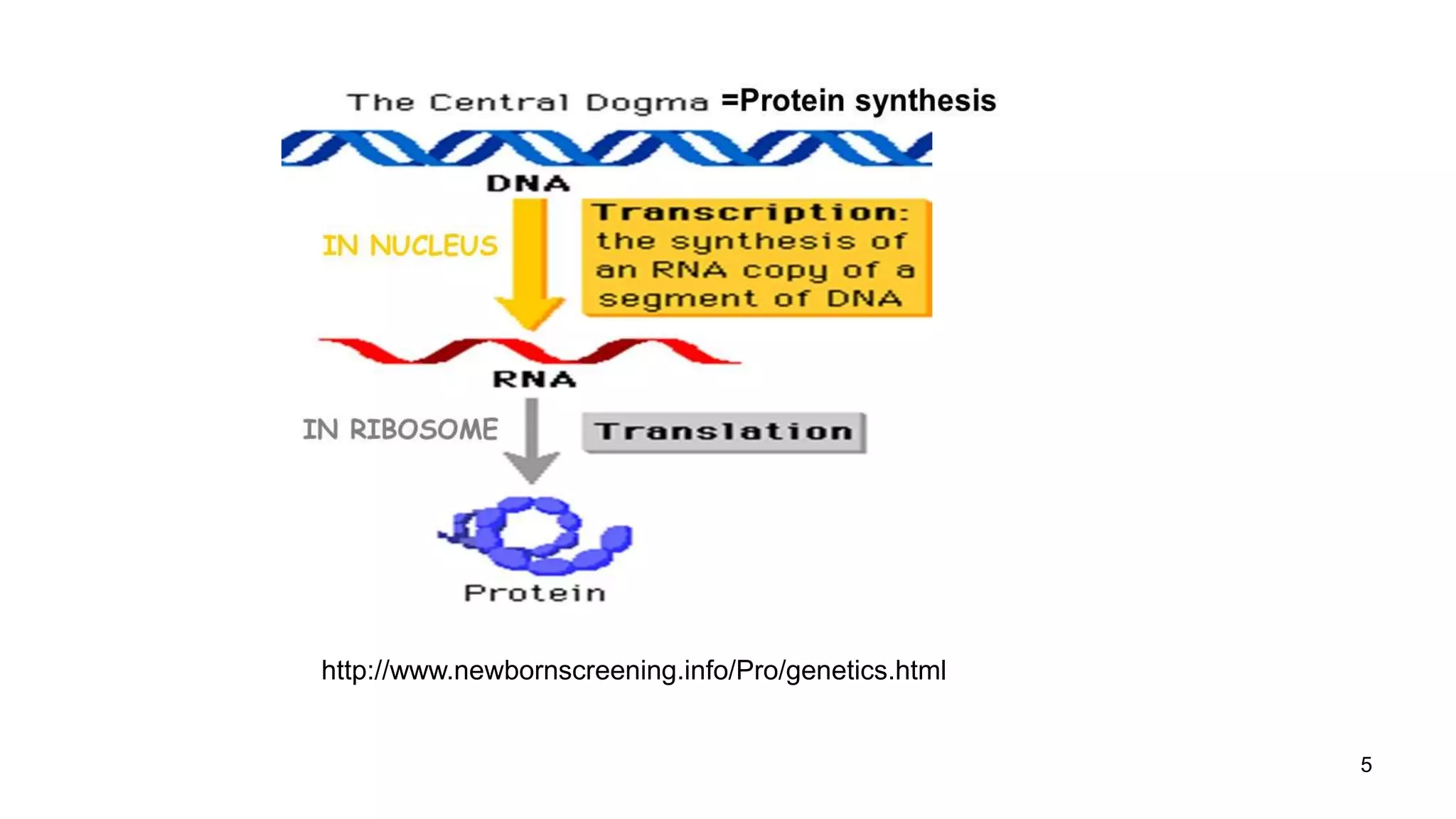
• It occurs when the RNA is unable to produce a protein during
translation.
• Gene silencing is a “knock down” process.
• When genes are knocked down, their expression is reduced. In
contrast, when genes are knocked out ,they are completely
erased from organism's genome and has no expression.
3
http://www.newbornscreening.info/Pro/genetics.html
4
http://www.newbornscreening.info/Pro/genetics.html
5
• Gene knock out
• Gene knock down
• Gene silencing and degradation of gene using RNA technology
-Antisense RNA technology
-RNA interference(RNAi) technology
There are mainly two types of gene silencing
1)Transriptional gene silencing
2)Post transcriptional gene silencing
6
Gene silencing can be induced either at transcriptional level or post
transriptional level.
Transcriptional level Post transcriptional level
 Genomic imprinting  Anti sense RNA technology
 Position effect  RNA interference
-mi RNA
-sh RNA
-si RNA
7
TRANSCRIPTIONAL GENE SILENCING
It is acheived by creating of environment of heterochromatin around
a gene that makes it inaccesible to transcriptional machinery (RNA
polymerase,transcription factors etc.)
1)Genomic imprinting
Genomic imprinting occurs when a gene inherited from either
mother or father has been permanently inactivated in the parent and
passed on to offsprings in the same inactivated condition.
2)Position effect
Position effect is the effect on the expression of a gene when its
location on a chromosome is changed, often by translocation.
8
POST TRANSCRIPTIONAL GENE SILENCING
It is the ability of endogenous or exogenous RNA to supress the
expression of the gene that corresponds to m-RNA sequence.
1) Antisense RNA technology
Antisense RNA is a single stranded RNA that is complementary to
a mRNA strand.They are introduced into a cell to inhibit the
translational machinery by base pairing with the sense RNA and
activating the RNase H.
9
Antisense RNA technology
10
https://www.ukessays.com/essays/sciences/antisense-technology-
applications-7151.php
2)RNA interference( RNAi)
• It is a cellular process by which mRNA is targeted for degredation
by a dsRNA with a strand complementary to a fragment of mRNA.
• During RNA i, dsRNA cut into small dsRNAs by an enzyme called
dicer. They base pair to an mRNA through a double stranded
RNA-enzyme complex (RISC).
There are 3 types of dsRNA produced that leads to RNAi pathway;
1)Small interfering RNAs (si RNAs)
2)micro RNAs (mi RNAs)
3)Short hairpin RNAs (sh RNA)
11
There are five components for siRNA ,miRNA and shRNA
generation
• Drosha
• Dicer
• RNA-induced silencing complex (Risc)
• Argonaute
• RNA dependent RNA polymerase
12
siRNA pathway
• Produced in vivo by by cleavage of dsRNA.
• Complementary to aspecific sequence of target mRNA for
degradation.
3 phases:
Initiation phase
Maintenance phase
Signal amplification and spreading phase
13
siRNA mediated RNAi pathway
14https://www.nature.com/articles/nrg
3978
• dsRNA are chopped into short
interfering RNAs(si RNA) by dicer.
• The siRNA and dicer complex
recruits additional component to
form an RISC . The siRNA unwinds.
• The unwound siRNAbase pairs with
complementary mRNA, thus guiding
the RNAi machinery to the target
mRNA.
• The target mRNA is effectively
cleaved and subsequently
degraded.
miRNA pathway
• It is a single stranded RNA molecule, 22-25 nucleotides
• Primary transcript is processed to a short structure called a pre-
miRNA and finally into a funtional miRNA.
2 phases:
Initiation
-Generation of mature miRNA
Execution
-Silencing of target gene
-Degradation or inhibition of translation.
15
miRNA mediated RNAi pathway
16
https://www.ous-research.no/kristensen/?k=kristensen%2FResearch+projects&aid=12836
shRNA pathway
17https://www.researchgate.net/figure/Three-strategies-to-enhance-si-or-
shRNA-efficiencies-in-mammalian-cells-schemes-A_fig1_256764704
There are 5 components for
siRNAs generation
1)Dicer
2)Short hairpin RNA
3) RISC
4)Argonuate
5) Rna dependent RNA
polymerase
Applications of gene silencing
• Specific gene silencing using RNA i in cell culture
• Cancer treatment
• RNAi has been used in biotechnology, particularly in the
engineering of food plants that produce lower levels of natural
plant toxins.
• Modulation of HIV -1 replication by RNA i.
18
References
• Molecular biology by David p. Clark ELSEVIER.
• Elbashir S.M. et al., 2001. RNA interference is mediated by 21-
and 22-nucleotide RNAs. Genes Dev, 15(2):188-200.
• Nelson, D., Nelson, D., Lehninger, A. and Cox, M. (2008).
Lehninger principles of biochemistry. 5th ed. New York: W.H.
Freeman, pp-.1110-1113.
19

Gene silencing

  • 1.
  • 2.
  • 3.
    INTRODUCTION • Gene silencingis the regulation of gene expression in a cell which prevents the expression of certain gene. • It describes the switching off of a gene by a mechanism other than genetic modification. • It occurs when the RNA is unable to produce a protein during translation. • Gene silencing is a “knock down” process. • When genes are knocked down, their expression is reduced. In contrast, when genes are knocked out ,they are completely erased from organism's genome and has no expression. 3
  • 4.
  • 5.
  • 6.
    • Gene knockout • Gene knock down • Gene silencing and degradation of gene using RNA technology -Antisense RNA technology -RNA interference(RNAi) technology There are mainly two types of gene silencing 1)Transriptional gene silencing 2)Post transcriptional gene silencing 6
  • 7.
    Gene silencing canbe induced either at transcriptional level or post transriptional level. Transcriptional level Post transcriptional level  Genomic imprinting  Anti sense RNA technology  Position effect  RNA interference -mi RNA -sh RNA -si RNA 7
  • 8.
    TRANSCRIPTIONAL GENE SILENCING Itis acheived by creating of environment of heterochromatin around a gene that makes it inaccesible to transcriptional machinery (RNA polymerase,transcription factors etc.) 1)Genomic imprinting Genomic imprinting occurs when a gene inherited from either mother or father has been permanently inactivated in the parent and passed on to offsprings in the same inactivated condition. 2)Position effect Position effect is the effect on the expression of a gene when its location on a chromosome is changed, often by translocation. 8
  • 9.
    POST TRANSCRIPTIONAL GENESILENCING It is the ability of endogenous or exogenous RNA to supress the expression of the gene that corresponds to m-RNA sequence. 1) Antisense RNA technology Antisense RNA is a single stranded RNA that is complementary to a mRNA strand.They are introduced into a cell to inhibit the translational machinery by base pairing with the sense RNA and activating the RNase H. 9
  • 10.
  • 11.
    2)RNA interference( RNAi) •It is a cellular process by which mRNA is targeted for degredation by a dsRNA with a strand complementary to a fragment of mRNA. • During RNA i, dsRNA cut into small dsRNAs by an enzyme called dicer. They base pair to an mRNA through a double stranded RNA-enzyme complex (RISC). There are 3 types of dsRNA produced that leads to RNAi pathway; 1)Small interfering RNAs (si RNAs) 2)micro RNAs (mi RNAs) 3)Short hairpin RNAs (sh RNA) 11
  • 12.
    There are fivecomponents for siRNA ,miRNA and shRNA generation • Drosha • Dicer • RNA-induced silencing complex (Risc) • Argonaute • RNA dependent RNA polymerase 12
  • 13.
    siRNA pathway • Producedin vivo by by cleavage of dsRNA. • Complementary to aspecific sequence of target mRNA for degradation. 3 phases: Initiation phase Maintenance phase Signal amplification and spreading phase 13
  • 14.
    siRNA mediated RNAipathway 14https://www.nature.com/articles/nrg 3978 • dsRNA are chopped into short interfering RNAs(si RNA) by dicer. • The siRNA and dicer complex recruits additional component to form an RISC . The siRNA unwinds. • The unwound siRNAbase pairs with complementary mRNA, thus guiding the RNAi machinery to the target mRNA. • The target mRNA is effectively cleaved and subsequently degraded.
  • 15.
    miRNA pathway • Itis a single stranded RNA molecule, 22-25 nucleotides • Primary transcript is processed to a short structure called a pre- miRNA and finally into a funtional miRNA. 2 phases: Initiation -Generation of mature miRNA Execution -Silencing of target gene -Degradation or inhibition of translation. 15
  • 16.
    miRNA mediated RNAipathway 16 https://www.ous-research.no/kristensen/?k=kristensen%2FResearch+projects&aid=12836
  • 17.
    shRNA pathway 17https://www.researchgate.net/figure/Three-strategies-to-enhance-si-or- shRNA-efficiencies-in-mammalian-cells-schemes-A_fig1_256764704 There are5 components for siRNAs generation 1)Dicer 2)Short hairpin RNA 3) RISC 4)Argonuate 5) Rna dependent RNA polymerase
  • 18.
    Applications of genesilencing • Specific gene silencing using RNA i in cell culture • Cancer treatment • RNAi has been used in biotechnology, particularly in the engineering of food plants that produce lower levels of natural plant toxins. • Modulation of HIV -1 replication by RNA i. 18
  • 19.
    References • Molecular biologyby David p. Clark ELSEVIER. • Elbashir S.M. et al., 2001. RNA interference is mediated by 21- and 22-nucleotide RNAs. Genes Dev, 15(2):188-200. • Nelson, D., Nelson, D., Lehninger, A. and Cox, M. (2008). Lehninger principles of biochemistry. 5th ed. New York: W.H. Freeman, pp-.1110-1113. 19