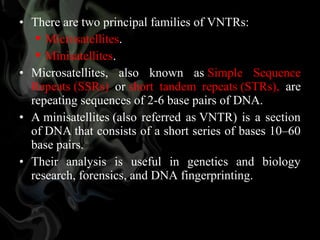
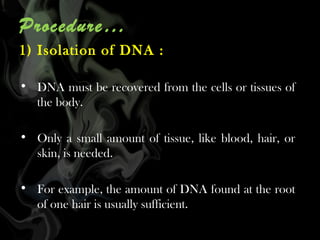
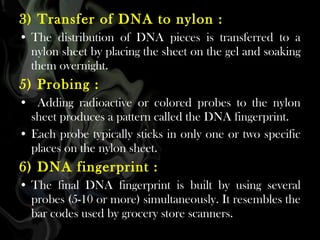
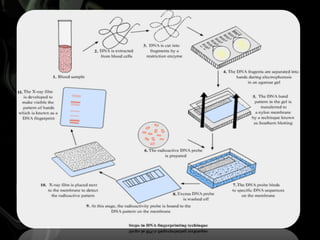
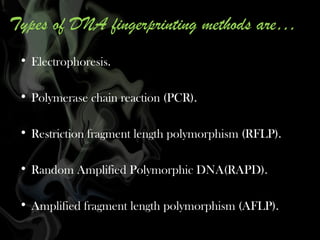
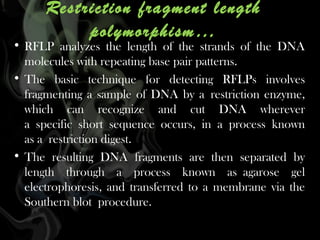
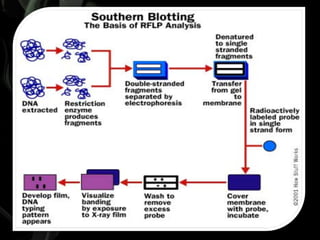
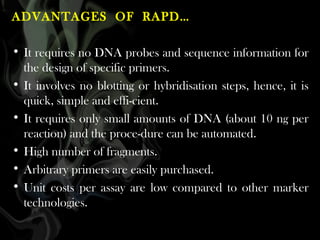
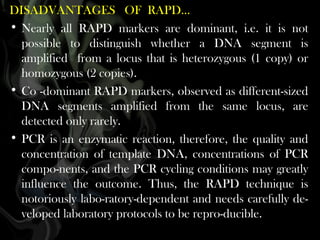
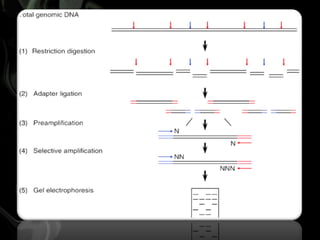
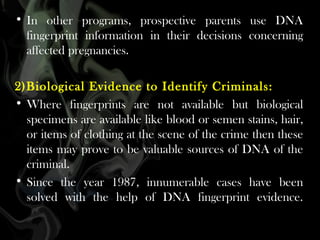
DNA fingerprinting is a technique developed in 1984 that analyzes variable regions in genetic material to distinguish one person from another. It involves isolating DNA from a sample, cutting it with restriction enzymes, sorting by size, and probing specific locations to generate a unique pattern. This technique uses variations in the number of short tandem repeats between individuals and has been used successfully in criminal cases and establishing paternity. The most common DNA fingerprinting methods are electrophoresis, polymerase chain reaction, restriction fragment length polymorphism, random amplified polymorphic DNA, and amplified fragment length polymorphism. DNA fingerprinting has applications in diagnosing inherited disorders, developing cures, and identifying criminals using biological evidence.


















![[Challenge:Future] Fighting with Superbugs](https://cdn.slidesharecdn.com/ss_thumbnails/challengefuture-fighting-with-superbugs4961-111107143723-phpapp01-thumbnail.jpg?width=640&height=640&fit=bounds)


![Ebola virus disease [ bio project ]](https://cdn.slidesharecdn.com/ss_thumbnails/ebolavirusbioprojecttoupload-141006053930-conversion-gate02-thumbnail.jpg?width=640&height=640&fit=bounds)


