DNA Profiling
(DNA fingerprinting)
What is DNA Profiling?


A technique used by scientists to
distinguish between individuals
of the same species using only
samples of their DNA
Who Invented it?
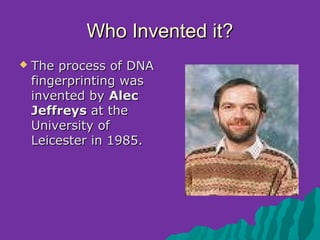
   The process of DNA
    fingerprinting was
    invented by Alec
    Jeffreys at the
    University of
    Leicester in 1985.
Stages of DNA Profiling
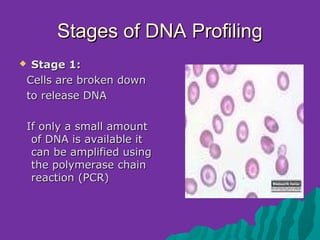
 Stage 1:
 Cells are broken down
 to release DNA

 If only a small amount
  of DNA is available it
  can be amplified using
  the polymerase chain
  reaction (PCR)
Stages of DNA Profiling
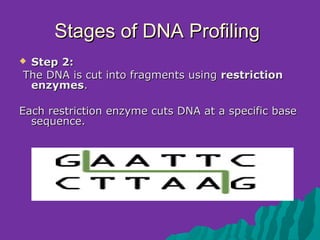
Step 2:
The DNA is cut into fragments using restriction
 enzymes.

Each restriction enzyme cuts DNA at a specific base
  sequence.
Stages of DNA Profiling
 Thesections of DNA that are cut out
 are called restriction fragments.

 Thisyields thousands of restriction
 fragments of all different sizes
 because the base sequences being
 cut may be far apart (long fragment)
 or close together (short fragment).
Stages of DNA Profiling
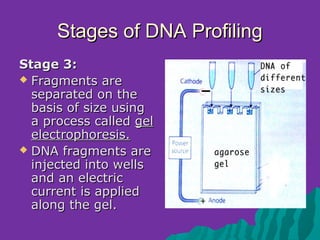
Stage 3:
 Fragments are
  separated on the
  basis of size using
  a process called gel
  electrophoresis.
 DNA fragments are
  injected into wells
  and an electric
  current is applied
  along the gel.
Stages of DNA Profiling
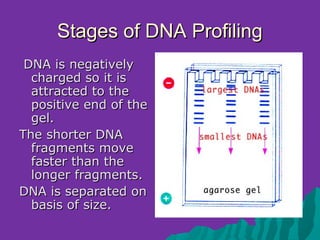
 DNA is negatively
  charged so it is
  attracted to the
  positive end of the
  gel.
The shorter DNA
  fragments move
  faster than the
  longer fragments.
DNA is separated on
  basis of size.
Stages of DNA Profiling
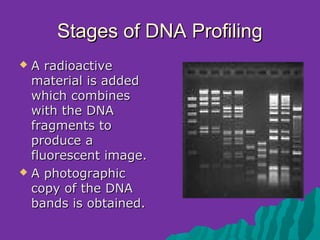
 A radioactive
  material is added
  which combines
  with the DNA
  fragments to
  produce a
  fluorescent image.
 A photographic
  copy of the DNA
  bands is obtained.
Stages of DNA Profiling
Stage 4:
 The pattern of fragment distribution
  is then analysed.
Uses of DNA Profiling
 DNA profiling is
 used to solve
 crimes and
 medical
 problems
Crime
 Forensic    science is the use of
  scientific knowledge in legal
  situations.
 The DNA profile of each individual is
  highly specific.
 The chances of two people having
  exactly the same DNA profile is
  30,000 million to 1 (except for
  identical twins).
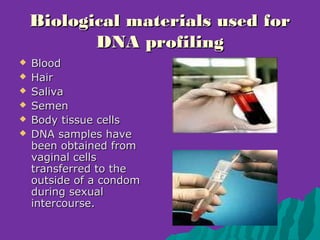
Biological materials used for
           DNA profiling
   Blood
   Hair
   Saliva
   Semen
   Body tissue cells
   DNA samples have
    been obtained from
    vaginal cells
    transferred to the
    outside of a condom
    during sexual
    intercourse.
DNA Profiling can solve crimes
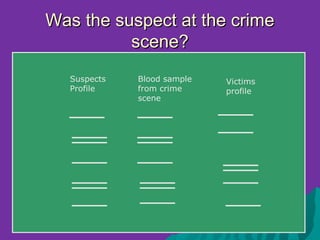
 The pattern of the DNA profile is then
  compared with those of the victim and the
  suspect.
 If the profile matches the suspect it
  provides strong evidence that the suspect
  was present at the crime scene (NB:it
  does not prove they committed the
  crime).
 If the profile doesn’t match the suspect
  then that suspect may be eliminated from
  the enquiry.
Example
A  violent murder occurred.
 The forensics team retrieved a blood
  sample from the crime scene.
 They prepared DNA profiles of the
  blood sample, the victim and a
  suspect as follows:
Was the suspect at the crime
          scene?
  Suspects   Blood sample   Victims
  Profile    from crime     profile
             scene
Solving Medical Problems
DNA profiles can be used to determine
  whether a particular person is the parent
  of a child.
A childs paternity (father) and
  maternity(mother) can be determined.
This information can be used in
• Paternity suits

• Inheritance cases

• Immigration cases
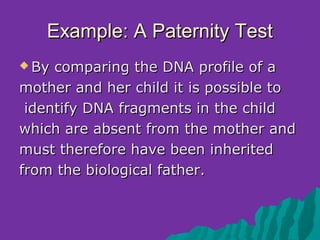
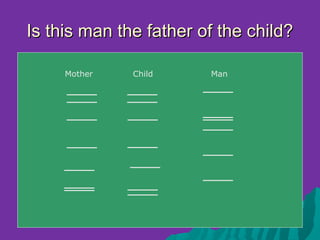
Example: A Paternity Test
 By comparing the DNA profile of a
mother and her child it is possible to
 identify DNA fragments in the child
which are absent from the mother and
must therefore have been inherited
from the biological father.
Is this man the father of the child?

     Mother   Child     Man
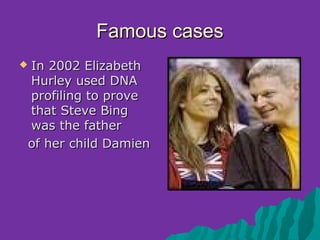
Famous cases
   In 2002 Elizabeth
    Hurley used DNA
    profiling to prove
    that Steve Bing
    was the father
    of her child Damien
Famous Cases
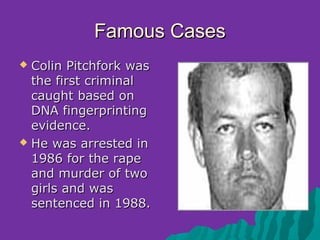
 Colin Pitchfork was
  the first criminal
  caught based on
  DNA fingerprinting
  evidence.
 He was arrested in
  1986 for the rape
  and murder of two
  girls and was
  sentenced in 1988.
Famous Cases
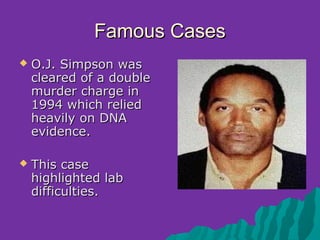
   O.J. Simpson was
    cleared of a double
    murder charge in
    1994 which relied
    heavily on DNA
    evidence.

   This case
    highlighted lab
    difficulties.

DNA Fingerprinting

  • 1.
  • 2.
    What is DNAProfiling? A technique used by scientists to distinguish between individuals of the same species using only samples of their DNA
  • 3.
    Who Invented it?  The process of DNA fingerprinting was invented by Alec Jeffreys at the University of Leicester in 1985.
  • 4.
    Stages of DNAProfiling  Stage 1: Cells are broken down to release DNA If only a small amount of DNA is available it can be amplified using the polymerase chain reaction (PCR)
  • 5.
    Stages of DNAProfiling Step 2: The DNA is cut into fragments using restriction enzymes. Each restriction enzyme cuts DNA at a specific base sequence.
  • 6.
    Stages of DNAProfiling  Thesections of DNA that are cut out are called restriction fragments.  Thisyields thousands of restriction fragments of all different sizes because the base sequences being cut may be far apart (long fragment) or close together (short fragment).
  • 7.
    Stages of DNAProfiling Stage 3:  Fragments are separated on the basis of size using a process called gel electrophoresis.  DNA fragments are injected into wells and an electric current is applied along the gel.
  • 8.
    Stages of DNAProfiling DNA is negatively charged so it is attracted to the positive end of the gel. The shorter DNA fragments move faster than the longer fragments. DNA is separated on basis of size.
  • 9.
    Stages of DNAProfiling  A radioactive material is added which combines with the DNA fragments to produce a fluorescent image.  A photographic copy of the DNA bands is obtained.
  • 10.
    Stages of DNAProfiling Stage 4:  The pattern of fragment distribution is then analysed.
  • 11.
    Uses of DNAProfiling  DNA profiling is used to solve crimes and medical problems
  • 12.
    Crime  Forensic science is the use of scientific knowledge in legal situations.  The DNA profile of each individual is highly specific.  The chances of two people having exactly the same DNA profile is 30,000 million to 1 (except for identical twins).
  • 13.
    Biological materials usedfor DNA profiling  Blood  Hair  Saliva  Semen  Body tissue cells  DNA samples have been obtained from vaginal cells transferred to the outside of a condom during sexual intercourse.
  • 14.
    DNA Profiling cansolve crimes  The pattern of the DNA profile is then compared with those of the victim and the suspect.  If the profile matches the suspect it provides strong evidence that the suspect was present at the crime scene (NB:it does not prove they committed the crime).  If the profile doesn’t match the suspect then that suspect may be eliminated from the enquiry.
  • 15.
    Example A violentmurder occurred.  The forensics team retrieved a blood sample from the crime scene.  They prepared DNA profiles of the blood sample, the victim and a suspect as follows:
  • 16.
    Was the suspectat the crime scene? Suspects Blood sample Victims Profile from crime profile scene
  • 17.
    Solving Medical Problems DNAprofiles can be used to determine whether a particular person is the parent of a child. A childs paternity (father) and maternity(mother) can be determined. This information can be used in • Paternity suits • Inheritance cases • Immigration cases
  • 18.
    Example: A PaternityTest  By comparing the DNA profile of a mother and her child it is possible to identify DNA fragments in the child which are absent from the mother and must therefore have been inherited from the biological father.
  • 19.
    Is this manthe father of the child? Mother Child Man
  • 20.
    Famous cases  In 2002 Elizabeth Hurley used DNA profiling to prove that Steve Bing was the father of her child Damien
  • 21.
    Famous Cases  ColinPitchfork was the first criminal caught based on DNA fingerprinting evidence.  He was arrested in 1986 for the rape and murder of two girls and was sentenced in 1988.
  • 22.
    Famous Cases  O.J. Simpson was cleared of a double murder charge in 1994 which relied heavily on DNA evidence.  This case highlighted lab difficulties.