DNA COMPUTING


Presented By :- Vikrant Dubey
                                V SEM(BCA)
INTRODUCTION


• What is DNA?

• What is DNA Computer?

• Why DNA Computers?
BRIEF
       HISTORY


•Adleman’s Hamiltonian Path Problem

•Typical N-Queen Problem
ARCHITECHTURE OF
  DNA COMPUTERS

• What is DNA?

• How Genetic Sequencing(DNA) works?

• How DNA chips are made?
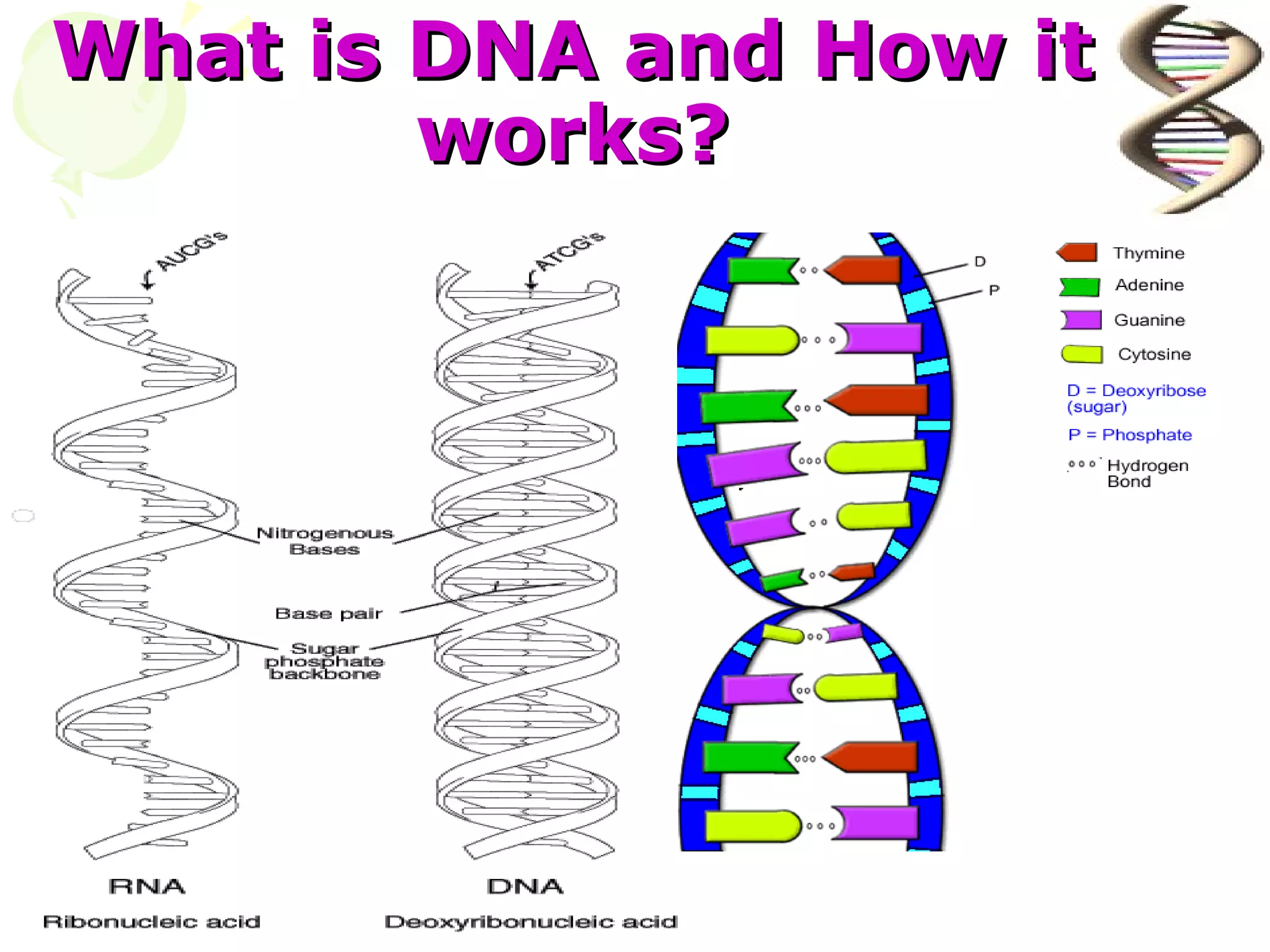
What is DNA and How it
        works?
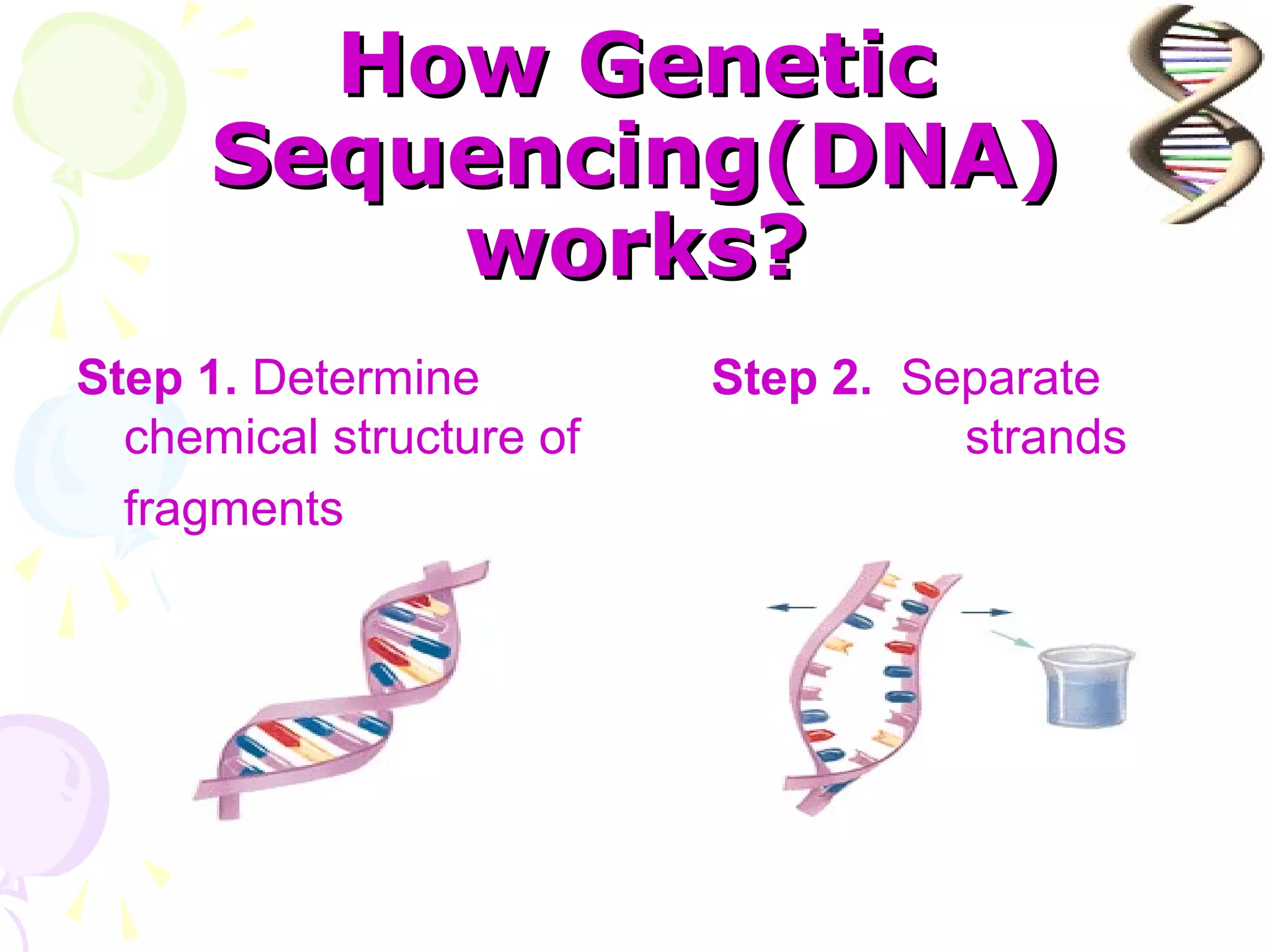
How Genetic
      Sequencing(DNA)
          works?
Step 1. Determine         Step 2. Separate
  chemical structure of             strands
  fragments
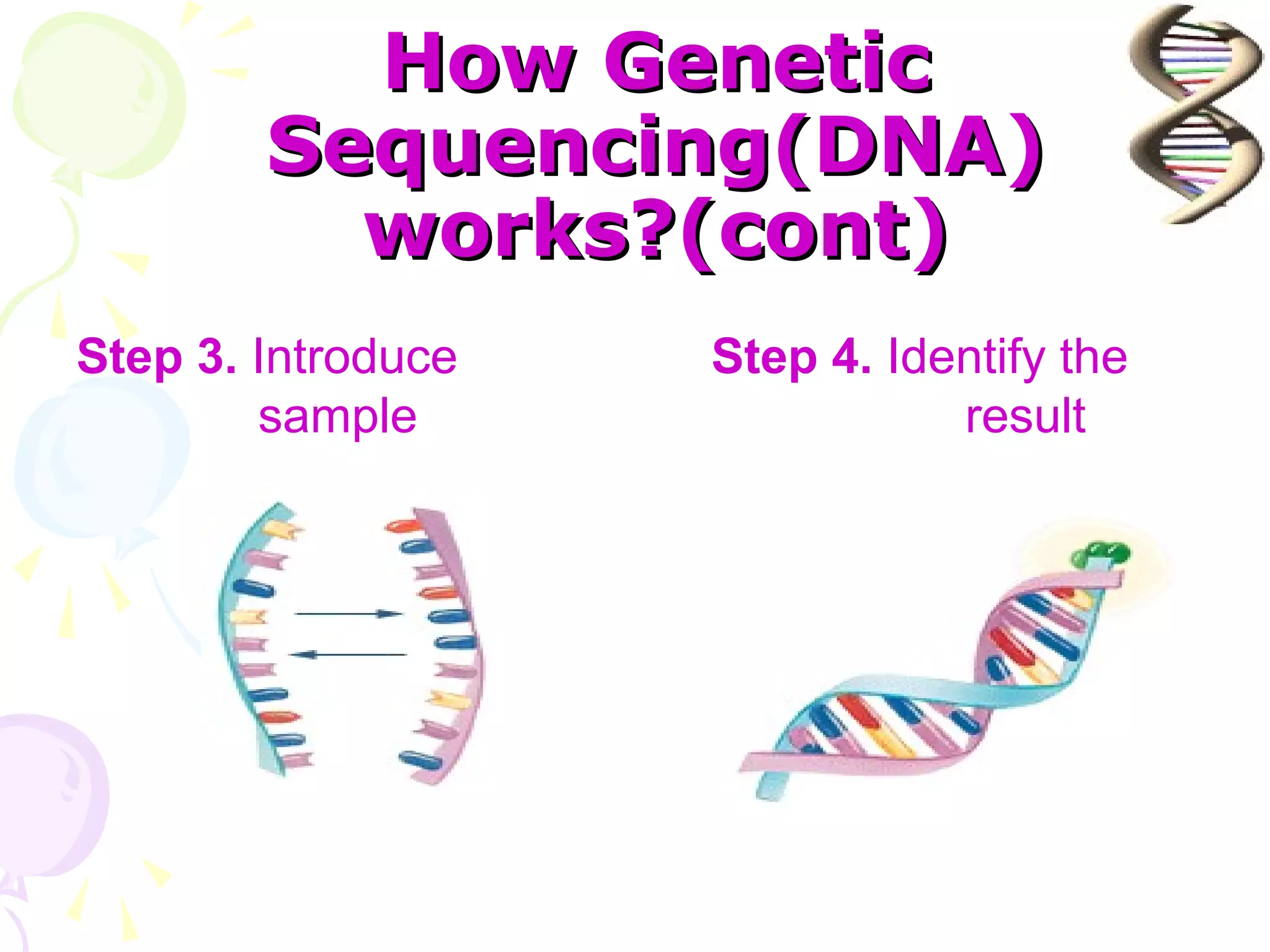
How Genetic
        Sequencing(DNA)
          works?(cont)
Step 3. Introduce   Step 4. Identify the
        sample                 result
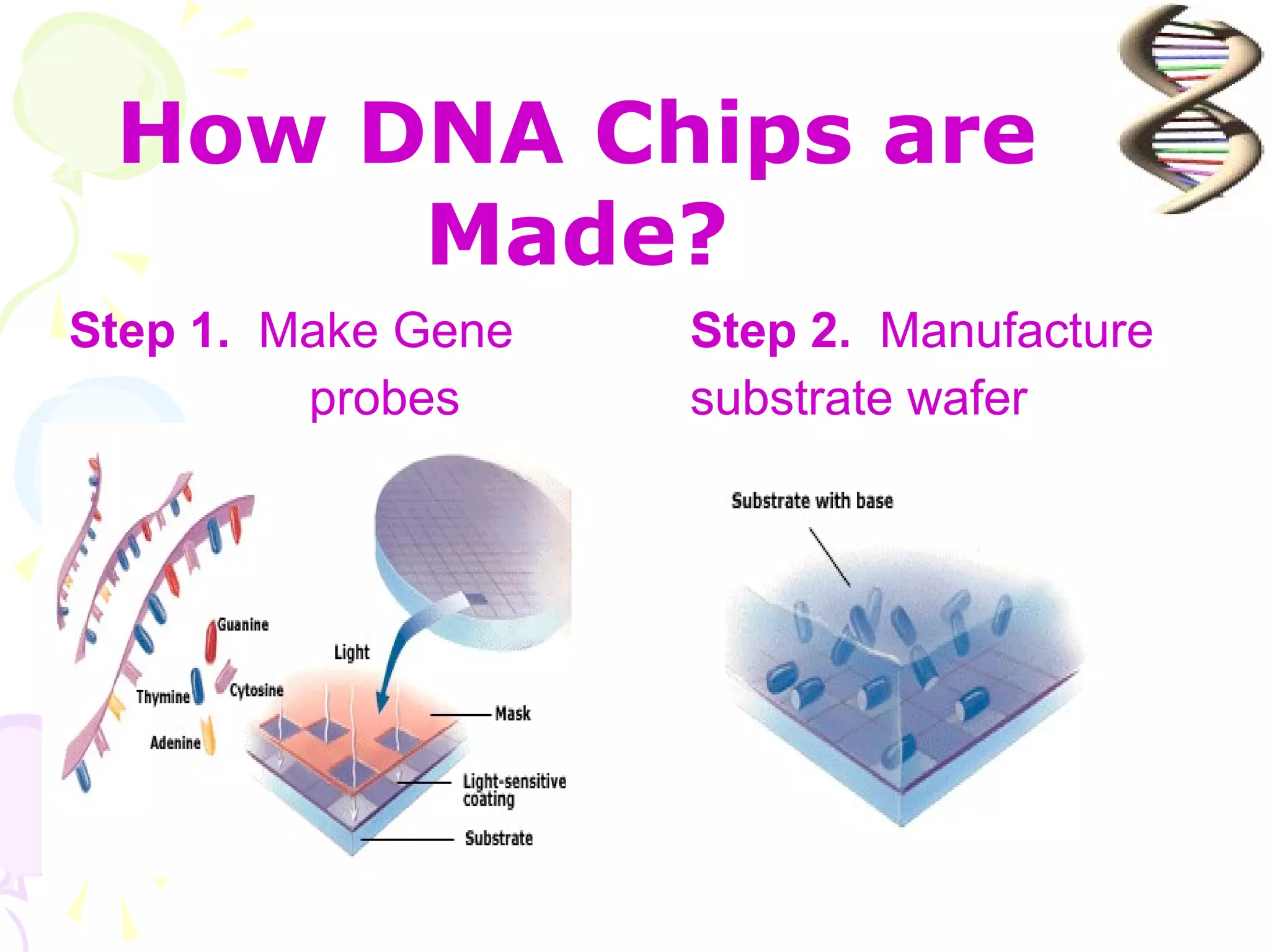
How DNA Chips are
      Made?
Step 1. Make Gene   Step 2. Manufacture
         probes     substrate wafer
How DNA Chips are
     Made?(cont)
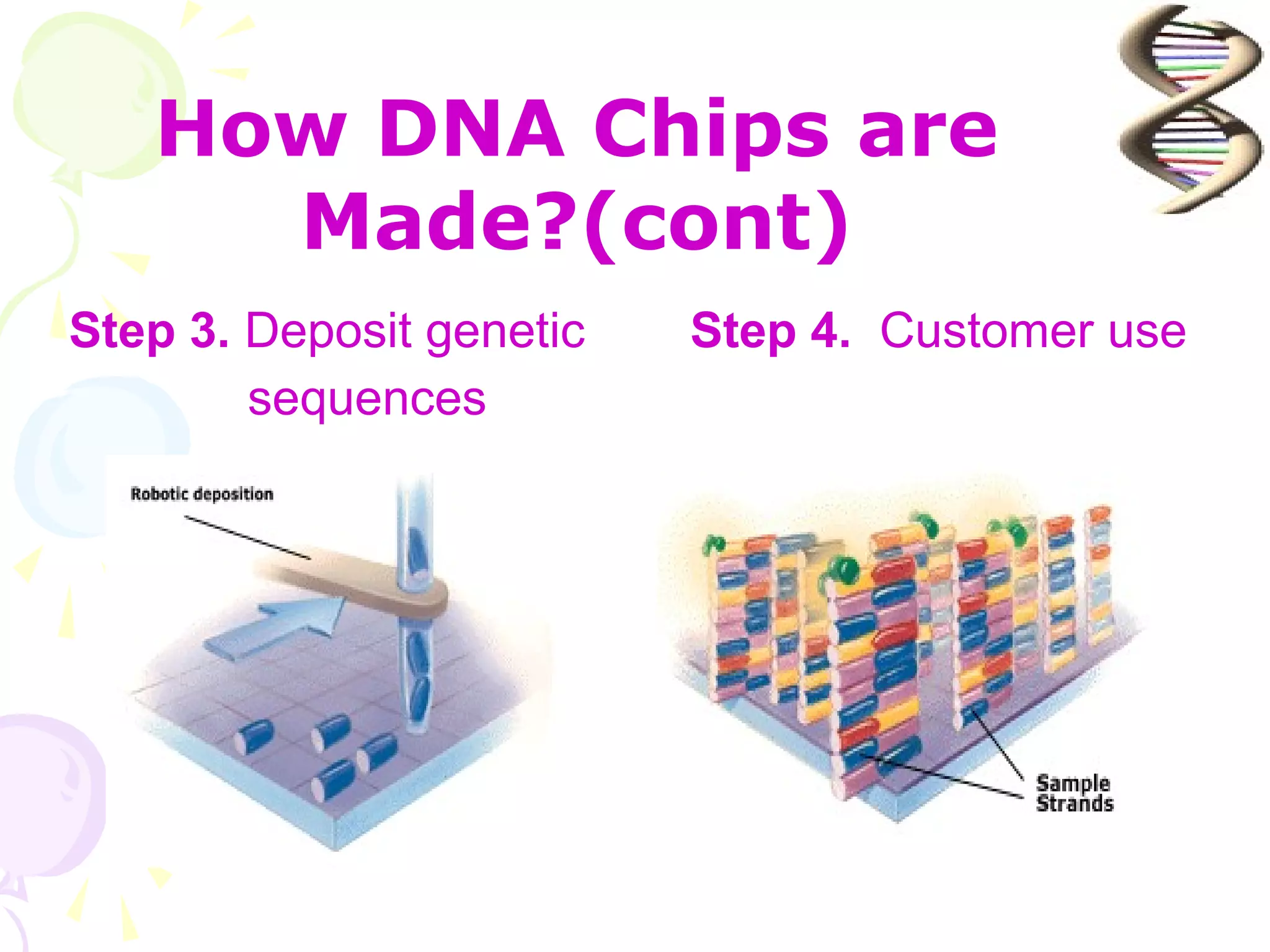
Step 3. Deposit genetic   Step 4. Customer use
        sequences
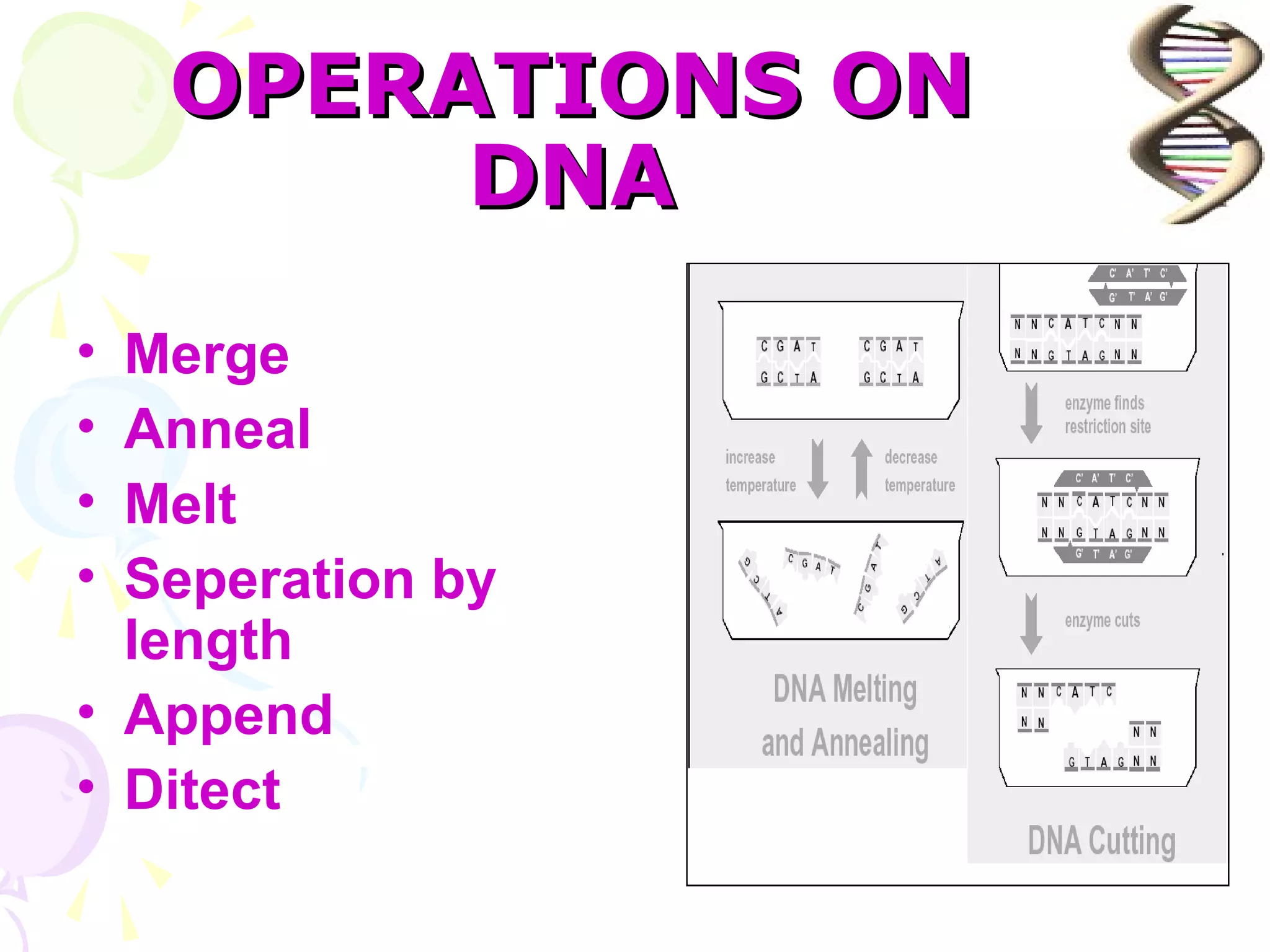
OPERATIONS ON
         DNA
• Merge
• Anneal
• Melt
• Seperation by
  length
• Append
• Ditect
FEATURES OF DNA
         COMPUTERS

•   Size and storage density
•   Speed
•   Energy Efficiency
•   Pharmaceutical and Biomedical field
•   High Parallelism
CURRENT RESEARCH
         IN DNA
•   Bell Labs
•   Duke University/Caltech
•   New York University
•   University of Southern California
•   University of Wisconsin
ADVANTAGES OF
      DNA COMPUTERS


•   Parallelism
•   Gigantic memory capacity
•   Lower power dissipation
•   Suitable for combinational problems
DISADVANTAGES OF
     DNA COMPUTERS


•   Occasionally slow
•   Hydrolysis
•   Information Untransmittable
•   Reliability problems
FUTURE SCOPE


What is the Future Scope for
    DNA Computing?
Conclusion

  It isn’t too hard to imagine that one
day we might have the tools & talent to
produce a small integrated desktop
machine that uses DNA, or a DNA like
biopolymer, as a computing substrate
along with set of designer enzymes.
THANK
 YOU…

DNA computing

  • 1.
    DNA COMPUTING Presented By:- Vikrant Dubey V SEM(BCA)
  • 2.
    INTRODUCTION • What isDNA? • What is DNA Computer? • Why DNA Computers?
  • 3.
    BRIEF HISTORY •Adleman’s Hamiltonian Path Problem •Typical N-Queen Problem
  • 4.
    ARCHITECHTURE OF DNA COMPUTERS • What is DNA? • How Genetic Sequencing(DNA) works? • How DNA chips are made?
  • 5.
    What is DNAand How it works?
  • 6.
    How Genetic Sequencing(DNA) works? Step 1. Determine Step 2. Separate chemical structure of strands fragments
  • 7.
    How Genetic Sequencing(DNA) works?(cont) Step 3. Introduce Step 4. Identify the sample result
  • 8.
    How DNA Chipsare Made? Step 1. Make Gene Step 2. Manufacture probes substrate wafer
  • 9.
    How DNA Chipsare Made?(cont) Step 3. Deposit genetic Step 4. Customer use sequences
  • 10.
    OPERATIONS ON DNA • Merge • Anneal • Melt • Seperation by length • Append • Ditect
  • 11.
    FEATURES OF DNA COMPUTERS • Size and storage density • Speed • Energy Efficiency • Pharmaceutical and Biomedical field • High Parallelism
  • 12.
    CURRENT RESEARCH IN DNA • Bell Labs • Duke University/Caltech • New York University • University of Southern California • University of Wisconsin
  • 13.
    ADVANTAGES OF DNA COMPUTERS • Parallelism • Gigantic memory capacity • Lower power dissipation • Suitable for combinational problems
  • 14.
    DISADVANTAGES OF DNA COMPUTERS • Occasionally slow • Hydrolysis • Information Untransmittable • Reliability problems
  • 15.
    FUTURE SCOPE What isthe Future Scope for DNA Computing?
  • 16.
    Conclusion Itisn’t too hard to imagine that one day we might have the tools & talent to produce a small integrated desktop machine that uses DNA, or a DNA like biopolymer, as a computing substrate along with set of designer enzymes.
  • 17.