DIGESTIVE
SYSTEM
Presented by: TRUPTHI B V
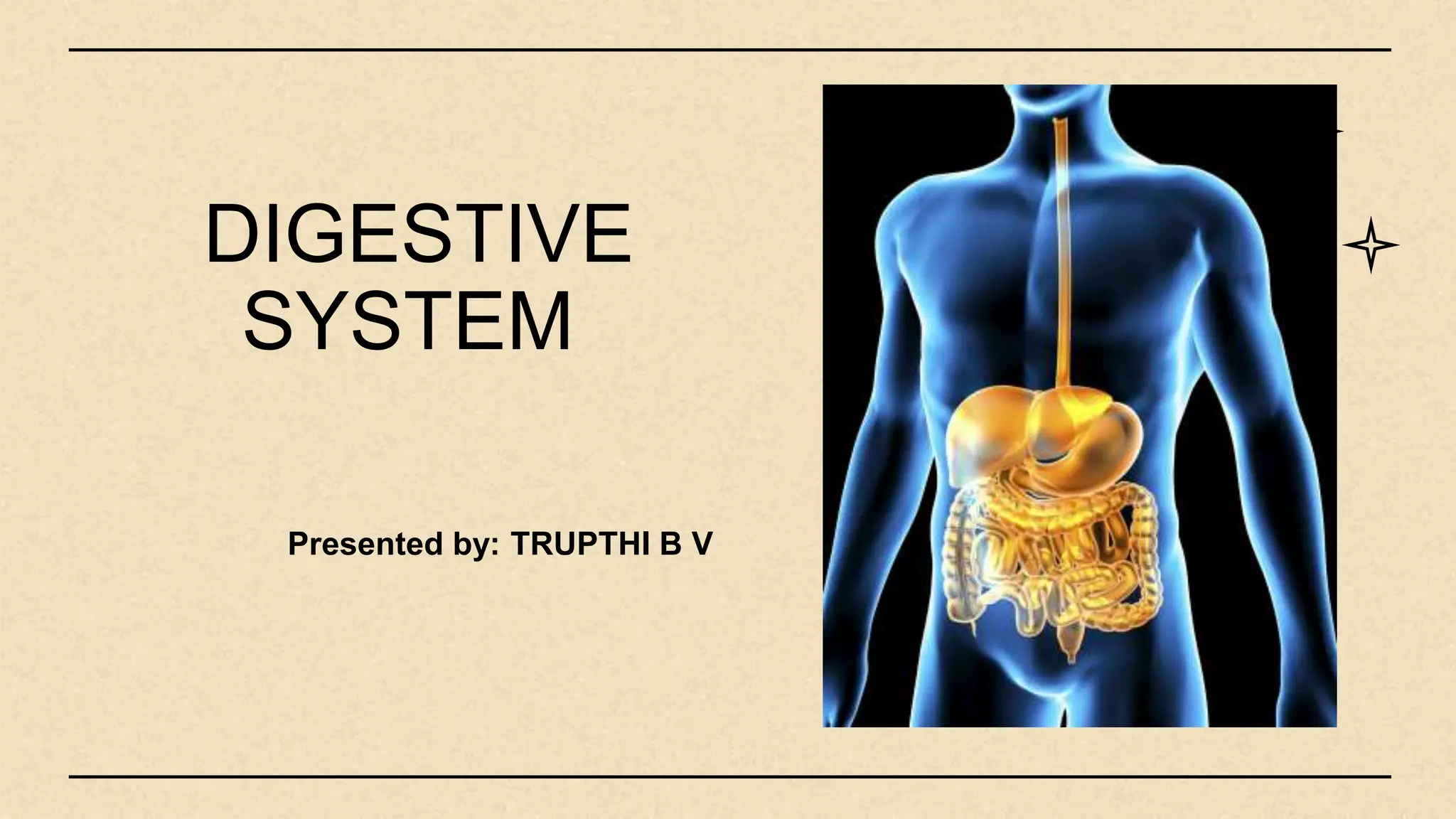
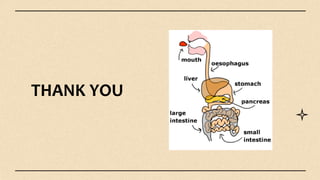
Digestive system
โ€ข The organs involved in the breakdown of foodโ€”collectively
called the digestive system.
โ€ข The medical specialty that deals with the structure, function,
diagnosis, and treatment of diseases of the stomach and intestines
is called gastroenterology.
โ€ข The medical specialty that deals with the diagnosis and treatment
of disorders of the rectum and anus is called proctology
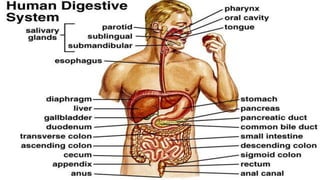
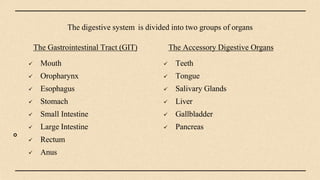
The digestive system is divided into two groups of organs
The Accessory Digestive Organs
๏ƒผ Teeth
๏ƒผ Tongue
๏ƒผ Salivary Glands
๏ƒผ Liver
๏ƒผ Gallbladder
๏ƒผ Pancreas
The Gastrointestinal Tract (GIT)
๏ƒผ Mouth
๏ƒผ Oropharynx
๏ƒผ Esophagus
๏ƒผ Stomach
๏ƒผ Small Intestine
๏ƒผ Large Intestine
๏ƒผ Rectum
๏ƒผ Anus
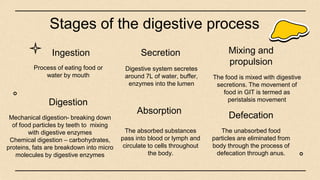
Digestive system secretes
around 7L of water, buffer,
enzymes into the lumen
The food is mixed with digestive
secretions. The movement of
food in GIT is termed as
peristalsis movement
Stages of the digestive process
Process of eating food or
water by mouth
Mechanical digestion- breaking down
of food particles by teeth to mixing
with digestive enzymes
Chemical digestion โ€“ carbohydrates,
proteins, fats are breakdown into micro
molecules by digestive enzymes
The absorbed substances
pass into blood or lymph and
circulate to cells throughout
the body.
The unabsorbed food
particles are eliminated from
body through the process of
defecation through anus.
Ingestion Secretion Mixing and
propulsion
Digestion
Absorption Defecation
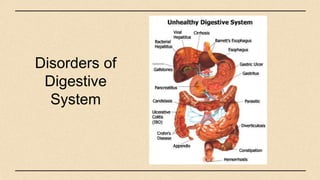
Disorders of
Digestive
System
Peritonitis: A common cause of peritonitis, an acute inflammation of
the peritoneum, is contamination of the peritoneum by infectious
microbes, which can result from accidental or surgical wounds in the
abdominal wall, or from perforation or rupture of abdominal organs.
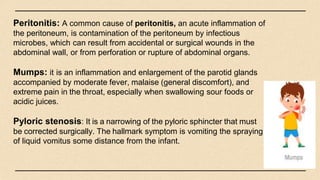
Mumps: it is an inflammation and enlargement of the parotid glands
accompanied by moderate fever, malaise (general discomfort), and
extreme pain in the throat, especially when swallowing sour foods or
acidic juices.
Pyloric stenosis: It is a narrowing of the pyloric sphincter that must
be corrected surgically. The hallmark symptom is vomiting the spraying
of liquid vomitus some distance from the infant.
Gastroesophageal reflux disease: If the lower esophageal sphincter
fails to close adequately after food has entered the stomach, the stomach
contents can reflux into the inferior portion of the esophagus. This
condition is known as Gastroesophageal reflux disease (gerd).
Hydrochloric acid (hcl) from the stomach contents can irritate the
esophageal wall, resulting in a Burning sensation that is called heartburn
because it is experienced in a region very near the heart.
Liver cirrhosis: Cirrhosis of liver refers to inflammation and damage of
parenchyma of liver. It results in degeneration of hepatic cells and
dysfunction of liver.
Pancreatitis:Inflammation of the pancreas, as may occur in association
with alcohol abuse or chronic gallstones, is called pancreatitis
Gallstones: If bile contains either insufficient bile salts or lecithin or excessive
cholesterol, the cholesterol may crystallize to form gallstones. As they grow in
size and number, gallstones may cause obstruction to the flow of bile from the
gallbladder into the duodenum.
Diarrhea: Symptoms of diarrhea include frequent, loose, watery stools (feces)
which are usually accompanied by an urgent need to go to the toilet. Abdominal
pain or cramping may also occur, and sometimes nausea or vomiting. Viruses or
bacterial infection also leads diarrhea.
Vomiting: vomit is the contents of the stomach are
forcefully expelled through the mouth, usually involuntarily.
Infection from bacteria, viruses or micro-organisms causes
of vomiting
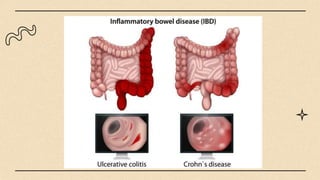
Crohn's disease: Crohnโ€™s disease is a chronic bowel disease that causes
patches of inflammation in the GI tract anywhere between the mouth and the
anus, although the area where the small intestine joins the large intestine is
most commonly affected. Symptoms may include diarrhea that persists for
several weeks, abdominal pain and weight loss.
Ulcerative colitis: it affects only the innermost lining of the colon. Although
the colon is the only part of the bowel affected, the whole of the colon is
inflamed. Symptoms are similar to Crohnโ€™s disease and include diarrhea, rectal
bleeding or bloody stools, abdominal pain, tiredness, and loss of appetite.
Malabsorption syndrome: it refers to a number of different conditions in
which the small intestine is unable to absorb nutrients, such as proteins,
carbohydrates, fats, vitamins or minerals.
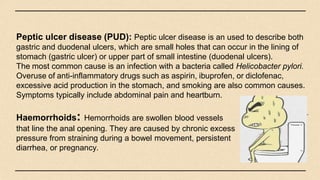
Peptic ulcer disease (PUD): Peptic ulcer disease is an used to describe both
gastric and duodenal ulcers, which are small holes that can occur in the lining of
stomach (gastric ulcer) or upper part of small intestine (duodenal ulcers).
The most common cause is an infection with a bacteria called Helicobacter pylori.
Overuse of anti-inflammatory drugs such as aspirin, ibuprofen, or diclofenac,
excessive acid production in the stomach, and smoking are also common causes.
Symptoms typically include abdominal pain and heartburn.
Haemorrhoids: Hemorrhoids are swollen blood vessels
that line the anal opening. They are caused by chronic excess
pressure from straining during a bowel movement, persistent
diarrhea, or pregnancy.
Appendicitis: Appendicitis is an inflammation of the appendix, a finger-
shaped pouch that projects from your colon on the lower right side of
your abdomen. Appendicitis causes pain in your lower right abdomen.
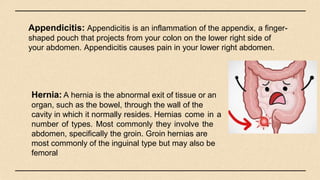
Hernia: A hernia is the abnormal exit of tissue or an
organ, such as the bowel, through the wall of the
cavity in which it normally resides. Hernias come in a
number of types. Most commonly they involve the
abdomen, specifically the groin. Groin hernias are
most commonly of the inguinal type but may also be
femoral
Drugs acting
on digestive
system
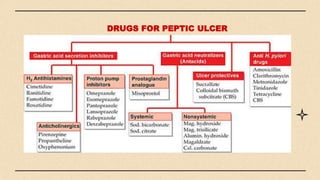
DRUGS FOR PEPTIC ULCER
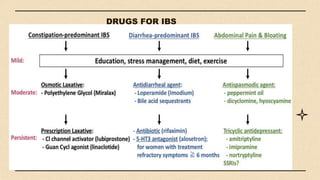
DRUGS FOR IBS
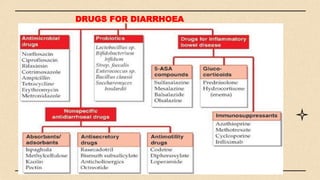
DRUGS FOR DIARRHOEA
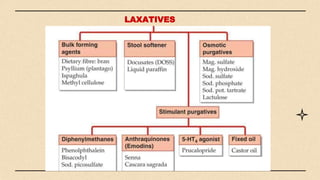
LAXATIVES
THANK YOU

DIGESTIVE SYSTEM. PPT human anatomy and physiology

  • 1.
  • 2.
    Digestive system โ€ข Theorgans involved in the breakdown of foodโ€”collectively called the digestive system. โ€ข The medical specialty that deals with the structure, function, diagnosis, and treatment of diseases of the stomach and intestines is called gastroenterology. โ€ข The medical specialty that deals with the diagnosis and treatment of disorders of the rectum and anus is called proctology
  • 4.
    The digestive systemis divided into two groups of organs The Accessory Digestive Organs ๏ƒผ Teeth ๏ƒผ Tongue ๏ƒผ Salivary Glands ๏ƒผ Liver ๏ƒผ Gallbladder ๏ƒผ Pancreas The Gastrointestinal Tract (GIT) ๏ƒผ Mouth ๏ƒผ Oropharynx ๏ƒผ Esophagus ๏ƒผ Stomach ๏ƒผ Small Intestine ๏ƒผ Large Intestine ๏ƒผ Rectum ๏ƒผ Anus
  • 5.
    Digestive system secretes around7L of water, buffer, enzymes into the lumen The food is mixed with digestive secretions. The movement of food in GIT is termed as peristalsis movement Stages of the digestive process Process of eating food or water by mouth Mechanical digestion- breaking down of food particles by teeth to mixing with digestive enzymes Chemical digestion โ€“ carbohydrates, proteins, fats are breakdown into micro molecules by digestive enzymes The absorbed substances pass into blood or lymph and circulate to cells throughout the body. The unabsorbed food particles are eliminated from body through the process of defecation through anus. Ingestion Secretion Mixing and propulsion Digestion Absorption Defecation
  • 7.
  • 8.
    Peritonitis: A commoncause of peritonitis, an acute inflammation of the peritoneum, is contamination of the peritoneum by infectious microbes, which can result from accidental or surgical wounds in the abdominal wall, or from perforation or rupture of abdominal organs. Mumps: it is an inflammation and enlargement of the parotid glands accompanied by moderate fever, malaise (general discomfort), and extreme pain in the throat, especially when swallowing sour foods or acidic juices. Pyloric stenosis: It is a narrowing of the pyloric sphincter that must be corrected surgically. The hallmark symptom is vomiting the spraying of liquid vomitus some distance from the infant.
  • 9.
    Gastroesophageal reflux disease:If the lower esophageal sphincter fails to close adequately after food has entered the stomach, the stomach contents can reflux into the inferior portion of the esophagus. This condition is known as Gastroesophageal reflux disease (gerd). Hydrochloric acid (hcl) from the stomach contents can irritate the esophageal wall, resulting in a Burning sensation that is called heartburn because it is experienced in a region very near the heart. Liver cirrhosis: Cirrhosis of liver refers to inflammation and damage of parenchyma of liver. It results in degeneration of hepatic cells and dysfunction of liver. Pancreatitis:Inflammation of the pancreas, as may occur in association with alcohol abuse or chronic gallstones, is called pancreatitis
  • 10.
    Gallstones: If bilecontains either insufficient bile salts or lecithin or excessive cholesterol, the cholesterol may crystallize to form gallstones. As they grow in size and number, gallstones may cause obstruction to the flow of bile from the gallbladder into the duodenum. Diarrhea: Symptoms of diarrhea include frequent, loose, watery stools (feces) which are usually accompanied by an urgent need to go to the toilet. Abdominal pain or cramping may also occur, and sometimes nausea or vomiting. Viruses or bacterial infection also leads diarrhea. Vomiting: vomit is the contents of the stomach are forcefully expelled through the mouth, usually involuntarily. Infection from bacteria, viruses or micro-organisms causes of vomiting
  • 12.
    Crohn's disease: Crohnโ€™sdisease is a chronic bowel disease that causes patches of inflammation in the GI tract anywhere between the mouth and the anus, although the area where the small intestine joins the large intestine is most commonly affected. Symptoms may include diarrhea that persists for several weeks, abdominal pain and weight loss. Ulcerative colitis: it affects only the innermost lining of the colon. Although the colon is the only part of the bowel affected, the whole of the colon is inflamed. Symptoms are similar to Crohnโ€™s disease and include diarrhea, rectal bleeding or bloody stools, abdominal pain, tiredness, and loss of appetite. Malabsorption syndrome: it refers to a number of different conditions in which the small intestine is unable to absorb nutrients, such as proteins, carbohydrates, fats, vitamins or minerals.
  • 13.
    Peptic ulcer disease(PUD): Peptic ulcer disease is an used to describe both gastric and duodenal ulcers, which are small holes that can occur in the lining of stomach (gastric ulcer) or upper part of small intestine (duodenal ulcers). The most common cause is an infection with a bacteria called Helicobacter pylori. Overuse of anti-inflammatory drugs such as aspirin, ibuprofen, or diclofenac, excessive acid production in the stomach, and smoking are also common causes. Symptoms typically include abdominal pain and heartburn. Haemorrhoids: Hemorrhoids are swollen blood vessels that line the anal opening. They are caused by chronic excess pressure from straining during a bowel movement, persistent diarrhea, or pregnancy.
  • 14.
    Appendicitis: Appendicitis isan inflammation of the appendix, a finger- shaped pouch that projects from your colon on the lower right side of your abdomen. Appendicitis causes pain in your lower right abdomen. Hernia: A hernia is the abnormal exit of tissue or an organ, such as the bowel, through the wall of the cavity in which it normally resides. Hernias come in a number of types. Most commonly they involve the abdomen, specifically the groin. Groin hernias are most commonly of the inguinal type but may also be femoral
  • 15.
  • 16.
  • 18.
  • 19.
  • 20.
  • 21.