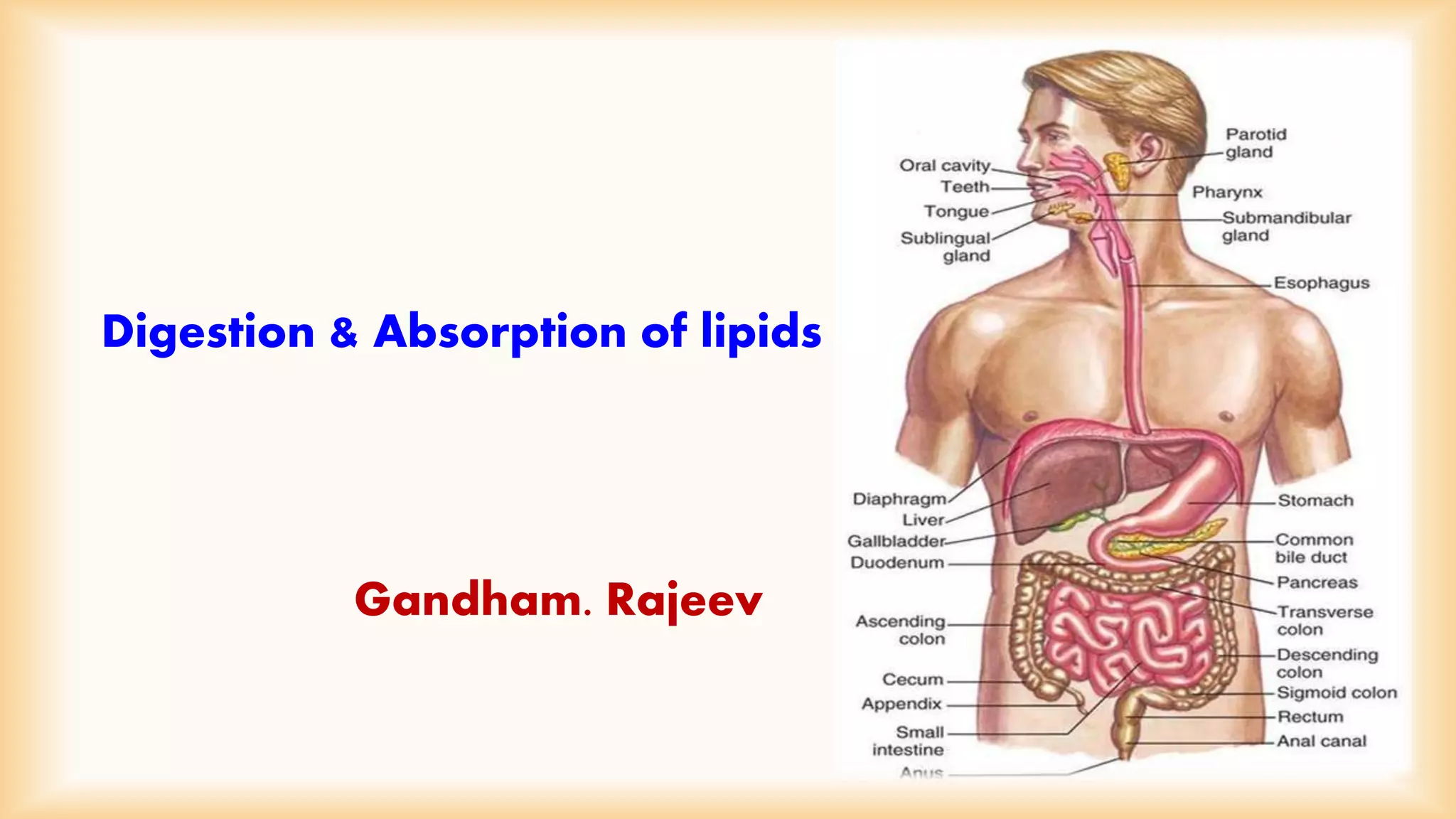
Digestion & Absorption of lipids 
Gandham. Rajeev
• The major dietary lipids are triacylglycerol, cholesterol & 
phospholipids 
• The average normal Indian diet contains about 20-30 g of 
lipids/day 
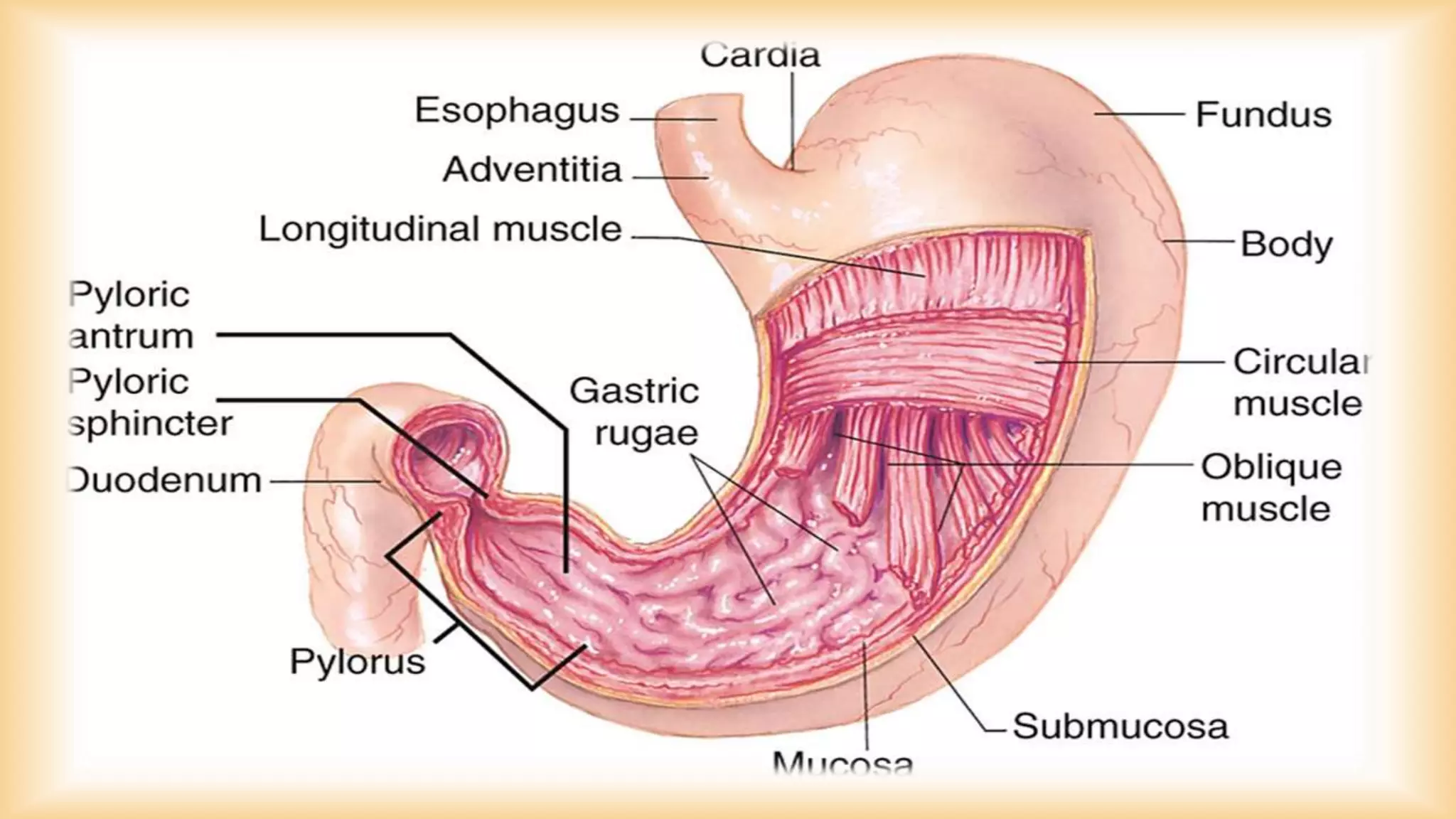
• Digestion in Stomach: 
• The lingual lipase from the mouth enters stomach along with 
the food 
• It has an optimum pH of 2.5-5 
• The enzyme active in the stomach
• It acts on short chain triglycerides (SCT) 
• SCTs are present in milk, butter and ghee 
• The action of lingual lipase is more significant in the newborns 
• Gastric lipase: 
• Gastric lipase is acid stable, with an optimum pH around 5.4 
• It is secreted by chief cells, the secretion is stimulated by 
gastrin. 
• Upto 30% digestion of triglycerides occurs in stomach
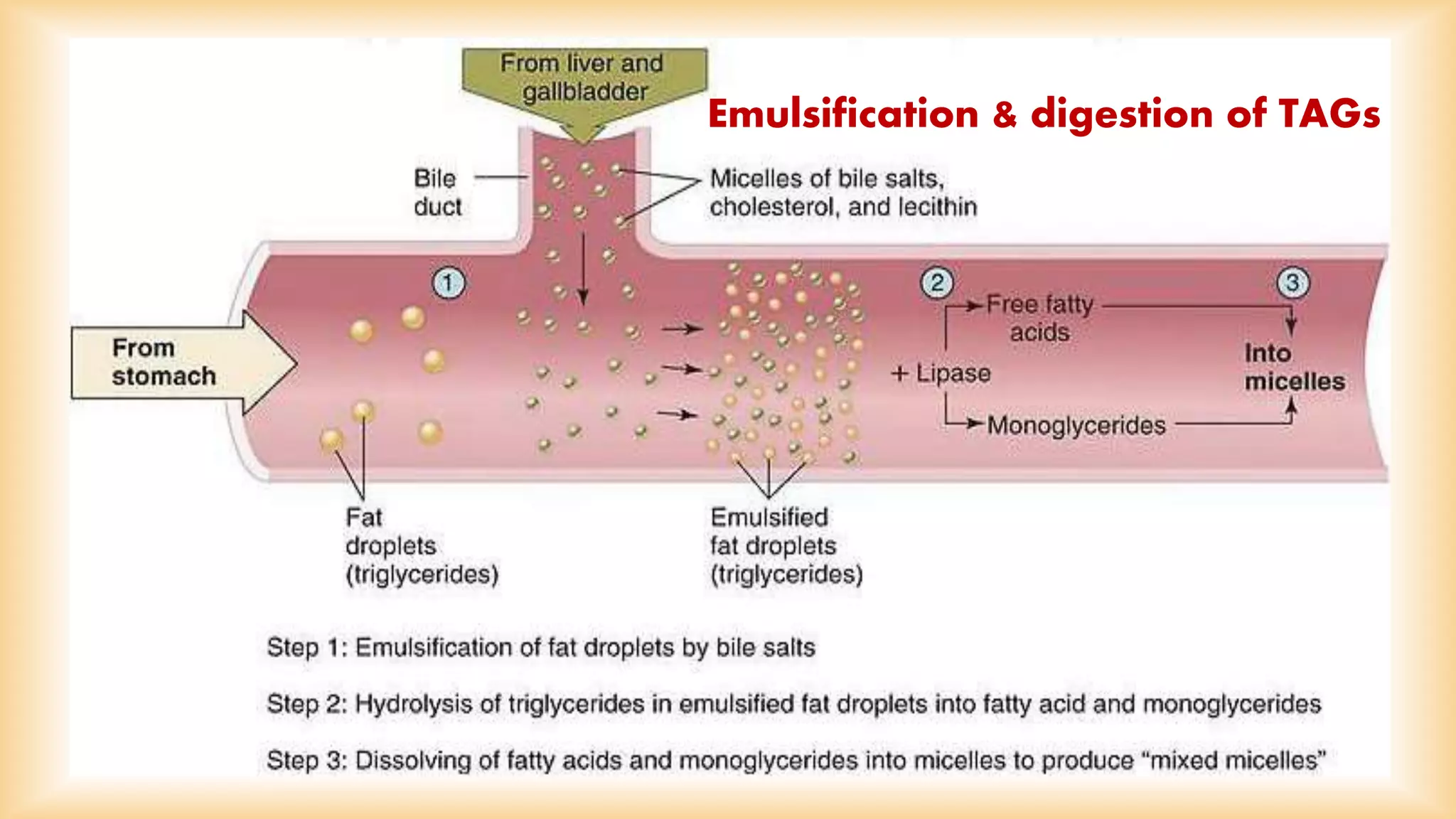
• Emulsification of lipids in the small intestine: 
• Emulsification is a prerequisite for digestion of lipids 
• The lipids are dispersed into smaller droplets; surface 
tension is reduced; and surface area of droplets is increased 
• This process is favoured by: 
1. Bile salts (detergent action) 
2. Peristalsis (mechanical mixing) 
3. Phospholipids
• Bile salts: 
• The bile salts are sodium glycocholate & sodium taurocholate 
• Bile salts are the biological detergents synthesized from 
cholesterol in the liver 
• They are secreted with bile into the duodenum 
• Bile salts possess steroid nucleus, the side chain is attached to 
either glycine (glycocholic acid) or taurine (taurocholic acid) 
• Bile salts are the most effective biological emulsifying agents
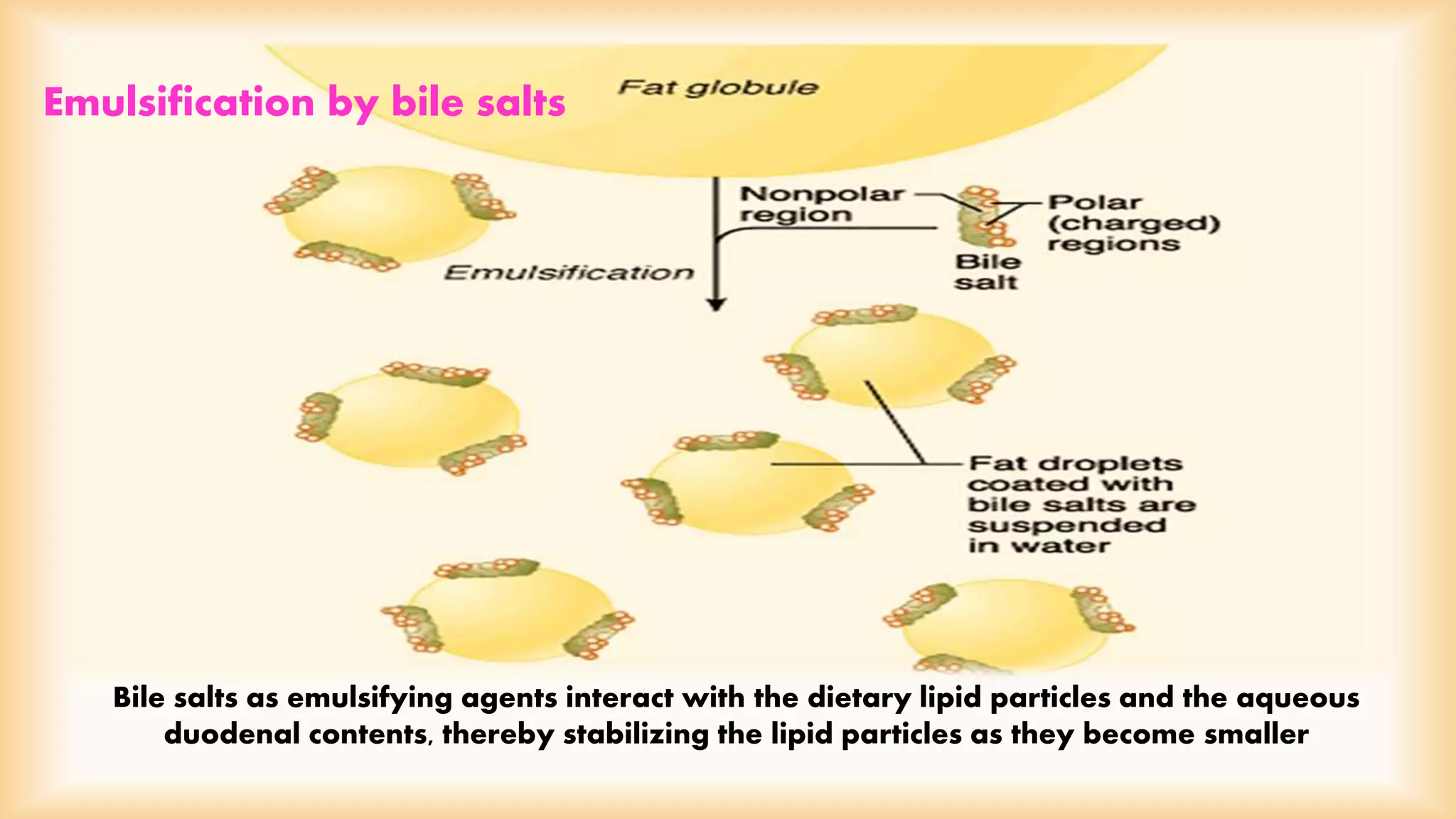
• They interact with lipid particles and the aqueous duodenal 
contents and convert them into smaller particles (emulsified 
droplets) 
• The bile salts lower surface tension 
• The emulsification increases the surface area of the particles 
for enhanced activity of enzymes
• Surfactant action of degraded lipids: 
• The initial digestive products of lipids (catalysed by lipase), free 
fatty acids, monoacylglycerols promote emulsification 
• These compounds along with phospholipids are known as 
surfactants 
• Surfactants get absorbed to the water-lipid interfaces & increase 
the interfacial area of lipid droplets 
• Mechanical mixing due to peristalsis also helps in the 
emulsification
Emulsification by bile salts 
Bile salts as emulsifying agents interact with the dietary lipid particles and the aqueous 
duodenal contents, thereby stabilizing the lipid particles as they become smaller
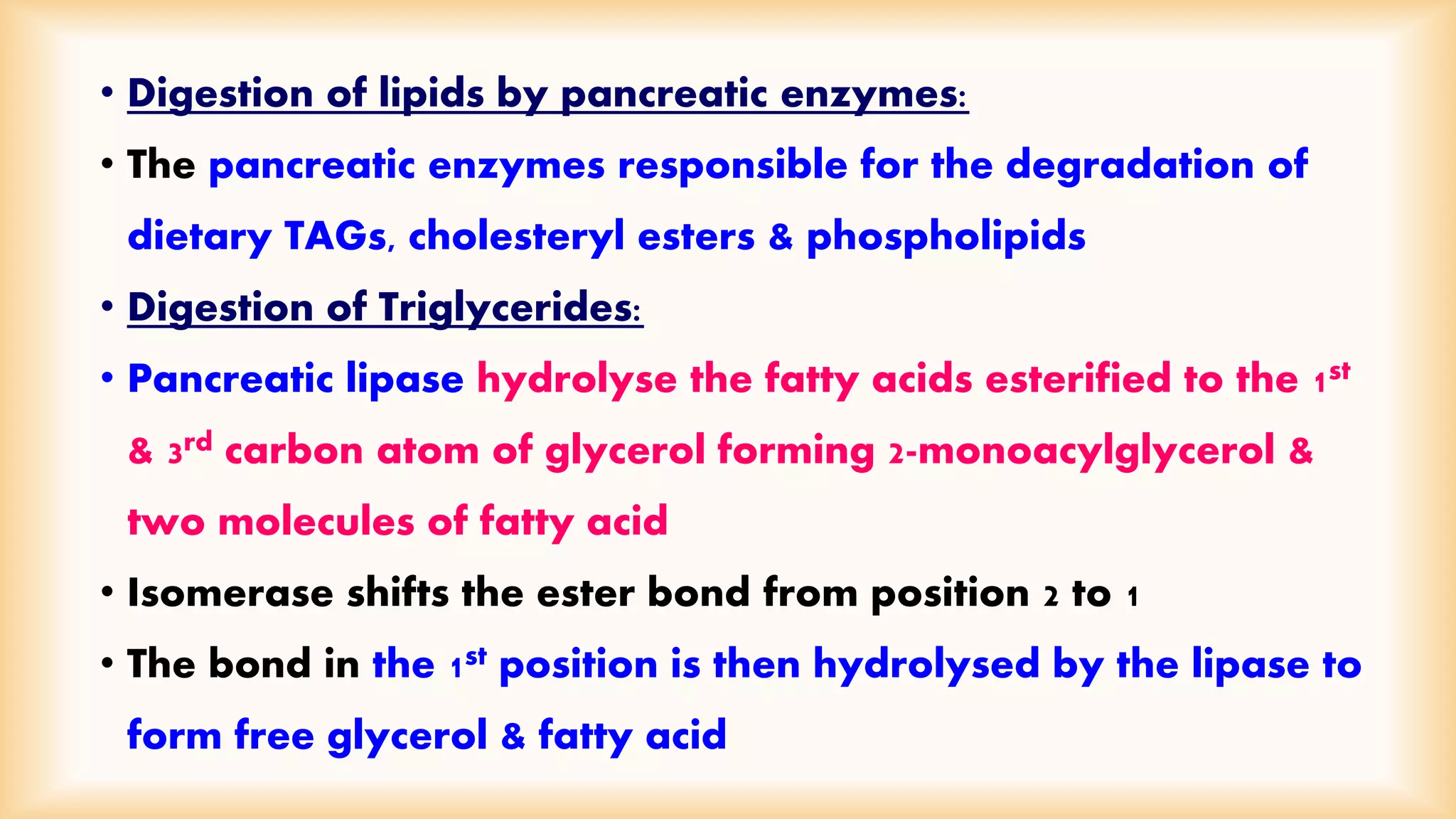
• Digestion of lipids by pancreatic enzymes: 
• The pancreatic enzymes responsible for the degradation of 
dietary TAGs, cholesteryl esters & phospholipids 
• Digestion of Triglycerides: 
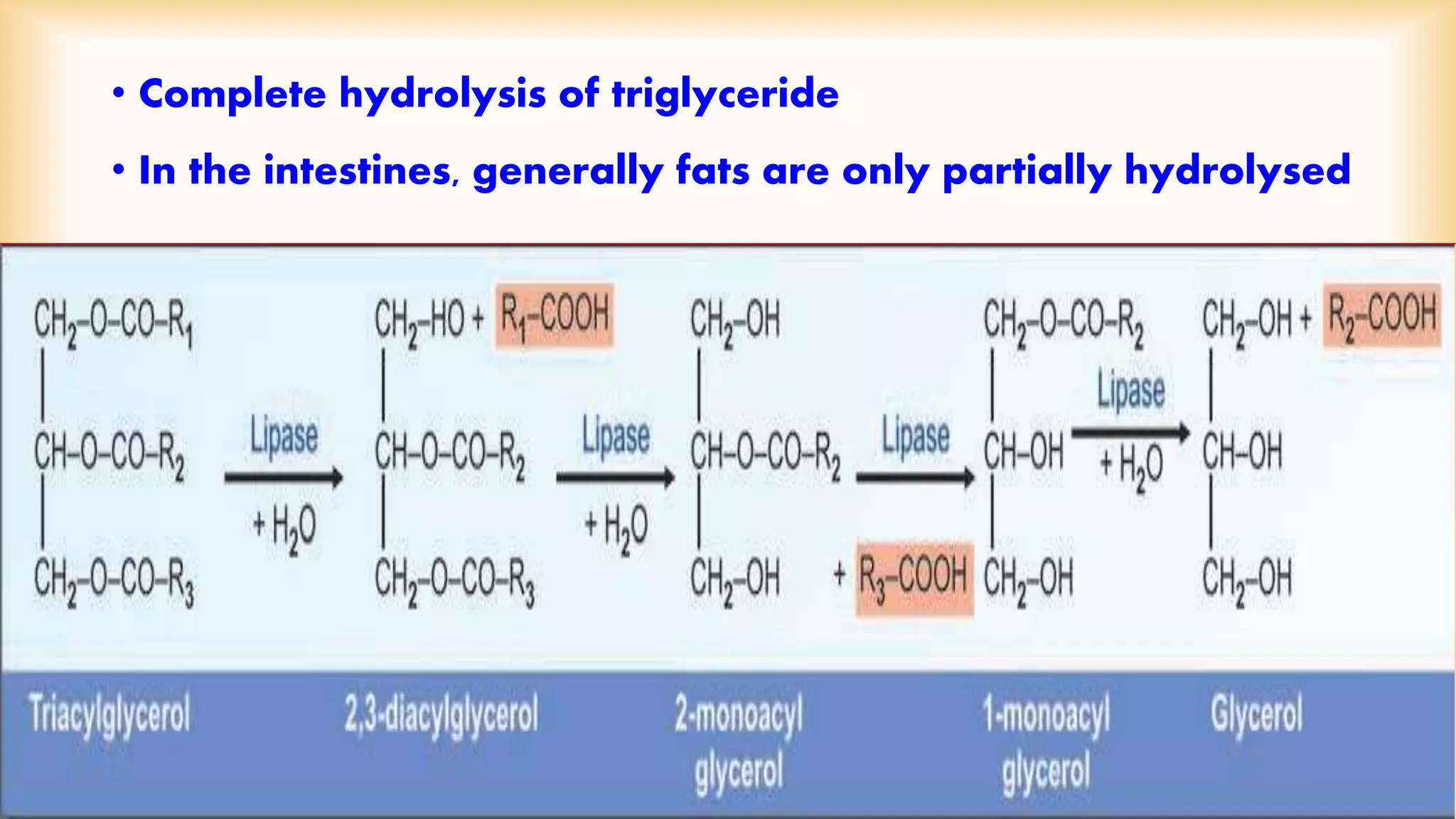
• Pancreatic lipase hydrolyse the fatty acids esterified to the 1st 
& 3rd carbon atom of glycerol forming 2-monoacylglycerol & 
two molecules of fatty acid 
• Isomerase shifts the ester bond from position 2 to 1 
• The bond in the 1st position is then hydrolysed by the lipase to 
form free glycerol & fatty acid
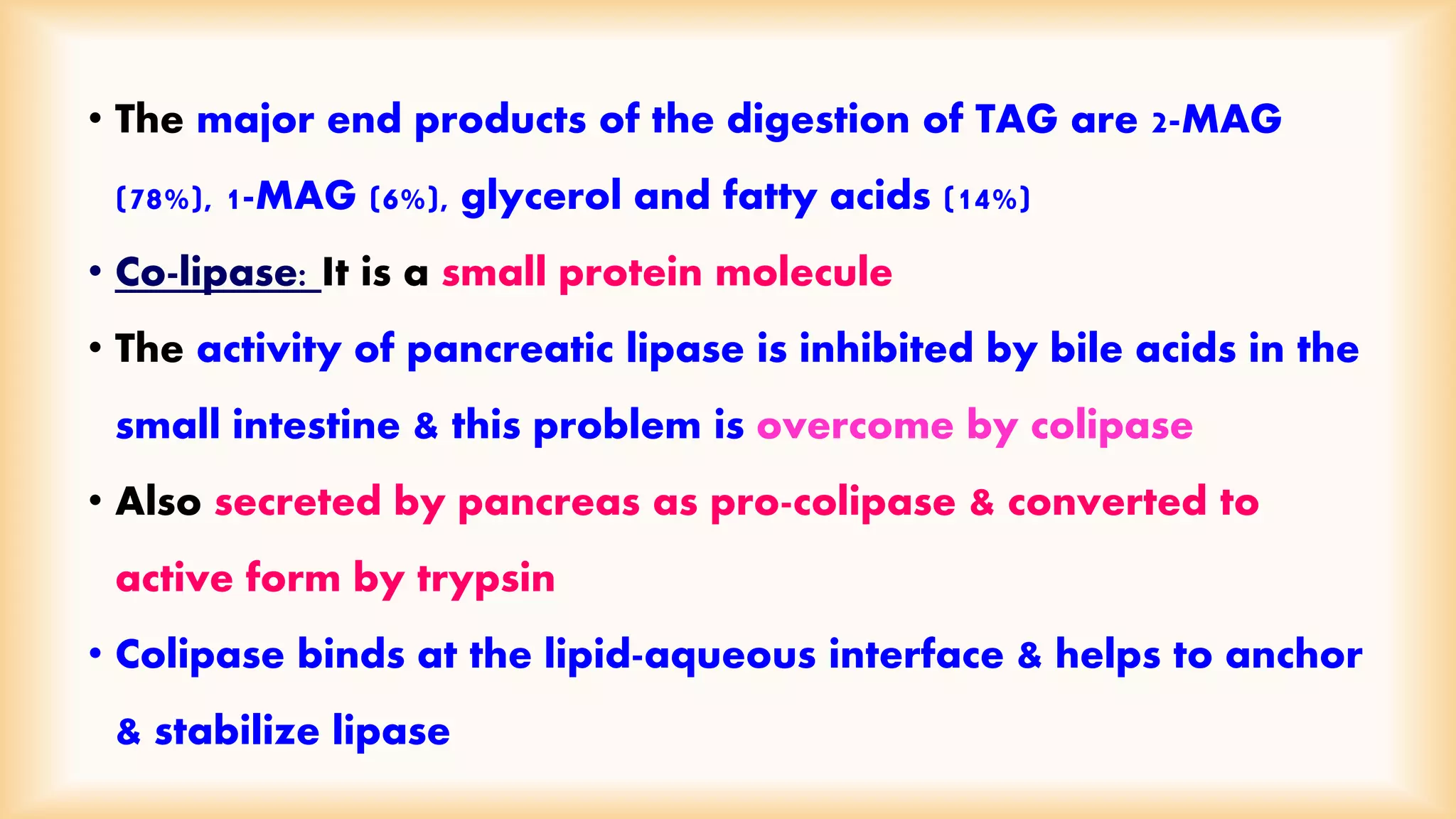
• The major end products of the digestion of TAG are 2-MAG 
(78%), 1-MAG (6%), glycerol and fatty acids (14%) 
• Co-lipase: It is a small protein molecule 
• The activity of pancreatic lipase is inhibited by bile acids in the 
small intestine & this problem is overcome by colipase 
• Also secreted by pancreas as pro-colipase & converted to 
active form by trypsin 
• Colipase binds at the lipid-aqueous interface & helps to anchor 
& stabilize lipase
• Complete hydrolysis of triglyceride 
• In the intestines, generally fats are only partially hydrolysed
Emulsification & digestion of TAGs
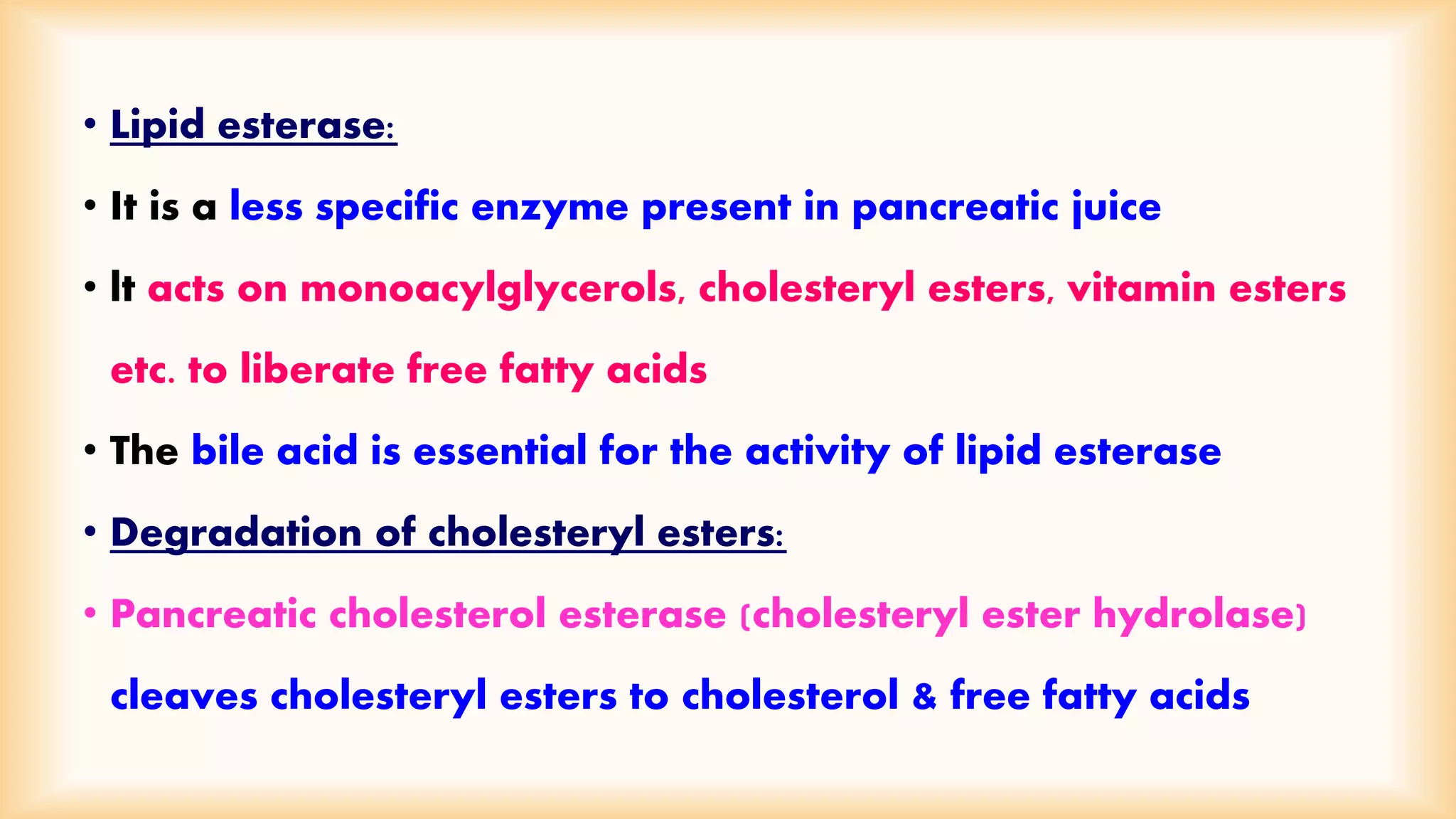
• Lipid esterase: 
• It is a less specific enzyme present in pancreatic juice 
• lt acts on monoacylglycerols, cholesteryl esters, vitamin esters 
etc. to liberate free fatty acids 
• The bile acid is essential for the activity of lipid esterase 
• Degradation of cholesteryl esters: 
• Pancreatic cholesterol esterase (cholesteryl ester hydrolase) 
cleaves cholesteryl esters to cholesterol & free fatty acids
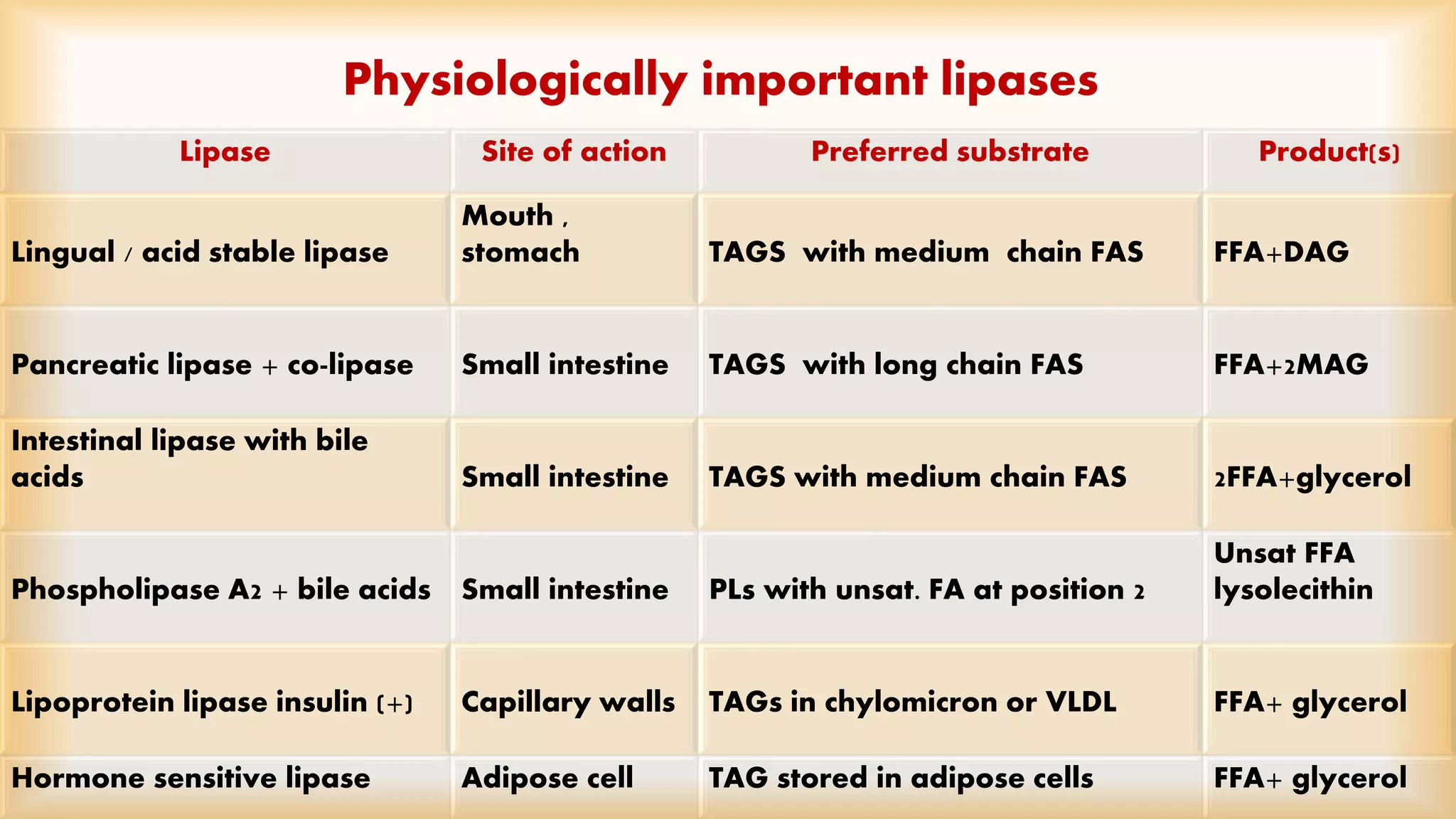
Physiologically important lipases 
Lipase Site of action Preferred substrate Product(s) 
Lingual / acid stable lipase 
Mouth , 
stomach TAGS with medium chain FAS FFA+DAG 
Pancreatic lipase + co-lipase Small intestine TAGS with long chain FAS FFA+2MAG 
Intestinal lipase with bile 
acids Small intestine TAGS with medium chain FAS 2FFA+glycerol 
Phospholipase A2 + bile acids Small intestine PLs with unsat. FA at position 2 
Unsat FFA 
lysolecithin 
Lipoprotein lipase insulin (+) Capillary walls TAGs in chylomicron or VLDL FFA+ glycerol 
Hormone sensitive lipase Adipose cell TAG stored in adipose cells FFA+ glycerol
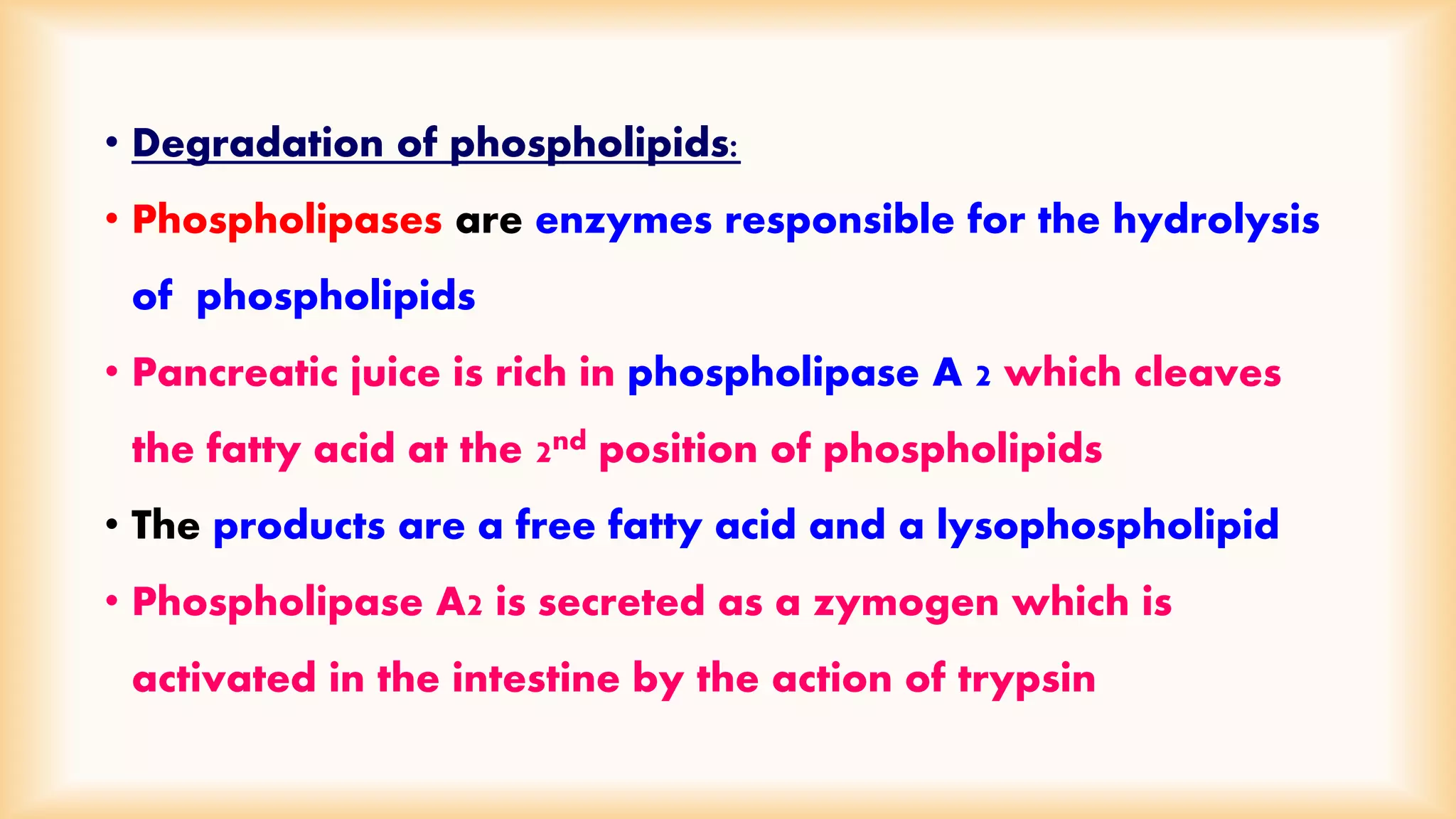
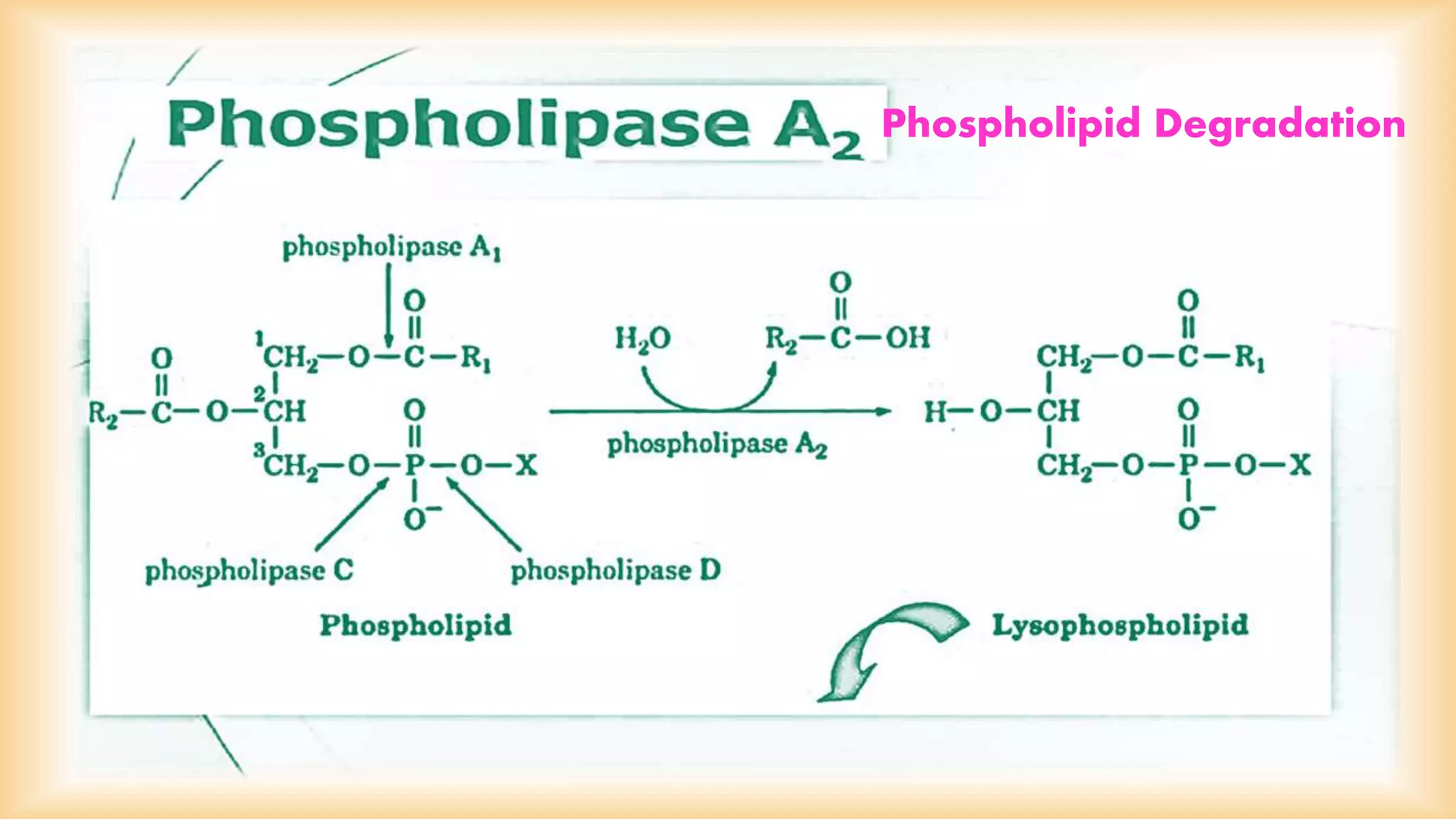
• Degradation of phospholipids: 
• Phospholipases are enzymes responsible for the hydrolysis 
of phospholipids 
• Pancreatic juice is rich in phospholipase A 2 which cleaves 
the fatty acid at the 2nd position of phospholipids 
• The products are a free fatty acid and a lysophospholipid 
• Phospholipase A2 is secreted as a zymogen which is 
activated in the intestine by the action of trypsin
Phospholipid Degradation
• Absorption of lipids: 
• Lipolytic theory put forth by Verzar: 
• According to this, fats are completely hydrolysed to glycerol & FFA 
• These are absorbed either as soaps or in association with bile salts 
• Partition theory proposed by Frazer: 
• According to this, digestion of TAGs is partial & not complete 
• The partially digested TAGs in association with bile salts, form 
emulsion 
• Lipids are taken up by the intestinal mucosal cells
• Bergstrom theory: 
• Long chain fatty acids (>14 carbons) are absorbed to the 
lymph & not directly to the blood 
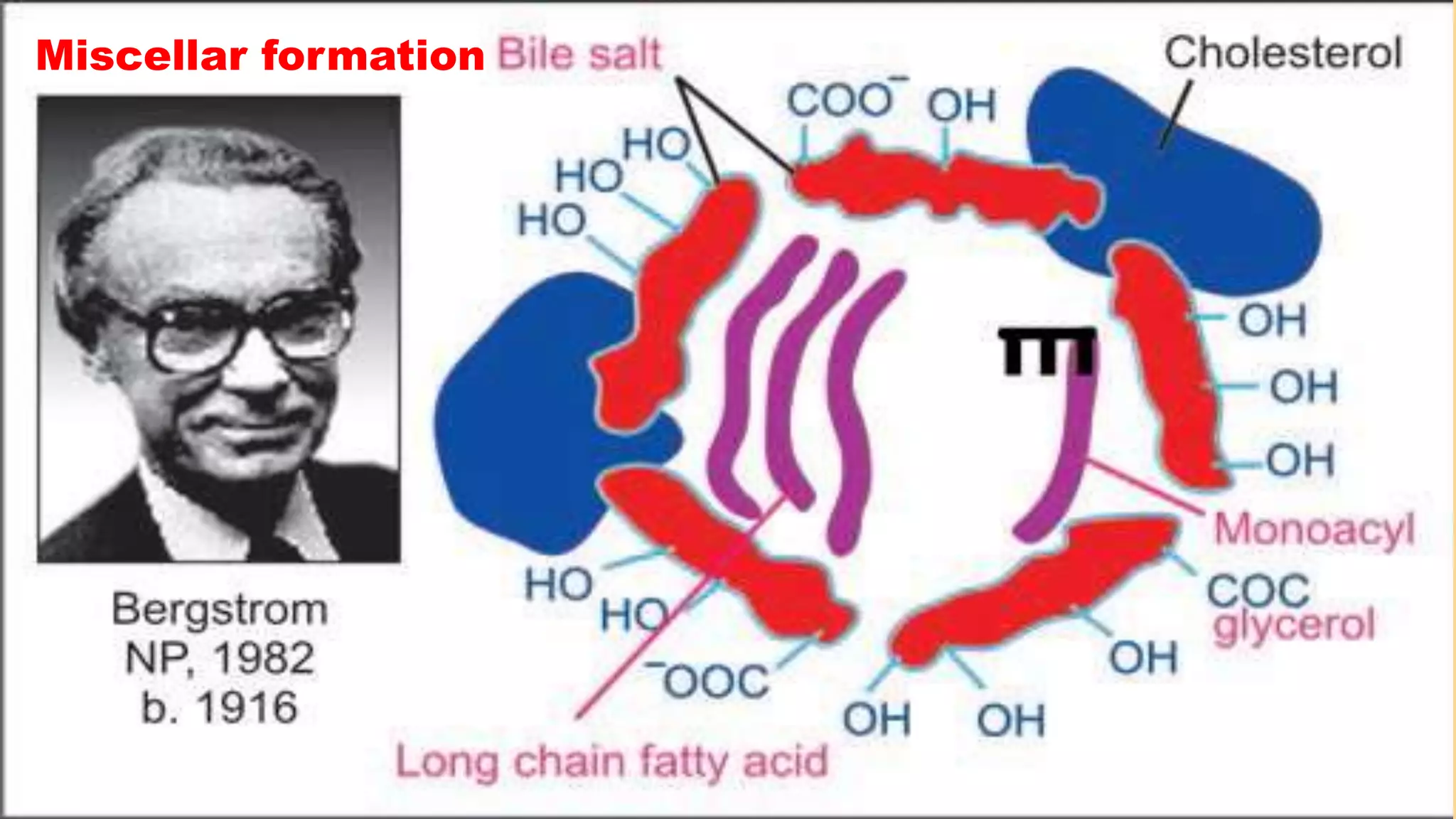
• Mixed Micelle Formation: 
• The products of digestion are 2-monoglycerides, long chain 
fatty acids, cholesterol, phospholipids and lysophospholipids 
are incorporated into molecular aggregates to form mixed 
micelle 
• Micelles are spherical particles with a hydrophilic exterior & 
hydrophobic interior core
Miscellar formation
• Due to detergent action, the bile salts help to form micellar 
aggregates 
• Micellar formation is essential for the absorption of fat-soluble 
vitamins such as vitamin A, D, E and K 
• The micelles are aligned at the microvillous surface of the 
jejunal mucosa 
• Fatty acids, 2-MAG and other digested products passively 
diffuse into the mucosal cell
• Synthesis of lipids in intestinal mucosal cells: 
• The fatty acids of short & medium chain length (<10 carbons), 
after their absorption into the intestinal cells, do not undergo 
any modification 
• They enter the portal circulation & are transported to the liver 
in a bound form to albumin
• Re-esterification Inside the Mucosal Cell: 
• Inside the intestinal mucosal cell, the long chain fatty acids are 
re-esterified to form triglycerides 
• The fatty acids are first activated to fatty acyl CoA by the 
enzyme, acyl CoA synthetase or thiokinase & requires energy 
• Two, such activated FAS react with monoacyl glycerol (MAG) 
to form the triglyceride 
• Majority of molecules follow this MAG pathway
• Free glycerol absorbed from intestinal lumen directly enters 
into the blood stream 
• Free glycerol is not available for re-esterification 
• But the cells can convert glucose to glycerol phosphate & 
add 3 molecules of acyl groups to synthesize TAG
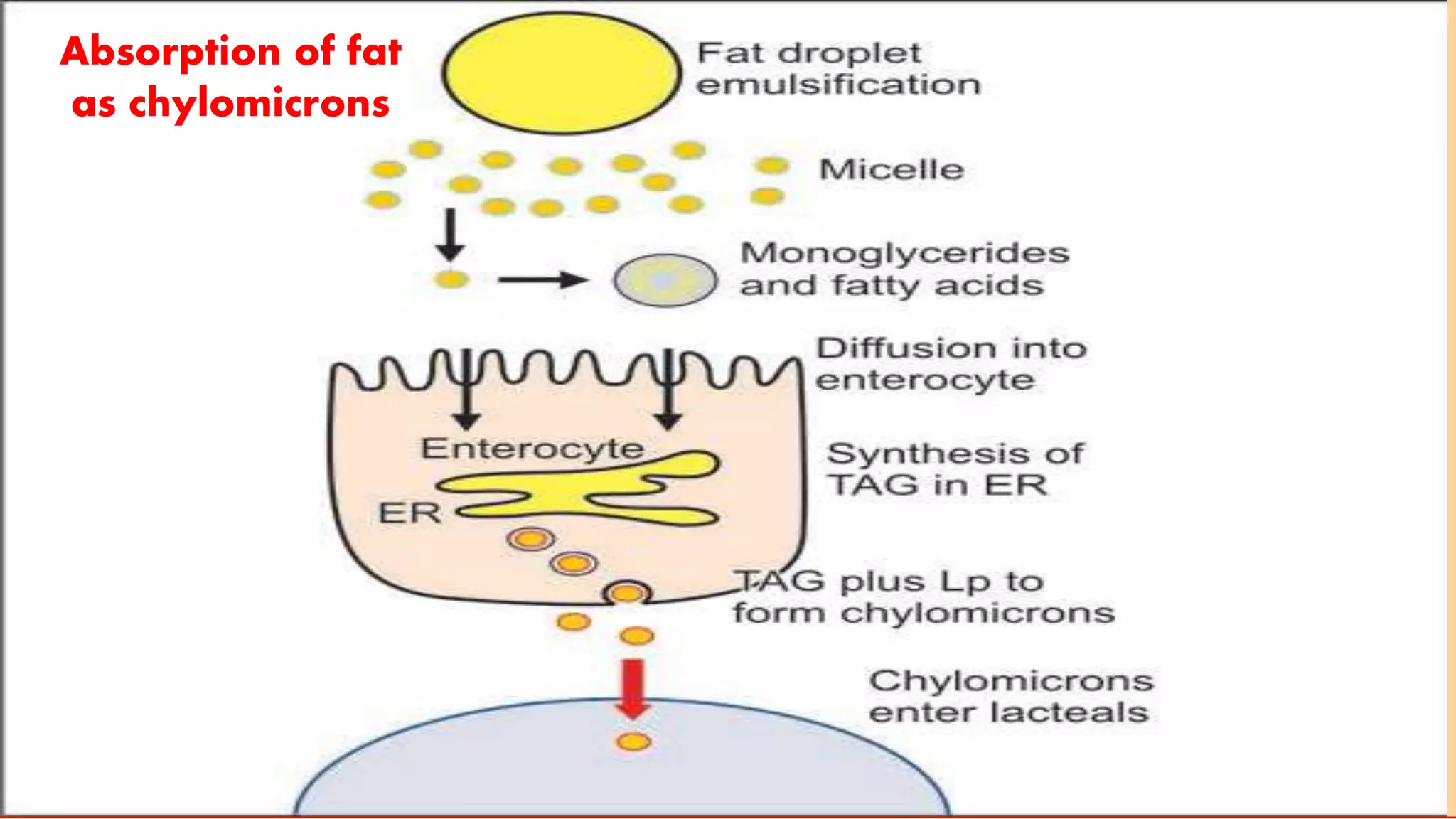
Absorption of fat 
as chylomicrons
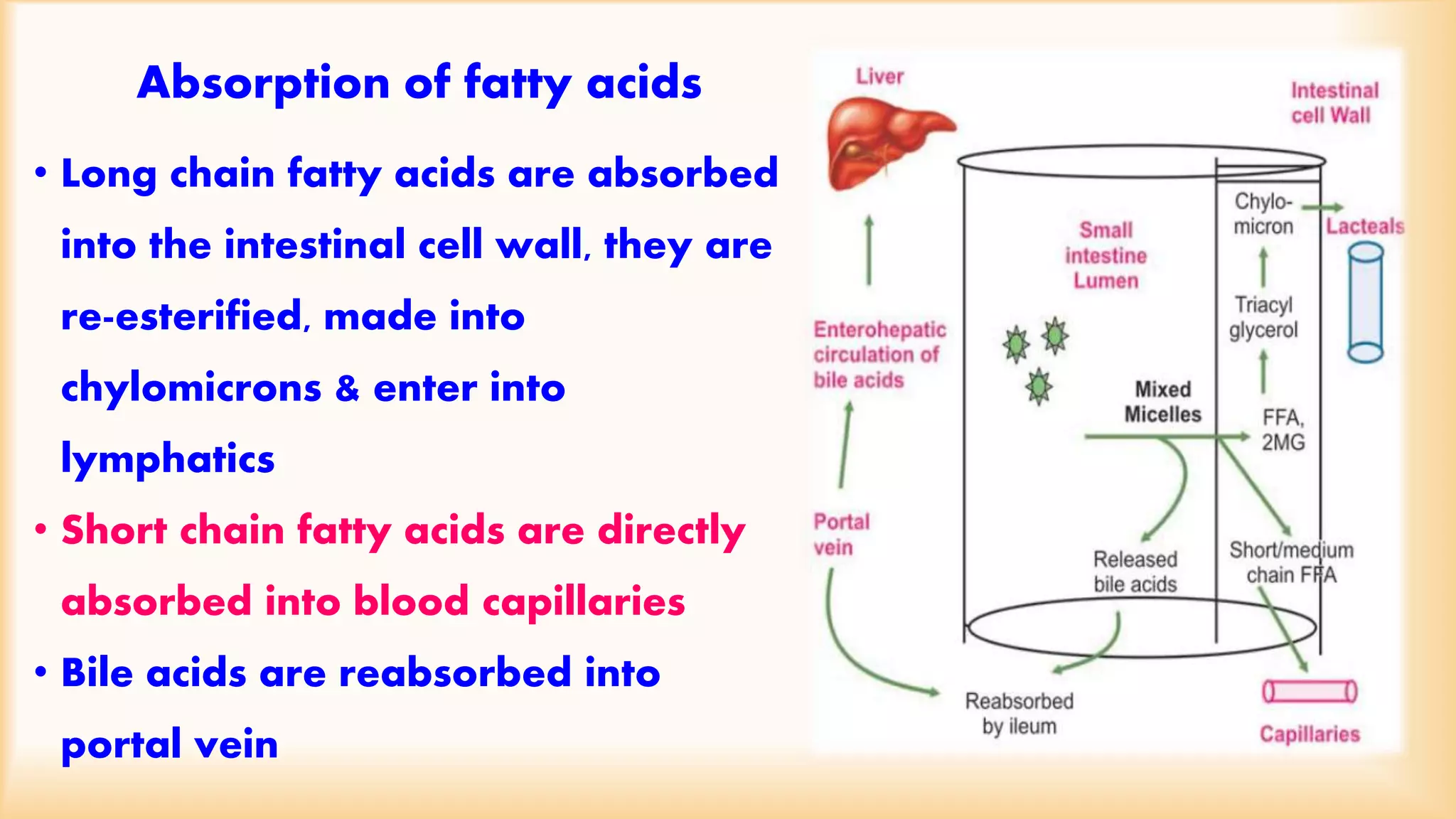
Absorption of fatty acids 
• Long chain fatty acids are absorbed 
into the intestinal cell wall, they are 
re-esterified, made into 
chylomicrons & enter into 
lymphatics 
• Short chain fatty acids are directly 
absorbed into blood capillaries 
• Bile acids are reabsorbed into 
portal vein
• Chylomicrons: 
• The lipids that are resynthesized in the intestinal cells are 
hydrophobic in nature 
• They are put together as lipid droplets and surrounded by a 
thin layer consisting of mostly apolipoproteins (A1 and B-48) & 
phospholipids 
• This package of lipids enveloped in the layer stabilizes the 
droplets and increases their solubility 
• These particles are known as chylomicrons
• Chylomicrons migrate to the plasma membrane of intestinal 
mucosal cells 
• They are released into the lymphatic vessels by exocytosis 
• The presence of chylomicrons (Greek; chylos-juice) gives the 
lymph a milky appearance, observed after a lipid-rich meal 
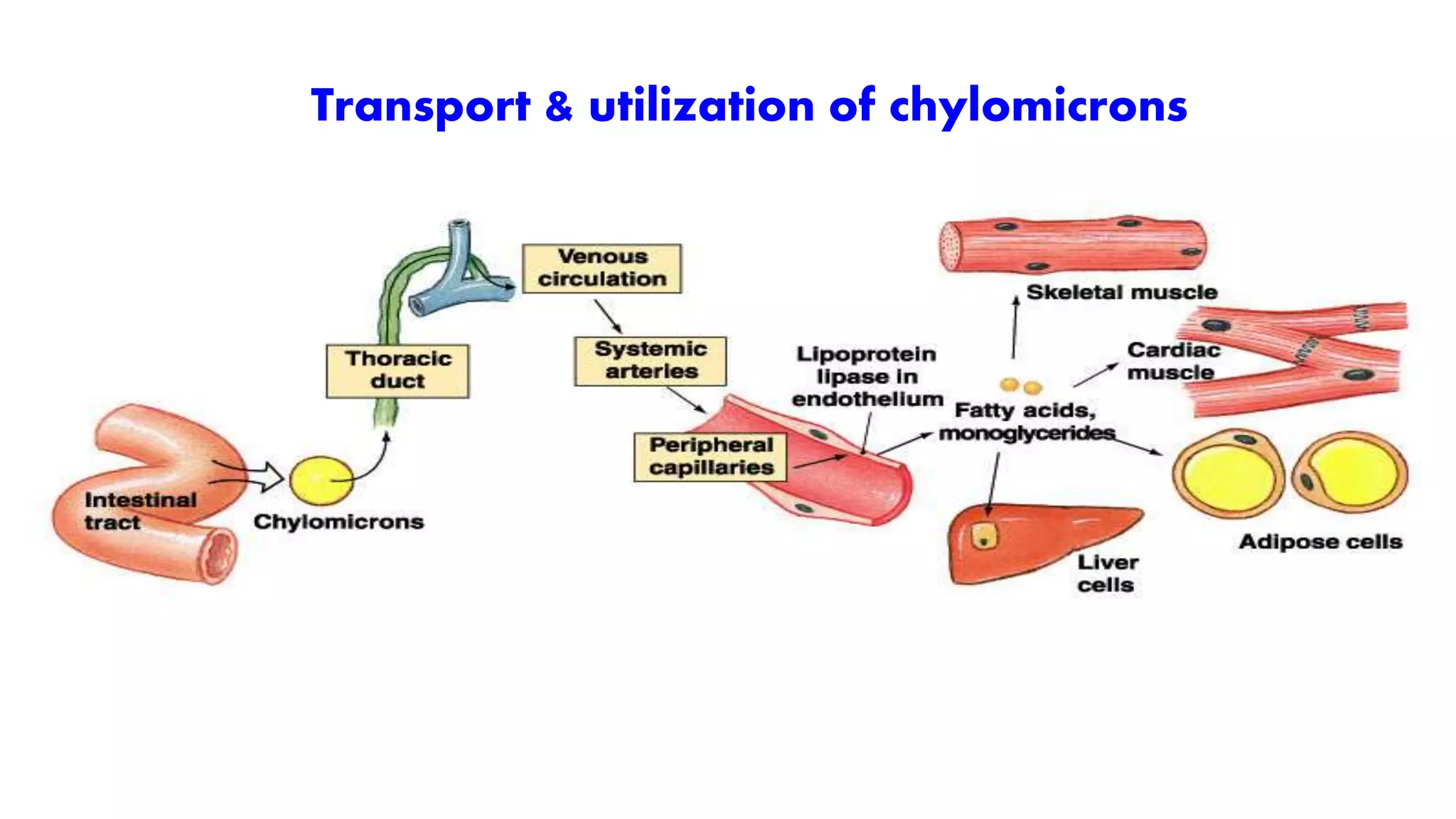
• Chylomicrons enter the large body veins via the thoracic duct 
• Blood from here flows to the heart & then to the peripheral 
tissues (muscle, adipose tissue) & finally, to the liver
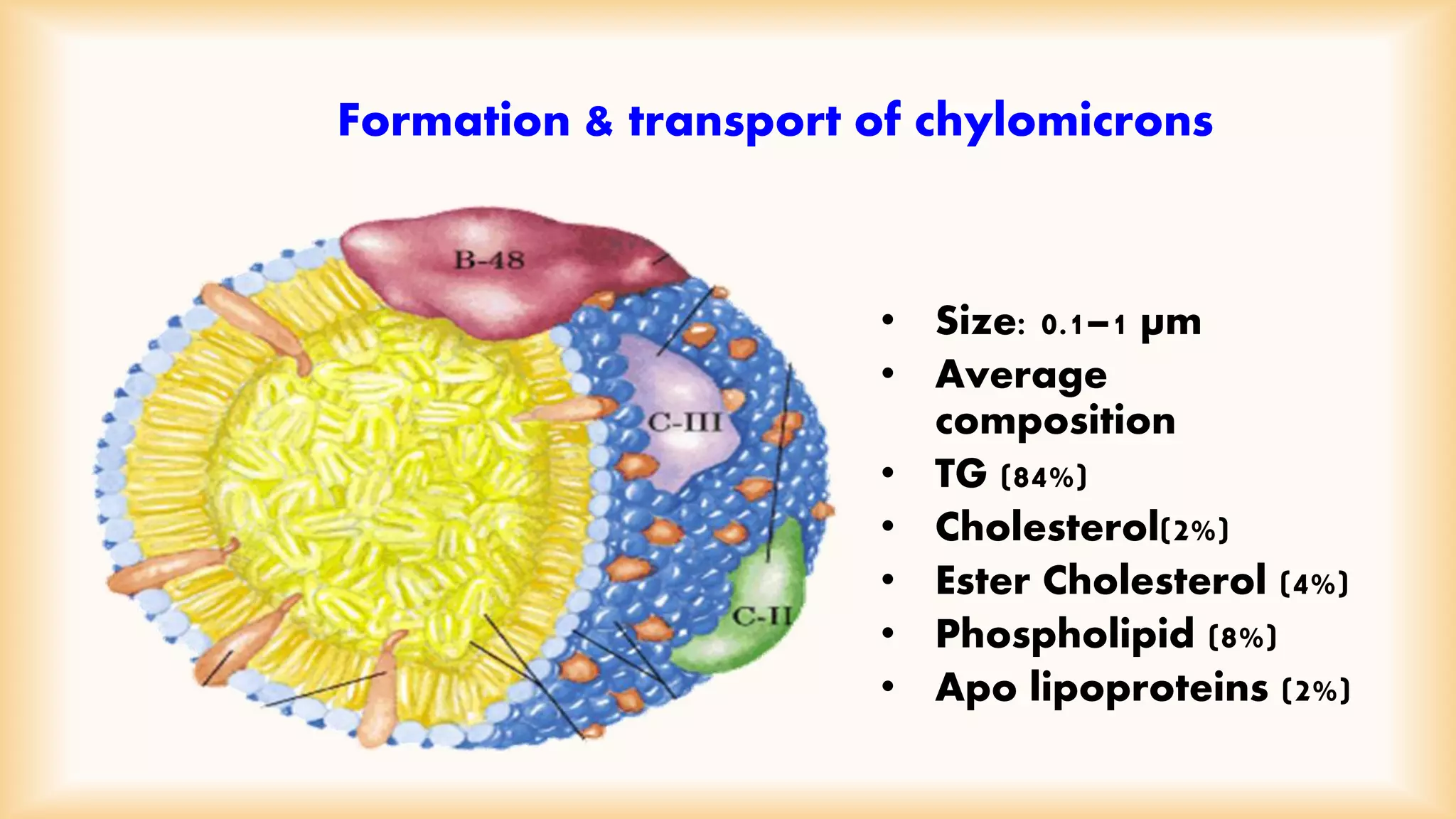
Formation & transport of chylomicrons
Formation & transport of chylomicrons 
• Size: 0.1–1 μm 
• Average 
composition 
• TG (84%) 
• Cholesterol(2%) 
• Ester Cholesterol (4%) 
• Phospholipid (8%) 
• Apo lipoproteins (2%)
Transport & utilization of chylomicrons
Clinical significance of Chylomicron synthesis & utilization 
• Defective synthesis- Due to deficiency of apo-B 48 protein. 
• The triglyceride may accumulate in intestinal cells. 
• Chyluria- Due to an abnormal connection between urinary tract 
& lymphatic drainage system of the intestines, forming Chylous 
fistula. Characterized by passage of Milky urine.

• Chylothorax- There is an abnormal connection between pleural 
space and the lymphatic drainage of small intestine resulting in 
accumulation of lymph in pleural cavity giving Milky pleural 
effusion 
• Absorption of short chain fatty acids: 
• Short chain fatty acids (SCFA) & medium chain fatty acids 
(MCFA) do not need re-esterification 
• They can directly enter into blood vessels, then to portal vein, 
finally to liver where they are immediately utilised for energy 
• Their absorption is rapid
• Abnormalities in lipid digestion & Absorption: 
• Defective digestion: 
• In steatorrhea, daily excretion of fat in feces is >6 g/day 
• It is due to chronic diseases of pancreas 
• In such cases, unsplit fat is seen in feces 
• Defective absorption: 
• If the absorption alone is defective, most of the fat in feces 
may be split fat, i.e. fatty acids and monoglycerides 
• Celiac disease
• Surgical removal of intestine 
• Obstruction of bile duct: 
• Due to gall stones, tumors of head of pancreas, enlarged 
lymph glands, etc. 
• The result is deficiency of bile salts. 
• TAGs with short chain and medium chain fatty acids are 
digested & absorbed properly, they do not require 
micellerisation for absorption
• Chyluria: 
• There is an abnormal connection between the urinary tract & 
lymphatic drainage system of the intestine. 
• Urine appears milky due to lipid droplets 
• Chylothorax can result from an abnormal connection 
between the pleural cavity and thoracic duct 
• Fate of Chylomicrons: 
• The absorbed (exogenous) TAGs are transported in blood as 
chylomicrons & taken up by adipose tissue & liver
• Liver synthesizes endogenous triglycerides 
• These are transported as VLDL & are deposited in adipose 
tissue 
• During starvation states, TAGs in adipose tissue are 
hydrolyzed to produce free fatty acids 
• In the blood, they are transported, complexed with albumin 
• These free fatty acids are taken up by the cells & are then 
oxidised to get energy
Reference books 
• Textbook of Biochemistry - Dr.U.Satyanarayana 
• Textbook of Biochemistry - DM.Vasudevan 
• Textbook of Medical Biochemistry - MN Chatterjea
Thank You

DIGESTION & ABSORPTION OF LIPIDS

  • 1.
    Digestion & Absorptionof lipids Gandham. Rajeev
  • 2.
    • The majordietary lipids are triacylglycerol, cholesterol & phospholipids • The average normal Indian diet contains about 20-30 g of lipids/day • Digestion in Stomach: • The lingual lipase from the mouth enters stomach along with the food • It has an optimum pH of 2.5-5 • The enzyme active in the stomach
  • 3.
    • It actson short chain triglycerides (SCT) • SCTs are present in milk, butter and ghee • The action of lingual lipase is more significant in the newborns • Gastric lipase: • Gastric lipase is acid stable, with an optimum pH around 5.4 • It is secreted by chief cells, the secretion is stimulated by gastrin. • Upto 30% digestion of triglycerides occurs in stomach
  • 5.
    • Emulsification oflipids in the small intestine: • Emulsification is a prerequisite for digestion of lipids • The lipids are dispersed into smaller droplets; surface tension is reduced; and surface area of droplets is increased • This process is favoured by: 1. Bile salts (detergent action) 2. Peristalsis (mechanical mixing) 3. Phospholipids
  • 6.
    • Bile salts: • The bile salts are sodium glycocholate & sodium taurocholate • Bile salts are the biological detergents synthesized from cholesterol in the liver • They are secreted with bile into the duodenum • Bile salts possess steroid nucleus, the side chain is attached to either glycine (glycocholic acid) or taurine (taurocholic acid) • Bile salts are the most effective biological emulsifying agents
  • 7.
    • They interactwith lipid particles and the aqueous duodenal contents and convert them into smaller particles (emulsified droplets) • The bile salts lower surface tension • The emulsification increases the surface area of the particles for enhanced activity of enzymes
  • 8.
    • Surfactant actionof degraded lipids: • The initial digestive products of lipids (catalysed by lipase), free fatty acids, monoacylglycerols promote emulsification • These compounds along with phospholipids are known as surfactants • Surfactants get absorbed to the water-lipid interfaces & increase the interfacial area of lipid droplets • Mechanical mixing due to peristalsis also helps in the emulsification
  • 9.
    Emulsification by bilesalts Bile salts as emulsifying agents interact with the dietary lipid particles and the aqueous duodenal contents, thereby stabilizing the lipid particles as they become smaller
  • 10.
    • Digestion oflipids by pancreatic enzymes: • The pancreatic enzymes responsible for the degradation of dietary TAGs, cholesteryl esters & phospholipids • Digestion of Triglycerides: • Pancreatic lipase hydrolyse the fatty acids esterified to the 1st & 3rd carbon atom of glycerol forming 2-monoacylglycerol & two molecules of fatty acid • Isomerase shifts the ester bond from position 2 to 1 • The bond in the 1st position is then hydrolysed by the lipase to form free glycerol & fatty acid
  • 11.
    • The majorend products of the digestion of TAG are 2-MAG (78%), 1-MAG (6%), glycerol and fatty acids (14%) • Co-lipase: It is a small protein molecule • The activity of pancreatic lipase is inhibited by bile acids in the small intestine & this problem is overcome by colipase • Also secreted by pancreas as pro-colipase & converted to active form by trypsin • Colipase binds at the lipid-aqueous interface & helps to anchor & stabilize lipase
  • 12.
    • Complete hydrolysisof triglyceride • In the intestines, generally fats are only partially hydrolysed
  • 13.
  • 14.
    • Lipid esterase: • It is a less specific enzyme present in pancreatic juice • lt acts on monoacylglycerols, cholesteryl esters, vitamin esters etc. to liberate free fatty acids • The bile acid is essential for the activity of lipid esterase • Degradation of cholesteryl esters: • Pancreatic cholesterol esterase (cholesteryl ester hydrolase) cleaves cholesteryl esters to cholesterol & free fatty acids
  • 15.
    Physiologically important lipases Lipase Site of action Preferred substrate Product(s) Lingual / acid stable lipase Mouth , stomach TAGS with medium chain FAS FFA+DAG Pancreatic lipase + co-lipase Small intestine TAGS with long chain FAS FFA+2MAG Intestinal lipase with bile acids Small intestine TAGS with medium chain FAS 2FFA+glycerol Phospholipase A2 + bile acids Small intestine PLs with unsat. FA at position 2 Unsat FFA lysolecithin Lipoprotein lipase insulin (+) Capillary walls TAGs in chylomicron or VLDL FFA+ glycerol Hormone sensitive lipase Adipose cell TAG stored in adipose cells FFA+ glycerol
  • 16.
    • Degradation ofphospholipids: • Phospholipases are enzymes responsible for the hydrolysis of phospholipids • Pancreatic juice is rich in phospholipase A 2 which cleaves the fatty acid at the 2nd position of phospholipids • The products are a free fatty acid and a lysophospholipid • Phospholipase A2 is secreted as a zymogen which is activated in the intestine by the action of trypsin
  • 17.
  • 18.
    • Absorption oflipids: • Lipolytic theory put forth by Verzar: • According to this, fats are completely hydrolysed to glycerol & FFA • These are absorbed either as soaps or in association with bile salts • Partition theory proposed by Frazer: • According to this, digestion of TAGs is partial & not complete • The partially digested TAGs in association with bile salts, form emulsion • Lipids are taken up by the intestinal mucosal cells
  • 19.
    • Bergstrom theory: • Long chain fatty acids (>14 carbons) are absorbed to the lymph & not directly to the blood • Mixed Micelle Formation: • The products of digestion are 2-monoglycerides, long chain fatty acids, cholesterol, phospholipids and lysophospholipids are incorporated into molecular aggregates to form mixed micelle • Micelles are spherical particles with a hydrophilic exterior & hydrophobic interior core
  • 20.
  • 21.
    • Due todetergent action, the bile salts help to form micellar aggregates • Micellar formation is essential for the absorption of fat-soluble vitamins such as vitamin A, D, E and K • The micelles are aligned at the microvillous surface of the jejunal mucosa • Fatty acids, 2-MAG and other digested products passively diffuse into the mucosal cell
  • 22.
    • Synthesis oflipids in intestinal mucosal cells: • The fatty acids of short & medium chain length (<10 carbons), after their absorption into the intestinal cells, do not undergo any modification • They enter the portal circulation & are transported to the liver in a bound form to albumin
  • 23.
    • Re-esterification Insidethe Mucosal Cell: • Inside the intestinal mucosal cell, the long chain fatty acids are re-esterified to form triglycerides • The fatty acids are first activated to fatty acyl CoA by the enzyme, acyl CoA synthetase or thiokinase & requires energy • Two, such activated FAS react with monoacyl glycerol (MAG) to form the triglyceride • Majority of molecules follow this MAG pathway
  • 24.
    • Free glycerolabsorbed from intestinal lumen directly enters into the blood stream • Free glycerol is not available for re-esterification • But the cells can convert glucose to glycerol phosphate & add 3 molecules of acyl groups to synthesize TAG
  • 25.
    Absorption of fat as chylomicrons
  • 26.
    Absorption of fattyacids • Long chain fatty acids are absorbed into the intestinal cell wall, they are re-esterified, made into chylomicrons & enter into lymphatics • Short chain fatty acids are directly absorbed into blood capillaries • Bile acids are reabsorbed into portal vein
  • 27.
    • Chylomicrons: •The lipids that are resynthesized in the intestinal cells are hydrophobic in nature • They are put together as lipid droplets and surrounded by a thin layer consisting of mostly apolipoproteins (A1 and B-48) & phospholipids • This package of lipids enveloped in the layer stabilizes the droplets and increases their solubility • These particles are known as chylomicrons
  • 28.
    • Chylomicrons migrateto the plasma membrane of intestinal mucosal cells • They are released into the lymphatic vessels by exocytosis • The presence of chylomicrons (Greek; chylos-juice) gives the lymph a milky appearance, observed after a lipid-rich meal • Chylomicrons enter the large body veins via the thoracic duct • Blood from here flows to the heart & then to the peripheral tissues (muscle, adipose tissue) & finally, to the liver
  • 29.
    Formation & transportof chylomicrons
  • 30.
    Formation & transportof chylomicrons • Size: 0.1–1 μm • Average composition • TG (84%) • Cholesterol(2%) • Ester Cholesterol (4%) • Phospholipid (8%) • Apo lipoproteins (2%)
  • 31.
    Transport & utilizationof chylomicrons
  • 32.
    Clinical significance ofChylomicron synthesis & utilization • Defective synthesis- Due to deficiency of apo-B 48 protein. • The triglyceride may accumulate in intestinal cells. • Chyluria- Due to an abnormal connection between urinary tract & lymphatic drainage system of the intestines, forming Chylous fistula. Characterized by passage of Milky urine.
  • 33.
    • Chylothorax- Thereis an abnormal connection between pleural space and the lymphatic drainage of small intestine resulting in accumulation of lymph in pleural cavity giving Milky pleural effusion • Absorption of short chain fatty acids: • Short chain fatty acids (SCFA) & medium chain fatty acids (MCFA) do not need re-esterification • They can directly enter into blood vessels, then to portal vein, finally to liver where they are immediately utilised for energy • Their absorption is rapid
  • 34.
    • Abnormalities inlipid digestion & Absorption: • Defective digestion: • In steatorrhea, daily excretion of fat in feces is >6 g/day • It is due to chronic diseases of pancreas • In such cases, unsplit fat is seen in feces • Defective absorption: • If the absorption alone is defective, most of the fat in feces may be split fat, i.e. fatty acids and monoglycerides • Celiac disease
  • 35.
    • Surgical removalof intestine • Obstruction of bile duct: • Due to gall stones, tumors of head of pancreas, enlarged lymph glands, etc. • The result is deficiency of bile salts. • TAGs with short chain and medium chain fatty acids are digested & absorbed properly, they do not require micellerisation for absorption
  • 36.
    • Chyluria: •There is an abnormal connection between the urinary tract & lymphatic drainage system of the intestine. • Urine appears milky due to lipid droplets • Chylothorax can result from an abnormal connection between the pleural cavity and thoracic duct • Fate of Chylomicrons: • The absorbed (exogenous) TAGs are transported in blood as chylomicrons & taken up by adipose tissue & liver
  • 37.
    • Liver synthesizesendogenous triglycerides • These are transported as VLDL & are deposited in adipose tissue • During starvation states, TAGs in adipose tissue are hydrolyzed to produce free fatty acids • In the blood, they are transported, complexed with albumin • These free fatty acids are taken up by the cells & are then oxidised to get energy
  • 38.
    Reference books •Textbook of Biochemistry - Dr.U.Satyanarayana • Textbook of Biochemistry - DM.Vasudevan • Textbook of Medical Biochemistry - MN Chatterjea
  • 39.