PRESENTATION TOPIC
Absorption of carbohydrates
SUBMITTED TO DR.SUMAIRA
Group members:
 SHUMAILA
 MISBAH
 ALEENA ARSHAD
 HABEEBULLAH
 BASIT ALI
 SHAHAB AHMAD
 KAHTIR ZAMAN
 USMAN.
Digestion
The process involving
hydrolysis of large and
complex organic
molecule into small
and water soluble
molecule which can be
easily absorbed by the
gastrointestinal tract
for the utilization by
the organism.
Digestion of carbohydrates:
 Carbohydrates are broken down into smaller
polysaccharides in the mouth by the action of salivary
amylase. Once in the small intestine, pancreatic amylase
further breaks the polysaccharide into disaccharides.
The three most common disaccharides are maltose,
sucrose and lactose. These disaccharide are broken
down into monosaccharide by the digestive enzymes
found at the brush border of the enterocytes.
 Maltose is obtain via the digestion of starch by
amylase. It consists of two glucose monomers
attached via α-1-4 glycosidic bond, which is
broken down by the brush border enzyme called
maltase. Sucrose consists of glucose and
fructose and is broken down by sucrase while
lactose consists of glucose & galactose and is
broken down by lactase.
Absorption of carbohydrates:
 The principal monosaccharide's produced by the
digestion of carbohydrates are glucose, fructose and
galactose
 Glucose accounts for 80% of the total monosaccharide
 The absorption occurs mostly in the duodenum & upper
jejunum of small intestine
 Only monosaccharaides are absorbed by the intestine
Absorption Rates:
Cori study:
 He studies the rate of absorption of different sugars from
small intestine in rate
 Galactose:
absorption rate for galactose is maximum
 Glucose:
absorption rate for glucose is moderate
 Fructose:
absorption rate for fructose is minimum
Comparison:
 Glucose absorption as 100, comparative absorption of
other sugars as
Galactose =110, glucose=100, fructose=43,
mannose=19, xylose=15
 Galactose is absorbed more rapidly than glucose
 Pentose are absorbed slowly
Mechanism of absorption
 Different sugars posses different mechanisms
for their absorption
Examples:
 Glucose is transported into the intestinal
mucosal cells by a carrier mediated and energy
requiring process
Active transport mechanism
 Glucose and sodium share the same transport system
referred to as sodium dependent glucose transporter
 The concentration of sodium is higher in the intestinal
lumen compared to mucosal cells
 Sodium moves into the cells along its concentration
gradient & simultaneously glucose is transported into
the intestinal cells
 Mediated by same carrier system
 Sodium diffuses into the cell and it drags glucose along with
it
 The intestinal sodium gradient is the immediate energy
source for glucose transport
 This energy is indirectly supplied by ATP
 Since the re-entry of sodium (against the concentration
gradient) into the intestinal lumen is an energy requiring
active process
 The enzyme sodium potassium ATPase is involved in the
transport of sodium in exchange of potassium against the
concentration gradient
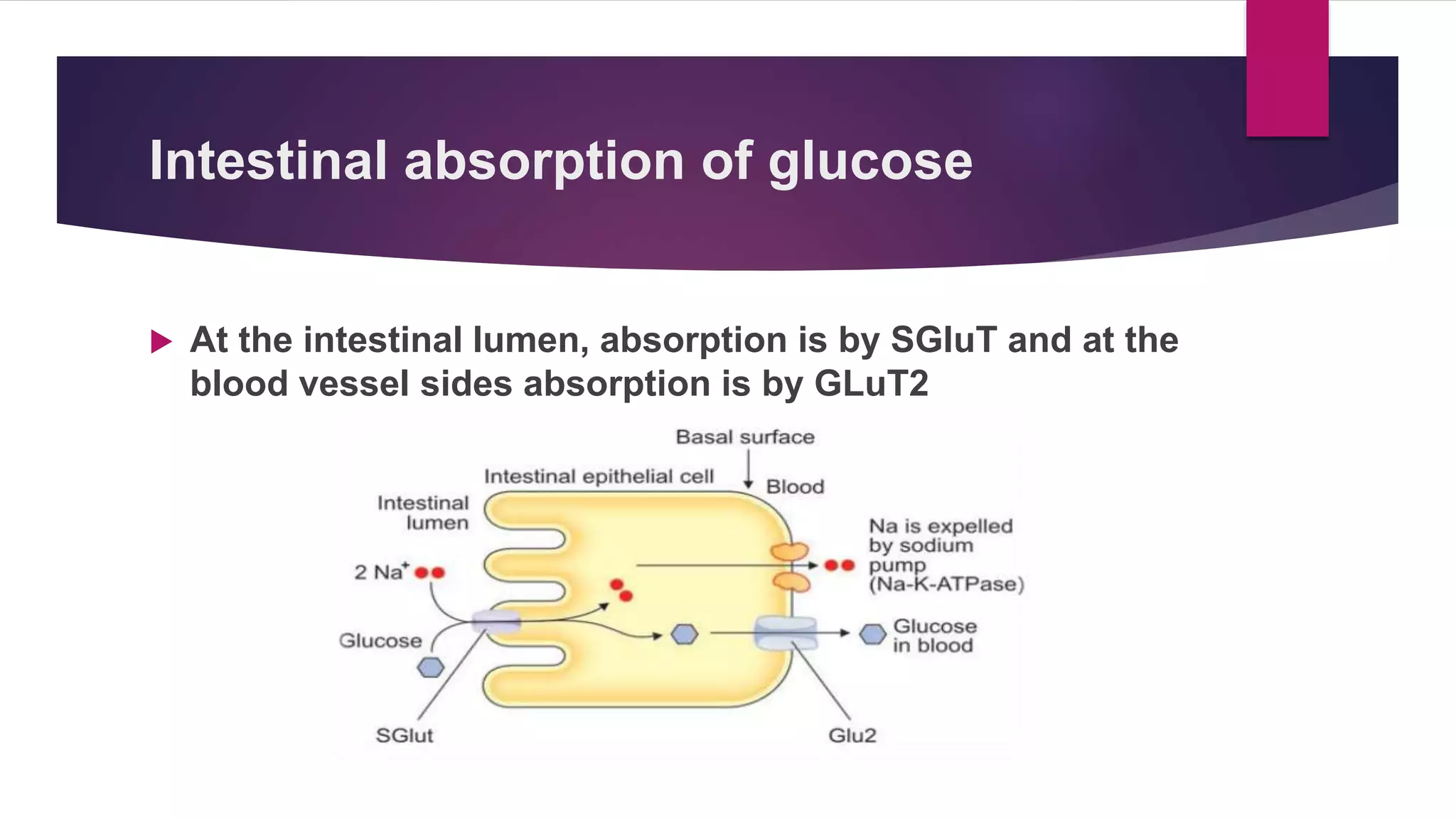
Intestinal absorption of glucose
 At the intestinal lumen, absorption is by SGluT and at the
blood vessel sides absorption is by GLuT2
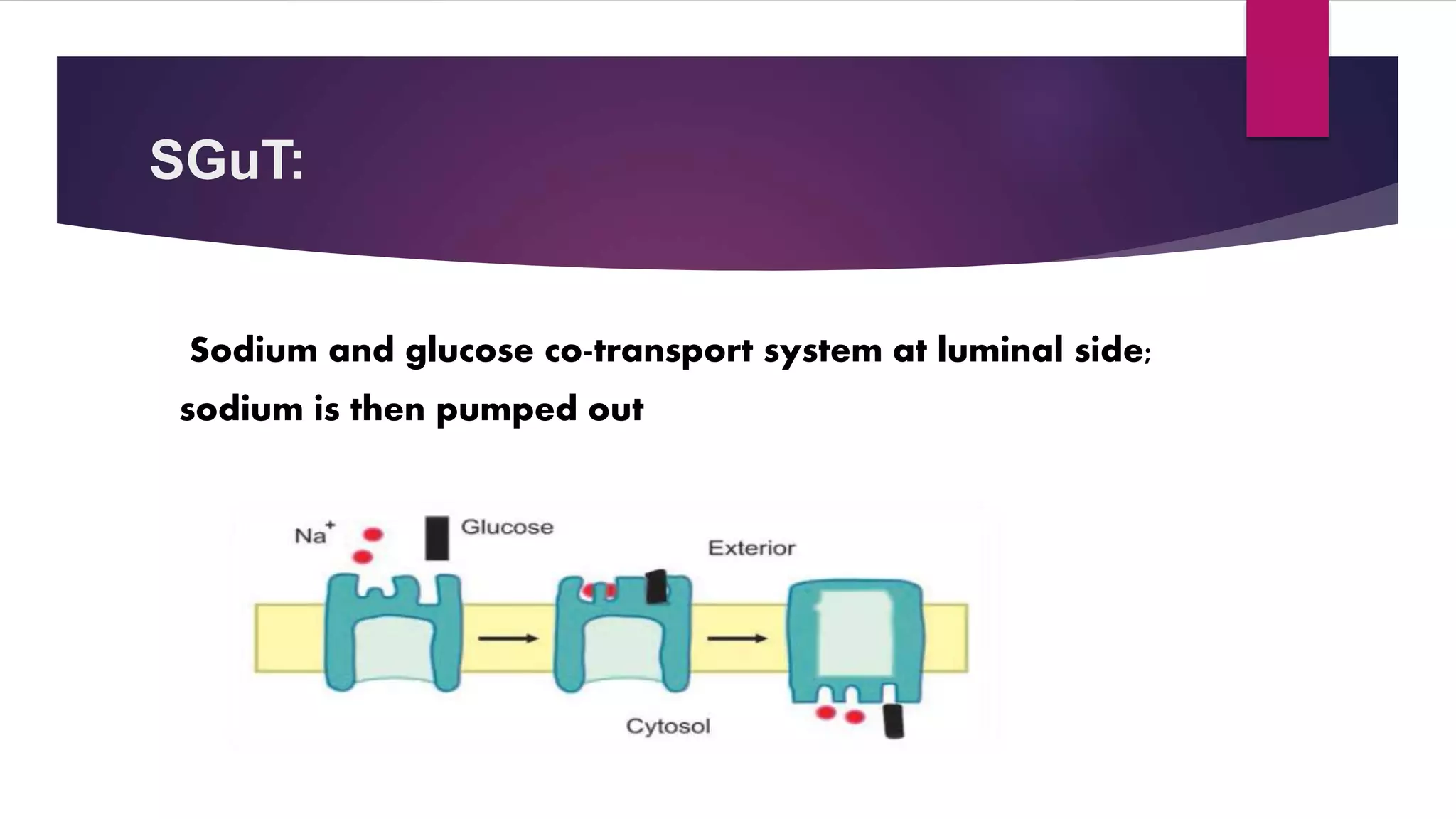
SGuT:
Sodium and glucose co-transport system at luminal side;
sodium is then pumped out
Galactose absorption:
 Mechanism for absorption of Galactose is
similar to that of Glucose
Absorption of Fructose:
 Fructose absorption is simple
 Does not require energy and Na+ ions
 Transported by facilitated diffusion mediated by a carrier
 Inside the epithelial cell, most of the fructose is converted
to glucose
 The latter then enters the circulation
Absorption of Pentose:
 Pentoses are absorbed by a process of simple diffusion
NON DIGESTIBLE CARBOHYDRATES:
The plant foods are rich in fibrous material which can not be
digested eihter by human enzymes or intestinal bacteria
Fiber are chemically complex carbohydrates which include
cellulose, hemicellulose, pectin, lignin and gums.
Factors effecting:
 Mucus membrane:
Mucus membrane is not healthy, absorption will decrease
 Thyroid hormones:
Increases absorption of hexoses & act on intestinal mucosa
 Adrenal cortex:
Absorption decreases in adrenocortical deficiency, mainly due to
decreased concentration of sodium
 Anterior pituitary:
It affects mainly through thyroid hormones
Abnormal carbohydrates digestion /
absorption
 Lactose intolerance .
 Maltase-sucrase combined deficiency.
Lactose intolerance
 Commonest disaccheridase deficiency.
 Either complete absence of lactase.
 Or low concentration of lactase (non inducible
enzymes)
Primary lactose deficiency
 Develops over a time.
 No congenital absence of lactose.
 But low enzyme synthesis and precipitate in
adults.
 Very common in Asian population.
 There is intolerance for lactose and milk products.
Secondary lactase deficiency
 It occurs because of damage or from medication
used for gastrointestinal diseases exposure to
gastrointestinal parasite like giardia lamblia
 production of lactase disturbed temporary lactose
intolerance
 another form is due to lactose overload.
Thank you

Absorption of carbohydrate

  • 1.
    PRESENTATION TOPIC Absorption ofcarbohydrates SUBMITTED TO DR.SUMAIRA
  • 2.
    Group members:  SHUMAILA MISBAH  ALEENA ARSHAD  HABEEBULLAH  BASIT ALI  SHAHAB AHMAD  KAHTIR ZAMAN  USMAN.
  • 3.
    Digestion The process involving hydrolysisof large and complex organic molecule into small and water soluble molecule which can be easily absorbed by the gastrointestinal tract for the utilization by the organism.
  • 4.
    Digestion of carbohydrates: Carbohydrates are broken down into smaller polysaccharides in the mouth by the action of salivary amylase. Once in the small intestine, pancreatic amylase further breaks the polysaccharide into disaccharides. The three most common disaccharides are maltose, sucrose and lactose. These disaccharide are broken down into monosaccharide by the digestive enzymes found at the brush border of the enterocytes.
  • 5.
     Maltose isobtain via the digestion of starch by amylase. It consists of two glucose monomers attached via α-1-4 glycosidic bond, which is broken down by the brush border enzyme called maltase. Sucrose consists of glucose and fructose and is broken down by sucrase while lactose consists of glucose & galactose and is broken down by lactase.
  • 6.
    Absorption of carbohydrates: The principal monosaccharide's produced by the digestion of carbohydrates are glucose, fructose and galactose  Glucose accounts for 80% of the total monosaccharide  The absorption occurs mostly in the duodenum & upper jejunum of small intestine  Only monosaccharaides are absorbed by the intestine
  • 7.
    Absorption Rates: Cori study: He studies the rate of absorption of different sugars from small intestine in rate  Galactose: absorption rate for galactose is maximum  Glucose: absorption rate for glucose is moderate  Fructose: absorption rate for fructose is minimum
  • 8.
    Comparison:  Glucose absorptionas 100, comparative absorption of other sugars as Galactose =110, glucose=100, fructose=43, mannose=19, xylose=15  Galactose is absorbed more rapidly than glucose  Pentose are absorbed slowly
  • 10.
    Mechanism of absorption Different sugars posses different mechanisms for their absorption Examples:  Glucose is transported into the intestinal mucosal cells by a carrier mediated and energy requiring process
  • 11.
    Active transport mechanism Glucose and sodium share the same transport system referred to as sodium dependent glucose transporter  The concentration of sodium is higher in the intestinal lumen compared to mucosal cells  Sodium moves into the cells along its concentration gradient & simultaneously glucose is transported into the intestinal cells  Mediated by same carrier system
  • 12.
     Sodium diffusesinto the cell and it drags glucose along with it  The intestinal sodium gradient is the immediate energy source for glucose transport  This energy is indirectly supplied by ATP  Since the re-entry of sodium (against the concentration gradient) into the intestinal lumen is an energy requiring active process  The enzyme sodium potassium ATPase is involved in the transport of sodium in exchange of potassium against the concentration gradient
  • 13.
    Intestinal absorption ofglucose  At the intestinal lumen, absorption is by SGluT and at the blood vessel sides absorption is by GLuT2
  • 14.
    SGuT: Sodium and glucoseco-transport system at luminal side; sodium is then pumped out
  • 15.
    Galactose absorption:  Mechanismfor absorption of Galactose is similar to that of Glucose
  • 16.
    Absorption of Fructose: Fructose absorption is simple  Does not require energy and Na+ ions  Transported by facilitated diffusion mediated by a carrier  Inside the epithelial cell, most of the fructose is converted to glucose  The latter then enters the circulation
  • 17.
    Absorption of Pentose: Pentoses are absorbed by a process of simple diffusion NON DIGESTIBLE CARBOHYDRATES: The plant foods are rich in fibrous material which can not be digested eihter by human enzymes or intestinal bacteria Fiber are chemically complex carbohydrates which include cellulose, hemicellulose, pectin, lignin and gums.
  • 18.
    Factors effecting:  Mucusmembrane: Mucus membrane is not healthy, absorption will decrease  Thyroid hormones: Increases absorption of hexoses & act on intestinal mucosa  Adrenal cortex: Absorption decreases in adrenocortical deficiency, mainly due to decreased concentration of sodium  Anterior pituitary: It affects mainly through thyroid hormones
  • 19.
    Abnormal carbohydrates digestion/ absorption  Lactose intolerance .  Maltase-sucrase combined deficiency.
  • 20.
    Lactose intolerance  Commonestdisaccheridase deficiency.  Either complete absence of lactase.  Or low concentration of lactase (non inducible enzymes)
  • 21.
    Primary lactose deficiency Develops over a time.  No congenital absence of lactose.  But low enzyme synthesis and precipitate in adults.  Very common in Asian population.  There is intolerance for lactose and milk products.
  • 22.
    Secondary lactase deficiency It occurs because of damage or from medication used for gastrointestinal diseases exposure to gastrointestinal parasite like giardia lamblia  production of lactase disturbed temporary lactose intolerance  another form is due to lactose overload.
  • 23.